upworthy
Add Upworthy to your Google News feed.
Google News Button
Pop Culture

Artist uses AI to create ultra realistic portraits of celebrities who left us too soon

What would certain icons look like if nothing had happened to them?

ai art generator

Mercury would be 78 today.

Some icons have truly left this world too early. It’s a tragedy when anyone doesn’t make it to see old age, but when it happens to a well-known public figure, a bit of their art and legacy dies with them. What more might Freddie Mercury have accomplished if he were granted the gift of long life? Bruce Lee? Princess Diana?

Their futures might be mere musings of our imagination, but thanks to a lot of creativity (and a little tech) we can now get a glimpse into what these celebrities might have looked like when they were older.

Alper Yesiltas, an Istanbul-based lawyer and photographer, created a photography series titled “As If Nothing Happened,” which features eerily realistic portraits of long gone celebrities in their golden years. To make the images as real looking as possible, Yesiltas incorporated various photo editing programs such as Adobe Lightroom and VSCO, as well as the AI photo-enhancing software Remini.

“The hardest part of the creative process for me is making the image feel ‘real’ to me,” Yesiltas wrote about his passion project. “The moment I like the most is when I think the image in front of me looks as if it was taken by a photographer.”

Yesiltas’ meticulousness paid off, because the results are uncanny. Along with each photo, Yesiltas writes a bittersweet message “wishing” how things might have gone differently…as if nothing happened.

Freddie Mercury

“I wish he hadn't got that disease.

There are plenty of amazing Freddie Mercury tributes and impersonators out there, but there will only ever be ONE Freddie Mercury.

Heath Ledger

“I wish he hadn't been affected by the exhaustion of his role.

One of Ledger's most notable roles is queer cowboy Ennis Del Mar in Ang Lee's iconic 2005 romantic western drama Brokeback Mountain. In a time when queer storytelling was still taboo, Ledger's honest and compassionate portrayal broke down a lot of barriers for future stories.

Though Ledger officially died due to an overdose, many believe it was his role of The Joker in Christopher Nolan’s The Dark Knight that pushed him over the edge.

Janis Joplin

ai art

Joplin would be 81.

Bored Panda

I wish she hadn't sought the inspiration she needed elsewhere.

The powerful singer with electric stage presence is still one of the greatest female rock stars of all time. Scratch that—one of the greatest rock stars of all time, period.

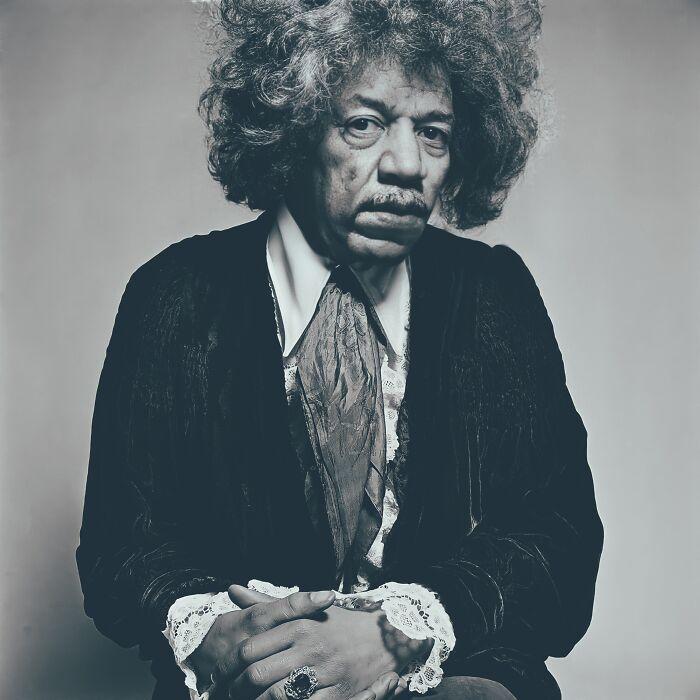
Jimi Hendrix
jimi hendrix

Hendrix would be 82.

Bored Panda

I wish he hadn't sought the inspiration he needed elsewhere.

Like Joplin and Ledger, Hendrix died due to an overdose—though many have speculated that it was instead the result of foul play.

Michael Jackson

I wish he hadn't faced vitiligo.

However questionable his personal life was, the King of Pop made some of the biggest contributions to music of all time. People continue to sing his songs, and likely will for a very, very long time.

Kurt Cobain

nirvana

Cobain would be 57.

Bored Panda

“I wish he had decided to stay.

The insightful, poetic and troubled Cobain took his life at 27. His story is a cautionary tale that success does not help thwart struggles with mental health. in fact, it can worsen it.

Bruce Lee

bruce lee

Lee would be 83.

Bored Panda

I wish he hadn't taken that painkiller that day.

The actor and martial-arts expert died at 32, officially due to a harmful reaction to a painkiller. His philosophies around kung fu, however, are eternal.

John Lennon

I wish he hadn't been in New York that day.

Legendary artist and activist John Lennon was fatally wounded by a gunshot in December 1980. The last thing he talked about, revealed ex-wife Yoko Ono in an interview, was the desire to see his son before he went to sleep.

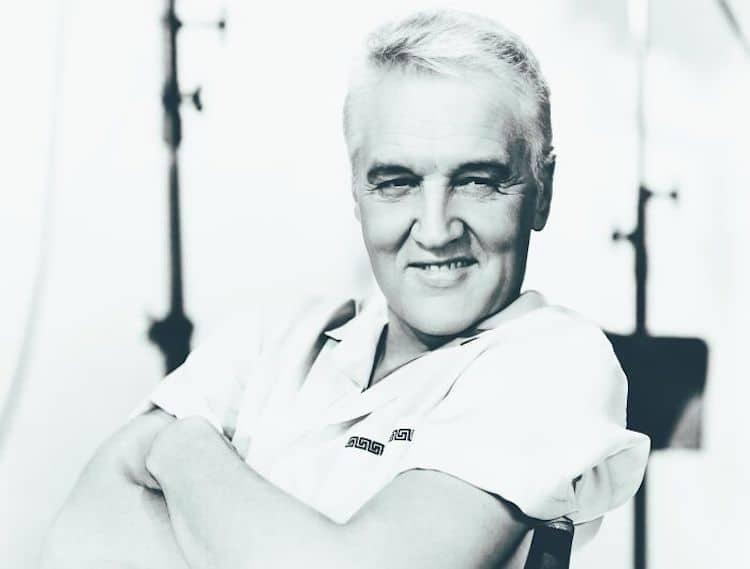
Elvis Presley
elvis movie

Presley would be 89.

Bored Panda

I wish he decided to live a life where he paid more attention to the health of his heart.

Had Presley not died of cardiac arrest, he would be 89 this year.

Tupac Shakur

“I wish he hadn't been involved in that event that would cause him to face the mafia.

The cause of Tupac’s untimely death is also one of debate and speculation. According to some, he never died at all. What we can all agree on—he was one of hip-hop's most iconic figures.

Princess Diana

This one seems to be a new addition to the collection, so no wistful message. Although I’m sure the general sentiment is “I wish she were still here.”

AI-generated art is a controversial topic, to be sure. Some consider it a new, innovative medium. Others see it as devoid of any real creativity at all, as it’s produced by a machine, rather than a human. Many are concerned that, as is the case with many jobs that get machine automated, it will threaten the livelihood of actual illustrators.

Those concerns are certainly valid, but perhaps there’s a balance to be found here, as Yesiltas seems to have accomplished. Previously, another artist similarly created stunningly lifelike portraits of cartoon characters from Encanto and The Simpsons. These works still required the human touch, and were carefully crafted over time rather than cracked out in mere seconds, as is the case with a lot of AI art.

At its best, AI art helps remind us, as Yesiltas puts it, that "anything imaginable can be shown in reality.” Which, at the end of the day, could be said for any art.


This article originally appeared three years ago.

party, chatting, likable, drinks small talk, men and women

A woman speaking with two men at a party.

When we think of someone likable, we often imagine a person with a big personality who's the life of the party. We conjure up images of social butterflies and people who keep everyone at the dinner party glued to their every word when they tell a story. The funny thing is, according to research, that's not really the case.

Studies show that the easiest way to make someone like you is to show interest by asking questions during the conversation and making it clear that you like them. People also really love those who come off as genuine.


Michael Gendler, a co-founder of Ultraspeaking, a platform that helps people master the art of public speaking, recently shared three "magic" phrases that make you more likable, all of which align with what science tells us.

Three phrases that make you more likable

Phrase 1: "Here's what really scares me..."

This phrase resonates with people because it shows you're genuine by admitting your vulnerability. "Man, talk about your feats, real fears, not like 'Oh, I'm scared I'm going to be too successful.' Tell us about something that actually scares you. Don't be guarded. Be open, and other people will appreciate that," Gendler says.

Phrase 2: "You know what I really like about you?"

This phrase makes people like you because it counters a psychological phenomenon known as signal amplification bias, which suggests we tend to overestimate how clearly we express our feelings to others. This means that, many times, when we think others know we like them, they may not be so sure. So a little assurance goes a long way toward showing them the feeling is mutual. "People love being complimented as long as it is genuine," Gendler says.


Phrase 3: "Tell me more"

As Dale Carnegie wrote in How to Make Friends and Influence People, the key to interacting with others is focusing on being interested in them rather than trying to impress them by being interesting. "Be interested, not interesting," Carnegie writes.

A Harvard study supports this, showing that when you first start speaking with someone, you should follow your first question with two more. People who do this are rated as much more likable than those who, after one question, shift the conversation to themselves. "People love feeling like what they're saying is interesting. So invite them to speak more," Gendler continues.


Don't forget to be genuine

Ultraspeaking's post is a breath of fresh air for those who aren't comfortable trying to impress others at parties, on dates, or in the office. The video shows that if you make people feel important, they're much more likely to like you in return. The key is that it has to come from the heart.

"Remember, don't just use these phrases and expect them to work," Gendler says. "They have to be genuine and open. That's what makes people likable."

Teachers

Teacher stirs 'controversy' by being brutally honest with students about their reading level

"I think some students need that in order to push themselves to actually try in school."

students, teachers grades, amber teacher, literacy rates, declining scores, american education

A teacher showing her students their grades.

Remember in school when the teacher would split the class into different reading groups? One was always, clearly, more advanced, while the other went at a slower pace. But the groups usually weren't labeled as such out loud.

One teacher, at least, says maybe they should be.


The results from 2024’s National Assessment of Educational Progress found that the slide in American students' reading abilities has only worsened. The percentage of 8th graders with “below basic” reading skills was 33%, the lowest in the exam’s three-decade history. The percentage of fourth graders “below basic” was the largest in 20 years at 40%.

“Our lowest performing students are reading at historically low levels,” said Peggy Carr, commissioner of the National Center for Education Statistics, which administers the NAEP exam. “We need to stay focused in order to right this ship.”

A big reason for the drop was the disruption in education caused by the height of the COVID-19 pandemic, but educators are looking to see if there are other causes behind the drop in competency. “This is a major concern — a concern that can’t be blamed solely on the pandemic,” Carr said. “Our nation is facing complex challenges in reading.”

Alarmed by the drop in reading scores, a high school teacher named Amber, who goes by @Amber.Maree44 on TikTok, is considering telling her students the grade level in which they read in hopes that it will motivate them and give them a reality check on their performance.

@amber.mariee44

Please give your feedback I can’t tell if this is a good idea or not #teacher #teachersbelike #teachertok #teacherlife #teachersoftiktok #highschool #literacy


“I'm starting to think that we need to be more straightforward with students about their progress and where they're at academically,” Amber said. "I think they need to know what grade level they're performing at."

Amber’s perspective may also be helpful to parents. A 2023 study revealed a significant gap between parents' perceptions of their child's performance and their actual standing compared to grade-level standards. Nearly nine out of ten parents thought their child was at grade level, while about half were below grade level nationally.

“I'm hesitant to do this because I know that we don't want students to feel bad about themselves, and I know that we don't want to discourage students by showing them their deficits. So I think, for a lot of students, having a real reality check like that where it's like, 'Hey, you're in high school. But it looks like you're reading at a fifth-grade level,' I think some students need that in order to push themselves to actually try in school," she continued.

students, teachers grades, amber teacher, literacy rates, declining scores, american education A teacher helping a student.Canva/Photos

Amber’s suggestion runs counter to some in education who believe that if children are told they are below grade level, it will discourage them from reading. Students may not challenge themselves by attempting to read above their level, or they may become discouraged.

This may further deter their progress, and it is far from an imperfect process to determine where a child is with their reading skills.

"To the people saying 'oh but only tell the parents' no, the kid needs to know. The parents can't read for them, or do the work for them. also some parents don't care, or don't get it," one person wrote in the comments.

"I’m a teacher. I did this for years, and I would tell my students iif you aren’t at a level you’re proud of, I want you to know it’s NOT your fault. But if you choose not to fix it, it will be,'” another added.

students, teachers grades, amber teacher, literacy rates, declining scores, american educatio Reading can be a challenge for many students.Canva/Photos

Amber believes that a big reason why 54% of adults cannot read at a fifth-grade level is that no one told them, so they don’t know they need help improving their reading skills.

To combat the literacy crisis, Amber was considering having her students take an online literacy test to determine their grade level; she doesn’t need to know the results because she already knows where they are from previous tests. Then, so no student feels singled out, she can have a dialogue with her students who have fallen behind about how they can improve their skills. This approach strikes a happy medium, allowing students to learn where they are without shame from their teacher, while also providing them with options to enhance their skills.

This article originally appeared last year. It has been updated.

1970s, '70s, generations, food, meals

Kids in the 1970s pretending to cook

"What's for dinner?" has been asked by kids for millennia, probably, and the most common answers depend on both where and at what time in history it was asked. In ancient times, people were limited to what they could hunt or gather. Medieval recipes look different than what people ate in the 19th century. And what our grandparents ate when they were children was different from what our kids eat today.

Obviously, people couldn't DoorDash Chipotle in the '70s, but when someone on Reddit asked people born before 1970 what they ate for dinner most weeks, there were some standard meals a lot of Americans clearly ate regularly growing up. Lots of meatloaf and beef stroganoff. Pork chops and chop suey. Convenient assistance from Shake n' Bake, Hamburger Helper and TV dinners. Canned fruits and veggies. So much Jell-O.


Here are some of the most popular responses:

"Overcooked pork chop, minute rice, canned green beans, canned fruit cocktail

Spaghetti with ground beef and sauce made from a packet (Durkee?)

Pot roast (whatever cut of meat was on sale) cooked with Lipton onion soup mix. Frozen peas. Canned peaches.

Meatloaf with mashed potatoes and canned green beans. Canned pears

Shake n bake chicken and scalloped potatoes from a box. Canned fruit of some kind.

On awesome days Chef Boyardee pizza mix from a box.

I liked LaChoy chop suey.

Always with a jug of milk on the table."

1970s, '70s, generations, meals, meatloaf Meatloaf was a staple dinner.Photo credit: Canva

"So I think many of our moms went to the same home ec classes. Our house also had on rotation:

Goulash: It wasn’t what I have come to understand is Hungarian Goulash, but ground beef/spices/tomatoes.

Chicken Diane: Way overcooked chicken with rosemary, thyme and other seasonings.

Meatloaf: Yes, ketchup on top.

And the ever-present rice. Dad bought an aluminum rice cooker from his time in Japan and we had rice (he added soy sauce on top) 3x per week. The other side was baked potatoes.

The big treat!!!??? Chef Boy Ar Dee pizza from a tube on Friday once per month. Mom had a round aluminum baking pan and make dough, spread the included sauce on the dough, add the Parmesan Cheese (in the included packet). That was the biggest treat - and in all honesty I would go back to that day cause I miss my mom. Best pizza ever."

- YouTube www.youtube.com

"Hamburger patty or braised round steak, green salad, canned vegetable (peas, beans, corn, beets). Occasionally a baked potato. Sometimes my mom would toss chicken in a flour/seasoning mix and bake it and we'd have oven fried chicken--maybe once every couple of weeks. We got beef from a cousin so it was cheap, and chicken was expensive.

Mom also made spaghetti with ground beef, and beef stew with the tougher cuts of the cow. Oh--and liver--God how I hated liver night.

We always had cheap grocery store 'ice milk' in the freezer for dessert."

1970s, '70s, generations, food, meals, spaghetti Spaghetti is still a classic.Photo credit: Canva

"Sunday - Spaghetti/macaroni and homemade spaghetti sauce and a salad.

Monday - Roast chicken, a side (potatoes, Rice-a-Roni), and a veg.

Tuesday - Pork chops, a side (potatoes, Rice-a-Roni), and a veg.

Wednesday - Spaghetti/macaroni and homemade spaghetti sauce and a salad.

Thursday - Rump or sirloin steak, a side (potatoes, Rice-a-Roni), and a veg.

Friday - breaded and fried fish (ugh--haddock, halibut, or cod if the latter was on sale), a side (potatoes, Rice-a-Roni), and a veg.

Saturday - Rump or sirloin steak, a side (potatoes, Rice-a-Roni), and a veg.

Dessert would be supermarket ice cream (carton, usually Neopolitan), Jello chocolate pudding, Table Talk pie (usually apple)."

1970s, '70s, generations, food, meals, pork chops Why were pork chops so popular?Photo credit: Canva

"Typical meals: stroganoff made with ground beef and egg noodles. Pot roast. Swiss steak. Chicken cacciatore. Fried chicken. This was in California, but my parents were from the Midwest so pretty meat-and-potatoes. There was always a side vegetable and a starch. Rarely bread or rolls. Occasionally salad but not always until the 1980s. No formal/planned dessert except for special occasions like birthdays and holidays, but sometimes there was ice cream in the freezer or there were cookies (store bought; my mom wasn't a baker). In the late 70s my mom loved Julia Child and started to be more adventurous with cooking; later she took Asian cooking classes too."

"Beef stroganoff, fried bologna, weiners wrapped in bacon and then broiled, baked beans, (from scratch) liver.

Jello 1-2-3 (so space age!) Bundt cake, canned fruit salad, canned pears, canned peaches."

- YouTube www.youtube.com

"When we had some money (early in the pay period):

Spaghetti with sausages and homemade sauce

Liver and onions

Chop suey

Spare ribs and sauerkraut

Pork chops with mashed potatoes and gravy

Beef stew

Boeuf bourguignon

Beef stroganoff

When we were short on money:

Spam & scrambled eggs

Homemade macaroni & cheese

Cold cereal

That’s all I can think of right now.

We very rarely ever had dessert and almost never ate out. We never had fast food, the only fast food chain in town was Burger King, and McDonald’s was a town away and only open about six months of the year."

Here's to all the meals that nourished us in every era of our lives.

is is, linguistics, english language, language quirks, linguists, grammar
Photo credit: Canva, Africa images (left, cropped) / Khosro (right, cropped) / SkaHero42 from pixabay (text box)

Linguists break down why so many people say "is is."

The English language is bizarre, littered with inconsistent rules, surprising pronunciations and subtle quirks in phrasing that we often overlook. With that in mind, what is "is is"? For starters, it’s a pretty common grammatical pet peeve. Beyond that, it’s also a strange repetition that you might find yourself saying out loud even though you’d never write it.

Before we go any further, let’s give some examples. You might encounter "is is" in sentences like "The problem is, is that we don’t have time for dinner" or "My point is, is that rock music is best experienced on headphones." You might read both of those sentences and think, "I’d never say that." But read them out loud, using those commas for intentional pauses, and the concept should crystalize. (Next time you listen to your favorite podcast, keep this front of mind—it might now become your pet peeve. You’re welcome.)


@wordsatwork

When it comes to English grammar, the weird thing is is that we can use "is" two times in a row - but how? And why? Let's talk about it! #language #linguistics #english #grammar #learnontiktok #education #fyp

You might call it the "is-is hiccup"

This isn’t just the stuff of online griping—linguists do have technical names for it. One common term is a "double copula," and an excellent article from the website GrammarBook.com uses the way catchier and more accessible "is-is hiccup." "Often these are statements made by sophisticated and qualified spokespersons," their author writes, distinguishing between real examples of this verbal flub ("The fact of the matter is, is that…") and others that are clunky and unorthodox but are technically correct ("[A] comedian from North Carolina named Andy Griffith once made America laugh with 'What It Was, Was Football,' his monologue about college football from a country boy’s perspective.")

So, why do we do this anyway? In 2013, Slate's Alyssa Pelish spoke to linguists and presented an educated guess. At one point, they ask readers to consider the following sentence as spoken out loud: "The thing is we are all out of pickles." They explain, "If the speaker places a definite stress on is, the rest of the sentence is likely to be followed by a pause, no? Linguists like Patrick McConvell at Australian National University and Laura Michaelis-Cummings at the University of Colorado have found that the stressed is, coupled with the break immediately after, sounds awkward to speakers’ ears, since it’s unlike the general patterns that stresses and pauses typically follow in English." The resulting "is is," according to Michaelis-Cummings, is something of a "workaround."

Teachers explain grammatical rules. Photo credit: Canva, Pressmaster (left, cropped) / pixelshot (right, cropped)

If you say "is is," you probably have good intentions

In other words, you’re probably using "is is" for the sake of clarity—even if some find it annoying. Speaking of which: One user created a thread about this topic in the r/grammar subreddit, and multiple people replied by theorizing about the concept. "The unnecessary 'is' comes from the fact that people often don't speak grammatically, but often speak in sentence fragments, especially when they're still figuring out what they want to say," one Redditor suggested. "I used to have to transcribe recordings of conversations, and it really struck me just how much people tend to stammer, use filler words, or change tacks in mid-sentence."

Others chimed in while also playfully using "is is." This comment wins the thread: "What the meaning of 'is is' is is not so clear." In response to one breakdown, someone replied, "This is very clear and actually helpful," highlighting the key difference between the written and spoken word. (But as another person noted, some examples in the thread are grammatically correct, and others aren’t. Confusing stuff!)

In summary: The thing is, is that words are weird.

- YouTube www.youtube.com

idioms, catchphrases, buzzwords, english language, english, office, workplace, corporate culture

Business idioms that you can totally use in your real workplace.

It seems that the higher up you ascend in your career, the more you grow to love a good business catchphrase, buzzword, or idiom. Working in an office will have you saying things like "let's kick this off," "let's circle back on this," and "let's not boil the ocean here" in no time.

Idioms, while they can get annoying when overused (especially in the workplace), do serve a helpful purpose. They're a sort of fun shorthand, conveying a lot of meaning in a few words. While idioms act as analogies or metaphors that give more context to a situation, they also come with a lot of history: when you hear one, you remember all the times you've heard it before or even used it yourself. It instantly contextualizes what's going on and quickly helps us understand what someone may be communicating.


However, run-of-the-mill workplace idioms have gotten a little stale, to the point that many of them have become meaningless cliches. We could all use some new ones, and luckily, folks on social media are chiming in with some ridiculous creations of their own.

It all started when an X user named Tomie shared what would go on to become a hugely viral post: "I've started saying nonsense phrases at work like 'that's neither cheese nor cheddar' just to see my coworkers nod seriously like they understand."

Tomie added in another post, "Like woah there, pause the pineapples."

The post received nearly 2 million views and hundreds of comments on X. Soon, it made its way to the professional crowd on LinkedIn, where people began building on Tomie's original suggestions.

Daniel Berk added a few of his own:

"Let's not microwave the lasagna on this one."

"We might be polishing the doorknob instead of opening the door."

"This feels like we're alphabetizing water."

"Let's not put racing stripes on a parked car."

"That's a lot of garnish for no entrée."

"We're measuring the shadow, not the object."


Noah Latner chimed in with:

"Let's not settle in before we buy the house."

"That lollipop isn't worth the lick."

"You've got to put the patty on the grill before it sizzles."

"This banana's got no peel to it."

"Don't juice a pickle and tell me it's matcha."

Sally Thomas writes, "One of my finest achievements was in a previous company where the manager was full of buzzwords. I got him to adopt 'It depends how you fold your napkin' as a favourite saying."

Jennifer Connelly suggested: "Let's sauce these nugs later!"

Cameron Gibbons said, "I'm not sure where it started, but one exec at Google said 'let's double click into that' and it spread like wildfire through the org."

idioms, catchphrases, buzzwords, english language, english, office, workplace, corporate culture "That banana's got no peel to it." Giphy

Liora Kern cooked up a few idioms that paid homage to different languages and cultures:

"Dutch version:
1. That's a lot of hagelslag on a very thin slice of bread.
2. It's a three bicycles beat one car type of thing.

Belgian version:
1. We're agreeing on the fries because agreeing on the sauces is harder.
2. We're arguing over the glass instead of the beer."

idioms, catchphrases, buzzwords, english language, english, office, workplace, corporate culture "We’re arguing over the glass instead of the beer." Photo by engin akyurt on Unsplash

Here are a few more from the creative minds on X:

"The last nail is the rustiest one."

"Two claps and the goat's up the hill"

"Let's toss this idea into the piranha bin."

"I'm pulling the porcupine here."

"This is all bags and boxes."

"The proof is in the parmesan."

"There's a rock behind every bush."

"There's more to being a dog than sleeping under the porch."

The funniest part about these made-up, nonsense idioms is that they kind of make sense.

Some of the idioms brainstormed by random commenters are variations of existing catchphrases, or combinations of multiple different ones ("It's not exactly rocket surgery."). But many are complete gibberish, and yet our brains still seek out and manage to find some semblance of meaning in them.

YouTube English teacher Aly says that "corporate English" is like its own language. Speaking the secret code with confidence, and pretending to understand it even when you don't, are key to success. In fact, one recent study found that more than half of employees regularly "pretend" to be working. So if you've ever felt self-conscious because you were in over your head at work or didn't know what the higher-ups were talking about, rest assured there's a good chance they were faking it, too.

- YouTube www.youtube.com

One commenter on Tomie's original post summed it up perfectly: "Office culture accepts nonsense when said confidently and calmly."

Another added, "The only way to survive corporate America is to understand its 90% make believe."

Delivering a totally made-up, nonsense business idiom with full confidence is one sure way to make people perk up and take notice of how brilliant you are.