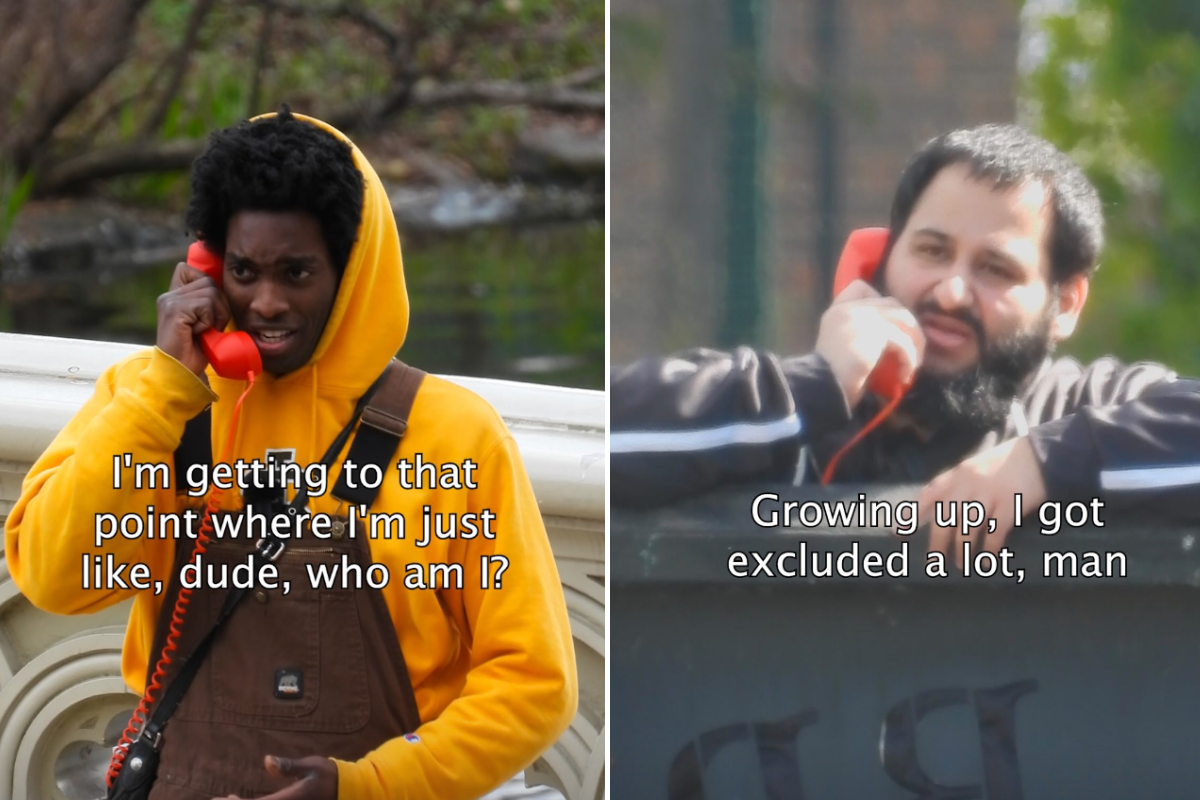
Viral “street interviews” are a relatively new form of content. They’ve popped up in the last couple of years and often involve random social media creators sticking a microphone in someone’s face on the street and asking personal, funny, or sometimes invasive questions about sex, relationships, and money.
In many big cities, these interviewers are everywhere. Though the clips are sometimes entertaining, many have pointed out problems with the format. Namely, that (often drunk) people can go viral for embarrassing moments and wind up humiliated on an international stage. Or famous. Either way, there’s little recourse for regretful participants, and even less substance in the interviews.
Artist Joe Bloom wanted to reimagine the street interview
“Interviewing strangers is such a beautiful art form but it’s been made so tacky,” Bloom told The Guardian in 2024. “You get some knobhead on the street running up to someone with a microphone asking them about their trauma. It feels awful. The AI-generated subtitles don’t even match up. It’s contrived and rushed. They just don’t care.”
He came up with what he thought was a better idea. Inspired by the early optimism of Internet projects like “Humans of New York,” he wanted to find a way to share people’s real stories, not just farm viral clips about embarrassing topics.
Immediately, he harkened back to his nostalgia for the telephone. No, not the iPhone, not texting, but the classic landline handset.
“You see it in movies: it’s always this nostalgic and almost glamorous thing, holding a phone up to your ear and talking into this object,” he said.

“A View from a Bridge” project is born
The project, called “A View from a Bridge,” launched in 2023 and saw Bloom place old-fashioned handset telephones on random bridges in London. When strangers would pass by and if they picked up, he’d be on the other end ready to chat.
What he found was that, surprisingly, people were willing to talk. Not just that, but they were more than willing to bare their souls.
There was the kid who had deep thoughts about the body after learning he was more than just a skeleton with a heart inside.
“What’s the point in not knowing who are you?” the wise boy said of his mission to devour all the books he could about anatomy.
Another young man opened up about all the time he spent chatting and connecting with people all over the world during COVID via virtual reality chat:
“A lot of people tend to think that history as it was has ended. … Things can never be how they once were. I don’t think things have changed that much in terms of people wanting each other and needing each other.”
The power of the format
Bloom’s project brings down people’s guard in a natural, organic way. As the interviewer, he stands far away. Typically, the subject can’t even see him at all. It gives the subject a sense of safety in the anonymity and lack of face-to-face eye contact.
And then there’s the phone itself.
“It creates an openness for the person being interviewed,” Bloom said of the format. “The action of holding the phone to your ear is powerful. It’s quite a calming thing.”
Who doesn’t remember long nights spent talking on the phone as a teenager, pouring out your deepest fears and dreams to friends and crushes? Research has found that in intimate, trusting relationships, we prefer to open up face to face. However, with people we don’t yet trust or are just getting to know, we’re often more forthcoming online or over the phone.
Bloom uses this phenomenon to get stranger interviewees to open up in ways the “street interview” creators could never dream of.
And the results are far more powerful and human. In each story, thousands of viewers see themselves and find ways to connect with the subjects—with their fears, pain, or even just funny observations. The videos are ultimately helping millions of people feel less alone.
That’s exactly the kind of optimism and connection Bloom was going for, and it’s something sorely lacking in most corners of the Internet.