A juice company dumped orange peels in a national park. Here’s what it looks like now.

12,000 tons of food waste and 21 years later, this forest looks totally different.

Array
ArrayPhoto credit: Array

In 1997, ecologists Daniel Janzen and Winnie Hallwachs approached an orange juice company in Costa Rica with an off-the-wall idea. In exchange for donating a portion of unspoiled, forested land to the Área de Conservación Guanacaste — a nature preserve in the country’s northwest — the park would allow the company to dump its discarded orange peels and pulp, free of charge, in a heavily grazed, largely deforested area nearby.

One year later, one thousand trucks poured into the national park, offloading over 12,000 metric tons of sticky, mealy, orange compost onto the worn-out plot. The site was left untouched and largely unexamined for over a decade. A sign was placed to ensure future researchers could locate and study it.

16 years later, Janzen dispatched graduate student Timothy Treuer to look for the site where the food waste was dumped.

Treuer initially set out to locate the large placard that marked the plot — and failed.
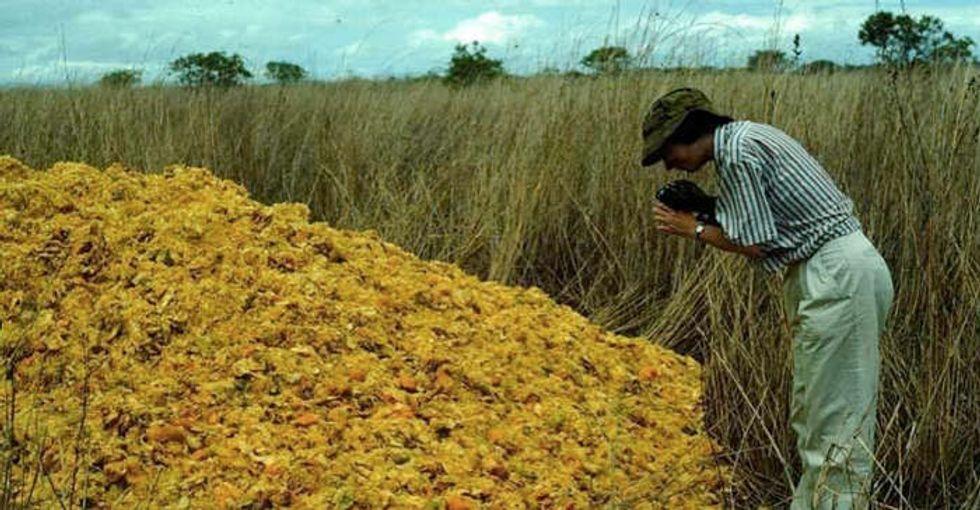
The first deposit of orange peels in 1996. Photo by Dan Janzen.

“It’s a huge sign, bright yellow lettering. We should have been able to see it,” Treuer says. After wandering around for half an hour with no luck, he consulted Janzen, who gave him more detailed instructions on how to find the plot.

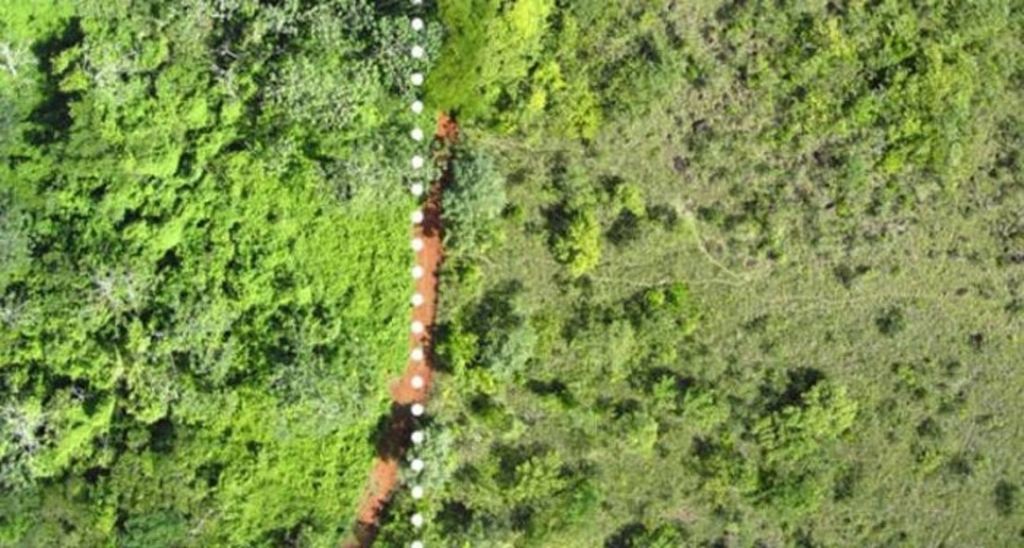
When he returned a week later and confirmed he was in the right place, Treuer was floored. Compared to the adjacent barren former pastureland, the site of the food waste deposit was “like night and day.”
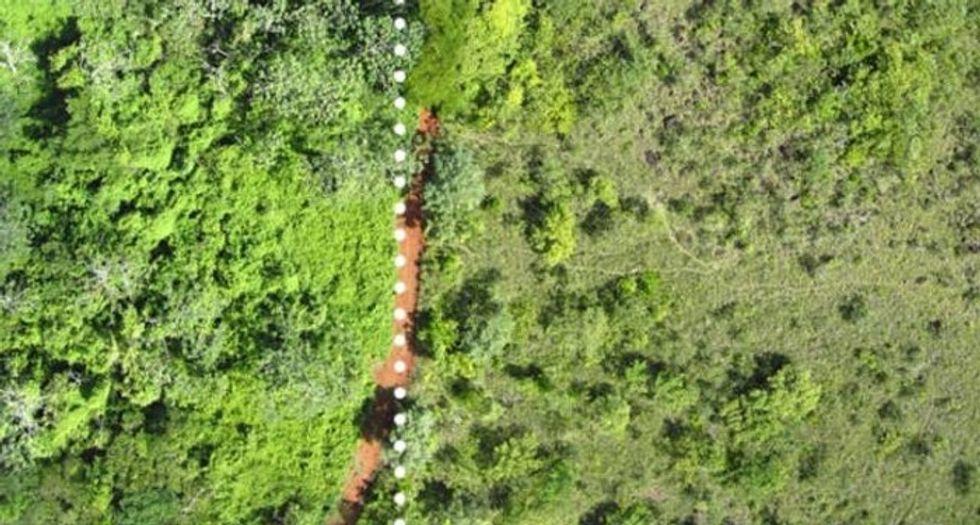
The site of the orange peel deposit (L) and adjacent pastureland (R).
<a href="https://assets.rebelmouse.io/eyJ0eXAiOiJKV1QiLCJhbGciOiJIUzI1NiJ9.eyJpbWFnZSI6Imh0dHBzOi8vYXNzZXRzLnJibC5tcy8xOTUzMDk2OS9vcmlnaW4uanBnIiwiZXhwaXJlc19hdCI6MTcxMzI1MTk4NX0.5e6–I5oUc6F9F_yO-Cwe0PkvLcabvqgRZHZWShFbw4/img.jpg?width=980">Photo by Leland Werden.</a>

“It was just hard to believe that the only difference between the two areas was a bunch of orange peels. They look like completely different ecosystems,” he explains.

The area was so thick with vegetation he still could not find the sign.

Treuer and a team of researchers from Princeton University studied the site over the course of the following three years.

The results, published in the journal “Restoration Ecology,” highlight just how completely the discarded fruit parts assisted the area’s turnaround.

The ecologists measured various qualities of the site against an area of former pastureland immediately across the access road used to dump the orange peels two decades prior. Compared to the adjacent plot, which was dominated by a single species of tree, the site of the orange peel deposit featured two dozen species of vegetation, most thriving.
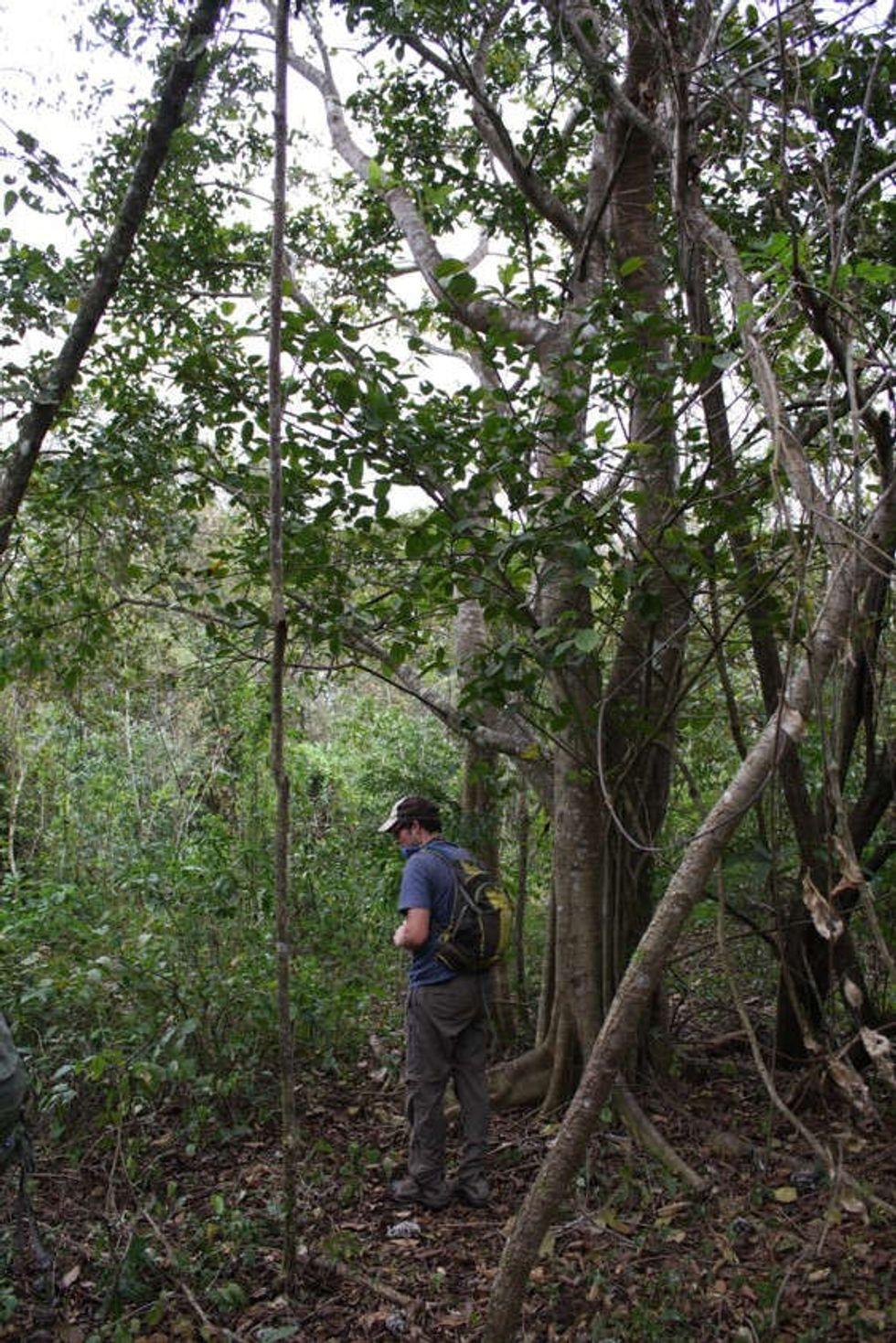
Lab technician Erik Schilling explores the newly overgrown orange peel plot.
<a href="https://assets.rebelmouse.io/eyJ0eXAiOiJKV1QiLCJhbGciOiJIUzI1NiJ9.eyJpbWFnZSI6Imh0dHBzOi8vYXNzZXRzLnJibC5tcy8xOTUzMDk3MC9vcmlnaW4uanBnIiwiZXhwaXJlc19hdCI6MTcxMDU3OTg0NX0.JW3vLaLoqHeml4gWw0fYkr4cC9DFLkZAjHjUJdlZIuc/img.jpg?width=980">Photo by Tim Treuer.</a>

In addition to greater biodiversity, richer soil, and a better-developed canopy, researchers discovered a tayra (a dog-sized weasel) and a giant fig tree three feet in diameter, on the plot.

“You could have had 20 people climbing in that tree at once and it would have supported the weight no problem,” says Jon Choi, co-author of the paper, who conducted much of the soil analysis. “That thing was massive.”

Recent evidence suggests that secondary tropical forests — those that grow after the original inhabitants are torn down — are essential to helping slow climate change.

In a 2016 study published in Nature, researchers found that such forests absorb and store atmospheric carbon at roughly 11 times the rate of old-growth forests.

Treuer believes better management of discarded produce — like orange peels — could be key to helping these forests regrow.

In many parts of the world, rates of deforestation are increasing dramatically, sapping local soil of much-needed nutrients and, with them, the ability of ecosystems to restore themselves.

Meanwhile, much of the world is awash in nutrient-rich food waste. In the United States, up to half of all produce in the United States is discarded. Most currently ends up in landfills.
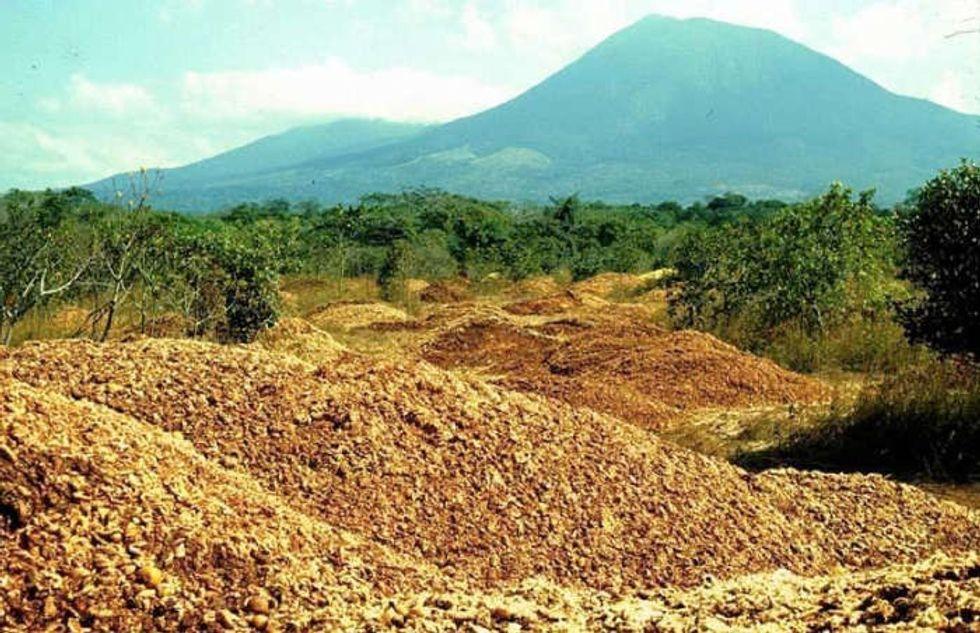
The site after a deposit of orange peels in 1998. Photo by Dan Janzen.

“We don’t want companies to go out there will-nilly just dumping their waste all over the place, but if it’s scientifically driven and restorationists are involved in addition to companies, this is something I think has really high potential,” Treuer says.

The next step, he believes, is to examine whether other ecosystems — dry forests, cloud forests, tropical savannas — react the same way to similar deposits.

Two years after his initial survey, Treuer returned to once again try to locate the sign marking the site.

Since his first scouting mission in 2013, Treuer had visited the plot more than 15 times. Choi had visited more than 50. Neither had spotted the original sign.

In 2015, when Treuer, with the help of the paper’s senior author, David Wilcove, and Princeton Professor Rob Pringle, finally found it under a thicket of vines, the scope of the area’s transformation became truly clear.
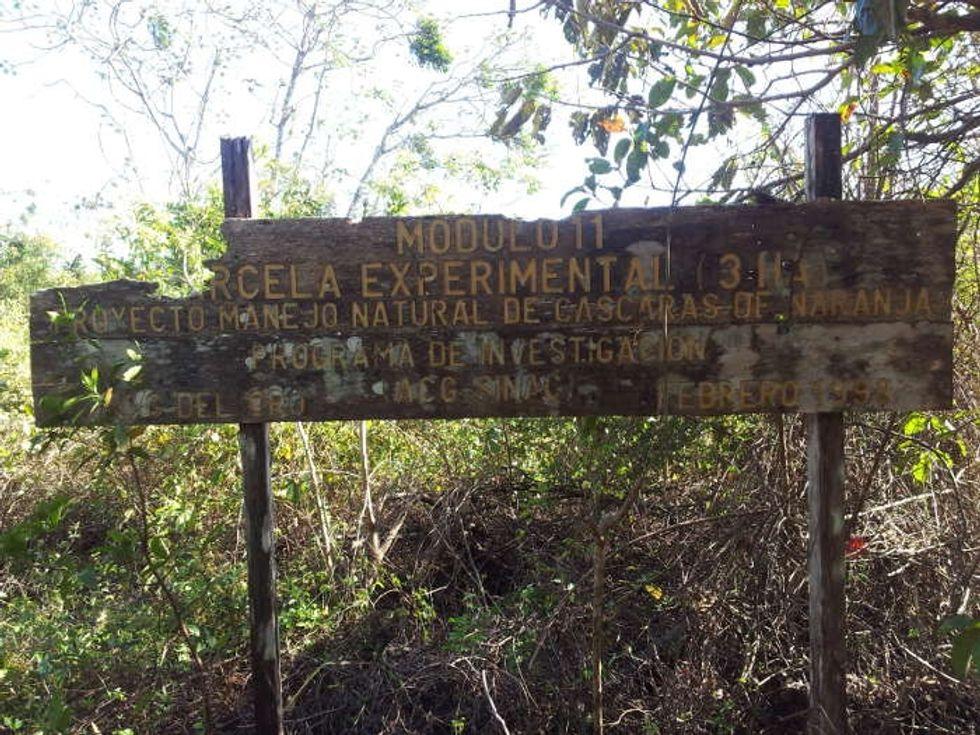
The sign after clearing away the vines. Photo by Tim Treuer.

“It’s a big honking sign,” Choi emphasizes.

19 years of waiting with crossed fingers had buried it, thanks to two scientists, a flash of inspiration, and the rind of an unassuming fruit.

This article originally appeared eight years ago.

  • 82-year-old Kentucky farmer rejects $26 million AI data center offer
    Horses on a farm. Photo credit: Canva
    ,

    82-year-old Kentucky farmer rejects $26 million AI data center offer

    The incredible story of Ida Huddleston in Mason County.

    Imagine getting a phone call out of the blue from a stranger offering you $26 million for part of your farm.

    For most of us, that would be a life-changing, champagne-popping, are-you-serious-right-now? moment. But for 82-year-old Ida Huddleston of Mason County, Kentucky, it was something else entirely: an insult dressed up in dollar signs.

    Ida’s answer? A hard no, and trust me, she didn’t lose a wink of sleep over it.

    A legacy that can’t be bought

    Ida is a part of the Huddleston family, who have farmed this land for 200 years. That’s two centuries of early mornings, muddy boots, and honest work. Over generations, they’ve raised cattle, grown soybeans, and planted corn on their 1,200-acre property outside Maysville.

    But it’s not just land stewardship. During the Great Depression—when jobs disappeared and families lined up just to get a meal—the Huddlestons grew wheat. They helped keep bread lines operating across America when people had almost nothing left. This land didn’t just feed the family; it fed the nation.

    kentucky, farmer, generation, ida, huddleston
    The Huddleston family has been farming in Kentucky for 200 years.Photo credit: Canva

    So when a representative from an unnamed Fortune 100 tech company offered $60,000 per acre—about ten times the current market rate—Ida’s daughter, Delsia Bare, simply said: “Stay and hold and feed a nation. $26 million doesn’t mean anything.”

    Notice the wording. She didn’t say “nothing.” She said $26 million doesn’t mean anything.

    The tech giant at the door

    The company that offered $26 million for the Huddlestons’ property has never revealed its identity; local officials were required to sign non-disclosure agreements just to learn who was making the offer.

    What we do know: The company planned to convert half of the Huddleston farm into a large “hyperscale” AI data center campus covering 2,000 acres outside Maysville. These facilities are enormous. They devour electricity. And a single ginormous data center can consume up to five million gallons of water per day: roughly what a city of 50,000 people uses.

    However, the company did promise this: 400 permanent jobs in exchange for community support. Ida wasn’t buying it.

    “They call us old, stupid farmers, you know, but we’re not,” she told WKRC-TV. “We know whenever our food is disappearing, our lands are disappearing, and we don’t have any water, and that poison. Well, we know we’ve had it.”

    She called it a scam. And to be honest, the repeated pressure campaigns—multiple offers, persistent calls, and what she described as “mind harassment”—don’t exactly reflect good faith.

    A community that agrees

    Ida isn’t a lone voice in the wilderness here. Since 2017, Mason County has lost one-fifth of its farms. Neighbors throughout the region share her concerns about what an industrial mega-campus would do to their rural way of life: their water, their soil, their sense of home.

    And they’re fighting back.

    A grassroots group called “We Are Mason County” has filed a lawsuit claiming the county’s zoning laws lack a proper legal framework for data centers. Their attorney noted that approving this rezoning would directly conflict with the county’s comprehensive land-use plan.

    In other words, this isn’t over.

    What this land means

    For Ida, the decision was never really about money.

    Her late husband built their house with his own hands. She feels his presence every time she walks the fields. The land holds her family’s past and, she hopes, their future.

    @lex18news

    ‘I’M STAYING PUT’: Ida Huddleston and her daughter, Delsia Bare, have rejected multimillion-dollar offers from developers planning a massive data center project on Big Pond Pike. Huddleston turned down $60,000 per acre for her 71 acres, while Bare declined $48,000 per acre for her 463-acre farm. 💰🚫 Despite promises of hundreds of jobs, the family remains skeptical—and determined to stay. “I’m staying put,” Huddleston said. County leaders are still reviewing the proposal as debate over the project continues. #KentuckyNews #CommunityVoices #datacenter

    ♬ original sound – lex18news – lex18news

    “I said, ‘No, mine is priceless.’ What I’ve got here, I want to pass it down. What God told me to do was to keep it until I was through with it and then pass it on to the next generation,” she told WXIX-TV.

    In an era when everything seems to have a price—and the biggest tech companies in the world have the resources to buy nearly anything—there’s something quietly remarkable about a woman who simply says: no, not this.

    Ida says she intends to die on that land, on her own terms, surrounded by 200 years of family history.

    Some things really are priceless.

  • Madrid art student sews a gorgeous, wearable dress out of hand-picked leaves
    Amanda Meyer turned a pile of leaves into a lovely dress.Photo credit: @manzanita.asada/Instagram

    Making quality dresses takes an enormous amount of skill. It’s not just about sewing and tailoring, but also about design—knowing which fabrics and colors pop and draw the eye. At their best, dresses bring art and beauty to fashion. But for a fine arts student living in Spain, making a dress incorporated all of those skills, along with a touch of nature.

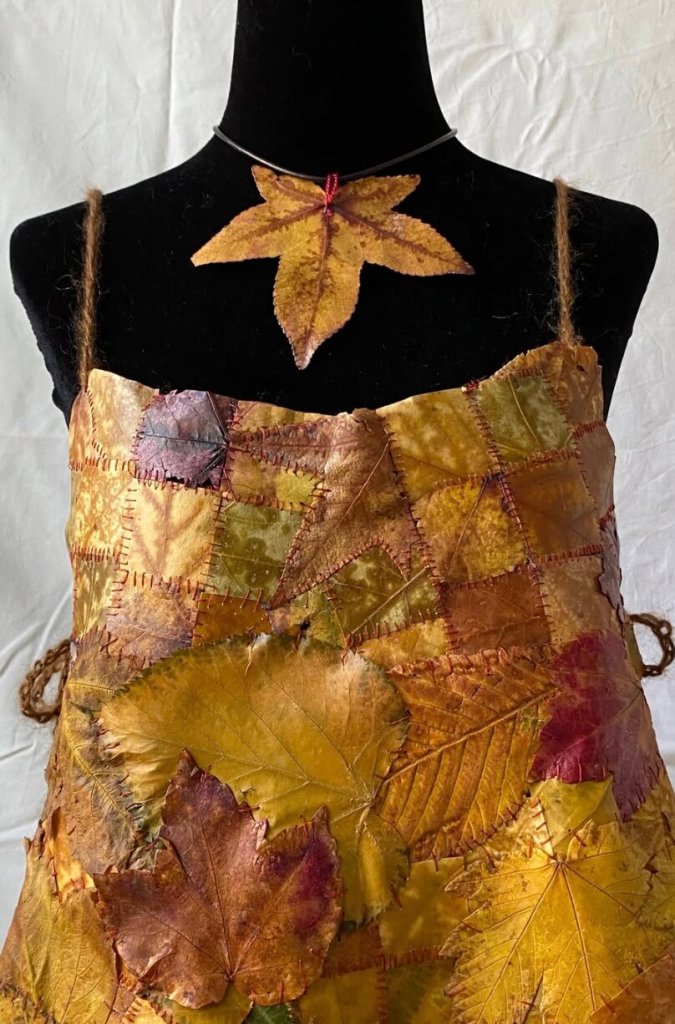
    Artist Amanda Meyer successfully sewed a beautiful dress from a variety of hand-picked autumn leaves in vibrant shades of orange, red, and yellow. She then soaked the leaves in glycerin to help preserve them. After drying them with an iron, the leaves became sturdier and easier to manipulate. Meyer cut and sewed the leaves together into a gorgeous patchwork mini dress.

    @artists.pages

    Meet artist Amanda Meyer who created fabric with autumn leaves, sewing them together to create nature’s dress. Find Amanda on Instagram ❤️ #artist #artistsoftiktok #sewing #textile #fashion #contemporaryart

    ♬ original sound – Artists Pages

    “I wanted to see if it was possible to create a fully organic garment without using the usual materials such as cotton or linen,” Meyer told My Modern Met. “As a young person deeply committed to the environment, my practice focuses on using only recycled and natural resources. I specialize in textile art, creating sculptures and sculpt-like garments.”

    Natural fibers of a different kind

    It took Meyer around 100 meters of thread and 40 hours of hand sewing to create her leaf dress. While the dress remains fragile and is intended for exhibition, it is also a wearable and successful clothing experiment. However, it was never meant to last.

    A dress sewn entirely out of preserved autumn leaves
    Screenshot

    “Many people have asked me if I intend to preserve it,” said Meyer. “The answer is no, I want to see how it passes the test of time. Clothes aren’t meant to last forever.”

    The environmental problem of modern fashion

    The mixed-media artist draws attention to the troubling fast-fashion industry. Fast fashion offers convenience and style, but it also contributes to environmental issues. According to Boston University, the United States throws out 34 billion pounds of used textiles each year. The lion’s share of them are made from synthetic fibers, which take much longer to decompose than natural ones like cotton.

    Fast fashion production also generates more carbon emissions than international flights, according to Business Insider. In the end, it contributes to piles of long-lasting clothing in landfills and increasing levels of air pollution.

    Meyer’s artwork and similar movements show how the life cycles of items can be repurposed, whether for creative expression or practical use. An old garment can be transformed into crafts, toys, rugs, or even cleaning rags. If leaves can be used to create beautiful art, a discarded T-shirt can become something more, too.

  • Scientists left cinderblocks in a barren part of the sea. 3 months later they were ecstatic.
    Scientists are turning simple concrete into the building blocks for a healthier ocean.Photo credit: Natural Parks Gallery & Canva Photos
    ,

    Scientists left cinderblocks in a barren part of the sea. 3 months later they were ecstatic.

    A viral video has been making the rounds lately that shows a giant (and extremely bizarre) ship opening up at its middle and dropping a metric buttload—that’s the official term—of cinderblocks directly into the ocean. The video is fascinating, so much so that I was certain it was AI-generated at first. After all, what kind…

    A viral video has been making the rounds lately that shows a giant (and extremely bizarre) ship opening up at its middle and dropping a metric buttload—that’s the official term—of cinderblocks directly into the ocean. The video is fascinating, so much so that I was certain it was AI-generated at first. After all, what kind of ship can part down the middle like that?

    Turns out, the video is real! The ship is called a split hopper barge and is often used to transport and deliver dredged soil. Dumping concrete like this looks like the world’s worst case of littering, but in actuality, the concrete blocks serve an important purpose that benefits sea life of all varieties.

    But how?

    For answers, look no further than the GARP — that’s the Grenada Artificial Reef Project (also known as the Grand Anse Artificial Reef Project or GAARP).

    With coral reefs under threat and disappearing all over the world, the team behind the project came up with an interesting solution they wanted to test out.

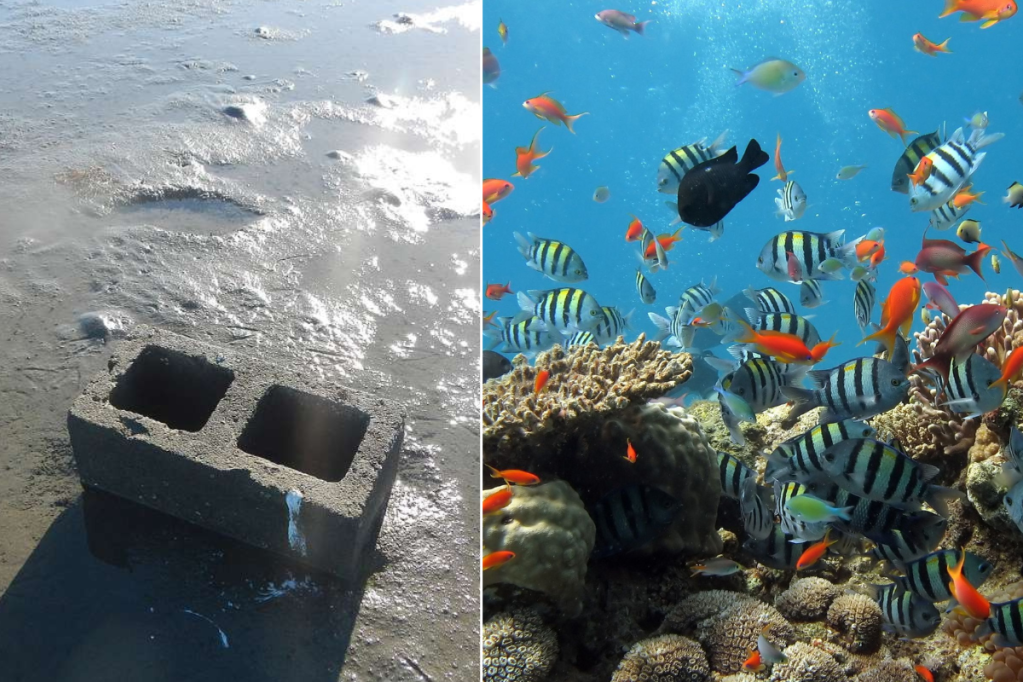
    In 2013, the scientists placed four concrete pyramids (basically, cinderblocks stacked together into something of a tower structure) in a barren part of the Caribbean Sea. The location was just off the coastal beaches of Grenada.

    In just 3 months, the pyramids had attracted tons of marine life.

    The block pyramids gave shelter to the animals who otherwise had nowhere to hide, nest, or feed in this part of the water. “An initial growth of algae and colourful encrusting sponge was soon followed by a varied range of invertebrates. These included feather duster worms, lobster, crab, and urchins. Excitement developed as we started to see a range of juvenile fish including squirrel fish, goat fish, grunts and scorpionfish,” says the official website.

    After a year, word must have spread among the fish, because the simple concrete blocks transformed into “buzzing diverse communit[ies] of marine life.”

    At around 18 months, things started to get really exciting. Stony and brain corals, described as the “building blocks of coral” began to appear on the pyramids.

    Over the following 10 years, the project has exploded with more and more coral growing on the blocks and more fish and other sea life moving in. “Each subsequent year more pyramids have been added to increase biomass. GARP is becoming a balanced ecosystem, home to over 30 species of fish, 14 different kinds of corals and many of the invertebrates and algae you would find on a naturally occurring reef.”

    Today, there are upwards of 100 pyramid blocks in the location. Other, similar projects are taking place in waterways all over the globe.

    GARP/GAARP isn’t the first or only project of its kind. Concrete has been shown again and again to make an excellent shelter for marine life and a perfect launching pad for new coral growth.

    People have tried other materials before, to varied results. One such project off the coast of Florida in the 1970s utilized millions (!) of old tires in an effort to create new fish habitats. Called the Osborne Reef, the effort is now considered a major ecological disaster as storms and sea currents have tossed many of the tires around, washing them ashore and even damaging otherwise healthy natural reefs nearby. Talk about a backfire. Major clean up initiatives to undo the damage are still underway.

    Specialized concrete structures are heavy enough to stay put in rough conditions and are one of the few things that can withstand years and years of being battered by rough, salty seawater without degrading.

    Coral reefs are disappearing around the globe at an alarming rate. Physical damage, both natural and manmade, along with pollution, coral harvesting, global warming, and bleaching wreaks havoc on natural ecosystems under the sea.

    Coral reefs aren’t just there to look pretty. They dampen waves and currents before they hit land, reducing erosion and protecting people who live on the coast. Reefs are home to a huge variety of marine life who use it for shelter and finding food. And, finally, they’re amazing destinations for scientific discovery—new species and even medical treatments are being discovered on reefs all the time!

    All that and the very existence of coral reefs may be in jeopardy, according to the EPA.

    There’s no easy fix to this grave problem. Natural coral reefs take thousands of years to grow and mature. So, even with all the cinderblocks in the world acting as growth platforms, it would be impossible for us to replace all the coral we’ve already killed or destroyed. Saving our oceans must be a multi-faceted effort, with initiatives that combat pollution and rising sea temperatures in addition to creating artificial reefs.

    But projects like GARP/GAARP are an awesome start. They may not save the planet all on their own, but if you ask me, those fish look pretty darn grateful for their new home.

    This article originally appeared last year. It has been updated.

  • San Diego Safari Park’s new Elephant Valley puts you in the middle of the African savanna
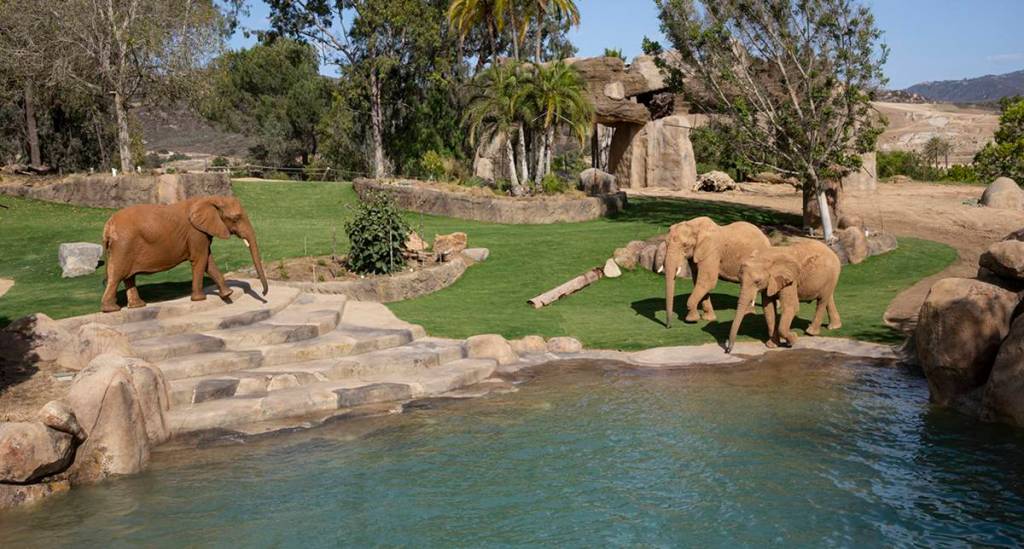
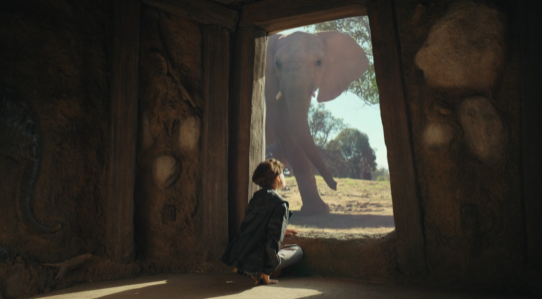
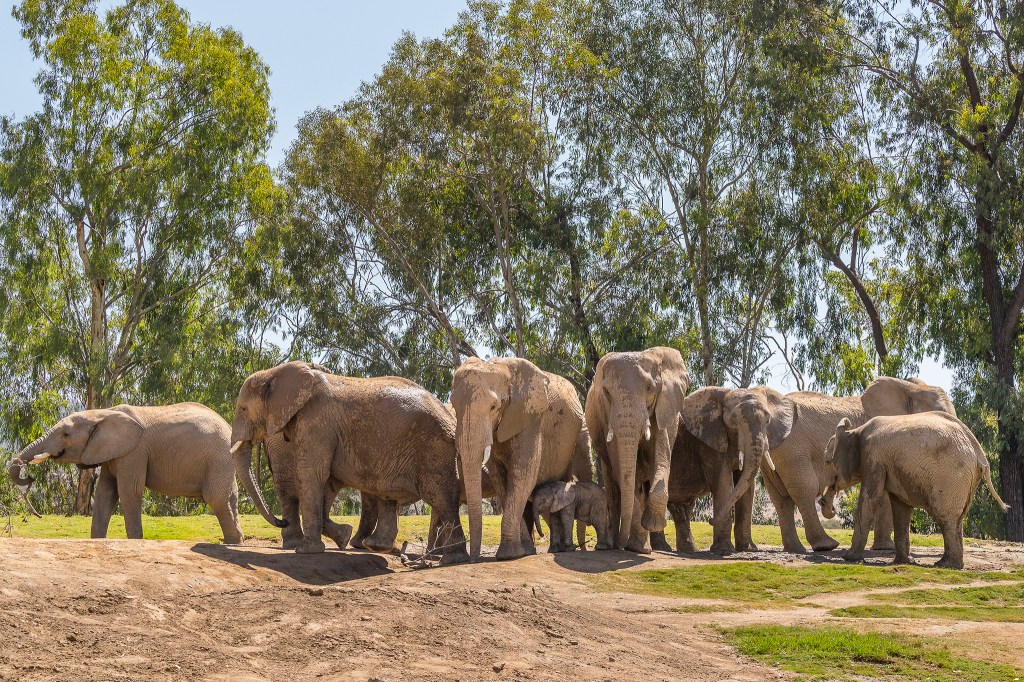
    The herd at Elephant Valley at San Diego Zoo Safari Park.Photo credit: San Diego Zoo Safari Park
    ,

    San Diego Safari Park’s new Elephant Valley puts you in the middle of the African savanna

    The park’s largest exhibit gets you closer to the elephants than ever before.

    Have you ever wanted to visit the African savanna, inhale the beautiful scents of the grasslands, and watch a stunning sunset while walking beside a herd of elephants? It’s a little tough for most people to get to Africa, but now you can come close to the experience at Denny Sanford Elephant Valley. The newly opened interactive habitat at the San Diego Zoo Safari Park puts visitors at the center of the experience.

    What’s unique about Elephant Valley is that Safari Park visitors are surrounded by elephants on both sides and can follow the herd as they march beneath a bridge in the center of the habitat. This gives guests a 360-degree view of these majestic animals as they chew on thorn trees, wade in a lake, or use their mighty tusks to pull treats from high up in the trees. Guests can also get face-to-face with the world’s largest land mammal at viewing windows that put them just inches from the herd.

    At Elephant Valley, you can experience elephants from above and below.

    elephants, safari park, san diego, san diego zoo, elephant valley
    A boy looking through a viewing window at Elephant Valley. Photo credit: San Diego Safari Park

    Elephant Valley is an immersive experience

    Marco Wendt, wildlife ambassador for the San Diego Zoo Wildlife Alliance, hopes the immersive experience inspires visitors to support conservation efforts in Africa.

    “We want to connect the guests, the people around the world, here in San Diego, to our projects out in Africa,” Wendt told Upworthy. “Garner that empathy, that understanding of elephants, so we can all work together.”

    elephants, safari park, san diego, san diego zoo, elephant valley
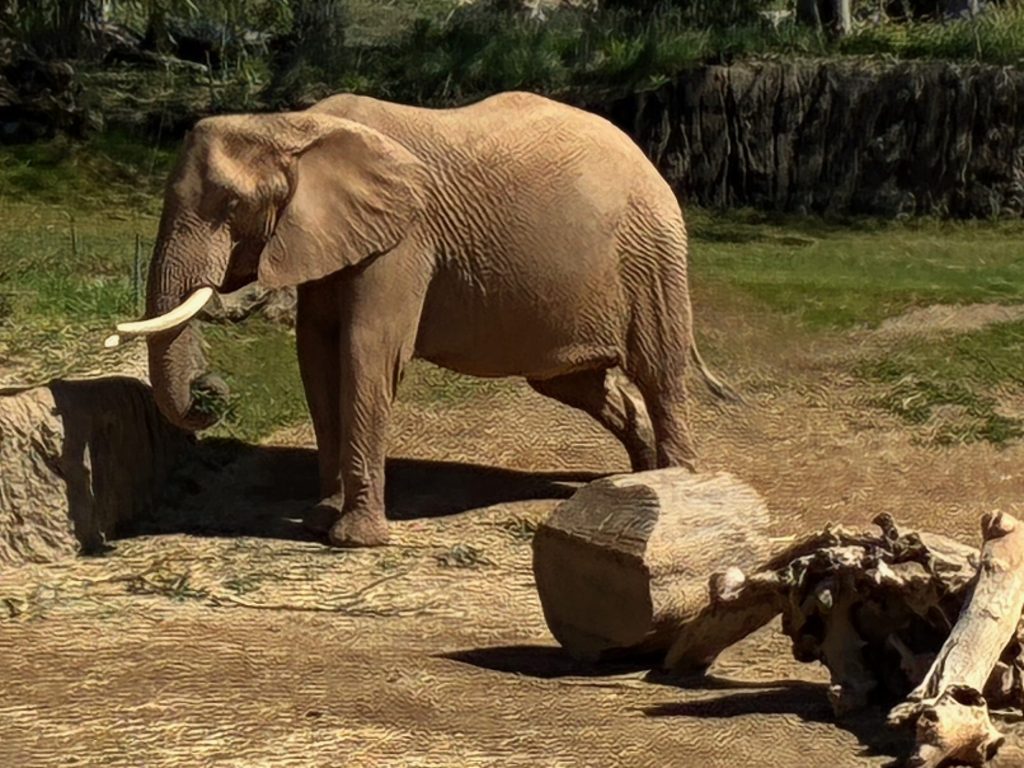
    An elephant at Elephant Valley at the San Diego Zoo Safari Park. Photo credit: Declan Perry (used with permission)

    Wendt’s message is important, considering African savanna elephants are listed as Endangered on the International Union for Conservation of Nature’s Red List of Threatened Species. This is due in large part to the rise of human-elephant conflict across the continent.

    The San Diego Zoo Wildlife Alliance’s commitment to conservation is especially apparent in the three elephants of the eight-member herd that were saved from being culled in Swaziland.

    “We were able to help out by offering this massive space that we have here at the Safari Park and rescue the three 36-year-old adult females that you see here today,” Wendt said. “You’ll see those 36-year-old adults, but the youngest, is seven years old. So we have generations of grandma, aunties, daughters, and a little boy.”

    elephants, safari park, san diego, san diego zoo, elephant valley
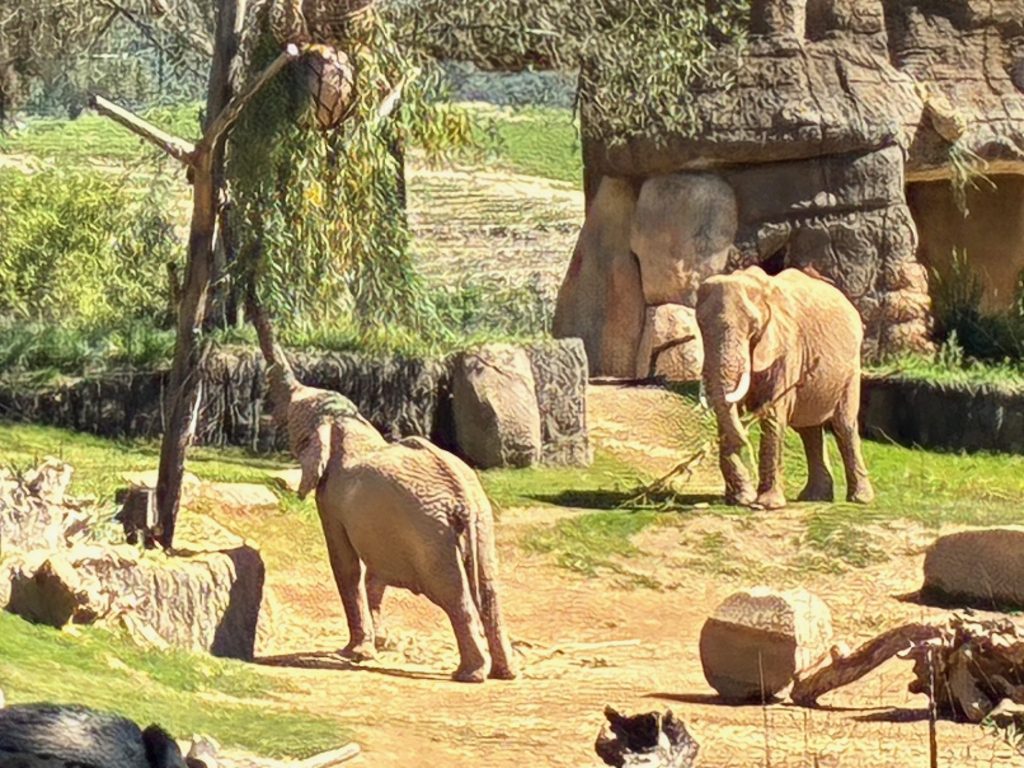
    An elephant at Elephant Valley at the San Diego Zoo Safari Park. Photo credit: Declan Perry (used with permission)

    Which elephants live at Elephant Valley?

    The herd at Elephant Valley consists of eight elephants: matriarch Swazi, 36; Umngani, 36; Ndlulamitsi (Ndlula), 36; Khosi, 19; Phakamile (Kami), 18; Qinisa (Nisa), 13; young male Umzula-Zuli (Zuli), 7; and Mkhaya, 7. The herd’s founding members—Swazi, Ndlula, and Umngani—were rescued in 2003.

    To recreate the African savanna, a team of horticulturists and arborists worked together to replicate the region’s smells and sounds. The team grew more than 350 individual plants for Elephant Valley, including African thorn trees, a common food source for elephants.

    elephants, safari park, san diego, san diego zoo, elephant valley
    The herd at Elephant Valley. Photo credit: San Diego Zoo Safari Park (used with permission)

    Ultimately, Elephant Valley is about strengthening the connection between elephants and humans.

    “I want everyone here to gain some kind of empathy and understanding of this majestic animal, to leave the Safari Park with a little bit of hope, knowing that they were part of something bigger than themselves,” Wendt said. “I don’t care if you’re the emperor of the world or a kid from the barrio, that this is going to be for everyone, and we all have the opportunity to change the world together.”

  • In 1958, a scientist began filling flasks with air. The samples showed the Earth was ‘breathing.’
    A scientist pioneered the study of our atmosphere by manually collecting air in glass flasks.Photo credit: Wikimedia Commons
    ,

    In 1958, a scientist began filling flasks with air. The samples showed the Earth was ‘breathing.’

    Charles David Keeling’s painstaking work offered a better understanding of our planet, along with undeniable evidence of climate change.

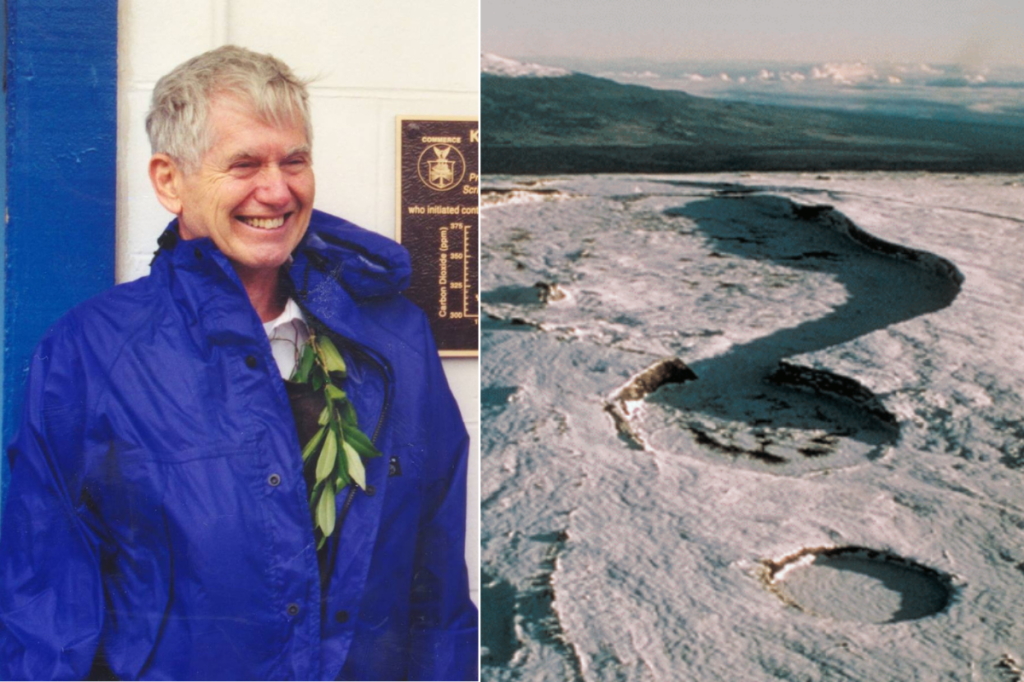
    One of the longest-running scientific studies of its kind might not sound all that interesting on its surface. For more than 60 years, scientists on the flank of Mauna Loa, an active volcano in Hawaii, have been collecting air. Yes, air.

    The work, while repetitive and tedious at times, is surprisingly among the most important scientific research ever conducted.

    In the early 1900s, a handful of scientists had captured similar air samples from around the globe. An engineer named Guy Stewart Callendar was one of the first to compare these datasets and conclude that the human burning of fossil fuels was causing carbon dioxide levels in the atmosphere to rise.

    However, the datasets weren’t very good. They were collected at different locations around the globe and at different times. In the 1930s, there wasn’t a strong baseline for what Earth’s atmosphere should look like, so the scientific community was skeptical of Callendar’s ideas.

    That’s where scientist Charles David Keeling comes in.

    charles keeling, science, climate change, carbon emissions, fossil fuels, global warming, plants, earth, nature
    Charles David Keeling. Photo credit: National Science Foundation/Wikimedia Commons

    In 1958, Keeling had the idea to collect air samples from the same spot every single day. It was radical at the time. His method required stationing a team at the Mauna Loa Observatory, far from cars, factories, and other human emissions, and collecting air samples in simple flasks.

    The entire process doesn’t sound all that scientific. One of the researchers would take a volleyball-shaped glass flask that had all of its air vacuumed out, hold his breath, walk into the wind, and open a valve that allowed air to rush in. Other teams repeated this process at various spots around the world, but the measurements at the Mauna Loa Observatory were where it all began. Despite how it sounds, Keeling was a stickler for precision and helped pioneer more accurate atmospheric measurements than the world had ever seen.

    Once Keeling had enough data, he realized two remarkable things about our planet.

    For starters, the Earth was breathing

    Carbon dioxide (CO2) levels in the atmosphere weren’t exactly steady. Keeling observed that they would rise and fall throughout the day, and even more so in a seasonal pattern.

    According to the University of Illinois Urbana-Champaign:

    “First, Keeling determined that CO2 levels rise and fall during the day, as well as throughout the seasons, based on vegetation growth. Plants feed themselves through photosynthesis, and CO2 is a vital ingredient of that process. With more plants growing in the Northern hemisphere’s summer months, the CO2 levels drop for a time as the plants ‘breathe’ it in.”

    In the winter, as plants die off and begin to decay, they release more CO2 into the air. In the Southern Hemisphere, this pattern is more or less reversed.

    Revealing this simple pattern helped form our understanding of Earth’s CO2 cycle, where carbon flows through the soil, oceans, atmosphere, and living organisms on the planet. This discovery also helps scientists build models that calculate the environmental impact of human behavior.

    Next, baseline CO2 levels were steadily rising every single year

    Soon, a more alarming trend became clear from Keeling’s data. Carbon dioxide levels were rising. He even developed something called the “Keeling Curve,” which is less of a curve and more of a line trending steadily up and to the right, indicating rising carbon dioxide levels.

    The Keeling Curve. Photo credit: Oeneis/Wikimedia Commons

    The Keeling Curve was one of the first undeniable pieces of evidence of human-caused climate change. As carbon dioxide levels rise, the atmosphere traps more heat and steadily warms the planet. This, in turn, leads to melting ice, rising sea levels, and more extreme weather, to name only a few consequences.

    Many scientists consider it one of the most important discoveries of the last century.

    Of course, Keeling was not the sole “founding father” of climate science. There was Callendar, whose hypotheses Keeling’s data eventually helped confirm. There was Irish scientist John Tyndall, who in 1861 discovered how certain gases could trap heat—what we now call the “greenhouse effect.” Fascinatingly, a less-heralded amateur scientist named Eunice Newton Foote demonstrated these ideas several years before Tyndall. And we’d be remiss not to give a shoutout to Jan Baptista van Helmont, a Flemish alchemist who helped identify carbon dioxide as a distinct gas.

    The sample collection at Mauna Loa continues to this day and remains one of the longest continuously running studies in the field. If anything, in recent years the work has only become more important.

  • Helicopters dump 6,000 logs into rivers in the Pacific Northwest, fixing a decades-old mistake
    Restoration workers now see how "critical" wood is to the natural habitat. Photo credit: Canva
    , , ,

    Helicopters dump 6,000 logs into rivers in the Pacific Northwest, fixing a decades-old mistake

    Forty years ago, restoration workers thought logs were the problem. They were wrong.

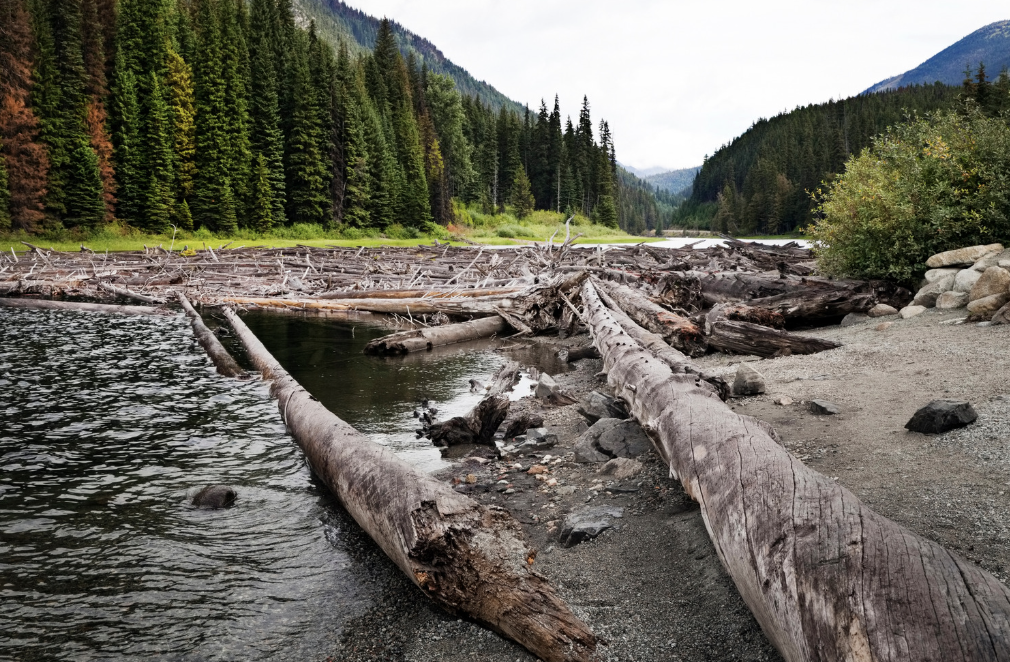
    For decades, river restoration in the Northwestern United States followed a simple rule: if you saw logs in the water, take them out. Clean streams were seen as healthy streams, fast-moving water was seen as optimal, and wood was treated like a “barrier” to natural processes, particularly those of the local fish.

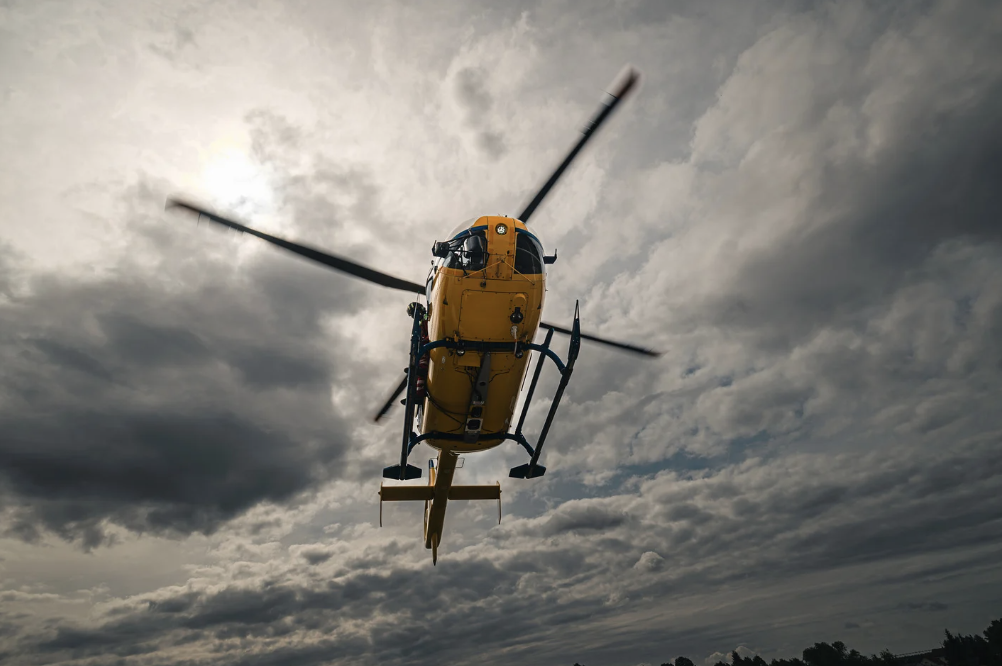
    Now, helicopters are flying thousands of tree trunks back into rivers to undo that thinking.

    In central Washington, one of the largest river restoration efforts ever attempted in the region is underway. More than 6,000 logs are being placed along roughly 38 kilometers, or 24 miles, of rivers and streams across the Yakama Reservation and surrounding ceded lands.

    Nearly 40 years ago, Scott Nicolai was doing the opposite kind of work, all in the name of restoration.

    “(Back then) the fish heads — what I call the fisheries folks — we stood on the banks, and we looked at the stream,” Nicolai, a Yakama Nation habitat biologist, told Oregon Public Broadcasting. “If we saw a big log jam, we thought, ‘Oh, that’s a barrier to fish. We want the stream to flow.’”

    river restoration, washington, river fish, restoration, Yakama Nation, indigenous land, indigenoues tribes, salmon, trout, pacific northwest
    Fish find shelter for spawning in the nooks and crannies of wood. Photo credit: Canva

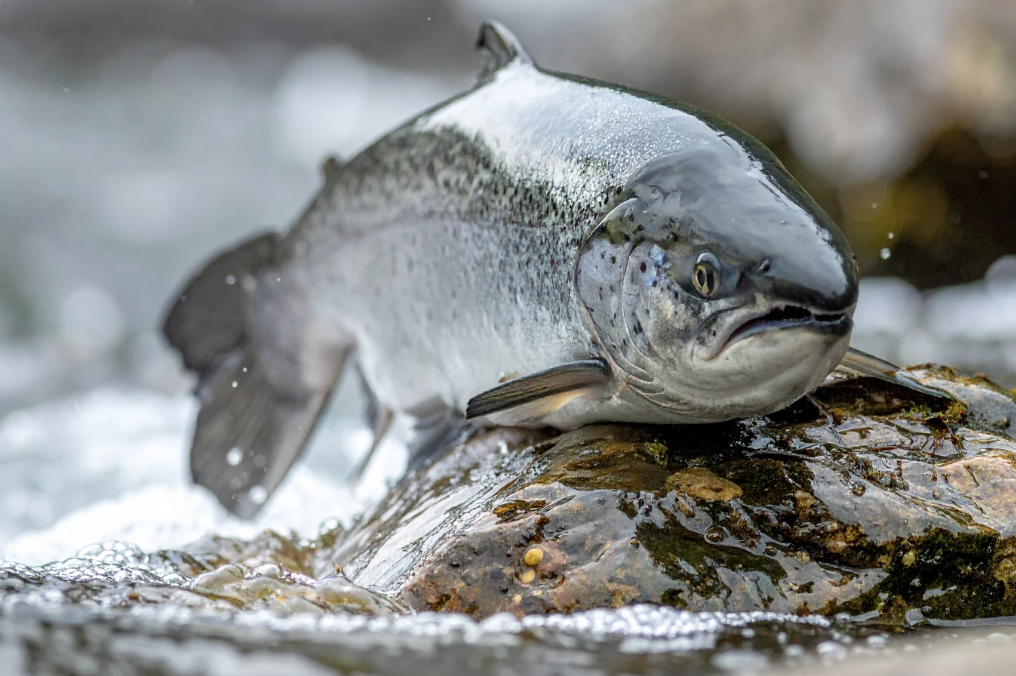
    At the time, logs were removed in an effort to simplify the habitat. However, it soon became clear that wood provided vital “complexity,” creating sheltered pockets for salmon and bull trout to spawn and supporting algae that feed aquatic insects. Logs also slow water, spread it across floodplains, and allow it to soak into the groundwater. That water is then slowly released back into streams, helping keep them flowing and cooler during hot, dry periods.

    The consequences of removing this “critical part of the system” (in addition to overgrazing, railroad construction, and splash dam logging) were made all too clear over the years as the rivers dried up and wildlife populations declined.

    “We’re trying to learn from our mistakes and find a better way to manage,” said Phil Rigdon, director of the Yakama Nation Department of Natural Resources.

    That’s why Nicolai is now helping lead a project for the Yakama Nation aimed at rebuilding river complexity by returning logs to their rightful place. Many of these streams are now unreachable by road, which is why helicopters are used. Logs are flown from staging areas and carefully placed at precise drop locations marked with pink and blue flagging tape.

    river restoration, washington, river fish, restoration, Yakama Nation, indigenous land, indigenoues tribes, salmon, trout, pacific northwest
    Many of these streams are now unreachable by road, which is why helicopters are used. Photo credit: Canva

    The wood comes from forest-thinning projects led by The Nature Conservancy and includes species such as Douglas fir, grand fir, and cedar. Although some of the timber could have been sold, it is instead being used as river infrastructure.

    For tribal leaders, the work carries even deeper meaning. During the helicopter flights, they gathered along the Little Naches River for a ceremony and prayer.

    “It was very simple: to bring what was rightfully part of this land back to us,” said former tribal chairman Jerry Meninick.

    The aftermath of the original restoration project illustrates how human concepts, such as the belief in the superiority of “cleanliness,” can be limited and sometimes cause more harm than good. The miracle of nature, however, is that when left to her own devices, she can heal herself.

  • In 1879 a scientist buried bottles filled with seeds. Every 20 years, one is dug up and studied.
    One of the world's longest running experiments will run another nearly 80 years.Photo credit: Lovelihood/Flickr

    142 years ago, botanist James Beal had a unique idea for how we could learn more about seeds.

    Beal wanted to know just how long seeds of different kinds would remain viable in soil. Now, that might not sound like the most exciting research topic of all time, but understanding seed longevity actually plays a crucial role in agriculture, our food supply, and the preservation of biodiversity.

    in 1879, Beal decided to bury 20 bottles filled with seeds in the ground. The bottles were open to allow soil and some moisture to reach the seeds, but positioned in such a way that they would not fill with water. That would allow just enough moisture for the seeds to theoretically survive without sprouting.

    According to Popular Science, each bottle held 50 seeds form 21 different plant species, all mixed into sand. That’s over 1,000 seeds per bottle. Beal’s plan was to dig up a new bottle every five years and test to see if the seeds could still be successfully planted.

    After running the experiment himself for several years, it was time for Beal to retire. The work was handed off in 1910 to a fellow professor, and in a few years the timeline was shifted: A new bottle would be dug up every 10 years instead of 5. Shortly after, it was extended to 20 years.

    The Beal Seed Experiment is still ongoing, with the final bottle scheduled to be dug up sometime around the year 2100. The project has been handed off multiple times and, at 142 years old, is now one of the longest running active experiments of all time.

    The Beal Seed Experiment is currently in the capable hands of a team of scientists at Michigan State University.

    The research team most recently dug up a new bottle in 2021, a year delayed after the COVID-19 pandemic. The scientists ventured out in the dead of night so as not to expose the dug up seeds to any sunlight that may alter the experiment.

    Once they’ve collected the seeds, they plant them in fresh soil and see if they will sprout. Unsurprisingly, the most resilient of seeds typically belong to weeds. Others are more fragile.

    When seeds don’t sprout, the scientists don’t give up. After all, they need something to do for the next 20 years. They try a variety of groundbreaking techniques to try to revive the seeds and bring them back to life, including simulating winter with a shock of extreme cold, simulating exposure to fire smoke, and other experimental treatments they’re ready to test.

    If seeds can not be revived, they are studied heavily. The scientists need to know what factors contribute to seeds that are better able to survive long periods of time dormant in the soil.

    After all, the Beal Botanical Garden writes, “We may yet see that ungerminated seeds remaining from this latest germination experiment are in fact viable, and simply haven’t been exposed to the right conditions.”

    Why does this unique experiment still matter, nearly 150 years later?

    An article published in the Portland Press states, “Understanding the molecular basis of seed longevity provides important new genetic targets for the production of crops with enhanced resilience to changing climates.”

    In other words, our food supply could, in the future, be dependent on our ability to bioengineer seeds and crops that can survive as temperatures rise and weather conditions change.

    The findings from Beal’s study are also critical for maintaining healthy seed banks, which protect against catastrophic crop failures and global food crises. Knowing what factors allow a seed to be more resilient, how to make it last longer, and how to “bring it back to life” could be a matter of life or death.

    What an exciting line of work and an incredible honor to be a part of the team that gets to unearth the next bottle sometime around the year 2040. There are only a few left in the ground, making the collection most likely a once-in-a-lifetime scientific opportunity.

  • Beavers were brought to the desert to save a dying river. Six years later, here are the results.
    Can outsider beavers save this dried up river?Photo credit: Canva Photos

    It’s not easy being a river in the desert under the best of circumstances. The ecosystem exists in a very delicate balance, allowing water sources to thrive in the harsh conditions. These water sources in otherwise extremely dry areas are vital to the survival of unique wildlife, agriculture, and even tourism as they provide fresh drinking water for the people who live nearby.

    But man-made problems like climate change, over-farming, and pollution have made a tough job even tougher in some areas. Rivers in Utah and Colorado part of the Colorado River Basin have been barely surviving the extremely harsh drought season. When the riverbeds get too dry, fish and other aquatic creatures die off and the wildfire risk increases dramatically.

    About six years ago, one team of researchers had a fascinating idea to restore the health of some of Utah’s most vulnerable rivers: Bring in the beavers.

    beavers, beaver dam, animals, wildlife, ecosystem, nature, earth, sustainability, deserts, waterways, rivers, pollution, climate change
    Beaver on riverbank. Canva Photos

    In 2019, master’s student Emma Doden and a team of researchers from Utah State University began a “translocation” project to bring displaced beavers to areas like Utah’s Price River, in the hopes of bringing it back to life.

    Why beavers? Well, it just makes dam sense! (Sorry.)

    In all seriousness, beaver dams restrict the flow of water in some areas of a river, creating ponds and wetlands. In drought-stricken areas, fish and other wildlife can take refuge in the ponds while the rest of the river runs dry, thus riding out the danger until it rains again.

    When beavers are present in a watershed, the benefits are unbelievable: Better water quality, healthier fish populations, better nutrient availability, and fewer or less severe wildfires.

    It’s why beavers have earned the title of “keystone species,” or any animal that has a disproportionate impact on the ecosystem around them.

    beaver, dam, dam building, nature, ecosystem
    Pbs Nature Swimming GIF by Nature on PBS Giphy

    Doden and her team took beavers who were captured or removed from their original homes due to their being a “nuisance,” interfering with infrastructure, or being endangered, and—after a short period of quarantine—were brought to the Price River.

    Despite the research team’s best efforts, not all the translocated beavers have survived or stayed put over the years. Some have trouble adapting to their new home and die off or are killed by predators, while others leave of their own accord.

    But sine 2019, enough have stayed and built dams that the team is starting to see the results of the effort. In fact, beaver projects just like this one have been going on all over the state in recent years.

    The water levels in the river are now the healthiest they’ve been in years. The fish are thriving and Utah residents are overjoyed with the experiment’s results.

    According to an early 2025 column in The Salt Lake Tribune (i.e. six years after the beaver translocation began) the revitalization of the Price River has “helped save [our] Utah town.”

    “A tributary of the Colorado River, the Price River runs through downtown Helper,” wrote column authors Lenise Peterman and Jordan Nielson. “On a warm day, you’re likely to find the river filled with tourists and locals kayaking, tubing and fishing along its shore. A decade ago, it was hard to imagine this scene—and the thriving recreation economy that comes with it—was possible.”

    Of course, it wasn’t JUST the beavers. Other federal water cleanup investments helped remove debris, break down old and malfunctioning dams, and place tighter regulations on agriculture grazing in the area that depleted vital plant life.

    But the experts know that the beavers, and their incredible engineering work, are the real MVPs.

    beavers, beaver dam, animals, wildlife, ecosystem, nature, earth, sustainability, deserts, waterways, rivers, pollution, climate change
    An actual beaver dam on the now-thriving Price River Public Domain

    In other drying, struggling rivers in the area, researchers are bringing in beavers and even creating manmade beaver dams. They’re hoping that the critters will take over the job as the rivers get healthier.

    Utah’s San Rafael River, which is in bleak condition, is a prime candidate. In one area of the river, a natural flood inspired a host of beavers to return to the area and “riparian habitat along that stretch had increased by 230%, and it had the most diverse flow patterns of anywhere on the river,” according to KUER.

    It’s hard to believe that beavers nearly went extinct during the heyday of the fur trapping industry, and continued to struggle as they were considered nuisances and pests. Now, they’re getting the respect they deserve as engineer marvels, and their populations have rebounded due to better PR and conservation programs.

    It’s about dam time!

    This article originally appeared in June.

Family

Widow trying to keep husband’s memory alive for their kids strikes gold by finding his bucket list

Dads

Woman catches her dad dealing with a ‘work emergency’ at Disney World, and people are showing respect

Wholesome

Strangers answer a mysterious red telephone on a bridge

Innovation

The surprisingly genius design of common zippers and why so many have ‘YKK’ on the pull tab