Mom has TikTok viewers in stitches after revealing she got her son’s birthday wrong—for years
Sometimes, we have to just laugh at our failures. “Here’s a little story to allow all the moms of littles out there to maybe feel a little better about yourself,” Emily Vondy told her 1.3 million TikTok followers. In a TikTok video that has now garnered more than 500,000 views, Vondy shared perhaps one of…
“Here’s a little story to allow all the moms of littles out there to maybe feel a little better about yourself,” Emily Vondy told her 1.3 million TikTok followers.In a TikTok video that has now garnered more than 500,000 views, Vondy shared perhaps one of the most hilarious “mom fail” stories of all time: forgetting her son’s actual birthdate.
After a recent trip to the pediatrician, Vondy was ready to give her insurance company the ol’ what for, after being told her son’s birthday was February 25.
“Per my words: ‘my son’s birthday is the 26th. I’m his mother. I know his birthday,’” Vondy affirmed. Emphatically so.
A quick scroll through Facebook to find the original birth date announcement proved the correct birthdate was, in fact, the 25th. Whoops.
“For two years I’ve been celebrating his birthday on the 26th!” exclaimed Vondy.
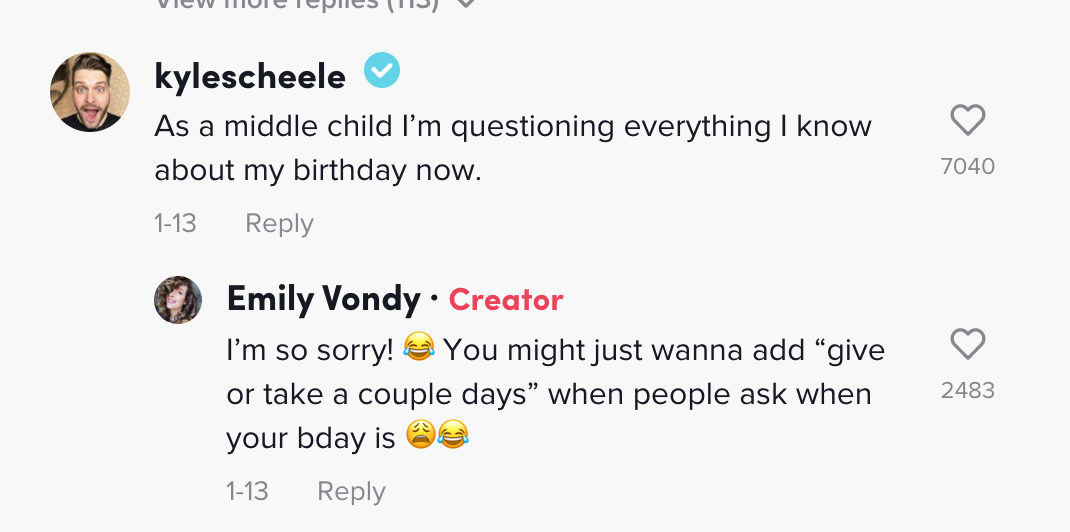
To make matters worse, Vondy revealed this was her middle child. My, my, how stereotypes manifest themselves.
She then shouted “I love my kids! They may not have their birthday celebration on the correct day but they celebrate it the next!” She then hilariously tried to sign off with a quick “Merry Christmas,” only to realize “Christmas is over!”
We get it, Vondy. What is time, anyway?
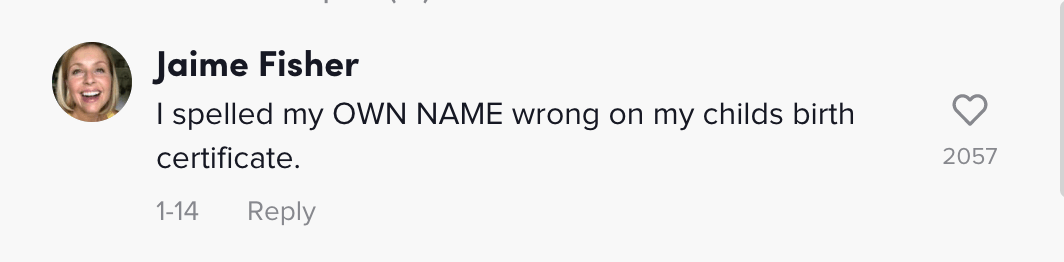
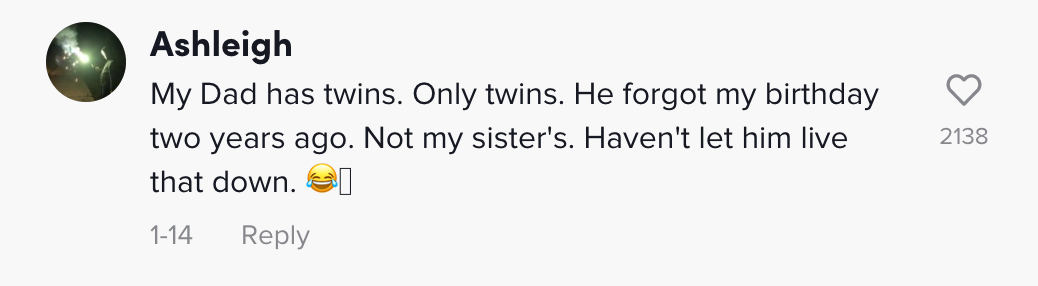
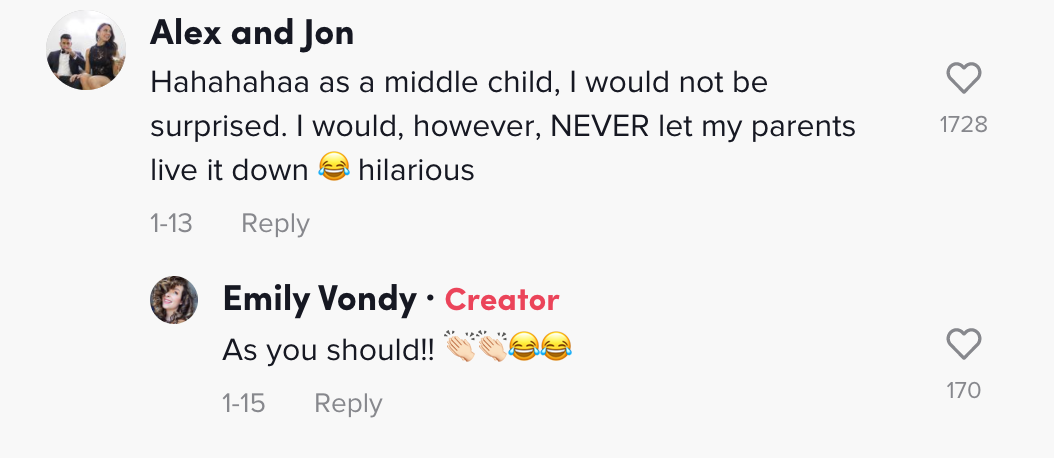
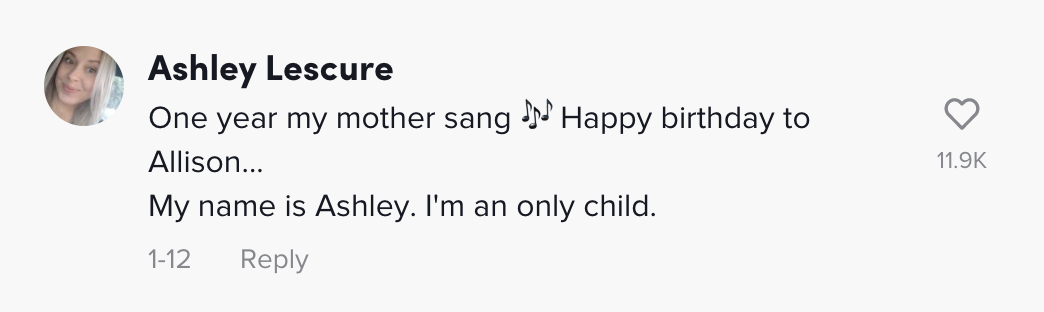
Parents and children alike delivered comments nearly as entertaining as the video itself:
If you enjoy Vondy’s ultra silly charm (that definitely gives off Amy Poehler vibes, no?), you’re in luck. Her channel is full of truly delightful videos that capture parenting life in a real, yet comical way.
I mean, just look at her music video promoting the meal delivery service Home Chef, complete with a “no prep two step.”
In March 2023, after months of preparation and paperwork, Anita Omary arrived in the United States from her native Afghanistan to build a better life. Once she arrived in Connecticut, however, the experience was anything but easy.
“When I first arrived, everything felt so strange—the weather, the environment, the people,” Omary recalled. Omary had not only left behind her extended family and friends in Afghanistan, she left her career managing child protective cases and supporting refugee communities behind as well. Even more challenging, Anita was five months pregnant at the time, and because her husband was unable to obtain a travel visa, she found herself having to navigate a new language, a different culture, and an unfamiliar country entirely on her own.
“I went through a period of deep disappointment and depression, where I wasn’t able to do much for myself,” Omary said.
Then something incredible happened: Omary met a woman who would become her close friend, offering support that would change her experience as a refugee—and ultimately the trajectory of her entire life.
Understanding the journey
Like Anita Omary, tens of thousands of people come to the United States each year seeking safety from war, political violence, religious persecution, and other threats. Yet escaping danger, unfortunately, is only the first challenge. Once here, immigrant and refugee families must deal with the loss of displacement, while at the same time facing language barriers, adapting to a new culture, and sometimes even facing social stigma and anti-immigrant biases.
Welcoming immigrant and refugee neighbors strengthens the nation and benefits everyone—and according to Anita Omary, small, simple acts of human kindness can make the greatest difference in helping them feel safe, valued, and truly at home.
A warm welcome
Dee and Omary's son, Osman
Anita Omary was receiving prenatal checkups at a woman’s health center in West Haven when she met Dee, a nurse.
“She immediately recognized that I was new, and that I was struggling,” Omary said. “From that moment on, she became my support system.”
Dee started checking in on Omary throughout her pregnancy, both inside the clinic and out.
“She would call me and ask am I okay, am I eating, am I healthy,” Omary said. “She helped me with things I didn’t even realize I needed, like getting an air conditioner for my small, hot room.”
Soon, Dee was helping Omary apply for jobs and taking her on driving lessons every weekend. With her help, Omary landed a job, passed her road test on the first attempt, and even enrolled at the University of New Haven to pursue her master’s degree. Dee and Omary became like family. After Omary’s son, Osman, was born, Dee spent five days in the hospital at her side, bringing her halal food and brushing her hair in the same way Omary’s mother used to. When Omary’s postpartum pain became too great for her to lift Osman’s car seat, Dee accompanied her to his doctor’s appointments and carried the baby for her.
“Her support truly changed my life,” Omary said. “Her motivation, compassion, and support gave me hope. It gave me a sense of stability and confidence. I didn’t feel alone, because of her.”
More than that, the experience gave Omary a new resolve to help other people.
“That experience has deeply shaped the way I give back,” she said. “I want to be that source of encouragement and support for others that my friend was for me.”
Extending the welcome
Omary and Dee at the Martin Luther King, Jr. Vision Awards ceremony at the University of New Haven.
Omary is now flourishing. She currently works as a career development specialist as she continues her Master’s degree. She also, as a member of the Refugee Storytellers Collective, helps advocate for refugee and immigrant families by connecting them with resources—and teaches local communities how to best welcome newcomers.
“Welcoming new families today has many challenges,” Omary said. “One major barrier is access to English classes. Many newcomers, especially those who have just arrived, often put their names on long wait lists and for months there are no available spots.” For women with children, the lack of available childcare makes attending English classes, or working outside the home, especially difficult.
Omary stresses that sometimes small, everyday acts of kindness can make the biggest difference to immigrant and refugee families.
“Welcome is not about big gestures, but about small, consistent acts of care that remind you that you belong,” Omary said. Receiving a compliment on her dress or her son from a stranger in the grocery store was incredibly uplifting during her early days as a newcomer, and Omary remembers how even the smallest gestures of kindness gave her hope that she could thrive and build a new life here.
“I built my new life, but I didn’t do it alone,” Omary said. “Community and kindness were my greatest strengths.”
Are you in? Click here to join the Refugee Advocacy Lab and sign the #WeWillWelcome pledge and complete one small act of welcome in your community. Together, with small, meaningful steps, we can build communities where everyone feels safe.
This article is part of Upworthy’s “The Threads Between U.S.” series that highlights what we have in common thanks to the generous support from the Levi Strauss Foundation, whose grantmaking is committed to creating a culture of belonging.
As many are in the habit of doing, a man recently took to TikTok to “vent.” His “story time” was about his choice to end a 10-year friendship after not getting invited to said friend’s wedding. It soon became undeniably clear that he wasn’t alone in having an experience like this.
In the now-viral clip, the creator, @yonosoyasi5, explained that he understood that weddings are special, expensive moments, and therefore “not everyone can go.”
However, he admitted that “I went through so much with this person that I thought I had made the cut.”
This blow ultimately caused @yonosoyasi5 to accept that the friendship as he knew it had come to a close. There was no animosity, but there wasn’t any effort, either.
“I wish him the best. I never wish him ill. But to say that I wanna be a part of his life now, it would be very fake. I just don’t care anymore,” he said.
Even when confronted by a member of that shared friend group, @yonosoyasi5 was upfront about his stance, saying, “What am I gonna hang out with him for? What’s the objective of me putting energy into this friendship?”
TikTok reacts
The video soon got an onslaught of comments from people who had similarly heartbreaking experiences—and developed similar mindsets.
“One of my BEST guy friends for 8+ years did not invite me to his wedding. I introduced him to his wife. They went out because of me. I have never been more hurt in my life. I cut off the relationship …and they always try to pull me back closer…I can never pull the knife out of my back.”
“It’s not actually the wedding invite, it’s finding out the person doesn’t see you as a close friend.”
“Once you exclude me from important moments, I will exclude you from my entire life.”
“I think at our age we want to get back what we put into friendships/relationships. You love with your whole heart, so to not have it reciprocated is hurtful. I feel ya.”
“Crazy…this happened to me…20 years of growing up down the drain.”
Lastly, one person even said, “friendship breakups are WORSE than romantic breakups.”
Woman sitting alone on a bench overlooking the water. – Photo credit: Canva Photos
Many experts seem to agree with this notion. Or, at the very least, that friendship loss triggers what’s known as “ambiguous grief,” which is the feeling of anguish that comes from losing someone physically while they are psychologically present (e.g., missing person, mental illness, divorce). Our stress responses are triggered, our feel-good chemicals get depleted, our sleep gets disrupted—which is all a science-based way of saying it hurts. Really bad.
This level of ambiguous grief really depends on what the friendship personally meant to a person. In @yonosoyasi5’s case, it meant a great deal. Thankfully, there are ways to navigate these difficult transitions.
Coping strategies for friendship loss
1. Allow yourself to grieve
Even once you’ve reached acceptance and found other meaningful relationships, waves of yearning for what’s past may still creep up. Allow space for those feelings. They will pass.
2. Use it as a learning opportunity
Without assigning blame, you can get curious about what might have caused the relationship to end. This way, you can set clear friendship intentions moving forward.
3. Engage in self-care
Journal, meditate, reclaim old passions, exercise, and get outdoors. These things tend to help with grief of all kinds.
4. Appreciate the support systems you still have
Taking stock of the good friends that remain in your life can help offset any feelings of loneliness and reinforce a sense of belonging, experts say.
Bottom line: cutting someone out of our lives hurts, but that pain might truly be the lesser evil in the long run. May we all have the foresight to know the difference and seek out those who do give us such grace.
There is no expiration date for finding success in life, but knowing what you want to do at a young age can give you a significant advantage in a competitive world. The problem is that many folks aren’t sure which path to pursue. Do you follow your dreams or take the safer route to success?
Actress Reese Witherspoon, who’s also had massive success as a producer and entrepreneur, says the answer is easy: follow your talents.
A young woman unhappy in her career asked Witherspoon for advice on starting a new one, and the Legally Blonde star shared her thoughts on Instagram.
Witherspoon’s career advice
“Okay, well, what are your talents?” Witherspoon asked the woman. “And she had a hard time telling me what her specific talents were. And I thought to myself, this is very, very important. You don’t chase your dreams, you chase your talent.”
“Everybody has dreams. Doesn’t mean you’re going to be that thing. You are supposed to do what you’re talented at,” Witherspoon said. “It’s your job in life to figure out what your specific, unique talents are and go chase them. That’s what you’re going to do. Chase your talents. Not your dreams.”
Witherspoon’s advice is practical but also leaves the door open for some magic. If you are an incredible painter and an average singer, it’s best to focus on improving your painting skills. Focusing on your talents can also help you fulfill your dreams, but you have to hone your talent first.
“It’s magic when your talents align with your dreams or when you recognize your talents can support your dreams,” one person wrote in the comments on Witherspoon’s video.
Reese Witherspoon in 2011. Photo credit: Eva Rinaldi/Wikimedia Commons.
Career coaches chime in on Witherspoon’s advice
Upworthy reached out to professional career coaches to see what they had to say about Witherspoon’s advice.
“From a research standpoint, Witherspoon is right to push back on the blanket (and all too popular) advice to follow your dreams,” said Dr. Heather Maietta, the owner of Career In Progress, a global private practice that develops career professionals. “Strengths (or talent) alignment is strongly associated with engagement and performance.”
A man leaping with a briefcase. Photo credit: Canva
“However, decades of career development research suggest that sustainable career decisions sit at the intersection of three factors: demonstrated strengths (talents), genuine interest and motivation, and market demand and role economics,” she added.
Karol Ward, a licensed psychotherapist who coaches corporate clients in professional growth, said that once someone has identified the talents they wish to cultivate, they should reach out to successful people in their network to create a roadmap for success. She shared some questions people should ask their connections:
• Did they have clear intentions or a vision about what they wanted?
• Did they create a specific plan, and if so, what did that look like?
• Did they hire support people such as coaches, therapists, or financial planners?
• Did they take classes, join organizations, or find mentors?
• What resources do they recommend?
• How did they choose who or what to spend their time on to reach their goals?
Witherspoon has achieved her dreams by succeeding as an A-list actress, an incredibly difficult career to break into that takes skill, perseverance, and a lot of luck. So, one would think she’d tell everyone to follow their dreams, too. However, she believes the best way to find success is for people to be the best versions of themselves, and that’s an opportunity available to everyone.
Japan’s Kaori Sakamoto was all but set to take home the gold in the women’s singles free skate at the Olympics, having entered the final leg of the competition in second place. Considering this would be the three-time world champion’s final skate before retiring, it would have been the ideal way to go out.
But things didn’t go to plan. Sakamoto apparently made a fatal mistake during a triple combo, placing her just under two points behind American skater (with the really cool hair) Alysa Liu, who ultimately won the gold.
Sitting in the arena, Sakamoto’s let her tears fall. The Olympic broadcast camera attempted to capture the moment, but was disrupted by fellow skater Amber Glenn of the U.S. Glen had also experienced the sting of not winning gold and knew her rival needed privacy in that vulnerable moment.
So, she put herself between Sakamoto and the camera. She waved her hands to relay that filming should stop, then turned to comfort her fellow athlete.
“Dude I know it’s their job but they will get all up in your business when you clearly need space it’s wild”
͢ Amber’s comment on a TikTok of her comforting Kaori Sakamoto after her free skate.
“I only felt regret,” Sakamoto said, according to Olympics.com. “I’ve come this far and I couldn’t get it done. The frustration is unbearable. I felt like the bronze medal last time was a miracle, and I’m wearing a better medal around my neck yet I’m frustrated — which probably says a lot about all the work I put in the last four years. And for that, I just want to give myself a pat on the back.”
Her stance exemplifies a phenomenon that is rather common among Olympic athletes. According to NPR, bronze medalists tend to be happier than those who win silver presumably because they are “viewing their wins through different standards of comparison.” Winning bronze is a pleasant surprise as you’re comparing it to not placing at all. The opposite is true of winning silver—you’re comparing it “upward” toward what could have been.
Of course, the fact that it would be Sakamoto’s last Olympic skate added to her grief. As she put it, “I guess this is how my story ends. It hurts, I have to admit.”
And who better to know what that grief might feel like than another athlete? That’s what makes this moment, however tragic, really quite beautiful. In an instant, there was no team division, just two kindred spirits who understood each other’s passion. The term “holding space” has become a bit of a joke these days, but it remains one of the kindest acts we can do for one another.
There are lots of cool moms out there. You may even have one yourself. But has anyone ever been cooler than this lady? In February, Juin Sommer went viral with an Instagram video showing his mom learning the drum part to Weezer’s 1994 alt-rock classic “Say It Ain’t So,” then playing it at her daughter’s wedding.
The clip is wonderful on many levels, but it deserves a little context. Starting in November 2025, Sommer posted a series of videos showing his mom, Elly, practicing on an electronic drum kit. He captioned the first one, “My mom learning the drums for her midlife crisis.”
Motivation aside, the final product was more than worth it. Sommer captioned the big reveal post “How it started” and “How it went,” contrasting his mom’s practice session with the actual wedding performance. The latter is a family-band affair: Sommer sings and plays the guitar solo, the bride Hanna is on rhythm guitar, longtime friend RJ is on bass, and mom lays down thunder behind the kit. She nails every moment, from the syncopated kick and splashy ride cymbals to the pre-chorus snare rolls. All in all, an excellent first gig.
After the clip went viral, it made its way to Weezer themselves.
“Nothing says happily ever after quite like some =w= at your wedding,” the band wrote on Instagram. “Congrats to mom on nailing the drums and congrats to the happy couple!”
Both Sommer and Hanna responded with amazement. “Wow crazy that one my favorite bands was able to see this,” the former enthused. “AHHHHHH OMG THIS IS SO AMAZING!!!!! I LOVE YOU GUYS SOOO MUCH THANK YOU FOR THE LOVE!!!!!!” added the latter.
Of course, lots of other admirers shared their kind words. Here are some of the top comments:
“who needs a DJ when you have mom??”
“Coolest mum ever”
“WE LOVE YOU WEEZER MOM”
“This is wedding goals right here =w=”
“This is the first wedding video I’ve seen that actually makes me want to get married someday, and then become the Korean mom playing at her kid’s wedding with sunglasses on like an absolute legend 😭😭😭 also amazing work on the noodly guitar solo!“
“I’ve filmed like 170 weddings as a videographer and this would have made me lose my mind. So good 👏👏”
“This is probably one of the best things I’ve seen”
“This is so outrageously cool omg“
“Imagine having a mom and sister that cool.“
“Why is her timing so good? Also brother crushed those vocals”
“Help why did this make me emotional 😭 her rocking out in the hanbok omg 👏“
“Epic on so many levels”
“Feel like your sister rocking out in her wedding dress needs to be highlighted as well”
It all started with a joke
Sommer tells Upworthy that the road to virality began with a joking Snapchat about his mom’s “midlife crisis” moment. “I found that snap more recently and posted it, and it got a lot of attention, which I was surprised to see,” he says with a laugh.
Elly had already been learning drums, but she cranked up her practice time after brainstorming the friends-and-family wedding performance. “She won’t admit it, but she was so nervous,” Sommer adds, “especially since it was her first time playing in front of a crowd.”
This was a special moment for a lot of reasons, and the song choice was meaningful, too. Sommer, Hanna, and RJ used to play together in a high school band, often covering “Say It Ain’t So.”
“I think I covered that song at least 50 times over the years with different bands,” Sommer notes. “So we all already knew it, except my mom.”
Given his longtime love of emo, pop-punk, and alt-rock, seeing Weezer’s reaction was definitely a trip.
“We were all in awe,” he says. “I didn’t even notice until my other younger sister, Zoë, sent it to me on Instagram. We all were so excited that one of our favorite bands was able to actually see us play.”
In summary, the bar has officially been raised for cool moms, wedding music, viral drummers, and family bands.
Dead Poets Society was one of the most popular coming-of-age films of the late ’80s, showcasing Robin Williams’ acting range and launching several young actors into their Hollywood careers. But according to Ethan Hawke, who played the timid Todd Anderson (the student who stands on his desk first) in the film, the famous comedian didn’t make his own job easy.
Hawke shared on The Graham Norton Show what working with Williams was like after Norton said he understood their on-set relationship to be “a bit fractious.”
“Well, he was incredibly funny, right?” said Hawke. “And he was very relaxed and very inventive…and he would just improv constantly, all day long, and the more the crew laughed, the more he would go.”
Despite Williams’ hilarious antics, the film wasn’t a comedy. Hawke struggled with the constant improv in light of his own acting work.
“I really wanted to be a serious actor,” he said. “You know, I had read Stanislavski, and I had what was supposed to be in my pockets, and I really, really wanted to be in character, and I really didn’t want to laugh. And the more I didn’t laugh, the more insane he got. And he’d make fun, ‘Oh, this one doesn’t want to laugh,’ and the more smoke would come out of my ears. He didn’t understand I was trying to do a good job…so I thought he hated me, because he just constantly would lay into me.”
"but, poetry, beauty, romance, love; these are what we stay alive for".
After filming, Hawke went back to school thinking Williams “hated” him. Then one day, he got a phone call.
“It was from a big Hollywood agent. This guy says, ‘I’m Robin Williams’ agent, and he says that you’re gonna be somebody, and that I should sign you.’ And I was like, really? And so he got me my first agent, who’s still my agent now.”
Many stories of Williams’ behind-the-scenes acts of kindness have come to light after his passing, so the fact he recommended Hawke unasked isn’t too surprising. Knowing the context from Hawke’s perspective, however, makes it all the more delightful.
Hawke spoke to Vanity Fair about his experience observing Williams and director Peter Weir interact on the Dead Poets Society set:
“I’m watching [Weir] direct Robin Williams, not an easy thing to do, ’cause Robin was a comic genius,” Hawke said. “But dramatic acting was still new to Robin at that time. And watching that relationship like, in the room—I was four feet away while they’re talking about performance—and that was something you don’t unsee.”
Williams taught Hawke that a script isn’t always set in stone.
“Robin Williams didn’t do the script, and I didn’t know you could do that,” Hawke recalled. “If he had an idea, he just did it. He didn’t ask permission. And that was a new door that was opened to my brain, that you could play like that. And Peter liked it, as long as we still achieved the same goals that the script had.”
“They had a very different way of working, but they didn’t judge one another or resist one another,” Hawke continued. “They worked with each other. That’s exciting. That’s when you get at the stuff of what great collaboration can do. You don’t have to be the same, but you don’t have to hate somebody for being different than you are. And then the collective imagination can become very, very powerful, because the movie becomes bigger than one person’s point of view. It’s containing multiple perspectives.”
The lessons Hawke learned from watching and working with Robin Williams have followed him through more than three decades in film. It’s delightful to see how Williams’ influence lives on in many small ways the world may not be aware of. His is an incredible legacy.
People get very creative when it comes to cooking with limited ingredients and no budget. This combination is something people who lived through the Great Depression were very familiar with. It’s also something Black Americans experienced frequently in the 1800s, but time has stolen many of the ingenious recipes. Until now.
One woman is on a mission to dig up these lost recipes for Black History Month. All February, Sonja Norwood, who runs the social media page for Wick’d Confections and owns Sonja Norwood Custom Cookies, has been baking up long-lost Black American recipes. Though the ingredients have folks scratching their heads, her videos clear things up by sharing each dish’s history.
Peanuts became a major Southern crop after the Civil War, and at Tuskegee Institute, George Washington Carver helped popularize peanuts as an affordable, soil-restoring crop with hundreds of uses. In Black Southern kitchens, that peanut power turned into breads, cookies, cakes, candy… and survival baking. During the Great Depression and WWII rationing, butter, eggs, and milk were often scarce. Peanut butter became the substitute for fat and protein, and peanut butter bread became a school-lunch staple and family recipe passed down through generations. Serve warm with a nostalgic molasses glaze and you’ll understand why this deserves a comeback 🤎 🥜 Peanut Butter Bread (One-bowl, no eggs, no butter) Ingredients 1 ¾ cups all-purpose flour (220 g) ½ cup granulated sugar (100 g) ¼ cup brown sugar (50 g) 1 tbsp baking powder ½ tsp salt 1 cup milk (240 ml) ¾ cup creamy peanut butter (190 g) 1 tsp vanilla extract Optional topping: 2 tbsp sugar Instructions 1️⃣ Preheat oven to 350°F / 175°C. Grease a 9×5 loaf pan. 2️⃣ Whisk flour, sugars, baking powder, salt. 3️⃣ Add milk, peanut butter, vanilla. Mix until just combined. 4️⃣ Spread into pan, sprinkle sugar if using. 5️⃣ Bake 50–60 min until toothpick comes out clean. 6️⃣ Cool 15 min, remove, slice. ✨ Molasses Glaze 2 tbsp butter (28 g) 3 tbsp molasses (45 ml) 2 tbsp milk (30 ml) 1 cup powdered sugar (120 g) ¼ tsp vanilla + pinch salt Optional: pinch cinnamon or ginger Melt butter, whisk in molasses + milk until warm. Remove from heat and whisk in powdered sugar until smooth. Stir in vanilla and salt. #BlackHistory BlackHistoryn#TikTokLearningCampaignFoodHistorye#VintageRecipes
One particular recipe caused the former Food Network contestant to give a disclaimer before tasting it, saying, “Before I try this, we understand that there’s a reason this pie exists, right? It’s genius. Very creative. That does not mean I have to like it.”
A unique recipe
Norwood tried her hand at vinegar pie, and just like viewers of the video, the baker was unsure how the dessert would turn out:
“Vinegar pie, also known as desperation pie, is classified as a pantry or make-do pie. As you can tell, this pie was born out of necessity, when fruit or citrus lemons were hard to come by. Home cooks used what they had on hand. Simple pantry staples to make something sweet, like sugar, eggs, butter, flour, and salt. A lot of people associate vinegar pie with the Great Depression, when fresh fruit was super expensive and scarce, but recipes go back much further. As early as 1855.”
Navy Bean Pie 🥧✨ A true heritage dessert with deep roots in Black American food culture. This traditional navy bean pie has a smooth, firm custard texture — rich, lightly spiced, and beautifully sliceable without hours of chilling. Simple ingredients, timeless flavor, and a recipe shaped by community and history. 🥧 Classic Navy Bean Pie (9-inch) Texture: traditional • smooth • firm custard • faster set Crust • 1 (9-inch) pie crust (homemade or store-bought) Filling • 1½ cups cooked navy beans (300 g) OR 1 (15-oz) can, drained & rinsed • ¾ cup unsalted butter, melted (170 g) • 1 cup evaporated milk (240 ml) • 4 large eggs • 1 cup granulated sugar (200 g) • 2 tbsp all-purpose flour (15 g) • 1 tbsp cornstarch (8 g) • 1 tbsp vanilla extract • 1 tsp cinnamon • ½ tsp nutmeg • ½ tsp salt ⭐ If using canned beans (flavor boost) • Rinse well • Simmer in fresh water 5–10 minutes • Drain completely Instructions 1️⃣ Preheat oven to 350°F / 175°C 2️⃣ Blend beans until completely smooth and creamy 3️⃣ Whisk butter, sugar, eggs, milk, vanilla, spices, flour, and cornstarch 4️⃣ Stir in blended beans until smooth 5️⃣ Pour into crust and smooth top 6️⃣ Bake 45–55 minutes (edges set, center barely jiggles) 7️⃣ Cool 1 hour at room temp, chill 1 hour for clean slices Slice, serve, and enjoy ✨ BlackHiBlackHistorynLearnOnTikTokeBeanPiesFoodHistoryalCooking
For the recipe, the custom cookie maker used vanilla, honey, and apple cider vinegar in the runny mixture. At first glance, it’s hard to see how this could turn into a pie meant to be cut and eaten with a fork, as it has the consistency of French toast batter. But once it’s poured into a pie pan and popped into the oven, it begins to look like a pie.
“Black cooks in the South and the Midwest adapted pantry-based dishes like this into their family food culture,” Norwood shares while mixing ingredients. “So you were going to see this pie at Sunday dinner and on special occasions, and it doesn’t taste the way you think a vinegar pie would taste. The acidity cuts through the sweetness and mimics lemon pie without the fruit.”
Lost Black American Recipes: Vinegar Pie 🥧 To kick off Black History Month, I’m starting a series honoring lost and forgotten Black American recipes—beginning with vinegar pie. Also known as desperation pie or pantry pie, this dessert was born from necessity. When fruit and citrus were scarce, home cooks used simple pantry staples to create something sweet, comforting, and joyful. Made with sugar, eggs, butter, and a splash of apple cider vinegar, vinegar pie has a flaky crust and a rich custard filling. The vinegar doesn’t make it sour—it adds brightness, mimicking the tang of fruit and balancing the sweetness. It’s a reminder of how Black foodways transform struggle into creativity and care. 🖤 Vinegar Pie Recipe (9-inch pie): 4 eggs ½ cup sugar ½ cup brown sugar ½ tsp vanilla 6 tbsp butter, melted 2 tbsp apple cider vinegar 2 tbsp honey 2 tbsp flour ¾ tsp salt Unbaked 9-inch pie crust Blind bake crust at 350°F (175°C). Whisk remaining ingredients until smooth, pour into crust, and bake 35–45 minutes. The center should still wobble slightly when gently shaken. Cool completely and dust with powdered sugar. Follow along as we honor Black history through food—one lost recipe at a time. #BlackHistoryMonth#BlackAmericanFood#LostRecipes#BlackFoodHistory#FoodReels
Viewers were shocked at how good the pie looked when it was done. Some even plan to give the Black American recipe a try. One person writes, “I[t] looks good and it was way less vinegar than my mind thought lol.”
Another says, “This looks so good! My grandma is 93 born & raised in Georgia and she swears by this pie & buttermilk pie. She watched this & just kept saying ‘yup, yup’ so I know it’s good.”
This person appreciates the history: “I appreciated acknowledging that it came out of necessity and that you don’t have to like it. Sometimes people have to make due with what they have and it’s not always what you necessarily want.”
Lost Black American Recipes: Blackberries & Dumplings 🍇🥟 Blackberries and dumplings is a sweet summertime dish rooted in Black American food culture. When sugar and money were scarce, the land provided. Black families relied on foraging, gathering blackberries that grew freely along fence lines, woods, and roadsides across the South. What began as necessity became tradition — turning simple ingredients into a communal, nourishing meal. Passed down orally and cooked intuitively, this dish was rarely written into cookbooks. Flour stretched what little was available, dumplings absorbed the berry juices, and one pot could feed many for very little. Though we still see cobblers today, blackberries and dumplings remain a largely forgotten seasonal treat — one deeply connected to land, resilience, and care. Blackberries & Dumplings Recipe Blackberry Syrup: 4 cups blackberries 1 cup sugar 2 cups water 1 tbsp lemon juice Lemon zest Dumplings: 2 cups flour ¼ cup sugar 1½ tsp baking powder ½ tsp salt ¼ tsp nutmeg ¾ cup milk 1 egg 1 tsp vanilla Simmer blackberries with sugar, water, lemon juice, and zest until juicy. Mix dumpling dough until it feels right. Drop spoonfuls into simmering berries, don’t stir, cover and cook 15 minutes. Uncover and simmer 5 more minutes. Serve warm with plenty of syrup. Follow along as I honor Black history through lost recipes — one pot at a time. #BlackHistory#TikTokLearningCampaign#BlackAmericanFood#LostRecipes#FoodHistory
“This is brilliantly done,” someone else writes. “Showing the ingenuity and innovation of Black folks is beautiful! This video is information and funny! I’m glad you actually liked the pie. Def going to ask my 90 year old granny about this recipe. Thanks for posting this.”
Vinegar Pie Recipe (9-inch pie):
4 eggs ½ cup sugar ½ cup brown sugar ½ tsp vanilla 6 tbsp butter, melted 2 tbsp apple cider vinegar 2 tbsp honey 2 tbsp flour ¾ tsp salt Unbaked 9-inch pie crust
Blind bake crust at 350°F (175°C). Whisk remaining ingredients until smooth, pour into crust, and bake 35–45 minutes. The center should still wobble slightly when gently shaken. Cool completely and dust with powdered sugar.
Loyal Costco fans are lauding their favorite big-box store for a long-awaited change to its custom cake ordering system. In a company memo, Costco announced that it will be launching an app for customers to order customized cakes at the touch of their fingers without having to enter a Costco store.
“We’ve got ordering cakes and deli trays online coming,” said Costco CEO Ron Vachris. “Many of the things that we’ve heard from our members that could be a little bit clunky are now moving to a digital state, and we’re seeing great adoption right out of the chute.”
It’s a massive change from the previous custom cake process. Costco lovers have long complained about the old-school ordering system that required customers to physically go to the store’s bakery, where they would fill out a slip of paper with their order requests and simply drop it in the order box.
Back in 2023, writer Lucy Huber humorously poked fun at Costco’s seemingly outdated custom cake ordering system that resonated with fellow Costco shoppers. And her words went viral:
“Ordered a cake from Costco and their system is from the 1800s, you write what you want on a piece of paper & put it in a box then nobody follows up and you just show up and hope they made it? I tried to call to confirm & they were like ‘if you put it in the box, it will be there’,” she wrote.
It was a system that also caused Costco members on Reddit a lot of anxiety.
“We did our wedding cakes from Costco, talk about a nerve-racking experience hoping everything worked out,” one wrote.
Another shared, “Drop a paper in a hole and cross your fingers 🤣🤣.”
Costco customers have mixed feelings
Many Costco customers and Redditors expressed their positive reactions to the updated ordering system news:
“As someone who lives 1.5 hours away from three different Costcos I LOVE this. I’m rarely in the market for a custom cake, but when I am I’m not driving an hour and a half to fill out the request form in store.”
“This is GREAT! But will I also be able to order chocolate cake with white icing and vice-versa? Because currently I can’t do that at my Costco.”
“While the box system worked, it was archaic. With anything, the new system will take time to implement.”
“Jumping from the 19th century to the 21st century. Bravo Costco!”
Others weren’t as happy:
“Kind of sad in a way. There are not too many interactions like this in the digital age.”
“But the Paper & Pencil worked.”
“Coming in 2027: I didn’t get my cake at Costco because Amazon-East-1 is down :(.”
“I have ordered many cakes with this low tech. Never an issue.”
Costco bakery workers react
Workers in Costco bakeries also chimed in, many with negative opinions:
“As someone who works in the bakery this is going to be a disaster. Half the people don’t even know the name on the order or what the cake says when they come to pick up. Like 2 times a week we get someone trying to pick up at the wrong Costco.”
“As a bakery employee, this is going to be a nightmare. The whole point of keeping the order form in warehouse only was to not overwhelm our staff AND (this one being the real reason I was given), is it makes people come in and ‘grab a few items while their there, and then again when they come pick up the cake.’ I am not looking forward to this. People are going to order at the wrong Costco, not do it right and then get mad at us. I’m terrified of this change 🫣.”
“As someone who has worked in the bakery at Costco, the prevailing thought has been ‘the system we have works fairly well, so they’re probably not gonna change it.’ It’s the same reason that the major sales department still uses paper slips for computers. Well, except for the apple tables. Those have a little iPad kiosk that will print out your slip for you, but literally none of the members ever use it and instead ask us to do it for them.”
If you’ve ever watched seniors play Mahjong, you know they’re not messing around. Some might find it complicated. A player’s guide explains, “Mahjong is a 4-person game of skill and chance that originated in China.” It involves numbered tiles, winds, dragons, flowers, and jokers. It’s serious business that, while fun and an excellent way to stretch the mind, can lead to actual fights.
No fight has been more dramatic than what happened between Allison Novak (@allisonnovak) and her family. While visiting her parents in Florida (an escape from the cold Minnesota winter where they all usually reside), Novak, alongside her brother, sister, husband, and son, piled into the car en route to the airport. From there, we get the full rundown on “Mahjong-gate.”
According to Allison’s mother, Cynthia, a woman named Barbara allegedly cheats at this game—and the other players aren’t having it. She shared, “We’re done with her. We’re not playing with a cheater anymore.”
Cynthia goes on to explain an “incident” regarding tapping tiles. “They tapped it. They put it down. And I said, ‘Oh damn. I wanted that tile.’ And Sharon goes, ‘Just take it.’ And Barbara said, ‘No, I tapped it already.’”
From there, it takes a dramatic turn: “Last night, Barbara did some stuff that was outright…I mean really bad.” She explains another tapping incident before explaining the etiquette of Mahjong: “So when you Mahjong, meaning you won, you have to show all your tiles to prove it. Kinda like bingo. But she takes her tiles and flips them over so no one really knows what she really had.”
These videos have become a massive hit online. On TikTok alone, the first in the series was so popular it has nearly 5,000 comments.
“Barbara is mentioned thousands of times in the Mahjong Files,” jokes one TikToker, a comment itself garnering over 7,000 likes.
“The secret lives of Mahjong Wives,” another comments, putting a spin on the popular reality show The Secret Lives of Mormon Lives.
The Mahjong saga was so popular it has now become a series, with each video clip more exciting and dramatic than the last. (Novak has put menacing music underneath the dialogue, adding to the already terrifying tension.)
In Part Two of the series, Cynthia’s friend Debbie (while chatting with their other friends Bud, Diane, and Ralph) says, “Oh, she looks like this innocent little lady. She goes to church. Like I told them, I don’t go to Mahjong to see how well I can cheat. You want to play the game.”
She complains that Barbara never bothers to change her game up, which the others find frustrating. From there, the conversation goes left, escalating into a possible murder accusation. (They’re joking, of course, but you’ll have to watch the video to see for yourself.)
Commenters from Instagram and Threads are also getting in on the fun by treating the saga like the soap opera/reality show it is. Many point out the pronunciation of Mahjong as “Mar-Jawn,” which adds an extra element of delight.
“The Barbara Chronicles are giving me life,” reads one of the comments. Another points out how quickly it all escalated, saying, “The jump from cheating to murdering your own husband…LOVE IT.”
In Part Five, Allison summarizes the whole affair, which leads to Barbara’s banishment from the game. At one point, Barbara runs away, and they chase after her with a camera. We then see a black screen with a chyron reading, “As of this recording, Barbara has declined all interview requests. Sources close to Barbara declined to comment. Some questions remain unanswered.”
On Threads, one person noted that not everything is always as it seems. “This is one of those documentaries where Barb walks in for her talking head interview in the last ten minutes and blows it all up.”
“My brother, sister, and I (and my husband and son) visit them every year. My mom and dad picked us up from the airport and immediately started telling me about the drama regarding Barbara. I couldn’t help but laugh, and I was like, ‘I need to record this!’”