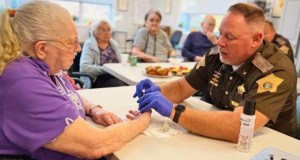
It’s a new year, y’all! Cue the fireworks, the resolutions, the confusion parents are feeling over pandemic schooling in the midst of the omicron wave and the continued uncertainty of American democracy. Weeeee!!! I’m sure I’m not the only one who could use a little light-hearted content to balance out the existential angst of the…
It’s a new year, y’all! Cue the fireworks, the resolutions, the confusion parents are feeling over pandemic schooling in the midst of the omicron wave and the continued uncertainty of American democracy. Weeeee!!!
I’m sure I’m not the only one who could use a little light-hearted content to balance out the existential angst of the era. While we work on solutions where and how we can, we also need mental breaks sometimes to keep ourselves sane.
In that spirit, I offer these 10 sweet and silly things to lighten your load and brighten your day.
Enjoy!
Ever seen penguins get weighed? And where can I get a job weighing penguins?
Where did this baby’s ‘do come from? I feel like he’s about to try to sell me a used car or some life insurance or something.
People shared their most embarrassing moments and it’s painfully funny.
Imagine someone you have a crush on holds their fist out for a fist bump, but you mistake it for a pretend microphone, so you lean over and say “hi” into it. GAH, the hilarious, vicarious embarrassment of this collection of stories has people rolling.
Grandpa learns to bake at age 90 and makes a cake for every visit.
Elmo has been feuding with Rocco, his best friend Zoe’s pet rock, since 1999, and every time he loses it over a rock it’s pure comedy. This clip prompted people to share other Elmo vs. Rocco moments and discuss the ongoing drama, which you can check out here.
Wordle the simple, wholesome and addictive daily word game.

Wordle is a simple word game with a sweet origin story.
Most word games are wholesome, but this one has a particularly pure origin story. Josh Wardle created Wordle for his partner who loves word games. There are no ads, there’s no data collection and you can only play it once a day, so even though you’ll want to play more, it’s not a huge time suck. Wardle just wants people to enjoy it. Mission accomplished. Learn more about it here.
Sweet baby being so gentle with another sweet baby.
I don’t actually know what this is—a gosling? A duckling? Definitely a big baby bird of some sort, and the little baby human with it is so dang precious.
Hope that brought some joy to your day! Tune back in next week for another roundup of smile-worthy finds from around the internet.

From Pakistan to Tanzania, the most effective education solutions are community-led. Here’s how local leaders, in partnership with Malala Fund and supported by Pura, are mobilizing entire communities.
When asked to describe what Tanzania smells like, Grace Isekore closes her eyes and breathes in deep. For a moment, she’s somewhere else entirely. Tanzania is a rich tapestry of sights and scents, from the smell of sea mist that permeates the coastline to the earthy cardamom and cloves she cooks with in her kitchen. But when Grace emerges from her reverie, her answer is unexpected.
“Tanzania smells like peace,” she says, her eyes still closed. “I see a beautiful country where we are free to move, free to speak. And there is peace within the community.”
For Grace, that sense of peace isn’t just something she smells; it’s something she works toward every day. As a project coordinator with Pastoral Women’s Council (PWC), a women-led organization that empowers pastoralist communities in northern Tanzania, she has seen firsthand how girls flourish when they have the opportunity to attend school. Like scent, education not only connects girls to their own culture, but also helps broaden their horizons, realizing new possibilities for themselves and others. That transformation reshapes entire communities and ripples outward, with the potential to change countries and transform the world for the better.
Different scents, different approaches, and communities driving change
Spices in Tanzania. Captured by James Roh for Pura
For Grace and others around the world, education is freedom, as well as a pathway to a stronger community. Rooted in that shared belief, Pura, a home fragrance company, was inspired to build on their four-year partnership with Malala Fund to create something truly unique: a fragrance collection that connects people through scent to communities in Tanzania, Nigeria, Pakistan, and Brazil, where barriers to girls’ education are among the highest.
Using ingredients from each region, the new Pura x Malala Fund Collection uses scent to transport people to these regions directly. “Future in Bloom,” for example, invokes Pakistan’s lush valleys through notes of jasmine, cedarwood, and mango; while Tanzania’s fragrance, “Heart on Fire,” evokes the spirit and joyfulness of the girls who live there through cardamom, lemon, and green tea.
The new Collection honors the work Malala Fund does every day, partnering with locally-led organizations in these four countries to ensure every girl can access and complete 12 years of education. Each scent celebrates the joy, tenacity, and courage of the women and girls driving change on the ground, while also augmenting Pura’s annual grant to Malala Fund by donating eight percent of net revenue from the Pura x Malala Fund Collection to Malala Fund directly.
Just as each country’s scent is unique, so too are their needs related to education. But with support from Malala Fund and Pura, local leaders are coming up with creative ways to mobilize entire communities (parents, teachers, elders, and the students themselves, in their pursuit of solutions, understanding that educating girls helps everyone thrive. Here’s how their efforts are creating real, durable impact in Tanzania and Pakistan, and creating a ripple effect that changes the world for the better.
Parent-teacher associations help Maasai girls and their communities in Tanzania problem-solve
A girl’s school in Tanzania. Captured by James Roh for Pura
Northern Tanzania, Grace’s home, is home to pastoralist communities like the Maasai, a nomadic people who have moved with the seasons to nurture the land and care for their livestock for centuries. The nomadic nature of this lifestyle creates significant and unique barriers to girls’ education. Longstanding gender roles have enabled Maasai to survive in the harsh environment and have placed great value on both women and men. Over time, as nomadic life has been threatened by the privatization of land and stationary education models have been implemented, the reality of pastoralist livelihood has shifted and introduced new complexities. Now, the sheer distance to schools is both a practical challenge and one that often comes with danger from the landscape, predators, and potential exposure to assault along the journey. Girls shoulder the responsibility of household chores and there is often cultural pressure around early marriage – both leading to boys’ education being prioritized over girls’.
“There are very, very good [pastoralist] cultural practices, which are passed from generation to generation,” says Janet Kimori, an English teacher at Lekule Girls Secondary School in Longido, Tanzania. But when cultural practices act as educational barriers, “you have to sit down and look for where you are going to assist. As a school, as an individual, the school administration—all of us will chip in and know how we are going to deal with this problem.”
PWC works to ensure girls are able to exercise their right to an education while also preserving pastoralist culture. One successful approach, the organization found, has been the formation of Parent Teacher Associations (PTAs), created with help from Malala Fund. In PTA meetings, students, parents, teachers, elders, and government officials meet, discuss educational barriers, and come up with community-led solutions that preserve and honor their culture while advancing educational outcomes.
PTA meeting in Tanzania. Captured by James Roh for Pura
One recent PTA meeting highlights how these community-led solutions are often the most effective. At Lekule Girls Secondary School, the lack of fresh water forces girls to walk long distances to collect water for the school’s kitchen during the school day, and these long journeys not only disrupt class time but can leave girls vulnerable to sexual assault in isolated areas. Through facilitated discussion, PTA members landed on a solution: installing a borehole to pipe in fresh water to the school. Reliable access to water creates a better learning environment for the girls, but it also benefits the community at large, as local governments are then more likely to invest in health clinics and other community resources nearby.
With a solution in place, the PTA was then able to discuss ideas and map out a course of action. The women would raise money for the cost of the borehole, while the men would recruit workers to dig the hole and lay the pipe. Together, they would ask government officials to match their investment.
The benefits of PTA meetings within the pastoralist communities are undeniable. “The girls are talking and addressing issues in a confident way, and parents feel they are part of the resource team to solve challenges happening at school,” Grace says. One unexpected benefit: The larger cultural impact these PTA meetings have created. Thanks to the success of PTAs within pastoralist communities, the models are now being endorsed on a national level, and schools across Tanzania are starting to use them to solve problems in their own communities. When a community creates opportunities for girls to learn, everyone benefits.
Safe spaces in rural Pakistan help students and their parents connect, then drive change
Safe space for girls meeting in Pakistan. Captured by Insiya Syed.
A continent away in Pakistan, the country’s northernmost region of Gilgit-Baltistan seems like a land untouched by time. The region’s looming mountains, snow-capped peaks, lush valleys and crystalline lakes draw nature lovers and landscape photographers from around the world, but living among this kind of breathtaking scenery has its drawbacks. Schools in the region are few and far between, and the area’s harsh climate often makes roads inaccessible for travel. Poverty and gender-based discrimination are additional obstacles, making school even further out of reach, and girls are affected disproportionately. Going up against these barriers requires a persistent, quiet strength that’s found in the women who live there and reflected in Pakistan’s signature scent.
Saheli Circles are how local leaders in Gilgit-Baltistan are bridging the gap between girls and education. An Urdu term for “female friend,” Saheli Circles are after-school safe spaces where girls explore subjects like art and climate change, while also developing skills that help them manage emotions, set goals, and build positive relationships. Girls study in groups, visit the library, play sports, and tackle filmmaking and photography projects, all designed to develop self confidence and teach the girls how to advocate for issues that matter to them. But the work doesn’t stop there.
“What we’re trying to achieve here will only be impactful if it trickles down to the home environment and the school environment,” says Marvi Sumro, founder and program director of Innovate, Educate, and Inspire Pakistan (IEI), the local organization that developed the Saheli Circles model and partnered with Malala Fund in 2021 to make it a reality. Ever since, Saheli Circles have grown to involve teachers, elders, and parents to encourage relationship building that’s essential for young girls and adolescents. “Our spaces can give mothers and daughters an opportunity to interact a little differently—do an art activity, or have a cup of tea together, or some good conversation,” Marvi says.
The relationship building is what makes the biggest positive impact throughout the community. Recently, one Saheli Circle was able to bring together parents, teachers, and administrators to advocate for better education at their local school, and together they convinced the department of education to hire a science teacher. Another Saheli Circle organized a fund where members of the community can contribute monthly to pay for uniforms, books, and other school expenses for the girls in their village, eliminating those small, hidden costs that are often a barrier to education for many. A third Saheli Circle was able to produce a short film about how gender-based household chores can take away valuable study time from girls, leaving them at a disadvantage. “The girls put the film together and showed it to the mothers, and the response from the mothers was just beautiful,” Marvi says.
Girls smiling in Pakistan. Captured by Insiya Syed.
The education and relationship building that the girls receive in Saheli Circles connects them to larger opportunities and economic freedom that are not possible in their hometown. “For girls in Gilgit-Baltistan, education is extremely important because of the fact that we’re so far away from where the economy is, where the opportunity is. Education becomes this bridge for us, for our girls, to access all the opportunity and economy that exists in [larger cities].”
From rural Tanzania to remote Pakistan, local organizations prove every day that prioritizing girls’ education benefits everyone. Communities that lift up girls are able to secure resources like clean water and well-staffed schools, as well as build stronger relationships.
These outcomes are only possible because of the women and girls who work tirelessly in these regions to overcome barriers and drive progress. The Pura x Malala Fund Collection is a way to honor them, celebrate their achievements, and unite people the world over around a shared belief that education is freedom. Like scent, that belief can build, travel, and has the possibility to transform the world.
Experience the Pura x Malala Fund Collection here, and connect with the stories of real girls leading change across the globe.
Americans’ attitudes about water have changed over the past 30 years. In the past, a common phrase on the athletic field was, “Don’t drink too much water, you’ll get a cramp,” which was partially true because of the risk for overhydration. Beyond that, the only people with water bottles were hippies. Now, people everywhere walk around with large water bottles, sometimes up to 64oz, attached to themselves like purses. It’s like people leave the house with the sincere belief that they will not be able to find potable water for the next three weeks.
The hydration craze has also meant that water bottles have become trendy status symbols and markers of personal identity. Are you more of a Yeti person or a Stanley? The trend has also been passed down to our children, who are encouraged to bring water bottles to school daily. In 2024, Miss Smith from the popular Bored Teachers TikTok page had fun with the trend in a video that received over 1.5 million views.
“Does anyone over 30 remember being allowed to have a water bottle in their elementary classroom?” she asks in the video.
Miss Smith recalls the only water she had during school back in the day was at lunch or during snack time and even then, the time she was allowed at the water fountain was limited.
“You were like gulping for life at that water fountain while kids behind you were like obnoxiously counting down or being like, ‘She’s getting more than 3 seconds!’” Then, the teacher would tap you on the shoulder, and you were done.
“Can you imagine if we did that to today’s kids? The emails! The calls I would get,” she continued.
The funny thing is that even though kids didn’t drink much water back in the day—and if they did, it was out of a fountain—somehow they survived. Now, we’re raising an entire generation that feels compelled to lug a heavy and costly bottle with them wherever they go, fearing they will suffer from dehydration.
Plenty of people remember those days well
The post resonated with many folks over 30 who lived through the dry days of pre-millennium America.
“I hear all the time that behavior issues have risen since we were kids; my theory is we were too dehydrated to misbehave,” one commenter joked. “We didn’t have water bottles because they also didn’t want us to ever go to the bathroom,” another added. “I don’t remember drinking water as a kid. Unless it was from a hose, it was Kool-Aid or milk. How am I still alive?” another said.
Your water bottle is SO ‘2023’
The hydration craze was a news topic in early 2024 after the new, limited edition Stanley + Starbucks water bottle was released at Target stores. The frenzy over the $49.95 bottle had people camping outside Target and jumping counters to get their hands on newly designed bottles popular with younger women.
The bottles promise to keep hot drinks hot and cold drinks cold for an extended period of time. So, when you drop your daughter off at first period, her water is still cold by the time the 3:05 bell rings. Having cold water throughout the day certainly is a luxury, but does it explain the hype? Some think the hydration craze has gotten out of control, but if history has anything to say about it, trends come and go and extra hydration in fancy cups might be on the way out.
This article originally appeared two years ago. It has been updated.
Millennials and Gen Z truly have a sibling kind of relationship. They take turns teasing each other but in the end it’s nothing but love between the two generations. One such viral taunting involved people saying that Gen Zers have aged like milk. Several Gen Zers themselves even agreed that people often mistake them for much older than they are. But that’s neither here nor there.
Gen Z eventually fired back with their own commentary about how poorly millennials age. But millennials came with receipts to prove that this was beyond untrue. Millennial Chris Bautista uploaded a pretty savage video response to these young whippersnappers explaining why they feel that way.
According to Bautista, the answer is quite simple. Millennials set the bar for what aging looks like for people approaching middle age.
Why millennials think they’re aging better
“I’m gonna say this a little bit louder for the Gen Zers in the back that didn’t hear me the last time. Millennials look fantastic for our age and you cannot tell us otherwise,” Bautista starts. “The reason why you think we don’t look great for our ages is because we have set the new standard of what it looks like to age.”
Then he pulls out the evidence. Pictures of celebrities who were the age millennials are right now when the pictures were taken. Yikes! Most millennials look nowhere near the age of the people in the pictures.
Fellow millennials were quick to chime in with their guesses as to why they are the poster children for anti-aging.
“It’s cause all millennials used the St. Ives peach scrub exfoliating wash and we achieved eternal youth,” someone surmised.
“It’s gotta be the Flintstone vitamins,” another quipped.
“I don’t know, I am 40 and got stopped at my son’s high school security guard because he thought I was a student. No one ever believes my age,” wrote a third.
A fourth shared, “But seriously like what’s the reason? Cause this life has been stressful.”
Experts actually have some answers
There are several theories as to why the anti-aging phenomenon has occurred. None of them actually involve Flintstones vitamins or St. Ives scrubs, but they do have that signature self deprecating millennial humor. They range from being the first group heavily indoctrinated to cosmetic “tweakments,” to being depressed and therefore indoors all day, to simply having youthful energy due to never being able to truly grow up.
However, according to experts, it really comes down to millennials being among the first group to take the basics seriously. By basics, we mean, sunscreen (and somehow bypassing the anti-sunscreen conspiracy theory craze via TikTok) as well as hydration (hellooooo Stanley water bottles). Plus, millennials aren’t as known to have a proclivity towards vaping, like their Gen Z counterparts. Sometimes it really comes down to the simple things.
Regardless of aging it seems that the sibling banter between these two generations will remain alive and well forever and ever.
This article originally appeared two years ago. It has been updated.
“JAW.” Cute, simple, straightforward. You can take any movie with a plural “s” and just remove it for a tiny chuckle. “The Avenger.” “Star War.” “Heather.” But the best responses make you think for a minute before the light bulb goes on and the belly laugh hits:
“The Postman Rang Once The One Time He Stopped By.”
“I for Vendetta”
“Malcom I”
“Jumanjus.”
That last one is a perfect example of why people are loving the responses to this prompt. “Jumanji” isn’t even plural, but applying the rule that gives us cactus/cacti and octopus/octopi, we get “Jumanjus.” Cleverly hilarious.
Some adjustments are just so silly, you can’t help but laugh, like “Indiana Jone.” Many of them use animal groups (pride of lions, murder of crows, school of fish) that you have to decipher or stretch your logic to break down things we don’t think of as plural (wall to brick, wind to air molecule, corporation to sole proprietor). And “I for Vendetta” and “Malcolm I”? Perfect. (As one person said, we don’t have enough Roman numeral humor in the world.)
People loved seeing how creative others were in their responses:
“This thread is for the ‘pleasure to have in class’ kids only and I love it. 😂”
“Gods everyone is so much smarter than me. I’m just over here trying to think of titles ending in S.”
“I’ve never been more ok with everyone been smarter than me. 😂”
“I cannot read this thread while my partner is trying to sleep beside me. I am SHAKING the bed, laughing.”
Why do people find these depluralized titles so funny, though? Likely the same reason we delight in puns and spoonerisms. Wordplay tickles our brains and our funny bones.
As neuroscientist Dean Burnett shared with BBC Science Focus, “Humor is essentially our brain going ‘This isn’t how things usually work… but I’m okay with it!’”
Burnett explains that humor happens in our brains when there’s incongruity between what we expect to happen and what actually happens and we resolve that incongruity.
“Basically, thanks to these complex systems in our brains, humour can be derived from things being surprising, unexpected or wrong in some form, as long at it’s resolved, without negative consequences,” he writes.
That’s essentially what’s happening when we see a familiar movie title altered in a way that we don’t expect but that ultimately makes sense. Whatever the humor trigger, it’s so fun to have so many people enjoy some wordplay together.
When you think of mesh shirts and fishnet stockings, you might picture a goth,punk, or other brands of night club fashion. Most wouldn’t associate fishnet garments with hiking, skiing, or dogsledding.
But as Michael Kristy from The Iron Snail Clothing Co. explains, fishnets are the underwear of choice for many. In particular, Norwegians who want to enjoy the great outdoors in all temperatures wear them. It may seem counterintuitive to wear something holey to stay warm, but there’s a reason it works better than most base layers.
Kristy explains that Norwegians have been wearing fishnets under their clothes for over 100 years. And they’re not the only ones. The first people who summited Mt. Everest wore a fishnet layer under their clothing to stay warm.
Mesh undergarments were popular around the 1950s, but they weren’t called fishnets. They were called “health vests” or “string vests” and they were touted as being “recommended by medical professionals.”
What’s the big deal with mesh? It’s all about the air layer it creates. Wearing it under clothing serves as both an insulating layer and a moisture wicking layer.
“It really helps regulate your overall body temperature and makes you feel a lot more comfortable when you don’t have wet, clammy clothes sticking to you at all times,” says Kristy.
The Norwegian company Brynje manufactures mesh under layers and claims they are four to six times warmer than other base layers.
So under other clothing, the fishnet fabric keeps you warmer. But conversely, if you get too hot, stripping down to only the mesh layer will quickly cool you down.
In addition to plenty of punk/goth approvals, the comments included corroboration from Norwegians and others who have first-hand experience with the magic of mesh base layers:
“Norwegian here, and proud wearer of «netting» as we call it in the military!”
“Can confirm, most Norwegians (and neighbours) that do outdoors stuff use ullnetting/woolnet. It’s basically a cheatcode for staying warm, so I have a ton of these. The words fishnets or health/stringvests is never used. You can find very old farmers that use the word healthvest/helsetrøye, mostly people just call them ullnetting or netting if talking to outdoors people.”
“I’m a veteran. I did training with the Norwegian army on a base north of Norway. I had so many layers and was constantly freezing my ass off. I noticed the Norwegian army guys had these fishnets as their first layer. And asked em why they all had that. He told me it was to keep them warm. Luckily i have not been in that kind of cold since. But getting those fishnet layers has been on my mind since.”
Fishnet leggings add a surprising amount of warmth as an underlayer. Photo credit: Canva
“Our guide on a glacier tour in Norway had these and told me about them, so I decided to give them a go for a recent vacation to go figure skating on wild ice in northern Sweden. I wore these nets under a merino wool baselayer and a thick Norwegian wool sweater (plus an outer synthetic hard shell to keep out the wind) and it was fantastic. Spent all day outdoors at -20°C combining intense workouts with picnic breaks and never got cold thanks to my base layer always being dry. 11/10 would recommend, I haven’t shut up about these since then.”
“Yeah, it’s absolutely true too. I’m an avid outdoorsmen, so I’ve watched lots of tests on this. Fishnets outperform even the best wool base layers in absolutely every single category except for odor. Unless we’re talking niche applications there’s nothing better than the fishnets.”
“I’ve been wearing mesh shirts under my normal clothes for about a year now—and without knowing this was exactly what they were used for, I found it helped me keep cool in the summer and warm in the winter. Imagine my surprise when this video teaches me I’ve been continuing a longstanding Norwegian tradition as a necessity for working in a warehouse (and for punk fashion lol).”
With as many advancements as we’ve made, sometimes the traditional methods still work best.
In 1969, the Juggy Sound Studio in New York City was forever changed. It was that year and place that Led Zeppelin recorded (at least part of) their album Led Zeppelin II, with the song “Ramble On” its 7th track. The song, co-written by front man Robert Plant and guitarist Jimmy Page (who also produced the track), has remained a staple in their extraordinarily rocking catalogue for over half a century.
So when Robert Plant, at the ripe young age of 77, casually strolled onto the set of The Late show with Stephen Colbert and flawlessly belted out the song, fans sure noticed. Yes, his face has more wrinkles – time will do that to a person. But it’s time itself that made the lyrics to this particular song all the more meaningful.
“Like he wrote it this morning”
Guitar Gods Unleashed took to X to share the video, writing “’Ramble On’ is 56 years old, and Robert Plant just walked onto The Late Show and made it sound like he wrote it this morning.”
The comments are so fitting for such a powerhouse performance. One X-er notes that some rock stars age. But Robert Plant? “You see the aging rock star trying to replay their youth, then you have Robert Plant being Robert Plant, and it rivals the original from a half century ago. Just incredible.”
Lord of the Rings
Another points out the lyrics, which reference J.R.R. Tolkien’s popular book series turned movies, Lord of the Rings. “I like that ‘Ramble On’ has Lord of the Rings references from back when Robert was reading the book series. I had no idea what Lord of the Rings was back when I first became a fan of the song, but eventually I said, “wait…did he mention Gollum and Mordor?”
In a piece for Far Out Magazine, Jack Whatley discussed the fact that many bands are influenced by authors. “The singer used moments throughout the lyrics to express his connection; lines like ‘the darkest depths of Mordor’ and ‘Gollum and the evil one’ are both doffs of the caps to the writer. Many artists have made references to great literature in their time; whether it is The Beatles and C.S. Lewis’ influence on ‘I Am The Walrus’ or The Cure’s nod to Albert Camus.”
The lyrics
The lyrics are so hauntingly beautiful and even more impactful now that Plant is older.
“Leaves are fallin’ all around It’s time I was on my way Thanks to you, I’m much obliged For such a pleasant stay
But now it’s time for me to go The autumn moon lights my way For now, I smell the rain, and with it, pain And it’s headed my way
Ah, sometimes I grow so tired But I know I’ve got one thing I’ve got to do
Ramble on And now’s the time, the time is now Sing my song I’m goin’ ’round the world, I gotta find my girl
On my way I’ve been this way ten years to the day I’m gonna ramble on Gotta find the queen of all my dreams
Got no time for spreadin’ roots The time has come to be gone Though our health, we drank a thousand times It’s time to ramble on
Ramble on And now’s the time, the time is now Sing my song I’m goin’ ’round the world, I gotta find my girl
On my way I’ve been this way ten years to the day I’m gonna ramble on Gotta find the queen of all my dreams
I ain’t tellin’ no lie
Mine’s a tale that can’t be told My freedom I hold dear How years ago in days of old When magic filled the air
‘Twas in the darkest depths of Mordor I met a girl so fair But Gollum and the evil one Crept up and slipped away with her, her, her, her, her, yeah
And ain’t nothin’ I can do, no I guess I’ll keep on
Ramblin’, I’m gonna say Sing my song, I’ve gotta find my baby I’m gonna ramble on, sing my song Gonna work my way, gonna ramble on Gonna ramble on, yeah-yeah”
Another fan shares their thoughts on just how brilliant the performance was. “To craft a new arrangement of a rock classic – a completely new composition – centered around the limitations your aging 80-year-old voice… and create something still so artistic and beautiful… it’s why this man is on the shortest of short lists of the best front men of all time.”
A lot of things can go wrong at a wedding, but for Visha and Ankeet Shah, what went wrong was rather unique. During their wedding, a tornado forced them and their guests to leave an upper floor of the Oklahoma City Convention Center to take shelter downstairs. Nearly 400 wedding guests had to share the first floor with a junior volleyball tournament that was taking place. Thankfully, all that went wrong ended up so right as the players celebrated the couple.
Prior to the tornado sirens going off, the wedding reception was in the middle of dancing the Garba, a traditional Indian dance.
“I remember them saying, ‘We have an emergency! There’s a tornado watch happening, and we need to take shelter and go downstairs,’” Ankeet Shah, the groom, told People. “I thought it was a joke at first, but then it turned into a reality, and we headed downstairs.”
Bump, set, celebration
In under 15 minutes, the wedding attendees were downstairs at the courts where the volleyball players were stretching before their match-ups. As everyone sheltered in place, the players started to notice what was going on. Wedding guests and players started mingling, with some players taking photos with the happy couple.
You never know when unexpected bad news can create one of the most heartwarming moments imaginable. This is the story of how a tornado warning in OKC caused us to take Visha and Ankeet’s Garba in the volleyball gym, where we celebrated with some unexpected guests! Thank you so much to the ladies of the Lonestar Classic Volleyball Tournament, Oklahoma City Convention Center, the friends and family of our bride and groom, and of course, Visha and Ankeet for a weekend we will never forget! 🌪️💕 #okc#okcwedding#tornadowedding#foryoupage#indianwedding
“We started kind of chatting with one of the coaches, and before we knew it, the girls ran onto the court taking pics with the couple and started chanting and lifting them up,” said Sydney Ore, the Shah’s wedding planner.
One thing led to another, creating a lively party atmosphere. Players joined in with guests to celebrate, clapping and chanting the bride and groom’s names. A mass of happy volleyball players lifted them both up into the air to celebrate.
“The girls were basically singing with us, dancing with us. They made us feel like royalty,” Ankeet said to KOCO News 5.
Shelter in place turned party in place
The volleyball players soon helped recreate the Garba with the guests.
“There’s usually music playing around and folks singing around with it, as well, but we did a silence dance with it, as well, and we looked over and saw the volleyball girls across the net doing a silent dance with us, as well, and that was super fun and memorable,” said Visha Shah, the bride.
What could have ruined the day turned out to be a wedding celebration that was more memorable than expected. A community of kind strangers came together, refusing to let the weather ruin the wedding or the volleyball tournament’s good time.
“It was amazing. It was the kindness of strangers truly. My tears were sad in the beginning but then towards the end it was happy tears,” concluded Visha.
Chef Craig Bowerson had a wonderful idea. He had noticed that the residents in the nursing home where he oversaw the dining menu had quite a few complaints about the food. So, it dawned on him to let their own personal recipes do the talking. He asked them for their favorite homespun dishes, and what happened next was downright lovely.
In a TikTok video, food podcaster Owen Roy shared a clip of Bowerson explaining his program for getting recipes from the residents. He asked them questions like, “How did you make spaghetti? How did you make lasagna? How did you make your chicken Cordon Bleu?” There is clear emotion in his voice, as he expresses the importance of embracing and cooking the food that might make the residents feel the most at home.
Ultimate hospitality. Chef Craig Bowerson talks about how he personalized the menu at the nursing home he used to work at for the residents that lived there. He took their old recipes from their parents and built the food program around them. I think more nursing homes should follow suit! Episode 17 is out now on all major streaming platforms. #chef#nursinghome#food#menu#owenbytheoven
He shared, “As you’re pulling all these recipes from the 1920s, 1930s, I’ve had residents give me index cards that their mother had written like in the 1920s. They’d say, ‘These are all my mom’s recipes. Find one that you like. This is what my mom used to cook for me. I cooked this for family.’ So we ended up incorporating all of our resident recipes into our menu, where we were actually reproducing all the family recipes. And my complaints went from almost 75 percent to almost no complaints whatsoever.”
Under the clip, there were over 2,500 comments on TikTok alone. One person shares, “This is what dignity looks like.”
Another points out how incredibly thoughtful the idea is. “Can you imagine tasting your comfort food from childhood as an aging, reliant, invalid person? A time when you miss your mom the most. This is beautiful.”
And this TikToker, as many of the commenters do, believes this should be incorporated everywhere. “Every retirement home, nursing home, memory care home should do this. I bet it’s really comforting and brings back great memories for them. Beautiful idea.”
Chef Bowerson dreamt of becoming a chef
Upworthy had the opportunity to learn more about Bowerson, his love of food, and his admiration and respect for nursing home residents he serves. He also addressed a few of the questions that were repeatedly asked in the comment section.
Upworthy: What drew you to the art form of cooking?
Bowerson: “I have dreamed of being a chef since I was 6. My grandmother started cooking with me around then. Currently, I’ve worked in food service for 31 years, and would say maybe the last 14, I’d consider myself a chef.
Food has always made sense to me. I love food, I love to talk about food, think about food, and I love the emotions that food can create. When you’re sick, you want grandma’s soup, or during a holiday it doesn’t feel right without that one dish that gets passed on and passed down. Food, I think, has been the ultimate expression of appreciation for nature as the ingredient maker. And the eater, who is the person receiving from the chef, (gets) the full expression of themselves, presented in a dish.”
Upworthy: How and when did you begin working with nursing homes?
(Bowerson first explains it was trial and error when he first began working with nursing homes.)
Bowerson: “Covid hit and my focus shifted from having to deal with administrative duties to developing relationships with residents to help make the ‘lockdown’ period better. It was during this time that I started talking more one-on-one with residents and learning about their backgrounds. I found many of the women were homemakers and ran the house prior to coming to the nursing home. Many reminded me of my own grandmother, who initially was the first person to teach me how to cook.
Working for contract services, we had to follow menu plans and recipes that designated ingredient inventories and so on. Residents at my home felt like they were receiving someone’s idea of ‘showing off.’ They said the food they received was nothing like what they had made at home, and it was a hard adjustment for them to make. Long story short, I learned how to submit substitute recipes into our menu system to receive CDM and dietitian approval for facility use. Then, as we could, we would substitute previous menu items. Let’s say (we would sub) the company’s potato salad recipe, for Peggy Sue’s potato salad recipe and notate it on the menu.”
Sopapillas
Upworthy: Do you have a favorite recipe so far?
Bowerson: “One of my favorite recipes is only my favorite because of the story behind it. Sopapillas. I had a pair of residents who were from New Mexico and had been moved to Kansas. I used to have conversations about food with the wife. Her husband was not doing well at this point and was almost nonverbal. She used to tell me how much she missed sopapillas and green chili enchiladas. She gave me her favorite sopapilla recipe and said if I could make it for her sometime, she would enjoy that. At times her husband would wake up and could eat on occasion, so one day when I knew he was awake, I converted a food cart into a buffet line and made her enchiladas and her sopapillas. For the next few weeks, until his passing, he would wake up and request green chili and sopapillas.
A resident’s handwritten note, c/o Bowerson
I received a personal handwritten letter from her describing how much they enjoyed having their personally prepared upscale meal.”
Recipes and stories
Upworthy: Any plans to create a senior cookbook?
Bowerson: “I’ve had some people request one on social media. I have thought about collecting all the recipes, adding in copies of letters and notes I’ve received from residents, and stories on what made the recipe stand out to me. I hope I can follow through and put one together.”
Upworthy: My mom resides in a senior living home in Dallas, and I know she would just love giving recipes to the chef/cook. Have you encouraged others to do this?
Bowerson: “I have tried to champion this type of approach for some time. I actually designed a food service program that helps convert kitchens into a more ‘home design’ type menu. I submitted it to one company but don’t know of another way to submit it without it being lost in the shuffle of large corporations.”
I trained my cooks to look at food from a resident perspective and remember that a lot of those we serve feel like their choices are being lessened and restricted. And if giving them control of their menu, their food, and how it’s cooked helps with the transition, then that’s what needs to happen. I have seen a lot of people say I must have struggled maintaining my budget, but I found as a chef it’s my job to learn ways to make better food and at lower costs without compromising the quality of what is being served. Homemade is always better than premade.”
Jimmy Carter was the 39th president of the United States (1977 to 1981). Looking back on his achievements both in and out of office, it’s easy to say that he was a man ahead of his time. He was far ahead of the mainstream when it came to advocating for social justice, human rights, and the environment.
The former peanut farmer and Navy Lieutenant from Plains, Georgia, was also far ahead of his time when supporting gay rights. In 1976, while running for president, he said he would sign the Equality Act, an amendment to the 1964 Civil Rights Act that would prohibit discrimination based on sexual orientation. “I will certainly sign it, because I don’t think it’s right to single out homosexuals for special abuse or special harassment,” he said.
He continued to advocate for gay rights as president. In 1977, the first gay delegation visited the White House. He also campaigned against California’s Proposition 6, which would have barred gays and lesbians from teaching in the state’s schools and was the first Democratic president to endorse gay rights in the party’s platform in 1980.
It may seem unusual for Carter, a confessed born-again Christian, to be a staunch advocate for gay rights. But he has publicly said that he believes that being pro-gay is wholly aligned with the teachings of Jesus Christ. Carter’s advocacy found itself in the spotlight once again after a meme featuring his thoughts about Christ and homosexuality from 2012 went viral on Reddit’s MadeMeSmile forum on April 8, 2024.
“A lot of people point to the Bible for reasons why gay people should not be in the church or accepted in any way,” the interviewer Rev. Paul Brandeis Raushenbush said. But Carter responded by correctly noting that Jesus Christ never said anything about homosexuality.
“Homosexuality was well known in the ancient world, well before Christ was born and Jesus never said a word about homosexuality. In all of his teachings about multiple things—he never said that gay people should be condemned. I personally think it is very fine for gay people to be married in civil ceremonies,” Carter said. “I draw the line, maybe arbitrarily, in requiring by law that churches must marry people. I’m a Baptist, and I believe that each congregation is autonomous and can govern its own affairs.
“So if a local Baptist church wants to accept gay members on an equal basis, which my church does, by the way, then that is fine. If a church decides not to, then government laws shouldn’t require them to,” he continued.
Jimmy Carter in the White House.
Three years later, Carter shared the same sentiments in another interview with the Huffington Post, this time shortly after the U.S. Supreme Court legalized same-sex marriage. “I think Jesus would encourage any love affair if it was honest and sincere and was not damaging to anyone else, and I don’t see that gay marriage damages anyone else,” Carter said.
Jimmy Carter’s belief in gay rights stems from his faith as a Christian, but it’s also in complete alignment with his values as an American. Carter believed that the United States was a “beacon” for human rights, and in his 1981 presidential farewell address, he reminded the nation that the job was an ongoing struggle.
“The battle for human rights–at home and abroad–is far from over,” Carter said. “If we are to serve as a beacon for human rights, we must continue to perfect here at home the rights and values which we espouse around the world: A decent education for our children, adequate medical care for all Americans, an end to discrimination against minorities and women, a job for all those able to work, and freedom from injustice and religious intolerance.”
Jimmy Carter passed away on December 29, 2024, at the age of 100 years old. He was the longest-lived U.S. president. After his passing, President Joe Biden wrote that Carter, “stands as a model of what it means to live a life of meaning and purpose, a life of principle, of faith and humility. His life was dedicated to others.” He will forever be remembered as a man who fought for human rights both at home and abroad.
This article originally appeared two years ago. It has been updated.