upworthy
Add Upworthy to your Google News feed.
Google News Button
Sustainability

Scientists tested 3 popular bottled water brands for nanoplastics using new tech, and yikes

The results were alarming—an average of 240,000 nanoplastics per 1 liter bottle—but what does it mean for our health?

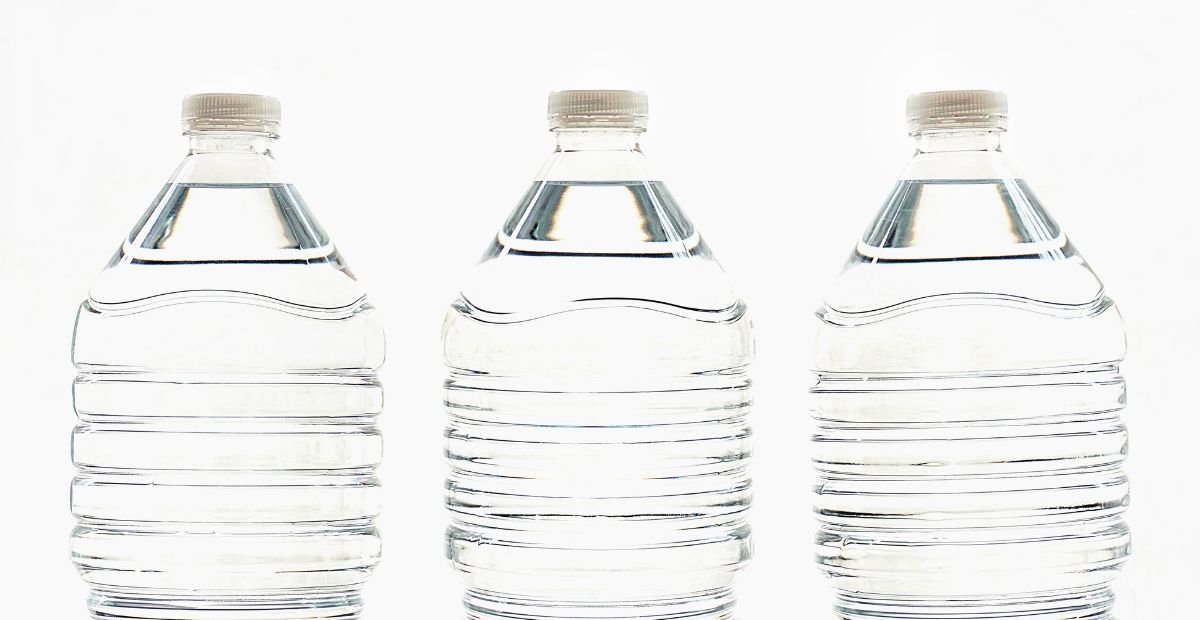
three disposable plastic water bottles
Suzy Hazelwood/Canva

Columbia University researchers tested bottled water for nanoplastics and found hundreds of thousands of them.

Evian, Fiji, Voss, SmartWater, Aquafina, Dasani—it's impressive how many brands we have for something humans have been consuming for millennia. Despite years of studies showing that bottled water is no safer to drink than tap water, Americans are more consuming more bottled water than ever, to the tune of billions of dollars in bottled water sales.

People cite convenience and taste in addition to perceived safety for reasons they prefer bottle to tap, but the fear factor surrounding tap water is still a driving force. It doesn't help when emergencies like floods cause tap water contamination or when investigations reveal issues with lead pipes in some communities, but municipal water supplies are tested regularly, and in the vast majority of the U.S., you can safely grab a glass of water from a tap.


And now, a new study on nanoplastics found in three popular bottled water brands is throwing more data into the bottled vs. tap water choice

Researchers from Columbia University used a new laser-guided technology to detect nanoplastics that had previously evaded detection due to their miniscule size.

The new technology can detect, count and analyze and chemical structure of nanoparticles, and they found seven different major types of plastic: polyamide, polypropylene, polyethylene, polymethyl methacrylate, polyvinyl chloride, polystyrene, and polyethylene terephthalate.

In contrast to a 2018 study that found around 300 plastic particles in an average liter of bottled water, the study published in the journal Proceedings of the National Academy of Sciences in January of 2024 found 240,000 nanoplastic particles per liter bottle on average between the three brands studied. (The name of the brands were not indicated in the study.)

As opposed to microplastics, nanoplastics are too small to be seen by microscope. Their size is exactly why experts are concerned about them, as they are small enough to invade human cells and potentially disrupt cellular processes.

“Micro and nanoplastics have been found in the human placenta at this point. They’ve been found in human lung tissues. They’ve been found in human feces; they’ve been found in human blood,” study coauthor Phoebe Stapleton, associate professor of pharmacology and toxicology at Rutgers University’s Ernest Mario School of Pharmacy told CNN Health,

We know that nanoplastics are making their way into our bodies. We just don't have enough research yet on what that means for our health, and we still have more questions than answers. How many nanoplastics does it take to do damage and/or cause disease? What kinds of damage or disease might they cause? Is whatever effect they might have cumulative? We simply don't have answers to these questions yet.

That's not to say there's no cause for concern.

We do know that certain levels of microplastic exposure have been shown to adversely affect the viability of cells. Nanoplastics are even smaller—does that mean they are more likely to cause cellular damage? Science is still working that out.

According to Dr. Sara Benedé of the Spanish National Research Council’s Institute of Food Science Research, it's not just the plastics themselves that might cause damage, but what they may bring along with them. “[Microparticles and nanoparticles] have the ability to bind all kinds of compounds when they come into contact with fluids, thus acting as carriers of all kinds of substances including environmental pollutants, toxins, antibiotics, or microorganisms,” Dr. Benedé told Medical News Today.
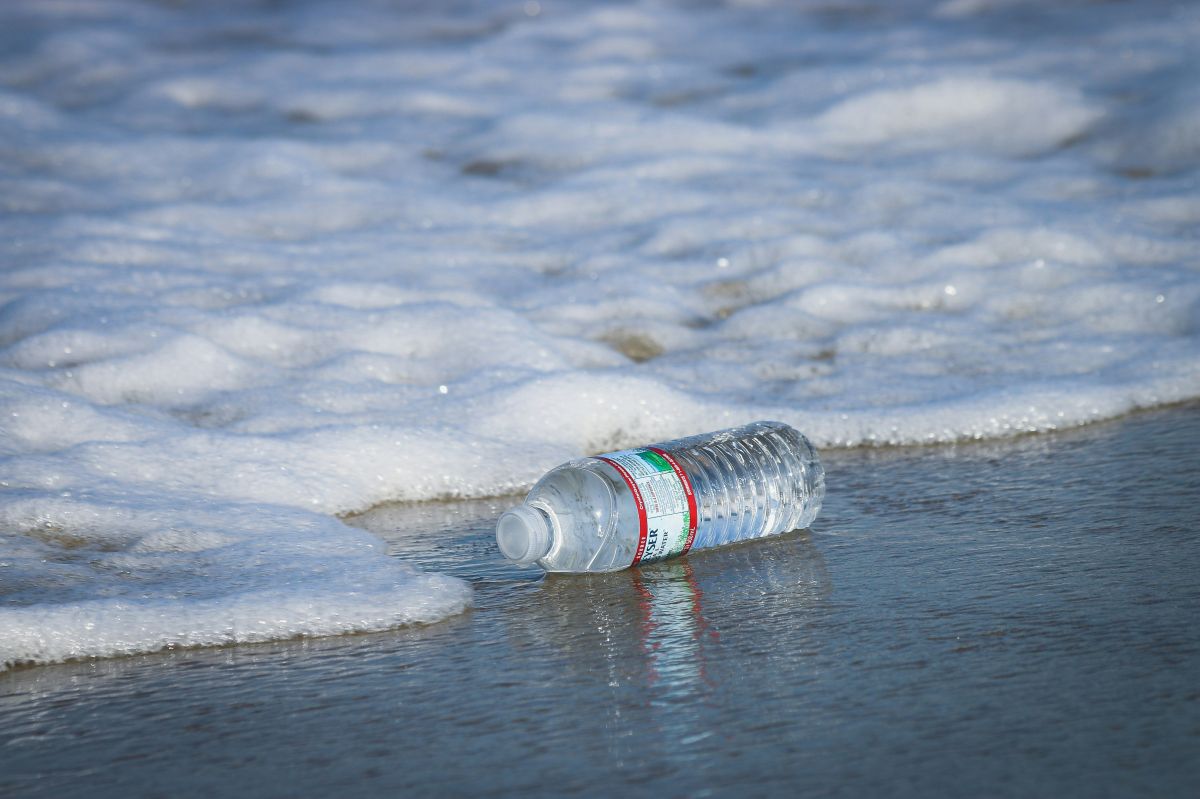
water plastic bottle on seashorePhoto by Brian Yurasits on Unsplash

Where is this plastic in water coming from?

This study focused on bottled water, which is almost always packaged in plastic. The filters used to filter the water before bottling are also frequently made from plastic.

Is it possible that some of these nanoplastics were already present in the water from their original sources? Again, research is always evolving on this front, but microplastics have been detected in lakes, streams and other freshwater sources, so it's not a big stretch to imagine that nanoplastics may be making their way into freshwater ecosystems as well. However, microplastics are found at much higher levels in bottled water than tap water, so it's also not a stretch to assume that most of the nanoplastics are likely coming from the bottling process and packaging rather than from freshwater sources.
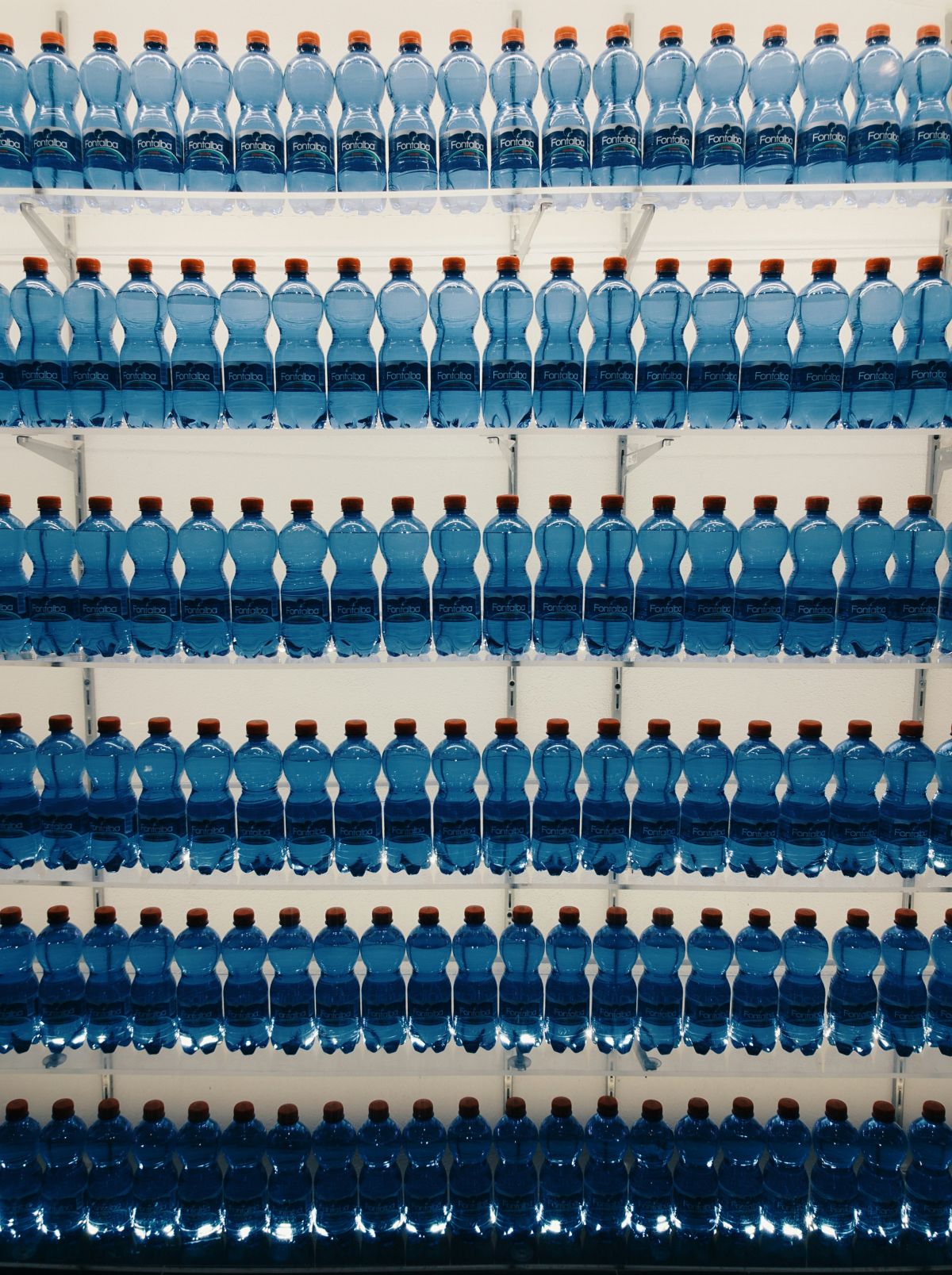
assorted bottled waters on shelfPhoto by Giuseppe Famiani on Unsplash

The reality is, though, we simply don't know yet.

“Based on other studies we expected most of the microplastics in bottled water would come from leakage of the plastic bottle itself, which is typically made of PET (polyethylene terephthalate) plastic,” lead author Naixin Qian, a doctoral student in chemistry at Columbia University, told CNN Health. “However, we found there’s actually many diverse types of plastics in a bottle of water, and that different plastic types have different size distributions. The PET particles were larger, while others were down to 200 nanometers, which is much, much smaller.”

We need to drink water, and we need to drink safe water. At this point, we have plenty of environmental reasons for avoiding bottled water unless absolutely necessary and opting for tap water instead. Even if there's still more research to be done, the presence of hundreds of thousands of nanoplastics in bottled water might just be another reason to make the switch.


This article originally appeared on 2.2.24

generation jones, gen jones, gen jonesers, girls in 1970s, 1970s, teens 1970s
Image via Wikimedia Commons

Generation Jones is the microgeneration of people born from 1954 to 1965.

Generational labels have become cultural identifiers. These include Baby Boomers, Gen X, Millennials, Gen Z and Gen Alpha. And each of these generations is defined by its unique characteristics, personalities and experiences that set them apart from other generations.

But in-between these generational categories are "microgenerations", who straddle the generation before and after them. For example, "Xennial" is the microgeneration name for those who fall on the cusp of Gen X and Millennials.


And there is also a microgeneration between Baby Boomers and Gen X called Generation Jones, which is made up of people born from 1954 to 1965. But what exactly differentiates Gen Jones from the Boomers and Gen Xers that flank it?

- YouTube www.youtube.com

What is Generation Jones?

"Generation Jones" was coined by writer, television producer and social commentator Jonathan Pontell to describe the decade of Americans who grew up in the '60s and '70s. As Pontell wrote of Gen Jonesers in Politico:

"We fill the space between Woodstock and Lollapalooza, between the Paris student riots and the anti-globalisation protests, and between Dylan going electric and Nirvana going unplugged. Jonesers have a unique identity separate from Boomers and GenXers. An avalanche of attitudinal and behavioural data corroborates this distinction."

Pontell describes Jonesers as "practical idealists" who were "forged in the fires of social upheaval while too young to play a part." They are the younger siblings of the boomer civil rights and anti-war activists who grew up witnessing and being moved by the passion of those movements but were met with a fatigued culture by the time they themselves came of age. Sometimes, they're described as the cool older siblings of Gen X. Unlike their older boomer counterparts, most Jonesers were not raised by WWII veteran fathers and were too young to be drafted into Vietnam, leaving them in between on military experience.

How did Generation Jones get its name?

generation jones, gen jones, gen jones teen, generation jones teenager, what is generation jones A Generation Jones teenager poses in her room.Image via Wikmedia Commons

Gen Jones gets its name from the competitive "keeping up with the Joneses" spirit that spawned during their populous birth years, but also from the term "jonesin'," meaning an intense craving, that they coined—a drug reference but also a reflection of the yearning to make a difference that their "unrequited idealism" left them with. According to Pontell, their competitiveness and identity as a "generation aching to act" may make Jonesers particularly effective leaders:

"What makes us Jonesers also makes us uniquely positioned to bring about a new era in international affairs. Our practical idealism was created by witnessing the often unrealistic idealism of the 1960s. And we weren’t engaged in that era’s ideological battles; we were children playing with toys while boomers argued over issues. Our non-ideological pragmatism allows us to resolve intra-boomer skirmishes and to bridge that volatile Boomer-GenXer divide. We can lead."

@grownupdish

Are you Generation Jones? Definitive Guide to Generation Jones https://grownupdish.com/the-definitive-guide-to-generation-jones/ #greenscreen #generationjones #babyboomer #generationx #GenX #over50 #over60 #1970s #midlife #middleage #midlifewomen #grownupdish #over50tiktok #over60women #over60tiktok #over60club

However, generations aren't just calculated by birth year but by a person's cultural reality. Some on the cusp may find themselves identifying more with one generation than the other, such as being culturally more Gen X than boomer. And, of course, not everyone fits into whatever generality they happened to be born into, so stereotyping someone based on their birth year isn't a wise practice. Knowing about these microgenerational differences, however, can help us understand certain sociological realities better as well as help people feel like they have a "home" in the generational discourse.

As many Gen Jonesers have commented, it's nice to "find your people" when you haven't felt like you've fit into the generation you fall into by age. Perhaps in our fast-paced, ever-shifting, interconnected world where culture shifts so swiftly, we need to break generations into 10 year increments instead of 20 to 30 to give everyone a generation that better suits their sensibilities.

This article originally appeared two years ago. It has been updated.

boss, angry boss, mad boss, benihaha chef, laptop

A boss is fed up with his employee's antics.

One of the most frequently debated topics in professional etiquette is which foods are appropriate to eat in the office. People often take offense when others cook smelly foods, such as fish or broccoli, in a shared microwave. It can also be rude to bring a bag of snacks into a meeting as a lot of folks don't want to hear chewing while they're trying to think.

When it comes to remote workers, people are even less sure about proper eating etiquette. Is it okay to eat a large meal during an all-hands meeting? One remote worker recently claimed they pushed those boundaries to the limit when their boss allegedly did something most employees would find rude: He scheduled meetings during lunchtime and showed zero interest in apologizing for it.


office, office kitchen, office fridge, workers, employees An office kitchen.via Canva/Photos

"I used to take my lunch break at the same time every day - 12 to 1. I don't eat breakfast (just coffee and lots of water), so my lunch is essential, and I can't just skip it," a Redditor wrote. "My calendar was blocked, but my boss (newly promoted, power-tripping) started scheduling meetings right in the middle of it."

At first, it wasn't a problem, but it became a habit. "The first couple of times, I let it slide," the employee continued. "Figured maybe it was urgent. But then it became a pattern. I pushed back and reminded him that it was during my break, and he said, 'Well, we all have to make sacrifices sometimes.'"

spaghetti, mean spaghetti, pasta, italian food, lunch An angry man eating spaghetti.via Canva/Photos

Sometimes? That would make sense if the boss only occasionally scheduled lunchtime meetings, but this was becoming a regular thing. So, the employee decided they wouldn't skip lunch and would make the meeting as uncomfortable as possible.

"Next meeting, I showed up with a full plate of spaghetti and meatballs. Had my camera on and mic unmuted, slurping and chewing, occasionally gave thumbs up while mid-bite," they wrote. "A few days later, it repeated, so I brought sticky wings. Last week on Thursday, it happened again, glad I still had my pizza."

"We all have to make sacrifices sometimes"

After the boss started noticing a trend, he spoke up: "Do you have to eat during the meeting?" The employee had the perfect response: "I smiled and said, 'We all have to make sacrifices sometimes.'" During the following week, the boss didn't schedule any lunch meetings.

The post went viral. After receiving countless awards from readers, the poster joked about new and inventive ways they could get back at their boss, including dressing up as a Benihana chef and performing an onion volcano, heating cheese mid-meeting with a fondue pot, and carving a massive tomahawk steak on camera.

The Redditor also claimed they purposely behaved obnoxiously during the meeting to further drive home their point. But where do people draw the line when it comes to eating during a remote meeting?

Kate Noel, head of People Ops at Morning Brew, said it's important to read the room:

"All Zoom meetings are not created equal," Noel wrote. "If it's with your closest teammates, it's probably nbd. But if you feel nervous about eating your sushi on camera, then you might want to wait until after the awkward goodbye waves at the end of your meeting. Not for nothing, you could probably get away with keeping your video off during a larger group meeting to eat food. But at your own risk, so choose your own adventure."

Parenting

Mom stepped away from the bath for 3 seconds. Then her toddler said 5 words that made her sprint right back.

She was gone for three seconds, but in the world of toddlers, that is apparently enough time to hold a full religious ceremony.

Beth Moore Instagram, toddler baptize bathtub, funny parenting moments, bath time toddler viral, mom bath time scare, toddler funny kids viral video, parenting Instagram 2026, bath safety toddlers, close call parenting, funny toddler stories
Canva

Young siblings taking a bath

Every parent has a moment where they think: this is the one. This is how it ends. For Beth Moore, a mom of young children who shares her parenting life on Instagram as @bethgracemoore, that moment came during an otherwise ordinary bath time.

She was bathing two of her kids together when she realized, mid-bath, that she had forgotten the towels. The linen closet was maybe five feet away. She made the call. "Before you come after me, I know that you were never supposed to step away from young children in the bathtub," she said in the video, which she posted on January 6, 2026. "But at this point in time, I was home alone, I needed to walk the five feet for literally three seconds."


Those three seconds were all her three-year-old needed.

From the hallway, she heard her son's voice, clear and confident: "I'm going to baptize her in the name of the Father, the Son, and the Holy Spirit." Moore dropped everything. "You can imagine my horror," she said.

She ran back to find... her son solemnly dunking his doll underwater, over and over, presiding over a perfectly reverent tub baptism. Her younger child, sitting nearby, was watching the whole ceremony play out with complete calm. "She is just sitting there and she's just watching the whole thing happen," Moore said.

Beth Moore Instagram, toddler baptize bathtub, funny parenting moments, bath time toddler viral, mom bath time scare, toddler funny kids viral video, parenting Instagram 2026, bath safety toddlers, close call parenting, funny toddler stories Gif of baby being baptizedgiphy

"So moral of the story is don't forget the towels," she concluded.

The video has pulled in over 45,800 views on Instagram, and the comment section is full of parents who felt this in their bones. "Mine got on the bed and fell down doing a flip, it was so scary! She was fine, but it happened in seconds!" wrote @byandreahusic. "This is hilarious but also so sweet," added @lauras.lifejoy. "Why couldn't God have made children move slower, because my goodness, do they do those things so fast?" said @laura.hagerbaumer.

Beth Moore Instagram, toddler baptize bathtub, funny parenting moments, bath time toddler viral, mom bath time scare, toddler funny kids viral video, parenting Instagram 2026, bath safety toddlers, close call parenting, funny toddler stories Woman gives toddler a bath Canva

Worth noting: Moore's fear, while it turned out to be beautifully misplaced, is rooted in something real. The American Academy of Pediatrics advises that children under 6 should never be left unattended in the bathtub, and the Consumer Product Safety Commission has noted that bathtub drownings can happen quickly and silently, even in just a couple of inches of water. The CPSC's specific guidance states that if you must leave, you should take the child with you. As Moore herself acknowledged, she knew the rule. She made a judgment call, and this time it worked out in the most wholesome way possible.

But the reason this video keeps getting shared isn't really about bath safety, or even about the perfectly executed toddler baptism. It's about that specific kind of parenting terror that arrives before your brain has had a chance to work out what's actually happening. The lurch in the stomach. The sprint down the hall. The absolutely unexpected relief.

"There is nothing that can prepare you for the heart attacks that you will experience while raising toddlers," Moore said at the top of the video.

Forty-five thousand parents nodded.

You can follow @bethgracemoore on Instagram for more parenting content.


@doctor.bing

Lesser known risk factors of drowning that everyone needs to know #brain #neurology #brainhealth #neurologist #drowning #water #safety #pool

green eyes, funny story, viral video, humor, comedy
Photo credit: @margoinireland on Instagram

Did she get superpowers?

Going to the eye doctor can be a hassle and a pain. It's not just the routine issues and inconveniences that come along when making a doctor appointment, but sometimes the various devices being used to check your eyes' health feel invasive and uncomfortable. But at least at the end of the appointment, most of us don't look like we're turning into The Incredible Hulk. That wasn't the case for one Irish woman.

Photographer Margerita B. Wargola was just going in for a routine eye exam at the hospital but ended up leaving with her eyes a shocking, bright neon green.


At the doctor's office, the nurse practitioner was prepping Wargola for a test with a machine that Wargola had experienced before. Before the test started, Wargola presumed the nurse had dropped some saline into her eyes, as they were feeling dry. After she blinked, everything went yellow.

Wargola and the nurse initially panicked. Neither knew what was going on as Wargola suddenly had yellow vision and radioactive-looking green eyes. After the initial shock, both realized the issue: the nurse forgot to ask Wargola to remove her contact lenses before putting contrast drops in her eyes for the exam. Wargola and the nurse quickly removed the lenses from her eyes and washed them thoroughly with saline. Fortunately, Wargola's eyes were unharmed. Unfortunately, her contacts were permanently stained and she didn't bring a spare pair.

- YouTube youtube.com

Since she has poor vision, Wargola was forced to drive herself home after the eye exam wearing the neon-green contact lenses that make her look like a member of the Green Lantern Corps. She couldn't help but laugh at her predicament and recorded a video explaining it all on social media. Since then, her video has sparked a couple Reddit threads and collected a bunch of comments on Instagram:

“But the REAL question is: do you now have X-Ray vision?”

“You can just say you're a superhero.”

“I would make a few stops on the way home just to freak some people out!”

“I would have lived it up! Grab a coffee, do grocery shopping, walk around a shopping center.”

“This one would pair well with that girl who ate something with turmeric with her invisalign on and walked around Paris smiling at people with seemingly BRIGHT YELLOW TEETH.”

“I would save those for fancy special occasions! WOW!”

“Every time I'd stop I'd turn slowly and stare at the person in the car next to me.”

“Keep them. Tell people what to do. They’ll do your bidding.”

In a follow-up Instagram video, Wargola showed her followers that she was safe at home with normal eyes, showing that the damaged contact lenses were so stained that they turned the saline solution in her contacts case into a bright Gatorade yellow. She wasn't mad at the nurse and, in fact, plans on keeping the lenses to wear on St. Patrick's Day or some other special occasion.

While no harm was done and a good laugh was had, it's still best for doctors, nurses, and patients alike to double-check and ask or tell if contact lenses are being worn before each eye test. If not, there might be more than ultra-green eyes to worry about.

Netflix and chill, reddit, funny, millennials, millennial humor, tifu
Image via Canva

An image of an embarrassed woman interlaid with a picture of two people cuddling while watching Netflix.

For many, if not most of us, when someone uses the term “Netflix and chill,” we know it to be a euphemism for, well, not much TV watching.

And yet, not everyone knows that this phrase has sexual connotations, apparently. At least one 34-year-old female college professor recently admitted to not knowing. Too bad she had been using the phrase as one of her go-to “icebreakers” in class.


A teacher learns she’s been using “Netflix and chill” wrong

As she shared on Reddit, she would often list “Netflix and chill” as one of her favorite hobbies. Not only that, but whenever students mentioned how stressed they were, she would reiterate: “While it's important to study, it's also important to take time to relax and recharge, so I hope they are able to do something for themselves soon, like ‘Netflix and chill.’”

It wasn’t until she visited her husband for lunch at his work and struck up a conversation with two of his co-workers that she discovered her hefty misunderstanding.

“I'm currently on maternity leave and mentioned to his co-workers that I can't wait for my infant to be older so I can ‘Netflix and chill’ again instead of having to feed and change diapers,” she wrote.

When one of the coworkers had a “shocked look on his face,” the OP was “confused.” She couldn’t believe it when this person explained that it’s a “euphemism for hooking up.” And yet, when the other coworker, a 50-year-old female, said, "Oh he's right, even I know what that means!" there was really no denying it.

Photo credit: Canva


Well, understandably, this woman was “mortified” at having learned the truth and was “now terrified I'm going to be reported for sexual harassment because I guess I've been inadvertently telling my students I love to hook up and have been encouraging them to hook up, too??”

In her defense, it's true that “Netflix and chill” used to mean relaxing while streaming, but that was about 17 years ago. The context we are all familiar with has been around since 2015.


She also noted that she and her husband married young and therefore never spent much time on dating apps, which could help explain why she remained unaware. Plus, she lived at home and worked two jobs during her college years, which meant "Netflix and chill” was literally “Netflixing and chilling,” she quipped.

All in all, she chalked this up to being an “oblivious Millennial.” And by that, she meant a “Millennial who is clearly oblivious” to something “invented by Millennials and has been around for at least 10-15 years.”

Reddit's reactions

Down in the comments, people tried to ease her worries about the whole accidental harassment thing.

"They either thought you were adorably clueless, or just a very cool teacher. Don't sweat it."

“Either people figured she didn’t know and thought it was funny or just assumed they’re very open and sex positive. NBD either way.”

“Rate my professor: 10/10. She told me I can come over and netflix and chill anytime 🥵”

Others didn’t let her off so easily, especially when she surmised that her older coworkers also likely didn’t know what it meant.

“I was shocked when I opened the post and saw OP was 34. I expected her to be 64.”

“I am 38 and have known what it means since it’s been around. This definitely isn’t an age thing, this is a living under a rock thing lol”

“I’m an out of touch millennial but that’s been a saying for like a decade now. lol. You might be under a rock.”

Photo credit: Canva


Regardless, the OP has had a good sense of humor despite being mortified. She concluded her post by saying, “Anyone who has lived the past decade+ under a rock like me is welcome to come over to my place and literally chill and watch Netflix with me anytime! I'll supply the popcorn 🤣”

Listen, it’s bonkers when things like this happen, but they do happen. Is it embarrassing? Sure. But does it remind us that life is about laughing at ourselves? Also yes.