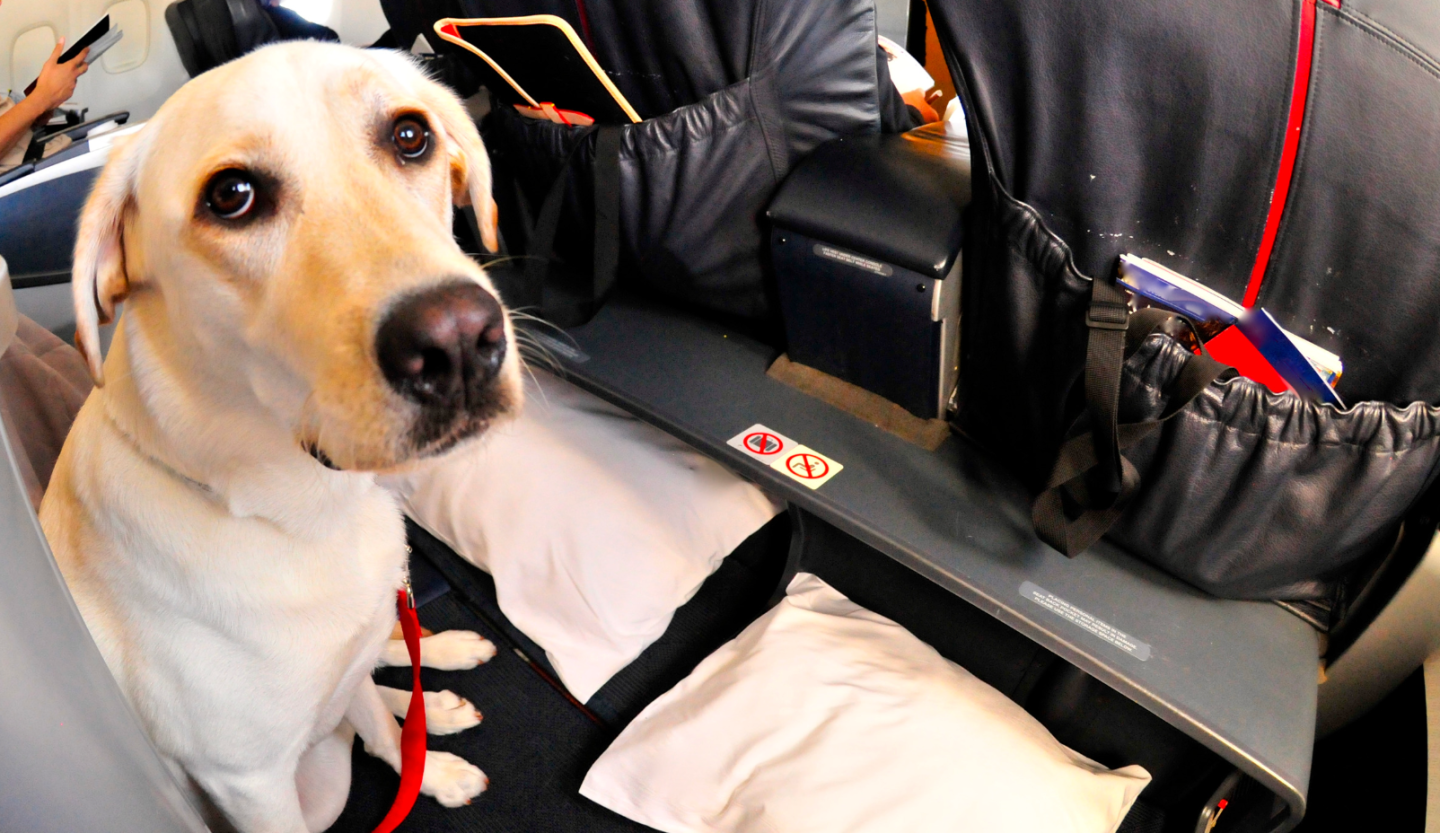
Katie was on a flight when she noticed the dog next to her wouldn’t stop pawing at her and whining. The woman sitting with the medical alert dog finally said something.
“Okay, this is gonna sound strange, but my dog usually does that when someone has a heart issue. You might wanna get checked out.”
Katie (@Uniquekatie02) laughed it off at the time, according to what she shared on X on May 13. But months later, during a routine checkup, she mentioned the incident to her doctor. They ran some tests and found a mildly irregular heartbeat.
The dog was right.
The moment everything changed for Katie
Medical alert dogs are trained to detect physiological changes in people, and science backs up what sounds almost supernatural. A 2021 study published in PLOS One surveyed 61 people with medical alert dogs and found that the dogs alerted them to 33 different medical conditions. Eighty-four percent of owners reported that their dogs alerted them to multiple conditions, and 54% said their dogs alerted them to multiple people, not just their owner.
How dogs actually detect illness
The dogs detect these changes through scent. Research published in Scientific Reports documented that seizures have a specific scent that dogs can pick up through human sweat and other fluids. Craig Angle, co-director of the Canine Performance Sciences Program at Auburn University’s College of Veterinary Medicine, told Scientific American that dogs are essentially “natural biosensors, preprogrammed with 30,000 years of evolutionary algorithms, and 300 million sensory receptors.”
A dog’s brain, he said, is designed to detect chemical information at thresholds much lower than most medical machines can manage.
For cardiac alert dogs specifically, they’re trained to recognize changes in heart rate and blood pressure. When they detect something off, they alert through behaviors like pawing, nudging, or lying down. Some will bump their owner with their head repeatedly until they respond.
The internet could not stop reacting
The internet had thoughts about Katie’s experience. One person wrote, “Medical alert dogs are honestly terrifyingly impressive. Imagine getting diagnosed by a Labrador at 30,000 feet before your doctor caught it.”
Someone else pointed out the absurdity: “Can you imagine a world where your most accurate diagnosis has four legs and no medical degree!”
Katie’s irregular heartbeat was mild, and she’s presumably managing it now. But the dog on that flight may have given her information she wouldn’t have had otherwise, at least not for a while.
A dog’s nose beat the doctors to it
At the end of the day, Katie’s irregular heartbeat was mild, and by all accounts she’s managing it fine. But that doesn’t make the story any less remarkable. A stranger’s dog picked up on something the human body was already broadcasting, long before a single test confirmed it, using nothing but scent and instinct honed over thousands of years of training.
It’s a strange kind of gift, being warned by an animal that has no idea what a heart is, only that something about you smells different than it should. Katie got lucky twice that day: once to sit next to that dog, and once to actually listen when it wouldn’t stop pawing at her.
This article originally appeared in May. It has been updated.