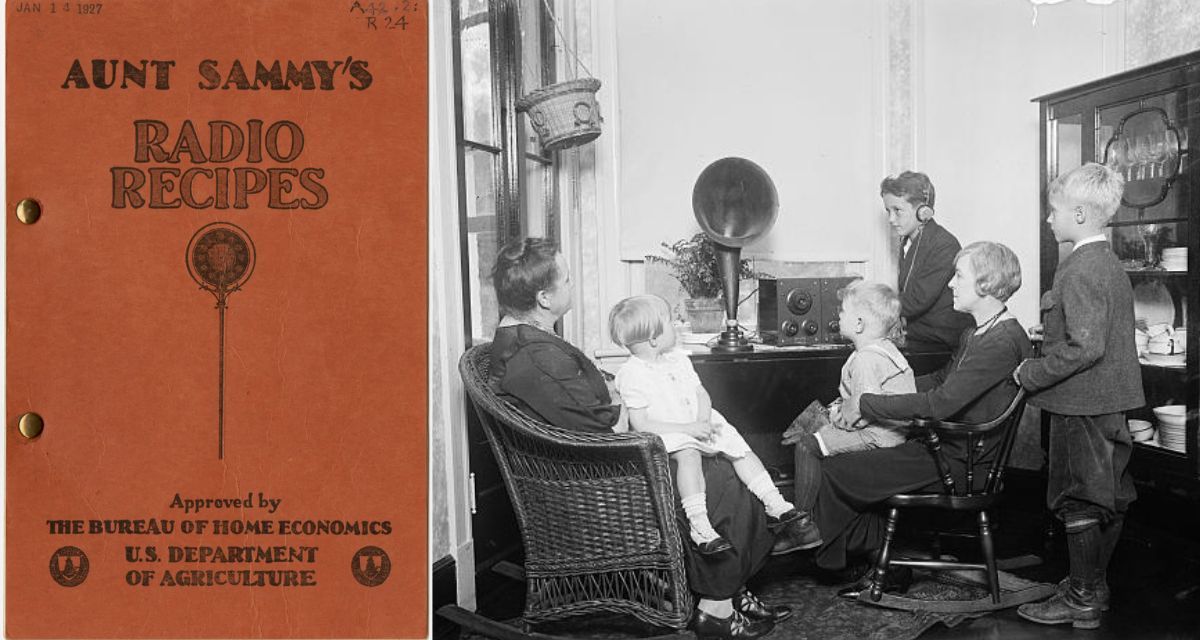
During the 1920s, radios had a boom in the United States. Sales of radios went from $60 million in 1922 to $426 million in 1929, according to the University of Houston Digital History.
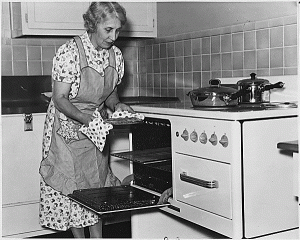
Families began to gather around their radios and listen to comedies, musical variety shows and news. And the U.S. Department of Agriculture’s Bureau of Home Economics and Farm Radio Service decided to create its own 15-minute broadcast aimed at housewives and all things homemaking in a number of different segments.
The show, called Housekeeper Chat, centered on the fictional character Aunt Sammy, the wife of Uncle Sam (the famous United State’s federal government persona). It premiered on October 4, 1926.
Aunt Sammy’s radio segments, explained
The 15-minute Housekeeper Chat show was broken down into three, 5-minute segments: “Backyard Gossip”, “Questions Women are Asking”, and “What Shall We Have For Dinner?”.
Real women took on the role of Aunt Sammy, including: Ruth Van DeMan, a home economics specialist who created many of Aunt Sammy’s recipes and menus; Josephine Hemphill, a journalism teacher who graduated from of Kansas State Agricultural College, who wrote many of the conversational scripts; and Fanny Walker Yeatman, who both tested and tasted recipes that were created for the show by the Bureau of Home Economics.
Final show approvals were run through another woman, Dr. Louise Stanley, head of the Bureau of Home Economics, before the show aired.
Ruth Van DeMan told a newspaper in 1927, “This is no caviar and truffle service for jazz-jaded appetites. We are striving to serve that great substantial class of women who are homemakers. We aim to make the menus simple and balanced.”
Aunt Sammy’s Radio Recipes cookbook
Housekeeper Chat was a hit. Demand for a cookbook featuring Aunt Sammy’s recipes and menus came flooding in, and the USDA compiled a cookbook that featured 70 favorite menus and 300 recipes from the show into Aunt Sammy’s Radio Recipes.
And 100,000 copies of it were distributed between October 1926 and December 1927.
In 1927, a million housewives were tuning in to the hit radio show. And the broadcast survived through the Great Depression, and was renamed to Homemaker Chats after 1934. It was discontinued in 1946, according to the University of North Texas.
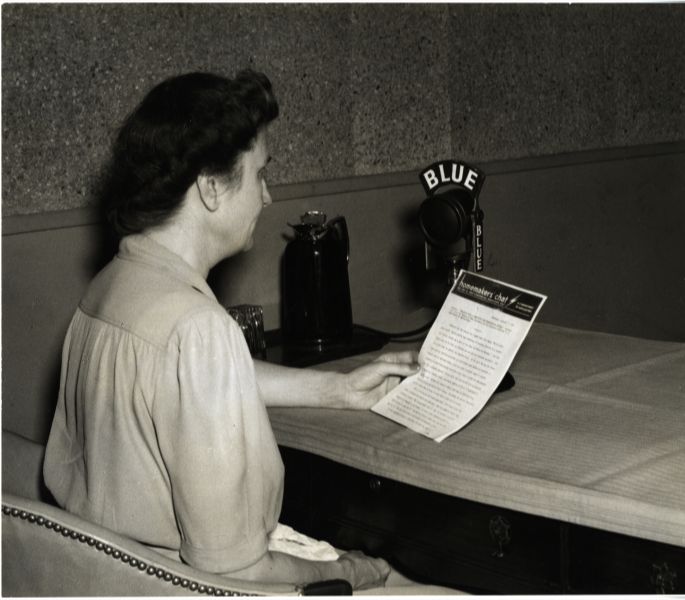
Photo Courtesy: National Archive
A 1931 recipe from ‘Aunt Sammy’s Radio Recipes’
A 1931 copy of Aunt Sammy’s Radio Recipes Revised is available through South Dakota State University. (You can also try making more original recipes shared back in 1927 in Aunt Sammy’s Radio Recipes: The Original 1927 Cookbook and Housekeeper’s Chat.)
Here’s how to make an original recipe 1931 created by Ruth Van DeMan and Fanny Walker Yeatman for a seasonal treat, Cranberry Muffins.
Cranberry Muffins
1 egg
3/4 cup milk
1/2 teaspoon salt
4 tablespoons melted butter or other fat
2 cups sifted flour
4 teaspoons baking powder
1/4 cup sugar.
1 cup cranberries
Beat the egg slightly and add the milk. To the liquid mixture, add the sifted dry ingredients. Roll the berries in two more tablespoons of sugar, and fold into the batter with the melted fat. Do not stir the mixture any more than necessary. Pour into greased muffin pans and bake in a moderately hot oven (400°F.) for about 30 minutes, or until brown. Serve hot.