Christine Garcia

  • Pianist stuns by using every part of his piano to perform ‘Africa’ by Toto
    Photo credit: via Peter Benace/YouTubePeter Bence plays the entire piano, and he does it barefoot.
    , ,

    Pianist stuns by using every part of his piano to perform ‘Africa’ by Toto

    “I don’t think I’ve ever seen anyone has so much fun playing the piano.”

    Peter Bence’s performance of “Africa” by Toto has over 19 million views on YouTube because of his creative reimagining of the song and, well, just about everyone loves “Africa.” Bence is a Hungarian composer and producer who has become a viral sensation for his Michael Jackson, Queen, Sia, and Beatles covers. He has over 1.1 million followers on YouTube and has toured the globe, playing in more than 40 countries across four continents.

    His performance of “Africa” is unique because it opens with him creating a rhythm track and looping it by strategically tapping the piano and rubbing its strings to create the sound of shakers and conga drums.

    The video eventually becomes rapturous, with Bence making the piano sound like an entire orchestra. 

    The comments say it all

    As the video caption says, “Toto x Peter Bence = Africa Piano Symphony.” Indeed. People were blown away by Bence’s impressive rendition of the classic 80s song.

    “I’m so glad to watch and see a fellow musician, that enjoys the music deep down. Excellent playing man!”

    “So fluid. The piano is an extension of your whole body. Amazing.”

    “I don’t think I’ve ever seen anyone has so much fun playing the piano. You’re not just terrifically talented, I love the creativity.”

    “Brilliant! Loved it. It made me think what would J S Bach have done with looping on a piano/harpsichord?”

    “Mesmerizing! He became the music and the music became him.”

    “Are you kidding me!!!! This cover is incredible. Still listening to it, years after I discovered it.”

    I return to this regularly, it’s absolute witchcraft levels of genius. This level of talent isn’t written in any handbook, it’s completely unworldly.”

    “I love how PB plays a piano worth more than my house in his bare feet like it’s an actual extension of his body. Pure brilliance.”

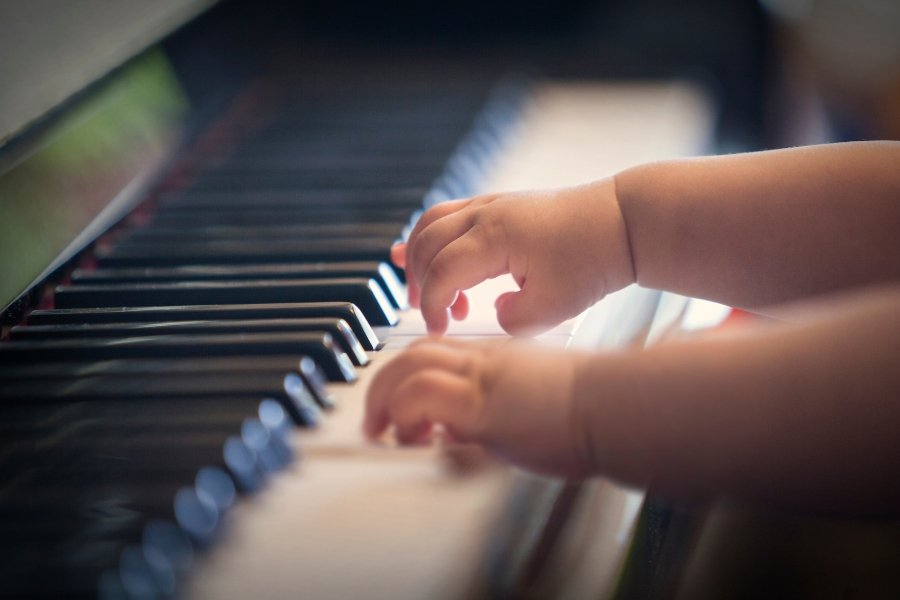
    baby at piano, toddler piano, piano prodigy
    Peter Bence was considered a musical prodigy as a child. Photo credit: Canva

    He has been a prodigy since toddlerhood

    If it seems like Bence was born to do this, that appears to be accurate. According to the bio on his website:

    “Starting as early as age 2 he already played back melodies by ear from his favorite cartoons and films on his grandparents’ upright piano. Showing serious interest and talent, he soon began his musical education at 4 in the local music school of his hometown, Hajduboszormeny in Hungary.

    He was considered a musical prodigy by teachers and peers, and was already accepted at Franz Liszt University of Music in Debrecen, despite he was still being enrolled at elementary school.

    At 7 he wrote his first composition, which was heavily influenced by the music of Mozart and Chopin, and at 11 he published his first solo piano album of his early compositions.”

    So yeah. The guy has had piano chops since toddlerhood, and he’s made the instrument his own with unique, edgy pieces like this one.


    And about the song itself

    Released in 1982 and peaking at number one in the U.S. in February 1983 and number three in the UK, “Africa” was Toto’s biggest hit, and the top 10 globally. It’s a stirring piece of music that’s beautifully arranged with an anthemic chorus. However, the lyrics aren’t that accurate.

    The song’s author, Toto drummer Jeff Porcaro, describes it as: “A white boy is trying to write a song on Africa, but since he’s never been there, he can only tell what he’s seen on TV or remembers in the past.”

    Nevertheless, the song is an iconic tune that captures a specific spirit of the early ‘80s when the world turned its focus to Africa. Over 40 years later, the song’s wholesome sincerity has made it a piece of music that every few years captures the hearts of a new generation.

    This article originally appeared three years ago.

  • High school salutatorian’s Goth yearbook photo goes viral for the most inspiring reason
    Then-17-year-old Weronika Jachimowicz
    ,

    High school salutatorian’s Goth yearbook photo goes viral for the most inspiring reason

    “I was always trying to please others and be like what everyone else wanted me to be.”

    Back in April 2021, then-17-year-old Weronika Jachimowicz got a lot of attention for subverting people’s expectations of who excels in high school—and that’s exactly what she wanted. Jachimowicz was named New York’s Mattituck-Cutchogue Union Free School District’s 2021 salutatorian. Her yearbook photo next to valedictorian Luke Altman is going viral because of her dramatic Goth makeup and attire.

    It all started when assistant professor and writer Dr. Jules Lipoff’s tweet of the photo of the valedictorian and salutatorian he saw in a newspaper went viral. How many salutatorians have you seen wearing pentagram hoop earrings, a choker, and black devil horns? The juxtaposition of her next to the bowtie-wearing Altman makes the photo even more amusing.

    The Today Show reports that Jachimowicz at first took her senior photo dressed “normal.” During the retake, she decided to “go all out and be herself.”

    Jachimowicz wanted the world to know that there’s no one way someone has to look or present themselves if they want to be academically successful, or successful in any right.

    What research actually says about Goth kids

    In fact, it’s completely normal for kids who are interested in the Goth subculture, as well as any other clique or community, to be good students.

    “The scene has quiet middle-class values—education, highbrow culture, theatre, museums, romantic literature, poetry, philosophy, Gothic architecture,” Dr. Dunja Bril, who studies Goth culture in England, told The Independent in 2006.

    “Many Goths like classical music. It’s a status symbol to have a good collection of classical pieces—mostly requiems and darker pieces,” she added.

    “Going to do a university degree is encouraged,” Bril continued. “[Being Goth] doesn’t encourage people to drop out of school. Whereas in the Punk scene you turn down the normal educational values, in Goth you gain status if you’re perceived as being educated. You get people who are in it for the shock value, but they are usually the ones who grow out of it.”

    Another study found that joining the Goth subculture may be good for young people’s mental health, offering them protection in the form of strong peer support and community. “Rather than posing a risk, it’s also possible that by belonging to the goth subculture, young people are gaining valuable social and emotional support from their peers,” writes New Scientist, quoting the study’s author.

    The response from young people was overwhelming

    Since her photo went viral, Jachimowicz has received countless messages of thanks from young people who say she’s inspired them to express themselves.

    “In all honesty, that’s all I wanted. I wanted to help anyone I could who is struggling with expressing themselves because I’ve been in the exact same position,” Jachimowicz told Yahoo! Life. “When people message me telling me how I have given them the confidence to be who they truly are, I almost cry from happiness.”

    Jachimowicz says that she was able to be herself because she was encouraged by others, so this is her chance to pay it forward.

    “I was always trying to please others and be like what everyone else wanted me to be, or at least try to fit into what was ‘normal.’ However, I did slowly start to realize that it’s OK to be different,” she said. “I’ve met people in my life who gave me the confidence to fully be myself,” she added.

    By the way, her resume is incredible

    In addition to having an unweighted GPA of 97.27%, Jachimowicz was on the fencing, ping pong, and winter track teams. She was also a member of the National Honor Society, Students Against Drunk Driving, and the Unity Club. The Suffolk Times says Jachimowicz had some of her hand-drawn art chosen to appear on the cover of the senior yearbook, as well.

    She told Fox 5 New York in a 2021 interview that she planned to major in biology and forensics after graduation, with hopes of becoming a forensic pathologist.

    Jachimowicz’s accomplishments are another reason to never judge someone for how they look or their interests. Just because someone is wearing satanic earrings doesn’t mean they aren’t highly intelligent or athletic.

    She believes the most important thing is to be yourself, regardless of what anyone else thinks. “Even if others don’t really like my style, it’s what makes me happy and I’ve worked hard to finally come to that conclusion,” she said.

    This article originally appeared five years ago. It has been updated.

  • 30 years ago, Carl Sagan revealed exactly how a ‘charlatan’ leader could take over the U.S.
    Carl Sagan tried to warn us that a 'charlatan' leader could easily take over the U.S.

    You’ve heard of old quotes, interviews, and predictions that “aged like milk,” but here’s one that aged like a fine wine.

    While astronomer Carl Sagan would likely be the first to scoff at the idea of him being a fortune teller, the man certainly had a prescient way of looking ahead during his lifetime. Sagan was the original host of a show called “Cosmos” back in 1980 and it became the most watched show in public television history. Sometimes called the “Mister Rogers of science,” few science communicators have been able to match Sagan’s talent for stoking wonder about the universe and our place in it.

    Sagan passed away in 1996, 30 years ago, from pneumonia. He was only 62, and it was a tragedy that he was taken so soon with so much good work left to do.

    His final warning was about all of us

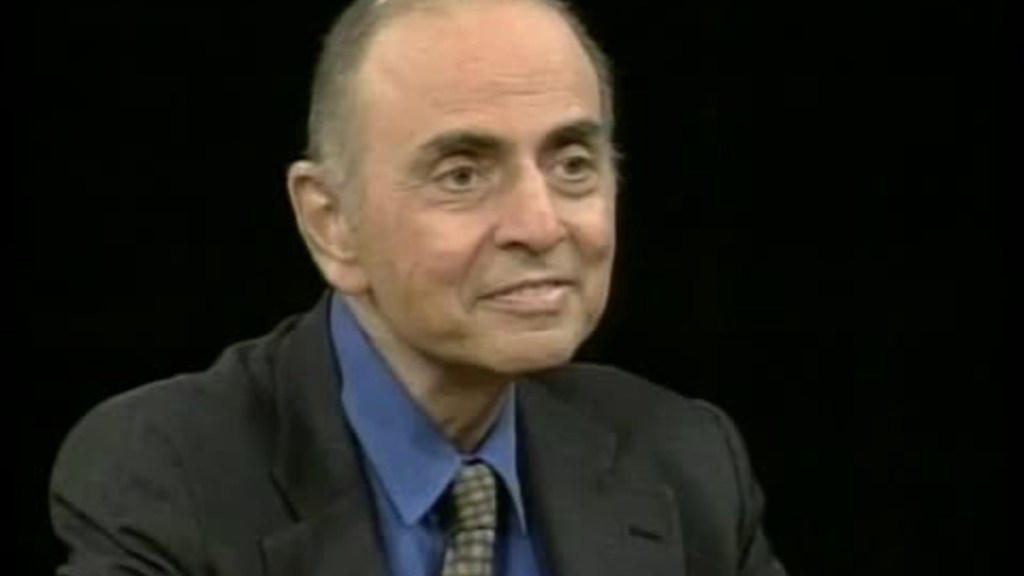
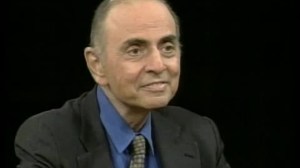
    Shortly before his death, however, Sagan appeared on “Charlie Rose” and made one final prediction: A dire warning about how susceptible America would be to the next “charlatan” politician who might come along.

    Sagan said that Americans’ lack of skeptical, scientific thinking could lead to disastrous consequences down the road. As a man who dedicated his life to science and education, he knew exactly how bad things could and would get.

    How accurate was his warning?

    Today, we can see the problems that are happening due to America’s anti-science streak whether it’s anti-vaxxers, conspiracy theories, or climate change deniers.

    Sagan was right, America will suffer due to a lack of scientific skepticism. Not skepticism of sound, peer-reviewed science, but skepticism of salesmen and frauds and conmen who come along and claim to have all the answers despite having put in none of the work.

    “We’ve arranged a society on science and technology in which nobody understands anything about science and technology, and this combustible mixture of ignorance and power sooner or later is going to blow up in our faces,” he told Rose. “I mean, who is running the science and technology in a democracy if the people don’t know anything about it?”

    carl sagan, charlie rose, science education, science communication, critical thinking, skepticism
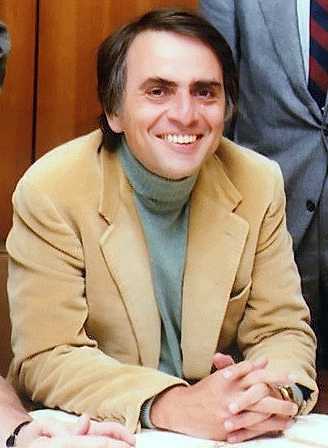
    One of Carl Sagan’s final interviews featured a dire warning. Photo credit: NASA/JPL – Wikimedia Commons

    He then warned that our lack of critical thinking leaves us vulnerable to those who wish to exploit our ignorance.

    “Science is more than a body of knowledge, it’s a way of thinking,” he says. “A way of skeptically interrogating the universe with a fine understanding of human fallibility. If we are not able to ask skeptical questions to interrogate those who tell us that something is true, to be skeptical of those in authority, then we’re up for grabs for the next charlatan, political or religious, who comes ambling along.”

    Sagan believes that a democracy cannot function without an educated populace.

    “It’s a thing that Jefferson lay great stress on. It wasn’t enough, he said, to enshrine some rights in the Constitution and the Bill of Rights, the people had to be educated and they have to practice their skepticism and their education,” he says. “Otherwise, we don’t run the government, the government runs us.”

    What scientific skepticism actually means

    One key to remember is that good scientists are inherently skeptical. NASA writes beautifully about the difference between scientific skepticism and the “do your own research” crowd, “Skepticism helps scientists to remain objective when performing scientific inquiry and research. It forces them to examine claims (their own and those of others) to be certain that there is sufficient evidence to back them up. Skeptics do not doubt every claim, only those backed by insufficient evidence or by data that have been improperly collected, are not relevant or cannot support the rationale being made.”

    Part of the problem we face in the present is that what constitutes education, including science and technology education, is being debated at the highest levels.

    Institutions of higher learning are undergoing attacks by the government, traditional education is being devalued by powerful parts of the political world, and positions that were traditionally filled by public servants with credentialed expertise are now being filled by political loyalists instead.

    Critical thinking has also taken a beating. People believe themselves to be “critical thinkers” simply because they go against scientific consensus, but that’s not how critical thinking and skepticism really work. When political ideologies take precedence over genuine scientific inquiry and investigation, we all lose out.

    In fact, many believe there is a concerted effort to discredit science; not just for kicks, but because those with ulterior motives need the populace to be uneducated, uninformed, and skeptical of those that might speak truth to power. This is not a new phenomenon, but it’s reached new levels in the modern age.

    Have we already reached that place?

    Some might even say we’ve already reached the place Sagan tried to warn us about. The “next political charlatan,” certainly sounds more than familiar to some. Of course, that’s up for debate as well, but regardless, Sagan certainly seemed to have his finger on the pulse of humanity’s tendencies. Hopefully people will heed his words and put science education in its rightful place as part of a thriving democracy.

    This article originally appeared six years ago. It has been updated.

  • Empty nesters share their genius, and surprisingly touching, downsizing hack
    Empty nest season comes with a lot of decisions about what to keep.
    ,

    Empty nesters share their genius, and surprisingly touching, downsizing hack

    “All I have to do is look in the eyes of my two girls, and they take me back, every time, to the most beautiful, colorful, emotional scrapbook I could ever dream of having.”

    The decades parents spent raising children are full, rich, exciting, exhausting, and loud. From babies crying to siblings bickering to the raucous laughter that creates collective memories, the sounds of family life are constant. Your home is full. The laundry never ends. Food gets purchased in bulk.

    Then, one day, you find that the intense family life that took up so much space physically, mentally, and emotionally, dwindles to a strange silence. When the last child moves out, you find yourself swimming in a house full of unused rooms and piles of memories. Suddenly, you don’t need all that space anymore, and you have to figure out what to do with those rooms and those piles of memories.

    For one couple, the process of downsizing their empty nest brought about a reflection on their family life, their relationship with their kids, and their stuff. In 2021, Jimmy Dunne shared that reflection entitled “Downsizing” on Facebook in a viral post that resonated with many people who are at or near this stage in life.

    Here is what he wrote, in his own words

    “My wife Catherine and I recently moved.

    I realized I had something I never knew I had.

    Thirty-four years ago, I carried my wife in my arms over the threshold in our home. Thirty-four years ago. From newlywed days, to witnessing our babies go from little girls to young adults. So many great memories in every inch of every room of our home.

    I didn’t think I was ready to ‘downsize.’ What an awful word. I liked walking through our girls’ bedrooms and still seeing their stuff on the walls and on the shelves. I liked our backyard. I liked imagining our kids coming down the steps every Christmas morning.

    We put it on the market, it sold in a couple days, and suddenly agreements thicker than my leg were instructing me to clear everything I ever had and knew – out.

    Every night I found myself saying goodbye to our backyard, to our garden of roses that Catherine would till and trim, to the sidewalk where the girls drove their Barbie cars and learned to ride their bikes, to our front lawn where we hosted tons of talent shows with all the kids on the block, and the red swing on the front porch.

    We found a condo in town and started lining up our ducks of what we were keeping, and what we were tossing. We vowed, if we’re going to do this, we weren’t putting anything in storage.

    I literally threw out half my stuff. Half. Half of the furniture. Half of my clothes, books. And the big one… way more than half the boxes in the attic.

    The attic was more than an attic. It held our stories. Every thing in every box, every framed picture was a story. After we gave away almost all of the living room furniture, we split the room in half and brought down everything of the girls from the attic and from their rooms. We invited the girls over, handed them a cocktail and said, “There’s good news and bad news. We’ve saved all this stuff; your outfits, drawings, dolls, skates — for you. It’s now yours. The bad news, whatever’s not gone by Friday at 10 in the morning, it’s getting chucked in that giant green dumpster in front of the house.

    The girls thought we were Mr. and Mrs. Satan. But they went through it, and that Friday, most of it went out the front door and right in the dumpster.

    I filled the entire dining room with boxes of all my old stuff. Grade school stories and pictures, report cards, birthday cards, trophies, you name it. Boxes of old plaques and diplomas and just stuff and stuff and stuff like that. How could I throw any of this out? I may as well have been throwing me in the dumpster!

    But this little jerk on my shoulder kept asking — what are your kids going to do with all this a week after you’re six feet under? They’re gonna chuck it all out!

    Here’s the crazy thing. The more I threw stuff in there, the easier it got. And I started to kind of like throwing it up and over in that thing. I started to feel lighter. Better.

    And we moved in a half-the-size condo – and the oddest thing happened.

    It became our home.

    A picture here and there on the wall, Catherine’s favorite pieces of furniture, all her knickknacks in the bathroom. We blinked, and it looked and felt just like us.

    And then I found that thing I never knew I had.

    Enough.

    I had enough.

    The wild thing was that having less – actually opened the door to so much more. More in my personal life. More in my career. More in everything.

    All I have to do is look in the eyes of my two girls — and they take me back, every time, to the most beautiful, colorful, emotional scrapbook I could ever dream of having.

    All I have to do is hold my wife’s hand, and it hypnotizes me back to kissing her for the first time, falling in love with everything she did, seeing her in that hospital room holding our first baby for the first time.

    It sure seems there is so much more to see, and feel, and be — if I have the courage, if I have the will to shape a life that’s just…

    Enough.”

    You can also read Dunne’s reflection on his website.

    Why this post resonated with so many people

    People shared Dunne’s post more than 24,000 times, and it’s easy to see why. He’s speaking a truth we probably all know deep down on some level: Things don’t make a life. Things don’t make relationships. They don’t even make memories, though we tend to hold onto them as if they do. We may associate places and things with memories, but we don’t need the places and things for our memories to live on.

    It’s not hard to notice Dunne’s deep wisdom as the result of a life well-lived. Fortunately for readers everywhere, Dunne compiled his wisdom, including the viral “Downsizing,” into a book that was released in September 2024 by Savio Republic and Post Hill Press, titled Jimmy Dunne Says: 47 Short Stories That Are Sure to Make You Laugh, Cry—and Think. Like his Facebook post, Dunne’s book is filled with heartfelt, thought-provoking reflections that stand to teach readers valuable and relatable lessons. It even got an endorsement from none other than actor Henry Winkler.

    The empty nest years can be whatever you want

    Kudos to Dunne and his wife for looking ahead to what their children would have to go through after they pass if they didn’t go through it now themselves. And kudos to them for truly embracing the freedom that comes with having raised your children to adulthood. The empty nest years can be whatever you choose to make of them, and this couple has figured out a key to making the most of theirs.

    Keep up with the Dunnes on their Instagram, where they share more writing, wisdom, family moments, and sweetest of all, their grandbabies.

    This article originally appeared five years ago. It has been updated.

  • People share 20 everyday things from the 90s and early 2000s that are now considered ‘luxuries’
    Photo credit: Canva PhotosReally should have appreciated some of these things when they were commonplace.

    Bob Dylan sang that the times are a-changin’ back in 1964, and since then, they haven’t ever stopped a-changin’. And yes, change has been a constant for all of humanity’s existence, but things certainly seem to be progressing a whole heck of a lot faster, don’t they?

    Before ya know it, those once fashion-forward pants you purchased are now retro, you don’t understand any of the slang the kids are spouting, and you’re doing your taxes, grocery planning and work meetings all from your phone. You know, that device that once only…gasp…called people.

    It certainly feels like more than simply growing older, too. Technology is evolving at a rapid pace, to the point where human beings are finally having a hard time keeping up. Combine that with uncertain economic times, and it’s no wonder that some folks are left reminiscing about how, in some (not all or even most, but some) ways, the good old days really were good.

    Reddit had a lot to say about this

    Take for instance this interesting question posed by a user over on Ask Reddit. They asked: “What was normal 20 to 30 years ago but is considered a luxury now?

    Thousands of people chimed in with fascinating bits of bittersweet nostalgia. Some were monetary — just think that the price of most everyday items has increased 2-3x since the 90s. Other memories were more intangible, based on experiences you just don’t get very often anymore.

    The things people miss most might surprise you

    Here are some of the best answers.

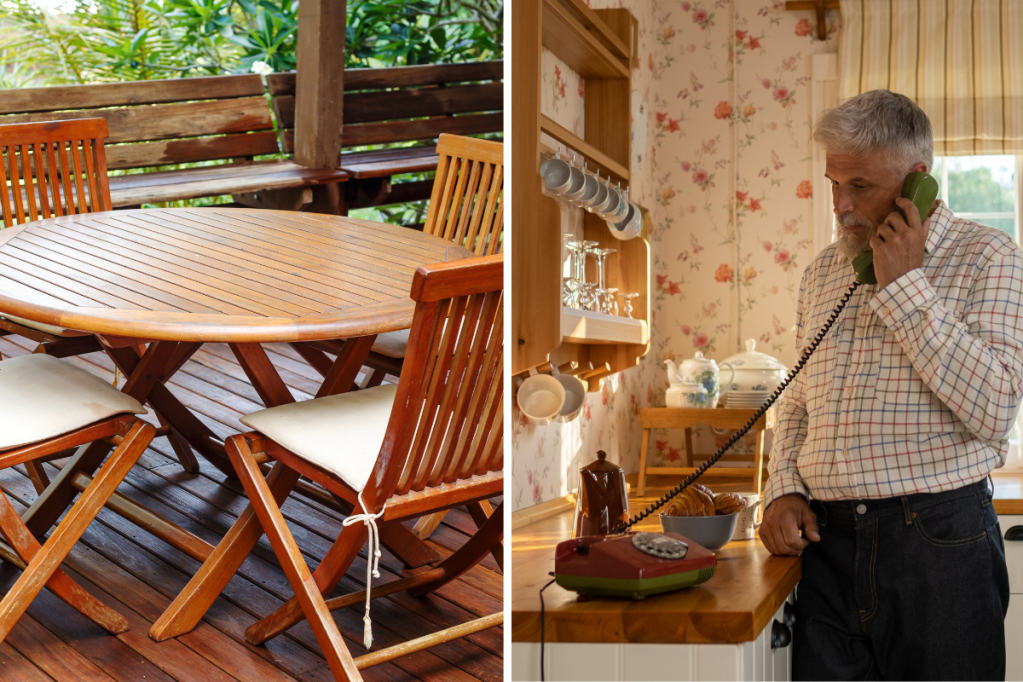
    1. “New furniture made out of real wood.”

    If you regularly traffic in furniture from Target, IKEA, Wayfair, and other relatively affordable places like that, you’ll recognize that furniture these days is more often than not made from particle board or fiber board, not real wood. That makes it convenient and relatively cheap, but not very durable.

    2. “Owning the software you purchased.”

    Remember the days when you just bought Microsoft Office once and were set for years? Today, the SAAS (Software As A Service) model has us paying recurring monthly fees for a million different subscriptions, for things we used to own outright. It’s maddening.

    3. “Paying no more than 30% of your income in rent.”

    One user added: “I lived in poverty housing and this was how they determined our rent. It was 30% of mom’s income, regardless of how much she was making. That was 20 years ago, not sure what starving kids do today.“

    4. “Concert ticket prices.”

    The entire concert-going experience has gotten completely out of hand due to high-tech scalpers and unregulated reseller markets.

    One person added: “17 years ago I spent $30 to see an internationally touring band play a concert, and I thought that was way too high. Now I’m spending minimum $20 to see local bands. Just on admission.”

    The New York Times writes that the average concert ticket for a mainstream show costs a staggering, ridiculous $135.

    5. “Household products that don’t break within the first few years of use.”

    One user wrote: “My grandma had the same fridge from 1993 before deciding to switch to a newer, bigger one two years ago. My mom’s wedding cookware is still going strong 25 years later, but whenever she needs new pans, they start flaking Teflon into the food within a few months.”

    Today, modern refrigerators are only expected to last about 10 years and generally aren’t worth repairing.

    6. “Not being expected to be reachable 24/7.”

    Ah, yes, being completely unreachable was the ultimate luxury. Most of us have actually forgotten what it feels like.

    7. “Being able to afford going out every Friday after work.”

    Remember happy hour specials? Dollar beer nights? It was easy to go out with friends or colleagues when a single beer didn’t cost $11 with tip.

    8. “Farmer’s markets.”

    “You used to be able to go down and get fruit and vegetables cheaper than the grocery store. Now it seems like they charge 3x more than stores do,” one user noted.

    9. “Single income families buying a home.”

    Another user read everyone’s mind by adding: “Buying a home in general”

    If you thought inflation on everything else was bad, housing prices might be the worst of all. They’ve ballooned far faster than salaries have, putting owning a home completely out of reach for many young people.

    10. “Good quality fabric in clothing.”

    “I have clothes from the 90s (and 80s from my mother) that still hold up today. These days, I’m lucky if my shirt isn’t saggy and misshapen within a year,” one user wrote.

    Fast-fashion is everywhere now! Like appliances, our clothes used to be built to last.

    11. “Items not requiring a subscription each month.”

    I’d love to see the average bank or credit card statement from the 90s. It must have been stunningly simple without a dozen recurring charges, from iCloud storage to Netflix.

    12. “Legroom on an airplane.”

    You’re not crazy. Flying used to be more comfortable. Planes have given up about 1-2 inches of legroom over the years, making passengers cramped and grumpy.

    The days when legroom was free. Photo credit: Canva

    13. “Free driver’s education classes taught in all high schools.”

    Private driver’s ed can cost anywhere from $500-1000 where it used to be much more commonly provided for free. Shouldn’t giving the next generation of drivers thorough safety training be considered a public necessity?

    14 . “Family vacations.”

    “I remember going on road trips regularly as a kid and even flying once or twice. Now that I have kids, I cannot afford a weeklong trip to the Badlands, Grand Canyon, Disney/Universal Studios, etc. The best I can do is a day trip to the Wisconsin Dells maybe once a year,” one user wrote.

    15. “Apartments.”

    “I could get a one-bedroom apartment in Wisconsin back in 1997 for under $500. Now that same apartment is at least $2,000.”

    Apartments are supposed to be the affordable thing! What happened?!

    16. “Affordable healthcare.”

    Even “good” healthcare these days leaves you paying enormous of out-of-pocket expenses. I’m not sure healthcare in America was ever great, but it’s definitely gotten worse.

    17. “People making friends with one another purely because they enjoy their companionship and not because of networking.”

    Hustle culture has really changed the way we think about friends and leisure time.

    18. “Calling a company and getting a person on the other end of the phone.

    Another problem that’s only getting worse with AI! They even have AI instead of people working at drive-thrus now.

    19. “Drinking water from the tap without filters and softeners.”

    More and more people are using home water filters for taste and, more importantly, because they don’t trust the local drinking water. Gee, wonder why?

    20.”Being able to dance and have a good time without having the risk that it will end up being recorded and put on social media.”

    Every time you leave your house you’re at risk of being pranked for TikTok or ending up in one of those life-ruining drunk “street interviews.”

    So what does all of this actually mean?

    The 90s and 2000s were a simpler time. Not everything was better, or even great, but there was something real about it. People were more authentic, things we bought weren’t so cheaply made yet expensive, and your hard-earned dollar went a lot further than it did today. We can’t go back, but it’s sure nice to visit every now and then.

    This article originally appeared three years ago. It has been updated.


  • Michael Jordan made a beloved high school staffer’s final wish come true while she lay in hospice
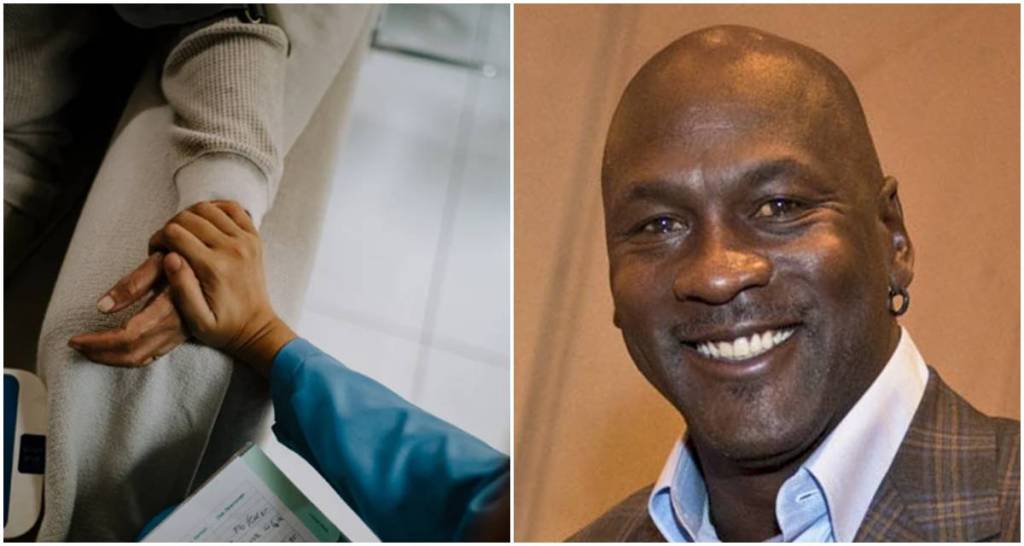
    Photo credit: DiversifyLens/Canva and D. Myles Cullen/Wikimedia CommonsMichael Jordan and a woman in hospice.

    NBA legend Michael Jordan is known as one of the most ruthless competitors ever to step foot on a basketball court. But he also understands that success isn’t everything, and that it all works toward fulfilling a greater life purpose. “To be successful, you have to be selfish, or else you never achieve. And once you reach your highest level, you have to be unselfish. Stay reachable. Stay in touch,” he once said

    Jordan recently showed that he has never forgotten where he came from by reconnecting with Ms. Etta, the transportation coordinator at Emsley A. Laney High School where he graduated 45 years ago. Ms. Etta was a hospice patient at Lower Cape Fear LifeCare in Jordan’s hometown. In her final days, she couldn’t stop talking about Jordan, who was one of her favorite students. Her biggest wish was to hug him one last time.

    Jordan reaches out to a beloved high school teacher in her final days

    Administrators at LifeCare tried to reach out to Jordan, but they never heard back. Then, on May 12th while at home, Wendy, a LifeCare social worker, received a call from an unknown number. It was Jordan: “Is this Ms. Etta?” he asked. Wendy then drove over to Ms. Etta’s bedside, and they set up a video call with Jordan.

    “They laughed, reminisced, picked at each other, and shared a moment that brought tears to everyone in the room,” LifeCare wrote in the caption of an Instagram post showing Ms. Etta and Jordan smiling and talking together. “A memory her family will carry with them forever.”

    High school plays a big role in Jordan’s legend. He graduated from the school in 1981, but as a sophomore in 1979, Jordan was “cut” from the varsity basketball team. Jordan has always said this was the catalyst for his becoming one of the greatest pro athletes the world has ever seen. However, at that time, sophomores rarely played on varsity teams. Jordan was sent to Junior Varsity because the team needed taller players. 

    Michael Jordan, Air Jordan 1984, Michael Jordan 80s, Jordan press conference
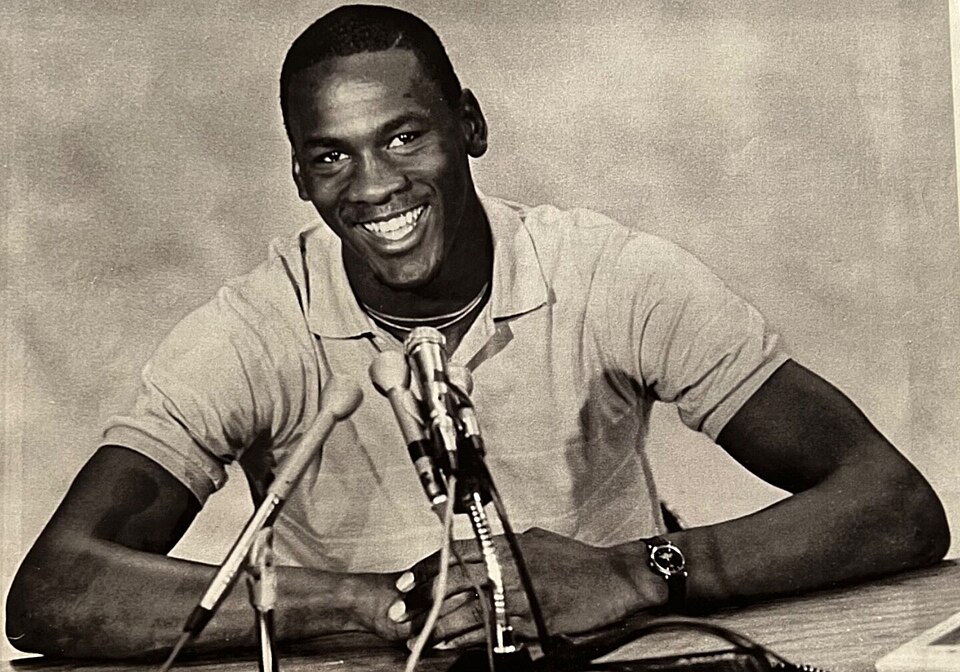
    Michael Jordan in 1984. Credit: United Press International/Wikimedia Commons

    Jordan never forgot about his high school days

    Jordan has clearly gotten over the slight, and, in 2019, he donated $1.1 million to Laney as part of an agreed-upon deal between Jordan, the school, and Nike for the 2013 sales of Jordan’s special Laney 5 sneakers. 

    “Mike decided that he wanted to take care of Laney High School,” Laney Athletic Director Fred Lynch said, according to WECT. “With him and his attorneys wanting to make sure that it would go entirely to Laney High School. So, Mike is still the man.” Half of the money went to the athletic department, while the other half was used at the school’s discretion. “It’s a very good thing. It’s a blessing to give that much money to a school,” Laney student Dariius Dutton said. “It means a lot to me because I love Laney, I love my school. And I think it will help a lot.”

    One can have all the success in the world, but without gratitude, it’s as empty as never having achieved anything in the first place. For Jordan to reach out to someone who helped him as a child in their final days shows that, although he may have reached incredible heights as an athlete, he never forgot those who helped him get off the ground.

  • The psychological trick behind why personality tests like Myers-Briggs always ‘work’
    Photo credit: CanvaSo personality tests really tell us about ourselves?

    If there’s one thing individuals and Fortune 500 companies have in common, it’s the inability to resist a personality test. Employers have long used tests like the Myers-Briggs Type Indicator or the Enneagram to understand their employees better and build more compatible teams. And people in general seem strangely addicted to quizzes that categorize them by personality type.

    It’s long been known that most personality tests aren’t scientifically sound, but that doesn’t stop people from taking them. Part of the reason is that those tests tell us something about ourselves as individuals while also making us feel like we’re part of a group identity. They seem to help us understand ourselves and one another better, and thus appear to “work.”

    However, as researcher Madelyn Leembruggen explained on SciShow, most personality profiles simply play into a psychological trick we humans easily fall into.

    The Barnum effect and how it works

    “Personality tests and profiles take advantage of a weird psychological tendency that also benefits everything from horoscopes to fortune tellers to Buzzfeed quizzes,” Leembruggen said. It’s called the Barnum effect.

    “The Barnum effect was named after P.T. Barnum, the iconic and problematic showman known for his ability to captivate, and often manipulate, an audience,” she explained. “The Barnum effect is the phenomenon where if you give someone a personality test, they’re pretty likely to believe that the results are true and accurate, regardless of how hard the profile-maker actually tried. There’s something about taking the test itself that makes an audience more likely to believe the end result.”

    Personality tests became popular after WWI, when someone developed an assessment to determine which soldiers might be prone to PTSD. In the decades that followed, personality profiles appeared in popular magazines and psychologists’ offices alike. But researcher and college professor Bertram Forer felt skeptical about their accuracy. He basically said the results weren’t any more specific than saying that a person has opposable thumbs.

    personality test, multiple choice, personality profile
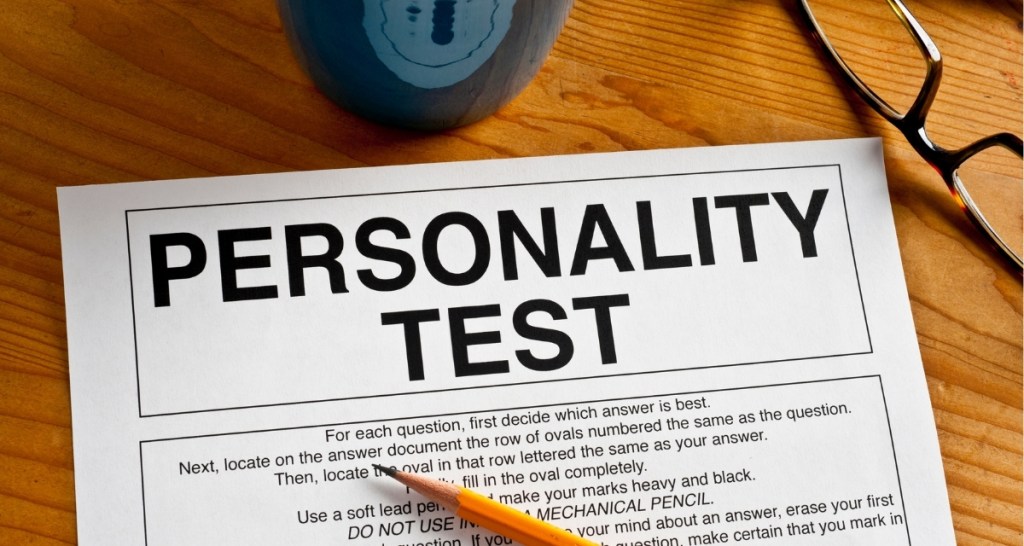
    Personality test example (Photo credit: Canva)

    Professor Forer’s 1949 personality test experiment

    In 1949, he conducted an experiment to test his hypothesis. He gave his Intro to Psychology students a personality questionnaire. Then, he told them he’d analyze the results and create a unique personality profile for each student. When they got their results, they rated them for accuracy. Only one student rated their results below a 4 out of 5, indicating nearly all students felt their results reflected their personality. However, Forer had duped them. He had actually given every student the exact same analysis.

    “Forer made a list of general, vaguely flattering, and universally relatable statements,” Leembruggen explained. “So, why did everyone believe that their list was so perfectly tailored to them? Well, that’s the Barnum effect.”

    Essentially, most personality descriptors in personality profiles are fairly relatable to most people. And when you combine any sense of the trait being positive, most people will see themselves in it.

    The SciShow video gives these statements as examples:

    “You have an analytical mind, though  you also might space out at times.”

    “You pride yourself as an independent thinker, and don’t accept other people’s statements without good proof.”

    “You love variety and tend to rebel against too many restrictions and limitations.”

    “You don’t always reveal all of yourself to others.”

    “You have a great desire for other people to like and admire you.”

    Most people see themselves in some, if not all, of those statements because they’re vague enough to feel true.

    However, 1949 was a long time ago. Haven’t psychologists gotten better at creating real personality profiles?

    personality test, introvert, extrovert
    Many personality tests have binary categories of traits. (Photo credit: Canva)

    How accurate is the Myers-Brigg Type Indicator, though?

    One of the most popular personality tests of the past 50 years is the Myers-Briggs Type Indicator, or MBTI. This test splits people into 16 personality categories based on combinations of eight traits or preferences: Introversion/Extroversion, Sensing/Intuition, Thinking/Feeling, and Perceiving/Judging. Your “type” would be a combination of four letters, like INTP or ESFJ, with a corresponding description of that personality.

    Many people have taken an MBTI test at work, but is it really accurate?

    “When researchers want to see how well a certain assessment tool, test, or survey actually works, one thing they’ll do is have the same people take the same test multiple times,” Leembruggen said. “If they get the same score each time, we’d say that tool has good test-retest reliability. And in studies of MBTI where participants took the assessment multiple times, up to half or even more test takers received a different result for at least one of the four letters.”

    Accurate or not, people love their Myers-Briggs. However, psychologists prefer a more recent personality indicator known as the Big Five Personality Trait model.  

    What is the Big Five Personality Trait model?

    In the Big Five, people rank as low, medium, or high in five personality dimensions: extroversion, neuroticism, openness, conscientiousness, and agreeableness. (A more recent test known as HEXACO includes honesty-humility as a trait.)

    “These tests, and newer variations that include subcategories of these five, do seem to show better test-retest reliability,” Leembruggen shared. “One major reason that newer tests based on the Big Five are more reliable is that they’re based on accumulating data from multiple long-term studies from the 1990s onwards. And they’re rooted in the principle that, if a personality trait exists in humans, languages will adopt words to describe it.”

    However, she notes, most research only includes people from WEIRD countries: Western, Educated, Industrialized, Rich, and Democratic. That reality alone makes it hard to extrapolate universal personality traits or types.

    woman on computer, personality test, online quiz
    Many people enjoy taking online personality tests. (Photo credit: Canva)

    The way personality tests are designed is inherently flawed

    Finally, the nature of personality tests with multiple-choice answers, most of which only offer two options, is flawed.

    “When you have to answer every question from a list of predetermined options, it’s called a forced-choice measure,” Leembruggen explained. “These tests are easy to administer and to grade, but the downside is that they’re really rigid and can flatten nuance, including how people’s personality traits can change due to the passage of time and other variables. We’ve all stared at a multiple-choice question and wished there was an option to check ‘other.’ So trying to make a questionnaire-style test that can accurately gauge anybody’s personality might be kind of impossible.”

    That certainly won’t stop a lot of people from taking those tests, though. Accurate or not, there’s something about them that draws us in. Maybe it’s just fun to self-analyze. Maybe we yearn to know ourselves better, and those tests offer a structured and largely harmless way to do that—or at least to feel like we’re doing it.

    You can follow SciShow on YouTube for more research-based learning.

  • Scientists think humans developed right-handedness thanks to these 2 factors
    Photo credit: CanvaHuman skull (left) human hand (right)
    ,

    Scientists think humans developed right-handedness thanks to these 2 factors

    90% of the population is right-handed. Before now, we didn’t really know why.

    Since the dawn of man, right-handedness has reigned supreme without much intel as to why. While our ape brethren also develop strong preferences toward one hand over another, there is generally an equal number of left- and right-handed individuals. Conversely, 90% of humans are right-handed. And now, scientists think they have discovered when this prevalence developed. 

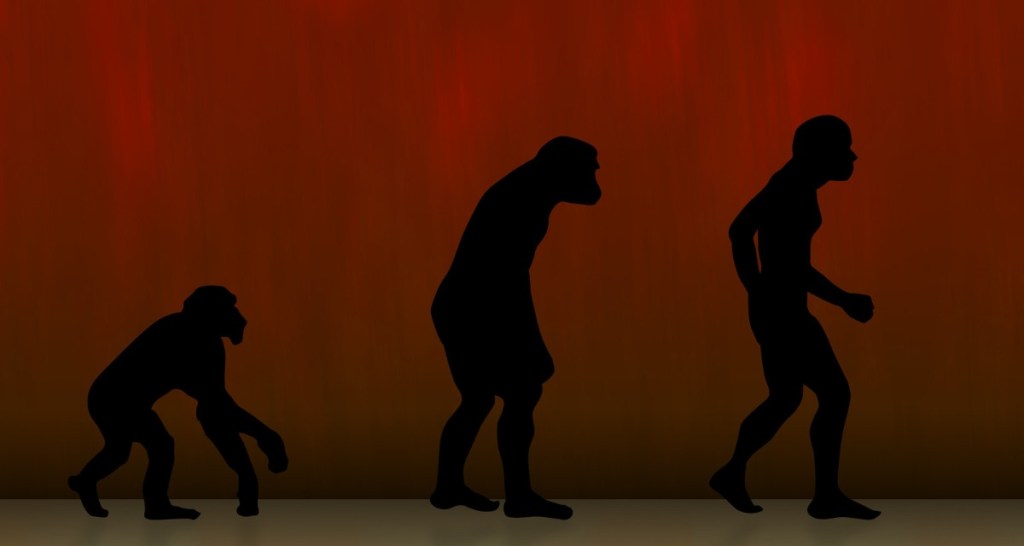
    A new study led by researchers at the University of Oxford suggests that it went hand-in-hand (pardon the pun) with two other major evolutionary shifts: walking on two legs and developing much larger brains.

    Thousands of primates helped narrow the possibilities

    biology, human evolution, scientific study
    A variety of primates, Canva

    The research, published in PLOS Biology, analyzed data from 2,025 monkeys and apes representing 41 different primate species.  All the evolutionary factors tested—tool use, diet, habitat, body size, social structure, brain size, movement patterns, etc.—seemed to match human data, leaving no real clues as to why our species decided to become almost exclusively right-handed. 

    However, that changed once researchers added brain size and the ratio between arm length and leg length to their analysis. Suddenly humans, with their larger brains and legs much longer than their arms (a hallmark trait of bipedal walking), stood out from an evolutionary standpoint. 

    These factors, along with other fossil records, help us imagine a timeline that looked something like this: 

    biology, human evolution, science
    The evolution of bidepal movement, Canva

    Human ancestors (Ardipithecus and Australopithecus, respectively) began walking upright, allowing one hand to become specialized over the other. At this point, there would likely be an equal number of left-handers to right-handers. 

    As our brains grow to incorporate more complex activities like using tools, communicating through a wide array of gestures, and participating in complex tasks like cooking and performing rituals, so too does our right-hand bias. In fact, the same 90% right-hand dominance is already present around 2.6 million years ago…before Homo sapiens and Neanderthals entered the scene. 

    One side of the brain might hold an important clue

    biology, human evolution, science
    Image of the brain hemispheres, Canva

    That third factor (complex tasks) is particularly interesting. Sequentially organized behaviors, also known as hierarchical action, are often believed to be something managed by the brain’s left hemisphere. The left hemisphere also controls all the motor functions and movements on the right side of the body. That said, all three elements, along with the fact that humans learn by imitating their parents, likely played equally important roles in the evolutionary narrative. 

    Ancient “hobbits” added another intriguing clue

    Backing this theory is the “hobbit” species discovered in Indonesia. This ancient humanoid species maintained smaller brains and the ability to climb while also walking. Conversely, it did not have nearly the same amount of right-hand dominance. 

    There are, of course, more mysteries to unravel. Why some of us are still left-handed, for instance. Or whether the limb preference of other animals suggests a similar evolutionary pattern. But, regardless, the study reminds us that even the most seemingly simple quirks that make us human actually tell an incomprehensibly vast story of how we came to be in the first place. 

Pop Culture

Michael Jordan made a beloved high school staffer’s final wish come true while she lay in hospice

People Skills

The psychological trick behind why personality tests like Myers-Briggs always ‘work’

Science

Scientists think humans developed right-handedness thanks to these 2 factors

Skills

After the death of his wife, C.S. Lewis shared exactly how he dealt with grief