People reveal how much happier they are after ditching these 7 so-called ‘required’ things

“I find such peace in not forming opinions about a lot of things.”

maze, breaking habits, unlearning behaviors, optional habits, personal growth, woman, mental flexibility
Photo credit: Canva (Bulat Silvia)Woman sees the solution to the maze.

There can be a lot of pressure to do what our communities and peers expect of us. Some people find absolute bliss by letting go of peer pressure. Imagine the joy in doing less of what is “required” and more of what’s right for you.

A question was posed in a recent r/AskReddit thread: “What’s something you didn’t realize was optional in life until you saw someone simply not doing it?” Comments ranged from common-sense opinions to valuable life lessons. It’s a curious thought about what things we might be engaging in that aren’t actually serving us. Perhaps you will remove a few of these from your behavioral patterns.

rally, opinions, behavioral change, mindset shift, emotional well-being, life improvement, self-awarenesss
People at a demonstration rally. Photo credit:u00a0Canva

My opinion is necessary on this

A few quick keystrokes, and our thoughts and opinions are easily shared on a seemingly endless stream of topics. Often with little repercussions, someone might even find themselves telling a professional how to apply their field of expertise properly.

“That you don’t actually have to have an opinion on everything. Watching someone say “I don’t know enough about that to comment” made me realize silence is an option too.”

Here were some clever responses to that way of thinking:

“I find such peace in not forming opinions about a lot of things.”

“it’s cheeky but liberating for me when people ask, ‘what do you think about […]?’ and I reply, ‘I don’t’”

“Social media has been the biggest driver of people thinking they have to have an opinion on everything & it has destroyed the fabric of society.”

“Some things are really, really complicated and I’m not being paid to figure them out”

social event, self-libation, invitation, friends, excuses, appointments, parties, unhealthy routines
People at a party. Photo credit: Canva

It’s important to attend the events to which I’m invited

Maybe it seems like a form of rocket science to uncover the best way to excuse ourselves from something. But, perhaps it’s actually simpler to say “no thank you” than come up with an elaborate excuse.

“Saying ‘thank you for the invitation, but I/we won’t be able to make it!’ to a social invite without providing a detailed explanation about WHY you can’t attend.

These responses sum up the idea nicely:

“Usually the person you’re talking to doesn’t even care that you don’t have a reason. They were just wanting to hear yes or no”

“BECAUSE I DON’T LIKE YOU, KAREN!”

“when I was young my mom taught me that “No.” is a complete sentence.”

“Yes and this also applies to work if you’re using to or vacation. You earned that time, you don’t have to explain why you want to use it. Same with canceling appointments.”

worry, problems, lifestyle cleanup, behavioral pruning, cognitive learning, social pressure, conformity bias
A man worried on a bench. Photo credit:u00a0Canva

Worrying about everything

It’s easy to get wrapped up in fear and worries. But how many things do we actually have the ability to change? On top of that, how many things are actually interfering with our lives and overall happiness?

“The world doesn’t end if you burn a pizza, or if the water spills over when boiling pasta. That guy who cut you off isn’t the worst part of your day, the staff member at the store checking your ID isn’t a bad person. You can just “not” react to those things, and life gets a whole lot easier.”

Redditors seemed to settle into this concept rather easily:

“I was irritated that an accident on the freeway made me late for my first day of a new job. I took a step back and realized the people involved in that accident likely wished that my issue was their problem that day.”

“I try and teach my little niece this – ‘whoopsie daisies!’ and ‘no big deal, we’ll clean it up! are common phrases my sis and I use.”

“Growing up my dad always said ‘don’t sweat the small stuff.’ Used to piss me off because he usually said it when I was arguing with my sister LOL. But now I think it’s actually such an important view to have.”

“I stress myself out about trying to do the best I can, trying to fight executive disfunction, being fast and efficient and right the first time. I really need to let that go and relax more.”

neighbors, community influence, socail modeling, herd behavior, perceived norms, normative behavior, social expectations
Sipping coffee and not answering the door. Photo credit:u00a0Canva

When you’re home, make yourself available

To some, this may be a novel concept that we are not at the beck and call of people. Perhaps it’s reasonable and fair to get back to others when it’s most convenient for us.

“Was casually speaking to my neighbor and she mentioned the neighborhood was getting hit hard by solicitors lately. I told her a few were selling internet plans, no name wireless, and pest control services, she looked at me like I had a horn between my eyes and asked me why I was opening my door to strangers. Made me really think about how programmed we are to answer the door, to anyone and everyone who may or may not be nefarious. So, I just stopped, because it IS weird I would open my door to someone I’m not expecting.”

People responded with their own thoughts about not answering the door:

“The doorbell and phone ringing are requests for your attention/time. You get to decide if you grant those requests”

“And you don’t have to hide from them either! Look out your front window, realize it’s a salesperson, wave, and then ignore them til they leave.”

“Years ago I realized that my door, much like my phone, is for MY convenience, not the world’s.”

“My intercom is on private. I disabled my doorbell, and less than five people know my full address. I also only speak to one neighbour. Makes for a peaceful life.”

habits, reading, books, optional norms, myth-busting, self-permission, optional norms, hidden freedoms
Closing the book. Photo credit:u00a0Canva

When you start something, you must see it through to the end

Sometimes it’s hard to put things down. Just because we “started” doesn’t necessarily mean “stopping” makes us a quitter.

“This was a revelation to me, when a friend casually mentioned that he’d started reading a particular book, but it didn’t grab him, so he stopped. I pushed back because I’d somehow got the idea that if a book didn’t interest me, that was a fault in me for not getting it/trying hard enough/being smart enough, but he was like ‘it’s the authors job to make me want to keep reading’.”

Commenters agreed that it’s worth stopping before finishing:

“The same goes for TV series, movies, videogames, etc. If you’re not enjoying it or you’ve had enough you can just stop.”

“And a book can be great but still not for me. Sometimes I just can’t get into it at that point in time or ever.”

“Just because you invested money into it doesn’t mean you need to see it through to the end. Do something else.”

“Yes! For a long time I felt this need to finish any book I picked up and I forced myself through some that truly just did not mesh with me.”
care instructions, ironing, convenience, dishwasher, complicated tasks, emotional resilience, stress reduction, mental expansion
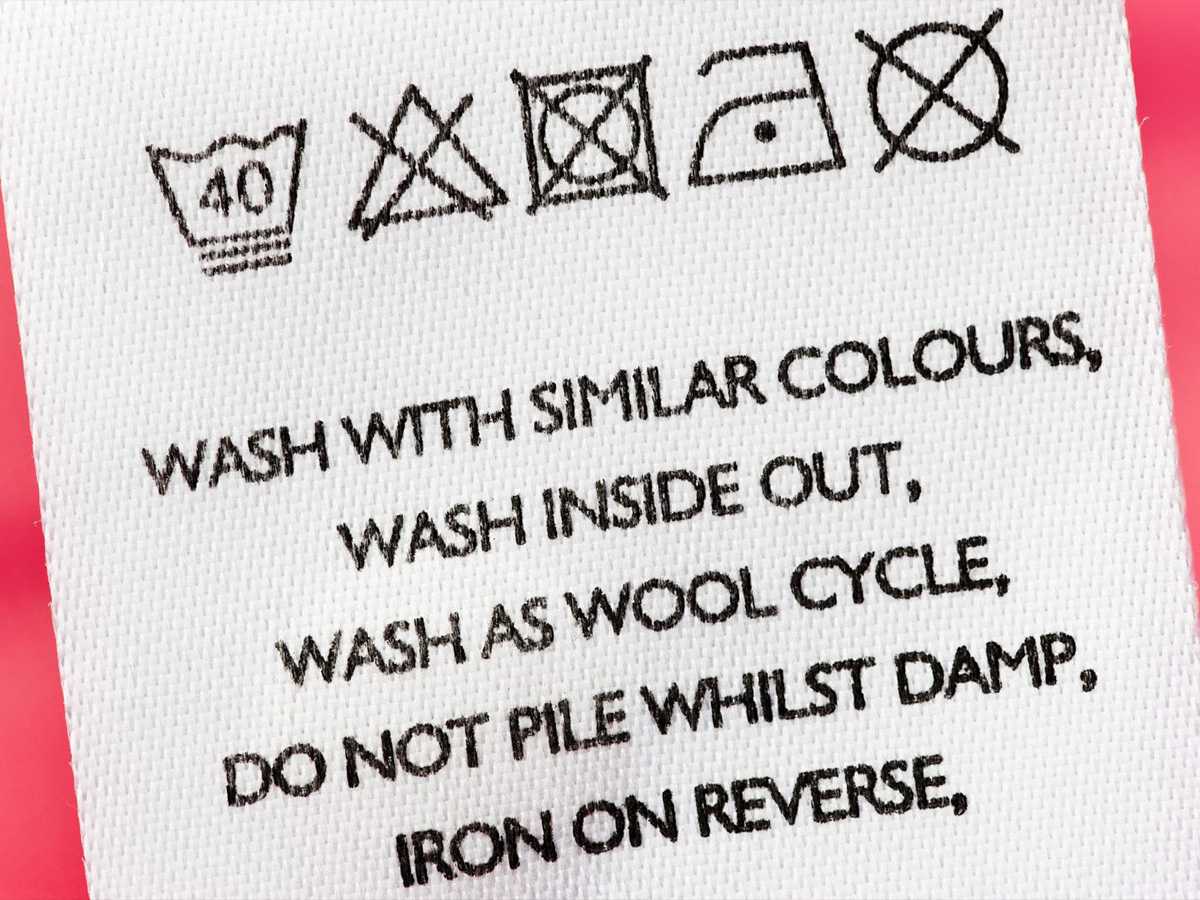
Care instructions. Photo credit:u00a0Canva

Things have more value if they’re complicated

There’s something to be said for having the time and patience to work through a challenge. However, filling up our lives with complicated tasks isn’t necessarily the best plan for a more enjoyable life.

“I call myself a Darwinist about my belongings. If you can make it through the washer/dryer, or the dishwasher, then you get to survive. Saves a whole lotta hassle, and reduces expectations.”

These were some of the opinions people had around making life less complicated:

“I’ve got this great ironing hack called ‘Don’t buy clothes that need ironing.’”

“For me, it’s ‘if I can’t throw it in the dishwasher, I don’t want it in my kitchen’. Gasp in horror that I don’t follow your 5-step knife care routine, but I really dgaf.”

“Yup, I still remember the exact Sunday night years ago when I was ironing my dress shirts for work thinking to myself ‘Why am I wasting time outside of work doing work related stuff?’ That was the last time I wore clothes that needed ironing to work.”

“I know of people who iron their sheets. It doesn’t have to be like this. We can break the cycle.”

family matters, wellness outcomes, mindful living, best friends, bullies, poor relationships, unhealthy people, psychological thriving
An awkward hug. Photo credit:u00a0Canva

Stay true to your friends and family, no matter what

This one might be a bit more complicated than most. However, everyone has the right to determine if a friend is bringing value to the relationship.

“My closest pals through me a little party and they asked who I wanted to come and I left someone off the list that we’d normally invite. They asked and I just said: unless you guys really want her here, or if it will cause an issue, I don’t want her to come. We all know how she’ll act and I just want to have a nice time. Everyone agreed though: we’re all tired of her behaviour. So we didn’t invite her and had a wonderful time.”

These were some thoughts by other Redditors:

“Yep my mil has a huge problem with me not wanting to see or speak to their bigoted racist family. I want nothing to do with them.”

“I just hope your not dropping family because of their views / ideologies / politics, but because of how they treat you.”

“Dropping toxic friends and, most especially family, out of your life. “What do you mean you’re not inviting A**hole Uncle Frank to Thanksgiving?” “Yup!” It is soooooooo good!”

“But who’s going to complain about the Obamacare royalties if Uncle Frank doesn’t show up????”
Calvin and Hobbes, boy, flying, freedom, animation, spring, animated, funny, humorous
Calvin flies with the birds. media1.giphy.com

Experts agree that letting go of these issues can make for a happier life

Learning how to adapt to what actually works in our lives is a valuable tool supported by science.

A 2025 study in BioMed Central found that hanging out with peers who engage in problematic behaviors increases depression. Learning how to protect ourselves against adopting behaviors that don’t actually serve us strongly supports emotional growth and self-esteem. A 2025 study in the Wiley Online Library found that positive self-view protected individuals from engaging in harmful behaviors. Learning how to curb unproductive habits can lead to more happiness. A 2022 study in MDPI showed that treating yourself kindly and being mindful of your emotional state and personal needs contribute to overall well-being.


  • Resurfaced 80s training video on ‘how to tip’ has people laughing with Gen X nostalgia
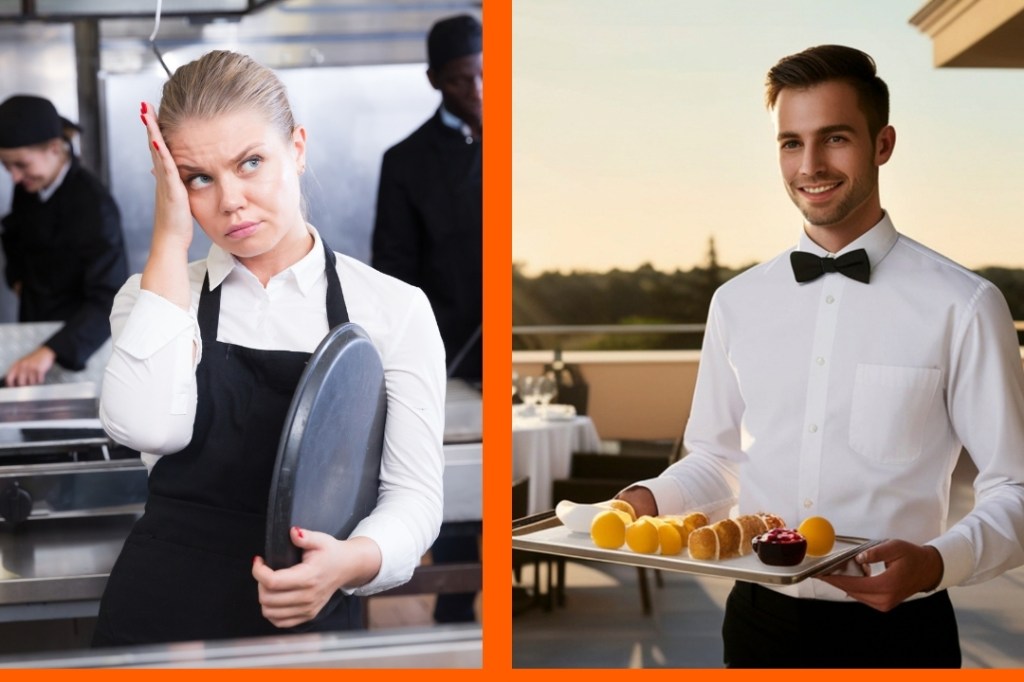
    Photo credit: Canva PhotosA waitress looks embarrassed; a waiter smiles while holding a plate.

    Tipping culture is ever-changing and, for many, has always been a bit confusing. Perhaps that’s why a training video was made circa the 1980s to give “tips” (pun intended) on gratuity after a meal.

    The Instagram account Totally 80s Room (@totally80sroom) posted the clip, with a chyron reading, “How much should you tip?” We see a video of a young woman receiving her bill. She ponders, “Hmm, how much should I tip?” A male voiceover answers, “That’s a good question. The gratuity can range from 10% for acceptable service to 20% for exceptional service.”

    An 80s training video on how to tip. Credit: Totally 80s Room, Instagram

    The screen then flashes over to a “waitperson” rocking a stained shirt. Mascara drips down her face, while she casually blows bubbles with her gum. The voiceover continues, “But if your waitperson is blatantly bad or has some attitude, don’t tip. Just leave a penny to show you didn’t forget to tip. And tell the manager your complaints. Believe me, he wants to know.”

    During this advice, the server then says to the customer, “Look. You’re just lucky I’m waiting on you.”

    The question is posed: “Basically, did the waitperson do everything in their power to make your dining experience pleasant? Were they courteous? Were they knowledgeable about specials, preparation methods, menu accompaniments, and other aspects of the restaurant? Or don’t they?”

    While the appropriate waitperson seems caring and calm, the “bad” employee files her nails and quips, “I ain’t got all day. Are ya gonna order or what?” The customer asks, “Ma’am, what’s the soup today?” The server is annoyed by the question. “Soup? I don’t know! Some kind of vegetable thing.”

    People in the comment section have a wide range of views. Many joke about the absurdity of the video itself. “I hate when servers constantly tell me how lucky I am they are waiting on me.”

    Others debate tipping etiquette in general with a variety of thoughts. “Always 20%.” “Australia = no tipping.” “15% if it’s okay service. 10% if it’s terrible service. 20% if the service was amazing and 0 if I have to order at the counter and get my own food.”

    How tipping culture has taken over. Credit: WSJ, YouTube

    Another notes how even the idea of a pressured gratuity has changed. “It’s not tipping anymore. It’s commission.”

    What’s up with tipping anyway?

    In MSN‘s recently posted piece, “The right thing: Should waiters expect a tip on every meal?” Jeffrey L. Seglin explains how much wait staff (and the restaurant owners) depend on these tips, especially in the United States. “The federal minimum wage in the United States is $7.25 per hour (a rate that hasn’t changed since 2009), and the federal tipped minimum wage is $2.13 per hour. Because the federal tipped minimum wage is below the federal minimum wage, most Americans who dine out know that most servers make a living wage based on the tips they receive.”

    CNBC writer Emily Lorsch reveals that expected gratuity percentages have grown over the decades. While in the past few years tips have crept up to over 20% for some diners, it didn’t used to be that way. “During the 1950s, people commonly tipped 10% of the bill. By the 1970s and 1980s, that percentage had jumped to 15%.”

    How tipping has evolved. Credit: Casually Explained, YouTube

    Lorsch shares data from a study conducted by Creditcards.com, who claim that the sleek machines brought to the table may pressure many to tip more. “22% of respondents said when they’re presented with various suggested tip amounts, they feel pressured to tip more than they normally would.”

    Regardless of steadfast tipping etiquette, it’s safe to say that wait staff should never file their nails at the table. Hopefully, that doesn’t change.

  • 4-year-old boy born deaf has a touching conversation with ‘Toy Story’ characters in ASL
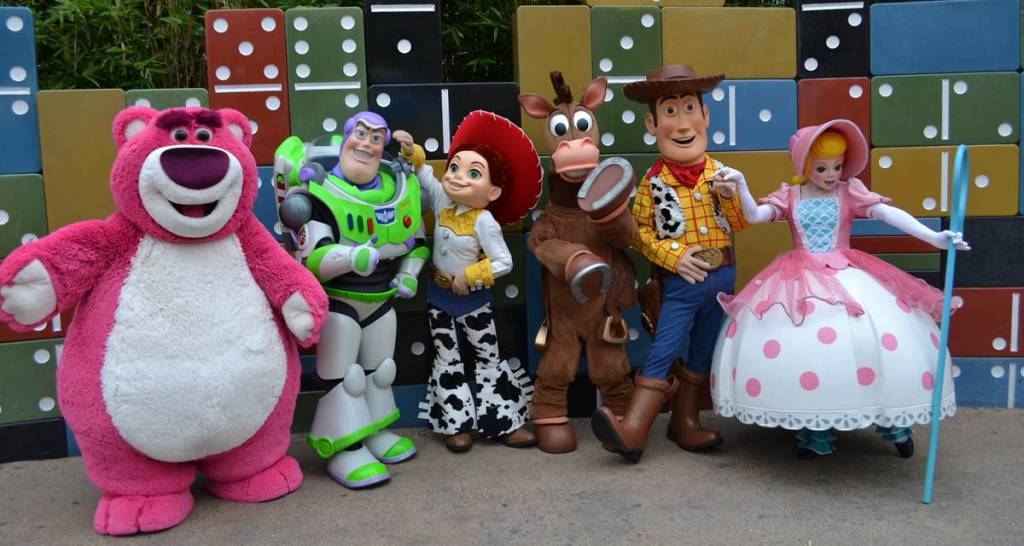
    Photo credit: FlickrToy Story cast members at a Disney park.
    ,

    4-year-old boy born deaf has a touching conversation with ‘Toy Story’ characters in ASL

    “Watching your child be included in their language… It’s a kind of magic you don’t forget.”

    An interaction between a 4-year-old boy and a Cast Member at Disneyland highlights the importance of inclusion and shows that learning American Sign Language (ASL) can have an incredible impact on deaf people and their families.

    Callie Foster, 38, and her husband, Leonardo Silva, 39, were recently at the park when their son, Luca, came across Disney Cast Members dressed as Jessie and Woody from the Toy Story series. The parents were taken aback when, for the first time at the park, the boy initiated a conversation in ASL with Jessie. 

    Jessie from Toy Story communicates in ASL

    “Because we go to the parks often, we really try not to put that expectation on anyone. We never assume a character will know ASL, so usually we’re the ones interpreting for Luca; we’re used to stepping in to help facilitate those interactions,” Foster told People. “This time was completely different. Luca initiated it on his own. He signed to her first, and there was this split second where we all kind of looked at each other like, ‘Wait… did that just happen?’ And then she recognized it and started signing back to him.”

    @thelacouple

    this is what magic looks like at Disneyland when your child is Deaf 🤍

    ♬ You’ve Got A Friend In Me (from “Toy Story”) – piano instrumental – Chilled Pig

    When Jessie and Luca first met, she didn’t know that he was deaf. Then, he looked up to her and signed, “What’s your name?” to which Jessie responded in ASL, “Name, J-E-S-S-E.” She then asked Luca, “Your name?” to which he responded, “Luca.” Jessie then said, “Nice to meet you,” and “Thank you.”

    “Watching your child be included in their language… It’s a kind of magic you don’t forget,” Foster concluded the video.

    This isn’t the first time Luca has gone viral for interacting with a character at Disneyland. Two years ago, when Luca was just 2 years old, a Cast Member playing Bo Peep communicated with Luca in ASL. When Luca approached Bo Peep, his mother signed, “This is Luca.” Bo Peep returned the greeting with, “Nice to meet you,” in ASL. 

    Bo Peep then knelt down to Luca’s height and signed, “You’re our friend.” Excited, Luca then tried to tell Jessie that her friend, Buzz Lightyear, was nearby.

    “I love how a lot of cast members know ASL,” Sherely wrote in the comments. “Just love Disney moments like this. Priceless,” Viv added.

    disneyland asl, american sign language, disney inclusion
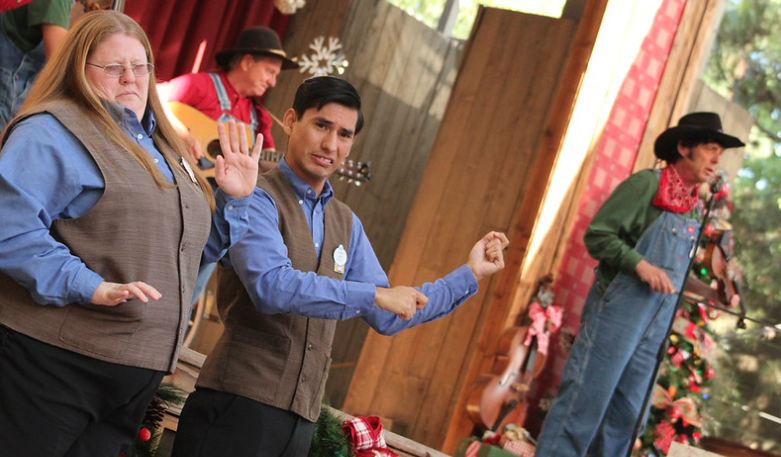
    ASL interpreters at a Disney park. Credit: Brooke Pearce/Flickr

    Disney is committed to ASL inclusion in its theme parks

    The fact that many characters in Disney Parks know ASL isn’t an accident. Since 1997, Walt Disney World Resort and Disneyland Resort have offered ASL interpretation at many attractions and shows. Sign language interpretation is a service that is available in parks for guests with hearing disabilities.

    “When a show or new attraction that warrants Sign Language interpretation is being developed, my team at Walt Disney World Resort and the Disneyland Resort Accessibility team are included in planning conversations and rehearsal process. We work to ensure appropriate interpreter placement and lighting are being considered and to share show scripts and videos with the fantastic theatrical interpreters who do work for us,” Mark Jones, Manager of Accessibility and Services for Guests with Disabilities at Walt Disney World Resort, told Disney Parks Blog. 

  • Woman inherits her grandma’s ‘perpetual calendar’ from the ’70s. It’s a perfect family heirloom.
    Photo credit: CanvaSome family heirlooms truly are precious gifts.
    ,

    Woman inherits her grandma’s ‘perpetual calendar’ from the ’70s. It’s a perfect family heirloom.

    The passing down of stories, memories, and keepsakes is important in many families. But how to do that isn’t always so simple. A lot can get lost over the years, both figuratively and literally. And younger generations don’t always want or appreciate physical heirlooms. One woman shared a brilliant heirloom that belonged to her grandma,…

    The passing down of stories, memories, and keepsakes is important in many families. But how to do that isn’t always so simple. A lot can get lost over the years, both figuratively and literally. And younger generations don’t always want or appreciate physical heirlooms.

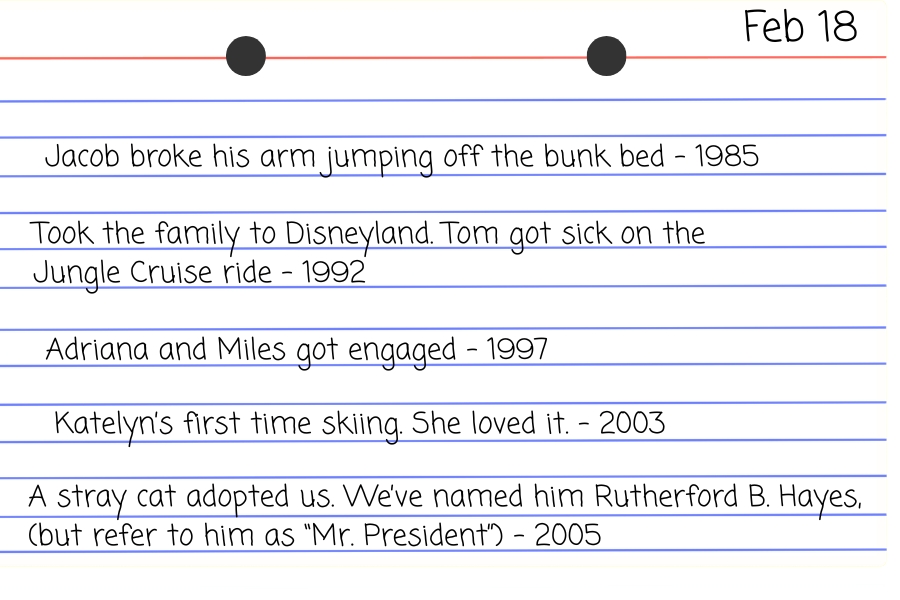
    One woman shared a brilliant heirloom that belonged to her grandma, which solves some of these problems. It’s called a perpetual calendar, and it keeps the whole family’s major memories in one spot. Essentially, it’s a ring of index cards that each have a month and day on them, but no year. As events happen in the family, they get written on the day they happened, with the year written next to them.

    Watch Jenn Perez Miller explain how her grandma’s perpetual calendar, which she started in the 1970s, works:

    The beauty of this idea is that it doesn’t take up a huge amount of space. If the cards eventually fill up, they can be stored physically or digitally and replaced with new ones, making the calendar filled with family memories essentially eternal.

    Another plus is that people can decide what they think is important to document. Will your great-grandkids care if you replaced your carpet 60 years ago? Maybe, maybe not. But not all memories have to be monumental. There’s something special about seeing the everyday events our loved ones felt were worth noting.

    An index card filled with family memories
    A sample of what a perpetual calendar card might entail. Photo credit: Canva

    People loved the idea:

    “Brb, gonna go put a perpetual calendar on my wedding registry and start this from our wedding day.”

    “If I came across something like this in an estate sale I’d immediately sit on the floor and read every single one.”

    “My boyfriend’s grandma did this and we were cryinnnnng laughing…. She talked about diarrhea a lot.”

    “This is the coolest thing I’ve ever seen.”

    “This is some serious matriarchal behavior and i am sooo jealous that you have something like this!!!”

    “I just love how women bring the family together in simple ways. 🥰”

    “I love the idea of seeing the major and insignificant things that happen on the same day years apart. Puts things into perspective.”

    “Genuinely this is such a treasure, future archeologists would lose their minds finding something like this.”

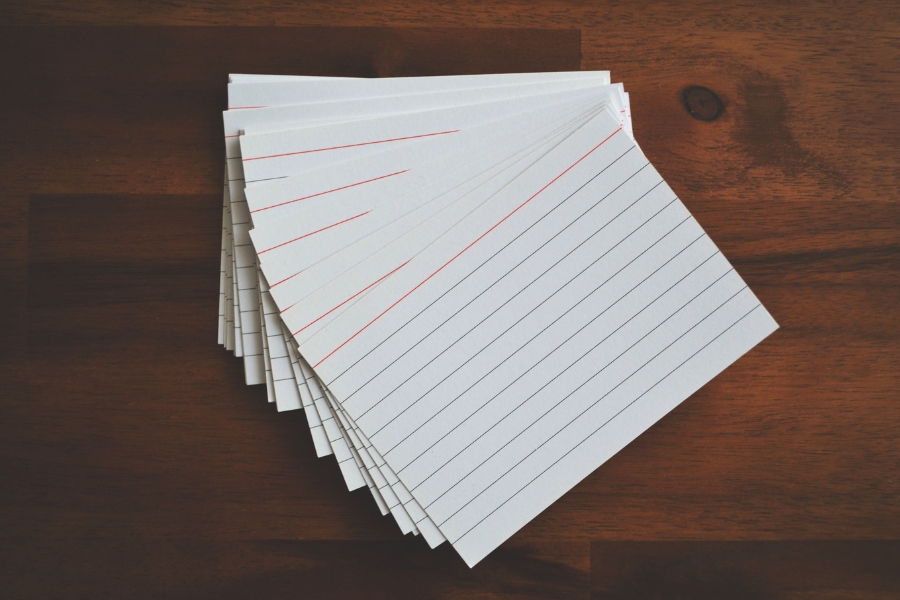
    A pile of index cards sits on a table
    You can make a perpetual calendar yourself with index cards. Photo credit: Canva

    The concept is not only simple, but it’s pretty easy to make yourself. All you need is index cards (one for each day of the year, including February 29th for leap years), a hole punch, and large binder rings. You could also use an index card box with dividers for each month instead of the rings.

    Some of us might see this idea and love it, but wish we had started earlier. But it’s never too late, especially when you think of it as something to pass down through the generations. Someone has to start sometime.

  • Hipster guy’s surprise ranking for each of Snoopy’s relatives has become a viral phenomenon
    Photo credit: Canva, Patrick Ferguson, InstagramHipster guy's surprise ranking for each of Snoopy's relatives has become a viral phenomenon.

    Snoopy, everyone’s favorite beagle from the mind of Peanuts creator Charles Schulz, is the joyous gift that keeps on giving. So, when content creator Patrick Ferguson took the time to rank each and every one of Snoopy’s relatives, it’s no surprise fans were delighted.

    Ferguson does this by playfully spoofing a popular “ranking” system commonly used on YouTube and Twitch. The idea is to put pop culture phenomenon (often movies or video games) and rank them in “tier lists.”

    Standing below an initial shot of all the animated beagles playing instruments, he begins by stating, “Snoopy is the best thing ever drawn or animated, and his siblings are pretty cool too. So I thought I would introduce you to them all and place them on a ‘tier list’ as I count them down.”

    He confirms where his references will come from: “I’m mainly discussing them from their role in Snoopy’s Reunion, but I will briefly mention the comic strips as well. And yes, ‘S’ tier does stand for ‘Snoopy tier,’ even on tier lists outside of this one.”

    Snoopy family tiers

    He begins with “Rover,” who he admits has a “cliché name even by today’s standards.” We see Rover, his light brown ears bouncing as he plays the resonator guitar. “Love his collar choice too. S tier.” From the Snoopy Town Tale fandom site, it’s reported that Rover only appeared in the TV special Snoopy’s Reunion, but never in the actual comic strip.

    Next, we see Olaf, a pudgier dog in a red hat. He blows dust off a jug, which happens to be his instrument of choice. Ferguson insists that Olaf “deserves every good thing in life that comes his way. S tier.” A site dedicated to learning about the Peanuts characters confirms that Olaf is “warm and sensitive, with a big, gentle heart.”

    We then see Molly, wearing a blue dress that Ferguson points out is similar to fellow Peanuts cast-mate Lucy’s signature style. Molly plays the mandolin and has some “really good, iconic Snoopy family qualities to her. I think I’ve gotta put her in S tier.” Like her brother Rover, Molly also only appeared in Snoopy’s Reunion.

    Then there’s Spike, who Ferguson points out has the “second most iconic look in the Snoopy family. He plays a mean fiddle.” He also notes that Spike isn’t the only S-tier dog with that name in the animated TV lexicon. Ferguson is most likely referring to the bulldog from Tom and Jerry, or quite possibly the bulldog from the Looney Tunes universe.

    The Peanuts site shares that Spike lives out in the desert: “He prefers a quiet, solitary life. His closest friends are the cacti and tumbleweeds. Spike is thoughtful and, at times, melancholic.”

    Next up is Belle. “She should have her own plushie. I think I have to go with S tier on this.” It’s stated on the site that Belle “lives in Kansas City with her teenage son. Snoopy and Belle reconnected when Snoopy hopped the wrong train on his way to Wimbledon and ended up in Missouri.”

    Up next is Marbles. The Peanuts site describes him as quiet and “weary of cats, often checking for them before entering a new place. Marbles is smart but lacks the imagination of his other siblings. He always finds himself confused by the games Snoopy plays.”

    @sy.fifilm

    #SNOOPY ૮ ◞ ﻌ ◟ ა i love andy sososo much hes so fluffy #foryou #viral #foru #4u #fyp #fup #downtownboy CREDITS: @esnopii_ 🐾

    ♬ original sound – Wayne ୨ৎ

    Lastly, we can’t forget the drummer. “Then we arrive at Andy. And this is the Snoopy sibling I want to pick up the most—but only after he and his scruffy fur are done jamming on the drum set. S tier.” Andy is described by the site as “a good traveler.” He “is always up for a walkabout, but his sense of direction is terrible.”

    As if that wasn’t adorable enough, Ferguson wants to give credit to both the guardian of the Snoopy gang and his own mother. “And could we forget the woman who raised the entire Snoopy family? Missy. One of the few S-tier moms, aside from my own.”

    Meet Patrick

    Upworthy had the delightful chance to chat with Ferguson, who shares that he’s a huge Snoopy fan. “Some of my earliest memories of laughter involve watching Snoopy as the Red Baron. I wouldn’t call myself the biggest Peanuts fan, per se, but I’ve always called Snoopy the greatest thing ever drawn.”

    He also further explains why he chose the tier system. “I made the video both to celebrate a character I love but never made a video for, and to poke fun at the idea of doing a tier list (a video concept I don’t see myself revisiting). The irony of having everyone at S tier plays into that.”

    The best part was the online response. “I’m surprised how many people commented on the wholesomeness of the video, if for no other reason than I was being very silly in every aspect of making it, albeit in a way that was also pretty sincere.”

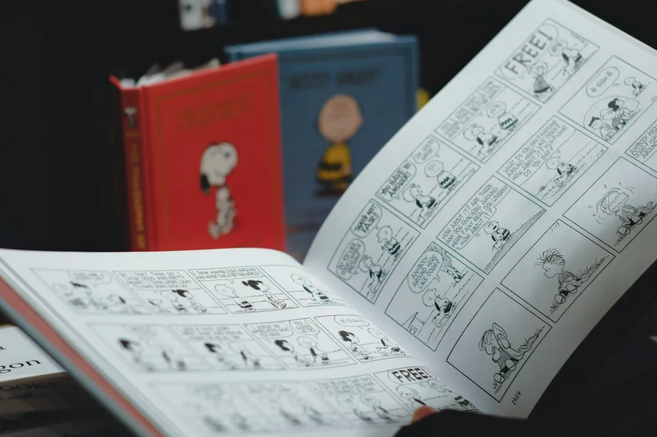
    Snoopy appears alongside his friends in the Peanuts comic strips. Photo credit: Unsplash

    The comments were definitely supportive and wholesome, indeed. The Reel has over 160,000 likes and nearly 500 comments. One Instagrammer shares, “Grinned so hard watching this. 10/10. No notes.”

    A few people argue over which instrument the puppies are playing. “95 percent sure Rover is playing a resonator dulcimer and not a resonator guitar,” one person notes. “10/10 video, though!”

    Another has thoughts on Spike, writing, “I’m kind of suspicious of the Snoopy with the mustache.”

    This commenter sums up what many seem to feel quite nicely: “I want to cuddle all of them.”

  • Math researchers confirm ’20 year rule’ in fashion trends and it’s uncanny
    Photo credit: CanvaTwo women show fashion trends from different decades.

    Everything old is officially new again after mathematicians determined that trends tend to resurface “every 20 years or so.” So, while a de-cluttering organizer might tell you to pitch those low-rise skinny jeans, these researchers might say, not so fast!

    The team of mathematicians, led by Emma Zajdela at Northwestern University, took a look at well over 150 years of women’s clothing styles and determined that they could calculate trends resurfacing about every 20 years, calling it, “the 20-year rule.”

    20-year rule

    In an article for Popular Science, Andrew Paul writes, “Clothing trends come and go, but in some cases, they don’t stay away for too long. For decades, both the fashion industry and its devotees have referenced the so-called “20-year rule,” which suggests society is liable to see certain styles return at semi-regular intervals. However, without any hard data to back up the claim, that “rule” has long remained more of a hypothesis.”

    This is where the research comes in. Zajdela shares, “To our knowledge, this is the first time that someone developed such an extensive and precise database of fashion measures across more than a century.”

    The research

    Here’s how they did it. The Northwestern research team took a look at runway collections dating all the way back to 1869 and combined those trends with information from the commercial pattern archive. Explained on their site, “The Commercial Pattern Archive (CoPA) at the University of Rhode Island is both an extensive collection of commercially produced paper sewing patterns and a unique scholarly database used by costumers, fashion designers, museum professionals, scholars, and vintage aficionados the world over.”

    @swagbloke

    The 20 year rule. Trends are so accurately cyclical and you dont even realise. #swag #fashiontrends

    ♬ original sound – swagbloke

    What they then were able to do is measure waistlines, pant legs, skirt length, etc., to determine the formula. Paul writes that the study found the pendulum is always swinging. “Basically, the fashion industry is constantly fluctuating between originality and tradition. Once a clothing style is too popular, designers begin changing their new apparel just enough to stand out while still remaining desirable to potential wearers.”

    Fashion is evolving

    Plenty of Redditors have weighed in on the topic. On a thread entitled “Fashion stopped evolving 20 years ago…what do you think?”

    A commenter proves that perhaps we’re about to shift trends. “Yes and no. 20 years ago was the last signature defining aspects of fashion that characterized it, but otherwise no. Fashion is still evolving as normal, we just haven’t hit a point where we get a shift that makes past fashion seem alien, and we shouldn’t expect it to happen anytime soon. No one walks around in a Victorian wardrobe today, and Victorians wouldn’t walk in ours. People keep craving a shift that makes the fashion landscape itself change, which simply isn’t going to happen.”

    This person shares, in part, that indeed everything comes back in style. “There’s been actual change though, with tons of ebb and flow. The 90’s / early 00’s was really influenced by the 60’s & 70’s as well. 2010’s felt very 80’s with their own twist. I feel like we’re in the 60’s again (as in what people actually wore in the 60’s, not the media), with clean girl, beige, minimalism, whatever. But if you follow trends, you’ll see there’s been a lot of pushback against that now, especially since fashion is political. Give it a few years and we’ll be in the 70’s / 80’s. That whole (The) Devil Wears Prada speech about fashion trickling down is true.”

  • 17 Great Depression recipes people still cook today during hard times
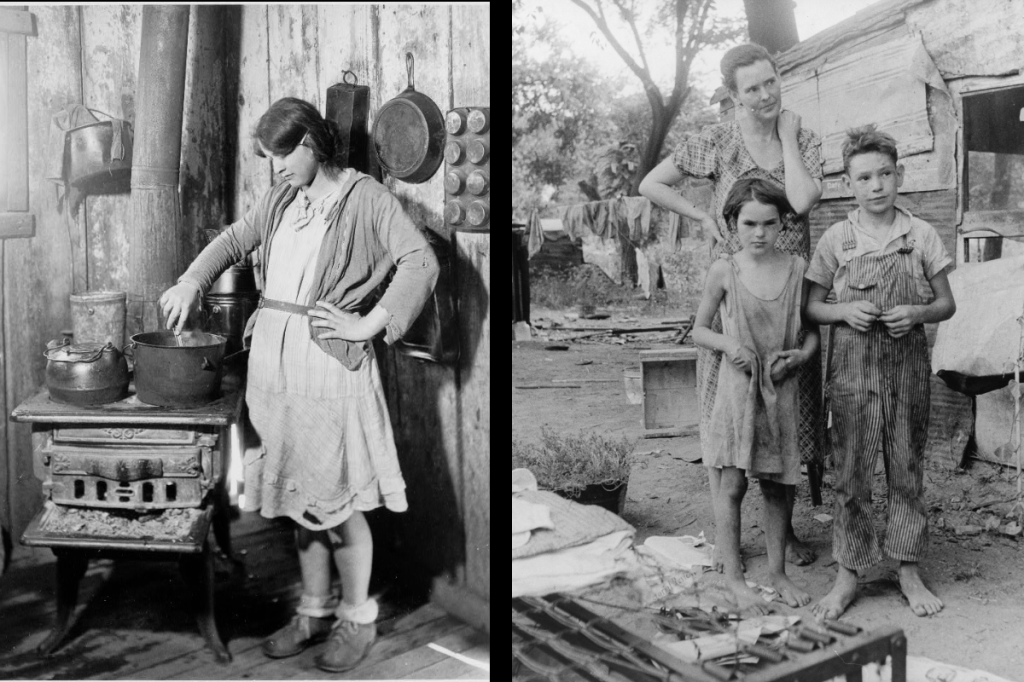
    Photo credit: Lewis Wickes Hine/Library of Congress, Dorothea Lange/WikipediaRecipes from the Great Depression to make today.

    The Great Depression, which lasted from 1929-1939, caused economic turmoil worldwide. Families struggled to feed themselves, and went to extreme lengths to stretch food and utilize all available ingredients.

    Known as the Greatest Generation (those born between 1901 and 1927), their resourcefulness resulted in a number of creative (and delicious) recipes that remain relevant today. Home chefs and bakers shared their Great Depression recipes on Reddit that have been passed down and are still enjoyed today to help others get inventive and save money.

    From soups and stews to cakes, these are 17 Great Depression recipes to try.


    Soups, Stews and More

    Beef and Noodles

    “My grandmas go to: Bag of egg noodles 1 can of creamed corn 1 can Campbells chicken noodle soup 1 lb ground beef. Salt and pepper to taste. Brown ground beef, add all other ingredients, add enough water or light chicken stock to cover noodles if needed. Bring to boil, and reduce to a simmer for about 15 minutes, take off the heat and let it rest 10 minutes before serving with buttered white bread. I still make this to this day. My kids loved it too. Basically homemade Hamburger Helper.” – -__Doc__-

    Hoover Stew

    Ingredients

    1 box noodles
    A can of tomatoes
    1 package of hot dogs, or 1 can of sausage or meat
    A can of corn, peas or beans
    2-4 cups water

    Instructions

    “Mix all ingredients together in a pot until boiling. Then simmer for 15-20 minutes until the noodles are tender. If you have aromatics, onion and garlic would be a great addition. If not, the recipe is great as is.” – Josuaross54

    Zaprezna soup

    “Depression soup… make a roux, add salt pepper and caraway seeds. Add water to make a thick soup texture. Use an egg or two mixed with flour and salt pepper and mix together to make dumplings.. drop into the soup to cook.. This was called zaprezna soup or depression soup. We ate it often in the 60’s after my dad abandoned us. Money was short but this soup was good.” – User Unknown

    Chipped Beef On Toast

    Ingredients

    8 oz. dried beef jerky
    2 tbsp butter or oil
    4 tbsp flour
    4 cups milk
    Salt and pepper to taste
    Sliced homemade bread, for serving

    Instructions

    “Add jerky and oil to a pan over medium heat. Cook until the meat softens, about 3-4 minutes. Stir in your flour and cook for 1-2 minutes. Add milk and bring to a low boil. Allow sauce to thicken for up to 5 minutes. Season with salt and pepper if you have it. Serve over homemade bread, toasted if desired.” – Josuaross54

    Rivel Soup

    “In Ohio…My mom would cook Rivel Soup when I was a kid in 80s and 90s. She still makes it. It’s milk based with flour dough balls in it. I hate it. Sometimes they would fry potatoes and put them in the soup.” – Vegetable_Record_855

    Potato Soup

    Ingredients

    4 large potatoes, peeled and sliced (or 2 cans of potatoes)
    2 garlic cloves, chopped
    One carrot, sliced
    A can of meat, sausage, or hot dogs (optional)
    3 cups water or stock
    3 cups milk
    Any herbs you have on-hand
    Salt to taste

    Instructions

    “Slice all your potatoes, garlic, and carrots. Add to a soup pot with the meat, water, and milk. Bring to a boil and reduce the heat, keeping the mix at a low simmer. Then, cook for 30 minutes until all veggies are tender. Add herbs and salt, if using. Serve hot.” – Josuaross54

    Tuna Fish Stew

    “My mother’s family always made tuna fish stew. It is celery, potatoes, canned tuna fish, milk, and hard boiled eggs. Sautee the celery until half way cooked, throw in some chopped potatoes and water. Cook until the potatoes are done. Thin the stew with some milk. Throw in chopped hard boil eggs. Salt and pepper to taste Serve over stale bread. It was cheap, quick, and really filling.” – RoseNoire4

    Sides

    Baked Beans

    Ingredients

    1 package soaked dried beans, or 2 cans of beans
    One tomato, chopped
    1 onion, chopped
    2 cloves garlic, chopped
    2 tbsp lard
    Two tbsp molasses
    One cup water

    Instructions
    “Soak your beans, if using dried, overnight and drain the liquid. Prepare your veggies by chopping. Omit any vegetable that you do not have on-hand. Add lard to a stock pot and cook your vegetables until tender. Add the beans, molasses, and water. Cook all together with a lid on for 2-3 hours or until the beans have your desired consistency. Add more water if needed.

    Milk Potatoes

    “Milk potatoes. Fry sliced potatoes with salt, pepper and a bit of onion until almost done. Pour milk over potatoes and simmer until potatoes are cooked through.” – kms811•6y ago

    Ash Cakes

    “Ash cakes got their name because different renditions are cooked in the hot white ash of your campfire. These are only 3 ingredients but are filling and have a great texture.

    Ingredients

    ½ cup cornmeal
    1 cup meat stock or water
    2 tbsp lard or grease

    Instructions
    Mix both ingredients together in a bowl and allow to sit overnight to hydrate the cornmeal. Pat into a bread pan and refrigerate or add to your cool storage before allowing to set up. The next day, slice into 1-inch slices and fry in melted lard. Serve hot and crispy.” – Josuaross54

    Sweets

    Potato Donuts

    Potato donuts from depression era cooking with Dylan Hollis.” – BainbridgeBorn

    Wacky Cake

    “If you have interest in baking, make a wacky cake. It’s a chocolate cake that has no milk, butter, or eggs, because those items were scarce during the Depression, but it is so good! The recipe I linked has more steps, but I’ve known a lot of people to literally just dump and mix everything in the baking dish.” – gwhite81218

    Rice Pudding

    Ingredients

    1 cup rice
    2 cups milk
    2 tbsp butter
    3 tbsp honey, maple syrup, or molasses
    Pinch of cinnamon

    “Combine all ingredients in a small saucepan and cook over low heat, about 20 minutes, stirring frequently. Taste for doneness and cook an additional 5 minutes, tasting until desired consistency. Serve warm.” – Josuaross54

    Tomato Soup Cake

    Tomato soup cake.” – AxelCanin

    Water Pie

    Water pie .” – AxelCanin

    Mock Apple Pie

    “There was a thing for ‘apple’ pie made with Ritz crackers my grandmother made some time ago (she was born 1901 so def Depression life).https://www.allrecipes.com/recipe/9545/mock-apple-pie/ That recipe looks more complicated than the one grandma made, but there are a number of recipes online for it, including one made by Ritz, on the box.” – User Unknown

    Hard Time Pudding

    “Batter: 1 cup flour
    1/2 cup white sugar
    1/2 cup raisins (Optional, I hate them)
    3 tsp Baking powder
    1/2 cup water
    Syrup: 1 1/2 cup Brown sugar
    1 TBSP. butter/marg.
    1 tsp vanilla
    1 1/2 – 2 cup water

    Mix together flour, sugar, raisins, Baking powder, and water. Pour into a baking dish. In a sauce pan combine brown sugar, butter, water bring to boil then add vanilla and pour over the batter. Bake at 300 º for 1/2 hour.” – MsBean18

    This article originally appeared last year. It has been updated.

  • Robin Williams and Martha Stewart barely keep it together in this classic cooking segment
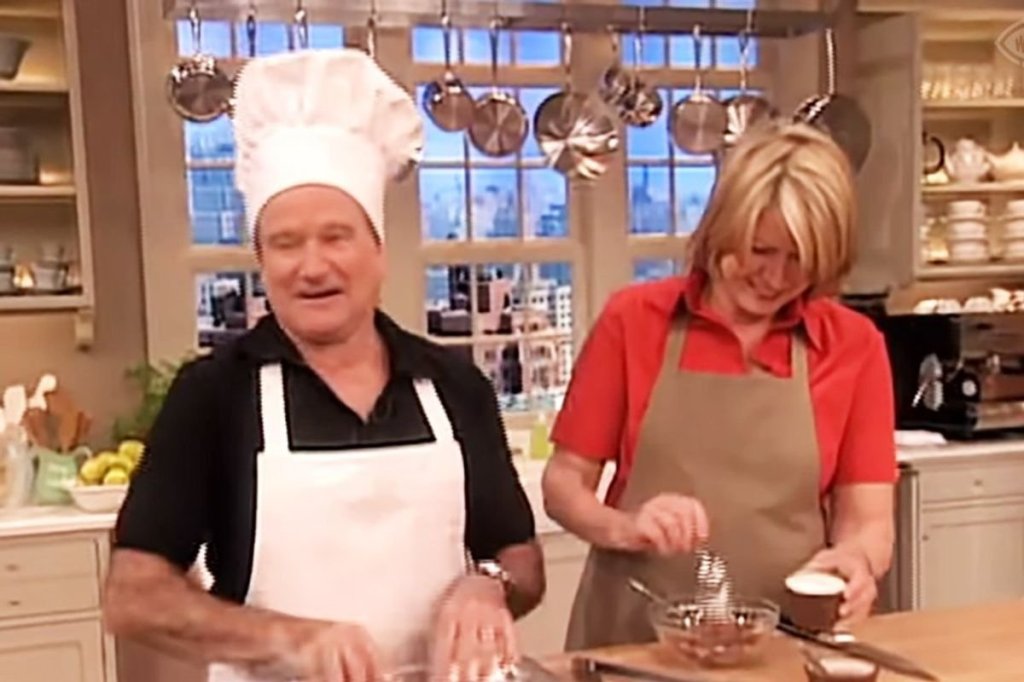
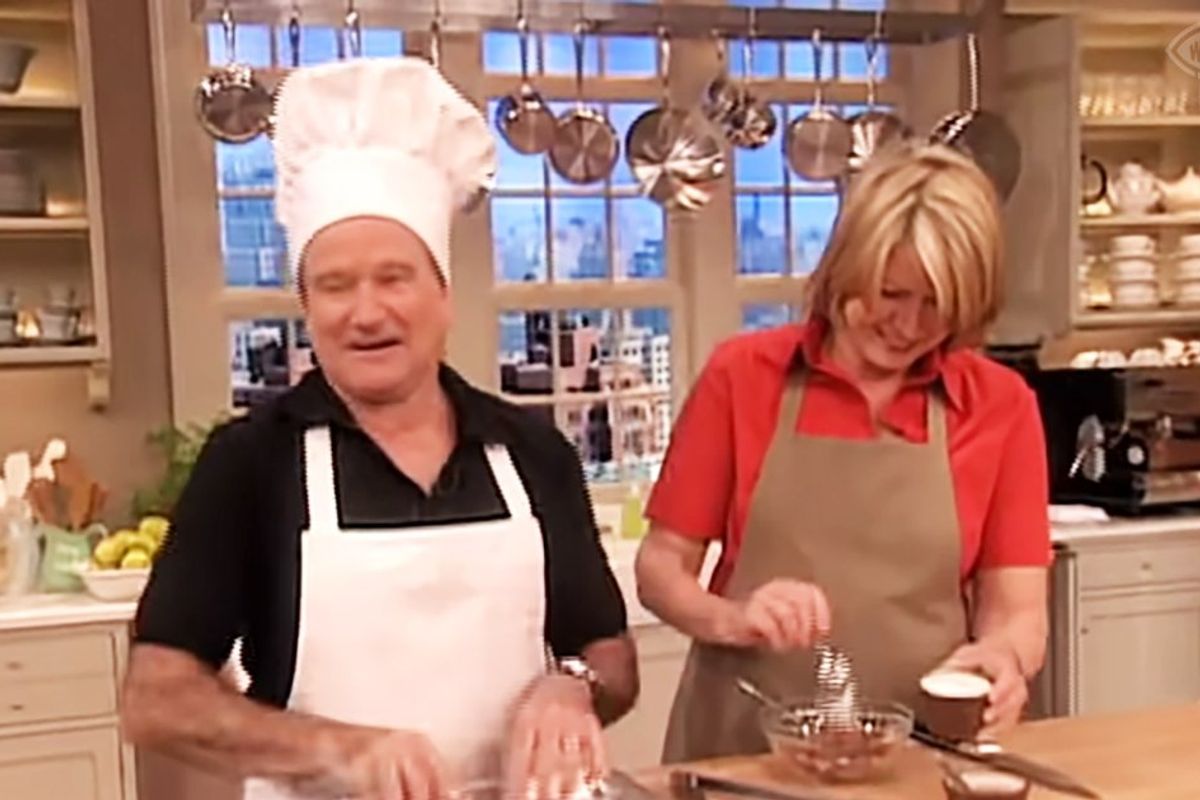
    Photo credit: via Martha Stewart/YouTube Robin Williams making Martha Stewart crack up.
    ,

    Robin Williams and Martha Stewart barely keep it together in this classic cooking segment

    “I feel incredibly honored to have grown up in an era where we had this wonderful man.”

    It’s hard to believe it’s been over 10 years since the great Robin Williams left our world. The man left a fantastic legacy of laughs, from his time on TV’s Mork and Mindy to his performances in comedy hits such as Mrs. Doubtfire and Disney’s Aladdin.

    Williams was also an incredible dramatic actor, giving memorable performances in films such as Dead Poets Society and Good Morning, Vietnam.

    But the Comic Relief star always shined brightest when he improvised on stage, whether on talk shows or in stand-up comedy. One appearance on Martha Stewart Living from 2004 resurfaced last year because of how quickly he improvised jokes while cooking with Stewart. It’s also great because Stewart plays the perfect straight woman to Williams, although she has a tough time holding it together.

    Their chemistry was spicy

    Whenever Stewart mentions an ingredient, whether cumin or brown sugar, Williams turns it into a comedic riff. He also jokes in Spanish and does a few accents that feel off-color over 20 years later, but they’re delivered with the best intentions. Williams also walks a bit of a tightrope during the segment while he tries to keep his humor appropriate for daytime TV while reacting to Stewart, who is “rubbing the meat.”


    “I feel incredibly honored to have grown up in an era where we had this wonderful man,” the most popular commenter on the YouTube video wrote. “His ability to change characters on the fly is remarkable,” another added. “His spontaneous humor is unmatched! He was an incredibly smart, kind and funny man. He is sorely missed!” another commenter said.

    Who were Martha Stewart’s favorite guests on her show?

    Years later, Stewart would admit that Williams was one of her favorite guests on the show. “We had so much fun because he was the fastest wit and the fastest mind and his mind was like a computer,” Stewart told AOL in 2022. “No matter what I said, he had a retort and he was so quick. I was marinating meat and he loved that—can you imagine what he did with ‘marinating meat’ and ‘rubbing the meat’ and ‘ooh la la?’ Watch the segment; it’s really good.”

    What’s The Many Lives of Martha Stewart film about?

    Although Martha Stewart has rarely been out of the spotlight over the past five decades, she was in the news after releasing the 2023 Netflix documentary about her life, The Many Lives of Martha Stewart.

    The film follows Stewart’s journey from teen model to Wall Street stockbroker to the queen of entertaining and good taste. Eventually, she would become America’s first self-made female billionaire. The documentary also discusses the insider trading scandal that sent her to prison in 2004.

    The film also reveals Stewart’s guiding philosophy. “I have two mottos. One is: Learn something new every day. And the second one is: When you’re through changing, you’re through,” Stewart says in the film. “Change that garden if you don’t like it. Rip it out and you start all over again.”

    If you want to relive the hilarious moments between Stewart and Williams in your kitchen, here’s a recipe for the Chili Espresso Steak Rub.

    This article originally appeared two years ago. It has been updated.

  • ‘Farmer’s Coke,’ a Southern U.S. snack from a bygone era, is now gaining traction in Japan
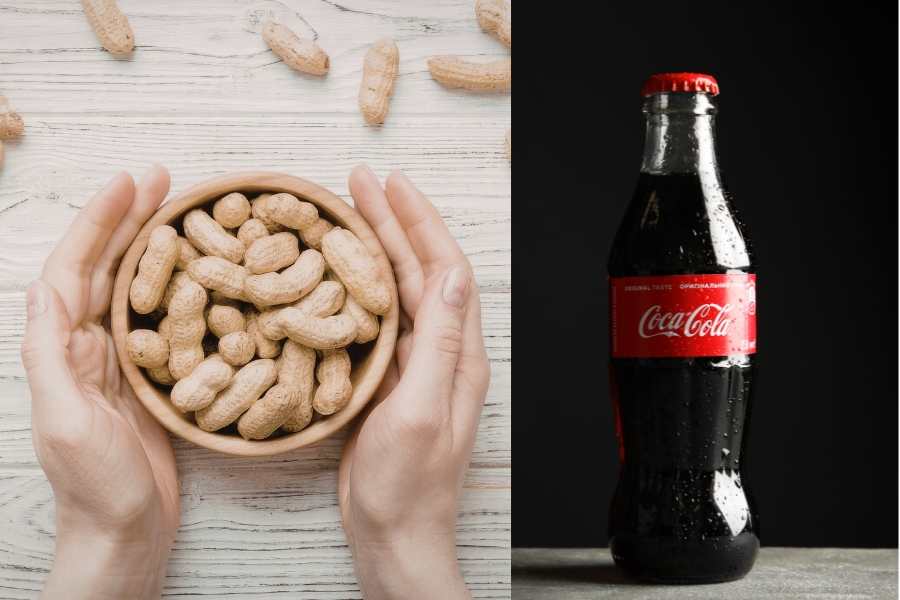
    Photo credit: CanvaPeople are putting peanuts into their Coke.

    Have you ever seen someone pour a snack pack of peanuts into a bottle of Coca-Cola? If so, you may have memories of relatives from the Southern United States. If not, you may be wondering why on Earth someone would do such a thing.

    An X user from Japan shared a photo of a glass with peanuts floating atop what appears to be cola, writing (auto-translated from Japanese):

    “About 30 years ago, I read in a Haruki Murakami essay that in America, it’s popular to drink cola with peanuts in it. I was like, ‘Huh,’ and a long time has passed since then, but I finally tried it. What the hell is this? It’s ridiculously delicious, damn it. It’s on a level where I won’t want to drink cola any other way anymore.”

    Are peanuts and Coke really an American tradition?

    Apparently, this “American” tradition has been gaining traction in Japan, with people sharing their experiences on social media. But many Americans may be surprised to see Coke with peanuts described as a “popular” combo. It’s not really a common or widespread snack choice. For some, however, it’s a flash from the past.

    “Southern kids did this all the time,” wrote one commenter. “Our folks would buy us an ice cold Coke in a bottle and a bag of peanuts, we’d drink some Coke, then funnel in some peanuts. Delicious and fun.”

    “I learned this from my father, but it was Dr Pepper. He was stationed in Texas when he was in the Army. That’s where he learned about it.”

    “My very southern high school AP US History teacher swore by peanuts and Coke but was adamant that the only way to do it was in the little glass bottles that you only really now see at weddings and other functions. Not sure if there’s science to back that up.”

    According to a few commenters, the combo also became popular in parts of Norway after people emigrated to the U.S. and then brought the idea back to Norway with them.

    Where did peanuts and Coke come from?

    How did it get started? According to The Local Palette, which explores the food culture of the South, the combo was known as “farmer’s Coke” and was a workingman’s beverage:

    Its fizzy refreshment bore sweet and salty satisfactions that could be savored during a work break. Some trace it back to the early decades of the twentieth century when ‘dope wagons’ roamed the grounds of textile mills before the advent of the vending machine. These food and beverage carts sold bottles of ‘dope,’ a nickname for Coca-Cola that was perhaps a reference to the days when the popular soda contained trace amounts of cocaine.

    For farmers, pouring the peanuts into the soda bottle made sense. For one, it kept them from touching the nuts with dirty hands. It also meant they could eat and drink with just one hand.

    There are multiple variations on the theme. Many people insist on taking a few sips from a bottle of Coke and then dumping the nuts straight into the bottle. Some say it has to be Mexican Coke, since it uses sugar instead of corn syrup. Others swear by RC Cola or Dr. Pepper instead of Coke. People disagree on whether the peanuts should be roasted or boiled.

    Why peanuts and Coke make such a delicious combination

    Sweet and salty is generally known to be an irresistible combination of flavors, so there’s that. But according to X user’s Aakash Gupta’s analysis, the chemistry that happens when you drop the nuts into the soda provides another layer of flavor:

    Coca-Cola sits at pH 2.5, roughly the same acidity as stomach acid. When you drop roasted peanuts into that, the phosphoric acid partially denatures the surface proteins on the nut, releasing free glutamate. You’re generating umami in real time inside the glass.

    The salt on the peanuts suppresses bitter taste receptors on your tongue, which amplifies your perception of sweetness without adding a single gram of sugar. Coca-Cola already has 39g of sugar per can. Your brain registers it as even sweeter because the salt is clearing the noise from competing flavor signals.

    Then carbonation does two things. CO2 dissolved in liquid forms carbonic acid, which triggers pain receptors (TRPA1), not taste receptors. That mild irritation resets your palate between sips so you never get flavor fatigue. Every sip hits like the first. Second, the bubbles physically agitate the peanut surface, accelerating the protein breakdown and glutamate release. The longer the peanuts sit, the more umami you extract.

    The fat content seals it. Peanuts are 49% fat by weight. Fat is the only macronutrient that activates CD36 receptors, which your brain interprets as richness and satisfaction. Mix that with sugar, salt, acid, umami, and carbonation and you’ve accidentally triggered every major reward pathway in the human taste system simultaneously.

    Sounds fancy. Perhaps it’s worth a try. If nothing else, the trend is creating some fun intercultural exchanges with our fellow humans on the other side of the world.

Nostalgia

Hipster guy’s surprise ranking for each of Snoopy’s relatives has become a viral phenomenon

Conservation

How Romania took its national recycling rate from 12 percent to 94 percent in just two years

People Skills

Skincare mogul says her ‘high touch’ theory will be the most important job-saving skill in the age of AI

Culture

Math researchers confirm ’20 year rule’ in fashion trends and it’s uncanny