Van Gogh never got to enjoy his own historic success as an artist (even though we’ve been able to imagine what that moment might have looked like). But it turns out that those of us who have appreciated his work have been missing out on some critical details for more than 100 years. I’m not easily impressed, OK? I know Van Gogh was a genius. If the point of this were “Van Gogh was a mad genius,” I would not be sharing this with you.
But I found this and I thought, “Oh, what a vaguely interesting thing.” And then I got to the part about the Hubble Space Telescope, and, let me tell you: Mind. Blown. We’ve got the set up here, but you have to watch the video for the full effect. It’s all the way at the bottom. Get this: Van Gogh was a pretty cool artist (duh), but as it turns out…What’s the truth behind when you take off an ear?
<a href="https://assets.rebelmouse.io/eyJhbGciOiJIUzI1NiIsInR5cCI6IkpXVCJ9.eyJpbWFnZSI6Imh0dHBzOi8vYXNzZXRzLnJibC5tcy8yODc5NjkzNi9vcmlnaW4uanBnIiwiZXhwaXJlc19hdCI6MTY4NDcxNzczMH0.IY31mA9CX_0rMhq4oqhR62BN-t6Hda0Xea7Vej1WU_g/img.jpg?width=980">assets.rebelmouse.io</a>
…he was also A SCIENTIST!*
*Pretty much.
Here’s the story.
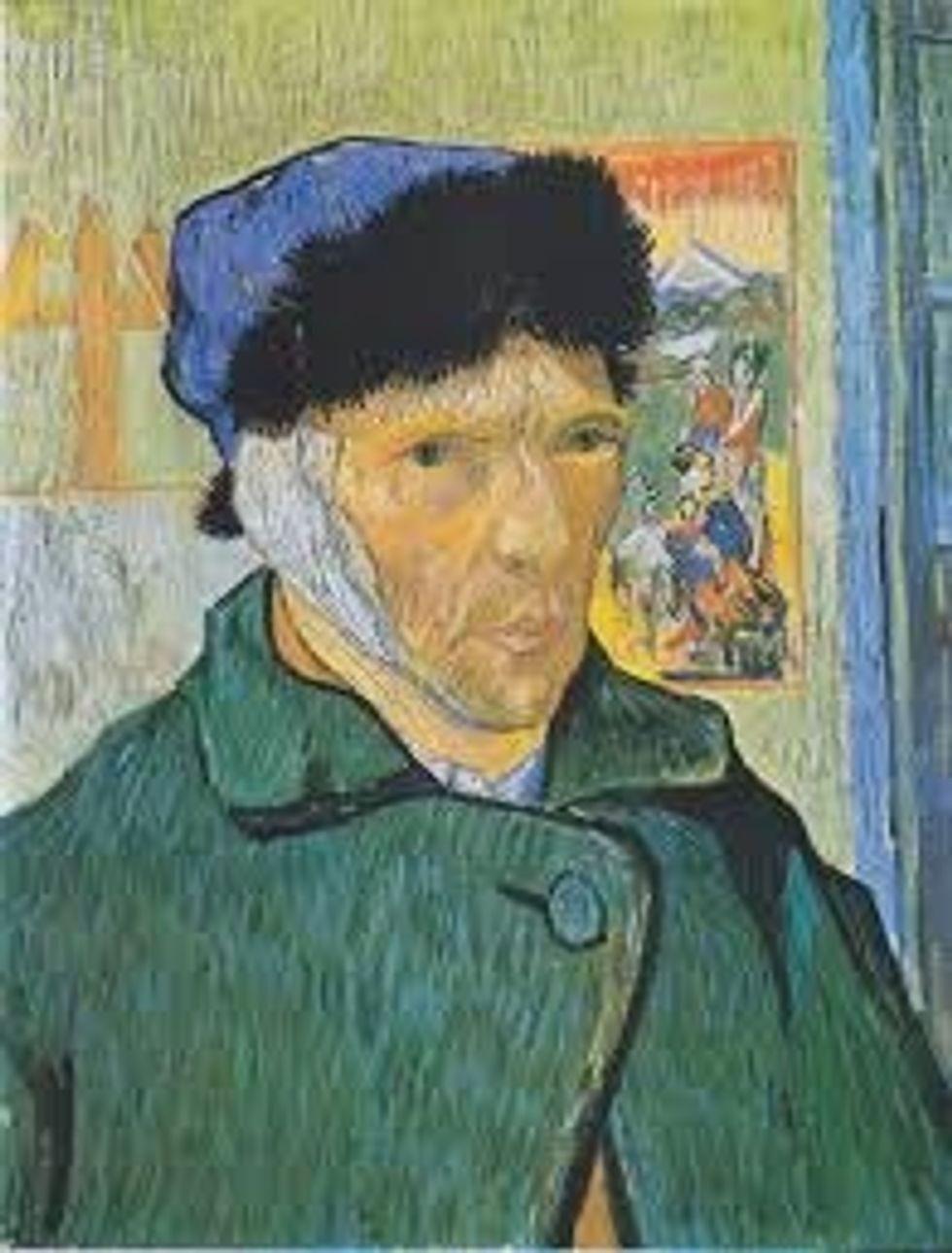
While Van Gogh was in an asylum in France, after he mutilated his ear during a psychotic episode*…
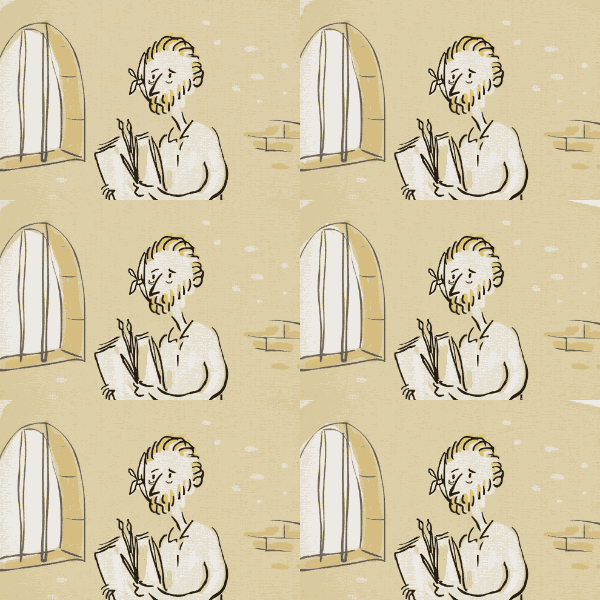
(*Or, and I’d like to thank the entire Internet for pointing this out, there’s a theory that his friend Paul Gauguin actually cut off his ear, in a drunken sword fight, in the dark. The more you know!)Animated a thinking one-eared Van Gogh. All Van Gogh GIFs via <a href="https://ed.ted.com/lessons/the-unexpected-math-behind-van-gogh-s-starry-night-natalya-st-clair">TED-Ed</a>.
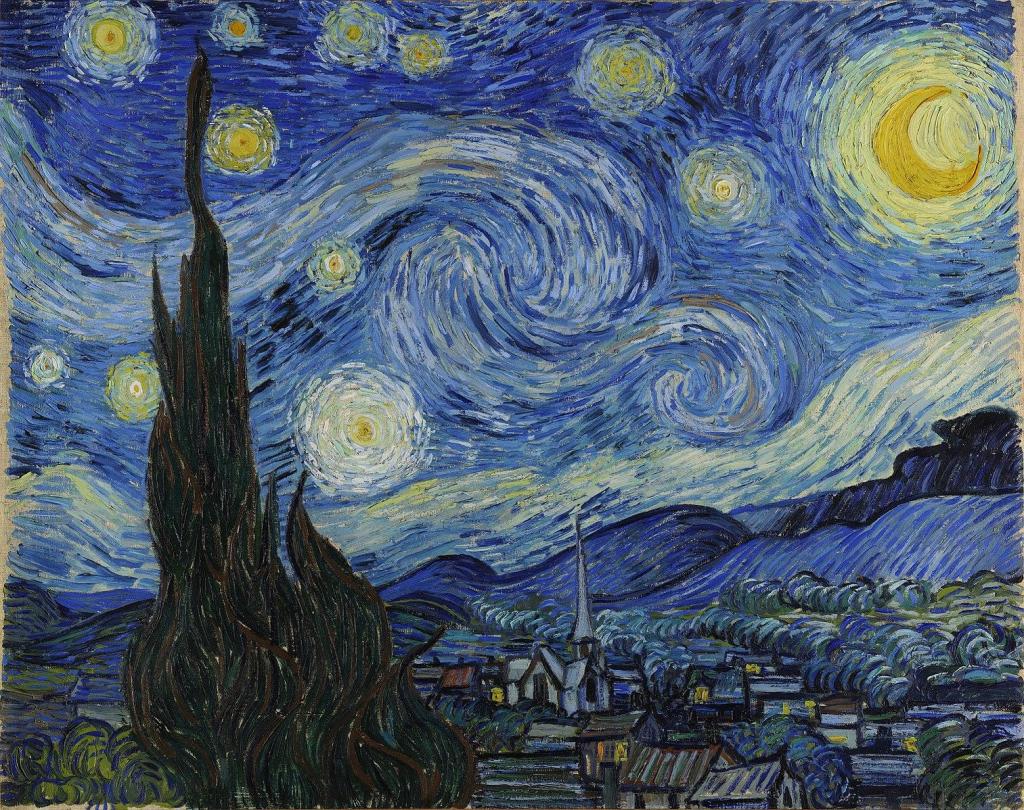
…he was able to capture one of science’s most elusive concepts:
Although it’s hard to understand with math (like, REALLY HARD), it turns out that art makes it easy to depict how it LOOKS.
So what is turbulence?
Turbulence, or turbulent flow, is a concept of fluid dynamics where fluid movements are “self-similar” when there’s an energy cascade — so basically, big eddies make smaller eddies, and those make even smaller ones … and so on and so forth.
It looks like this:Pictures explain science.
<a href="https://assets.rebelmouse.io/eyJhbGciOiJIUzI1NiIsInR5cCI6IkpXVCJ9.eyJpbWFnZSI6Imh0dHBzOi8vYXNzZXRzLnJibC5tcy8yODc5NzAwNC9vcmlnaW4uZ2lmIiwiZXhwaXJlc19hdCI6MTY5MjgyNjUwMn0.-U3boyxh3XlYrnonSS2cjvw9PyQbOmNY4qOXqd99rwg/img.gif?width=980">assets.rebelmouse.io</a>
See? It’s easier to look at pictures to understand it.
Thing is, scientists are pretty much *just* starting to figure this stuff out.
Animation of referencing art to science.
<a href="https://assets.rebelmouse.io/eyJhbGciOiJIUzI1NiIsInR5cCI6IkpXVCJ9.eyJpbWFnZSI6Imh0dHBzOi8vYXNzZXRzLnJibC5tcy8yODc5NzA4OC9vcmlnaW4uZ2lmIiwiZXhwaXJlc19hdCI6MTY4NDI5NTUzMH0.E-AIaWySLCJiGdZZz1cbK_EhO4QwTS3ikMuchS5dCpY/img.gif?width=980">assets.rebelmouse.io</a>
Then you’ve got Van Gogh, 100 years earlier, in his asylum, with a mutilated ear, who totally nailed it!
Science studying Van Gogh.
<a href="https://assets.rebelmouse.io/eyJhbGciOiJIUzI1NiIsInR5cCI6IkpXVCJ9.eyJpbWFnZSI6Imh0dHBzOi8vYXNzZXRzLnJibC5tcy8yODc5NzA5MS9vcmlnaW4uZ2lmIiwiZXhwaXJlc19hdCI6MTY4NDcwODIyMn0.8BiCCSxAaB20cSUmbFpW1ams6Ibkf-lg8c031TUsnT4/img.gif?width=980">assets.rebelmouse.io</a>
The folks who noticed Van Gogh’s ability to capture turbulence checked to see whether other artists did the same. Most impressionists achieved ” luminance” with their art (which is the sort-of *pulsing* you see when you look at their paintings that really shows what light looks like).
But did other artists depict turbulence the way Van Gogh did?
NOPE.Animated “The Scream."
<a href="https://assets.rebelmouse.io/eyJhbGciOiJIUzI1NiIsInR5cCI6IkpXVCJ9.eyJpbWFnZSI6Imh0dHBzOi8vYXNzZXRzLnJibC5tcy8yODc5NzEwMS9vcmlnaW4uZ2lmIiwiZXhwaXJlc19hdCI6MTczMzQyODcwNH0.HF3UdStZ6Ltyu7XbCOURbVgnDbjnqwH80kS16iTmrig/img.gif?width=980">assets.rebelmouse.io</a>
Not even “The Scream” could hold a candle to Van Gogh!
Capturing concepts of nature.
<a href="https://assets.rebelmouse.io/eyJhbGciOiJIUzI1NiIsInR5cCI6IkpXVCJ9.eyJpbWFnZSI6Imh0dHBzOi8vYXNzZXRzLnJibC5tcy8yODc5NzEyMS9vcmlnaW4uZ2lmIiwiZXhwaXJlc19hdCI6MTcwNDA5NDEyM30.sUDfSK21jjWBwcMbvP9RH18JtMT_E2nooSDMTBXJ9-Q/img.gif?width=980">assets.rebelmouse.io</a>
Even in his darkest time, Van Gogh was able to capture — eerily accurately — one of nature’s most complex and confusing concepts … 100 years before scientists had the technology to observe actual star turbulence and realize its similarity to fluid turbulence mathematics as well as Van Gogh’s swirling sky. Cool, huh?
Watch the video below to learn even more:
This article originally appeared twelve years ago.
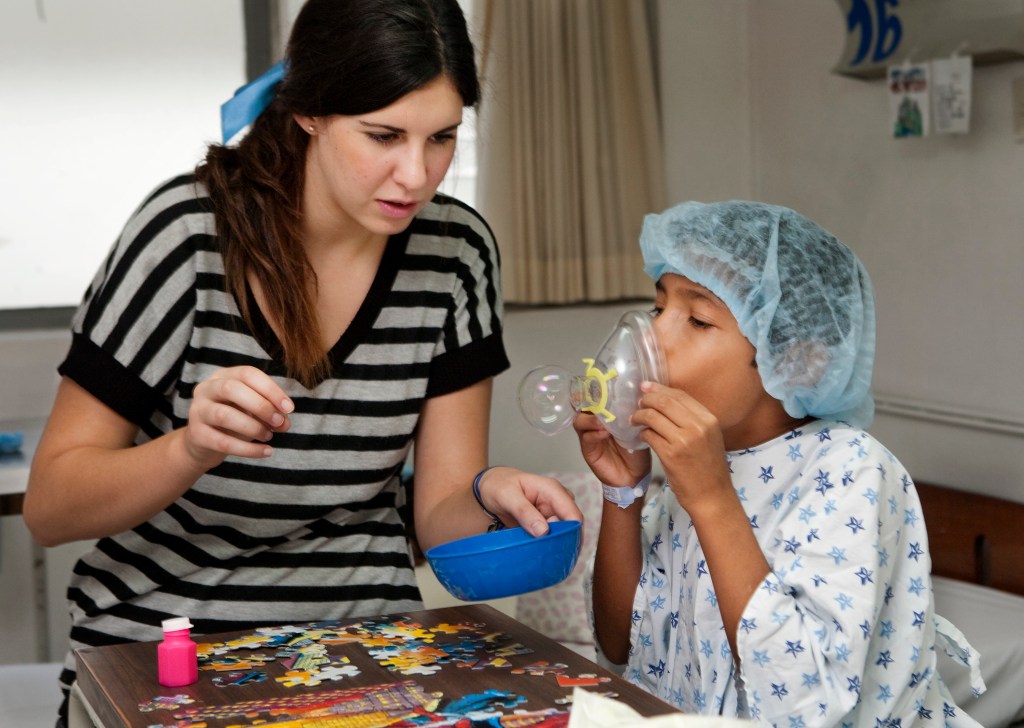
An Operation Smile volunteer reverses an oxygen mask so a child with a cleft condition can blow a bubble for the first time in Guadalajara, Mexico. (Operation Smile Photos)
For thousands of children born with cleft conditions, Operation Smile provides simple, playful tools—like bubbles—to strengthen the skills they need to speak and thrive.
While a bottle of bubbles might seem out of place in a hospital setting, you might be surprised to learn that, for thousands of children around the world born with cleft lip and palate, they can be a helpful tool in comprehensive cleft care. Lilia, who was born with cleft lip and palate in 2020, is one of the many patients who received this care.
As a toddler, Lilia underwent two surgeries to treat cleft lip and palate with Operation Smile’s surgical program in Puebla, Mexico. Because of Operation Smile’s comprehensive care, it wasn’t long before her personality transformed: Lilia went from a quiet and withdrawn toddler to an exuberant, curious explorer, babbling, expressing herself with a variety of sounds, and engaging with others like any child her age.
Lilia is now a healthy five-year-old, with the same cheerful attitude and boundless energy. Her progress is the result of care at every level, from surgery to speech therapy to ongoing support at home—but it’s also evidence that small, sustained interventions throughout it all can make a meaningful difference.
Lilia at age 1, before surgery, and at age 5, 4 years post-surgery
Cleft Conditions: A Global Problem
Since 1982, Operation Smile has provided cleft lip and cleft palate surgeries to more than 500,000 patients worldwide with the help of generous volunteers and donors. Cleft conditions are congenital conditions, meaning they are present at birth. With cleft lip and palate, the lip or the roof of the mouth do not form fully during fetal development. Cleft conditions put children at risk for malnutrition and poor weight gain, since their facial structure can make feeding challenging. But cleft conditions can have an enormous social impact as well: Common difficulties with speech can leave kids socially isolated and unable to meet the same developmental milestones as their peers.
Surgery is a vital step in treating cleft conditions, but it’s also just one part of a much larger solution. Organizations like Operation Smile emphasize the importance of multi-disciplinary teams that provide comprehensive, long-term care to patients across many years. This approach, which includes oral care, speech therapy, nutritional support, and psychosocial care, not only aids in physical recovery from surgery but also helps children develop the skills and confidence to eat easily, speak clearly, and engage in everyday life. This ensures that each patient receives the full range of support they need to thrive.
Marie, 11 months, with her mother at Operation Smile Madagascar before her cleft surgery (Operation Smile Photos)
A Playful (and Powerful) Solution
Throughout a patient’s care, simple tools like bubbles can play a meaningful role from start to finish.
Immediately before surgery, children are often in a new and unfamiliar environment far from home, some of them experiencing a hospital setting for the first time. When care providers or loved ones blow bubbles, it’s a simple yet effective technique: Not only are the children soothed and distracted, the bubbles also help create a sense of joy and playfulness that eases their anxiety.
Milagros Rojas, a volunteer speech therapist in Peru, using bubbles in a screening with a patient. (Operation Smile Photos)
In speech therapy, bubbles can take on an even more important role. Blowing bubbles requires controlled airflow, as well as the ability to form a rounded “O” shape with the lips, which are skills that children with cleft conditions may struggle to develop. Practicing these skills with bubbles allows children to gently strengthen their facial muscles, improve breath control, and support the motor skills needed for speech development. Beyond that, blowing bubbles can help kids connect with their parents or providers in a way that’s playful, comforting, and accessible even for very young patients.
Finally, bubbles often follow patients with cleft conditions home in the “smile bags” that each patient receives when the surgical procedure is finished. Smile bags, which help continue speech therapy outside of the hospital setting, can contain language enrichment booklets, a mirror, oxygen tubing, and bubbles. While regular practice with motor skills can help with physical recovery, small acts of play help as well, giving kids space to simply enjoy themselves and join in on what peers are able to do.
Bubbles at Home and Beyond
Today, because of Operation Smile’s dedication to comprehensive cleft care, Lilia is now able to make friends and speak clearly, all things that could have been difficult or impossible before. Instead of a childhood defined by limitation, Lilia—and others around the world—can look forward to a childhood filled with joy, learning, discovery, friends, and new possibilities.
CTA: Lilia’s life was changed for the better with the care she received through Operation Smile. Find out how you can make an impact in other children’s lives by visiting operationsmile.org today.
Peter Bence’s performance of “Africa” by Toto has over 19 million views on YouTube because of his creative reimagining of the song and, well, just about everyone loves “Africa.” Bence is a Hungarian composer and producer who has become a viral sensation for his Michael Jackson, Queen, Sia, and Beatles covers. He has over 1.1 million followers on YouTube and has toured the globe, playing in more than 40 countries across four continents.
His performance of “Africa” is unique because it opens with him creating a rhythm track and looping it by strategically tapping the piano and rubbing its strings to create the sound of shakers and conga drums.
The video eventually becomes rapturous, with Bence making the piano sound like an entire orchestra.
The comments say it all
As the video caption says, “Toto x Peter Bence = Africa Piano Symphony.” Indeed. People were blown away by Bence’s impressive rendition of the classic 80s song.
“I’m so glad to watch and see a fellow musician, that enjoys the music deep down. Excellent playing man!”
“So fluid. The piano is an extension of your whole body. Amazing.”
“I don’t think I’ve ever seen anyone has so much fun playing the piano. You’re not just terrifically talented, I love the creativity.”
“Brilliant! Loved it. It made me think what would J S Bach have done with looping on a piano/harpsichord?”
“Mesmerizing! He became the music and the music became him.”
“Are you kidding me!!!! This cover is incredible. Still listening to it, years after I discovered it.”
“I return to this regularly, it’s absolute witchcraft levels of genius. This level of talent isn’t written in any handbook, it’s completely unworldly.”
“I love how PB plays a piano worth more than my house in his bare feet like it’s an actual extension of his body. Pure brilliance.”
Peter Bence was considered a musical prodigy as a child. Photo credit: Canva
He has been a prodigy since toddlerhood
If it seems like Bence was born to do this, that appears to be accurate. According to the bio on his website:
“Starting as early as age 2 he already played back melodies by ear from his favorite cartoons and films on his grandparents’ upright piano. Showing serious interest and talent, he soon began his musical education at 4 in the local music school of his hometown, Hajduboszormeny in Hungary.
He was considered a musical prodigy by teachers and peers, and was already accepted at Franz Liszt University of Music in Debrecen, despite he was still being enrolled at elementary school.
At 7 he wrote his first composition, which was heavily influenced by the music of Mozart and Chopin, and at 11 he published his first solo piano album of his early compositions.”
So yeah. The guy has had piano chops since toddlerhood, and he’s made the instrument his own with unique, edgy pieces like this one.
And about the song itself
Released in 1982 and peaking at number one in the U.S. in February 1983 and number three in the UK, “Africa” was Toto’s biggest hit, and the top 10 globally. It’s a stirring piece of music that’s beautifully arranged with an anthemic chorus. However, the lyrics aren’t that accurate.
The song’s author, Toto drummer Jeff Porcaro, describes it as: “A white boy is trying to write a song on Africa, but since he’s never been there, he can only tell what he’s seen on TV or remembers in the past.”
Nevertheless, the song is an iconic tune that captures a specific spirit of the early ‘80s when the world turned its focus to Africa. Over 40 years later, the song’s wholesome sincerity has made it a piece of music that every few years captures the hearts of a new generation.
Back in April 2021, then-17-year-old Weronika Jachimowicz got a lot of attention for subverting people’s expectations of who excels in high school—and that’s exactly what she wanted. Jachimowicz was named New York’s Mattituck-Cutchogue Union Free School District’s 2021 salutatorian. Her yearbook photo next to valedictorian Luke Altman is going viral because of her dramatic Goth makeup and attire.
It all started when assistant professor and writer Dr. Jules Lipoff’s tweet of the photo of the valedictorian and salutatorian he saw in a newspaper went viral. How many salutatorians have you seen wearing pentagram hoop earrings, a choker, and black devil horns? The juxtaposition of her next to the bowtie-wearing Altman makes the photo even more amusing.
The Today Show reports that Jachimowicz at first took her senior photo dressed “normal.” During the retake, she decided to “go all out and be herself.”
Jachimowicz wanted the world to know that there’s no one way someone has to look or present themselves if they want to be academically successful, or successful in any right.
What research actually says about Goth kids
In fact, it’s completely normal for kids who are interested in the Goth subculture, as well as any other clique or community, to be good students.
“The scene has quiet middle-class values—education, highbrow culture, theatre, museums, romantic literature, poetry, philosophy, Gothic architecture,” Dr. Dunja Bril, who studies Goth culture in England, told The Independent in 2006.
“Many Goths like classical music. It’s a status symbol to have a good collection of classical pieces—mostly requiems and darker pieces,” she added.
“Going to do a university degree is encouraged,” Bril continued. “[Being Goth] doesn’t encourage people to drop out of school. Whereas in the Punk scene you turn down the normal educational values, in Goth you gain status if you’re perceived as being educated. You get people who are in it for the shock value, but they are usually the ones who grow out of it.”
Another study found that joining the Goth subculture may be good for young people’s mental health, offering them protection in the form of strong peer support and community. “Rather than posing a risk, it’s also possible that by belonging to the goth subculture, young people are gaining valuable social and emotional support from their peers,” writes New Scientist, quoting the study’s author.
“In all honesty, that’s all I wanted. I wanted to help anyone I could who is struggling with expressing themselves because I’ve been in the exact same position,” Jachimowicz told Yahoo! Life. “When people message me telling me how I have given them the confidence to be who they truly are, I almost cry from happiness.”
Jachimowicz says that she was able to be herself because she was encouraged by others, so this is her chance to pay it forward.
“I was always trying to please others and be like what everyone else wanted me to be, or at least try to fit into what was ‘normal.’ However, I did slowly start to realize that it’s OK to be different,” she said. “I’ve met people in my life who gave me the confidence to fully be myself,” she added.
By the way, her resume is incredible
In addition to having an unweighted GPA of 97.27%, Jachimowicz was on the fencing, ping pong, and winter track teams. She was also a member of the National Honor Society, Students Against Drunk Driving, and the Unity Club. The Suffolk Times says Jachimowicz had some of her hand-drawn art chosen to appear on the cover of the senior yearbook, as well.
She told Fox 5 New York in a 2021 interview that she planned to major in biology and forensics after graduation, with hopes of becoming a forensic pathologist.
Jachimowicz’s accomplishments are another reason to never judge someone for how they look or their interests. Just because someone is wearing satanic earrings doesn’t mean they aren’t highly intelligent or athletic.
She believes the most important thing is to be yourself, regardless of what anyone else thinks. “Even if others don’t really like my style, it’s what makes me happy and I’ve worked hard to finally come to that conclusion,” she said.
This article originally appeared five years ago. It has been updated.
Bob Dylan sang that the times are a-changin’ back in 1964, and since then, they haven’t ever stopped a-changin’. And yes, change has been a constant for all of humanity’s existence, but things certainly seem to be progressing a whole heck of a lot faster, don’t they?
Before ya know it, those once fashion-forward pants you purchased are now retro, you don’t understand any of the slang the kids are spouting, and you’re doing your taxes, grocery planning and work meetings all from your phone. You know, that device that once only…gasp…called people.
It certainly feels like more than simply growing older, too. Technology is evolving at a rapid pace, to the point where human beings are finally having a hard time keeping up. Combine that with uncertain economic times, and it’s no wonder that some folks are left reminiscing about how, in some (not all or even most, but some) ways, the good old days really were good.
Thousands of people chimed in with fascinating bits of bittersweet nostalgia. Some were monetary — just think that the price of most everyday items has increased 2-3x since the 90s. Other memories were more intangible, based on experiences you just don’t get very often anymore.
The things people miss most might surprise you
Here are some of the best answers.
1. “New furniture made out of real wood.”
If you regularly traffic in furniture from Target, IKEA, Wayfair, and other relatively affordable places like that, you’ll recognize that furniture these days is more often than not made from particle board or fiber board, not real wood. That makes it convenient and relatively cheap, but not very durable.
3. “Paying no more than 30% of your income in rent.”
One user added: “I lived in poverty housing and this was how they determined our rent. It was 30% of mom’s income, regardless of how much she was making. That was 20 years ago, not sure what starving kids do today.“
One person added: “17 years ago I spent $30 to see an internationally touring band play a concert, and I thought that was way too high. Now I’m spending minimum $20 to see local bands. Just on admission.”
5. “Household products that don’t break within the first few years of use.”
One user wrote: “My grandma had the same fridge from 1993 before deciding to switch to a newer, bigger one two years ago. My mom’s wedding cookware is still going strong 25 years later, but whenever she needs new pans, they start flaking Teflon into the food within a few months.”
Today, modern refrigerators are only expected to last about 10 years and generally aren’t worth repairing.
6. “Not being expected to be reachable 24/7.”
Ah, yes, being completely unreachable was the ultimate luxury. Most of us have actually forgotten what it feels like.
7. “Being able to afford going out every Friday after work.”
Remember happy hour specials? Dollar beer nights? It was easy to go out with friends or colleagues when a single beer didn’t cost $11 with tip.
8. “Farmer’s markets.”
“You used to be able to go down and get fruit and vegetables cheaper than the grocery store. Now it seems like they charge 3x more than stores do,” one user noted.
9. “Single income families buying a home.”
Another user read everyone’s mind by adding: “Buying a home in general”
“I have clothes from the 90s (and 80s from my mother) that still hold up today. These days, I’m lucky if my shirt isn’t saggy and misshapen within a year,” one user wrote.
You’re not crazy. Flying used to be more comfortable. Planes have given up about 1-2 inches of legroom over the years, making passengers cramped and grumpy.
The days when legroom was free. Photo credit: Canva
13. “Free driver’s education classes taught in all high schools.”
Private driver’s ed can cost anywhere from $500-1000 where it used to be much more commonly provided for free. Shouldn’t giving the next generation of drivers thorough safety training be considered a public necessity?
14 . “Family vacations.”
“I remember going on road trips regularly as a kid and even flying once or twice. Now that I have kids, I cannot afford a weeklong trip to the Badlands, Grand Canyon, Disney/Universal Studios, etc. The best I can do is a day trip to the Wisconsin Dells maybe once a year,” one user wrote.
15. “Apartments.”
“I could get a one-bedroom apartment in Wisconsin back in 1997 for under $500. Now that same apartment is at least $2,000.”
Apartments are supposed to be the affordable thing! What happened?!
16. “Affordable healthcare.”
Even “good” healthcare these days leaves you paying enormous of out-of-pocket expenses. I’m not sure healthcare in America was ever great, but it’s definitely gotten worse.
17. “People making friends with one another purely because they enjoy their companionship and not because of networking.”
Hustle culture has really changed the way we think about friends and leisure time.
18. “Calling a company and getting a person on the other end of the phone.
Another problem that’s only getting worse with AI! They even have AI instead of people working at drive-thrus now.
19. “Drinking water from the tap without filters and softeners.”
More and more people are using home water filters for taste and, more importantly, because they don’t trust the local drinking water. Gee, wonder why?
20.”Being able to dance and have a good time without having the risk that it will end up being recorded and put on social media.”
Every time you leave your house you’re at risk of being pranked for TikTok or ending up in one of those life-ruining drunk “street interviews.”
So what does all of this actually mean?
The 90s and 2000s were a simpler time. Not everything was better, or even great, but there was something real about it. People were more authentic, things we bought weren’t so cheaply made yet expensive, and your hard-earned dollar went a lot further than it did today. We can’t go back, but it’s sure nice to visit every now and then.
This article originally appeared three years ago. It has been updated.
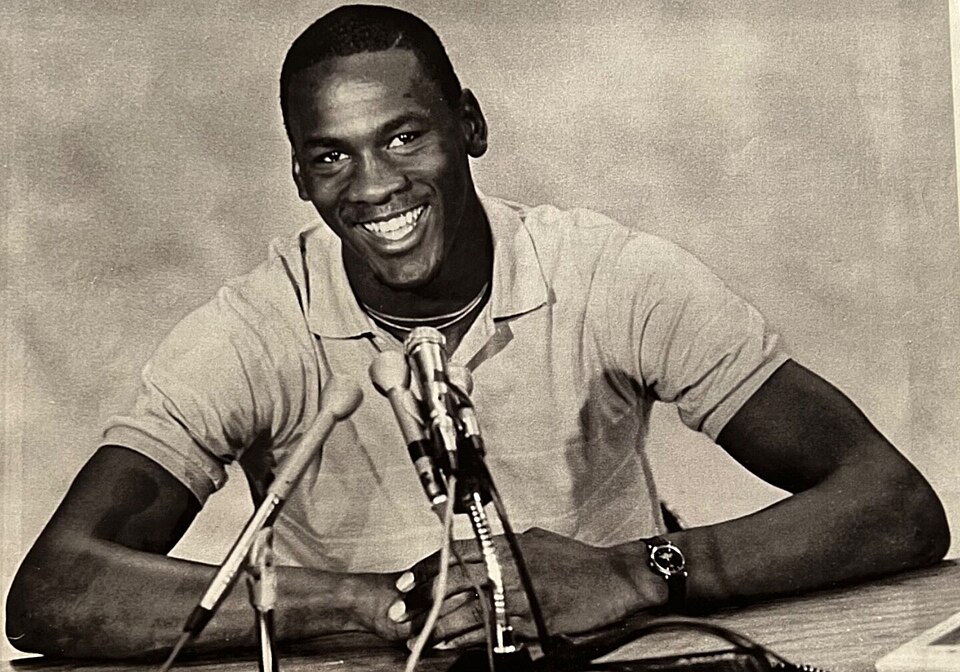
NBA legend Michael Jordan is known as one of the most ruthless competitors ever to step foot on a basketball court. But he also understands that success isn’t everything, and that it all works toward fulfilling a greater life purpose. “To be successful, you have to be selfish, or else you never achieve. And once you reach your highest level, you have to be unselfish. Stay reachable. Stay in touch,” he once said.
Jordan recently showed that he has never forgotten where he came from by reconnecting with Ms. Etta, the transportation coordinator at Emsley A. Laney High School where he graduated 45 years ago. Ms. Etta was a hospice patient at Lower Cape Fear LifeCare in Jordan’s hometown. In her final days, she couldn’t stop talking about Jordan, who was one of her favorite students. Her biggest wish was to hug him one last time.
Jordan reaches out to a beloved high school teacher in her final days
Administrators at LifeCare tried to reach out to Jordan, but they never heard back. Then, on May 12th while at home, Wendy, a LifeCare social worker, received a call from an unknown number. It was Jordan: “Is this Ms. Etta?” he asked. Wendy then drove over to Ms. Etta’s bedside, and they set up a video call with Jordan.
“They laughed, reminisced, picked at each other, and shared a moment that brought tears to everyone in the room,” LifeCare wrote in the caption of an Instagram post showing Ms. Etta and Jordan smiling and talking together. “A memory her family will carry with them forever.”
High school plays a big role in Jordan’s legend. He graduated from the school in 1981, but as a sophomore in 1979, Jordan was “cut” from the varsity basketball team. Jordan has always said this was the catalyst for his becoming one of the greatest pro athletes the world has ever seen. However, at that time, sophomores rarely played on varsity teams. Jordan was sent to Junior Varsity because the team needed taller players.
Jordan has clearly gotten over the slight, and, in 2019, he donated $1.1 million to Laney as part of an agreed-upon deal between Jordan, the school, and Nike for the 2013 sales of Jordan’s special Laney 5 sneakers.
“Mike decided that he wanted to take care of Laney High School,” Laney Athletic Director Fred Lynch said, according toWECT. “With him and his attorneys wanting to make sure that it would go entirely to Laney High School. So, Mike is still the man.” Half of the money went to the athletic department, while the other half was used at the school’s discretion. “It’s a very good thing. It’s a blessing to give that much money to a school,” Laney student Dariius Dutton said. “It means a lot to me because I love Laney, I love my school. And I think it will help a lot.”
One can have all the success in the world, but without gratitude, it’s as empty as never having achieved anything in the first place. For Jordan to reach out to someone who helped him as a child in their final days shows that, although he may have reached incredible heights as an athlete, he never forgot those who helped him get off the ground.
Picture this: A city neighborhood has exploded in population, from a few hundred people to more than 3,000 residents in just a few years. With a new $450 million soccer stadium being built nearby, experts expect that population to rise to more than 9,000.
And yet, there are glaring gaps in the community. With no neighborhood school, library, or community center, people have few local public spaces to gather. And with a stark lack of grocery stores and restaurants, residents have found themselves living in a “food desert.”
Artist’s rendering of the front of Alchemist Public Market. Photo courtesy of Alchemist CDC
A vibrant public space that serves as an incubator for new food businesses
The first-of-its-kind public market will include a corner store that accepts WIC and CalFresh (California’s SNAP benefits program) and sells grocery staples and products from local makers. People will be able to connect at the market’s eating areas, co-working space, inclusive playground, and weekly farmers market.
But APM will also provide opportunities for up-and-coming food entrepreneurs. The space will be home to eight small incubator restaurants in a shared food court, as well as a shared-use commissary kitchen that can support dozens of independent food vendors.
Shannin Stein, Alchemist’s director of advancement, tells Upworthy that one goal of the market is to make sure people living and working in the neighborhood aren’t left out of the economic conversation as hundreds of millions of dollars are invested in the surrounding area. That goal aligns with Alchemist CDC’s long-time support of food entrepreneurs from underserved populations.
Helping food entrepreneurs get their businesses off the ground
Alchemist CDC has multiple programs that help support burgeoning food businesses, and APM will serve as an extension of that support.
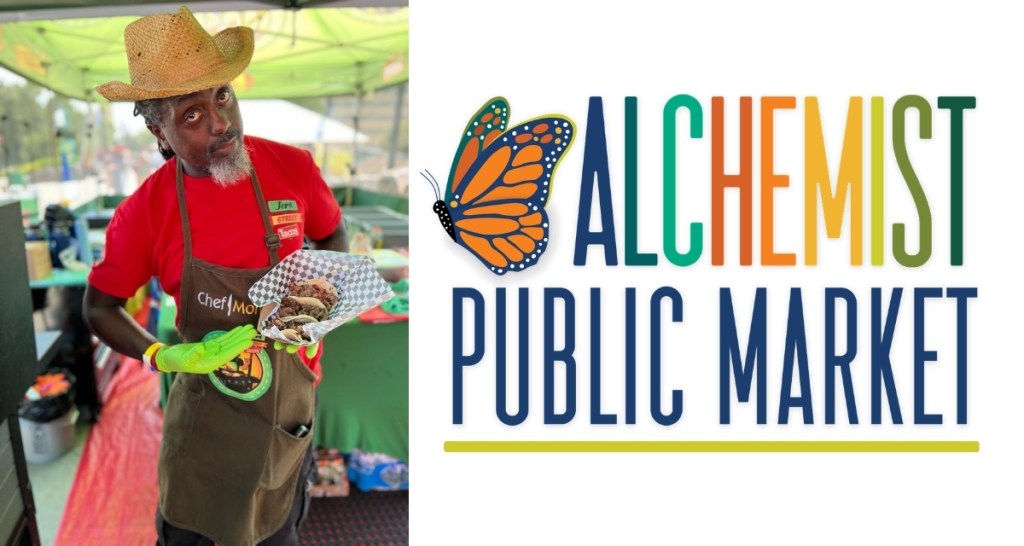
Nikki Gaddis-Chester, owner of Jerk Street Tacos, has been part of the Alchemist Kitchen Incubator Program (AKIP) for the past two years and looks forward to having a space at APM. She tells Upworthy that mentorship from Alchemist has “significantly transformed” her business journey.
“This vibrant community has not only supported the growth of our small mobile food business, but has also equipped us with essential tools for developing and sustaining our menu,” she said.
Jessica Brown, founder of Latin Caribbean culinary brand Caribe Azul, tells Upworthy that APM will be “a powerful opportunity for entrepreneurs who have the creativity, culinary experience, and drive to start a business but may not yet have the structure, knowledge, or support to build a strong foundation.”
“I came into the program with a clear concept for my Latin Caribbean cuisine, but building a business can feel isolating when you are managing so many parts on your own, from operations to marketing and promotion,” she said. “What I experienced through Alchemist felt like opening a gate to a portal I did not realize I had access to, but that was always there. It helped me recognize the strengths I already had while giving me the structure to apply them with confidence.”
An all-electric campus that fosters community around food
The APM project aims to connect people to local agriculture and food businesses while also meeting the goal of environmental sustainability.
“APM is being built as a state-of-the-art, all-electric, sustainably designed campus that reflects Sacramento’s leadership in environmental innovation, investment in local food systems, and community-centered economic development,” Stein said. “We want this to be a place where neighborhood residents, visitors to Sacramento, and anyone who loves food and community feel welcome and connected.”
So-called “third places,” where people can meet up outside of home or work, play an important role in building community culture. Sam Greenlee, CEO of Alchemist, describes how local residents will be able to use the space:
“Alchemist Public Market will serve as a heart for this emerging community. At APM, people can walk over to buy their grocery staples, and that includes people who depend on EBT and WIC nutrition benefits. Community elders can read the paper and chat over a great cup of coffee. Parents of young kids can meet up to enjoy delicious food while their kids have fun in the play area. Co-workers can go out to lunch and find enough variety to make everyone happy. Teens can come by after school, get a snack, and check out ping pong paddles or a basketball to play in the park next door. Families can meet their neighbors at the weekly farmers’ market, listen to local musicians during dinner, and celebrate after Sacramento Republic FC matches.”
A community gathering space that serves as an engine of economic growth
Alchemist Public Market broke ground in April 2026 with bipartisan support and significant public funding secured. Sacramento Mayor Kevin McCarty and Congresswoman Doris Matsui attended the groundbreaking.
“Alchemist Public Market will drive economic growth, support public health, and transform a vacant space into a community center, increasing food access for the immediate neighborhood and fostering economic growth that will ripple across Sacramento,” McCarty told Upworthy. “We were proud to support Alchemist CDC’s Farmers’ Market access program and look forward to this all-electric market.”
Greenlee concurs on the importance of the market as a driver of the local economy. “APM is going to be an economic development engine at the heart of our region for decades to come,” he said, “launching new businesses that represent the diversity of our communities, filling vacant storefronts, hiring neighbors, paying local taxes, and altogether making Sacramento a more vibrant place to live.”
The challenges of nonprofit projects in tough economic times
Of course, like most nonprofit organizations, Alchemist has had to play whack-a-mole with challenges since the market’s inception. The economic woes we’ve all experienced in recent years have taken a toll on the project and its organizers as they navigate the ever-evolving world of government funding, manage cash flow timing, and deal with dramatic increases in building material costs.
“Community-based organizations are often expected to solve deeply complex social and economic challenges, but without the same incentives, flexibility, or financial backing commonly available to traditional for-profit development projects,” Stein said. “It can create a difficult dynamic where nonprofits are asked to prove success long before receiving the level of investment needed to fully realize that success.”
Though construction has already begun, the project faces an immediate need for a bridge loan to move forward as red tape ties up funding disbursements. However, Alchemist is determined to bring the market and all it has to offer to life.
“This project’s existence is the story of numerous almost-insurmountable challenges, and the tenacity to find a way through each one,” Greenlee said. “Early on, many people understandably thought the project was a bit pie in the sky; a great idea that seemed unlikely to become reality. As a non-profit, we have always faced challenges funding the next step of the project…But at every step in the process, we have demonstrated our commitment to see this project through, and we have found people stepping up to help us through each and every obstacle.”
You can find updates on Alchemist Public Market here and learn more about what Alchemist CDC does here.
Everyone has bad days, even world class athletes. Any number of circumstances can cause someone who’s been training their entire life to simply miss the moment; be it physical, mental, or just plain bad luck.
It happened to Simone Biles when she got the the “twisties” and became disoriented in the air during what should have been a pinnacle moment in her Olympic career. It happened to golfer Greg Norman when he squandered an unprecedented six-stroke lead at the 1996 Masters in a stunning collapse.
The best athletes, and people, aren’t defined by perfection, however. They’re defined by what they do after they fail.
Bowler Tom Daugherty puts on one of the worst performances of all time
Bowling, while not a premier sport in the minds of most viewers, comes with a ton of pressure. It’s a highly technical sport where being just a millimeter or a fraction of a second off in your technique can be disastrous.
Tom Daugherty found this out firsthand in what has became a legendary game…but not legendary for the reasons he’d like.
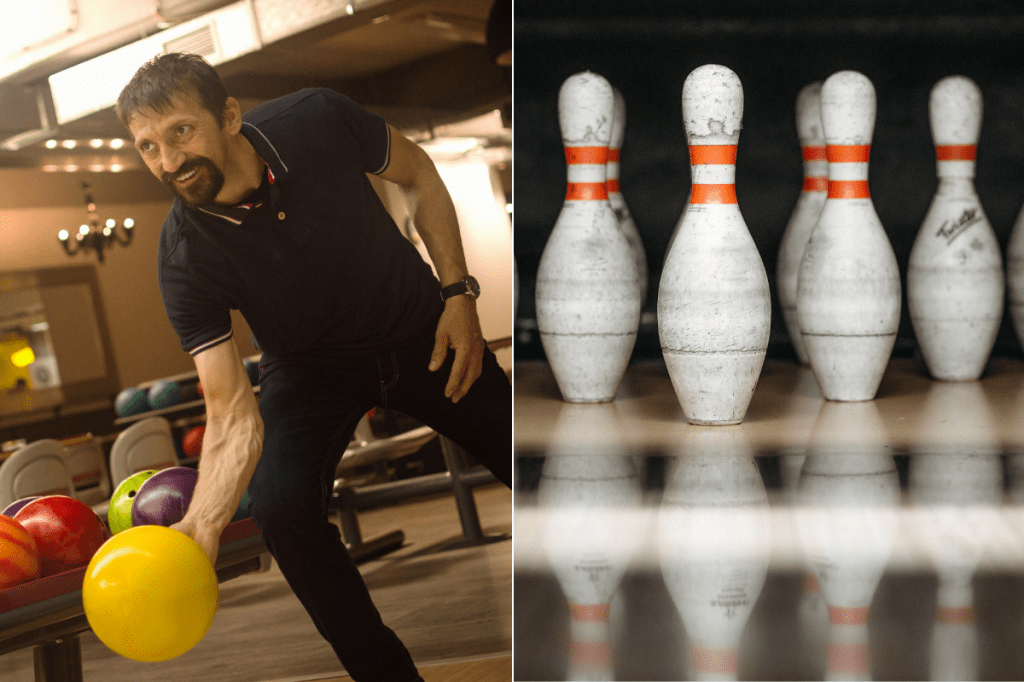
In 2011, Daugherty faced off with Mike Koiveniemi in a semifinal match of the PBA Tournament of Champions. The event was televised, and the pressure was high. Luck, however, was not on Daugherty’s side that day. He rolled his way into every conceivable bad split you could possibly imagine.
The round was a nightmare, and Daugherty found himself facing his final shot of the night with a score under 100. His opponent, meanwhile, finished with a 299—nearly a perfect game. For reference, a 70-100 is roughly an achievable score for people who only bowl a few times per year and are not trained at all in form and technique. Yikes.
When Daugherty’s last shot connected, it put his final score at 100 exactly: triple digits. He reacted by running around and high-fiving the crowd, determined not to let himself get down.
His 199-point loss is one of the worst margins in professional bowling history, and his score of 100 is the lowest that’s ever been televised.
Daugherty did not let the humiliation define him, and came back stronger
Through it all, Tom Daugherty kept an impressive sense of humor about what could have been the greatest failure of his career, to date.
As the third place winner in the tournament, he won $50,000. He joked that he was excited to have won “$500 per pin.”
Later, he was quoted as saying: “That 100 game was the best thing that ever happened to me. I have no problem with it. No one would remember me if I hadn’t bowled that game.”
The positive attitude served him well. The very next year, he returned to another PBA tournament—this time the Bowlers Journal Scorpion Championship at the World Series of Bowling in Las Vegas—in his first televised performance since the infamous “100 game.”
Since then, he’s gone on to have a fantastic career that features four PBA Tour titles, including one major title at the 2021 PBA World Championship.
In 2026, he even got a rematch against his opponent from the famed 100-game—and beat him.
Athletes like Daugherty give us a good blueprint for how to deal with failure
Anyone who performs at the highest level of their chosen endeavor is going to fail and suffer setbacks. We can learn a lot from how they pick themselves back up afterwards.
Kevin Chapman, PhD, clinical psychologist and founder of The Kentucky Center for Anxiety and Related Disorder, writes: “People who have a high standard for themselves understand that failure is part of the journey towards growth and success. On the other hand, people who are perfectionistic view failure as unacceptable, which is actually very limiting. When you view failure as just another part of the process, then significant learning can occur as a result. You fix it and then move forward.”
It would be easy for anyone to implode after a performance like Daugherty’s. The way he handled the epic loss with humility and humor, though, no doubt helped him get in the right mindset for next time. He was able to learn where things had gone wrong for him in 2011 and come back a far better bowler the very next year when he won it all.
Generation X is often known, or at least broadly categorized, as the middle child of generations. So many of us kept our heads down as we latch-keyed ourselves into empty homes to make Pop Tarts for dinner. Sure, we sometimes side-eyed our elders, but when we were criticized, our “Who cares?” response exemplified the cynical, proverbial shrug heard all through the ’70s, ’80s, and early ’90s.
It’s almost a rite of passage for a generation to be besmirched by those who came before them. But when an older man went on a TikTok rant about Millennials and Gen Z in 2019, many of them didn’t take it especially well. The term “OK boomer,” though coined years earlier, went viral.
Gen X version of ‘Okay, Boomer’
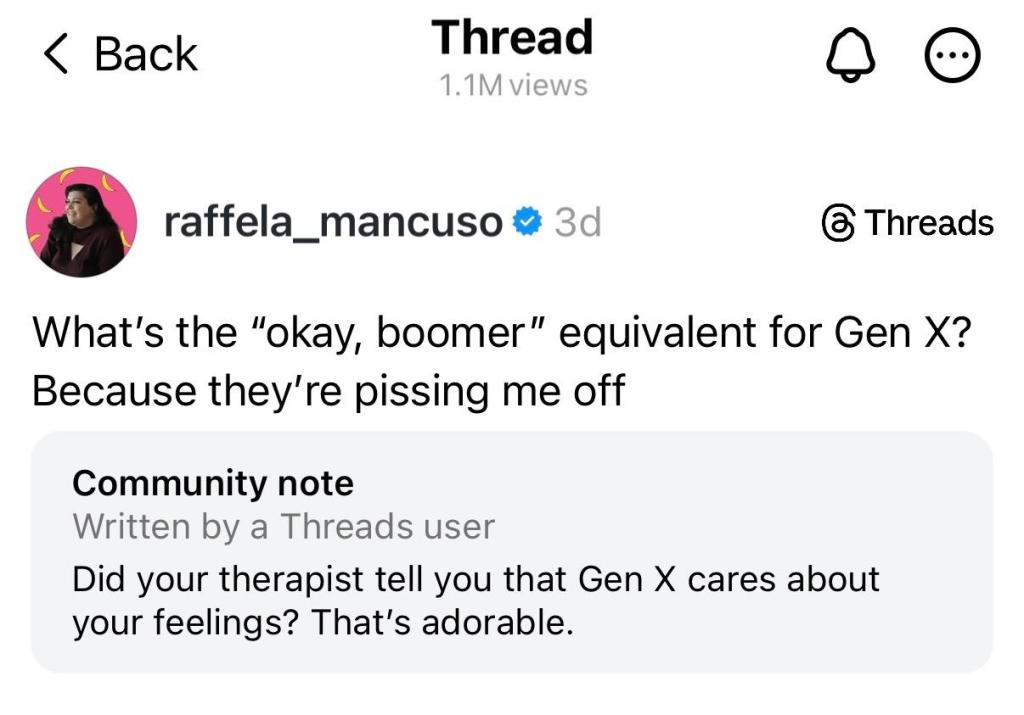
Entrepreneur and mental health advocate Rafella Mancuso seems to have had it with Gen X. In recent post on Threads, Mancuso wanted to know what one might say to an X-er that was the equivalent of “OK boomer.” They wrote, “What’s the ‘Okay, boomer’ equivalent for Gen X? Because they’re p—ing me off.” What they perhaps didn’t anticipate in the responses was an entire generation that’s known for not caring, caring just enough to share their thoughts.
The query received nearly 12,000 comments in just four days. In fact, one person even took the time to write a “community note,” and they didn’t hold back: “Did your therapist tell you that Gen X cares about your feelings? That’s adorable.”
“Sounds like a ‘you’ problem,” someone else comments. This one works on two levels: An apt Gen-X response to the OP’s question, and our version of “OK, boomer” back in the day.
This Threader didn’t hold back, writing in part: “We’re latchkey kids who grew up with the Cold War, asbestos ceilings, and landlines. We have 0 fks to give about who is pissed off at us because we used them all up in the ’80s worrying about quicksand and the Bermuda Triangle. Now…share your phone number so we can prank call you.”
We don’t care
Another tried to gently explain to the OP why they shouldn’t bother messing with us. “The thing about boomers is they get mad when you say ‘OK boomer,’ so that is satisfying to you. Gen X has zero Fs to give…So my advice is to say whatever makes you feel better because we truly, I promise you, don’t care.”
“Oh no, a random person on the Internet is mad at an entire generation for some unknown reasons. I guess I’ll just listen to the entire Nevermind album and not cry myself to sleep,” wrote another.
This person seems pleased with the thousands of answersL “Checks comments. Sees my fellow Gen X-ers already have it covered. Nods and scrolls on.”
One person notes that Gen X doesn’t need memes to be snappy. “Gen X doesn’t crowdsource insults. We freestyle them.”
And lastly, a Threader decided to use the king of Gen X dialogue, quoting the great John Hughes film The Breakfast Club: “The correct response is: Does Barry Manilow know that you raid his wardrobe?”
Dr. Richard Harris is an associate professor at Southeastern University in Lakeland, Florida. He’s also the first white pastor in the 140-plus-year history of Good Hope Missionary Baptist, a historically Black church in Bartow, Florida. However, if you met him in the late ‘70s, you would have no idea his life would take such a turn. From the age of 16 to 20, he was a member of the Ku Klux Klan, and for the final two years, he served as the youngest Grand Dragon north of the Mason-Dixon Line.
Harris was a lonely child in elementary school and was bullied by his classmates. In the late 1960s, when desegregation began at his Indiana school, Harris decided to take out his frustrations on the new students.
Harris is indoctrinated into the Ku Klux Klan
“I got to sixth grade, and all of a sudden my school has changed,” Harris told the Herald-Tribune in 2021. “It was the first time I had ever spoken to a person of color … they’re in my school. I looked at the African-Americans in my school, and I realized that they were displaced. I thought, ‘Maybe I could be the bully for once.’ And that’s exactly what I did.”
Harris’ behavior caught the attention of the KKK, who indoctrinated him into their violent hate group by offering family and protection. He was groomed to be a leader in the organization and, after just two years in 1976, he became the Grand Dragon, the highest-ranking member of the Indiana KKK.
In a recent interview with LADBible, Harris shared how he was able to get out of the terrorist organization. It began with a life-changing realization: the Klan was lying to him. After learning one of his guards was plotting to kill him, he realized he needed better protection. So, he turned to God.
“I didn’t know what to do. And in my 20-year-old mind at that time, all I could think of was, ‘I need better security,’” he told LADBible. So, he began reading the gospels and came to the story of the Samaritan woman. He realized that the Klan had completely changed the message to be one of division rather than acceptance.
Harris realized he was being lied to by the Klan
“The whole point of the Samaritan woman at the well story was Jesus accepted Samaritans, race mixers,” he said. “And he loved them, and they believed in him. That’s when the light bulb went on. ‘The Klan has been lying to me. They’ve been twisting the scriptures.”
Harris then called the Imperial Wizard and quit the KKK. “We’re gonna let you out. We’re gonna let you live. If you keep your mouth shut,” he was told with a gun pressed to his head.
Harris then did a complete 180 and began working for racial justice. In 2012, he documented his time in the KKK in his award-winning book, One Nation Under Curse, and would go on to serve as a senior pastor in the Free Methodist Church for 31 years in churches in Illinois, Indiana, and Florida.
“I changed,” he said in a 2023 TEDx Talk in which he explained his transformation from racist to antiracist and discussed his R.A.C.E. framework. “I’m not that guy anymore, thank God. But I know that I caused pain and hurt to so many that today, my life’s purpose is to help others radically reduce racial bias.”