



Tags
More for You
-
A safe, stable home can change lives for the better. Here’s how Habitat for Humanity wants to make that possible for everyone.
Better health, better jobs, and a brighter future all start with access to a safe, affordable home.
A single door can open up a world of endless possibilities. For homeowners, the front door of their house is a gateway to financial stability, job security, and better health. Yet for many, that door remains closed. Due to the rising costs of housing, 1 in 3 people around the world wake up without the security of safe, affordable housing.
Since 1976, Habitat for Humanity has made it their mission to unlock and open the door to opportunity for families everywhere, and their efforts have paid off in a big way. Through their work over the past 50 years, more than 65 million people have gained access to new or improved housing, and the movement continues to gain momentum. Since 2011 alone, Habitat for Humanity has expanded access to affordable housing by a hundredfold.
A world where everyone has access to a decent home is becoming a reality, but there’s still much to do. As they celebrate 50 years of building, Habitat for Humanity is inviting people of all backgrounds and talents to be part of what comes next through Let’s Open the Door, a global campaign that builds on this momentum and encourages people everywhere to help expand access to safe, affordable housing for those who need it most. Here’s how the foundation to a better world starts with housing, and how everyone can pitch in to make it happen.

Volunteers raise a wall for the framework of a new home during the first day of building at Habitat for Humanity’s 2025 Carter Work Project. Globally, almost 3 billion people, including 1 in 6 U.S. families, struggle with high costs and other challenges related to housing. A crisis in itself, this also creates larger problems that affect families and communities in unexpected ways. People who lack affordable, stable housing are also more likely to experience financial hardship in other areas of their lives, since a larger share of their income often goes toward rent, utilities, and frequent moves. They are also more likely to experience health problems due to chronic stress or environmental factors, such as mold. Housing insecurity also goes hand-in-hand with unstable employment, since people may need to move further from their jobs or switch jobs altogether to offset the cost of housing.
Affordable homeownership creates a stable foundation for families to thrive, reducing stress and increasing the likelihood for good health and stable employment. Habitat for Humanity builds and repairs homes with individual families, but it also strengthens entire communities as well. The MicroBuild® Initiative, for example, strengthens communities by increasing access to loans for low-income families seeking to build or repair their homes. Habitat ReStore locations provide affordable appliances and building materials to local communities, in addition to creating job and volunteer opportunities that support neighborhood growth.

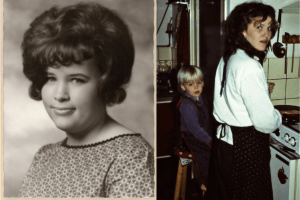
Marsha and her son pose for a photo while building their future home with Southern Crescent Habitat for Humanity in Georgia. Everyone can play a part in the fight for housing equity and the pursuit of a better world. Over the past 50 years, Habitat for Humanity has become a leader in global housing thanks to an engaged network of volunteers—but you don’t need to be skilled with a hammer to make a meaningful impact. Building an equitable future means calling on a wide range of people and talents.
Here’s how you can get involved in the global housing movement:- Speaking up on social media about the growing housing crisis
- Volunteering on a Habitat for Humanity build in your local community
- Travel and build with Habitat in the U.S. or in one of 60+ countries where we work around the globe
- Join the Let’s Open the Door movement and, when you donate, you can create your own personalized door
- Shop or donate at your local Habitat ReStore
Every action, big and small, drives a global movement toward a better future. A safe home unlocks opportunity for families and communities alike, but it’s volunteers and other supporters, working together with a shared vision, who can open the door for everyone.
Visit habitat.org/open-door to learn more and get involved today.
-
Dad demands DNA test after his daughter is born with the ‘wrong’ eye and hair color
Was he right to be skeptical?
The presumed father of a newborn baby was skeptical of his paternity after the baby girl was born with blonde hair and blue eyes. He and his wife of two years have brown hair and brown eyes, so he thought there was no chance it was his child.
The wife reassured her husband that they could have a blonde-haired, blue-eyed baby and that, quite often, a baby’s hair and eye color can change over time.
But the husband “freaked out at this and refused to listen,” the wife wrote in a viral post on Reddit’s AITA page. Instead, he “demanded a paternity test and threatened to divorce me if I didn’t comply, so I did.”
The husband and his family created problems when there wasn’t one
The man was so confident that after the baby was born, he moved into his mother’s house while he awaited the results of the DNA test. The wife stayed home with the baby and was helped through the first few weeks by her sister.

Couple after an argument. Photo credit: Canva To make things worse, the wife’s mother-in-law began to make threats. “My mother-in-law called and informed me that if the paternity test revealed that the child wasn’t his, she would do anything within her power to make sure that I was ‘taken to the cleaners’ during the divorce,” the mom shared on Reddit.
Finally, three weeks after the child was born, the DNA test results arrived and the husband came home to read them with his wife. “I was on the couch in the living room, so he sat next to me and we started to read the results,” she wrote. “They showed that he was the father and my husband had this shocked, kinda mortified look on his face with his eyes wide as he stared at it.”
The wife said, “I told you so,” and laughed in his face. In the post, the wife also notes she has “zero history” of cheating.
Can two brown-eyed parents have a blue-eyed baby?
Although it is rare for two people with brown eyes and brown hair to have a blue-eyed, blonde-haired baby, it is entirely possible. According to genetics researchers, when both parents have brown eyes, the chance of having a blue-eyed baby is roughly 6%, though this can increase if blue eyes run in either family. And, as the wife noted earlier, a baby’s eye color can change over its first year of life.
Further, two people with brown hair can have a blonde-haired child if both parents carry the recessive gene for blonde hair. The blonde hair may darken over time as well.
If the father had done a quick Google search on the topic, he would have quickly realized that there was a very strong case that he was the father and the drama could have stopped before any damage was done to the marriage.
The support from Reddit users was huge
The positive part of this story is that the wife’s post on Reddit earned her a ton of support from people who thought her husband’s antics were utterly inappropriate. The support probably also helped to put her husband’s wild behavior into perspective while she determined their future. The wife felt bad about laughing at her husband, but most people thought it was appropriate, given her husband’s initial response.
“Not only doesn’t he have a basic grasp of genetics, he threw a tantrum and left you immediately after having the baby to struggle alone for almost a month,” CrystalQueen3000 commented. “He’s lucky all you did was laugh in his face.”
A lot of commenters thought that the woman should leave her husband for accusing her of cheating and leaving her alone with the child.
“Honestly, if my husband left me for weeks after giving birth due to a faint assumption like this, I would be done. I can’t be together with someone who abandoned me when I needed them desperately,” another commenter wrote.
This article originally appeared two years ago. It has been updated.
-
Genius parents devise bedtime ritual: son is allowed to stay up late, but he has to run
Sensory input can help little ones fall asleep, according to science.
Recently, a TikTok featuring one very determined boy went viral. His parents struck the deal of a lifetime: he could stay up past his bedtime. The only caveat? He had to keep running. The moment he stopped, it was straight to bed. The video shows the little boy sprinting in circles around the room, clinging to those extra minutes of freedom while his parents cheer him on. Three minutes later, he’s wiped. The caption reads, “A win is a win.”
If you’ve ever watched your own kid get this exact second wind, you can probably feel that kid’s energy through the screen. Memories flood in: tiny feet pounding down the hallway, wild giggles, and a voice yelling, “Watch this!” as your toddler launches themselves onto a pile of pillows.
Then, a little voice in your head chimes in: “Fantastic. There goes bedtime.“
But who said that burst of energy before bed is the enemy of sleep? What if it were a crucial part of your child’s nighttime routine? Child‑development and sleep experts agree: under the right conditions, a little active play before bedtime can help some toddlers wind down and sleep more soundly. Let’s unpack what’s going on with those bedtime zoomies—and how to work with them instead of fighting them.
Why toddlers get “jacked up on life” at bedtime
Toddlers collect stress during the day: following rules at daycare; sharing toys they really, really don’t want to; sitting still at dinner; holding in big feelings because you’re not “supposed to” melt down in the grocery store (even though no one wants to buy you that gummy candy you’ve been asking nicely for). By the time evening comes around, all of that unprocessed emotional energy that has been slowly building up is still there in their little bodies.
Active, joyful play gives them a safe pressure valve.

Toddlers collect stress during the day. Canva When your toddler is pulling, pushing, jumping, and climbing, their brain releases feel-good endorphins that help them de-stress. Plus, playful contact with parents—wrestling, piggyback rides, being scooped up and spun—boosts oxytocin, the “cuddle hormone” that makes us feel safe and connected. Silly, physical play is essential for toddlers as it helps them move tension through the body and ultimately release it. That’s what’s happening in the viral video as this kid runs laps around the room. “Heavy work” helps many sensory-seeking children feel more regulated and ready for rest.
Think of it as a reset button for an overloaded little nervous system.
The power of active play before bedtime
When you time it right and keep things intentional, a short burst of active play before bed can lead to real, tangible changes. Many “out of nowhere” meltdowns at bedtime aren’t really about their pajamas being itchy or needing “one more story.” They’re the culmination of everything your child has been holding in all day.
That’s why a few minutes of big, silly movement is so essential: it gives that tension a place to go. Laughing, rolling, jumping, and even running laps around their small bedroom is your child’s body saying, “I’m letting go of the day” before heading to bed. They’re practicing turning down the excitement.
Not all play is chaos. Games with start and stop points built in (“run to the wall… now, FREEZE!”), games that take turns, and those that toggle between fast and slow tempos help toddlers learn that their energy comes with emergency brakes.
That’s emotional regulation in disguise. You’re teaching their brain, “We can go big… and then we can come back down.” That same skill shows up later when it’s time to be still, close their eyes, and drift off.
It deepens your connection
Most toddlers just want their parents to be there at bedtime, present and solely focused on them. When you put your phone down and spend even five minutes playing—being the horse and letting them climb on top of you, assuming the role of ‘tickle monster’ or the bridge they crawl under—you add to their sense of connection right before the hardest separation of the day: saying goodnight.
Feeling seen and secure can make bedtime seem less like a painful goodbye and more like a soft landing. Large sleep studies on young children have found that simple, consistent bedtime routines—brushing teeth, reading stories, cuddling, a light jog—are linked with longer, less disruptive sleep and fewer behavioral struggles over time.
It helps their bodies feel ready to rest
In the same way that adults sleep more deeply after a long walk or a workout, toddlers’ bodies respond to movement. A little physical effort equals a calm mind, which sends the clear signal: “Oh, right. We already did our big moves. Now, we can rest.”

Physical activity can lead to faster bedtimes. Canva For some families, that combination (physical activity and emotional regulation) can lead to faster bedtimes, fewer “one more” negotiations, and restorative sleep. Instead of an emotional 40-minute standoff about “I’m not ready for bed” nonsense (even when their eyes are literally halfway closed), their bedtime routine transforms into an easy cycle: five minutes of running around, a deep breath, one fairytale, and lights off.
How to add energy that doesn’t wreck bedtime
An important note: this is not about letting your child go wild until they crash. It’s a little intentional play that turns into a clear, gentle slide into calm. The viral TikTok provides a wonderful example of that system at play: parents say yes to movement, but it’s contained within the parameters of “bedtime.”
1. Start early
Aim to begin active play about 40–60 minutes before bedtime. Keep the high-energy section brief, ideally about 5 to 15 minutes. Consider running, jumping, and horse play as openers to your bedtime routine, not the grand finale.
2. Choose “heavy work” activities
Many toddlers, especially the endlessly wiggly ones, crave what therapists call “heavy work”: pushing, pulling, climbing, and crashing that give deep input to their muscles and joints. For many sensory‑seeking kids, that kind of play is especially soothing.
- Pull your toddler on a smooth blanket down the hallway like a “train ride.”
- Let them jump from a mini trampoline or low stool into a safe pillow pile.
- Offer piggyback rides and pretend you are different animals (a bouncy kangaroo, a slow turtle, a galloping horse).
Again, the goal isn’t to exhaust them. Their bodies are chock-full of pent-up energy. Laughing and physical activity act as powerful release valves.
3. Build a clear transition
When active play is over, you need a simple ritual that says, “We’re shifting gears now.”
You might:
- Set a simple timer and say, “Two more minutes of big play, then we are heading to the bath.”
- Turn the overhead lights down and switch on a softer lamp.
- Lower your voice and move into the next steady step: bath, pajamas, teeth, stories.
For this portion, it’s wise to repeat the same order and steps on most nights. Their brains start to recognize the pattern: big play leads to a calm routine, which turns into sleep.

A parent’s attention is all a child wants. Canva 4. Stay present, even if you’re tired
No one is asking you to suit up and become a wrestling maniac every night like it’s the WWE. But even when you’re exhausted or “touched out,” you can still provide an anchor.
Set up the pillow pile. Hold the blanket they are pulling. Referee a sibling “pillow tower demolition.” Cheer them on from the floor as they run their own version of that TikTok sprint.
More than any specific game, your attention makes this one of connection, not chaos.
Oh, and never forget that safety is non-negotiable. Before engaging in active play, scan the room for sharp corners or tripping hazards. Skip roughhousing if your child already looks overtired or seems unsteady.
When active play may not be the right fit
For some kids, bedtime rough-and-tumble is simply not the answer. That’s okay. If your toddler is sensitive to noise, sudden movement, and general chaos, high-energy play in the evening might leave their pint-sized nervous system feeling frenetic rather than soothed. Children who are “sensory avoidant” often wind down better with gentler, predictable routines before sleep.
Red flags that the play is too much or too late:
- Their giggles tip into frantic, wild running they cannot seem to stop.
- They are more tearful, not less, once the game ends.
- It consistently pushes bedtime later and later, even with a calm routine afterward.
In cases like these, consider leaning into cozy sensory activities, like deep pressure hugs, slow rocking, or quiet stretches, and keep high-energy play earlier in the day.
Make bedtime more joyful
Sure, bedtime can be stressful, but it can also provide a daily opportunity to reconnect with your child.
A few moments of wild laughter. A blanket ride down the hallway. One last big jump into your arms. These are the moments their bodies will remember when the lights go out. It all provides a sense of “I moved, I let it out, I am safe. They are here.”
For some toddlers, this is exactly the safety that lets their brain finally say, “Okay, I can sleep now.”
If you have a high-energy child, you might try five minutes of play tonight. See what happens. Under the right conditions, those bedtime zoomies might be the precursor of a sweet night’s sleep for both of you.
-
Grandma realized her granddaughter didn’t look like her siblings so she got secret DNA test
It was a shocking decision but people are saying she was right to do it.
A grandmother always felt her middle granddaughter Lindsay, 15, looked slightly different from the rest of the family because she had blonde, curly hair, while the rest of her siblings’ hair was dark “I thought genetics was being weird and I love her,” she wrote.
But things became serious after Lindsay’s parents “banned” her from taking things a step further and getting a DNA test. If the family was sure their daughter was theirs, why would they forbid her from seeking clarity in the situation? After the parents laid down the law, the situation started to seem a little suspicious. “I told my son and [daughter-in-law] that there was something fishy around her birth she needed to know. They denied it and told me to leave it alone,” the grandma wrote.
Lindsay wouldn’t give up her quest. She approached her biology teacher, who admitted that it was “odd” for her to have such different traits. This confusion was too much for Lindsay, so she went to her grandmother for help. “She came to me distressed, asking me to buy a DNA test since she needs to know,” the grandmother wrote.

The grandmother’s post about her secret DNA test went viral. Photo credit: Canva The DNA test that changed everything
The grandmother purchased a DNA test and it proved their suspicions. “Long story short, she is not her mother’s kid,” the grandmother wrote. “My son got someone else pregnant and her bio mom gave her up.”
The interesting thing was that Lindsay was a middle child. So, the dad had a baby with another woman while he was with his wife. This revelation begs the question: How did the family suddenly have a baby out of nowhere without people being suspicious?
“They were on the other side of the country when she was born, and I met Lindsay when she was about 6 months old. Really not hard to hide the whole thing,” the grandmother wrote. “Our family has a history of miscarriages, so it’s common to drop news about a baby late in the pregnancy. They did the same with their oldest and didn’t think anything about it.”
The big revelation has caused friction in the family. The family no longer talks to the grandmother, which makes Lindsay even more furious about the situation.Should the grandmother have taken such drastic steps if she knew what could happen if her suspicions were true? The commenters on Reddit overwhelmingly supported the grandmother’s decision. The big reason was that Lindsay needed to know her family history for medical reasons.
“Your son and his wife suck for lying to her until she is 15 about something so important and trying to keep lying to her even after she obviously started to question things. There are medical reasons a person might need to know what their genetics are/are not, and if you hadn’t helped her, she would have found out some other way,” Shake_Speare423 wrote.
Another commenter noted that protecting the parents’ lie wasn’t nearly as important as Lindsay’s mental health.
“People have a right to know their genetic heritage. Lying about adoption is linked to increased suicidal ideation, anxiety, and depression. You put her safety and comfort ahead of your son’s preferences. Parental rights do not have greater value than a child’s right to access comprehensive medical care, and hiding an adoption does precisely that. Maybe some things, like a child staying healthy, should matter more than a parent’s right to lie, gaslight and manipulate their child as they see fit,” RemembrancerLirael added.
Reddit took the grandmother’s side
The commenters overwhelmingly supported the grandma for putting herself into an uncomfortable situation to protect her granddaughter’s mental and physical health. However, one commenter noted that she could have gone about it in a less polarizing way.
“Bit out of the norm for the responses here, but you should have gone through your son [and daughter-in-law] and convinced them. Told them that the biology teacher had highlighted that she had traits that didn’t make sense, etc. and convinced them that Lindsey would find out either way,” PhilMcGraw wrote. “It would have allowed them to find a way to tell her without it being forced on them angrily. A DNA test is the absolute worst way to be told. I’m sure they would have much rather told her than let her find out by a DNA test if that is what was coming.”
This article originally appeared three years ago. It has been updated.
-
‘Devoted granny’ says it’s grandparents’ job to build relationships with their grandkids, not parents
Grandparents shouldn’t wait to be told to do their job.
There has been a growing discussion over the last couple of years, mostly initiated by Millennial parents, that their Baby Boomer parents aren’t there for their children. It’s believed that the absentee Boomer grandparent phenomenon stems from the generation’s financial success. In retirement, Boomers have more options to travel and pursue their interests than earlier generations did, which often chose to spend more time with family.
A common excuse among some grandparents is that they “did their time” as parents and don’t want to spend their golden years raising the next generation. Others will blame their children for refusing to foster a relationship between grandparents and grandchildren.
However, TikTok user Helen Devoted Granny, a grandmother in Devon, England, is going viral for being brutally honest: “I think it’s always the grandparents’ responsibility.”
Helen’s TikTok page expresses the joy of being a devoted grandparent while questioning those who aren’t there for their grandchildren.
Who is responsible for the grandparent-grandchild relationship?
“I think it’s always the grandparents’ responsibility,” Helen said in a video. “And as a devoted granny, I’ll explain why I think it’s the grandparents responsibility to always reach out, to be the one saying, ‘Well, can we help with this? Can we come and visit? Can we take them there? Is there anything you’d like me to do? Do you need some support this week? Do you need some support next week? These are my days off.’ Blah, blah, blah.”
She added, “That’s what I do. I’m a devoted granny, and I feel very strongly about this. And I don’t think kids should be the ones. Your children shouldn’t be the ones who need to facilitate that relationship. It’s up to the grandparents to do that.”

Grandmother and grandson. Photo credit: Canva Helen also has some strong words for grandparents who don’t want to raise kids anymore because they believe that “it’s their time” now.
“I think if grandparents are coming back with things like, ‘Well, it’s our time now, it’s our time now.’ No, it’s not,” Helen said. “It’s your time to help your kids because it’s really difficult when your children are small. The help that you give them is so needed, and it’s so appreciated that, honestly, it’s your time to be with your grandchildren and to help in every way you can.”
The folks in the comments overwhelmingly agreed
Commenters applauded Helen, many of whom were upset that their parents never put any effort into building a relationship with their children.
“I recently read the following: ‘Active grandparents never want to stop being parents, while uninvolved grandparents never really wanted to be parents in the first place.’ This statement struck a chord,” Azucar wrote.
“I agree. No support or effort = no relationship,” Naarah added.

Family time. Photo credit: Canva Kermy said that it’s all about priorities, which are easy to see: “If Grandparents can work out how to order expensive gadgets online, buy new cars and book holidays, they are more than capable of picking up the phone and contacting the grandkids themselves.”
Helen’s TikTok is a clear example of a truth in life: when people care about something, they take initiative. They don’t wait for other people to give them permission. In the end, no matter what side you take in the discussion, her message is clear: relationships don’t build themselves. When it comes to family, those who show up and take initiative are always going to be the ones who matter most.