Articulate people share exactly how they mastered speaking confidently and concisely

“As much as I’m a talker…I listen a lot more.”

articulate, articulation, how to be articulate, confident communication, better communication
Articulate people share how they became experts at communicating clearly.Photo credit: Canva

Being an articulate speaker comes down to communicating thoroughly. According to Merriam Webster, the definition of “articulate” is “expressing oneself readily, clearly, and effectively.”

Being precise with words when speaking with others (especially public speaking) can empower you to share your thoughts in an intelligent and likeable way to others. And learning how to be articulate is easier than you think.

Over on Reddit, self-proclaimed articulate people were asked to share their tips and tricks for how they became great at articulation, and they delivered. From reading to journaling to expanding their vocabulary, these are all the ways people learned to be articulate speakers.

“recall my mom saying she refused to speak baby talk with us as little kids – I’m told I spoke in complete sentences quite early (and I’ve not stopped talking since LOL). But my parents also had a good vocabulary and even now my husband has commented on it. I grew up reading constantly. We had a library in the house with many classics. As a kid I liked classic Sci-Fi like Isaac Asimov but when I hit my teens I fell for Steinbeck. I read everything in front of me, constantly, and had friends who were readers too. I didn’t like reading, I loved it. As I’ve gotten older I listen to books more. So…reading, writing, speaking all exercise that part of the brain. I do Wordle and love word games now too.” – PebblesmomWisconsin7

“Read. Shut up. Don’t talk to fill silence or hear your own voice. Talk when you have something worthwhile to say.” – unrotting

“Reading a lot is what keeps my vocabulary sharp. Mindfulness is how I am able to be articulate. Yep, meditation (which I used to do often) has taught me to put space between my thoughts and my expression. The other thing that helps? As much as I’m a talker…I listen a lot more. Listening for understanding, as opposed to responding has been helpful when it comes to articulating my thoughts.” – Cerulean_Zen

“You read a lot of books, watch a lot of movies, watch videos of conversations that are productive and pleasant, and talk in public often.” – IllustriousCut328

“I journal, and read actual books. I’m from the 80’s, so I know life without distraction, too. I have to work to recreate it now, but I try to carve out an hour to do either or both of those (reading or writing) every single day. Also worth noting; if you come across a word you don’t know, learn its meaning and use it immediately. This helped me grow my functional vocabulary significantly as an adult.” – crazymom7170

articulate, articulate speaker, public speaking, public speaker, how to become articulate
An articulate woman public speaking. Photo credit: Canva

“I process my emotions externally, so I’m always talking or journaling what I am thinking. I think that combined with being an avid fan of stories in any form (movies, books, etc) lends itself to becoming more articulate. Hearing other people express themselves as well as the practice of talking it out makes it easier!” – Microwave_Of_Evil07

“To be honest, I’d say it’s genetic disposition at my end, which also manifests in my environment since I was a kid. It’s a baseline. As for regulation, I like to be prepared in general, and my mind feels energized solving problems—I run quick mental simulations of conversations and social “textures.” I then have some sort of mental map that if they say A, it could mean ABC, which may or may not require me to say XYZ, depending on the nuance. I’d add that pattern training helps. It’s not enough to just be confident. There must be genuine pillars so there’s no nagging sense of imposter syndrome that could lead to analysis paralysis.” – cryanide_

“One of the things I do that might not have been mentioned yet is that I use speech-to-text technology for almost all of my written communications with my cell phone. Including this comment! It used to be challenging for me to directly articulate what I had to say without filler words or long pauses, but over time, it’s become easier. I’ve learned to choose my word more carefully and say exactly what I mean to say.” – rhiai

“I also listen to a lot of audiobooks. I think listening to nonfiction out loud helps. I’ve noticed my vocabulary has expanded considerably over the past couple of years. I even find myself using words I don’t technically know the definition to correctly in context. ” – rhiai

speaking, talking, how to be articulate, articulating, being articulate
A woman communicates concisely to a group of people. Photo credit: Canva

“I loved it, so I practiced. When I was young, I would keep a running commentary while playing video games, rephrase my reading in my own words, etc. Words are wonderful because you are never without them. Part of it was also a lot of internet arguments. There’s better ways to do this, but if you examine rhetoric and learn to look through the persuasive language to what something is really saying… You find yourself able to cut to the heart of what you are thinking and articulate it snappily.” – LatexSwan

“Read out loud. Read speeches by eloquent people. Read books written by people smarter than you. Speak slightly slower than you think you should. Think as if you are actually “singing” the words instead of speaking but do not actually sing. Your voice is actually a woodwind instrument. Use your voice with pride but be humble about it and your true voice will feel more natural.” – Bmack27

“This might surprise you, but sleep. If you’re well rested and energized, your brain works better. That coupled with reading is a super power.” – chiefbushman

“Introspection. This is a personality trait that some have more than others. I’ve learned that I might have an unhealthy level, but it serves me in this regard. I’m always conscious of what I’m saying; I can recall most conversations verbatim and essentially give myself feedback. I also listen to recorded audio of myself and do the same.” – hunterbuilder

“My cheap-and-easy advice is listen to podcasts by journalists, experts, and academics on their field. There are 20-min podcasts on research that took years to conduct. Pay attention to how they use framing (we noticed XYZ and wanted to test ABC), actions (I traveled to XYZ to talk to people), results (surprisingly, we found XYZ ) , implications (if this continues, by next year we could see XYZ), and stories (so-and-so is really affected, given XYZ). Check how much detail they use, how they use emotion, what facts they give, how they guide you to what’s most important (this is a big deal because XYZ). Great speakers will also give heroes and villains (so-and-so was really suffering, but they couldn’t get through to Acme Corp to fix it) . Also note what makes you interested, engaged, outraged, skeptical, bored or confused.” – Affectionate_Map5518

“‘About six years ago I made a New Year’s resolution never to say ‘um’, ‘ah’, or ‘er’ and no single thing that I have done to the way that I speak has served to make me sound smarter than I actually am than that’ -Taylor Mali.” – pengie123


  • A teacher asked students to draw a square with 3 lines. How the kids approached it was fascinating.
    Can you draw a square with three lines? Photo credit: Canva

    Logic puzzles and brain teasers have long been used to challenge our minds and encourage critical thinking. Sometimes the most intriguing puzzles are the ones that seem the simplest. For instance, a teacher in India, Raviraj Master, posted a seemingly simple yet seemingly impossible problem for his students: “Draw a square with three lines.” That’s it. Could they do it?

    Student after student came up to the board to make an attempt. One by one, they drew three lines, which of course did not add up to a square. One student cleverly drew three sides of a square with lines and the fourth side with a dotted line. That move demonstrated creative thinking, but it was not the solution.

    Finally, a student walked up to the board, drew a square with all four sides, and then drew three lines inside it. That was it. She had drawn a square with three lines. Problem solved.

    Thinking critically about wording

    The solution is so straightforward that most people miss it. It’s not that it’s hard; it’s that our brains interpret the prompt a certain way and go full speed ahead with that interpretation. It’s an excellent lesson in thinking critically about how something is worded and what is being asked.

    For instance, “Draw a square using three lines” would be a totally different ask than “Draw a square with three lines.” Just that one-word difference changes the possible meaning of the prompt. What if the teacher had asked, “Is there another way these words can be interpreted?” Proactively looking at each word to see if it could have a different meaning makes puzzles like this one a little easier.

    However, the lesson extends far beyond silly brain teasers. Advertisers, politicians, and others who exploit the power of persuasion sometimes use words in ways that confuse or mislead.

    The logical fallacy of equivocation or ambiguity

    For instance, let’s look at the logical fallacy of equivocation, also known as the fallacy of ambiguity. Using words that have more than one meaning makes it easy to be vague and leave statements open to interpretation.

    In our brain teaser, the word “with” could mean “using,” which is the way most students interpreted it. But “with” can also mean “accompanying,” which is how it’s used in the actual solution.

    Politicians use ambiguity a lot. Philosopher Justin D’Ambrosio called it “manipulative under-specification.” Using terms that are open to multiple interpretations gives politicians plausible deniability if you disagree with them. They can simply say they meant something different. Even important concepts like justice, fairness, and democracy are underspecified terms, making it easy for politicians to use them in slogans or soundbites without detailing what they mean.

    Ambiguity can be used to manipulate people via the media as well. Sharon Haigler and C. Anneke Snyder’s “Propaganda Techniques in Media” handout at Texas A&M University lists 12 media propaganda techniques. Check out number 10:

    Obfuscation: Intentionally confusing the issue with vague, non-specific language. By avoiding clarity, propagandists create uncertainty and prevent critical analysis. Complex legal jargon or ambiguous statements serve this purpose.”

    Understanding ambiguity may help us understand each other

    It’s wise to think critically when it comes to wording, whether we’re trying to solve a silly logic puzzle or serious social and political problems. Pay attention to words that are vague. Ask what various definitions or interpretations there might be for ambiguous terms.

    On the positive side, staying aware of words with multiple meanings can sometimes help us see where others are coming from. Sometimes disagreements are due to defining a word differently, rather than an actual issue. So many words in our social and political discourse require definitions before we engage. Otherwise, we risk talking past one another rather than meaningfully discussing things with one another.

    Amazing what we can learn from a simple brain teaser, isn’t it?

  • How one teacher came up with the now-viral ‘Tattle Phone’ idea being hailed as a classroom gamechanger
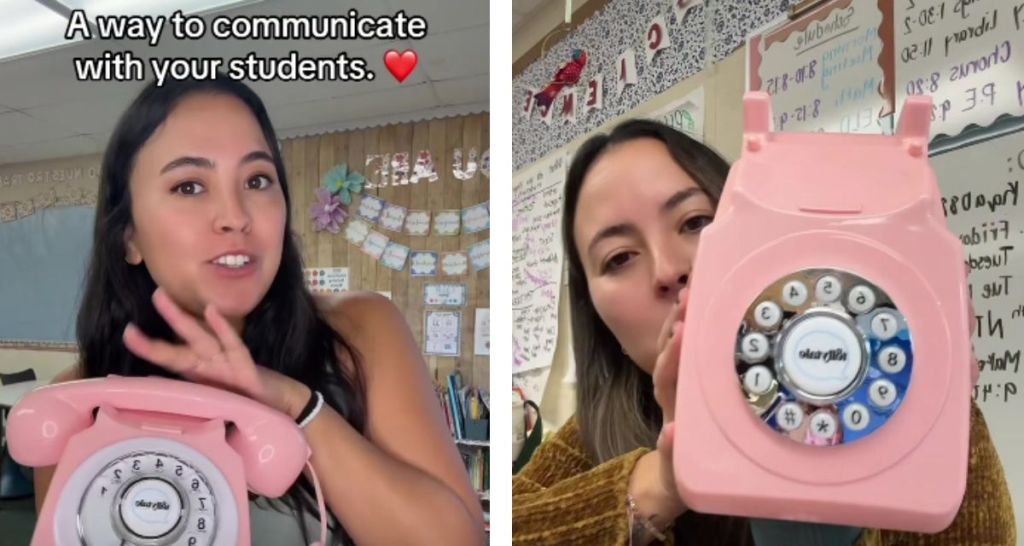
    Anais Zavala shows how to use the Telly Tale Phone.Photo credit: @tellytalephone/TikTok

    If you teach young children, or have young children in school, you might have heard of the viral “Tattle Phone.”

    On TikTok, you’ll find several videos of teachers raving about the product, which they’ve largely purchased on Amazon, for the way it gives students a way to vent while sparing their own sanity.

    Not to mention it provides some grade-A entertainment to boot. Because who can resist piping-hot tea like “Micha burped on purpose!” and “Evan has TWO erasers in his pencil pouch!”

    But what you may not know is that this trendy product stems from the brainchild of a real educator looking for impactful ways to curb tattling in her own classroom.

    @tellytalephone

    Telly Tale Phone ❤️ record your memories, tattles, stories and so much more. #fyp #parati #teacherlife #teachersoftiktok #maestra #education #tattletail

    ♬ original sound – Telly Tale ™ ❤️

    Over her 12 years working as a teacher and counselor for transitional kindergarten students through fifth grade, Anais Zavala noticed that “constant tattling” had become a major disruptor to learning. Knowing that kids already associate phones with being listened to, she thought it might be the perfect way to make them feel seen in a structured setting without being so distracting for everyone else.

    And thus the original “Tattle Phone” was born in 2023

    The idea is pretty simple: students walk up to the phone, which has a small Bluetooth recording device that captures all their complaints. But Zavala didn’t stop there. After all, the intention wasn’t just to “stop kids from speaking,” she tells Upworthy, but to focus on “teaching them how to speak, reflect, and resolve conflicts.”

    So, using both her teaching experience and behavioral specialist expertise, Zavala also created a curriculum (available in English and Spanish) that helps educators teach kids to manage conflict and express emotions, also known as Social-Emotional Learning, or SEL.

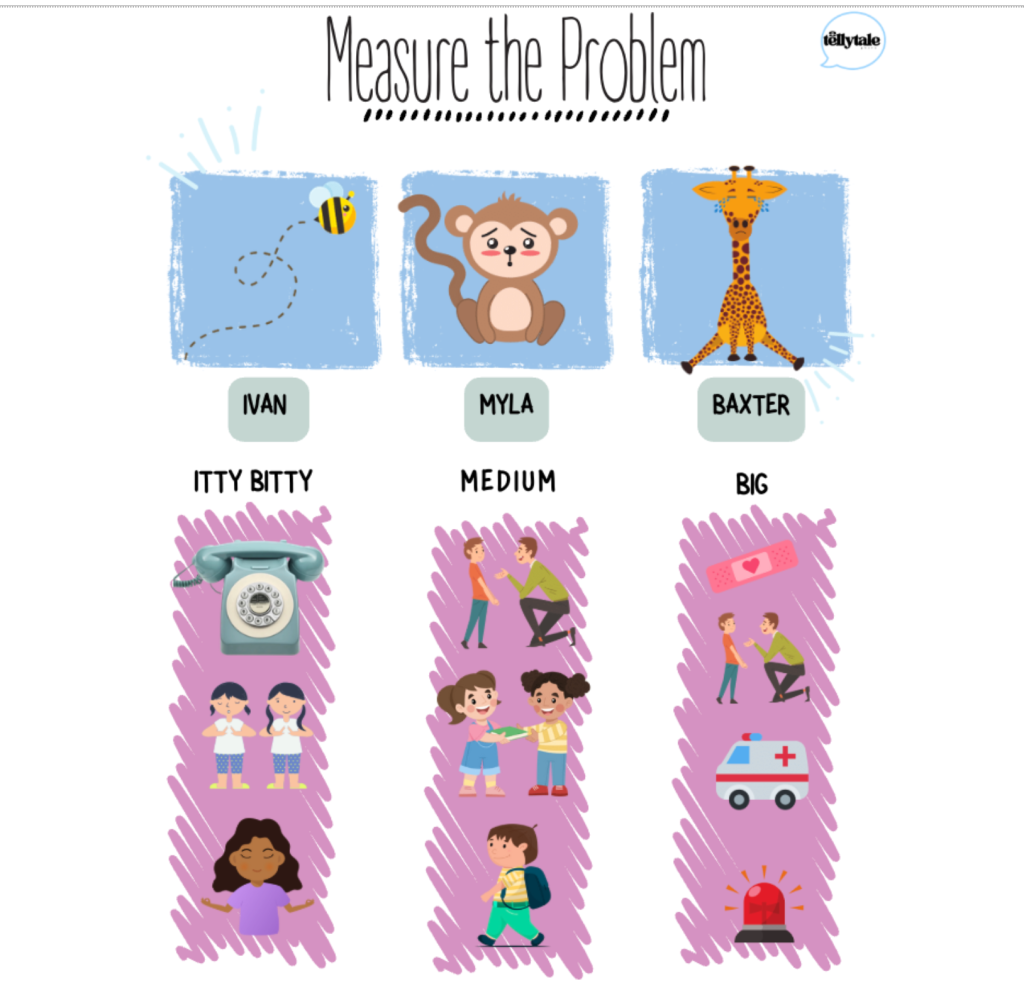
    One example is learning how to identify the “size” of a problem. In the cute graph below, “itty bitty” problems are represented by a bee, “medium” problems by a monkey, and “big” problems by a giraffe. Each category also includes images of possible solutions, such as breathing deeply, talking to an adult, or calling an ambulance.

    tattle phone, classroom etiquette, teachers, gifts for teachers, parents, kids, kindergarten
    Measuring the size of a problem. Photo credit: Anais Zavala, used with permission

    The reflective aspect became so integral that Zavala eventually renamed and trademarked her device the “Telly Tale Phone,” because she wanted it to feel less about reporting and more about processing what happened. Telling, versus tattling, if you will.

    So, did it work? Yes, in more ways than one 

    Zavala noticed that not only did the Telly Tale Phone result in fewer classroom interruptions, but students also became more mindful with their tattles. They began pausing to rethink what they wanted to say and often tried to solve problems on their own. Other teachers reported similar results: increased independence, better peer conflict resolution, and reclaimed instructional time.

    Unsurprisingly, as Zavala’s Telly Tale Phone began making a splash, similar products started popping up. While Zavala understands that competition is “normal when something meets a real need,” she maintains that what makes the Telly Tale Phone more than a “novelty” item is its structured reflection system. It treats tattling as a learning opportunity rather than something to be squelched entirely.

    “Even though more products are coming out, my focus has always been staying true to the educational mission,” she said. “Our focus has always been impact — not just popularity.”

    Where to buy your own Telly Tale products

    In addition to the Telly Tale Phone, Zavala also sells an adorable Ellie the Telly Elephant stuffie with a similar Bluetooth recording device tucked into its ear, for kiddos who might need something on the softer side.

    If you’d like to support Zavala’s small business, you can check out the Telly Tale Phone website here, as well as follow the Telly Tale Phone socials here and here

  • 6th-grade teacher quits rather than remove harmless sign from her classroom
    An exhausted teacher takes a break in her classromPhoto credit: Array

    Alright, that’s it. We’ve finally had enough in this country. In a move that’s long overdue, we’re finally cracking down on… *checks notes*…basic human kindness?

    The orders have come straight from the top. Being nice to people who are different than you is now bad. Creating environments that are welcoming and inclusive of everyone? Also bad. What’s most disturbing is just how far these mandates are trickling down—all the way into our schools.

    A 6th grade teacher in Idaho was recently told by school administrators to remove a controversial sign from her classroom. She refused.

    Sarah Inama, teacher resigns, West Ada School District, Idaho, everyone is welcome here, school controversy, content neutral policy, DEI, academic freedom, viral letter
    An angry elementary school teacher sits in class Canva

    Earlier this spring, world civilization teacher Sarah Inama at Lewis and Clark Middle School was told that one of the posters in her class was inappropriate. The school asked her to remove it.

    Initially, she complied, but upon reflection and discussion with her husband, decided that it didn’t feel right. She needed to take a stand. So Inama put the poster back up and left it visible for all to see, even after administrators warned her she could lose her job over the noncompliance.

    Finally, among growing outcry and threats of termination, Inama decided to resign rather than remove the poster. She bravely decided to stick up for her controversial beliefs, even though she knew her personal opinion may not be popular.

    Just wait until you see the outrageous sign. Here it is:

    Seriously, that’s it. The sign reads “Everyone Is Welcome Here” and shows hands of different colors. This is the poster that was deemed not appropriate for the public school environment.

    The district’s chief academic officer Marcus Myers clarified that, “The political environment ebbs and flows, and what might be controversial now might not have been controversial three, six, nine months ago.”

    Inama’s sign was said to have violated the school’s “content neutral” policy, which prohibits any speech or messaging that might reflect personal opinions, religious beliefs, or political ideologies.

    What’s hard to believe is that a sign meant to show kids that they are welcome in Inama’s classroom somehow reflects a “personal belief” that the school won’t tolerate. The sign made no mention of religion or LGBTQ+ identities or political ideologies; and it was still deemed too woke. That’s extremely frightening.

    Inama received an outpouring of support from the community, but it wasn’t enough to change the district’s mind. After her resignation, she didn’t hold back, sharing her resignation letter with local news.


    “This will be my last year teaching in the West Ada School District, and it saddens me to leave under these circumstances,” Inama’s letter begins.

    “I cannot align myself nor be complicit with the exclusionary views and decisions of the administration. It is deeply troubling that the people running this district and school have allowed a welcoming and inclusive message for my students to be considered controversial, political, and, worst of all, an opinion.”

    “I hope for the sake of the students in your district that you can remember the core values of public education,” she concludes. “To serve all citizens, foster an inclusive and safe learning environment, and protect your staff and students from discriminatory behavior.”

    And now, the education system has lost a talented and passionate teacher because of it. But at least Inama hasn’t gone quietly, and with millions of outraged supporters all over the country and now world, we probably haven’t heard the last of this case.

    This article originally appeared last year. It has been updated.

  • Professor breaks down how a PhD differs from a master’s degree in layman’s terms
    Graduation is a time to celebrate, whatever your degree.Photo credit: Canva

    Have you ever wondered what the real difference is between a master’s degree and a PhD is, but felt like it would be dumb to ask? You’re not alone, and it’s not a dumb question at all. Despite what many might think, a PhD (or doctoral degree) is not a more advanced master’s degree.

    In fact, as college professor Dr. Ari explains, a PhD and a master’s degree have fundamentally different purposes.

    “Getting a master’s and a PhD are very different from each other,” she says in a TikTok video. “When someone says, ‘Maybe I should just keep going and get my PhD,’ I kind of immediately know that they don’t really understand the difference.”

    @arisofficehours

    A PhD is not just “more classes.” It’s training to become a knowledge producer, not just a knowledge consumer. #highered #highereducation #edutok #tiktoklearningcampaign #learnontiktok

    ♬ original sound – Dr. Ari’s Office Hours

    Master’s = learning. PhD = producing.

    “A master’s program is about learning knowledge. A PhD program is about producing knowledge,” Dr. Ari goes on. “In a master’s, you take classes, you complete assessments and assignments, you prove you understand existing research, maybe you write a thesis or do a comprehensive exam. In a PhD, your classes are the easy part. Your real job is to identify a ‘gap’ in the literature. You design a study, you defend it to a bunch of experts, and you contribute something new to your field (theoretically).”

    Perhaps the clearest way to explain the difference is through what Dr. Ari says about what each degree asks of the person earning it:

    “A master’s program asks, ‘Do you understand what we already know?’ And a PhD asks, ‘Can you expand what humanity already knows about this thing?’”

    A PhD program tends to be all-consuming

    Dr. Ari also explains the lifestyle difference between the degrees. Master’s degree candidates are generally balancing work and family life along with their program requirements. It’s certainly not easy, but expectations are even higher for PhD candidates.

    “PhD program, especially funded ones, really expect you to be all in, all the time,” says Dr. Ari. “Research, conferences, publishing, teaching. It’s a little different for each discipline, but for the most part, it’s the same.”

    Most people understand that getting a PhD is harder than getting a master’s degree, but it’s not just simply about there being more or harder classes. It’s really a fundamental difference in what you are doing: consuming knowledge vs. producing it.

    Can you get a PhD without a master’s degree?

    Many of us think of the degrees in the U.S. college system as a hierarchy—associate’s, bachelor’s, master’s, PhD, in that order. But thinking of them purely as rungs to climb on a ladder is a bit of a misnomer, as it ignores the differences in the degrees’ purposes.

    In many cases, you can get a PhD without ever getting a formal master’s degree, just as many people get a bachelor’s without getting a separate associate’s degree first. (And, of course, there are niche advanced degrees, like a J.D. to become a lawyer or an M.D. to become a medical doctor, which have different requirements and purposes than other doctoral degrees.)

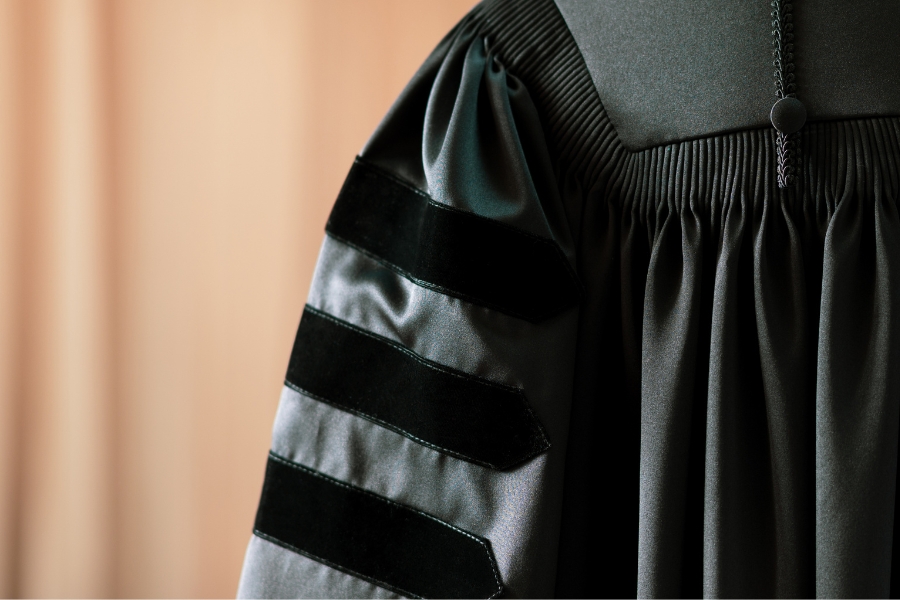
    A PhD or doctoral degree gown for graduation
    A PhD gown usually has three stripes on the sleeve. Photo credit: Canva

    Some people pointed out that there are master’s programs that are more research-based, thus more alike in nature to a PhD. However, others who have been through a research master’s and a PhD program said they were still different.

    One thing everyone agreed on is that getting a PhD is no joke

    Here’s how people in the comments described it:

    “Fetal position crying is part of the journey of earning a PhD 😫. My master’s was a breeze compared to it.”

    “My PhD gave me PTSD.”

    “I’m almost done with my PhD and I regret it :)”

    “Just know that getting a PhD is literally academic hazing.”

    “A PhD is quite literally the highest attainable degree; it’s not something you just do. You will work. And you will nearly die. 😂”

    “I’m currently getting my Nursing PhD. No, I do not want to talk about it.”

    “Oh so this is why some professors are so strict about being called Doctors. Honestly yeah, I get it now.”

    “That’s why when I see my PhD candidate friends crashing out, I leave them be. They deserve that moment.”

    “PhD Student here. This is accurate. Funded student. I had to adjust my entire life for research. It’s worth it nonetheless…”

    Here’s to the humans who help add to our ever-expanding knowledge as a species, even when it consumes their entire life to do so.

    You can follow Dr. Ari on TikTok for more on college degrees.

  • It’s not brains or talent. Expert says high achievers have two traits anyone can learn.
    Angela Duckworth speaking at a TED event.Photo credit: via TED / YouTube

    Why is it that some people are high achievers who have a track record of success and some people never come close to accomplishing their dreams? Is it talent, luck, or how you were raised? Is it that some people are just gifted and have exceptional talents that others don’t?

    The good news is, according to psychologist Angela Duckworth, the most critical factor in being a high achiever has nothing to do with talent or intelligence. It’s how long you can keep getting back up after getting hit. She calls it “grit” and, according to Duckworth’s research, it’s the common denominator in high achievers across the board, whether it’s cadets at West Point or kids in a spelling bee. Duckworth goes into depth on the topic in her book Grit: The Power of Passion and Perseverance.

    What personal traits make someone successful?

    “The common denominator of high achievers, no matter what they’re achieving, is this special combination of passion and perseverance for really long-term goals,” Duckworth revealed on The Mel Robbins Podcast. “And in a word, it’s grit.”

    “Partly, it’s hard work, right? Partly it’s practicing what you can’t yet do, and partly it’s resilience,” she continued. “So part of perseverance is, on the really bad days, do you get up again? So, if you marry passion for long-term goals with perseverance for long-term goals well then you have this quality that I find to be the common denominator of elite achievers in every field that I’ve studied.”

    When pressed to define the specific meaning of grit, Duckworth responded: “It’s these two parts, right? Passion for long-term goals, like loving something and staying in love with it. Not kind of wandering off and doing something else, and then something else again, and then something else again, but having a kind of North Star.”


    For anyone who wants to achieve great things in life, grit is an attitude that one can develop for themselves that isn’t based on natural abilities or how well one was educated. Those things matter, of course, but having a gritty attitude is something someone can learn.

    “I am not saying that there aren’t genes at play because every psychologist will tell you that’s also part of the story for everything and grit included,” Duckworth said. “But absolutely, how gritty we are is a function of what we know, who were around, and the places we go.”

    Why grit is so important

    Grit is critical for people to become highly successful because it means that you stick with the task even when confronted with barriers. In every journey of taking an idea that you love and turning it into reality there is going to be what’s known as the dark swamp of despair—a place that you must wade through to get to the other side. It takes grit and determination to make it through the times when you fear that you might fail. If it were easy, then everyone could be high achievers.

    Grit is what keeps people practicing in their room every night as teenagers and makes them an accomplished guitar player. Grit is what makes a basketball player the first one in the gym and the last to leave so that they make the starting lineup. Grit is knocking on the next door after 12 people have just slammed their doors in your face.

    The wonderful thing about Duckworth’s work is that it presents an opportunity for everyone willing to do the work. You can no longer use the fact that you may not have specialized intelligence or a God-given talent as an excuse. All you need is perseverance and passion and you have as good a shot as anyone at achieving your dreams.

    This article originally appeared last year. It has been updated.

  • Experts share how to get that dreaded orange stain out of shower liners without tossing them
    , ,

    Experts share how to get that dreaded orange stain out of shower liners without tossing them

    Shower liners are like any other piece of fabric; they need to be washed. As people become more environmentally conscious, fewer plastic shower liners are ending up in the trash. Instead, people have been investing a few extra dollars into reusable shower liners, but are finding that the dreaded orange stain is still showing up…

    Shower liners are like any other piece of fabric; they need to be washed. As people become more environmentally conscious, fewer plastic shower liners are ending up in the trash. Instead, people have been investing a few extra dollars into reusable shower liners, but are finding that the dreaded orange stain is still showing up after a washing.

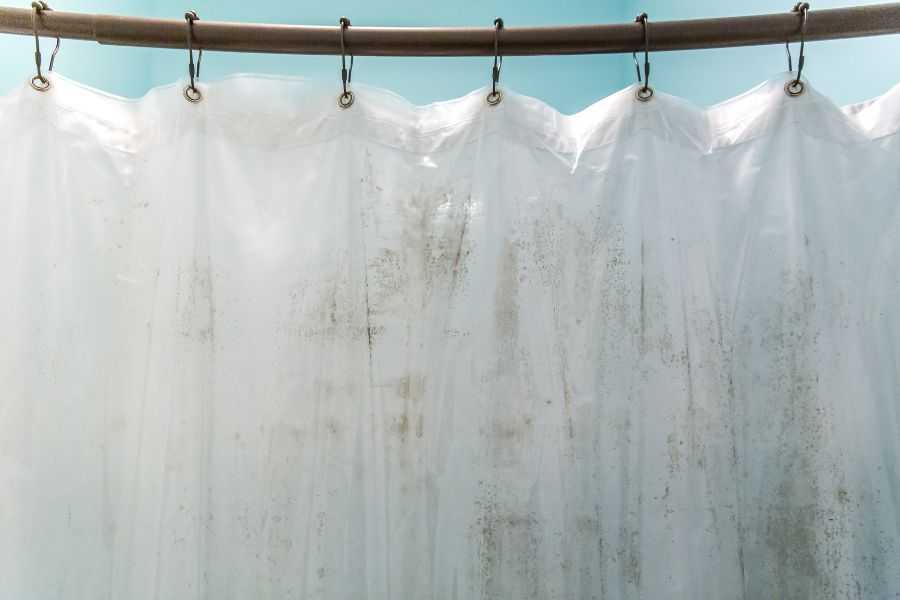
    The orange stain seems to start creeping up, not long after hanging the bright white liner behind your shower curtain. What is this stain, and how can you get it out without having to replace the entire liner? According to experts, the orange stain can be caused by different things, but ruling out dye from a shower curtain, the likely culprits are hard water or bacteria.

    “If you live in an area prone to hard water, then there’s a good chance that the orange stains in your shower curtains are caused by mineral buildup,” Allie Ogletree writes for Angi before later sharing the other culprit. “If your shower curtains are orange and slimy, then bacteria called Serratia marcescens could be the reason behind your orange shower curtains.”

    shower curtain; shower liner; get orange out; clean shower liner; shower liner cleaner
    Shower curtain with visible mold spots. Photo credit: Canva

    While hard water is more of an annoyance than a health hazard, an orange stain caused by bacteria may be a bigger concern, making it a priority to keep it off your shower liner.

    The Cleveland Clinic notes that this particular bacteria, often found on shower curtains, can cause unpleasant health issues. They write, “Serratia marcescens is bacteria that sometimes causes infections, including UTIs and pneumonia. You’re at higher risk for infection if you’re in the hospital or at a long-term care facility, have a weakened immune system or a medical device in your body. S. marcescens can be hard to treat because it’s often resistant to many antibiotics.”

    Tossing the shower curtain into the washer may kill the bacteria, but it doesn’t always get the stain out. Cleaning experts have a solution.

    shower curtain; shower liner; get orange out; clean shower liner; shower liner cleaner
    Cleaning the shower with green gloves and a blue cloth. Photo credit: Canva

    Method One

    Spray down the orange parts of the liner with an enzyme stain remover spray, then soak it in OxyClean and scrub with a soft brush. Once the first few steps are done, toss it in the washing machine with a half cup of baking soda. When the washer reaches the rinse cycle, add a half cup of vinegar. According to Real Simple, following these steps will have your shower liner looking good as new.

    If you have a plastic liner, you can wash it by hand and skip a few of the steps, but you may still want to scrub any residue off with a scrub brush. Cleaning enthusiast Jeneva Aaron tells Real Simple, “You can soak a plastic liner in a baking soda and vinegar solution to remove soap residue.”

    shower curtain; shower liner; get orange out; clean shower liner; shower liner cleaner
    Woman diligently cleaning shower glass with spray and cloth. Photo credit: Canva

    Method Two

    Going back to basics just may be what works. Angi touts using a simple vinegar and water mixture on the stain, allowing it to sit for 15 minutes before scrubbing, which can do the job. But you can take it one step further by adding baking soda to a few drops of white vinegar to create a paste to spread onto the grime, then scrub off.

    According to the experts at Angi, “If your shower curtain still has discoloration after cleaning it, you can toss the shower curtain in the washing machine on the delicate setting to try to remove any remaining bacteria and then soak it in bleach to remove the orange. Just be sure to wear PPE, have good ventilation, and avoid mixing bleach and vinegar, as this creates a hazardous gas.”

    shower curtain; shower liner; get orange out; clean shower liner; shower liner cleaner
    Laundry day vibes in a cozy, tidy room. Photo credit: Canva

    How to keep the orange away

    One of the reasons bacteria builds up is due to the moisture in the bathroom, so ventilating the bathroom will help cut down on how often the liner needs to be washed. In addition to ventilating the bathroom, close the shower curtain and place it on the outside of the bathtub where it’s dry. Closing the shower curtain after getting out of the shower will allow the liner to dry completely, as it will not be folded onto itself.

    Surprisingly, there’s no need to wash the shower liner weekly to aid in keeping the bacteria from discoloring it. Cleaning experts at Real Simple say that a fabric shower curtain should be washed once every three months, as long as a shower liner is used. The liner should be washed monthly to interrupt bacterial growth.

  • Professional speaker explains how voice messages can improve public speaking skills
    , ,

    Professional speaker explains how voice messages can improve public speaking skills

    Many people are looking to improve their public speaking skills, whether for work or to feel more comfortable in social situations. While taking classes and getting advice from speech coaches can help, some people have difficulty finding either the money or the time to access professional help. But one speech expert believes you can significantly…

    Many people are looking to improve their public speaking skills, whether for work or to feel more comfortable in social situations. While taking classes and getting advice from speech coaches can help, some people have difficulty finding either the money or the time to access professional help. But one speech expert believes you can significantly improve your verbal communication skills just by using your phone.

    In a YouTube video, communication professional and speaker Vinh Giang offers a daily exercise that can help improve public speaking: sending voice messages instead of texts. Giang notes that one benefit of texting is being able to review a message before sending it to fix potential communication issues or miscues—and argues that you can do the same with voice messages.

    Recording a voice message lets you hear yourself in a low-stakes situation, with the option to re-record again and again if necessary. Each time you listen back, you can pick up on your volume, speed, clarity, and word choice and be more mindful in the next one. You’ll be able to see (well, technically hear) where you’re lacking and what to improve, whether that means fixing an issue right away or identifying exactly what you need to work on in your speech.

    Speech professionals agree voice notes help improve speaking abilities

    Other professionals in public speaking and speech therapy spoke to Upworthy about voice messages and how they can help people improve their speaking skills.

    “In the speech therapy world, the process of using voice messaging to improve public speaking would be considered a method called self-monitoring through biofeedback,” said speech pathology expert Ryann Sutera. “Rehearsing running speech through the use of recordings can help assess intelligibility, rate of speech, and word choice.”

    “Using voice memos as a low-stakes tactic to improve communication and public speaking skills is something we find helps prep our clients for media opportunities,” said public relations director Lauren Guess. “Most of our clients are on the go, and sending a voice memo back in response to the reporter’s question is a great practice for creating usable, digestible sound bites.”

    Guess said voice messages not only help communication with media outlets, but also help refine clients’ public speaking skills and sharpen their talking points.

    “We prefer this approach because we find it quickly strengthens confidence in speaking on their subject matter and enhances their ability to nail their key messages, compared to submitting quotes via email or text,” Guess said.

    Whether you want to improve your public speaking for professional reasons, like giving a presentation at work or running for political office, or to get better at conversations and connecting with friends, it might be worth recording a voice note instead of talking through your fingertips.

  • People share the new subscriptions and fees they refuse to pay before they become normal
    An angry customer complains to customer service. Photo credit: via Canva/Photos

    Remember when you bought something, you owned it and, for the most part, only paid once? These days, companies try to extract the most value from their customers by getting them to pay more by tacking on surprise fees or add-ons that function as a subscription.

    Remember when you bought software once and, if you wanted to upgrade to the latest version, you paid extra? But if you liked the old version, you kept it and it worked fine? These days, you’re forced to pay a monthly fee to use the software and are forced to pay for the upgrades whether you like them or not.

    If you’re allergic to paying additional surprise fees, don’t go to Las Vegas. These days, you’ll get hit with a hefty resort fee upon checkout. Some hotels charge you up to $50 to use the in-room mini-fridge, $60 if you want to check in early, a phone-booking fee, and the most infuriating: a $25 fee to use the silverware with room service. At a time when inflation is hitting people hard, these feel like an insult to injury.

    las vegas, nevada, welcome to vegas, vegas sign, hotels
    The Las Vegas strip. via Canva/Photos

    People are seriously fed up with being nickel-and-dimed everywhere they turn, so a Redditor asked people to share the subscription fees they’ve recently encountered that they need to “collectively refuse to pay” so they don’t become normalized. We chose some to be aware of and shared information on how you can avoid paying fees—or at least whittle the number of subscriptions you have to a bare minimum.

    1. The online convenience fee

    “I wish we could stop ‘online convenience fee’ when there is essentially no other way to pay.”

    “They shouldn’t exist anyway because paying online isn’t just more convenient for the customer— it’s more convenient for the company, too! They can cut tons of positions when no one has to open actual mail or enter checks/CC numbers manually.”

    If you’re tired of paying online convenience fees, one way to avoid them is to set up auto-pay with your bank, which often lets you bypass them. You can also pay by check. If you don’t want to waste paper by receiving a bill in the mail, you can usually print out a payment stub online and pay it that way.

    2. School lunch fees

    “Our school required us to use an app to deposit lunch money to our children’s school accounts. Each deposit cost a $2.75 ‘processing fee’ to the app itself, paid for by the parent. I started packing lunches.”

    “Yes! Our school uses this, and in addition, they cap how much you can deposit at a time, which forces you to do multiple deposits and get multiple processing fees. The cap doesn’t change if you have multiple kids either, so like every 2 months I have to do a deposit for each kid and pay separate processing fees.”

    lunch, school lunch, kids eating, lunch lady, cafeteria
    Kids eating lunch in school. via Canva/Photos

    3. Streaming services with ads

    “Subscriptions to streaming services that show ads. Big media is getting two bites of the apple.”

    “Oh, and when you pay extra for ad-free, they stop showing advertisements from outside companies, but they replace them with ads for their own services and programming.”

    Want to make sure you don’t let your subscriptions pile up unnecessarily and avoid a big squeeze on your budget? One Redditor on the thread r/LifeProTips had a great idea: write down all of your monthly subscriptions on Post-it notes and keep them in a place you look every day, like where you put your keys. As the old saying goes, out of sight, out of mind. Seeing what you’re paying for each month can help you rethink your spending.

    4. A/C repair subscription

    “We have a local heating and air conditioning company that’s rated near the best in the business. However, as the wife I found out, their business model is incredibly scummy and we’ve made other people aware of it because it’s predatory. If you call them for a checkup on your furnace or AC they have a normal fee for that… but if you need any type of repairs or anything you have to pay for that repair AND they make you sign up for a monthly fee that allows you to be a customer if you have issues moving forward. If you do not agree to this fee, they won’t fix your unit – regardless of you paying for the parts or not. It was like $45 a month.”

    5. Subscription fees for car features

    “Subscriptions for hardware features your car already has. BMW tried to charge a subscription for heated seats, and now other companies are watching.”

    “Honestly, they just need to make it a law that if the functionality is present in the finished product, they by law cannot disable it. The reason why auto manufacturers used to charge more for the higher trim packages was because there was more work involved in producing them. But now they’ve capitalized on economies of scale and figured out a way to just make all the cars identical and selectively turn off features unless you pay shakedown money to the manufacturers.”

    6. Utility add-ons

    “In the city I live in, some teledoc company has convinced them to automatically add a $7 a month charge to the electric/water bill so everyone will have access to their service. It’s automatic, so if we don’t want it, we have to have the option removed. Most people get their bills electronically and pay automatically and won’t even notice the charge. Scammers!”

    “My bank started charging a fee of $5 monthly for “undeliverable mail”. When I called to fix the prob, the security question was: What’s your address.”

    Did a service you pay for recently go up in price? Tiktoker @SavingMoneySabrina has a great way to lower your bill when you call customer service. She has a simple script to follow: “Hi, my name is [insert name]. I saw that my Internet went up about $25 this month. Unfortunately, I’m not able to afford that. So if I can’t get it down to the rate that it was last month, I’m gonna have to cancel. Is this something you can help me with?” Here’s how she does it:


    @savingmoneysabrina

    I hope this helps you save some money on your bill! Important note tho: when I say that I will “have to cancel,” I actually do mean it. Sometimes you’ll have to get close to cancelling for anything to happen. Trust the process! #howtosavemoney

    ♬ original sound – savingmoneysabrina


    7. Fees to pay your bills

    “They should just call those a ‘fee fee.’”

    “Another One Won’t Hurt fee.”

    8. Printer ink scams

    “My wife had one of those HP subscription printers, which worked fine for her needs, and her job reimbursed her for it, so it wasn’t really a problem for her. When she changed jobs, we decided to cancel the subscription because we weren’t using the printer nearly as much, thinking we’d use up the ink in the cartridges and then just buy new cartridges ourselves. NOPE. It turns out, the whole thing stops working as soon as you cancel your subscription, and you can’t buy normal ink cartridges to put in it; it only accepts the ones specifically made for the subscription service. So now we have a big plastic paperweight with mostly full ink cartridges.”

    9. Personalized pricing

    “That ‘personalized pricing’ bs they are considering. The price should be the same for everyone, everywhere, and every time from the same physical store or website. If I want to order in-store pickup from the website, it should be the same price on the shelf. If I use the website at home, in the store, or down the street from inside a competitor’s store it should be the same price. If I order online from my friend’s pc it should be the same price as ordering from my own pc. The price should be the same whether I’m using the app, the website, or the physical store, not talking about delivery fees. The entire idea that a store can change the price of an item arbitrarily to what they think YOU will pay for it compared to someone else should be absolutely illegal.”

    “Would you like to use our personal shopping assistant? Guaranteed to give you the lowest price offered to any customer! And it only costs 25% to use!”

    10. No free parking here

    “Parking fees at suburban hotels. I don’t have an issue obviously when you’re in downtown Chicago or San Francisco, but charging $20/day to park in a huge suburban hotel with a lot that holds 500 cars is obnoxious.”

    “Also, parking fees at your job. I’m a nurse in Chicago. All of the major hospitals charge us a parking fee on our paychecks. Like… I get that it’s the city and parking is limited, but the hospitals own their own lots. Why are you making me to pay to come to work? Lol.”

    motel, parking, free parking, motel fees, parking lot
    A motel parking lot. via Canva/Photos

    11. Software subscriptions

    “Back in the day, someone would write a piece of software you actually found useful, so you bought it. Later, the developer added some nice new features, you thought the upgrade was worth it, and you bought the new version. Then the next version came along with features you didn’t care about (bloatware), so you skipped it. The developer sees their income dropping and decides the solution is… a subscription.”

    If you are locked into subscription software for the next few months, be sure to flip off the auto-renewal switch on the site. If they won’t allow you to do so, then set a calendar reminder on your phone for the last month of service so you can cancel before it auto-renews for another year.

People Skills

Expert shares the simple small talk mistake almost everyone makes—and how to fix it

Nature

Beavers were brought to the desert to save a dying river. 6 years later, here are the results.

Culture

3-year-old ventures outside in the pitch black to save his great-grandma after scary fall

Popular

Teachers share the tell-tale signs they know a parent truly cares about their kid