We all long to be close to at least one person. (Though some of us may try to befriend everyone on the planet; no judgment.) According to a 2023 Pew Research poll, 53% of adults have 1 to 4 close friends, 38% have 5 or more, and 8% to 12 % have no close friends. So, how do we feel closer to people? A recent study published in Neuropsychologia found that it has everything to do with how we talk to each other.
The study, which looked at 42 same-sex friends, had them engage in conversations where they revealed emotional information and others that were merely fact-based. Researchers monitored them with brain scans and later interviewed them, asking how close they felt to their partner while they talked.

The study found that people who shared emotions in conversation felt closer than those who stuck to facts. Brain scans showed that when people shared their emotions, their brain activity became coordinated as they interacted in what is known as “interpersonal neural synchronization.”
What is ‘interpersonal neural synchronization’?
When you’re experiencing neural synchronization with another person, your brainwaves become temporarily aligned. It doesn’t mean you are thinking the same thoughts, but that certain brain signals rise and fall together, depending on how you communicate and cooperate. This can also happen when someone is teaching you a skill or when you work together on a creative task.
How to form closer relationships
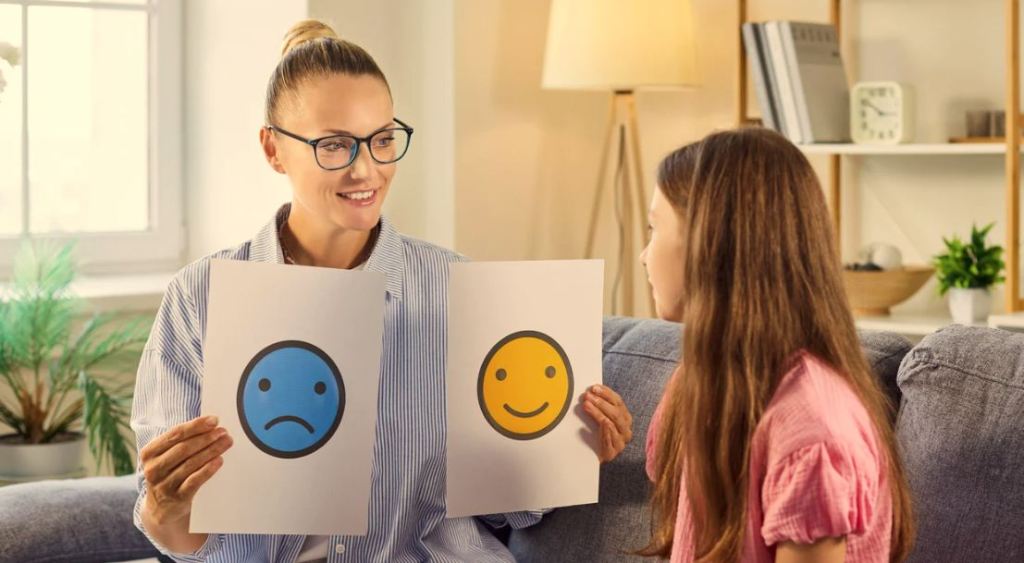
The key takeaway from the study is that people’s brains sync up when they talk about their emotions, whether positive or negative. So, if you’re talking about the weather and it rained the day before, be sure to share how it made you feel, whether you were bummed or felt comforted by the sound of the patter on your windows.
Here’s the same story, one full of emotions and the other without.

No emotions: Last night I went to the carnival. I rode the Tilt-A-Whirl and played that game where you shoot water into a clown’s mouth.
Full of emotions: Yesterday, I went to a carnival, and it was so exciting. I rode the Tilt-A-Whirl, and the ride was exhilarating. For a while I felt kinda scared, but then I got nervous and couldn’t stop laughing. I also played the game where you shoot water into a clown’s mouth, and you know how competitive I get. I felt so frustrated when a 12-year-old beat me.
If you talk to your friend like the person did in the second example, then you will have a much better chance of your brain activity syncing up. It also gives them a chance to share their emotions about similar experiences.
In conversation, emotions are the perfect icing on the cake, adding drama and relatability to every story. We’ve all been scared on a ride, frustrated playing a game, and excited for a night out at a carnival. Why leave those emotional details out, especially when they do a great job of bringing people in?