Mark Twain is often seen as the quintessential American novelist, having penned classics such as The Adventures of Tom Sawyer and Adventures of Huckleberry Finn. But he was also a popular travel writer who wrote six books about his adventures abroad. In 1867, he was sent by a newspaper to travel throughout Europe and the Holy Land via the Mediterranean Sea, resulting in the popular book The Innocents Abroad.
In 1880, Twain wrote an unofficial sequel to The Innocents Abroad called A Tramp Abroad, a fictionalized account of himself, his traveling companion “Harris,” and their attempt to walk through Europe. The book is both a travelogue from a time when it was rare for most Americans to travel to Europe and a satire of how clueless they can be when encountering new cultures.
Twain didn’t care much for European cuisine
One unforgettable passage in A Tramp Abroad has Twain critiquing European food and longing for his favorite comfort foods. He refers to European fare as unsatisfying, to say the least. “The number of dishes is sufficient, but then it is such a monotonous variety of UNSTRIKING dishes. It is an inane, dead-level of ‘fair-to-middling.’ There is nothing to ACCENT it,” Twain wrote.
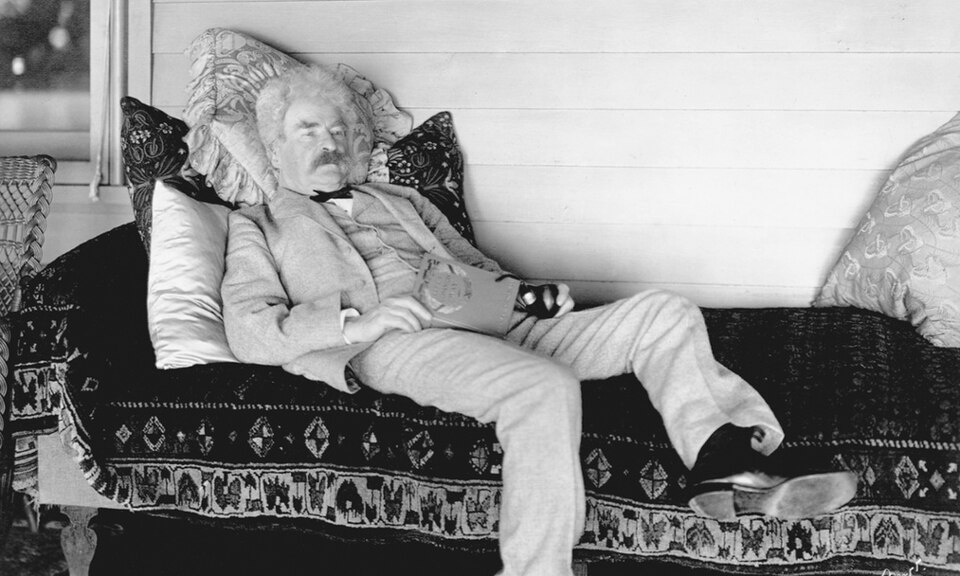
In the book, he jokes that when he returns to the States, he will have a “modest” meal of his favorite foods prepared for him and will send his requests ahead of time so they are ready when he arrives. The menu contains 60 of his favorite American comfort foods.
Twain lists his favorite comfort foods
“It has now been many months, at the present writing, since I have had a nourishing meal, but I shall soon have one, a modest, private affair, all to myself,” Twain wrote. “I have selected a few dishes, and made out a little bill of fare, which will go home in the steamer that precedes me, and be hot when I arrive, as follows:
Radishes. Baked apples, with cream
Fried oysters; stewed oysters. Frogs.
American coffee, with real cream.
American butter.
Fried chicken, Southern style.
Porter-house steak.
Saratoga potatoes.
Broiled chicken, American style.
Hot biscuits, Southern style.
Hot wheat-bread, Southern style.
Hot buckwheat cakes.
American toast. Clear maple syrup.
Virginia bacon, broiled.
Blue points, on the half shell.
Cherry-stone clams.
San Francisco mussels, steamed.
Oyster soup. Clam Soup.
Philadelphia Terapin soup.
Oysters roasted in shell-Northern style.
Soft-shell crabs. Connecticut shad.
Baltimore perch.
Brook trout, from Sierra Nevadas.
Lake trout, from Tahoe.
Sheep-head and croakers, from New Orleans.
Black bass from the Mississippi.
American roast beef.
Roast turkey, Thanksgiving style.
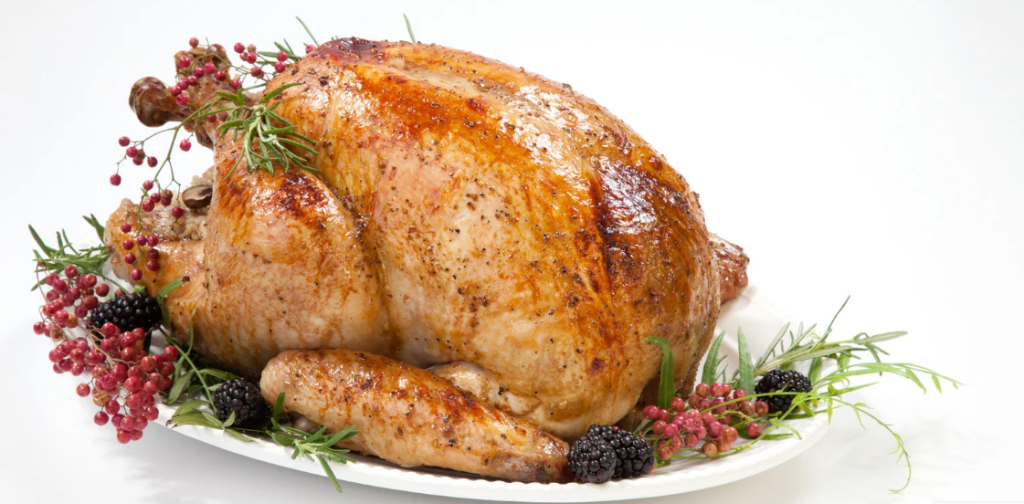
Cranberry sauce. Celery.
Roast wild turkey. Woodcock.
Canvas-back-duck, from Baltimore.
Prairie hens, from Illinois.
Missouri partridges, broiled.
‘Possum. Coon.
Boston bacon and beans.
Bacon and greens, Southern style.
Hominy. Boiled onions. Turnips.
Pumpkin. Squash. Asparagus.
Butter beans. Sweet potatoes.
Lettuce. Succotash. String beans.
Mashed potatoes. Catsup.
Boiled potatoes, in their skins.
New potatoes, minus the skins.
Early rose potatoes, roasted in the ashes, Southern style, served hot.
Sliced tomatoes, with sugar or vinegar. Stewed tomatoes.
Green corn, cut from the ear and served with butter and pepper.
Green corn, on the ear.
Hot corn-pone, with chitlings, Southern style.
Hot hoe-cake, Southern style.
Hot egg-bread, Southern style.
Hot light-bread, Southern style.
Buttermilk. Iced sweet milk.
Apple dumplings, with real cream.
Apple pie. Apple fritters.
Apple puffs, Southern style.
Peach cobbler, Southern style
Peach pie. American mince pie.
Pumpkin pie. Squash pie.
All sorts of American pastry.
Fresh American fruits of all sorts, including strawberries, which are not to be doled out as if they were jewelry, but in a more liberal way. Ice-water—not prepared in the ineffectual goblet, but in the sincere and capable refrigerator.”
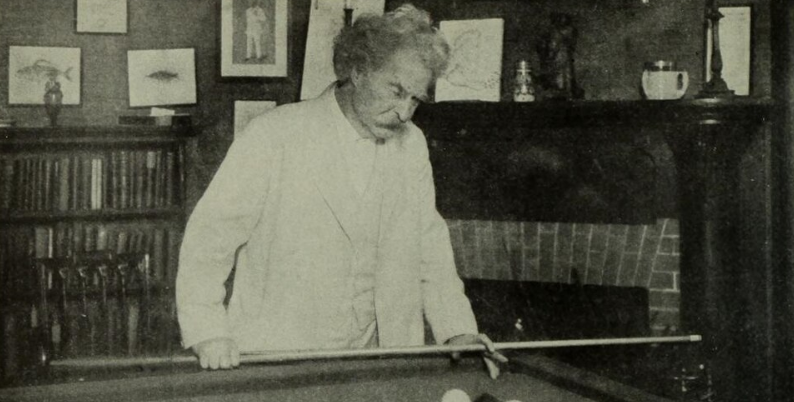
Twain’s list of favorite foods is notable because he spent much of his life in different regions of the United States, including Hannibal, Missouri (his boyhood home), Hartford, Connecticut (his adult home), and Elmira, New York (his summer retreat).
His career as a writer also took him to places in the West, including San Francisco and Sacramento, California, as well as Carson City and Virginia City, Nevada. This led him to develop a taste for many regional cuisines, which he referenced specifically on his list. The oysters should be from San Francisco, and the black bass from Mississippi.
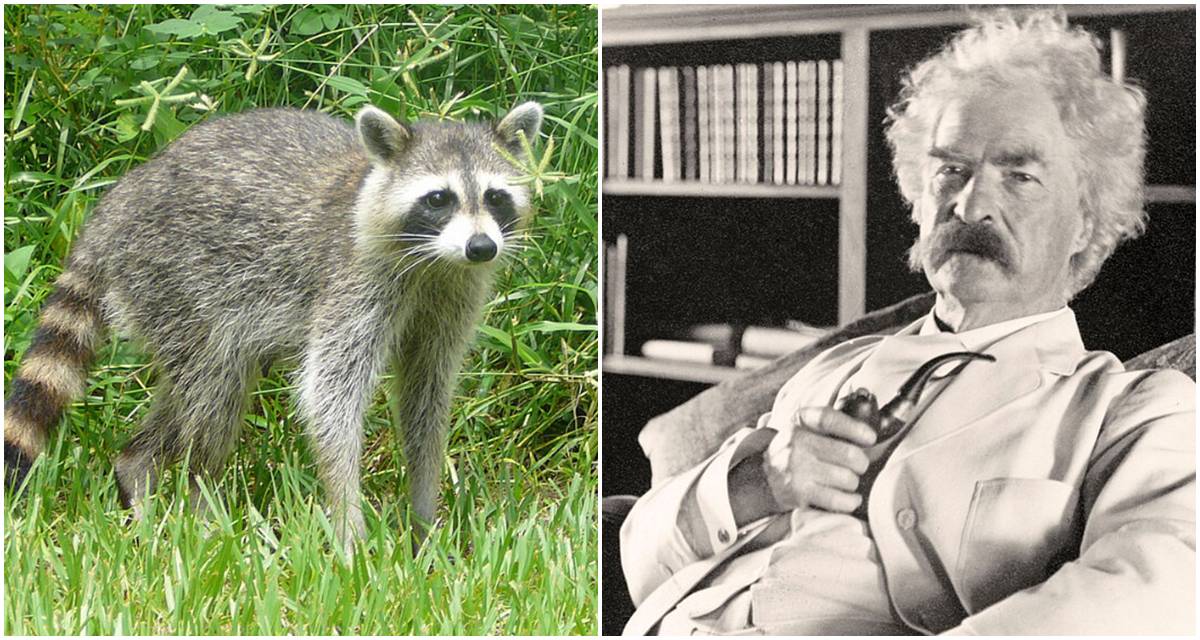
Some may recoil when they see a few items on his list, namely “’coon” (short for raccoon) and “’possum,” short for opossum. These days, most Americans would shudder at the idea of eating them for dinner, but in the 1800s, they were seen as delicacies. Both were commonly roasted or stewed and served with sweet potatoes.
Twain’s over-the-top menu is a fun look at the types of food that were popular in the late 1800s, and it’s also a charming example of how every region of the U.S. has its own specialty. Whether it’s fish in the Sierras or duck in Baltimore, Maryland, every place has its own flavor, and to a man who lived just about everywhere, they were all something to savor.