Millennial parents are pleading with Boomer grandparents to stop giving excessive gifts to grandkids
"I struggle to keep on top of tidying as it is, and this is a massive added challenge."
Boomer grandparents are excessively gifting their grandkids, and Millennial parents have had enough.
Millennial parents and Boomer grandparents don't always see eye to eye on parenting and grandparenting. Now, Millennial parents are uniting on a nightmare Boomer grandparenting trend that sees them "excessively gifting" their grandkids with tons of both new and old *unwanted* stuff during visits.
Ohio mom Rose Grady (@nps.in.a.pod) shared her "Boomer grandparent" experience in a funny and relatable video. "Just a millennial mom watching her boomer parents bring three full loads of 'treasures' into her home," she wrote in the overlay.
Grady can be seen looking out the window of her home at her Boomer mom and dad carrying bags and boxes up her driveway after several visits. The distressed and contemplative look on Grady's is speaking to plenty of Millennial moms.
@nps.in.a.pod Today's "treasure" highlight was the mobile that hung in my nursery... #boomerparents #boomers #boomersbelike #millennialsoftiktok #millenialmom #motherdaughter
Grady captioned the video, "Today's 'treasure' highlight was the mobile that hung in my nursery..."
The humorous video resonated with with fellow Millennial parents. "Straight to the trash when they leave," one viewer commented. Another added, "I always say 'if you don’t want it in yours, we don’t want it in ours' 😂."
Even more Millennial parents have shared and discussed their situations with Boomer grandparents buying their kids too much stuff on Reddit. "Both my mother and my MIL love buying and sending toys, books, clothes, etc. I don't want to be ungrateful but we just don't need it and don't have the space. I have brought this up politely in 'we are all out of drawers for that' but it hasn't slowed things down," one explained. "I think part of the issue is that the grandparents live in different cities and vacation a lot. They don't get to see our daughter much so they buy stuff instead."
Another Millennial parent shared, "While the intention is very kind behind these, all the grandparents are very aware that we do not need, nor wish to receive these gifts in such an excessive volume - as it creates a daily struggle to store and accommodate in our home. I struggle to keep on top of tidying as it is, and this is a massive added challenge."

How to talk to Boomer grandparents about gifts
So, why are Boomer grandparents excessively gifting? "Boomer grandparents may be the first grandparent generation to have accumulated the substantial discretionary funds that enables them to spend money on their grandchildren," Sari Goodman, a Certified Parent Educator and founder of Parental Edge, tells Upworthy. "These grandparents probably grew up with grandparents who didn’t have that kind of money and so they may be excited to give their grandchildren the things they didn’t get."
Goodman suggests that Millennial parents first discuss with them the "why" behind the gifting. "What comes before setting a boundary to limit over-the-top gift-giving is delving into the reasons grandparents are buying so much," she explains. "Coming from a place of compassion and understanding makes it possible to come up with mutually beneficial solutions."
- YouTube www.youtube.com
She recommends that Millennial parents sit down with their Boomer parents to learn more. "Did they grow up without many toys and clothes and are fulfilling a dream? Ask them about the values they learned as children (hard work, perseverance, the power of delayed gratification) and how they can pass on these lessons to the grandchildren," she suggests.
She adds that another reason may be that Boomer grandparents live far away and want their grandchildren to feel a connection with them. "Set up a regular FaceTime or Zoom meeting. Rehearse with the kids so they have something to say and suggest a topic for the grandparents," says Goodman. "Or send snail mail. Kids love getting mail. The grandparents can send postcards from where they live and explain some of the special sites."

Finally, Goodman adds that for some grandparents, this may be is the only way they know how to show their love. Millennial parents could ask if they would be open to other ideas. "Parents can set up an activity for grandparents and kids to do when they come over—a jigsaw puzzle, art activity, board game, magic tricks," she says. "Arrange for the grandchildren to teach the grandparents something their phones can do or introduce them to an app they might like."
This article originally appeared last September
- Grandma has the perfect solution for grandparents who buy too many gifts for their grandkids ›
- Grandparents share their 'no-buy' things to do while spending time with grandkids ›
- Grandma offers wake-up call for grandparents who can't stop buying the grandkids presents ›
- Woman calls out boomer parents who 'beg' for grandchildren and then completely disappear - Upworthy ›
- 15 quirky boomer habits that frustrate millennials to the core - Upworthy ›
- Woman flawlessly reenacts how pre–holiday visit planning with her mother-in-law should go - Upworthy ›
- Elderly woman hilariously shares her 'not to do' list and it’s truly inspiring - Upworthy ›
- Boomers say stop wasting money on 'luxuries.' Millennial proves they have it backwards. - Upworthy ›


A couple cooking in the kitchen with a cat sitting on the table beside chopped ingredients.
12 non-threatening leadership strategies for women
We mustn't hurt a man's feelings.
Men and the feels.
Note: This an excerpt is from Sarah Cooper's book, How to Be Successful Without Hurting Men's Feelings.
In this fast-paced business world, female leaders need to make sure they're not perceived as pushy, aggressive, or competent.
One way to do that is to alter your leadership style to account for the fragile male ego.
Should men accept powerful women and not feel threatened by them? Yes. Is that asking too much?
IS IT?
Sorry, I didn't mean to get aggressive there. Anyhoo, here are twelve non-threatening leadership strategies for women.
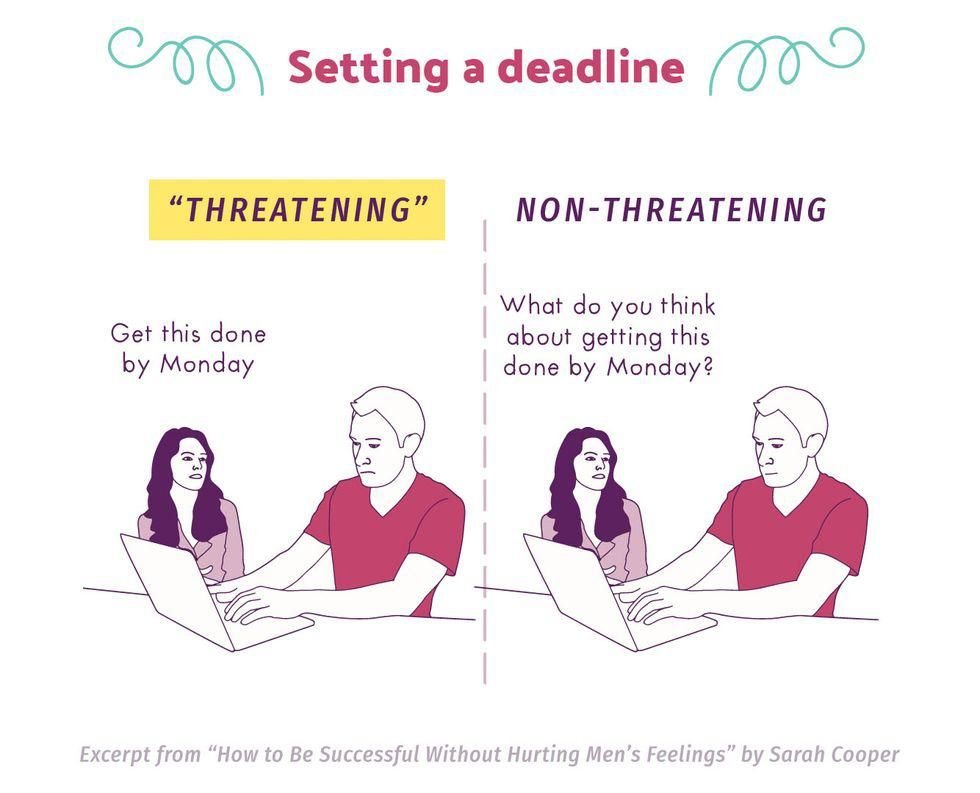
Encourage.
With permission from Sarah Cooper.
When setting a deadline, ask your coworker what he thinks of doing something, instead of just asking him to get it done. This makes him feel less like you're telling him what to do and more like you care about his opinions.
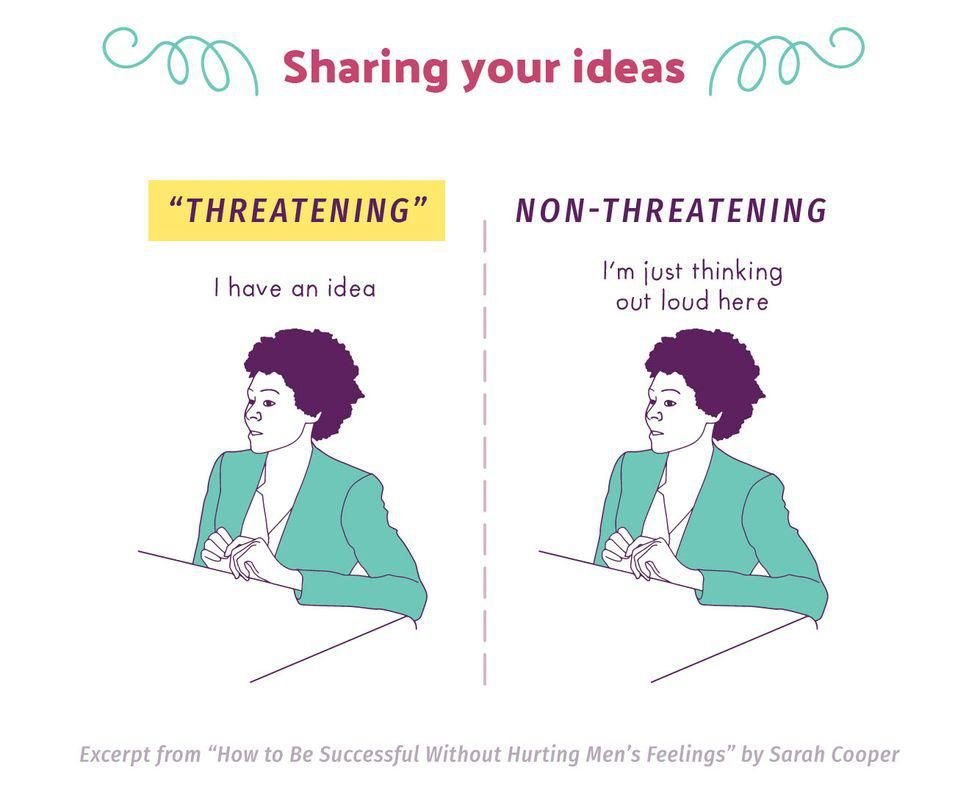
Sharing ideas.
With permission from Sarah Cooper.
When sharing your ideas, overconfidence is a killer. You don't want your male coworkers to think you're getting all uppity. Instead, downplay your ideas as just "thinking out loud," "throwing something out there," or sharing something "dumb," "random," or "crazy."
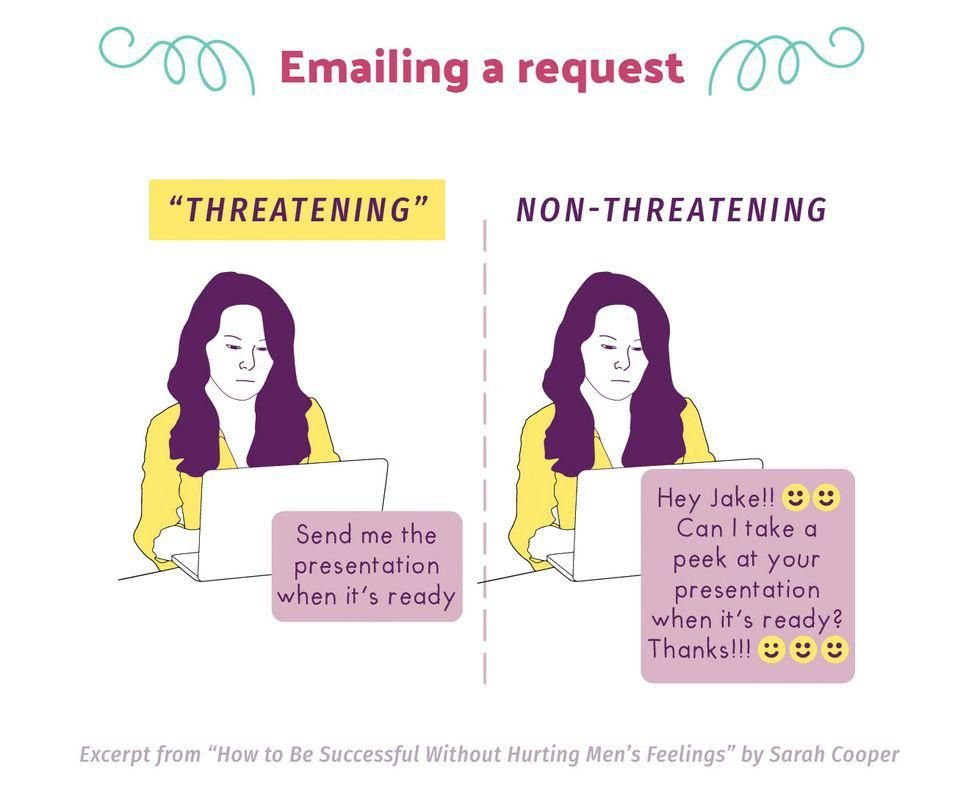
Email requests.
With permission from Sarah Cooper.
Pepper your emails with exclamation marks and emojis so you don't come across as too clear or direct. Your lack of efficient communication will make you seem more approachable.
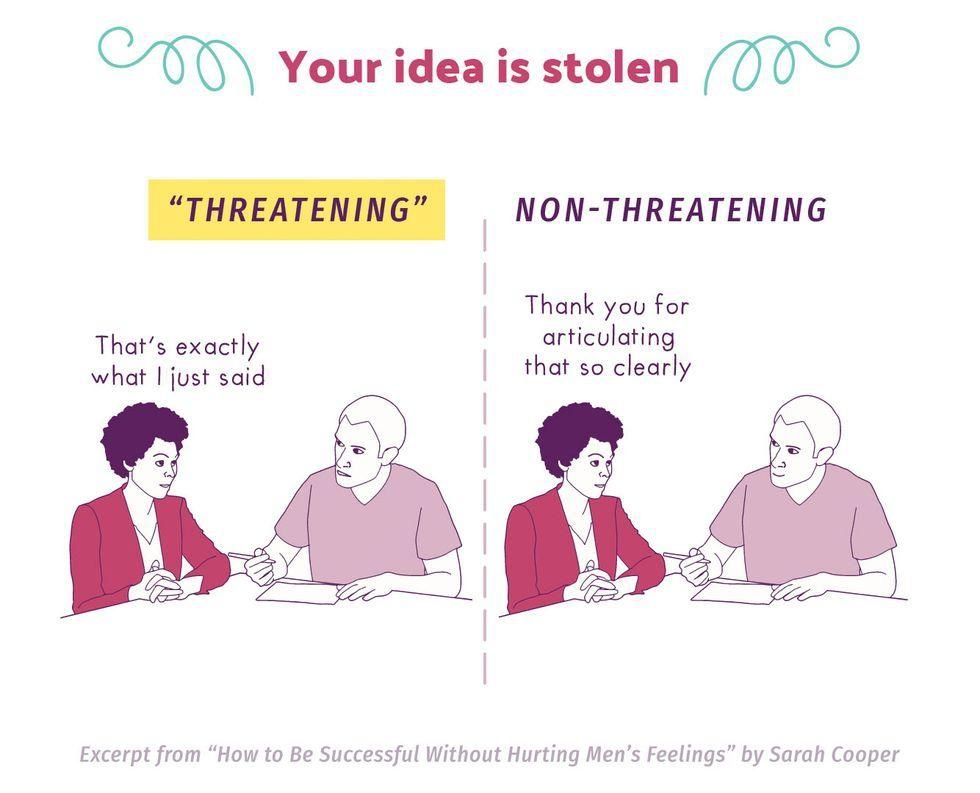
Idea sharing.
With permission from Sarah Cooper.
If a male coworker steals your idea in a meeting, thank him for it. Give him kudos for how he explained your idea so clearly. And let's face it, no one might've ever heard it if he hadn't repeated it.
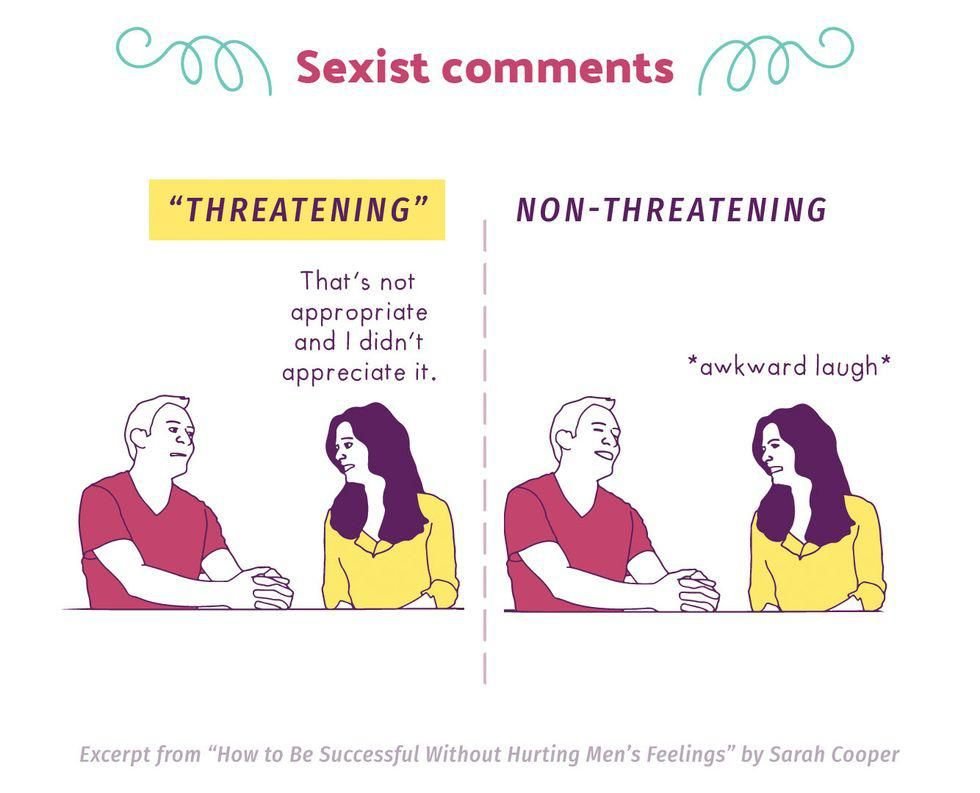
Sexism.
With permission from Sarah Cooper.
When you hear a sexist comment, the awkward laugh is key. Practice your awkward laugh at home, with your friends and family, and in the mirror. Make sure you sound truly delighted even as your soul is dying inside.
Mansplain.
With permission from Sarah Cooper.
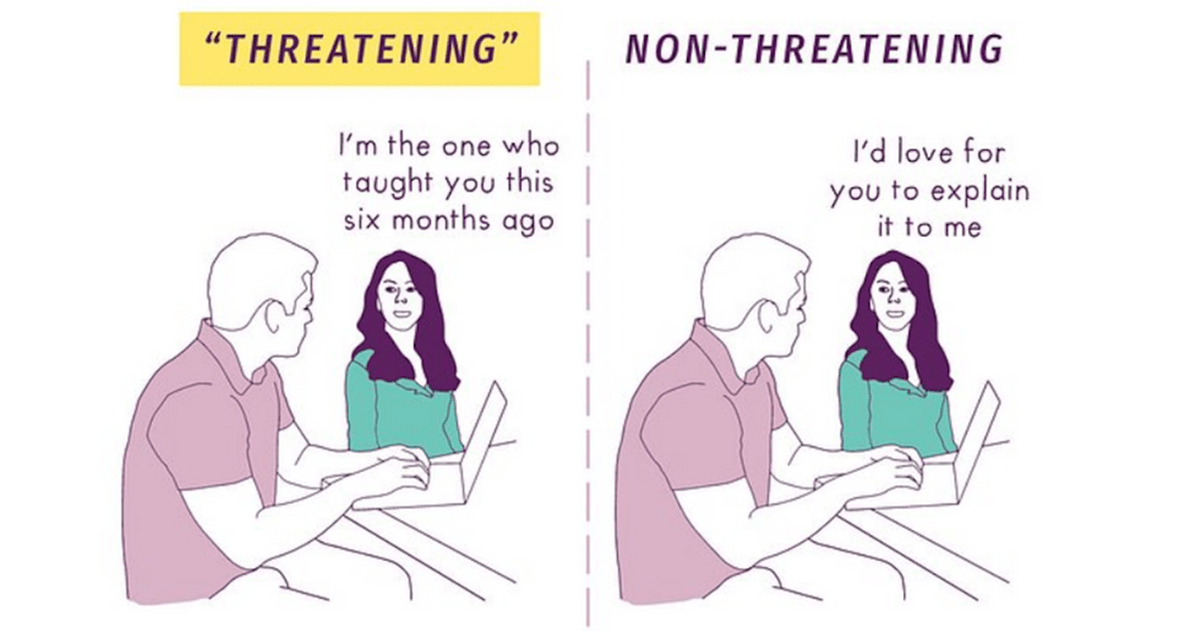
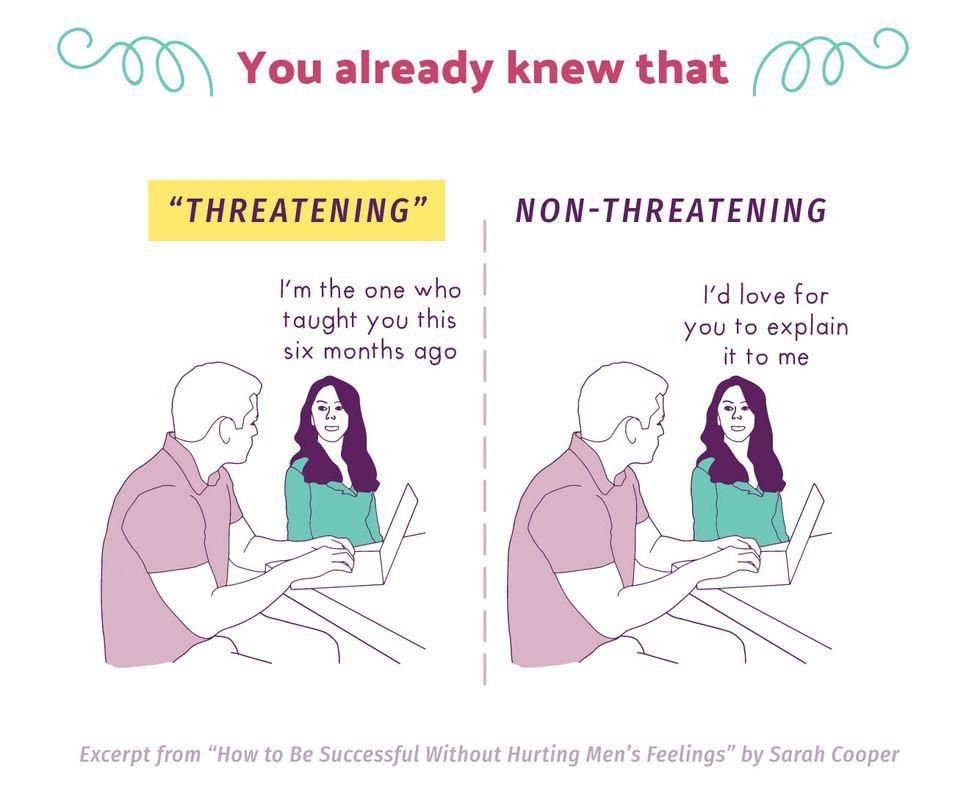
Men love explaining things. But when he's explaining something and you already know that, it might be tempting to say, "I already know that." Instead, have him explain it to you over and over again. It will make him feel useful and will give you some time to think about how to avoid him in the future.
Mistakes.
With permission from Sarah Cooper.
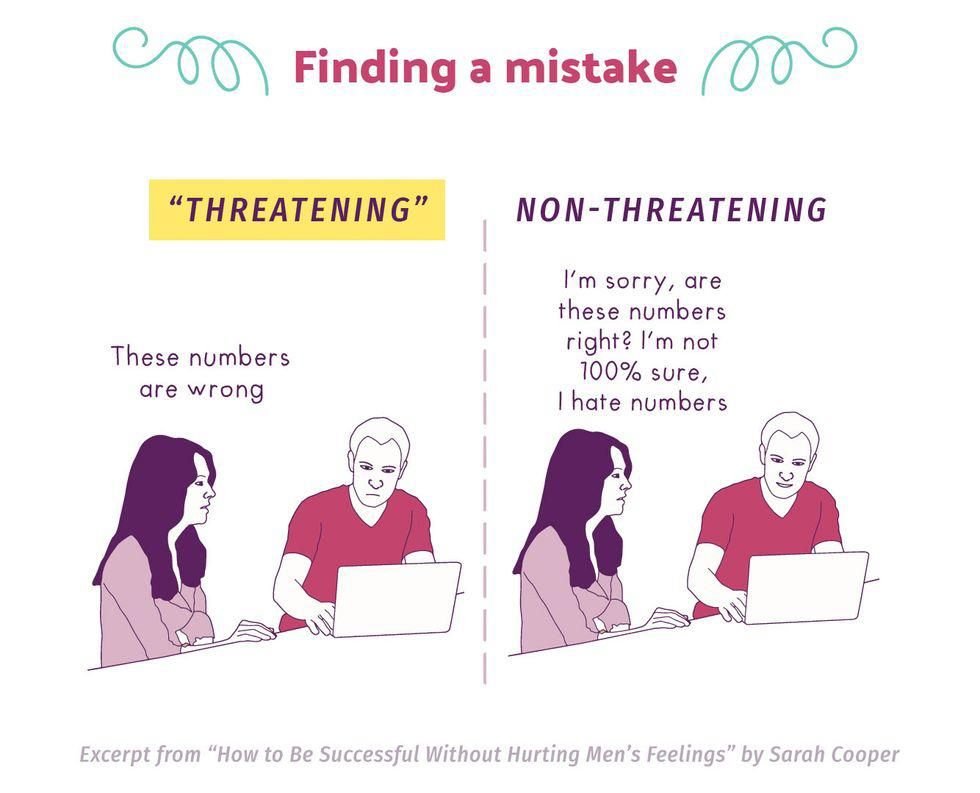
Pointing out a mistake is always risky so it's important to always apologize for noticing the mistake and then make sure that no one thinks you're too sure about it. People will appreciate your "hey what do I know?!" sensibilities.
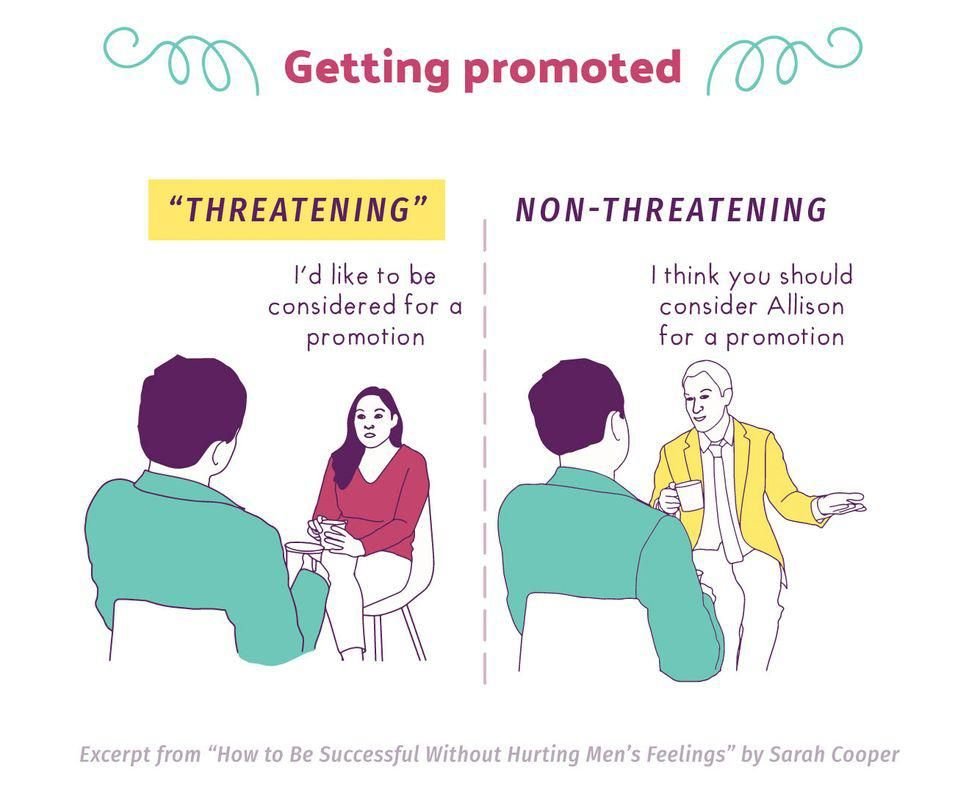
Promotions.
With permission from Sarah Cooper.
Asking your manager for a promotion could make you seem power- hungry, opportunistic, and transparent. Instead, ask a male coworker to vouch for you. Have your coworker tell your manager you'd be great for the role even though you don't really want it. This will make you more likely to actually get that promotion.
Rude.
With permission from Sarah Cooper.
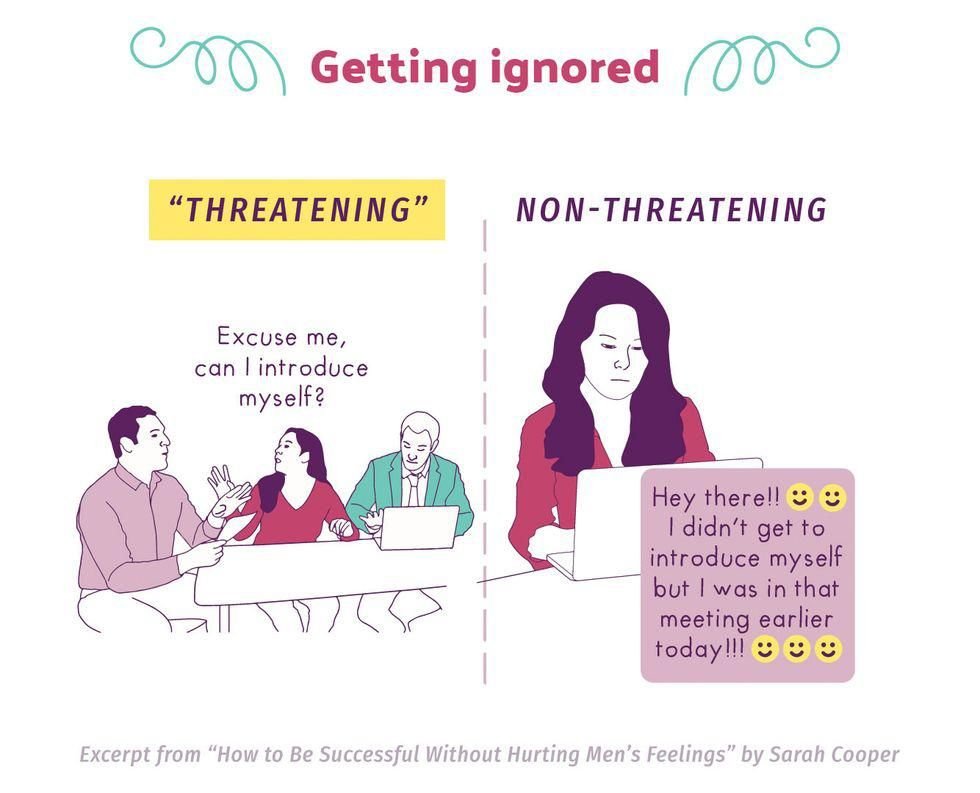
Sometimes not everyone is properly introduced at the start of a meeting. Don't take it personally even if it happens to you all the time, and certainly don't stop the meeting from moving forward to introduce yourself. Sending a quick note afterward is the best way to introduce yourself without seeming too self-important.
Interruptions.
With permission from Sarah Cooper.
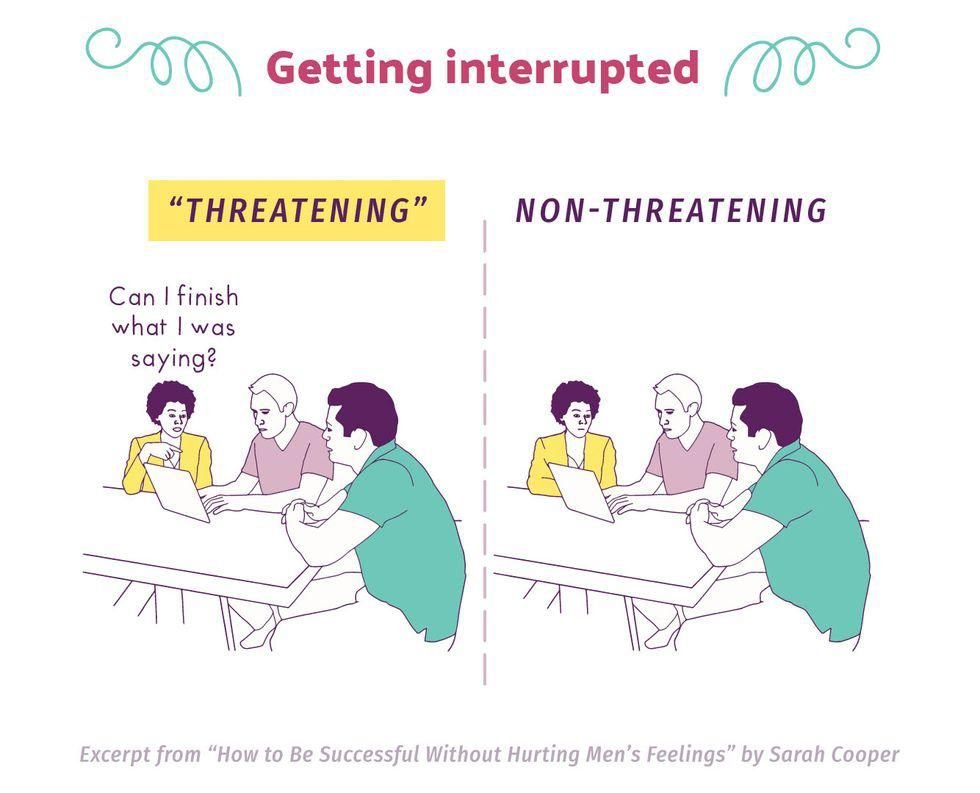
When you get interrupted, you might be tempted to just continue talking or even ask if you can finish what you were saying. This is treacherous territory. Instead, simply stop talking. The path of least resistance is silence.
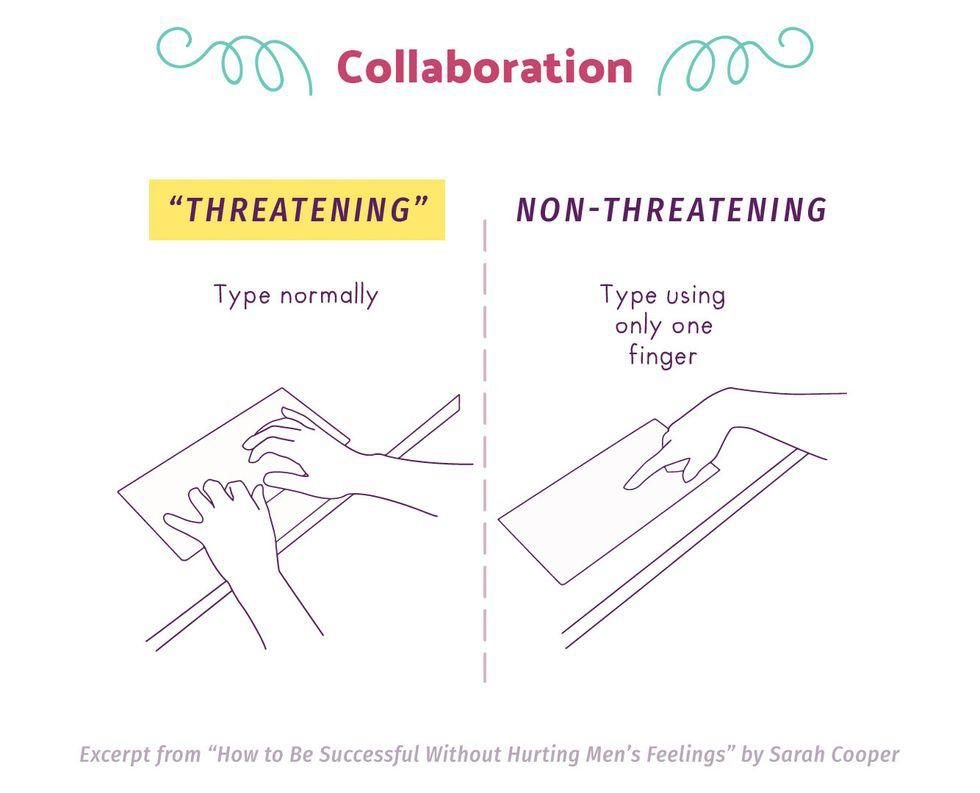
Collaboration.
With permission from Sarah Cooper.
When collaborating with a man, type using only one finger. Skill and speed are very off-putting.
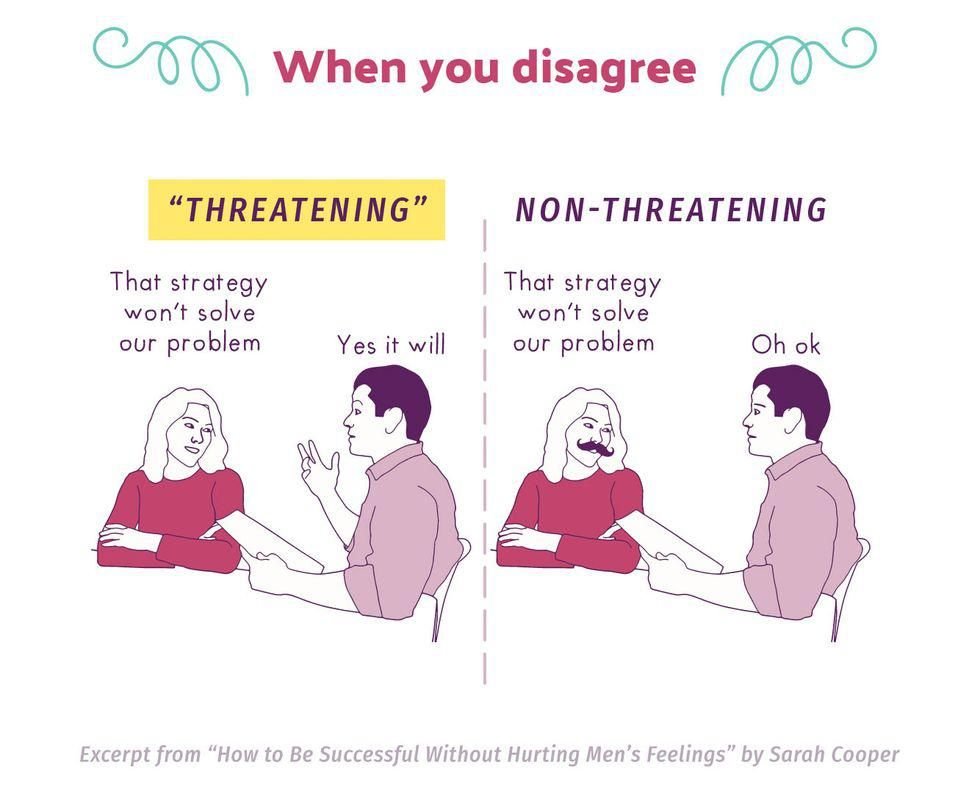
Disagreements.
With permission from Sarah Cooper.
When all else fails, wear a mustache so everyone sees you as more man-like. This will cancel out any need to change your leadership style. In fact, you may even get a quick promotion!

In conclusion...
With permission from Sarah Cooper.
Many women have discovered the secret power of non-threatening leadership. We call it a "secret power" because no one else actually knows about it. We keep our power hidden within ourselves so that it doesn't frighten and intimidate others. That's what makes us the true unsung heroes of the corporate world.
About the Author: Sarah Cooper
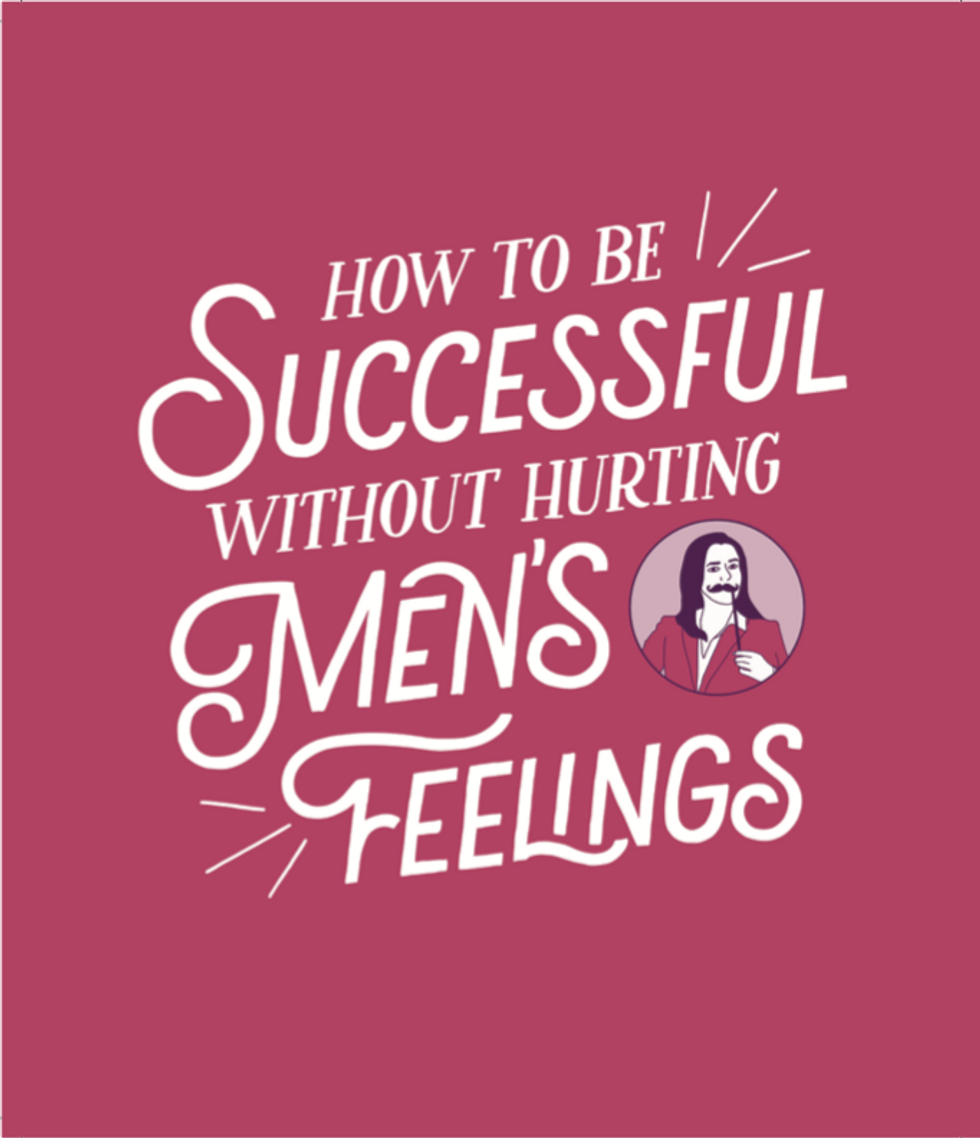
Sarah Cooper is a writer, comedian, and author of 100 Tricks to Appear Smart in Meetings. Her new book, How to Be Successful Without Hurting Men's Feelings, is out now.
The comedic book cover.
With permission from Sarah Cooper.
A satirical take on what it's like to be a woman in the workplace, Cooper draws from her experience as a former executive in the world of tech (she's a former Googler and Yahooer). You can get the book here.
This article was originally published on 3.25.19