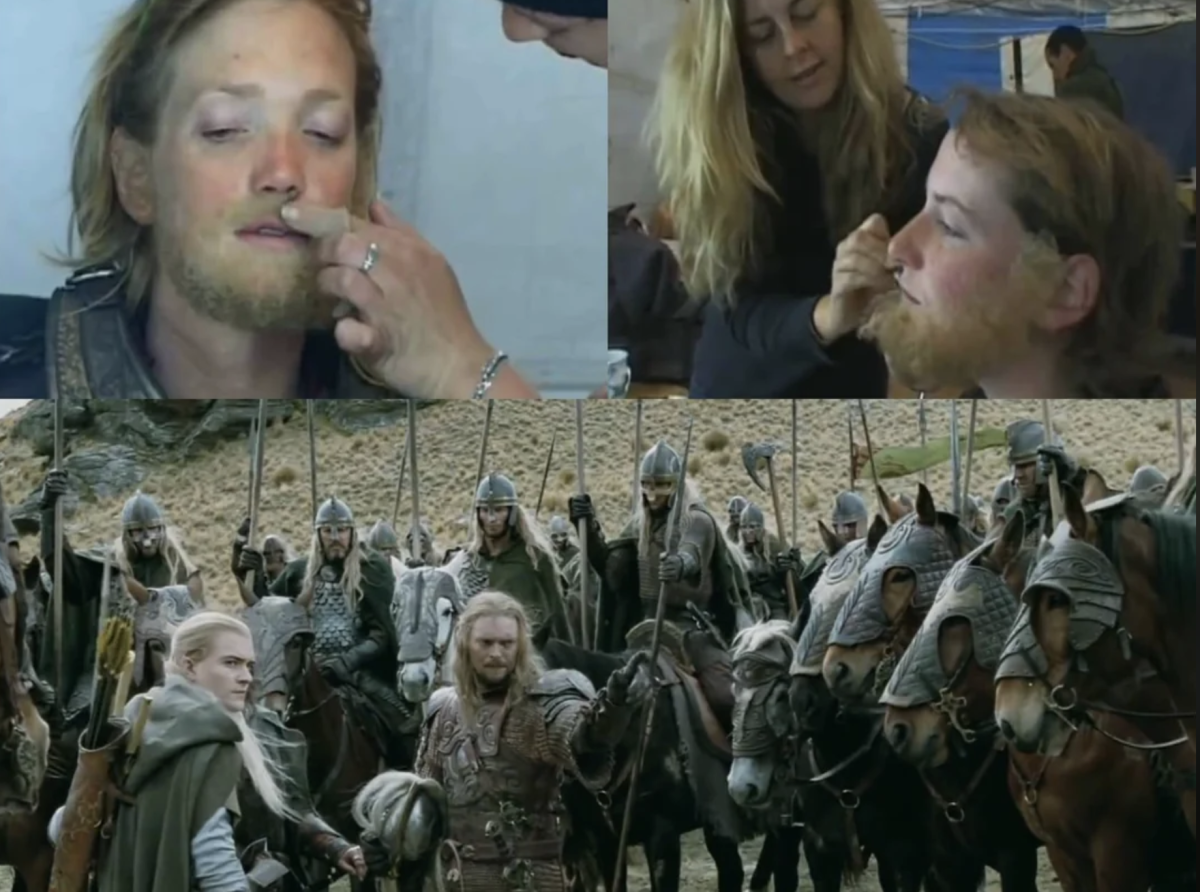
The Lord of the Rings: The Two Towers is widely regarded as the most action-packed installment of the Lord of the Rings trilogy. The Battle of Helm’s Deep alone was a juggernaut of a fight scene, wherein thousands of Riders of Rohan (the good guys) go up against the forces of Saruman’s infantry of Uruk-hai, Orcs, and Dunlendings (the bad guys).
And of course, valiantly fighting in disguise as a Rider of Rohan, or the Rohirrim, in the third and final installment of Lord of the Rings (i.e. Return of the King) is Eowyn (played by Miranda Otto), one of the only three female leads in the trilogy. Funny to think that Eowyn wasn’t, in fact, the only cross-dressing female in this iconic movie moment…not by a long shot.
The real riders behind the army
To capture the full size and scope of the battle, Peter Jackson needed extras. Lots of them. Extras who could not only ride a horse well (they’re not called riders for no reason), but who would also, ideally, own their own horse. That significantly narrowed the availability of viable performers. Surprisingly, an overwhelmingly larger number of women fit that bill than men. So, Jackson and his team created a bit of movie magic. They gave these female riders fake beards, and voila: an army of horseback riding men.
A BTS story that stuck
Major LOTR nerds might remember this story being shared in the extensive behind-the-scenes footage that came with the DVD. In it, we see the female extras getting fit (one even jokes, “I am a girl! See?!”), as well as Viggo Mortensen, aka Aragorn, coyly admitting that he may or may not have had a crush on one with a strawberry blonde beard.
While this kind of bonus content is, in some ways, a thing of pop culture past, this story lives on online as part of LOTR lore, occasionally resurfacing from time to time to either shock those who were unaware, or give aficionados reason to brag, “Yeah, I already knew that.” Either way, it’s always an opportunity to find newfound appreciation. It also highlights how the best kind of filmmaking often relies on practical solutions that subtly reshape what audiences think they are seeing.
Expanding women’s presence in Middle-earth
In subsequent adaptations of Tolkien’s work, there have been a few measures taken, for better or worse, to add more female representation to the mix. The Hobbit franchise, for example, invented Elven warrior Tauriel, played by Evangeline Lilly. Similarly, Rings of Power centers on a young Galadriel (Morfydd Clark), and also features dwarf royalty Princess Disa, played by Sophia Nomvete.
Both the Lord of the Rings books and movie series are highly regarded for the way they portray masculinity and male relationships. But as we see, both in obvious and not-so-obvious ways, the women in LOTR brought to life some of the story’s most defining moments.
And really, even more than that, this story speaks to the collaborative nature of filmmaking. As a new rendition of Lord of the Rings is currently being created—in a time when so many vitally human aspects of filmmaking seem to be at risk—one can only hope this element stays within its DNA.