10 photos of seriously wounded vets remind us about the real costs of war.

Their wounds belong to all of us.

democracy, justice, wounded veterans, documentation, portraits
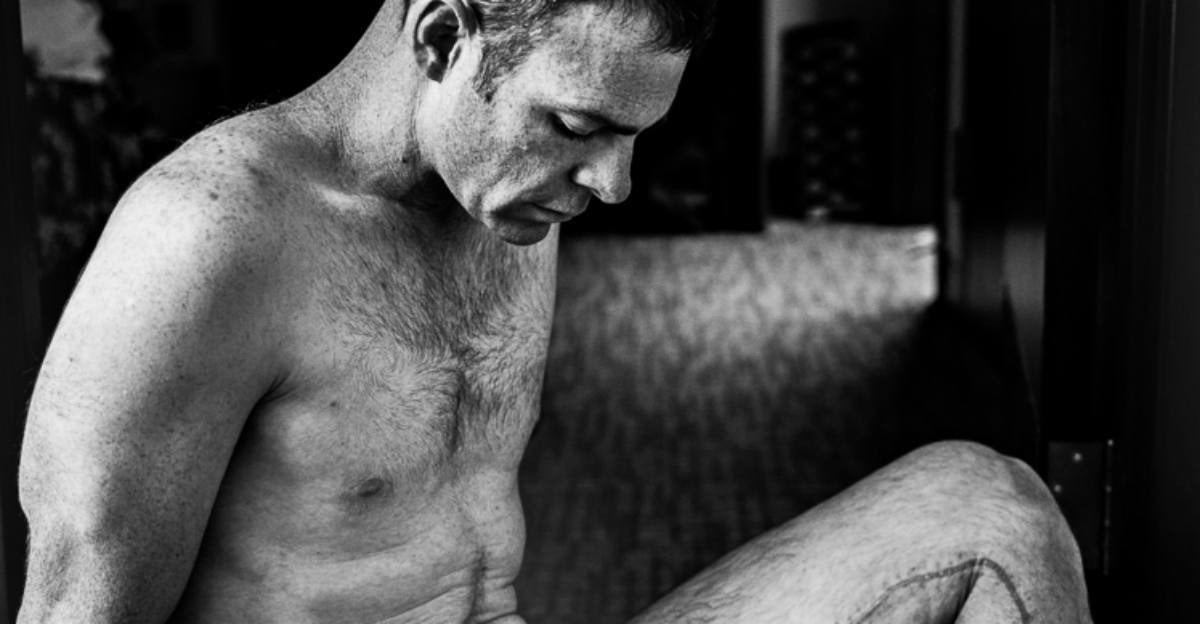
Maj, Matt Smith at Walter Reed Medical Center in Bethesda, Maryland.Photo credit: Image by David Jay/ David Jay Photography.

Photographer David Jay specializes in fashion and beauty, stuff that’s “beautiful and sexy — and completely untrue,” as he puts it. But that’s not all he photographs.

Three years ago, Jay began to take pictures of young, severely wounded soldiers returning home from the wars in Iraq and Afghanistan.

Trigger warning: These portraits don’t shy away from wounded bodies.


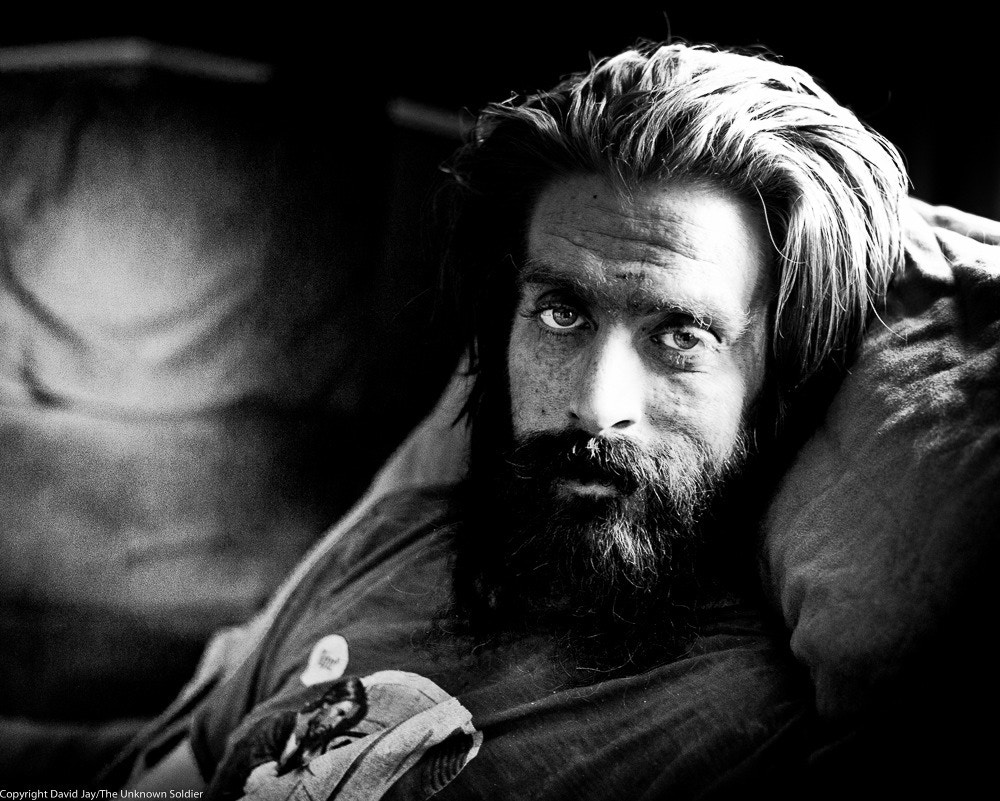
Be prepared. I found them shocking at first. But keep looking. The more I looked, the more beauty and humanity I found reflected here. (The photo captions are from the Jay’s Unknown Soldier Project Facebook page. All images used with permission.)
military, body image, disabilities
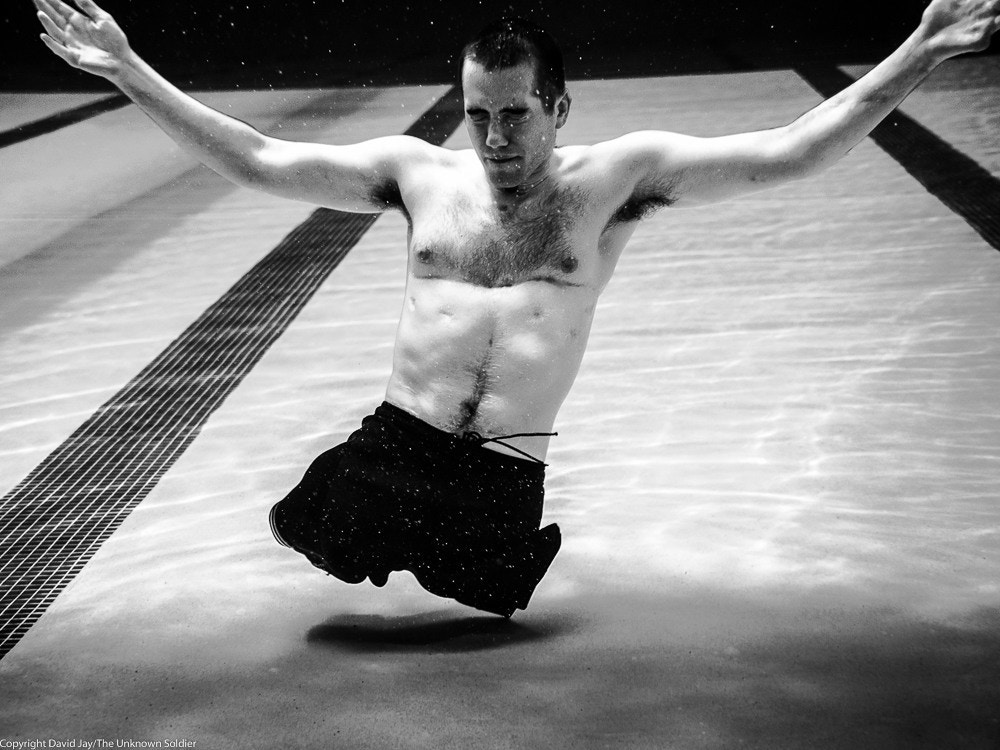
Lt. Nicholas John Vogt, U.S. Army Image by David Jay/ <a href="https://farm.upworthy.com/nuggets/5564a2bd633239000c2f0100/www.davidjayphotography.com">David Jay Photography</a>.

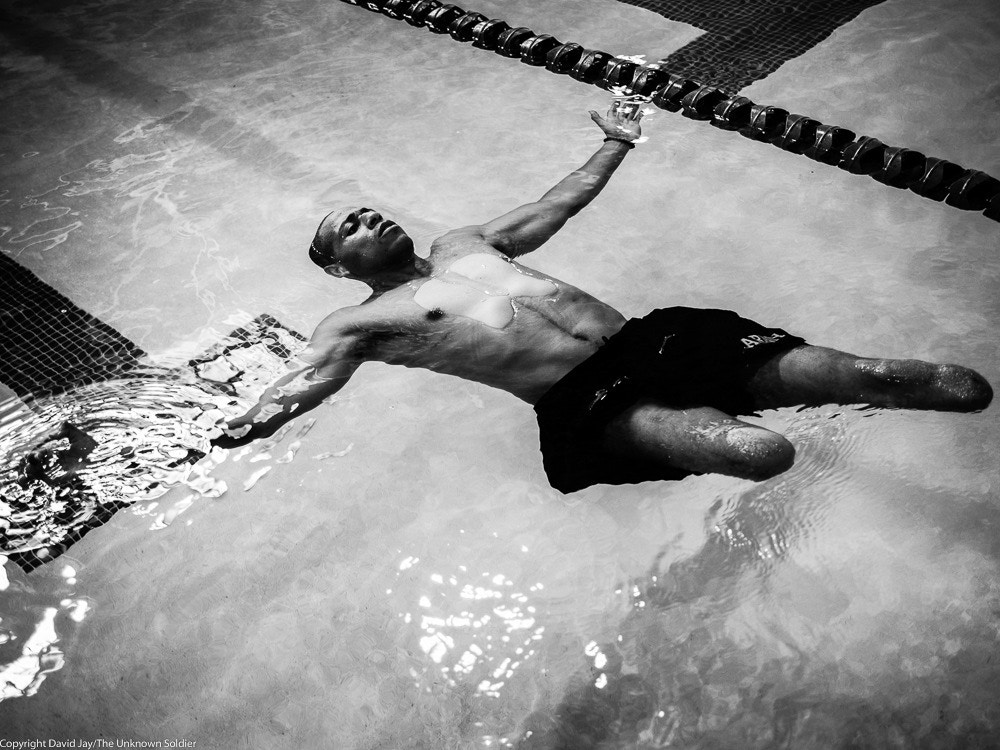
This is 1st Lt. Nicholas John Vogt, U.S. Army. On Nov. 12, 2011, he was severely injured by an IED while on a foot-patrol in Panjwaii, Afghanistan. We took these pictures this past weekend in the swimming pool at Walter Reed Medical Center. I asked Nicholas for his permission to post these images and this was his response: “The only thing that I want to pass on is this: Losing limbs is like losing a good friend. We wish we could still be with them, but it wasn’t ‘in the cards.’ Then we get up, remember the good times, and thank God for whatever we have left.” Image by David Jay/ David Jay Photography. All images used with permission.

In a National Public Radio interview about his project, Jay said, “You can imagine how many times each of these men and women have heard a parent tell their child, ‘Don’t look. Don’t stare at him. That’s rude.’”

“I take these pictures so that we can look; we can see what we’re not supposed to see. And we need to see them because we created them.” — David Jay

photography, mental health, veteran rights
Taking a swim. Image by David Jay/ <a href="https://farm.upworthy.com/nuggets/5564a2bd633239000c2f0100/www.davidjayphotography.com">David Jay Photography</a>.

Jay wants us to see, to become even a little familiar with the tragic loss of limbs and burned skin of wounded vets — his portraits are 4 feet wide — but he also wants us to see them as people and to think about their experiences and those of people in their lives.
health, David Jay, The Unknown Soldier
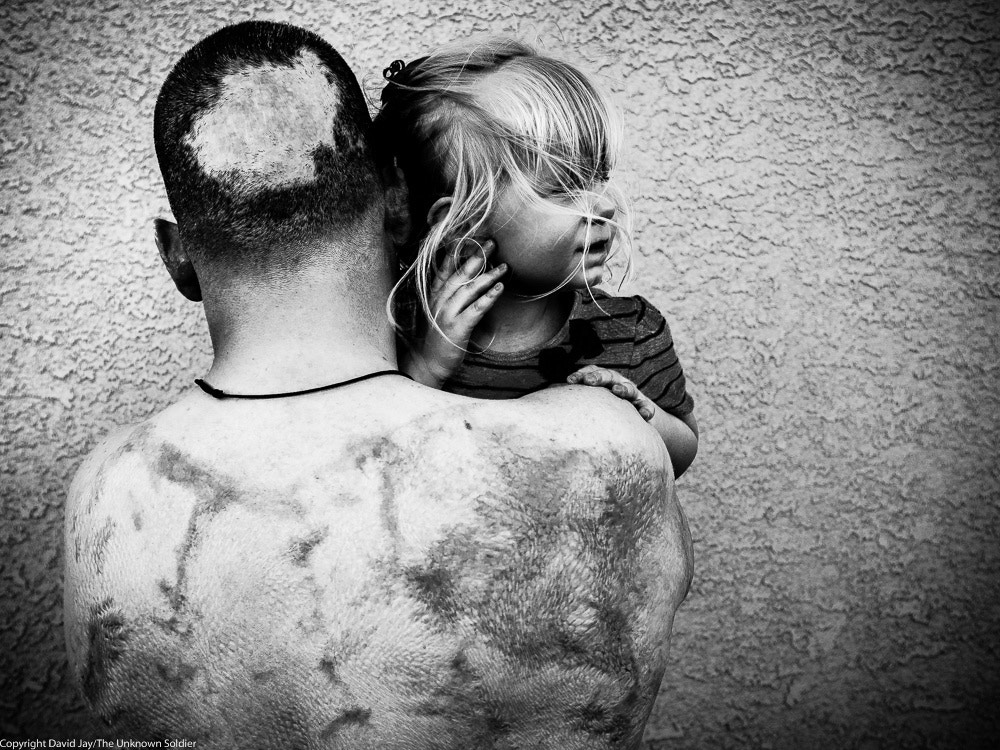
Bobby Bernier with daughter Layla. Image by David Jay/ <a href="https://farm.upworthy.com/nuggets/5564a2bd633239000c2f0100/www.davidjayphotography.com">David Jay Photography</a>.

This past week, I went to San Antonio, Texas. There I had the privilege of photographing both Daniel Burgess and Bobby Bernier. They are friends. Daniel stepped on a IED, losing one leg and destroying the other. Bobby was hit by incoming artillery, sustaining burns over 60% of his body. He is pictured here with his daughter Layla.
IED, Maj. Matt Smith, Afghanistan
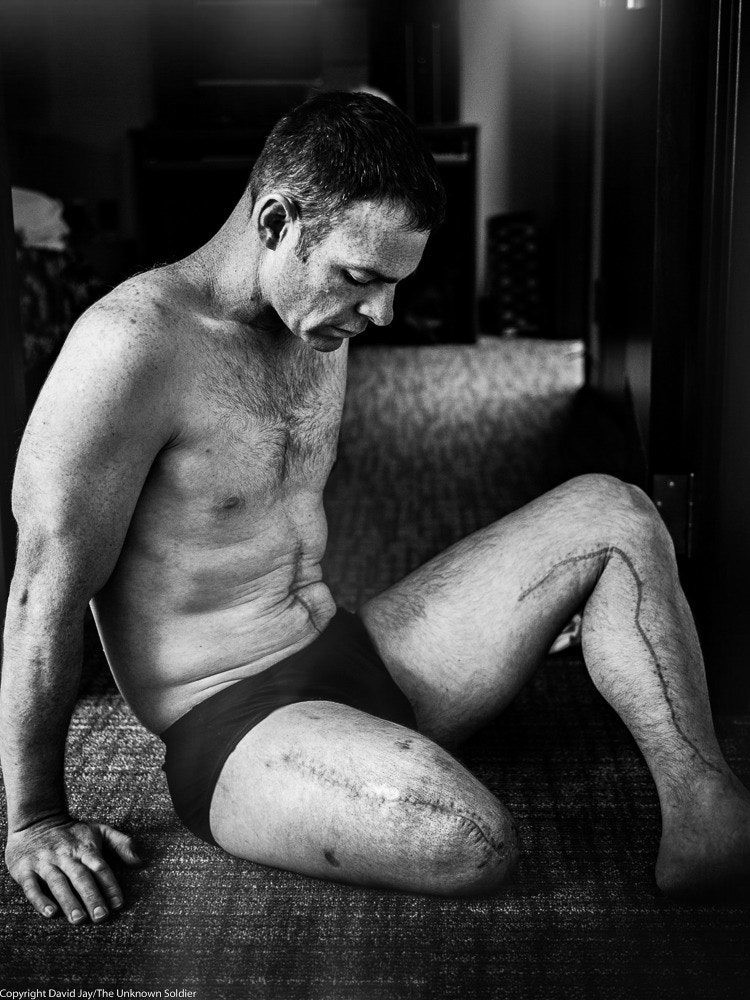
Maj, Matt Smith at Walter Reed Medical Center in Bethesda, Maryland. Image by David Jay/ <a href="https://farm.upworthy.com/nuggets/5564a2bd633239000c2f0100/www.davidjayphotography.com">David Jay Photography</a>.

This is Maj. Matt Smith. This past week, Matt allowed me to photograph him in his room at the Walter Reed Medical Center in Bethesda, Maryland. Less than three months ago, on June 8, 2013, in Paktika province, Afghanistan, Matt was shot along with five others by a member of the Afghan National Army. The bullet severed his femoral artery, resulting in the amputation of his leg. A private and soulful man, it was an honor to photograph him. Thank you, Maj. Smith.
disabled, war, amputee
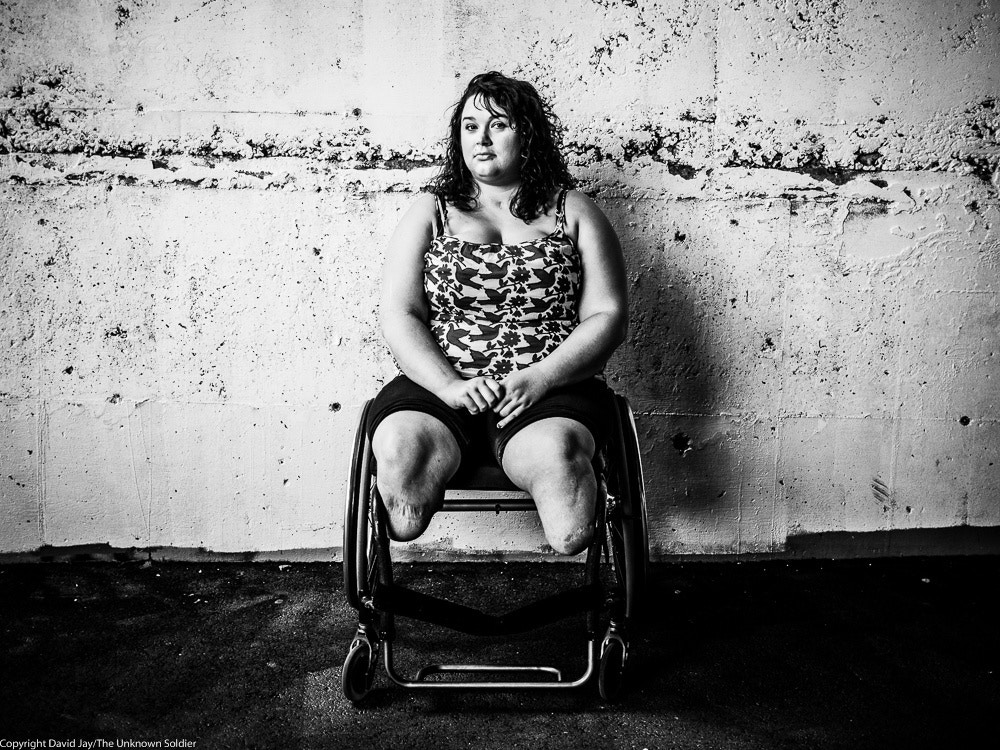
Spc. Marissa Stock injured by an IED. Image by David Jay/<a href="https://farm.upworthy.com/nuggets/5564a2bd633239000c2f0100/www.davidjayphotography.com">David Jay Photography</a>.
burn victim, roadside bomb, survivor
Jerral Hancock survived a roadside bomb. Image by David Jay/ <a href="https://farm.upworthy.com/nuggets/5564a2bd633239000c2f0100/www.davidjayphotography.com">David Jay Photography</a>.

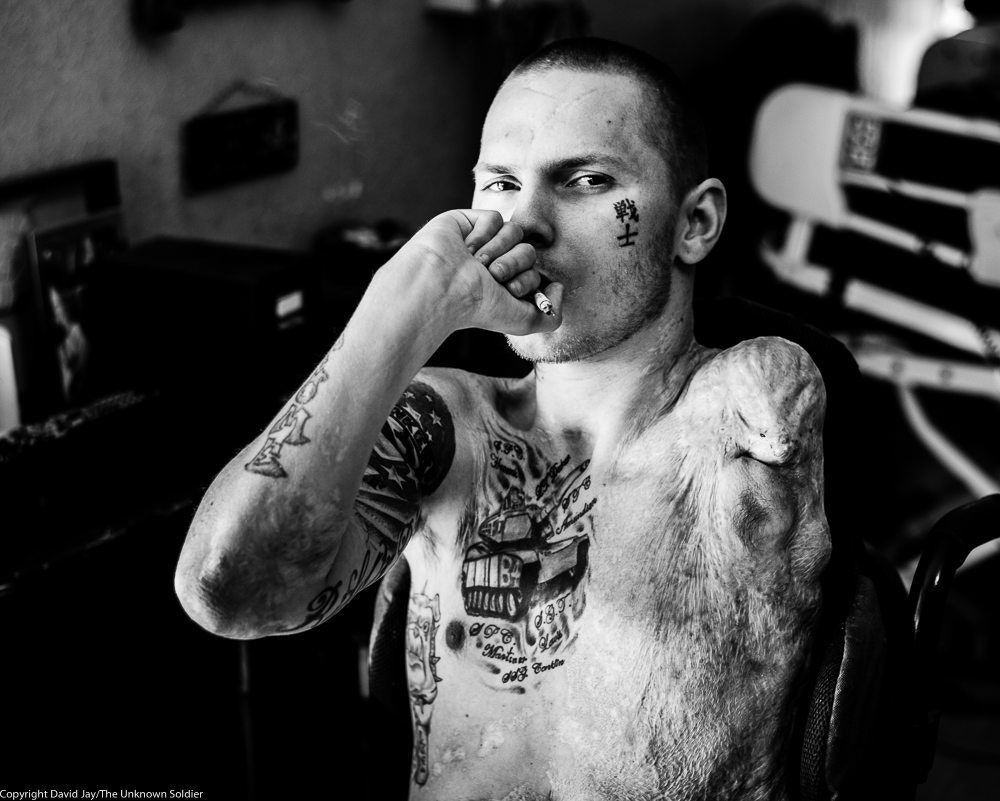
This is Jerral Hancock. He was driving a tank in Iraq. A roadside bomb pierced the armor, breaching the interior. We shot these pics two weeks ago at his home in Lancaster, California, where Jarral lives with his two beautiful children. We ended up hanging out into the night, smokin’ ciggys … so I kept taking pictures.

“To the men and women of The Unknown Soldier, I can’t thank you enough for your courage and sacrifice … both on and off the battlefield. It is an honor to photograph you.” — David Jay
swimming, photography, internal injuries, Airborne Ranger
SFC Cedric King floats in the pool. Image by David Jay/<a href="https://farm.upworthy.com/nuggets/5564a2bd633239000c2f0100/www.davidjayphotography.com">David Jay Photography</a>.

On July 25, 2012, SFC Cedric King, an Airborne Ranger, was severely injured by an IED while serving his country in Afghanistan. Due to the explosion, Cedric sustained a multitude of internal and external injuries, losing both his legs. Cedric was doing his laps while I was photographing 1st Lt. Nicholas Vogt in the pool at Walter Reed Medical Center last week. Cedric kept watching, so I had to ask. Cedric said, “That man (Nicholas) doesn’t know it, but he changed my life. There was a point when I was so down that I thought I couldn’t go on. And then one day I saw him swimming … and I just thought, wow … if he can go on like that, then I can go on too.” Cedric will also change people’s lives. Already has.
Marine, foot-patrol, Afghan Army
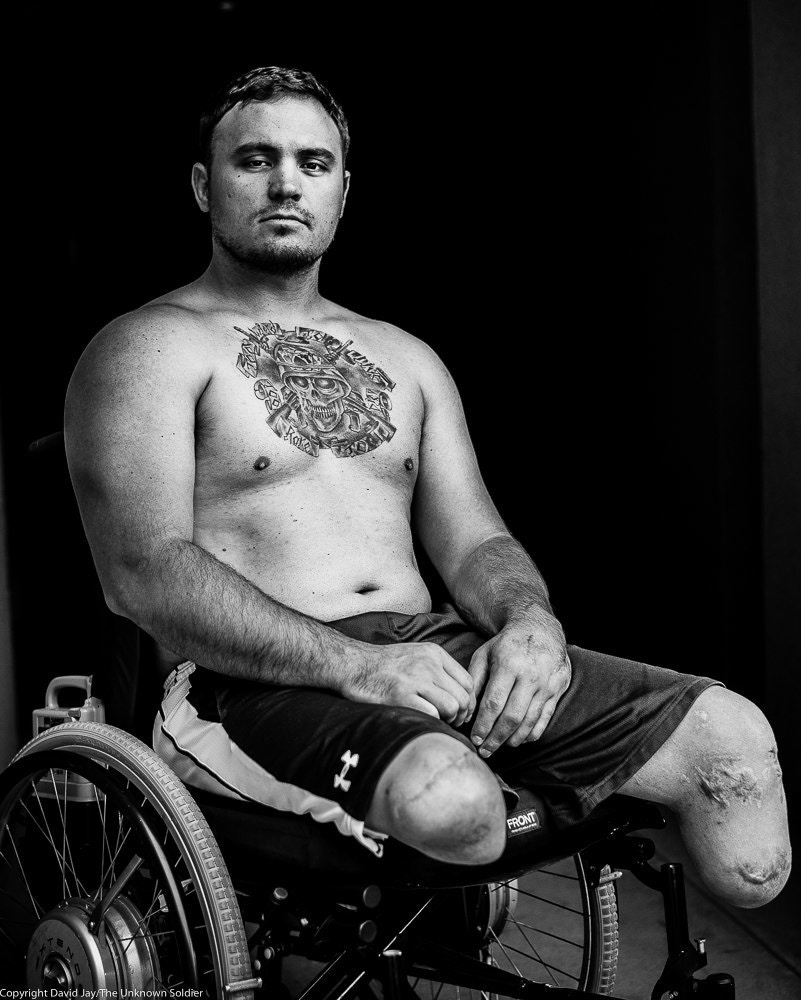
Michael Fox, 27-year-old Marine. Image by David Jay/<a href="https://farm.upworthy.com/nuggets/5564a2bd633239000c2f0100/www.davidjayphotography.com">David Jay Photography</a>.

This is Michael Fox, a 27-year-old Marine and an amazing man. On Nov. 15, 2011, Michael was on foot-patrol in the Helmand province of Afghanistan. His is the first picture of “The Unknown Soldier.”
The SCAR Project, battle-scarred, therapy
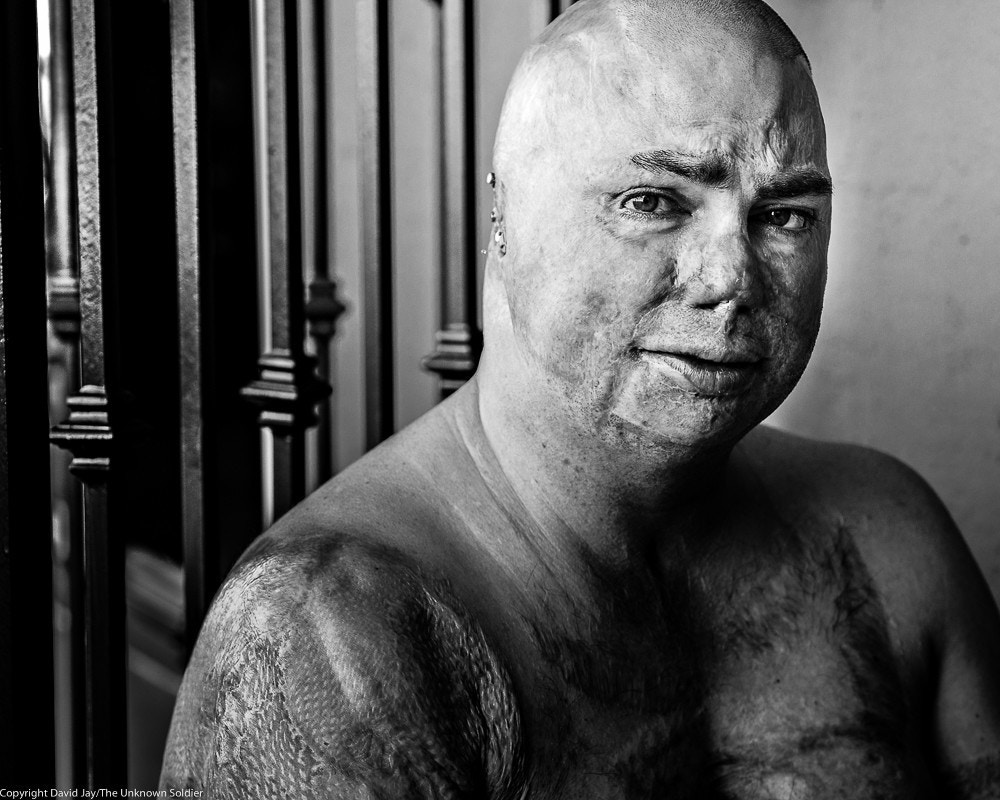
Staff Sgt. Shilo Harris in Houston, Texas. Image by David Jay/<a href="https://farm.upworthy.com/nuggets/5564a2bd633239000c2f0100/www.davidjayphotography.com">David Jay Photography</a>.

This past weekend, I photographed Staff Sgt. Shilo Harris in Houston, Texas. He came up from San Antonio to see one of my other exhibitions, The SCAR Project (www.thescarproject.org). Shilo was severely burned on Feb. 19, 2007, by a roadside bomb estimated at 700 pounds. He lost three men out of a crew of five. Only Shilo and his driver survived the blast. Shilo has a book coming out soon. He is truly an amazing man, and I am honored to call him a friend.

“The Unknown Soldier is about neither war or politics … but rather something infinitely simpler and more powerful.” — David Jay
healing, medicine, remedy, hope
Thomas Young in Kansas City, MO. Image by David Jay/ <a href="https://farm.upworthy.com/nuggets/5564a2bd633239000c2f0100/www.davidjayphotography.com">David Jay Photography</a>.

The Library of Congress has acquired images from Jay’s The Unknown Soldier project as part of its documentation of the wars in Iraq and Afghanistan. This speaks to the power of these images in capturing war’s aftermath. But they are so much more than documentation.

Pictures like these help those of us who remain at home to begin to comprehend the true human cost of war.

This article originally appeared on 05.31.15

  • Hipster guy’s surprise ranking for each of Snoopy’s relatives has become a viral phenomenon
    Hipster guy's surprise ranking for each of Snoopy's relatives has become a viral phenomenon.Photo credit: Canva, Patrick Ferguson, Instagram

    Snoopy, everyone’s favorite beagle from the mind of Peanuts creator Charles Schulz, is the joyous gift that keeps on giving. So, when content creator Patrick Ferguson took the time to rank each and every one of Snoopy’s relatives, it’s no surprise fans were delighted.

    Ferguson does this by playfully spoofing a popular “ranking” system commonly used on YouTube and Twitch. The idea is to put pop culture phenomenon (often movies or video games) and rank them in “tier lists.”

    Standing below an initial shot of all the animated beagles playing instruments, he begins by stating, “Snoopy is the best thing ever drawn or animated, and his siblings are pretty cool too. So I thought I would introduce you to them all and place them on a ‘tier list’ as I count them down.”

    He confirms where his references will come from: “I’m mainly discussing them from their role in Snoopy’s Reunion, but I will briefly mention the comic strips as well. And yes, ‘S’ tier does stand for ‘Snoopy tier,’ even on tier lists outside of this one.”

    Snoopy family tiers

    He begins with “Rover,” who he admits has a “cliché name even by today’s standards.” We see Rover, his light brown ears bouncing as he plays the resonator guitar. “Love his collar choice too. S tier.” From the Snoopy Town Tale fandom site, it’s reported that Rover only appeared in the TV special Snoopy’s Reunion, but never in the actual comic strip.

    Next, we see Olaf, a pudgier dog in a red hat. He blows dust off a jug, which happens to be his instrument of choice. Ferguson insists that Olaf “deserves every good thing in life that comes his way. S tier.” A site dedicated to learning about the Peanuts characters confirms that Olaf is “warm and sensitive, with a big, gentle heart.”

    We then see Molly, wearing a blue dress that Ferguson points out is similar to fellow Peanuts cast-mate Lucy’s signature style. Molly plays the mandolin and has some “really good, iconic Snoopy family qualities to her. I think I’ve gotta put her in S tier.” Like her brother Rover, Molly also only appeared in Snoopy’s Reunion.

    Then there’s Spike, who Ferguson points out has the “second most iconic look in the Snoopy family. He plays a mean fiddle.” He also notes that Spike isn’t the only S-tier dog with that name in the animated TV lexicon. Ferguson is most likely referring to the bulldog from Tom and Jerry, or quite possibly the bulldog from the Looney Tunes universe.

    The Peanuts site shares that Spike lives out in the desert: “He prefers a quiet, solitary life. His closest friends are the cacti and tumbleweeds. Spike is thoughtful and, at times, melancholic.”

    Next up is Belle. “She should have her own plushie. I think I have to go with S tier on this.” It’s stated on the site that Belle “lives in Kansas City with her teenage son. Snoopy and Belle reconnected when Snoopy hopped the wrong train on his way to Wimbledon and ended up in Missouri.”

    Up next is Marbles. The Peanuts site describes him as quiet and “weary of cats, often checking for them before entering a new place. Marbles is smart but lacks the imagination of his other siblings. He always finds himself confused by the games Snoopy plays.”

    @sy.fifilm

    #SNOOPY ૮ ◞ ﻌ ◟ ა i love andy sososo much hes so fluffy #foryou #viral #foru #4u #fyp #fup #downtownboy CREDITS: @esnopii_ 🐾

    ♬ original sound – Wayne ୨ৎ

    Lastly, we can’t forget the drummer. “Then we arrive at Andy. And this is the Snoopy sibling I want to pick up the most—but only after he and his scruffy fur are done jamming on the drum set. S tier.” Andy is described by the site as “a good traveler.” He “is always up for a walkabout, but his sense of direction is terrible.”

    As if that wasn’t adorable enough, Ferguson wants to give credit to both the guardian of the Snoopy gang and his own mother. “And could we forget the woman who raised the entire Snoopy family? Missy. One of the few S-tier moms, aside from my own.”

    Meet Patrick

    Upworthy had the delightful chance to chat with Ferguson, who shares that he’s a huge Snoopy fan. “Some of my earliest memories of laughter involve watching Snoopy as the Red Baron. I wouldn’t call myself the biggest Peanuts fan, per se, but I’ve always called Snoopy the greatest thing ever drawn.”

    He also further explains why he chose the tier system. “I made the video both to celebrate a character I love but never made a video for, and to poke fun at the idea of doing a tier list (a video concept I don’t see myself revisiting). The irony of having everyone at S tier plays into that.”

    The best part was the online response. “I’m surprised how many people commented on the wholesomeness of the video, if for no other reason than I was being very silly in every aspect of making it, albeit in a way that was also pretty sincere.”

    Snoopy appears alongside his friends in the Peanuts comic strips. Photo credit: Unsplash

    The comments were definitely supportive and wholesome, indeed. The Reel has over 160,000 likes and nearly 500 comments. One Instagrammer shares, “Grinned so hard watching this. 10/10. No notes.”

    A few people argue over which instrument the puppies are playing. “95 percent sure Rover is playing a resonator dulcimer and not a resonator guitar,” one person notes. “10/10 video, though!”

    Another has thoughts on Spike, writing, “I’m kind of suspicious of the Snoopy with the mustache.”

    This commenter sums up what many seem to feel quite nicely: “I want to cuddle all of them.”

  • How Romania took its national recycling rate from 12 percent to 94 percent in just two years
    Romania’s recycling revolution inspires Europe.Photo credit: Canva
    ,

    How Romania took its national recycling rate from 12 percent to 94 percent in just two years

    Being late to the game may actually have given the country an advantage.

    Every week, Dana Chitucescu grabs a bag, walks around her home in the Transylvanian village of Pianu de Jos. She’s collecting something her neighbors happily hand over: empty bottles and cans.

    The 51-year-old brings them to her local shop, drops them off, and walks out with 40 brand-new Romanian leu in her pocket, about $9 USD. She uses it to feed her seven cats.

    It’s a small thing, nothing, really. But it also, somehow, encapsulates the story of how an entire country is changing the way it thinks about trash.

    From zero to hero: Romania used to be Europe’s worst recycler

    Not long ago, Romania ranked dead last in the European Union for recycling. Three-quarters of the country’s waste—74%—went straight into landfills. The environmental impact was catastrophic: rivers became clogged with plastic. Picturesque roadsides were buried under litter.

    Romania, recycling, revolution, environment, cans
    The secret to Romania’s success isn’t complicated. Photo credit: Canva

    The European Environment Agency even flagged Romania as being at serious risk of missing its recycling targets for years in a row. It looked like a problem without a solution.

    Then came RetuRO.

    The idea is simple

    Here’s how RetuRO works: when you buy a bottled or canned drink in Romania—water, soda, beer, anything—you pay an extra deposit of .50 Romanian leu. That’s about 11 cents in US dollars. When you finish the drink and bring the empty container back to the store, you get your money back. Voila!

    That’s it. That’s the whole idea.

    On top of that, Romania has made it ridiculously simple for citizens to recycle. Supermarkets have automated reverse vending machines that scan the container, crush it, and then credit your deposit on the spot. Smaller shops handle returns manually. And crucially, the program accepts plastic, aluminum, and glass; the latter, which most countries’ deposit systems skip altogether because glass is heavy and expensive to transport.

    RetuRO launched in November 2023 as a partnership between the Romanian government, beverage producers, and retailers, meaning everyone had skin in the game. Everyone had a reason to want to make it work.

    What happened next was remarkable

    Within months, something shifted in Romania. The recycling numbers, of course—those went through the roof—but also, something deeper. The way people regarded bottles and cans changed. Containers stopped feeling like garbage and became, instead, money left on the table.

    In the peak summer months, 94% of beverage containers were being returned. Later, in January 2026, the return rate hit 108%. That meant Romanians were returning more containers than were even sold that month, as people dug old bottles out of storage. Nine out of ten Romanians have used the system at least once. Six in ten do it every single week.

    Since launch, over 9 billion containers have been returned.

    “It is a zero-to-hero story,” said Gemma Webb, RetuRO’s CEO. “You go to Romania now, you don’t see a bottle anywhere. It was the impossible made possible. Everybody’s very proud… we are the largest fully integrated deposit return system globally.”

    It’s not just about bottles. It’s about people

    Yes, Romania’s story is impressive. But not because of the infrastructure or the statistics alone. It’s the way RetuRO has fundamentally changed Romanian citizens’ views on recycling.

    Grandparents who never recycled in their lives have found a new weekly routine (and a small but real source of income). Parents use their trips to the return machine as a chance to teach their kids that taking care of the planet doesn’t have to be a sacrifice; it can just be Tuesday. Young Romanians in their 20s now describe recycling as part of their identity.

    Dana Chitucescu’s brother lives in Spain, a country without a comparable system. Apparently, he’s jealous. “He says it’s one of the few things Romania does exceptionally well,” she told The Guardian. “He’s right.”

    Not to mention, the program has also added over $346 million to Romani’s GDP and created more than 2,000 new jobs: all within its first year of full operation. Romanian recyclers no longer need to import plastic raw material, because for the first time, there’s enough good-quality recycled Polyethylene Terephthalate (or PET, the clear, lightweight plastic used to make the vast majority of beverage bottles) being collected domestically to meet industry demand.

    The rest of the world is paying attention

    Government leaders from Poland, Turkey, Bulgaria, and beyond have traveled to Romania specifically to learn how to replicate this recycling scheme. In the European Parliament, Romania serves as the benchmark model for deposit-return programs.

    The secret to Romania’s success isn’t complicated. They made the recycling incentive real and immediate, simplified participation by creating a universal system (every retailer who sells drinks must accept returns by law), and trusted its citizens to do the right thing.

    What could this look like where you live?

    Romania’s recycling journey is proof that a recycling revolution doesn’t require a perfect society, unlimited funding, or decades of gradual habit change. It requires the right system, one built around real human behavior, not wishful thinking.

    Sometimes, all it takes is a bag, a short walk to the corner shop, and eleven cents.

    Or, that’s how it starts, anyway. That’s how nine billion bottles get returned.

  • Skincare mogul says her ‘high touch’ theory will be the most important job-saving skill in the age of AI
    A friendly woman in customer service. An AI robot.Photo credit: Canva

    Like it or not, AI technology is almost certainly here to stay. While that might bring new conveniences we never thought possible, it still causes many to stress out over range of topics from our careers to existential level threats.

    In a segment for New Normal entitled, “Is Human Connection the New Job Security?” for BBC Global, journalist Katty Kay delves into the idea of job security in this new age. She first recalls a chat she had in 2023 with her old pal, Dermalogica Skincare founder Jane Wurwand.

    High touch vs. high tech

    In just two words, the corporate mogul had the antidote to “high tech,” and it was really quite simple. She told Kay, “The equal and opposite reaction to ‘high tech’ is ‘high touch.’” She explains that it’s “service-oriented businesses where humans are doing things that humans do best. Cooking. Caring. Touching. Kindness. Compassion. Talking. I’m not just in the business of skincare products. I’m in the business of human connection.”

    Kay reconnects with Wurwand over a video chat a few years later to find out if she still feels the “high touch” concept is possible now that AI has advanced. “It’s not confined to physical touch, your concept of high tech/high touch. It’s also about this broader idea of just having a human voice when you call.” (Kay gives the example of having to call tech support if your Wi-Fi has gone out.)

    The human being industry

    Kay then asks, “Give us some tangible thoughts on which are the high-touch jobs and areas of employment you think survive this rapidly growing technology that may take other jobs away?”

    Wurwand replies confidently, “The jobs that I see that are going to be booming…and really can’t be replaced. Hospitality. Travel. Anything in the human being industry.”

    She discusses the importance of true empathy, something that can’t be substituted by a robot. “If you are receiving a cancer diagnosis, goodness forbid, an AI bot might have found or detected that rogue cell, but you certainly don’t want that bot talking to you or giving you that diagnosis. You want someone with kindness, empathy, and to hold your hand and literally say, ‘We’ve got a plan. We’re going to execute on it.’”

    man in white button up shirt holding black tablet computer
    A doctor consults with his patient. Photo credit: Unsplash

    Wurwand gives other examples, as well, essentially suggesting “high touch” can be applied anywhere, including tech jobs. “Whether you’re working in retail, whether you’re working in an industry that is full of technology, what we can bring as humans that makes the workplace, that business, that space kind, empathetic, that you feel seen, you feel heard, that you matter, that somebody knows a little bit about your life so that you can chat and talk.

    A new social contract

    Kay brings up the insightful point that many, especially younger people in today’s society, feel threatened and disillusioned. “Many felt there was this kind of social contract, where you get educated, you pay an enormous amount of money to go to a university or tertiary education, and then you come out and actually there aren’t jobs because the jobs have been taken.”

    She also points out the frustration some might feel from having been told if they’d only learned to “code” they’d be fine. They then entered the workforce to find out lots of those jobs have been taken over, as well. Kay asks, “What do you say to the graduate who has a degree in accounting or coding?”

    Wurwand reiterates that “high touch” is still important, even in accounting or coding jobs. “You’re not gonna compete with a robot. We don’t have those same skills. We don’t have that ‘code’ in our head. You have everything else that is needed by other humans. So we have to take the strength and move with it.”

    She points out that we shouldn’t be so quick to label. “We shouldn’t box things into that’s ‘tech’ and this is ‘human.’ There has to be this connection.”

    Genuine empathy

    They both agree that those interpersonal skills—the ones that only human beings can truly have—must be nurtured in order to survive this AI flux. Wurwand gives the example: “Your first message of branding is that voice that answers the phone. And it doesn’t have to be in an office at a desk. It can be obviously remote. However, it has to be a double-down, delicious sort of person who sounds great and is kind and genuinely has empathy because we can hear or spot a fake in 30 seconds.”

    Of course, the idea of good customer service isn’t exactly new. But it seems extra important right now given it’s seemingly being forgotten by so many major corporations.

    In the article “9 Examples of High Touch,” for Simplicable, writer and IT tech John Spacey writes that it comes down to simply being human: “High touch is any business process that requires extensive human attention. These are typically areas where automation reduces the value of a process because humans add significant value to it.”

    Aside from the aforementioned client services, Spacey also discusses the importance of having “personalized attention with every customer.” This includes, of course, listening to their needs and tailoring the experience directly to them when possible.

  • Math researchers confirm ’20 year rule’ in fashion trends and it’s uncanny
    Two women show fashion trends from different decades.Photo credit: Canva

    Everything old is officially new again after mathematicians determined that trends tend to resurface “every 20 years or so.” So, while a de-cluttering organizer might tell you to pitch those low-rise skinny jeans, these researchers might say, not so fast!

    The team of mathematicians, led by Emma Zajdela at Northwestern University, took a look at well over 150 years of women’s clothing styles and determined that they could calculate trends resurfacing about every 20 years, calling it, “the 20-year rule.”

    20-year rule

    In an article for Popular Science, Andrew Paul writes, “Clothing trends come and go, but in some cases, they don’t stay away for too long. For decades, both the fashion industry and its devotees have referenced the so-called “20-year rule,” which suggests society is liable to see certain styles return at semi-regular intervals. However, without any hard data to back up the claim, that “rule” has long remained more of a hypothesis.”

    This is where the research comes in. Zajdela shares, “To our knowledge, this is the first time that someone developed such an extensive and precise database of fashion measures across more than a century.”

    The research

    Here’s how they did it. The Northwestern research team took a look at runway collections dating all the way back to 1869 and combined those trends with information from the commercial pattern archive. Explained on their site, “The Commercial Pattern Archive (CoPA) at the University of Rhode Island is both an extensive collection of commercially produced paper sewing patterns and a unique scholarly database used by costumers, fashion designers, museum professionals, scholars, and vintage aficionados the world over.”

    @swagbloke

    The 20 year rule. Trends are so accurately cyclical and you dont even realise. #swag #fashiontrends

    ♬ original sound – swagbloke

    What they then were able to do is measure waistlines, pant legs, skirt length, etc., to determine the formula. Paul writes that the study found the pendulum is always swinging. “Basically, the fashion industry is constantly fluctuating between originality and tradition. Once a clothing style is too popular, designers begin changing their new apparel just enough to stand out while still remaining desirable to potential wearers.”

    Fashion is evolving

    Plenty of Redditors have weighed in on the topic. On a thread entitled “Fashion stopped evolving 20 years ago…what do you think?”

    A commenter proves that perhaps we’re about to shift trends. “Yes and no. 20 years ago was the last signature defining aspects of fashion that characterized it, but otherwise no. Fashion is still evolving as normal, we just haven’t hit a point where we get a shift that makes past fashion seem alien, and we shouldn’t expect it to happen anytime soon. No one walks around in a Victorian wardrobe today, and Victorians wouldn’t walk in ours. People keep craving a shift that makes the fashion landscape itself change, which simply isn’t going to happen.”

    This person shares, in part, that indeed everything comes back in style. “There’s been actual change though, with tons of ebb and flow. The 90’s / early 00’s was really influenced by the 60’s & 70’s as well. 2010’s felt very 80’s with their own twist. I feel like we’re in the 60’s again (as in what people actually wore in the 60’s, not the media), with clean girl, beige, minimalism, whatever. But if you follow trends, you’ll see there’s been a lot of pushback against that now, especially since fashion is political. Give it a few years and we’ll be in the 70’s / 80’s. That whole (The) Devil Wears Prada speech about fashion trickling down is true.”

  • 14 English words students learn differently if their teacher is American vs. British
    Flapjacks in the U.S. are something totally different than flapjacks in the U.K.Photo credit: Canva

    Even though Americans and British people technically speak the same language, there are some major differences in our English vernacular. For instance, if you were to give someone from the United States and someone from England this prompt:

    Draw a kid in a jumper eating chips, biscuits, and flapjacks while watching football.

    You would end up with two very different drawings. The words jumper, chips, biscuits, flapjacks, and football all have completely different meanings in American English vs. British English. Most of us know the football vs. soccer difference, but the others may be unfamiliar.

    football, soccer, american english, british english, sports
    Football is soccer, except when it’s football. Giphy

    Words in the same language having different meanings based on geography can be confusing for English language learners, especially when they’re learning how to order food in a restaurant. Here are some differences just with foods alone:

    Chips

    In the U.S., chips means potato chips. As in Lay’s, Ruffles, etc. In the U.K., those are called “crisps,” while chips means french fries. Hence fish and chips meaning fish and fries, not fish and Ruffles.

    Biscuits

    When Americans talk about biscuits, we’re talking about fluffy, flaky baked balls of dough smothered in butter and served with either soups or meat and mashed potatoes, generally. Buttermilk biscuits are an American staple. Not so in the U.K. where a biscuit simply means “cookie.” What we call a biscuit, they call a scone. We have scones in the U.S., too, but our definition is generally more limited to the triangular, sweet kind. British scones also cover what we think of as biscuits.

    biscuits, cookies, british english, american english, english vernacular

    Biscuits in the U.S. vs. biscuits in the U.K. Photo credit: Canva

    Flapjacks

    A flapjack in the U.S. is synonymous with pancake—the breakfast staple. A flapjack in the U.K. is a baked oat bar, almost like a granola bar.

    Pudding

    If you order a sticky toffee pudding in the U.K. and expect to get a custard-like substance, you’d be disappointed. Pudding is a general term for a dessert in the U.K., whereas it specifically means a custard dessert in the U.S.

    pudding, dessert, british english, american english, english vernacular

    Pudding in the U.K. vs. pudding in the U.S. Photo credit: Canva

    There’s also the opposite issue, where we use different words for the same foods as opposed to the same words for different foods. In the U.K., a zucchini is a courgette, an eggplant is an aubergine, cilantro is coriander, a grilled cheese sandwich is a toastie, and Jell-O is jelly.

    Clothing also can be confusing for folks learning English from an American vs. a Brit. Here are some words:

    Jumper vs. Sweater

    In the U.K., a jumper is what we call a sweater. In the U.S. a jumper is kind of like a mix between overalls and a dress—a sleeveless garment generally worn over something else.

    Pants vs. Underpants vs. Trousers

    What Americans call pants, folks in the U.K. call trousers. (Americans know the word trousers, but we don’t use it much.)

     pants, underpants, british english, american english, english vernacular

    Pants in the U.K. vs. pants in the U.S. Photo credit: Canva

    Vest vs. Waistcoat vs. Undershirt

    This one is super counterintuitive for Americans. A “vest” in the U.K. is an undershirt, like a thin t-shirt or tank top. What Americans think of as a vest, the Brits call a waistcoat.

    Braces vs. Suspenders

    This one is also counterintuitive for Americans. For us, braces are either the orthodontia that straightens our teeth or a supportive apparatus that stabilizes a body part (a leg brace, wrist brace, etc.). But braces in the U.K. has another meaning, which is what we call suspenders. In the U.K., suspenders don’t hold up pants—those are braces—but they do hold up stockings, which isn’t the way we use that word.

    Bonnet and Boot

    A bonnet is a head covering in both the U.S. and the U.K., but the Brits also use the word for the hood of a car. Boots are shoes that go above the ankle in both countries, but a boot is also the trunk of a car in the U.K.

    That’s not the end of the list of words that differ between American English and British English, but it’s a good start. For folks learning English as a second language, it’s at least good to know that some things you learn will really depend on where your teacher is from so you don’t end up disappointed when you order pudding or biscuits at a restaurant and get something totally different.

    This article originally appeared last year. It has been updated.

  • 51-year-old empty nester who struggled to declutter her house shares 8 tips that finally worked
    Mom and empty nester shares her tips for decluttering her home.Photo credit: Canva

    Deep cleaning and decluttering a home is a daunting task—especially for empty nesters. After spending a lifetime creating memories and living together under one roof, doing a big declutter can take an emotional toll.

    It’s a milestone that many empty nesters know the sting of. And in a cleaning community on Reddit, a 51-year-old mom and recent empty nester shared her experience cleaning and decluttering her home after entering this new phase of life.

    “In my entire life, my house has always been messy. I mean, I didn’t have a disaster-level situation going on, but if someone dropped by unannounced, it would’ve been super embarrassing,” she shared. “When my kids were younger, we had a housekeeper because I just couldn’t keep up. Now that we’re empty nesters, I realized I never really learned how to keep house.”


    She explained that the book Unf*ck Your Habitat: You’re Better Than Your Mess played an integral part in helping her declutter—and offered eight helpful tips to fellow empty nesters looking to organize their new lives.

    1. Put stuff away, not down.

    Her first tip is the key to decluttering.

    “Whatever you have goes right back where it’s supposed to go when I’m done with it,” she notes.

    2. Do laundry every day.

    And she doesn’t just wash and dry her laundry when doing it.

    “Just one load, start to finish. Wash, dry, fold, and put away,” she shares. “Also, no chair or floor laundry. It gets put in the hamper or hung back up. No clothes are ever out.”

    3. I make the bed every day.

    The benefits keep on giving by doing this, she notes.

    “It just makes my bedroom look cleaner and I smile every time I come in my room,” she writes. “Plus we aren’t fighting over the covers when we get in because the bed is straightened out.”

    4. Do a quick daily clean-up of commonly used spaces.

    She cleans the places that she and her husband use frequently.

    “I keep a stack of cleaning rags in my master bath because it’s the only bathroom that’s used every single day. Every night, I spray the counter, wipe everything down, put everything back (that my husband leaves out), and wipe the mirror,” she explains. “I also wipe down the toilet. I find that I don’t need a huge, big cleaning of this space because I’m keeping it up daily. Same goes for the kitchen.”

    5. Dishes are always put away, cabinet or dishwasher.

    No dishes in the sink or stuck in the dishwasher.

    “Dishes are finished in the dishwasher? It’s emptied and dirty ones are placed inside while waiting for the dishwasher to get full,” she notes.

    6. Don’t neglect your shoes.

    When she takes them off, they get put away.

    “Shoes are put away immediately upon walking in the house,” she shares.

    7. Knock out small tasks.

    There is no time to waste.

    “If it takes less than 5 minutes clean it while you’re waiting for something else to get done,” she writes.

    8. Take no days off.

    Rather than assign certain days for cleaning, she is constantly doing it throughout the week.

    “Lastly, I do not have scheduled cleaning days. I just do something all the time,” she explains. “My life is kind of unpredictable, we love traveling or going out for the day so my so called cleaning schedule would be shot to hell every time. It’s better this way, because now I never feel behind.”

    Editor’s Note: This story originally contained a typo in its text. It has since been corrected.

    This article originally appeared [time-difference] ago. It has been updated.

  • Teacher lists the 10 basic skills she says 3rd graders no longer have, and it’s eye-opening
    Children with backpacks entering school, text overlay: "Many don’t know their parents’ names…”Photo credit: Canva

    When elementary school teacher @mommy_n_zachy went on TikTok to talk about the skills her students struggle with, it wasn’t to shame anyone. It was an honest cry for help. Her short video, which has now been viewed nearly five million times, has sparked a wide conversation about what children are, and are not, prepared for when they walk into a classroom.

    In the clip, she listed 10 basic skills many of her 3rd graders couldn’t do. Some forgotten skills, like reading an analog clock, counting physical money, or writing in cursive, aren’t entirely surprising given how technology has shifted daily habits for all of us. Many adults rarely use cash, handwritten letters, or wall clocks themselves.

    But more troubling is the fact that many kids cannot memorize their parents’ phone numbers or their home address. Even more concerning, students often don’t know how to use a dictionary, follow multi-step directions, tie their shoes, remember their parents’ names, know where their family is from, or recall the year they were born. These are practical safety skills and developmental milestones that help children navigate the world with more independence.

    What makes the situation even harder, she shared, is that many students don’t seem very interested in learning these basics. For teachers, starting from scratch on so many foundational tasks makes an already demanding job even more difficult, especially when large classrooms and limited time already stretch their capacity.

    “We are going to do our part as teachers, but we just need a little help at home, please,” she said. “We are a community. We work together. So let’s set our kids up for success. … If y’all can help us out, we need to go back to basics.”

    Her words touched a nerve. While some commenters placed blame on schools, the broader conversation that emerged was about how essential it is for parents and teachers to work together. Many adults pointed out that families juggling financial pressures, work schedules, limited childcare, or lack of support may not always have the time or energy to reinforce these skills. Others noted that teachers, too, face resource shortages and systemic challenges. The consensus was that partnership, not blame, is what helps children most.

    Fortunately, the skills @mommy_n_zachy highlighted are very teachable at home with simple routines. Parents can practice phone numbers as a little song or rhyme. Reading clocks can become a daily guessing game. Counting coins while unloading groceries can turn into a mini challenge. Tying shoes can be practiced for a few minutes before leaving the house. Writing letters to grandparents, labeling drawings, or even copying short messages can build comfort with script. Asking children to complete two-step or three-step directions can strengthen their working memory and confidence. None of these activities require extra money or special materials. What they need most is repetition, patience, and a supportive adult by their side.

    teachers, elementary school, 3rd grade, basic skills, teaching basic skills, writing in cursive, education, learning
    Dad helps daughter with homework at table; mom reads in background. Photo credit: Canva

    If anything, her viral video reminded many people that children thrive when all the adults in their world take part in their learning. Small efforts made consistently can make a meaningful difference, both in the classroom and beyond.

    This article originally appeared last year. It has been updated.

  • 17 Great Depression recipes people still cook today during hard times
    Recipes from the Great Depression to make today.Photo credit: Lewis Wickes Hine/Library of Congress, Dorothea Lange/Wikipedia

    The Great Depression, which lasted from 1929-1939, caused economic turmoil worldwide. Families struggled to feed themselves, and went to extreme lengths to stretch food and utilize all available ingredients.

    Known as the Greatest Generation (those born between 1901 and 1927), their resourcefulness resulted in a number of creative (and delicious) recipes that remain relevant today. Home chefs and bakers shared their Great Depression recipes on Reddit that have been passed down and are still enjoyed today to help others get inventive and save money.

    From soups and stews to cakes, these are 17 Great Depression recipes to try.


    Soups, Stews and More

    Beef and Noodles

    “My grandmas go to: Bag of egg noodles 1 can of creamed corn 1 can Campbells chicken noodle soup 1 lb ground beef. Salt and pepper to taste. Brown ground beef, add all other ingredients, add enough water or light chicken stock to cover noodles if needed. Bring to boil, and reduce to a simmer for about 15 minutes, take off the heat and let it rest 10 minutes before serving with buttered white bread. I still make this to this day. My kids loved it too. Basically homemade Hamburger Helper.” – -__Doc__-

    Hoover Stew

    Ingredients

    1 box noodles
    A can of tomatoes
    1 package of hot dogs, or 1 can of sausage or meat
    A can of corn, peas or beans
    2-4 cups water

    Instructions

    “Mix all ingredients together in a pot until boiling. Then simmer for 15-20 minutes until the noodles are tender. If you have aromatics, onion and garlic would be a great addition. If not, the recipe is great as is.” – Josuaross54

    Zaprezna soup

    “Depression soup… make a roux, add salt pepper and caraway seeds. Add water to make a thick soup texture. Use an egg or two mixed with flour and salt pepper and mix together to make dumplings.. drop into the soup to cook.. This was called zaprezna soup or depression soup. We ate it often in the 60’s after my dad abandoned us. Money was short but this soup was good.” – User Unknown

    Chipped Beef On Toast

    Ingredients

    8 oz. dried beef jerky
    2 tbsp butter or oil
    4 tbsp flour
    4 cups milk
    Salt and pepper to taste
    Sliced homemade bread, for serving

    Instructions

    “Add jerky and oil to a pan over medium heat. Cook until the meat softens, about 3-4 minutes. Stir in your flour and cook for 1-2 minutes. Add milk and bring to a low boil. Allow sauce to thicken for up to 5 minutes. Season with salt and pepper if you have it. Serve over homemade bread, toasted if desired.” – Josuaross54

    Rivel Soup

    “In Ohio…My mom would cook Rivel Soup when I was a kid in 80s and 90s. She still makes it. It’s milk based with flour dough balls in it. I hate it. Sometimes they would fry potatoes and put them in the soup.” – Vegetable_Record_855

    Potato Soup

    Ingredients

    4 large potatoes, peeled and sliced (or 2 cans of potatoes)
    2 garlic cloves, chopped
    One carrot, sliced
    A can of meat, sausage, or hot dogs (optional)
    3 cups water or stock
    3 cups milk
    Any herbs you have on-hand
    Salt to taste

    Instructions

    “Slice all your potatoes, garlic, and carrots. Add to a soup pot with the meat, water, and milk. Bring to a boil and reduce the heat, keeping the mix at a low simmer. Then, cook for 30 minutes until all veggies are tender. Add herbs and salt, if using. Serve hot.” – Josuaross54

    Tuna Fish Stew

    “My mother’s family always made tuna fish stew. It is celery, potatoes, canned tuna fish, milk, and hard boiled eggs. Sautee the celery until half way cooked, throw in some chopped potatoes and water. Cook until the potatoes are done. Thin the stew with some milk. Throw in chopped hard boil eggs. Salt and pepper to taste Serve over stale bread. It was cheap, quick, and really filling.” – RoseNoire4

    Sides

    Baked Beans

    Ingredients

    1 package soaked dried beans, or 2 cans of beans
    One tomato, chopped
    1 onion, chopped
    2 cloves garlic, chopped
    2 tbsp lard
    Two tbsp molasses
    One cup water

    Instructions
    “Soak your beans, if using dried, overnight and drain the liquid. Prepare your veggies by chopping. Omit any vegetable that you do not have on-hand. Add lard to a stock pot and cook your vegetables until tender. Add the beans, molasses, and water. Cook all together with a lid on for 2-3 hours or until the beans have your desired consistency. Add more water if needed.

    Milk Potatoes

    “Milk potatoes. Fry sliced potatoes with salt, pepper and a bit of onion until almost done. Pour milk over potatoes and simmer until potatoes are cooked through.” – kms811•6y ago

    Ash Cakes

    “Ash cakes got their name because different renditions are cooked in the hot white ash of your campfire. These are only 3 ingredients but are filling and have a great texture.

    Ingredients

    ½ cup cornmeal
    1 cup meat stock or water
    2 tbsp lard or grease

    Instructions
    Mix both ingredients together in a bowl and allow to sit overnight to hydrate the cornmeal. Pat into a bread pan and refrigerate or add to your cool storage before allowing to set up. The next day, slice into 1-inch slices and fry in melted lard. Serve hot and crispy.” – Josuaross54

    Sweets

    Potato Donuts

    Potato donuts from depression era cooking with Dylan Hollis.” – BainbridgeBorn

    Wacky Cake

    “If you have interest in baking, make a wacky cake. It’s a chocolate cake that has no milk, butter, or eggs, because those items were scarce during the Depression, but it is so good! The recipe I linked has more steps, but I’ve known a lot of people to literally just dump and mix everything in the baking dish.” – gwhite81218

    Rice Pudding

    Ingredients

    1 cup rice
    2 cups milk
    2 tbsp butter
    3 tbsp honey, maple syrup, or molasses
    Pinch of cinnamon

    “Combine all ingredients in a small saucepan and cook over low heat, about 20 minutes, stirring frequently. Taste for doneness and cook an additional 5 minutes, tasting until desired consistency. Serve warm.” – Josuaross54

    Tomato Soup Cake

    Tomato soup cake.” – AxelCanin

    Water Pie

    Water pie .” – AxelCanin

    Mock Apple Pie

    “There was a thing for ‘apple’ pie made with Ritz crackers my grandmother made some time ago (she was born 1901 so def Depression life).https://www.allrecipes.com/recipe/9545/mock-apple-pie/ That recipe looks more complicated than the one grandma made, but there are a number of recipes online for it, including one made by Ritz, on the box.” – User Unknown

    Hard Time Pudding

    “Batter: 1 cup flour
    1/2 cup white sugar
    1/2 cup raisins (Optional, I hate them)
    3 tsp Baking powder
    1/2 cup water
    Syrup: 1 1/2 cup Brown sugar
    1 TBSP. butter/marg.
    1 tsp vanilla
    1 1/2 – 2 cup water

    Mix together flour, sugar, raisins, Baking powder, and water. Pour into a baking dish. In a sauce pan combine brown sugar, butter, water bring to boil then add vanilla and pour over the batter. Bake at 300 º for 1/2 hour.” – MsBean18

    This article originally appeared last year. It has been updated.

Modern Families

51-year-old empty nester who struggled to declutter her house shares 8 tips that finally worked

Education

Teacher lists the 10 basic skills she says 3rd graders no longer have, and it’s eye-opening

Culture

17 Great Depression recipes people still cook today during hard times

Health

Study discovers people don’t age steadily, but in dramatic bursts at two specific ages