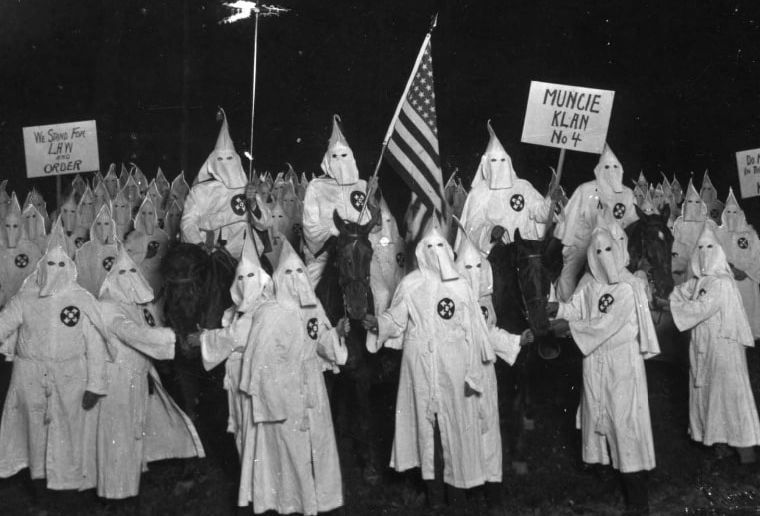

As much as we’d like to pretend every phrase we utter is a lone star suspended in the space of our own genius, all language has a history. Unfortunately, given humanity’s aptitude for treating each other like shit, etymology is fraught with reminders of our very racist world.Since I have faith that most of you reading want to navigate the world with intelligence and empathy, I figured it’d be useful to share some of the everyday phrases rooted in racist etymology. Knowledge is power, and the way we use and contextualize our words can make a huge difference in the atmospheres we create. According to Meriam-Webster’s dictionary definition, a thug is “a violent criminal.” Obviously, this definition leaves the word open to define people of all ethnicities. However, given the frequent ways this word has been used to describe Black Lives Matter protesters, the 17-year-old murder victim Trayvon Martin, and sadly, almost every black victim of police brutality — there is an undeniable racial charge to the word. When you consider the people who are called thugs — groups of black protesters, victims of racist violence, teenagers minding their own business, and flip the racial element, you’d be hard-pressed to find examples of white people being called thugs in earnest by the media (or really by anyone).
Several prominent activists and black writers have written about the phenomenon of thug replacing the n-word in modern culture. In a popular press conference back in 2014, the Seattle Seahawks player Richard Sherman explained his feelings about the word. “The reason it bothers me is because it seems like it’s an accepted way of calling somebody the N-word now. It’s like everybody else said the N-word and then they say ‘thug’ and that’s fine. It kind of takes me aback and it’s kind of disappointing because they know,” Sherman said.
When most of us hear the term “grandfather clause” we just think of the generalized description: a person or entity that is allowed to continue operating over now expired rules. But the literal meaning reveals the “grandfather clause” was a racist post-Reconstruction political strategy. This is the historical definition, according to Encyclopedia Britannica: In modern speak, this basically meant the Grandfather Clause let white people off the hook for new voting requirements because their ancestors were already registered voters. Meanwhile, black people were required to fill out impossible literacy tests and pay exorbitant poll taxes to vote. This in turn, meant many black people were unable to vote, while white people weren’t held to the same standard. The word “Gypsy” was (and is) a racial slur referring to the Roma people. The Roma people are descendants of Northern India who, due to severe marginalization and threats of violence by others, lived a nomadic lifestyle of forced migration for centuries. During a fraught history, Roma people were taken as slaves in Romania and were targeted for genocide by the Nazis. In a similar vein, the term “Gyp” or “getting gypped” means to cheat or get conned, and many connect this meaning as another racist extension of Gypsy. According to the Oxford Dictionary, the very common phrase “no can do” was originally made popular as a way to make fun of Chinese immigrants. Upon first hearing, many people associate the phrase “sold down the river” with the notion of being betrayed, lied to, or otherwise screwed over. While these definitions all technically apply to the origin, the root of this phrase is much more bleak. “River” was a literal reference to the Mississippi or Ohio rivers. For much of the first half of the 19th century, Louisville, Ky., was one of the largest slave-trading marketplaces in the country. Slaves would be taken to Louisville to be “sold down the river” and transported to the cotton plantations in states further south. This heavy connotation sadly makes sense, but also makes casual use of the phrase feel way more cringe-inducing. This straw woman in Reagan’s campaign served as a racially-charged exaggeration of one minor case of real welfare fraud used to pedal his platform for welfare reform. Needless to say, the term has sadly lived on as a racially-charged vehicle used to undermine the importance of welfare programs, while peddling gross stereotypes about black women. On top of all the other offenses, this stereotype is of course ignoring the fact that poor white Americans receive the most welfare out of any economically-disadvantaged demographic. The term shuck and jive is both common and very obviously rooted in the language of slavery. According to the Online Etymology Dictionary, the phrase shuck and jive refers to: Likewise, the modern usage of this phrase refers to pandering, selling out, or instances in which black people go along with racist white people’s wishes. Again, not a phrase to be thrown around lightly. The very commonly used greeting “long time no see” first became popular as a way to make fun of Native Americans. The phrase was used as a way to mock a traditional greeting exchanged between Native Americans. This is the official definition, according to the Oxford Dictionary: The act of committing genocide is not limited to human lives, but also translates to a normalized cultural violence. Deconstructing, mocking, and erasing someone’s language contributes to this pattern of colonialism. Originally, this term referred to the balconies in segregated theaters where black people were forced to sit. The nickname “peanut” was given due to the fact that peanuts were introduced to America at the same time as the slave trade. Because of this, there was a connection drawn between black people and peanuts. As of now, the word “uppity” is often used as a synonym for “stuck up” or “pretentious” or “conceited.” But the roots of the word are far more specific and racist. So, basically, any black person who overtly stood up to racism. Given the heaviness of this origin, it seems best to leave this word at home when looking to describe a pretentious acquaintance. Sadly, given our ugly history, there are many more words and phrases I could add to this list. In the meantime, hopefully this list is helpful for navigating the racism innate in our language. The article was originally published by our partners at someecards and was written by Bronwyn Isacc. It originally appeared on 02.04.191. Thug
If you’re talking about an actual criminal, there are so many descriptive words to invoke besides “thug.” Given its current use as a negative, racially-coded word, avoiding its use seems like an easy and obvious move.
2. Grandfather Clause
“Grandfather clause, statutory or constitutional device enacted by seven Southern states between 1895 and 1910 to deny suffrage to African Americans. It provided that those who had enjoyed the right to vote prior to 1866 or 1867, or their lineal descendants, would be exempt from educational, property, or tax requirements for voting. Because the former slaves had not been granted the franchise until the adoption of the Fifteenth Amendment in 1870, those clauses worked effectively to exclude black people from the vote but assured the franchise to many impoverished and illiterate whites.”
3. Gypsy or “Gyp”
The word “Gypsy” is a slang word perpetuating stereotypes of Roma people as “thieves, rowdies, dirty, immoral, con-men, asocials, and work-shy” according to the Council of Europe.
4. No Can Do
“The widespread use of the phrase in English today has obscured its origin: what might seem like folksy, abbreviated version of I can’t do it is actually an imitation of Chinese Pidgin English. The phrase dates from the mid-19th to early-20th centuries, an era when Western attitudes towards the Chinese were markedly racist.”
5. Sold Down The River
According to a report from NPR, being “sold down the river” was a literal reference to slavery, and the families that were torn apart in the south.
6. Welfare Queen
The term “welfare queen” was first popularized by Ronald Reagan’s 1976 presidential campaign in which he repeatedly painted a picture of a Cadillac-driving welfare queen.
7. Shuck And Jive
“The fact that black slaves sang and shouted gleefully during corn-shucking season, and this behavior, along with lying and teasing, became a part of the protective and evasive behavior normally adopted towards white people in ‘ traditional’ race relations.”
8. Long Time No See
“Long Time No See was originally meant as a humorous interpretation of a Native American greeting, used after a prolonged separation. The current earliest citation recorded in the Oxford English Dictionary (OED) comes from W.F. Drannan’s book Thirty-one Years on Plains (1901): ‘When we rode up to him [sc. an American Indian] he said: ‘Good mornin. Long time no see you’.”
9. The Peanut Gallery
Most modern uses of the term “the peanut gallery” is in reference to a group of people who needlessly criticize or mocking another person. However, the historical roots of this term are much more racist and painful.
10. Uppity
The word Uppity was first used by Southerners to refer to slaves who did not fall into line, or acted as if they “didn’t know their place.”
Tags
More for You
-
Transforming girls’ education across the world takes a village.
From Pakistan to Tanzania, the most effective education solutions are community-led. Here’s how local leaders, in partnership with Malala Fund and supported by Pura, are mobilizing entire communities.
When asked to describe what Tanzania smells like, Grace Isekore closes her eyes and breathes in deep. For a moment, she’s somewhere else entirely. Tanzania is a rich tapestry of sights and scents, from the smell of sea mist that permeates the coastline to the earthy cardamom and cloves she cooks with in her kitchen. But when Grace emerges from her reverie, her answer is unexpected.
“Tanzania smells like peace,” she says, her eyes still closed. “I see a beautiful country where we are free to move, free to speak. And there is peace within the community.”
For Grace, that sense of peace isn’t just something she smells; it’s something she works toward every day. As a project coordinator with Pastoral Women’s Council (PWC), a women-led organization that empowers pastoralist communities in northern Tanzania, she has seen firsthand how girls flourish when they have the opportunity to attend school. Like scent, education not only connects girls to their own culture, but also helps broaden their horizons, realizing new possibilities for themselves and others. That transformation reshapes entire communities and ripples outward, with the potential to change countries and transform the world for the better.
Different scents, different approaches, and communities driving change

Spices in Tanzania. Captured by James Roh for Pura For Grace and others around the world, education is freedom, as well as a pathway to a stronger community. Rooted in that shared belief, Pura, a home fragrance company, was inspired to build on their four-year partnership with Malala Fund to create something truly unique: a fragrance collection that connects people through scent to communities in Tanzania, Nigeria, Pakistan, and Brazil, where barriers to girls’ education are among the highest.
Using ingredients from each region, the new Pura x Malala Fund Collection uses scent to transport people to these regions directly. “Future in Bloom,” for example, invokes Pakistan’s lush valleys through notes of jasmine, cedarwood, and mango; while Tanzania’s fragrance, “Heart on Fire,” evokes the spirit and joyfulness of the girls who live there through cardamom, lemon, and green tea.
The new Collection honors the work Malala Fund does every day, partnering with locally-led organizations in these four countries to ensure every girl can access and complete 12 years of education. Each scent celebrates the joy, tenacity, and courage of the women and girls driving change on the ground, while also augmenting Pura’s annual grant to Malala Fund by donating eight percent of net revenue from the Pura x Malala Fund Collection to Malala Fund directly.
Just as each country’s scent is unique, so too are their needs related to education. But with support from Malala Fund and Pura, local leaders are coming up with creative ways to mobilize entire communities (parents, teachers, elders, and the students themselves, in their pursuit of solutions, understanding that educating girls helps everyone thrive. Here’s how their efforts are creating real, durable impact in Tanzania and Pakistan, and creating a ripple effect that changes the world for the better.
Parent-teacher associations help Maasai girls and their communities in Tanzania problem-solve

A girl’s school in Tanzania. Captured by James Roh for Pura Northern Tanzania, Grace’s home, is home to pastoralist communities like the Maasai, a nomadic people who have moved with the seasons to nurture the land and care for their livestock for centuries. The nomadic nature of this lifestyle creates significant and unique barriers to girls’ education. Longstanding gender roles have enabled Maasai to survive in the harsh environment and have placed great value on both women and men. Over time, as nomadic life has been threatened by the privatization of land and stationary education models have been implemented, the reality of pastoralist livelihood has shifted and introduced new complexities. Now, the sheer distance to schools is both a practical challenge and one that often comes with danger from the landscape, predators, and potential exposure to assault along the journey. Girls shoulder the responsibility of household chores and there is often cultural pressure around early marriage – both leading to boys’ education being prioritized over girls’.
“There are very, very good [pastoralist] cultural practices, which are passed from generation to generation,” says Janet Kimori, an English teacher at Lekule Girls Secondary School in Longido, Tanzania. But when cultural practices act as educational barriers, “you have to sit down and look for where you are going to assist. As a school, as an individual, the school administration—all of us will chip in and know how we are going to deal with this problem.”
PWC works to ensure girls are able to exercise their right to an education while also preserving pastoralist culture. One successful approach, the organization found, has been the formation of Parent Teacher Associations (PTAs), created with help from Malala Fund. In PTA meetings, students, parents, teachers, elders, and government officials meet, discuss educational barriers, and come up with community-led solutions that preserve and honor their culture while advancing educational outcomes.

PTA meeting in Tanzania. Captured by James Roh for Pura One recent PTA meeting highlights how these community-led solutions are often the most effective. At Lekule Girls Secondary School, the lack of fresh water forces girls to walk long distances to collect water for the school’s kitchen during the school day, and these long journeys not only disrupt class time but can leave girls vulnerable to sexual assault in isolated areas. Through facilitated discussion, PTA members landed on a solution: installing a borehole to pipe in fresh water to the school. Reliable access to water creates a better learning environment for the girls, but it also benefits the community at large, as local governments are then more likely to invest in health clinics and other community resources nearby.
With a solution in place, the PTA was then able to discuss ideas and map out a course of action. The women would raise money for the cost of the borehole, while the men would recruit workers to dig the hole and lay the pipe. Together, they would ask government officials to match their investment.
The benefits of PTA meetings within the pastoralist communities are undeniable. “The girls are talking and addressing issues in a confident way, and parents feel they are part of the resource team to solve challenges happening at school,” Grace says. One unexpected benefit: The larger cultural impact these PTA meetings have created. Thanks to the success of PTAs within pastoralist communities, the models are now being endorsed on a national level, and schools across Tanzania are starting to use them to solve problems in their own communities. When a community creates opportunities for girls to learn, everyone benefits.
Safe spaces in rural Pakistan help students and their parents connect, then drive change

Safe space for girls meeting in Pakistan. Captured by Insiya Syed. A continent away in Pakistan, the country’s northernmost region of Gilgit-Baltistan seems like a land untouched by time. The region’s looming mountains, snow-capped peaks, lush valleys and crystalline lakes draw nature lovers and landscape photographers from around the world, but living among this kind of breathtaking scenery has its drawbacks. Schools in the region are few and far between, and the area’s harsh climate often makes roads inaccessible for travel. Poverty and gender-based discrimination are additional obstacles, making school even further out of reach, and girls are affected disproportionately. Going up against these barriers requires a persistent, quiet strength that’s found in the women who live there and reflected in Pakistan’s signature scent.
Saheli Circles are how local leaders in Gilgit-Baltistan are bridging the gap between girls and education. An Urdu term for “female friend,” Saheli Circles are after-school safe spaces where girls explore subjects like art and climate change, while also developing skills that help them manage emotions, set goals, and build positive relationships. Girls study in groups, visit the library, play sports, and tackle filmmaking and photography projects, all designed to develop self confidence and teach the girls how to advocate for issues that matter to them. But the work doesn’t stop there.
“What we’re trying to achieve here will only be impactful if it trickles down to the home environment and the school environment,” says Marvi Sumro, founder and program director of Innovate, Educate, and Inspire Pakistan (IEI), the local organization that developed the Saheli Circles model and partnered with Malala Fund in 2021 to make it a reality. Ever since, Saheli Circles have grown to involve teachers, elders, and parents to encourage relationship building that’s essential for young girls and adolescents. “Our spaces can give mothers and daughters an opportunity to interact a little differently—do an art activity, or have a cup of tea together, or some good conversation,” Marvi says.
The relationship building is what makes the biggest positive impact throughout the community. Recently, one Saheli Circle was able to bring together parents, teachers, and administrators to advocate for better education at their local school, and together they convinced the department of education to hire a science teacher. Another Saheli Circle organized a fund where members of the community can contribute monthly to pay for uniforms, books, and other school expenses for the girls in their village, eliminating those small, hidden costs that are often a barrier to education for many. A third Saheli Circle was able to produce a short film about how gender-based household chores can take away valuable study time from girls, leaving them at a disadvantage. “The girls put the film together and showed it to the mothers, and the response from the mothers was just beautiful,” Marvi says.

Girls smiling in Pakistan. Captured by Insiya Syed. The education and relationship building that the girls receive in Saheli Circles connects them to larger opportunities and economic freedom that are not possible in their hometown. “For girls in Gilgit-Baltistan, education is extremely important because of the fact that we’re so far away from where the economy is, where the opportunity is. Education becomes this bridge for us, for our girls, to access all the opportunity and economy that exists in [larger cities].”
From rural Tanzania to remote Pakistan, local organizations prove every day that prioritizing girls’ education benefits everyone. Communities that lift up girls are able to secure resources like clean water and well-staffed schools, as well as build stronger relationships.
These outcomes are only possible because of the women and girls who work tirelessly in these regions to overcome barriers and drive progress. The Pura x Malala Fund Collection is a way to honor them, celebrate their achievements, and unite people the world over around a shared belief that education is freedom. Like scent, that belief can build, travel, and has the possibility to transform the world.
Experience the Pura x Malala Fund Collection here, and connect with the stories of real girls leading change across the globe.
-
Fascinating study reveals the beginnings of an Antarctic accent
The findings provided greater insight into how dialects form in the first place.
Antarctica has no permanent residents or Indigenous populations. The only people who live there do so temporarily, either to conduct research or to serve as support staff. And yet, even in the most isolated place in the world, an accent could be forming.
At least, that was the conclusion of a 2019 study in which 11 participants, known as “the winterers,” were recorded saying common, everyday words every few weeks. The group consisted of eight Brits, one American, one German, and one Icelandic participant. Most of the words were ones they used regularly in daily life and contained vowel sounds known to vary across English accents, including “food,” “coffee,” “hid,” and “airflow.”
The researchers found that, over their six-month stay, the winterers began shifting their vowel pronunciations, gradually sounding more similar to one another.
How the Antarctic accent came to be
Part of this phenomenon has to do with accommodation, a linguistic term describing how we adjust our speech to be as clear as possible to the person we are speaking to, often adopting their pronunciation. That person, in turn, instinctively does the same, and a new dialect can begin to take shape, often through what’s known as a vowel merger. Vowel mergers occur when two distinct vowel sounds merge into one, causing words that historically sounded different to be pronounced identically (think: “Mary,” “marry,” and “merry”—which once had slightly different pronunciations).
The study’s researchers also found that the “ou” vowel sound (as in “sew,” “flow,” and “code”) began “fronting,” meaning it was pronounced farther forward in the mouth. This finding was particularly interesting because none of the speakers’ native accents featured this trait, suggesting it did not arise from accommodation. In other words, they developed it spontaneously.
Scientists call this linguistic innovation, the process by which social interaction, technology, and cultural shifts create new language patterns. Slang falls into this category.

Man looking at “hello” in different languages. Photo credit: Canva Why you won’t be seeing an Antarctic accent anytime soon
There are, however, a few caveats. For one, Jonathan Harrington, a professor of phonetics and speech and an author of the study, told the BBC that the accent shift was “very subtle” and couldn’t technically be heard. Instead, researchers observed the change in recorded acoustic waves.
Second, Harrington noted that “for accents to develop to the point where they are noticeable, it really takes a generational change.” Considering that people stay in Antarctica for only six months at most, any accent that forms is likely short-lived.
The bigger takeaway
Still, this experiment provides larger insight into how new accents, dialects, and even languages develop when communities grow in isolation. It also helps explain why American English has diverged so much from British English.
And if you really want to sound Antarctic, it’s all in the slang, apparently. Here are a few examples of words known among those who live on “the ice” (as dwellers call it, rather than Antarctica), courtesy of Bernadette Hince’s The Antarctic Dictionary and the Cool Antarctica website:

Researcher photographing a penguin. Photo credit: Canva Dingle
A sunny, bright, and clear day.
Fod Plod
Picking up rubbish or debris to keep the airfield and base safe.
Big Eye
Insomnia caused by a lack of sunlight disrupting one’s circadian rhythms.
Toasty
Brain fog caused by perpetual darkness, as well as low temperatures and discombobulating altitudes. The term can also be used for other general misdemeanors committed around camp.
Ice Shock
As one Antarctica-based blogger put it, this is what happens when “you get back to the rest of the world and realize that no matter how insane Antarctica is, the real world is FAR nuttier, and that you can no longer function in it.”
Greenout
A riff on “whiteout.” As The Antarctic Dictionary defines it, “greenout” is “the overwhelming sensation induced by seeing and smelling trees and other plants after spending time in Antarctic regions.”
Beaker
Scientist. There are also nicknames for specialists, including “fuelies” (in charge of fueling equipment) and “wasties” (who deal with, well, waste).
City Mice/Country Mice
Personnel who work at main research stations, as opposed to crews who move among different camps across the continent.
Freshies
Shipments of fresh fruits and vegetables that provide a welcome culinary respite for those on the ice.
Poppy
Alcohol served over Antarctic ice, which makes a satisfying popping sound as it releases long-pressurized gas.
All of this goes to show that even at the very edges of the world, humans will continue to reshape the way they connect with one another.
-
Royal Navy marine shares 8 unbelievable things about daily life on a submarine
Somehow this is all entirely real.
Life can feel confining at times. With every freedom to enjoy there seems to be a limitation. However, after watching a submariner’s TikTok, many people are grateful for the life they have. They were also amazed at how a person lives on a nuclear submarine.
Former U.K. Royal Navy submariner Paul McNally shared what life was like for him during a seven-month long patrol inside a submarine. He introduced the video with, “Everything I’m about to say sounds fake, but it’s completely normal underwater.”
People sounded off in the comments remarking about the day-to-day reality of being underwater in a metal tube:
“I panicked and realized I don’t ever have to do this.”
“This sounds absolutely miserable, thank you for your service.”
“Wow, this just made me really grateful for my silly little life.”
Here are some of the odd realities McNally shared about living in a submarine for an extended period of time:
‘Fresh air smells disgusting when you’re back on land’
McNally shared that, over time, many submariners get so used to the purified recycled air within a sub that “regular” air stinks when they return to the surface. This is because the air within submarines is made through a reverse osmosis process and electrolysis. Reverse osmosis removes salt from ocean water surrounding the vessel to create pure water. Electrolysis turns that pure water into breathable hydrogen and oxygen. This air is free of the usual air pollution and scents that typically exist outdoors. The air is also recycled and filters out any contaminants throughout the voyage.
They drink ‘demin’ water
“Demin water” is shorthand for “demineralized water.” Like how a submarine gets its air, it also gets its water through reverse osmosis. While pure water does sound clean, it’s not necessarily good on its own. Much of our drinking water contains healthy, helpful minerals whether you drink it from the tap or a purchased bottle through a store. This means that submariners are encouraged to take extra supplements and vitamins to make up for it.
‘No contact with the outside world for seven months straight’
In the TikTok, McNally mentions the long span of time without contact with the outside world, limiting communication between sailors and family members to one email per week, printed. Patrols and mission protocols can vary, but for most submariners email is the primary way to communicate with the outside. This can be due to technological limitations or mission priorities that call for limited communication between the vessel and other areas.
There may even be protocols that prohibit certain messages, such as the death of a family member, be withheld until the submariner is back on shore. This can be due to mental health and morale reasons, along with the reality that the person usually cannot leave mid-patrol to address their loss.
‘Daytime and nighttime don’t exist’
Since sunlight cannot peek into submerged submarines and there needs to be 24/7 alertness to keep the vessel moving safely, there is no “day” or “night.” McNally shared that he worked two six hour shifts per day on his vessel. Since submarines only have artificial light, submariners have to take vitamin D supplements to help offset the lack of sun exposure.
Many submariners have ‘coffin dreams’
Due to living in such cramped quarters, many submariners have “coffin dreams,” nightmares in which the submariner believes they’re being buried alive, even after they wake. This is due to the confined coffin-like bunks and the reality that they’re technically buried underwater.
‘Showers are limited to 16 seconds’
While the reverse-osmosis of seawater helps create breathable air and drinking water for the submarine, it also is the water supply for other needs on the vessel. This includes cooking and showering. It’s also very limited in supply.
Because of the greater need for air and drinkable water, showering is less of a priority. This means shower time is extremely limited in order to save clean water. Most showers allow a person to spray water on themselves to get wet, turn off the water to lather up their body with soap, and then spray the lather off quickly.
It can ‘rain’ inside a sub
It’s not that rain clouds form inside of a submarine, but it’s not far off either. The interior of the sub is impacted by the water temperature of the ocean outside of it. If the temperature outside of the sub causes the temperature inside to drop, it can lower to the dewpoint. This creates condensation “sweat” that could “rain” in parts of the sub.
They entertain themselves the best way they can
Recreation is necessary when living in a tube with 130 people, but the options are limited compared to on land. Movie night and video games help pass the time between shifts. Card games, especially cribbage, are considered the traditional and time-honored way people on the submarine bond.
Different submariner vessels also have various playful “rites of passage” not unlike fraternities and sororities. On “Halfway Night,” for example, the submariners celebrate the halfway point of their deployment. This can include various activities including throwing cream pies at their ranking officers. Some vessels allow submariners to receive “halfway box” care packages from loved ones to celebrate being halfway done with their tour.
Based on McNally’s video and other submariners’ experience, living on a submarine isn’t easy, but it sure is interesting.
-
A pageant winner boldly calls out her abuser in the audience during her final interview
“I took back my power—not just for myself, but for my dreams and everyone watching and listening.”
Domestic violence survivors cheered on the winner of the 2024 Miss Kansas competition after she stood on stage and called out her abuser who showed up to the pageant. Before Alexis Smith was chosen from 26 participants in the state competition on June 8, 2024 to represent Kansas in the 2025 Miss America contest, she was asked to speak on stage about her Reclaimed Respect initiative.
“My vision as the next Miss Kansas is to eliminate unhealthy and abusive relationships,” Smith said. “Matter of fact, some of you out in this audience saw me very emotional because my abuser is here today. But that’s not going to stop me from being on this Miss Kansas stage and from representing as the next Miss Kansas. Because I, and my community, deserve healthy relationships. We deserve a domestic [violence] free life.”
Watch:
In the video shared on TikTok, the freshly-crowned Miss Kansas wrote, “Respect Reclaimed is about reclaiming your power and standing firmly in it. On the night of Miss Kansas, my journey took an unexpected turn when someone I have been healing from tried to disrupt my peace. Instead of falling into silence, I chose to live out my vision for a better world. I took back my power—not just for myself, but for my dreams and everyone watching and listening.”
She wrote that it wasn’t about shunning anyone, but about “turning our pain into purpose and channeling it in a way that unifies and uplifts.”
“I’m ready to use my story, tools, and resources to end unhealthy relationships in all forms,” she wrote. “My voice and advocacy will empower everyone to reclaim their own power in their own unique way.
I might be small in stature, but I stand tall in strength, purpose, and power with hopes of inspiring others to do the same.”
People who have experienced abuse themselves applauded her advocacy.
“As a victim of domestic violence I applaud you for speaking out!! I watched this 10 times!! I’m still getting bullied by his parents even with a no contact order. I plan on helping women like us as well.”
“WHAT A WOMAN. This is absolutely incredible. From one survivor to another, I am SO SO proud of you for reclaiming this moment for yourself. You will do amazing things “
“Incredibly brave of you. You just made a statement for all women. I appreciate you so much.”

A woman holds a sign that reads: “Love shouldn’t hurt.” Photo credit: Canva “As an old survivor…I’m so damn PROUD OF YOU!! Love, A Stranger “
“We got to see you ACTIVELY showcasing your platform LIVE IN PERSON! My utmost respect to you Miss Alexis. This is beyond any crown, I cannot wait to watch your journey. As someone who grew up around domestic violence, I have chills watching you. You will always have a supporter in me. You absolutely ate that. “
“YAS GIRL! As a fellow survivor, you are an inspiration and I’m so proud of you for using your voice and showing your strength.”
“”I experienced emotional and psychological abuse for a very long time,” Smith shared with KMUW, “and it was recognizing that I was losing control over my own personal emotions, trying to save the emotions of someone else, and so to be able to save myself. I recognize that we don’t want to both go down together. I need to be able to leave this relationship. That way, I’m able to pursue a future, because you just never know what can happen to your partner or happen to yourself when you’re in those relationships.”
According to The Wichita Eagle, Smith uses her 19 years of experience as a ventriloquist to teach kids about healthy relationships with puppets as part of her Reclaimed Respect initiative. She also works full-time as a cardiothoracic ICU nurse. And she went on to compete at Miss America 2025 in Orlando in January, where Miss Alabama Abbie Stockard was crowned.
This article originally appeared two years ago. It has been updated.
-
A neighbor complained that her rooftop yoga was “inappropriate for children” and promoted “Eastern religion.” She made them regret it.
The neighbor had been secretly photographing her at 6 AM to build the case.
Getting a formal notice from your HOA is rarely a good way to start the morning. For one homeowner (u/clammyanton on Reddit) who shared her story on social media, the letter arrived after months of peaceful sunrise yoga on her rooftop terrace, a routine she’d built around the views and the quiet of early morning.
The notice informed her that a neighbor had filed a complaint about her “inappropriate public displays” and “disturbance of community aesthetics.” She was baffled. She practiced at 6 AM when almost no one else was awake, wore standard workout clothes, and made no noise.
Then it got stranger. When she followed up with the HOA manager for specifics, she learned the neighbor had gone further than a written complaint. They had been photographing her in various poses and submitted the photos as evidence, arguing they were “inappropriate for children to potentially see” and were “promoting Eastern religious practices in a family community.”

A woman meditates while doing yoga. Photo credit: Canva “I’m literally just doing basic vinyasa flow!” she wrote.
The detail about Eastern religious practices caught significant attention when the post went viral on Reddit, and for good reason. Legal experts and housing advocates are clear on this point: the Fair Housing Act prohibits HOAs from restricting a homeowner’s use of their property based on religion. As one legal resource explains it plainly, an HOA can ban exercise broadly, but it cannot single out yoga specifically because of its perceived religious associations. The same logic applies to holiday decorations — an HOA that bans string lights for Diwali but allows Christmas lights is on legally shaky ground.
Commenters on the post were quick to flag this. “If that whole promoting Eastern religion thing is an exact quote, I feel like that right there is your ticket to fight,” wrote u/cheybananas. “They can’t just outlaw religious practices.”
Others were more focused on the neighbor’s surveillance. Several urged her to file a counter-complaint about someone photographing her on her own private terrace at dawn. “Taking photos of someone on their private residence without their knowledge or consent?” u/ok-pomegranate-6479 wrote. “Involve authorities if you have to, that’s creepy.”

A woman executes an advanced yoga pose on the beach. Photo credit: Canva The homeowner had already come to the same conclusion on her own. After reviewing her HOA’s bylaws, she found nothing prohibiting yoga or exercise on private terraces, only a vague clause about maintaining community standards. She drafted a formal email to the HOA board requesting the specific bylaw citation they were relying on, along with copies of all photos collected of her. She also made clear she was considering a counter-complaint about the neighbor’s behavior.
“The irony is that yoga is supposed to reduce stress,” she wrote, “but this whole situation is doing the opposite.”
Her experience isn’t unusual. A Rocket Mortgage survey of more than 1,000 HOA homeowners found that more than 3 in 10 feel their HOA has too much power, and 10% have considered selling their home because of it.
This article originally appeared earlier this year.
-
‘Are you serious?’ Man tries on women’s jeans to see if the pockets are ‘really that bad’
Spoiler: Yup. They are.
It’s hard to say what makes every woman happy or what every woman wants, and as a woman myself, I’m not a fan of sweeping generalizations based on gender. However, there are certain elements of walking through the world as a woman that are fairly universal, which makes me feel confident in saying this:
If you ever want to see pure, spontaneous joy, watch a woman put on a dress and suddenly realize it has pockets!
Happy Fashion GIF by Rosanna Pansino Giphy Women’s clothes are notorious for having either no pockets (most dresses) or pockets that are barely usable (most jeans and dress pants). And this isn’t just a perception—a 2018 study by The Pudding found that, on average, the front pockets on women’s jeans are 48% shorter and 6.5% narrower than they are on men’s jeans. I have pants in my wardrobe that look like they have both front and back pockets, but they don’t; where the pocket opening would be is sewn shut. Faux pockets may sound dumb—because they are—but they’re not uncommon. And some pockets are so small you can’t even fit a ChapStick into them.
To test whether women’s pockets really are as bad as they (we) say they are, popular vlogger Nick Wilkins tried on a pair of women’s jeans. The fit was great and they looked fine. But the moment he held up the items he usually puts in his own pockets, women collectively let out a loud “HA!” Sure enough, when he tried to put his phone and wallet in the pockets, his reaction reflected what women have said countless times ourselves: “Are you serious? That’s all it does?”
Yep, that’s really all they do, and yes, they really are that bad.
“Now I know why you guys wear purses,” Wilkins said before having an epiphany. “You guys don’t have pockets with dresses, too!”
Exactly. Hence the “It has pockets!” elation described above.
“Um, people who make women pants,” Wilkins said, “let’s start putting some depth in there, why don’t we.”
Seriously, though, why don’t we? What’s up with women’s clothing and the dearth of pockets?
As it turns out, the history of women’s clothing and pockets goes way back, and, of course, there have been various trends and shifts over time. Some people have posited that companies don’t put usable pockets into women’s clothing so that they can sell more purses and handbags. However, according to a deep dive in FASHION Magazine, that’s not quite the whole story. Believe it or not, we’re still living with leftover, outdated notions of men being active and women being passive, with men’s clothing needing to be functional and women’s clothing desiring form over function.
“Essentially: Men are required to act and therefore need practical clothing,” writes Annika Lautens. Women are expected to simply appear and be watched—their beauty prioritized above all else. And these outdated gender ideals are still being sewn directly into our clothing.”
The irony, of course, is that women tend to carry more things than men. Sure, sometimes that necessitates a purse, but sometimes you don’t want to carry something extra. Pockets are nice. They’re convenient, helpful, and functional. We want them. We need them. What in the name of patriarchy is the problem here?
It can’t be that hard to make normal pants for women with decent pockets. Jeans with decent pockets. Dress pants with decent pockets. And yes, dresses with pockets, too. We are seeing more independent and female-led clothing makers providing pockets, and clearly the awareness about it is finally kicking in pretty universally. But as most women can attest, it remains an issue.
Maybe women would simply be too powerful if we all had pockets. Maybe this will be our ultimate last stand. Pockets or bust, ladies. Pockets or bust.
This article originally appeared [time-difference] ago. It has been updated.
-
Stylist has liberating response to ‘mid-forties ugly’ comment, and women are applauding
“Nobody prepared me for how comfortable I would feel about my looks at this age.”
Gen X stylist Jennine Jacob posts a lot of content encouraging women not to fall victim to ageism and instead find confidence in their self-expression. But in a recent video, she got candid about how freeing it’s been to reject society’s norms in her own life.
In the clip, Jacob referenced a woman on Instagram who shared that “no one prepares you for mid-forties ugly.” The video appears to come from content creator Susie Trigg Tucker, who got candid about the natural “grieving process” that comes with “your physical beauty changing.”
Addressing her own gray hair and textured skin, Tucker urged other women to “lean into acceptance” and “work on redefining what makes us beautiful.”
But for Jacob, the experience hasn’t been quite so painful. In fact, it’s been rather liberating.
“No one prepared me for how little I would care about what people think about my looks,” she said. “Nobody prepared me for how comfortable I would feel about my looks at this age.”
“And yes, I have wrinkles, I have thinning hair, I have gray hair…I have all of the things that are like conventionally bad, but I literally could not care less,” she added.
Her reason for this laissez-faire attitude is simple. “I did my time in the patriarchy, and my time is done,” she shared.
“I have never felt more free being so ‘ugly’…I am so grateful for it,” Jacob concluded.
Judging by the comments, she’s not the only one who has felt this way.
“100000000000%!!!! I feel the best ever!!!!❤️”
“I couldn’t agree more! Aging out of the male gaze is the best part! Now there’s an inner peace like I have never known. I wish this gift for all women.”
Granted, it seems that Jacob did spend some time, as Tucker put it, “redefining what beauty looks like.” In previous videos, she shared that when she first turned 40, she used Botox, face tape, and filters in hopes of looking younger. Now she doesn’t use any of those things and says she feels “1,000x better.”
Really, these two women aren’t arguing two different points of view. It’s perfectly natural for women (or anyone, really) to grieve a physical way of being that no longer exists one moment, and the next appreciate the wisdom and confidence that come with growing older. That’s pretty much adult life in a nutshell.
Their conversation arrives at a moment when aging, beauty standards, and cosmetic procedures are being talked about more openly than ever. Social media feeds are filled with discussions about Botox, fillers, preventative treatments, and whether embracing natural aging is empowering or simply another unrealistic expectation placed on women.
For some people, cosmetic procedures feel like a form of self-expression and autonomy. For others, rejecting those options can feel equally empowering. Increasingly, women are speaking honestly about the complicated emotions that come with getting older in a culture that has long prioritized youth.
What voices like Tucker’s and Jacob’s show is that there isn’t just one correct way to navigate that experience. Some people grieve the changes that come with age. Others feel an unexpected sense of freedom when they realize they no longer feel pressured to perform beauty for anyone else.
And, sometimes, those two feelings can exist at the very same time.
What matters most, as both women suggest in their own ways, is giving people the space to define beauty and self-worth on their own terms. For many women entering their 40s and beyond, that definition is finally becoming something they get to write themselves.
-
People shared the ‘one question’ they’d ask God if they could, and the responses are profound
Throughout human history, we have had a lot of gods, at least 18,000, to be specific. Most people believe in just one and forget about the other 17,999 that have fallen in and out of favor over the millennia. If we focus on the major god of the Abrahamic religions—Christianity, Judaism, and Islam—we, as mortal…
Throughout human history, we have had a lot of gods, at least 18,000, to be specific. Most people believe in just one and forget about the other 17,999 that have fallen in and out of favor over the millennia. If we focus on the major god of the Abrahamic religions—Christianity, Judaism, and Islam—we, as mortal humans, still have many questions that remain unanswered in their holy books.
For example:
If you love us, why do you send a big percentage to hell?
Why do you allow evil to happen?
Who killed John F. Kennedy?
Why do you only cure diseases that we can’t see? (And never cure amputees or burn victims?)
Why do churches ask for money? Can’t you just make a bag of cash magically appear when the rent is due?
Why is shellfish an abomination when it’s so damn tasty?

A lobster ready to eat. Photo credit: Canva The problem is that humans can ask all the questions we like, and the big answer we usually get is: “God works in mysterious ways.”
Well, a group of folks on Reddit wouldn’t accept that as an answer, so they got together and listed all the questions they would ask God if they had the chance. Many people questioned whether we truly have free will, while others wondered where God is when tragedies happen. It’s great food for thought, and just maybe God will one day pop into the comments section and sort things out.
1. The question of evil
“Are you willing to stop evil, but unable? Or are you able to stop evil, but unwilling?”
2. Can I have a do-over?
“Can I start all over again and retain my memories, please?”
3. Where did you come from?
“How were you created if you’re the creator?”
This is a big question, and for many religious people the answer is simple: God is eternal and the “uncaused cause” of everything else. This rubs determinists the wrong way because they believe that everything must have a prior cause.
4. The Fieri conundrum
“Why did you allow Guy Fieri to create Donkey Sauce?”
For the uninitiated, Donkey Sauce was popularized by Guy Fieri on his TV show Diners, Drive-Ins and Dives. Although it may have a bizarre name, it’s basically a mayo-and-garlic sauce that often features Dijon mustard, lemon juice, and Worcestershire sauce.
5. The big three
“I have no singular question, I have three that are combined…
How can we have free will if you’re omniscient (all-knowing). You knew what colour my pajama pants were before I put them on tonight, yet I’m supposed to have made that decision myself with my own free will? That doesn’t make sense if you already knew.
If you’re omnipotent (all powerful) then how could you make a stone so powerful that you couldn’t lift it… if you couldn’t, you’re not all powerful, if you can… then you’re not all powerful.
If you’re all-loving then why is there so much pointless suffering?”
6. Why such a poor communicator?
“Why do you make yourself in a way that makes it so humanity has to follow a thousand-year-old book. Why can’t you just give us monthly updates or some sh*t via our phones. Seems a lot more effective.”
7. The pizza predicament
“Why is pizza such an unhealthy food? It should be something you consume all the time to stay in shape and fight cancer.”

A whole pizza. Photo credit: Canva 8. Yeah, really
“Child cancer? WTF dude.”
9. More evidence would be nice
“Why don’t you just give us a clear evidence, before blaming us for not believing in you?”
“If you have a plan for us and know everything that will ever happen, why do you blame us and condemn people to suffer forever for the crime of not doing what you wanted us to do when you already knew everyone who was going to was going to do that and counted on it?”
10. A corgi question
“Did you just put all the creation points in cuteness and herding skills when you made the corgi, or was there another plan for this dog?”
11. *taps watch*
“Where have you been?”
12. How hot?
“Could you microwave a burrito so hot that you yourself could not eat it?”
It seems that God would probably be able to eat a burrito cooked as hot as it can get, because that would only reach 212°F, the boiling point of water. Microwaves cook food by making water molecules vibrate, so once the temperature reaches the boiling point, the water turns into steam rather than getting any hotter.
13. Why are we here?
“It’s one of life’s great mysteries isn’t it? Why are we here? I mean, are we the product of some cosmic coincidence, or is there really a God watching everything? You know, with a plan for us and stuff. I don’t know, man, but it keeps me up at night.”
14. Is it all about suffering?
“The weird thing about this for me is wondering what I’d do next. like if god really answers ‘to suffer, it’s fun for me to watch you all be miserable’ do you just … go to work the next day”
15. Reincarnation
“What’s my soul’s goal so I can stop reincarnating already?”

Reincarnation. Photo credit: Canva 16. The apple
“All this over a piece of $&@%ing fruit?!?”
17. The most important question
“Are my cats and dog happy?”