https://youtube.com/watch?v=qLoEUEDqagQ
Tags
More for You
-
Once a refugee seeking safety in the U.S., Anita Omary is using what she learned to help others thrive.
Even in divided times, small acts of friendship help create vibrant communities where everyone feels safe.
In March 2023, after months of preparation and paperwork, Anita Omary arrived in the United States from her native Afghanistan to build a better life. Once she arrived in Connecticut, however, the experience was anything but easy.
“When I first arrived, everything felt so strange—the weather, the environment, the people,” Omary recalled. Omary had not only left behind her extended family and friends in Afghanistan, she left her career managing child protective cases and supporting refugee communities behind as well. Even more challenging, Anita was five months pregnant at the time, and because her husband was unable to obtain a travel visa, she found herself having to navigate a new language, a different culture, and an unfamiliar country entirely on her own.
“I went through a period of deep disappointment and depression, where I wasn’t able to do much for myself,” Omary said.
Then something incredible happened: Omary met a woman who would become her close friend, offering support that would change her experience as a refugee—and ultimately the trajectory of her entire life.
Understanding the journey
Like Anita Omary, tens of thousands of people come to the United States each year seeking safety from war, political violence, religious persecution, and other threats. Yet escaping danger, unfortunately, is only the first challenge. Once here, immigrant and refugee families must deal with the loss of displacement, while at the same time facing language barriers, adapting to a new culture, and sometimes even facing social stigma and anti-immigrant biases.
Welcoming immigrant and refugee neighbors strengthens the nation and benefits everyone—and according to Anita Omary, small, simple acts of human kindness can make the greatest difference in helping them feel safe, valued, and truly at home.
A warm welcome
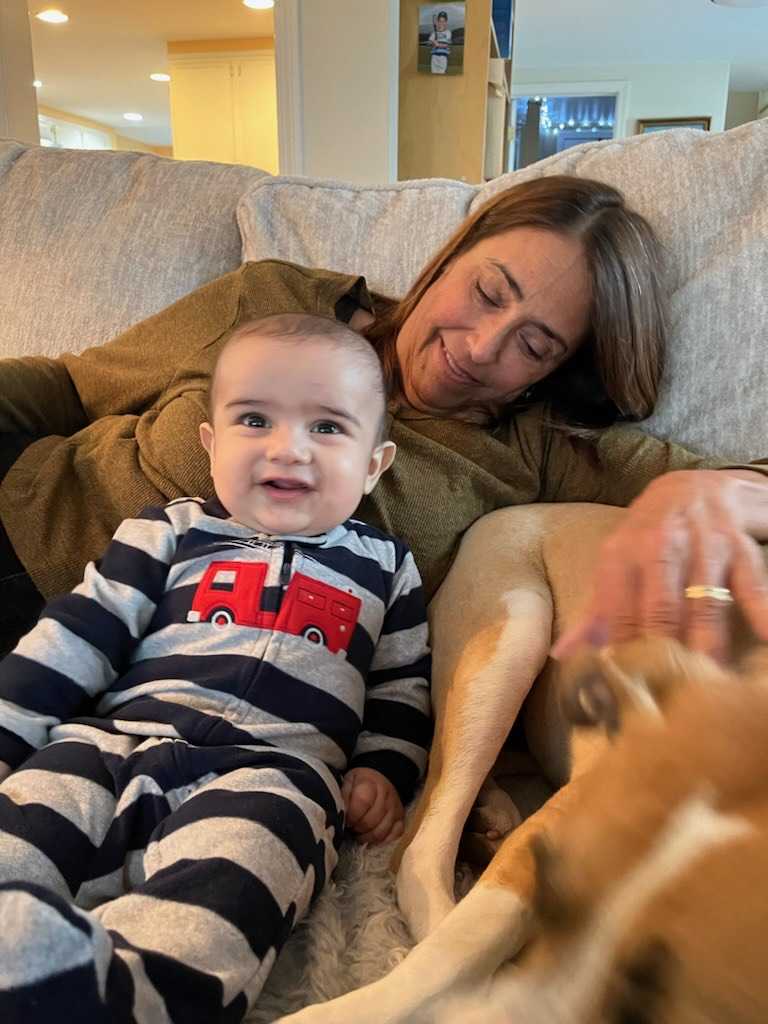
Dee and Omary's son, Osman Anita Omary was receiving prenatal checkups at a woman’s health center in West Haven when she met Dee, a nurse.
“She immediately recognized that I was new, and that I was struggling,” Omary said. “From that moment on, she became my support system.”
Dee started checking in on Omary throughout her pregnancy, both inside the clinic and out.
“She would call me and ask am I okay, am I eating, am I healthy,” Omary said. “She helped me with things I didn’t even realize I needed, like getting an air conditioner for my small, hot room.”
Soon, Dee was helping Omary apply for jobs and taking her on driving lessons every weekend. With her help, Omary landed a job, passed her road test on the first attempt, and even enrolled at the University of New Haven to pursue her master’s degree. Dee and Omary became like family. After Omary’s son, Osman, was born, Dee spent five days in the hospital at her side, bringing her halal food and brushing her hair in the same way Omary’s mother used to. When Omary’s postpartum pain became too great for her to lift Osman’s car seat, Dee accompanied her to his doctor’s appointments and carried the baby for her.
“Her support truly changed my life,” Omary said. “Her motivation, compassion, and support gave me hope. It gave me a sense of stability and confidence. I didn’t feel alone, because of her.”
More than that, the experience gave Omary a new resolve to help other people.
“That experience has deeply shaped the way I give back,” she said. “I want to be that source of encouragement and support for others that my friend was for me.”
Extending the welcome
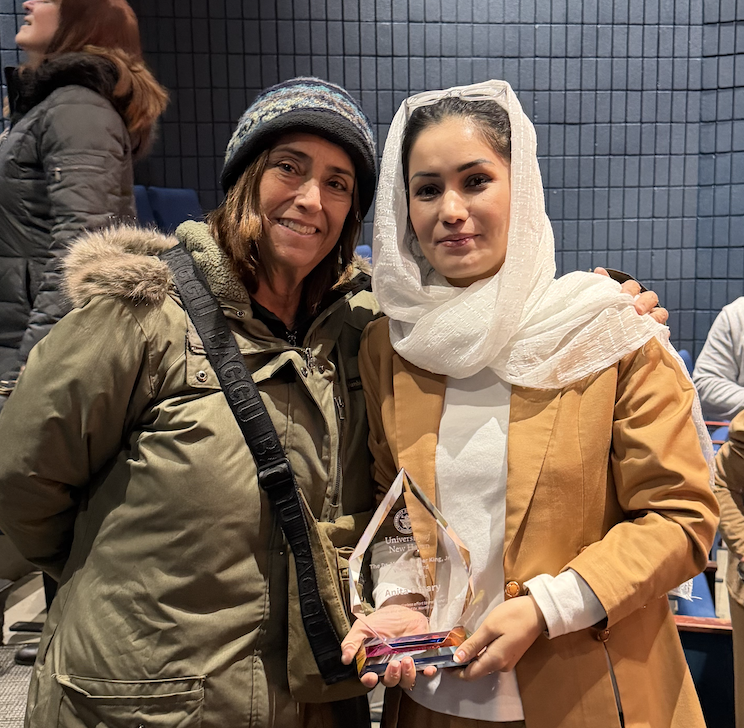
Omary and Dee at the Martin Luther King, Jr. Vision Awards ceremony at the University of New Haven. Omary is now flourishing. She currently works as a career development specialist as she continues her Master’s degree. She also, as a member of the Refugee Storytellers Collective, helps advocate for refugee and immigrant families by connecting them with resources—and teaches local communities how to best welcome newcomers.
“Welcoming new families today has many challenges,” Omary said. “One major barrier is access to English classes. Many newcomers, especially those who have just arrived, often put their names on long wait lists and for months there are no available spots.” For women with children, the lack of available childcare makes attending English classes, or working outside the home, especially difficult.Omary stresses that sometimes small, everyday acts of kindness can make the biggest difference to immigrant and refugee families.
“Welcome is not about big gestures, but about small, consistent acts of care that remind you that you belong,” Omary said. Receiving a compliment on her dress or her son from a stranger in the grocery store was incredibly uplifting during her early days as a newcomer, and Omary remembers how even the smallest gestures of kindness gave her hope that she could thrive and build a new life here.
“I built my new life, but I didn’t do it alone,” Omary said. “Community and kindness were my greatest strengths.”
Are you in? Click here to join the Refugee Advocacy Lab and sign the #WeWillWelcome pledge and complete one small act of welcome in your community. Together, with small, meaningful steps, we can build communities where everyone feels safe.
This article is part of Upworthy’s “The Threads Between U.S.” series that highlights what we have in common thanks to the generous support from the Levi Strauss Foundation, whose grantmaking is committed to creating a culture of belonging.
-
How to live more productively by understanding your distinct ‘time personality’
Are you time anxious? Or time blind?
It’s true that we all have the same 24 hours in a day. But it’s our own personal relationship to those 24 hours that greatly determines what that day looks like.
Time is one of those things that is both a constant in our collective reality, and yet highly subjective to the individual. It’s why one person hears “We need to be there 6:30” and translates that to “We need to be out the door in fifteen minutes,” and another person translates it as “Oh, I have plenty of time to change my clothes, walk the dogs, listen to a podcast, and clean out that junk drawer!” And of course, these two individuals will be spouses. It is universal law.
It would seem that—much like how knowing whether you’re an introvert, extrovert, or somewhere in between can help you navigate social settings—knowing your MO when it comes to time management can really help make your day flow a lot smoother.
That’s where the four “time personalities” come in.
In an article for Verywell Mind, experts Kristin Anderson, LCSW, and Dr. Ryan Sultan, explained that most of us fall somewhere on a spectrum between “very rigid” and “very flexible.” There are, of course, various factors that dictate why we might fall into a certain spot—including neurodiversity, age, and other aspects of our overall personality. But regardless, knowing the gifts and challenges of our go-to time management settings can greatly affect how we “function.”
See which one below seems to resonate the most.
The 4 Time Personalities
1. The Time Optimist
The never-ending mantra, or perhaps the “famous last words,” of this personality is “I’ve got plenty of time!” regardless of what the clock says.
Because of this, Sultan says time optimists “don’t really feel pressure under a time crunch.” They truly believe they can fit multiple tasks into a short amount of time and don’t easily account for potential delays, which leads to chronic tardiness.
“They’re ones who leave for a dinner reservation with just enough time to get there, as long as there’s no traffic and they hit every green light,” said Sultan.
Folks who consider themselves time optimists might benefit from exploring the “double it rule,” which has you automatically double the amount of time you think it’ll take to get somewhere or complete a task.
2. Time Anxious
Unlike time optimists, “time anxious” personalities feel an enormous amount of pressure, assuming “everything that can go wrong, will go wrong (e.g., traffic, delays, getting lost on the way).” Therefore, they attempt to ease this tension by showing up to things incredibly early.
Dealing with time anxiety involves many of the same tools to handle everyday anxiety, such as grounding techniques (5-4-3-2-1 technique, deep breathing), cognitive restructuring (challenging perfectionism, setting realistic goals), and structured planning (using calendars/apps, setting “worry time”). These strategies help shift focus from the future to the present, reducing the fear of wasted time. And maybe, just maybe, the time anxious can experiment with being fashionably late to low-pressure situations.
3. Time Bender
For time benders, the whole concept of time is merely subjective. Where time optimists overestimate what they can accomplish within a certain amount of time, time benders create entirely different time rules for themselves. “Being 10 minutes late basically counts as on time,” Anderson uses as an example.
These are the curious, creative souls who thrive under pressure and easily lose track of time when they reach a flow state, or bounce from inspiring task to inspiring task.
To help curb time-bending tendencies, a good option could be the “Pomodoro Technique,” which has you working in focused, 25-minute bursts followed by short breaks to maintain high energy and concentration.
“Time blindness” might sound very close to “time optimism” and “time bending,” but the former is associated with an actual inability to perceive the passage of time. That’s why Anderson and Sultan explained that this category is frequently found in those with ADHD or executive function issues.
4. Time Blind
“It’s not that these folks don’t care about being late or making other people wait,” said Anderson. “Without external reminders or cues, it’s easy for them to lose track of how long things take, which makes sticking to a schedule more challenging.”
Sultan added, “Their brains actually have a difficult time registering and processing temporal information, causing impairments in working memory, executive functioning, and temporal discounting.”
Though time blindness might be more deeply ingrained than the other three personalities, there are several proven tools that can help—from simple, tried-and-true methods like visual/audio timers (think hourglasses and analog clocks) to apps designed to help strengthen time estimation. And of course, these tools aren’t exclusively beneficial to those with bona fide time blindness. Optimists and benders can try them out as well.
Once you better understand how you uniquely navigate time, you’re better able to (a) incorporate strategies that help you work within your limitations and (b) give yourself a little grace. Perhaps that last part is most important.
-
‘Conservative’ mom sparks debate after questioning the appropriateness of a Target girl’s dress
Should girls that young be showing so much skin?
Everywhere you go, there seems to be a constant war between children’s clothing retailers who want to push the boundaries of modesty and parents who push back, saying they are sexualizing children. On top of that, when young girls believe they are supposed to wear clothes that are tight-fitting and revealing, it’s very damaging to their self-esteem and body image. So what is a parent to do?
“I think it’s one thing that the girls’ clothes are very fitted and small, and it’s another that they’re in such direct contrast to what you find on the boys’ side, and those two things send a pretty strong message about what they’re supposed to look like, dressed to be slim and to be fit,” Sharon Choksi, a mom of two and founder of the clothing line, Girls Will Be, told CNN.
Mom spots a revealing dress at Target
The topic came up again recently when Meghan Mayer, a mother of 2 and a 7th-grade school teacher, posted a TikTok video about a dress she saw at Target, which received over 1.6 million views. Meghan was reacting to a smock-style, patterned dress with balloon sleeves that appeared modest at first glance. But after closer examination, it has holes in the waist on both sides, revealing the girl’s midriff and possibly more.
“My oldest daughter and I are at Target, and there’s some cute spring stuff,” Mayer started the video. “I am a little bit more conservative when it comes to my kids’ clothing, so maybe I’m overreacting, but let me know what you think of these dresses.”
She added that the dress may be okay for a 12-year-old but was inappropriate for a 6- or 7-year-old. Mayer asked her followers what they thought of the dress. “Like I said, I know I’m a little bit more conservative. I don’t usually even let my girls wear bikinis, but maybe I’m overreacting, I don’t know. Thoughts?”
For reference, she then showed the dresses’ sizes to indicate they were for kids, then revealed the holes in the sides. “Look at these little slits on the sides of these dresses, right at the hips on all these dresses,” she said. The dress is obviously designed for a young girl to show skin, and it begs the question: Why would she want to, and who is supposed to be looking?
Most people found the dress to be inappropriate
Most people commenting on the video thought the dress was a bit much for such a young girl to wear, and that it was inappropriate for someone that age to expose themselves.

Target store at night. via Mike Mozart/Flickr “You’re not overreacting. You’re parenting properly,” Paper Bound Greetings wrote. “No, no. There is no reason for those holes to be there. They should have pockets! Not holes!” Anna wrote. “I think retailers are trying to mature our kids too fast. I agree with mom!” HollyMoore730 commented. “That dress is SO CUTE until you see the slit. Why did they have to ruin it like that?!?”krb15 added.
“All the lady people have been asking for is dresses with pockets. This is the opposite of pockets. Whyyy?” akcrucial wrote.
But some thought that the dress was acceptable, while others thought Mayer was overreacting.
“Unpopular opinion, I think they’re cute,” Dr. Robinson wrote. “When I was a kid in the ‘70s, I wore halter tops and tube tops; they were not seen as big deals. I don’t think this is scandalous,” Kimberly Falkowsi added. “Overreacting. Both my girls have the blue and white, you can’t even tell much. It’s not that big of a hole. The dresses are so cute,” LolitaKHalessi commented.
“Fun fact… you don’t have to buy it, Bethany wrote. “Idk I think it’s cute and that everyone just making it weird when it really isn’t,” Wisdomdeals added. “Nothing wrong with the dress. It’s sold out in my area. Luckily if you don’t like it or think it’s inappropriate, you don’t buy it for your child,” Maddison commented.

An aisle at a Target. via Mike Mozart/Flickr Some commenters told Mayer that she should buy the dress and have her daughter wear a shirt beneath it so it doesn’t show skin. However, Mayer believes that it would support Target in making questionable kids’ clothing.
“No, I’m not going to buy it and have them wear a tank top with it, because then that’s showing Target that it’s OK,” she told Today.com. “And over time, the cutout will get bigger and bigger.”
This article originally appeared two years ago. It has been updated.
-
Kids asked their Gen X parents to ‘dance like it’s the 80s’ and they absolutely delivered
These Gen Xers still have the moves.
Once you reach a certain age, you resign yourself to the fact that young people will no longer think you’re cool. And that’s OK. But sometimes it’s nice to remind them how awesome you are (were?) when the opportunity presents itself.
And that was exactly the feat achieved by Gen Xers during a wholesome TikTok trend that instantly transported you right back in the attitude-filled, neon colored post-disco Decade of Decadence, otherwise known as the 80s.
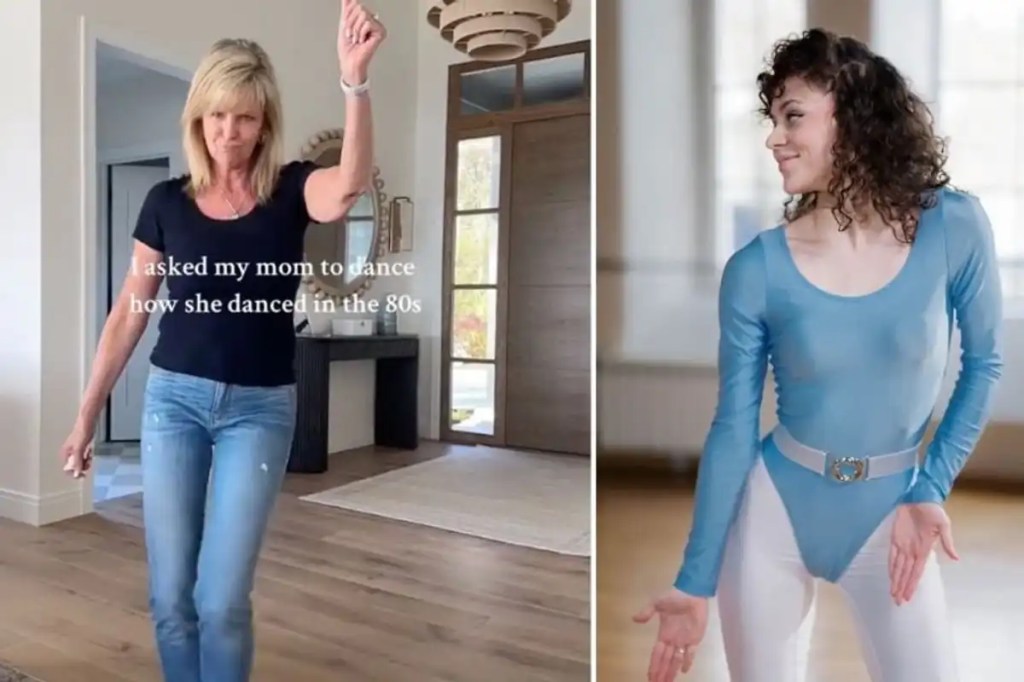
Specifically, it’ took you back to an 80s dance club. In the trend, which peaked around a years ago, kids asked their parents to “dance like it’s the 80s,” as the 1984 track “Smalltown Boy” by the British pop band Bronski Beat played in the background. The song’s high energy tempo mixed with heartbreaking, anguish-ridden lyrics make it a fitting choice to bring us back to the time period.
The TikTok “80s dance challenge”
Parents happily obliged to their kids’ requests to show off their 80s dance moves. Their muscle memory kicked in the minute the tune began to play, and it was a whole vibe.
Check out Tabatha Lynn’s video of her mom, Leanne Lynn, which quickly racked up over 12 million views.
Leanne and Tabatha told TODAY that since going viral, the dance became a common “topic of conversation in the family text group.”
There are two factors here that folks really seem to connect with. One: 80s dancing was simple. Just moving to the rhythm, maybe a head bob for some flair or a robot if you’re feeling adventurous. Of course, the 80s had ambitious moves like the worm and the moonwalk, but for the most part it was just about groovin’ to beat.
Two: there’s something inexplicably heartwarming about seeing the parents light up at the chance to go back to the days of their youth.
“I can literally see the young women in these women spring out in fluidity. Love this trend,” one person commented.
Another seconded, “I love seeing moms remember when they were just themselves.”
Of course, dads are totally rocking this trend too. Check it out:
The 80s was a time of rapid expansion for music. Much of this we have the birth of MTV to thank for, which subsequently dropped music videos, CDs and a vast array of music sub genres straight into the heart of pop culture.
Plus, the 80s brought us the synthesizer, which remains a strangely satisfying sound even in 2024. So while the era might have brought some things that most of us would prefer not to revisit—like acid washed denim and awful, awful hairstyles—some of its gems are truly timeless.
The trend also shows how, even though the weekly outing to a dance hall might be a thing of the past, people inherently want to bust a move. Luckily, there’s no shortage of clubs that cater to someone’s music tastes, no matter the era.
Speaking for 00s teens everywhere…just play the Cha Cha slide and we’ll come a-runnin.
This article originally appeared two years ago. It has been updated.
-
Too young to be a Boomer, too old to be Gen X: Meet the microgeneration ‘Generation Jones’
Generation Jones is made up of people born from 1954 to 1965.
Generational labels have become cultural identifiers. These include Baby Boomers, Gen X, Millennials, Gen Z and Gen Alpha. And each of these generations is defined by its unique characteristics, personalities and experiences that set them apart from other generations.
But in-between these generational categories are “microgenerations”, who straddle the generation before and after them. For example, “Xennial” is the microgeneration name for those who fall on the cusp of Gen X and Millennials.
And there is also a microgeneration between Baby Boomers and Gen X called Generation Jones, which is made up of people born from 1954 to 1965. But what exactly differentiates Gen Jones from the Boomers and Gen Xers that flank it?
What is Generation Jones?
“Generation Jones” was coined by writer, television producer and social commentator Jonathan Pontell to describe the decade of Americans who grew up in the ’60s and ’70s. As Pontell wrote of Gen Jonesers in Politico:
“We fill the space between Woodstock and Lollapalooza, between the Paris student riots and the anti-globalisation protests, and between Dylan going electric and Nirvana going unplugged. Jonesers have a unique identity separate from Boomers and GenXers. An avalanche of attitudinal and behavioural data corroborates this distinction.”
Pontell describes Jonesers as “practical idealists” who were “forged in the fires of social upheaval while too young to play a part.” They are the younger siblings of the boomer civil rights and anti-war activists who grew up witnessing and being moved by the passion of those movements but were met with a fatigued culture by the time they themselves came of age. Sometimes, they’re described as the cool older siblings of Gen X. Unlike their older boomer counterparts, most Jonesers were not raised by WWII veteran fathers and were too young to be drafted into Vietnam, leaving them in between on military experience.
How did Generation Jones get its name?
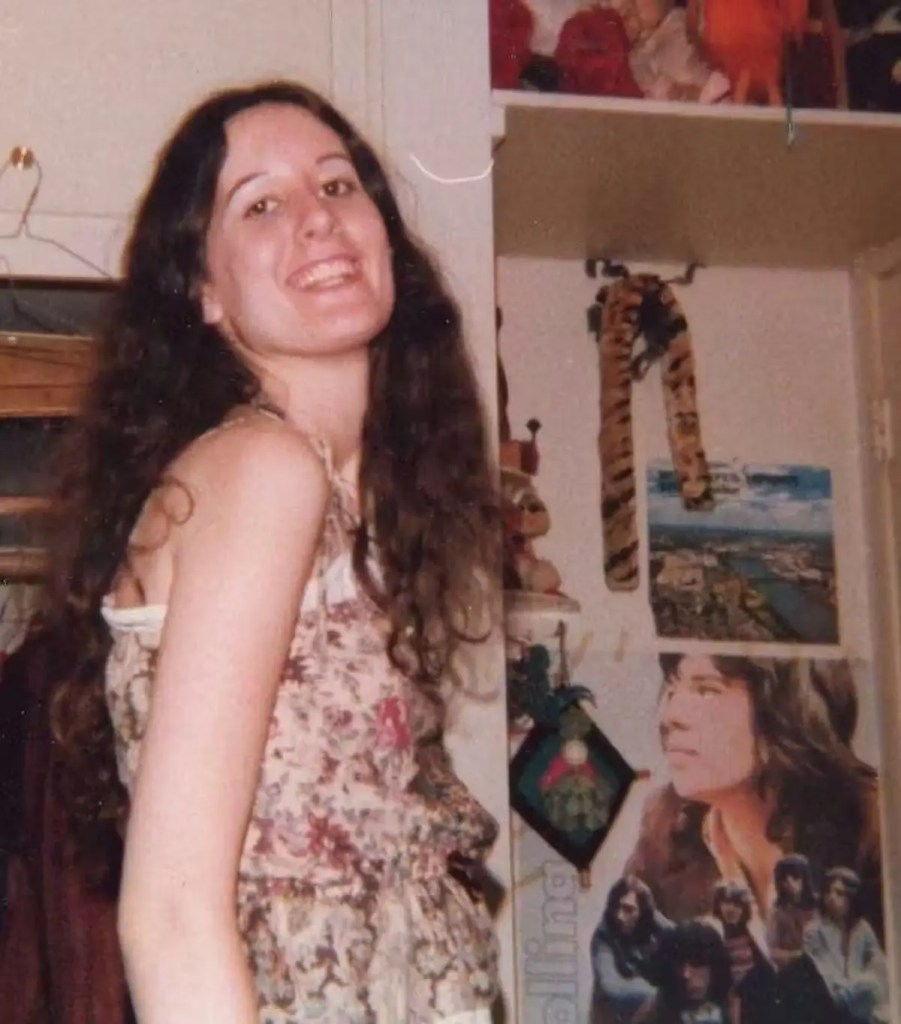
A Generation Jones teenager poses in her room. Image via Wikmedia Commons Gen Jones gets its name from the competitive “keeping up with the Joneses” spirit that spawned during their populous birth years, but also from the term “jonesin’,” meaning an intense craving, that they coined—a drug reference but also a reflection of the yearning to make a difference that their “unrequited idealism” left them with. According to Pontell, their competitiveness and identity as a “generation aching to act” may make Jonesers particularly effective leaders:
“What makes us Jonesers also makes us uniquely positioned to bring about a new era in international affairs. Our practical idealism was created by witnessing the often unrealistic idealism of the 1960s. And we weren’t engaged in that era’s ideological battles; we were children playing with toys while boomers argued over issues. Our non-ideological pragmatism allows us to resolve intra-boomer skirmishes and to bridge that volatile Boomer-GenXer divide. We can lead.”
However, generations aren’t just calculated by birth year but by a person’s cultural reality. Some on the cusp may find themselves identifying more with one generation than the other, such as being culturally more Gen X than boomer. And, of course, not everyone fits into whatever generality they happened to be born into, so stereotyping someone based on their birth year isn’t a wise practice. Knowing about these microgenerational differences, however, can help us understand certain sociological realities better as well as help people feel like they have a “home” in the generational discourse.
As many Gen Jonesers have commented, it’s nice to “find your people” when you haven’t felt like you’ve fit into the generation you fall into by age. Perhaps in our fast-paced, ever-shifting, interconnected world where culture shifts so swiftly, we need to break generations into 10 year increments instead of 20 to 30 to give everyone a generation that better suits their sensibilities.
This article originally appeared two years ago. It has been updated.
-
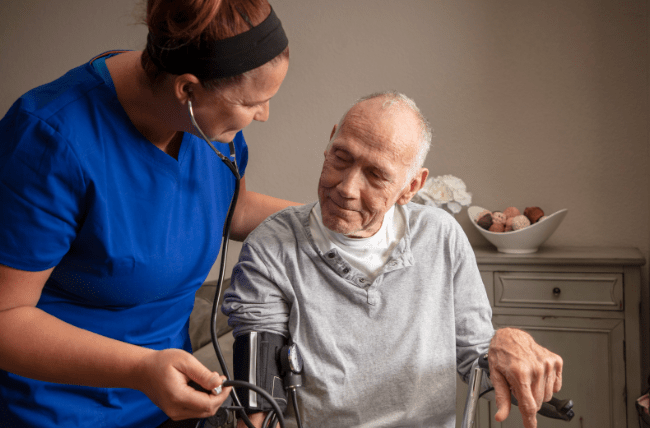
Hospice nurse reveals the ‘one sign’ that someone is going to die within 4 weeks
Death is something, like it or not, we all must face. It’s the final mystery, and it’s totally normal to feel scared of the impending process. Experts say a few things can help, including using our fear to live a purposeful life and even making jokes, or using ‘gallows humor’. One bit of good news…
Death is something, like it or not, we all must face. It’s the final mystery, and it’s totally normal to feel scared of the impending process. Experts say a few things can help, including using our fear to live a purposeful life and even making jokes, or using ‘gallows humor’. One bit of good news is that we tend to get a little bit less afraid of death as we age. But in general, it helps to not shy away from death completely. Learning and talking about it is actually a good thing.
A new video by a hospice nurse shows an excellent reason for people to feel comfortable facing the unknown. Julie McFadden posts videos helping to demystify the dying process and bring comfort to people with a loved one in hospice care, or who may be dying themselves. Her profile reads, “Helping understand death to live better and die better.” McFadden is also the author of the bestselling book, “Nothing to Fear.”
Hospice Nurse Julie has earned over half a million subscribers and has witnessed over a hundred deaths. In a recent video, she reveals that people are often comforted by friends and relatives who have passed away in their final days.
She says that when people begin experiencing these visions, it’s a sign that they will be passing away within a few weeks.
“Here’s one sign that someone is close to death that most people don’t believe happens,” Julie begins the video.
[Video]
“Usually a few weeks to a month before someone dies, if they’re on hospice, they will start seeing dead loved ones, dead relatives, dead pets. This happens so often that we actually put it in our educational packets that we give to patients and their families when they come on hospice so they aren’t surprised or scared when it happens,” she continues.
The experience is called visioning
“We don’t know why it happens, but we see it in definitely more than half of our patients,” she continues.
People often believe that the visions are caused by a lack of oxygen to the brain. However, Julie says that isn’t true. “Because when it does happen, most people are alert and oriented and are at least a month from death, so they don’t have low oxygen,” she said.
The good news is that the visioning experience is almost always comforting for those who are nearing the end.
[Image]
It often involves relatives who ‘come from the other side’ to let them know everything will be okay and encourage them to let go and pass away. People also experience being taken on journeys with loved ones or having sensory experiences from the past, such as smelling their grandmother’s perfume or father’s cigar.
These visitors can also appear several at a time. Patients might report the room feeling ‘crowded’ like they are being joined by many people at once. It’s possible they may be visited by ‘spirits’ or people they don’t know, though that’s less common.
Christopher Kerr, a CEO of Hospice & Palliative Care, an organization that provides palliative care in Buffalo, New York, says that the relatives that often appear in these visions are people who protected and comforted the dying parent when they were alive. So, they may see a parent who nurtured them but not one they feared.
Kerr has extensively studied the mysterious phenomena that happen when people die but has no real explanation for why the visioning experience happens. “I have witnessed cases where what I was seeing was so profound, and the meaning for the patient was so clear and precise, that I almost felt like an intruder,” he told BBC Brazil. “And trying to decipher the etiology, the cause, seemed futile. I concluded that it was simply important to have reverence, that the fact that I could not explain the origin and process did not invalidate the experience for the patient.”
In a more in-depth video, Hospice Nurse Julie shares a real video of a dying woman experience visioning. It’s extremely powerful:
Again, experts agree that once your loved one begins experiencing these visions, it’s likely that they will pass on in the next 3-4 weeks. Remember that they are not a symptom to be treated or a concern to be addressed, as long as they aren’t causing distress. They are simply a comforting sign of things to come.
It’s comforting to know that for many, the final days of life may not be filled with pain and fear but instead with a sense of peace and joy. While we may never fully understand the reasons behind these mysterious visions, if they bring calm during such a daunting time, we can simply be grateful for their presence. They’re kind of like life, in general. In the end, we may not really know what it was all about, but we can be happy that it happened.
This article originally appeared last year. It has been updated.
-
Woman steps outside to feed her goats and finds an English Bulldog calmly waiting for a miracle
A mysterious midnight visitor turned into the sweetest farm addition.
Andrea walked out of her barn home one morning expecting nothing more than the usual routine: feed the goats, check on the animals, enjoy the peaceful Hudson Valley scenery. Instead, she found an English Bulldog sitting quietly on a log outside the goat pen, watching her with calm, patient eyes.
The dog wasn’t barking. She wasn’t running around or causing chaos. She was just… waiting. The farm is pretty remote, miles from the nearest neighbor, so a random dog appearing out of nowhere wasn’t just unusual—it was downright mysterious.
But here’s where the story gets even better: When Andrea ran back to grab food and water, the bulldog gratefully accepted both, then immediately began following her around like they’d been best friends for years. This wasn’t some skittish stray who’d bolt at the slightest movement. This pup trusted Andrea completely from the very first moment.
The midnight mystery deepens
Naturally, Andrea checked her security cameras to solve the mystery. The footage revealed that the bulldog had wandered onto her property at exactly 12:37 a.m.—and had been sitting in that same spot for hours, alone in the dark countryside, waiting for someone to notice her.
Andrea did everything right. She contacted the local shelter, filed a police report, took the dog to the vet to check for a microchip (there wasn’t one), and posted on social media. While waiting for someone to claim her, Andrea’s family decided to care for the bulldog. They named her Stella.
Everything about Stella suggested she’d been someone’s beloved pet. She was well-mannered, loved playing fetch, and wasn’t dirty despite her outdoor adventure. Apart from a cherry eye and not being spayed, she was in good health. This wasn’t a dog who’d been living rough—this was a dog who knew what a home felt like.
From midnight stranger to forever familyOne week passed with no claims. Then two weeks. That’s when Andrea and her family realized what their hearts already knew: Stella had found exactly where she belonged.
Today, Stella is absolutely thriving at Tresle Farms. She gets along beautifully with the other dogs, visits her first friends (those patient goats) regularly, and even rides around the property on a mule. Because of course she does. The best part? Stella no longer sits alone in the dark, waiting and hoping. She’s found her people, and they’ve found her. We’ll probably never know where Stella came from or why she ended up on Andrea’s farm that night. But maybe that’s not what matters. What matters is that a dog who was brave enough to wait for kindness found a family who was ready to give her all the love she deserved.
-
Two birds crossed paths after millions of years, creating a bird that shouldn’t exist.
Climate change created the perfect conditions for nature’s experiment.
Often, when people think about birds, they think about freedom. These feathered creatures can take off and fly anywhere their heart desires, within reason. Birds, like other animals, are indigenous to certain areas and don’t venture beyond the invisible fence in the sky. Migration patterns for birds exist for a reason, but there’s been a bit of a disruption to business as usual.
-
Buddhist monks on a peace walk help a nonverbal autistic boy make a heartwarming breakthrough
“Today was such a blessing.”
There is a story unfolding across America’s South that has been healing for many at a time when the news cycle is dominated by war, street violence, and political tension.
On October 26, 2025, a procession of Buddhist monks left their temple in Texas to begin a 120-day, on-foot spiritual trek to Washington, D.C. Their mission is simple: to promote national healing and peace. At a time when many forces seem to be pulling America apart, these monks are here to bring people together.
“My hope is, when this walk ends, the people we met will continue practicing mindfulness and find peace,” said the Venerable Bhikkhu Pannakara, the group’s leader, according to the Independent.
Along for the “Walk of Peace” journey has been Aloka, a rescued Indian pariah dog who captured hearts across the country and later became a cause for concern after being sidelined by a leg injury. Aloka is now recovering and hopes to rejoin the monks once healed.
The monks have a beautiful encounter with an autistic child
The monks have touched countless hearts on their trek to spread peace and love, and they created what felt like a near miracle during a stop in Raleigh, North Carolina, on January 25. Samantha Bray and her family were among the spectators hoping to see the monks along their journey, and she couldn’t believe the effect they had on her son, Vincent, who is nonverbal and autistic.
As the monks walked by, they noticed Vincent and approached him. One of the monks tied a bracelet around the boy’s wrist as Vincent held his mother’s hand. For his family, the moment was astonishing—Vincent had never allowed anyone to put anything on his wrist before, not even those close to him.
Bray later shared the video on Facebook, where it received more than a million views. The monks also reposted the clip on their growing social media accounts.
Bray wrote in her post:
“Today was such a blessing. We caught the Buddhist Monks in the Walk for Peace. My daughter and I were on the sidewalk while my son and husband were a little ways back. One of the Buddhist Monks saw our son and asked if he was ok. My husband brought our son up. They prayed over our son, who is autistic and nonverbal, and tied the holy thread around his wrist and gave our daughter flowers.”
The monks responded:
“Thank you, Samantha, for sharing your family’s precious experience with all of us. May the blessing continue to shine in your son’s life and in your whole family’s hearts.”
“Having that moment with our family, surrounded by our community and the monks, it was just a really beautiful moment to experience,” Bray told WRAL. “And to even add, you know, for him to tolerate that and kind of just being in that moment together was pretty spectacular.”
The meaning behind the bracelet
Traditionally, when a Buddhist monk shares a bracelet, it carries multiple meanings. It’s meant to promote mindfulness, serving as a reminder to focus on having a deeper connection to the present moment. The bracelets are also believed to promote inner peace, offer protection from negative energies, and help ward off obstacles along one’s spiritual path.
There’s a lot of good in this world; you just have to look around to find it sometimes. While those who wage war and sow chaos often get the most attention, it’s important to remember that many people are also fighting for good. These monks are a powerful reminder that simple acts, like gentle kindness, can overcome forces of negativity and division.









Culture
An Eastern European asked Americans why they’re so ‘nice and cordial.’ The replies were totally wholesome.

Pop Culture
Brazilian pianist covers Guns N’ Roses with the weirdest instrument of all: rubber chickens

Pop Culture
Drummer creates amazing cover videos from wheelchair with innovative mouth-trigger kick pedal
Get stories worth sharing delivered to your inbox.
Advertisement