What nobody warns you enough about when it comes to having kids

Experienced parents are dropping truth bombs about parenthood.

parenting, motherhood, fatherhood, kids, children
Here are some things new parents need to know.Photo credit: Photo by Nubelson Fernandes on Unsplash

Parenting is as old as time, but there’s never been a time in history when we’ve talked about it more. If you go into any bookstore, you’ll find shelf after shelf filled with books about how to raise your kids. If you have questions about any element of parenting, there are countless websites and online groups you can consult.

And yet, most of us still go into it unaware of the reality of it, because let’s face it, there’s no way to adequately prepare for parenthood. No matter what you picture it being like going in, parenting will yank that image right out of your head, smash it into the ground and grind its heel right into the heart of it.


Okay, that’s a bit dramatic. But only a bit.

Parenting is the hardest, most rewarding job on earth—a thrill ride that takes you on the highest highs and plunges you to the lowest lows.

Up and down you go, over and over again, sometimes squealing with delight, sometimes thinking you might puke and sometimes screaming “Stop the ride, I wanna get off!”

While it’s not possible to truly prepare, it’s good to hear from experienced parents what you might expect. Every kid, every parent, every family is different, but there are some near-universal things that people really should know going in.

A user on Reddit asked, “What is something nobody warns people about enough when it comes to having kids,” and the answers didn’t disappoint. Here are some highlights:

You have less control over how your kids turn out than you think.

“There’s a very good chance they won’t turn out like you think,” wrote one commenter. That’s not to say that you have no influence whatsoever, but each kid is their own unique person with their own individuality, and they also change as they grow. If you’re too attached to an idea of how they should be, you may not fully appreciate who they are.

“People seem to often forget that they’re raising people,” shared another commenter, “as in, independent-thinking individuals whose actions, values, personalities, interests, and capabilities will potentially be completely unlike yours. I’ve seen a lot of parents struggle hard with that, and frankly, that’s a possibility you should have made your peace with before you became a parent, imo.”

Another person added:

“This is why many parent/child relationships are so strained. Many parents have a child thinking they are programming a perfect human being. Many are disappointed when the child is not the exact person they hoped (or worse, the polar opposite). Perfectly normal children grow into resentful, tired adults because of their parents’ unrealistic expectations that have nothing to do with them.”

The books aren’t all that helpful.

women's yellow jacket Photo by <a href="https://unsplash.com/@nci?utm_source=RebelMouse&utm_medium=referral">National Cancer Institute</a> on <a href="https://unsplash.com/?utm_source=RebelMouse&utm_medium=referral">Unsplash</a>

We all want to look to “the experts” when raising our kids, and some things we find in parenting books can be marginally helpful. But they certainly aren’t the be-all-end-all of good parenting.

“The books are fine for ideas, your experience, friends thoughts, paediatricians, therapists,” wrote one commenter. “But at the end of it all you have this complicated little person you’re in charge of with their own preferences, feelings, insecurities, abilities, and you have to do what works for them and your family and, of course, also raise someone who isn’t a blight on humanity or menace to society.”

Another wrote:

“As my mum says: ‘The kid hasn’t read the book.’

“Her parents tried to do everything by the book with her and she hated it. She was supposed to have pigtails, wear dresses, learn piano and not go climb trees and play soccer/football. She saved pocket money to get her hair cut short and her dad almost hit her for it. Did she stop pushing to be herself? Nope. She is a strong woman, but boy, does she have some scars on her soul.

“With her own three kids she watched what interests they developed and then helped them explore it further and to not forget to keep an open mind about other possible hobbies, sports, arts etc. I have no idea how to thank her properly for this.”

It doesn’t go by fast—until suddenly it does.

woman in black graduation gown with black mortar board Photo by <a href="https://unsplash.com/@omarlopez1?utm_source=RebelMouse&utm_medium=referral">Omar Lopez</a> on <a href="https://unsplash.com/?utm_source=RebelMouse&utm_medium=referral">Unsplash</a>

“The days are loooong and the years are so very short,” wrote one person. It’s true. When you’re in the thick of parenting and someone tells you how fast it goes, you might feel like strangling them. But then you look at your child who has changed so much and it does feel fast in hindsight.

“I’ve heard older people say this or the equivalent all my life,” wrote another. “I always thought I understood. And then I had children. Now I understand. I keep looking at my kids and can’t believe how much time has passed. I’ll look at them doing something new and just be amazed. Seems like yesterday that my youngest couldn’t lift her own head and now she’s doing tuck rolls across the house.”

“This is it!” shared a parent of young adults. “Mine are 18, 19 & 20. Empty-nest syndrome is a REAL thing. I always look back and think… How the hell did it go by so quick? I used to roll my eyes at people who would say stuff like this when they had 3 different practices, in 3 different places at the same time. It really goes by so quickly.”

Your time—and sleep—are no longer yours.
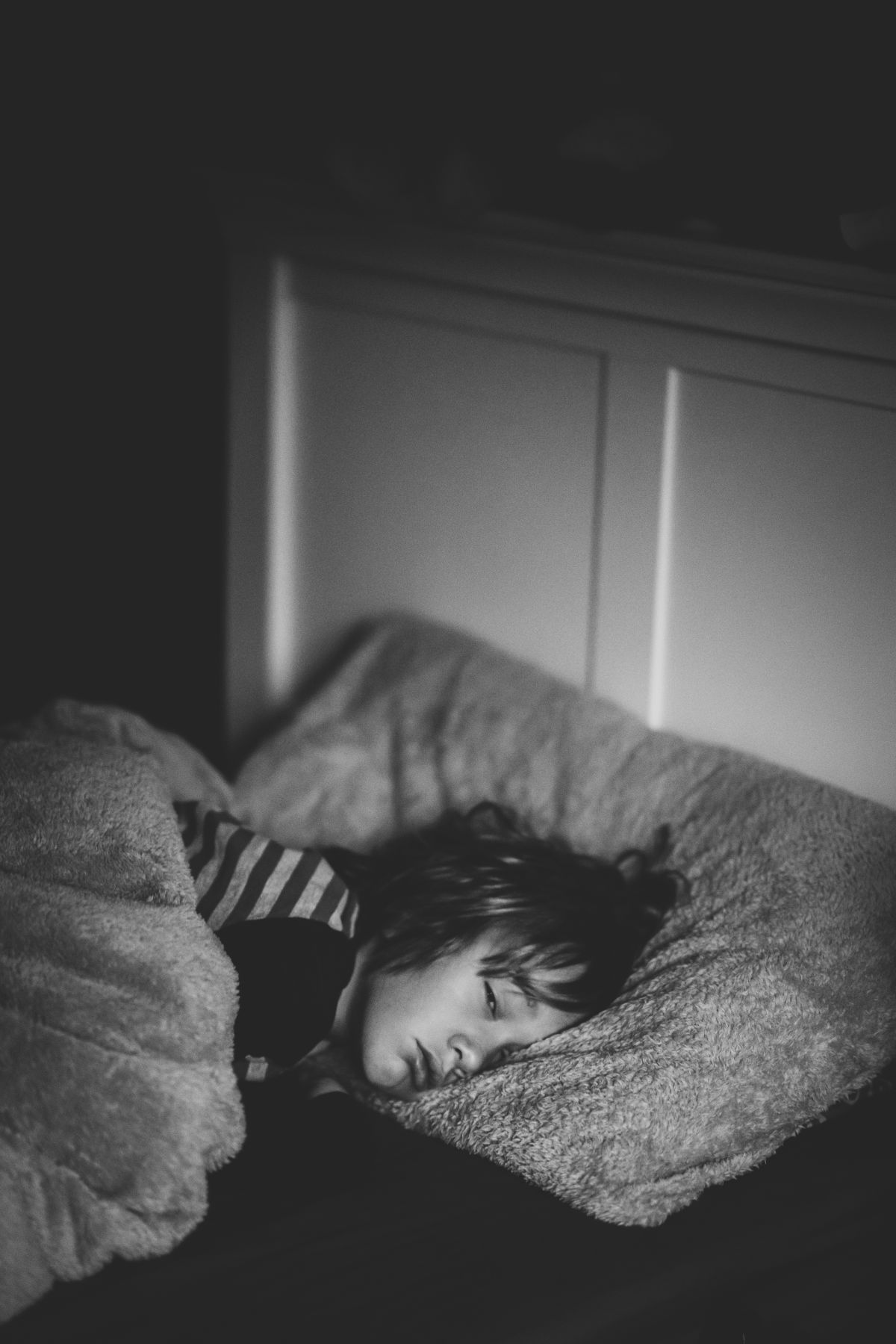
grayscale photography of kid lying on bed Photo by <a href="https://unsplash.com/@anniespratt?utm_source=RebelMouse&utm_medium=referral">Annie Spratt</a> on <a href="https://unsplash.com/?utm_source=RebelMouse&utm_medium=referral">Unsplash</a>

When they’re babies, they wake up in the night for all kinds of reasons—to eat, to practice crawling, to say hi, to wail inconsolably for no explicable reason, and so on. When they’re older, they wake up because they need to go to the bathroom or a drink of water or they’re scared. Then, when they’re much older, they suddenly stay up late and want to have deep, heart-to-heart talks at 10 p.m. Most of us expect the baby sleep deprivation stage, but there are sleep disruptions throughout a child’s entire childhood.

“When they grow older, you don’t have a private life anymore,” wrote one commenter. “They stay awake longer than you.”

“Never thought of this. The later part of the evening is my time usually,” someone responded.

“Used to be my time as well,” shared another commenter. “Since becoming a parent, my time is 4-6am. One reason why you start waking up early once you’re older, probably.”

I have a young adult, a teen and an almost-teen, and I can attest to waking up extra early simply to have uninterrupted time to myself.

You will miss being able to think clearly.
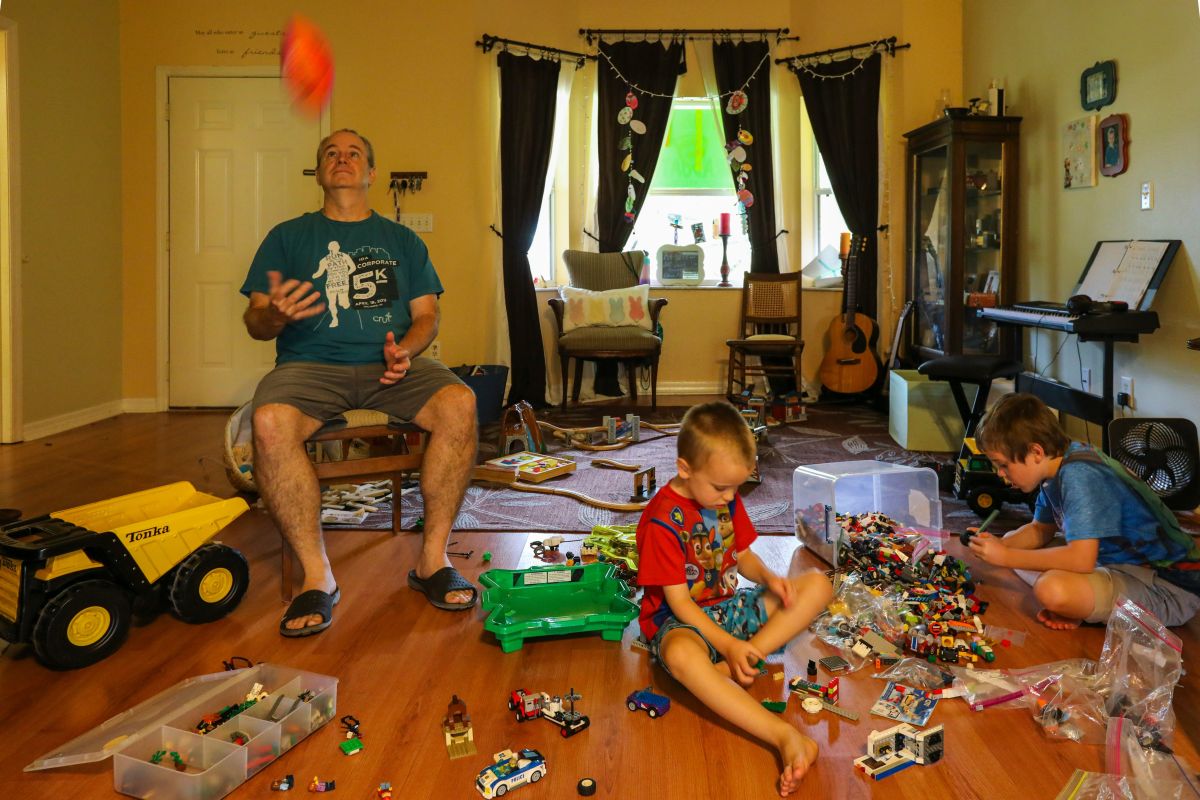
man in gray crew neck t-shirt sitting beside boy in red and white crew neck Photo by <a href="https://unsplash.com/@rocinante_11?utm_source=RebelMouse&utm_medium=referral">Mick Haupt</a> on <a href="https://unsplash.com/?utm_source=RebelMouse&utm_medium=referral">Unsplash</a>

“For me, I stopped having a chance to think anything through without interruption,” wrote a commenter. “I had a very hard time with that. I couldn’t remember anything, couldn’t make decisions, etc because every thought seemed to get interrupted.

“I’d just sit in my car alone sometimes so I could think.”

Ah, the beautiful, quiet solitude of the car. Every mother I know enjoys a good “car bath” once in a while.

“I am so glad somebody said this,” someone responded. “I was starting to worry I was getting early onset dementia, because my mind just feels like mush all the time. I can’t remember things, I start sentences and can’t finish them, I forget common words….my mind rarely gets to switch off because someone is always interacting with me or calling my name.”

Part of the brain mush is because kids need things all the time. And part of it is that you now have an entire other person’s life (multiplied by however many kids you have) to think about. Their health and well-being, their education, their emotional state, their character—it’s a lot. So much more than you can really imagine until you’re in it.

Take advantage of the middle years.

“How important the years between 7 and 12 are for building a bond (one that lasts into the teenage years),” wrote a commenter. “They are so hard to listen to at that age with all the starts and stops in conversation and they talk about the most boring thing’s BUT it is so important to listen and converse at those ages. They will grow into teenagers that will talk to you, and be fun to talk to, but only if you can get through long boring conversations about Minecraft or whatever thing they are currently into.”

Having teens and young adults, I have seen the truth of this advice play out. If you want your teens to talk to you, you have to listen well before they get to that age.

Another user shared what it meant to them when their mother did just that:

“I can remember being about 12 and wanting to share my biggest interest at the time with my mom, that being Bionicle, by reading to her all the books I had been collecting with my allowance. Sometimes she would involuntarily fall asleep, but my God she tried so hard to show an interest. I really didn’t appreciate it at the time, focused on all the times she yawned or fell asleep, but now (16 years later) we both remember it fondly as the bonding time it really was.”

And another shared just the opposite:

“My god, what an amazing mom you have. I vividly remember coming home from school around 12-13 yo, super excited to tell my mom all about my day, and she’s sitting there reading her book, as always. No problem, I’m just telling her my stories while she’s reading. Then that one time, I wondered is she actually listening? So I stopped mid-sentence and she didn’t notice. I remember my heart just sank, and after that I never told her anything ever again. I don’t think she noticed.”

Diapering a doll isn’t going to prepare you for wrangling a baby.

baby in white and black plaid shirt Photo by <a href="https://unsplash.com/@evysem?utm_source=RebelMouse&utm_medium=referral">Evelyn Semenyuk</a> on <a href="https://unsplash.com/?utm_source=RebelMouse&utm_medium=referral">Unsplash</a>

“Practicing diapers on a doll doesn’t count,” wrote one commenter. “You’re ready when you can do it on a cat.”

HA. So true. Others shared their diaper wrangling woes as well:

“My first daughter was patient and would just let us change her. My second daughter wants nothing more than to roll over and crawl away. There’s nowhere for her to go but she wants to go anyway.”

“It’s like, I am physically orders of magnitude stronger than her, how the hell does she still win?”

“My daughter has just perfected the alligator death roll technique when she doesn’t want to be changed or put pants on lmao. And because she’s 2 and a bit she laughs the whole time cause it’s hilarious.”

Don’t even get me started on trying to get an unwilling jellyfish toddler buckled into a carseat.

All parents are winging it.

“I stupidly thought once I had a child I would automatically ‘know’ how to parent,” wrote one commenter. “You’re the same dummy before and after having a child, and you realize how much your parents were winging it.”

“Leaving the hospital with that tiny fragile little being was terrifying,” wrote another. “C-section delivery so they kept us a couple days longer. Lots of help from the amazing maternity ward, to the moment you realize you and your spouse are alone and now solely responsible for keeping this little baby alive.”

“Yeah, it’s like: “We can just leave? WITH the baby? Who approved this?” added another.

“The panicked looks my husband and I exchanged the first time we were left alone with our newborn will live forever in my mind,” wrote yet another.

It really is surreal that you’re just, like, handed a newborn baby and that’s it. A whole life in your hands, and you’re supposed to just figure out what to do with it. Good luck!

The relentlessness is real.

“Nothing prepared me for the sheer ‘unrelentingness’ of parenting,” shared one parent. “Every day for many years has to be finished with a dinner/bath/bed routine that takes two hours, regardless of how tired, upset or unwell you are. Difficult enough if you’ve been at work all day, yes. But also if you’re on holidays and got a little bit sunburnt, or been to a family wedding and overeaten, or spent the day assembling Ikea furniture and are just exhausted.

“As a childless adult you could occasionally say ‘I’m just having takeaway tonight’, and flop in front of the TV until bedtime. As a parent, that’s not an option.”

This is a truth that’s hard to fathom but oh so real. Parenting never ends. You don’t ever really get a break, even when you’re lucky enough to kind of get a break. Your kids’ well-being is always on your mind, even when you’re not with them.

And it doesn’t end at 18, either. Many commenters talked about how parenting is forever. You worry about your adult kids, too, just in a different way than when they were young and you were fully responsible for raising them.

woman in black shirt sitting beside man in white t-shirt Photo by <a href="https://unsplash.com/@hillshirefarm?utm_source=RebelMouse&utm_medium=referral">Hillshire Farm</a> on <a href="https://unsplash.com/?utm_source=RebelMouse&utm_medium=referral">Unsplash</a>

This list might lead people to believe that parenting sucks, but it doesn’t. I mean, sometimes it can, but that’s true of anything in life. If you’re fortunate and put in your best effort, the joy and fulfilment of parenting hopefully outweighs the hard parts. Getting a realistic picture of what it entails—both the delights and the challenges—can help people temper their expectations and take the roller coaster of parenting as it comes.


This article originally appeared on 11.22.21

  • If you see a person and two dogs in this photo, look again. It’s an optical illusion.
    If you see a man and two dogs, look again.Photo credit: @Rainmaker1973/X, @farhadge/X

    Optical illusions are wild. The way our brains perceive what our eyes see can be way off base, even when we’re sure about what we’re looking at. Plenty of famous optical illusions have been created purposefully, from the Ames window that appears to be moving back and forth when it’s actually rotating 360 degrees, to the spiral image that makes Van Gogh’s “Starry Night” look like it’s moving.

    But sometimes optical illusions happen by accident. Those ones are even more fun because we know they aren’t a result of someone trying to trick our brains. Our brains do the tricking all by themselves.

    The popular Massimo account on X shared a photo that appears to be a person and two dogs in the snow. The more you look at it, the more you see just that—two dogs and someone who is presumably their owner. Turn the photo every which way and it’s still the same conclusion.

    That’s a person and two dogs, right?

    But there are not two dogs in the photo. There are actually three dogs in this picture. Can you see the third?

    Full confession time: I didn’t see it at first. Not even when someone explained that the “human” is actually a dog. My brain couldn’t see anything but a person with two legs, dressed all in black, with a furry hat and some kind of furry stole or jacket. My brain definitely did not see a black poodle, which is what the “person” actually is.

    Are you looking at the photo and trying to see it, totally frustrated? The big hint is that the poodle is looking toward the camera. The “hat” on the “person” is the poodle’s poofy tail, and the “scarf/stole” is the poodle’s head.

    Once you see it, it fairly clear, but for many of us, our brains did not process it until it was explicitly drawn out. This outline helps somewhat:

    As one person explained, the black fur hides the contours and shadows, so all our brains take in is the outline, which looks very much like a person facing away from us.

    People’s reactions to the optical illusion were hilarious.

    One person wrote, “10 years later: I still see two dogs and a man.”

    Another person wrote, “I agree with ChatGPT :)” and shared a screenshot of the infamous AI chatbot describing the photo as having a person in the foreground. Even when asked, “Could the ‘person’ be another dog?” ChatGPT said it’s possible, but not likely. Ha.

    One reason we love optical illusions is that they remind us just how very human we are. Unlike a machine that takes in and spits out data, our brains perceive and interpret what our senses bring in—a quality that has helped us through our evolution. But the way our brains piece things together isn’t perfect. Even ChatGPT’s response is merely a reflection of our human imperfections at perception being mirrored back at us. They say seeing is believing, but when what we interpret what we’re seeing incorrectly, we end up believing things that might not be real.

    Sure is fun to play with how our brains work, though. Also a good reminder that what we think we see, even with our own eyes, may not be an accurate picture of reality.

    This article originally appeared two years ago. It has been updated.

  • Man walks around Brooklyn after blizzard to show off the most wonderful snow creatures
    A snowman sculpture in New York City.Photo credit: Instagram/WhatIsNewYork
    ,

    Man walks around Brooklyn after blizzard to show off the most wonderful snow creatures

    “Humans at their finest. It’s freezing and they made art.”

    Art is magical because it can be found anywhere at any time. So when New Yorkers got close to three feet of snow dumped on their city, many dug deep into their creative sides. They took to the parks and contributed to building a winter wonderland of whimsical snow creatures.

    Of course, this wasn’t just any snowfall. It was a full-on blizzard causing travel bans, school and street closures, and power outages in all five New York City boroughs and the surrounding cities and states in the Northeast.

    NYC Mayor Zohran Mamdani announced an old-fashioned snow day by FaceTiming an 8th-grade student named Victoria. “So my only ask to you is that you just stay safe, stay indoors during the height of the storm,” he told her. “Once that has passed, feel free to go out and sled.”

    Artists got creative

    For many residents, the powdery, white snow became a sculpting canvas. Photographer Matthew Dean Stewart took to a park in Brooklyn to show off some of the most adorable creations. Captioning the video, “I LOVE BROOKLYN,” we first see a puppy snowman who looks not unlike a Pixar character begging for love.

    Then he moves on to a more traditional snowman, complete with an orangey pink nose that he, of course, “boops.” Another snowman has an orange hat. Yet another is just basic snowballs piled atop one another.

    Stewart also points out a detailed pyramid that someone built. “How did they even DO that? That’s pretty impressive.”

    We next see a woman on the ground stirring strawberry ice cream in a silver bowl. “She’s making ice cream in the snow!” Stewart exclaims. She gives him a spoonful to which he replies, “This is so good. This is the best day of my life.”

    Aside from traditional snowmen (giant, faceless, tiny carrot-nosed), some sculptures were clearly made by potentially professional artists. One snowperson is wrapped around a tree, complete with hair made from leaves. “It has hair! And it has a butt!” Stewart points out.

    Another is a “study” Hello Kitty snow-cat. Then we get to the duck. “It’s a duck. What else would it be? That’s like super detailed,” Stewart quips.

    Some people got incredibly creative and used trees as the actual canvas and snow as the “paint.” “That is adorable. It looks like it has hair,” he says about one. Another artist used a similar idea to “paint” a snow lizard climbing a tree.

    Perhaps coolest of all: other artists built an actual igloo on which they’ve written “The people’s igloo.” They sit inside, illuminated by a light (possibly from a smartphone!).

    It’s Stewart’s joyous giggling and earnest commentary that gives the snow creature tour that extra delightful touch. “That s–t was whimsical as f$%$,” he concludes.

    The comment section agrees. The clip already has over 265,000 likes and thousands of comments. One notes, “The fact that I know without a doubt that every single one of them was made by fully grown adults and not one actual kid was around for the making of these snowmen is hilarious.”

    Others simply marvel at the whimsy of the city. “What a display of joy!” “This is incredible – so New York!” one writes. “Humans at their finest. It’s freezing and they made art. AI could never,” said another.

    A few of the artists eventually came forward to claim their work: Dori Miller (@dori.miller) writes, “I made that lizard!” And when asked who designed the “tree hugger,” Michael Galligan (@Michael_galligan) chimed in, “That was me and Maddy Rosaler (@maddyrosaler).”

    Dazed by the igloo, one Instagrammer writes, “I’m sorry, but there aren’t enough people in these comments talking about that igloo. A WHOLE IGLOO! WHAT? Incredible.”

    Perfect conditions for snowmen

    As terrific as these snow creations are, it takes a certain temperature and snow type to make it all work—even for the most brilliant artists. A 2015 article in Smithsonian Magazine explains the science behind it, citing perfectly-named physicist Dan Snowman, who says, “Snow can be either too wet or too dry.”

    “Scientists actually classify snow based on its moisture content—the amount of free water relative to ice crystals—not to be confused with the amount of water the snow would produce if melted. Snow comes in five categories: dry (zero percent water), moist (less than 3 percent), wet (3 to 8 percent), very wet (8 to 15 percent), and slush (more than 15 percent).”

    For snowman-building weather, it’s best to have moist snow. “Dry snow is like a loose powder with particles that don’t stick together very well, while slush is too fluid to hold a shape.”

    Temperature-wise, the weather needs to be just a bit above freezing. As for the “where” of it all: “Once the raw material is on the ground, it’s time to select your snowman-building surface. Level ground is best, but asphalt absorbs and holds heat from sunlight, so avoid driveways. A flat spot near the bottom of a large hill could provide shade and keep your creation safe from direct warmth from the sun—although it may wind up as a target for sleds.”

  • Philosophy expert shares the 300-year-old rule to tell if someone is a good or bad person
    Johann Wolfgang von Goethe and a scene at a restaurant.Photo credit: via Canva/Photos and G.Meiners/Wikimedia Commons

    What makes a ‘good person’ is hard to quantify, but sometimes, you just know it when you see it. But that’s the problem, you can’t always see it. Have you ever met somebody new and wondered if they were a good person with a mischievous streak or a bad person who can turn on the charm and behave occasionally? Determining someone’s true moral character is important, especially if you start dating them or have a business relationship. It is crucial to get to the core of who they are and know whether they can be trusted.

    Popular TikTok philosopher and Substack writer Juan de Medeiros recently shared a great way to determine whether someone is good or bad. His rubric for judging someone’s moral character comes from a quote commonly attributed to Johann Wolfgang von Goethe, a German poet, playwright, novelist, and intellectual known for works like Faust and The Sorrows of Young Werther.

    How can you tell if someone is a good or a bad person?

    “Here’s a pretty good indicator that somebody is a bad person and vice versa, how you can spot a good one. And this goes back to a simple rule, a moral aphorism by Goethe in which he writes, ‘Never trust someone who is unkind to those who can do nothing for him,’” de Medeiros shared in a TikTok video with over 45,000 views.

    “Never trust someone who is unkind to those who can do nothing for him.” —Johann Wolfgang von Goethe

    De Medeiros then provided real-world ways to determine whether the person you have questions about is good or bad. “A bad person is unfriendly to strangers, to the elderly, to children, to service staff, to anybody they’re not trying to impress,” he said. At the same time, the good person treats people equally, no matter what they can do for him. They’re good for goodness sake, not to get anything out of it.

    “A good person carries grace within them and shares it freely with abundance. A good person treats other people as they would like to be treated as well. And it doesn’t matter who you are, it doesn’t matter what your status is, they will treat you and see you as their equal,” de Medeiros said.

    What is ‘The Waiter Rule’?

    Goethe’s quote echoes the common red/green flag test that many people have on dates. Sure, it’s important if your date is courteous and treats you well on the date, but you really want to watch how they interact with the server. The rule is often called “The Waiter Rule,” outlined by William Swanson. Swanson, the former chairman and CEO of Raytheon Company, wrote in his book, 33 Unwritten Rules of Management, “A person who is nice to you but rude to the waiter—or to others—is not a nice person.” Boxer Muhammad Ali is also known for saying something similar: “I don’t trust anyone who’s nice to me but rude to the waiter. Because they would treat me the same way if I were in that position.”

    Rudeness toward the waitstaff also indicates that the person isn’t very smart. It’s not wise to be rude to someone who is in charge of your meal for the night.

    Conversely, a good person is kind to others without looking for anything in return because they want to spread joy and believe that others deserve respect. You are what you do, not what you think or believe, and when someone treats others with goodness, it’s a clear indicator of the type of person they are.

    In the end, we are all a mixed bag of behaviors and attitudes, and even the most perfect of us has a devil on their shoulder telling them that it’s okay to occasionally get into a bit of mischief. However, when it comes down to determining someone’s core character, how they treat those who can do nothing for them says everything.


    This article originally appeared last year. It has been updated.

  • A man at a bar bought a rude stranger a drink and used it as a brilliant lesson about consent
    An uncomfortable woman is approached by a man at a barPhoto credit: Canva

    The situation was familiar enough to be exhausting. A man at a bar had bought a woman a drink. She didn’t want to go home with him. He apparently felt those two things were in conflict.

    “You are not going to come home with me?” he said, audibly frustrated. When she said no, he pushed back: “But I bought you a drink.” She got up and walked away.

    A TikTok user who goes by @tripptokk10 was standing nearby when this happened, already at the bar ordering his own drink. He watched the woman leave, looked at the man still standing there working through his grievance, and made a decision. He ordered two shots.

    “I slide it over to him,” he explained in his TikTok video, posted December 20, 2025. They took the shots together. Then he leaned in and made his point: “So are you going to come home with me or what?”

    The logic was the same. The conclusion was absurd. That was exactly the point.

    In the video, filmed casually at home in a robe and bonnet, he explained what he was responding to: “This one’s for the boys who think buying a woman a drink at the bar means that she should go home with you. No, it doesn’t. She doesn’t know you.”

    A man stares at a woman at a bar.
    A man stares at a woman at a bar. Photo Credit: Canva

    The same creator posted a second video about another night, different bar, same basic dynamic. This time a man had approached one of his female friends, put his hands on her shoulders without asking, and kept going despite her visibly trying to shrug him off. When she tried to walk away, he reached for her hand. The TikTok user stepped in and told him to back off.

    What happened next is the part that stayed with people. The man started apologizing, directing the apology not at the woman he’d been grabbing, but at the guy who’d intervened. “You didn’t do anything to me,” the creator told him. “You were harassing her.”

    The man’s response: “I respect you so much.”

    He described how confused and frustrated he felt in that moment. “Go apologize to her and change your behavior,” he said in the video, “because an apology without changed behavior is just a manipulation tactic.”

    That line hit harder than the shot glass moment for a lot of viewers. The dynamic he was describing, where a man harms a woman and then seeks absolution from another man rather than the person he actually hurt, is one that gets talked about in academic gender studies literature but rarely gets explained so plainly in a 60-second video in a bathrobe.

    Neither incident is complicated. Nobody got arrested, nobody threw a punch, nobody did anything that required a news alert. What spread was simpler than that: one person noticed something wrong, said something proportionate, and kept his head on straight when the whole thing got weird. Apparently that’s still worth talking about.

    This article originally appeared earlier this year.

  • Why the iconic Boston accent is disappearing as the pronunciation of ‘R’ makes a comeback
    Why the infamous Boston accent is disappearing as the pronunciation of "R" makes a comeback.Photo credit: Canva

    Accents are regional in America. Two people can be from the same state but live hours apart, resulting in wildly different accents. The same is true for Massachusetts. People living in Cambridge don’t have the same accent as those living in Boston.

    The South Boston accent is so iconic that it has captured the hearts of people who have never even been there. This is likely due to a few famous Bostonians. Mark Wahlberg and his brothers, as well as the best-friend duo of Matt Damon and Ben Affleck, are all from Boston. They’ve let their native Boston accent shine on the big screen more than once, helping cement the accent’s popularity.

    Boston, South Boston, Boston accent, regional accent decline, losing Boston accent
    Boston, Massachusetts. Photo credit: Canva

    But sadly, the endearing way Bostonians drop their “R” for the “ah” sound is fading, and fast. In a few short decades, people may not understand why someone would teasingly ask a Bostonian to say “car keys.” The famous “park the car in the Harvard Yard” line won’t hit the same. All Rs will be present and accounted for.

    Where’s the Boston accent going?

    So what’s happening with the accent that many Americans like attempting to mimic? The simple answer: humans migrate. We’ve been migrating since standing upright became a thing. Sure, we don’t migrate to follow food sources anymore, but we do follow jobs, social safety-net programs, and educational opportunities. As people from other states and countries move into Boston, and Bostonians move out, the accent becomes a casualty.

    Boston, South Boston, Boston accent, regional accent decline, losing Boston accent
    A group of people take a selfie. Photo credit: Canva

    Katherine Loftus, a native Bostonian and mom of two school-aged children, is a little sad about the accent disappearing. Her young children don’t have the iconic accent and tease her a bit for not pronouncing her Rs.

    “It might sound funny because it’s almost sort of this surface level, like, ‘what’s the big deal if your kids don’t have the accent that you have,’ but I have to admit that there’s a real sadness to the fact that they don’t have it at all,” she tells The Boston Globe. “There’s something for me that I’m very proud of that I sound like my dad, that I sound like my grandparents, that I sound like when you hear me, you know who I am.”

    According to linguist Ezra Wyschogrod, the mesmerizing South Boston accent has already reached its peak. He explains that there’s a trend toward the homogenization of American speech as people move more frequently. The City of Boston Planning Department reports that there are currently more than 100 different languages spoken in Boston. Additionally, more than 285,000 Boston residents are multilingual.

    “A lot of one’s dialect, and even one’s language, gets codified at very young ages amongst peer groups, and there are much less peer groups in Boston where you have all the kids that are all Boston kids,” Wyschogrod tells The Boston Globe. “New accents form all the time, and for all we know, whatever new mix that Boston is, there could be some new accent that everyone just starts noticing.”

    Bostonians didn’t always have the iconic accent

    It turns out the missing R is something that only started around 100 years ago. Now, that pesky consonant is returning after a brief centennial hiatus. Wyschogrod doesn’t want people to worry. No one is revoking anyone’s Boston card if they don’t drop their Rs.

    “There was this interesting period where we were R-less, and now we’re back to this R-full speech,” Wyschogrod reveals. “We were distinctly New England before that. We were distinctly New England during this R-less period, and we’re going to be distinctly New England after.”

    The South Boston accent isn’t the only one getting the boot. As people do what they’ve been doing since the dawn of time—move—dialect is evolving. Today reports that multiple studies have shown that the “Southern twang, the Texas drawl, and even the beloved Brooklynese are all slowly changing.”

    Marjorie Feinstein-Whittaker, a speech and communications consultant, explains to Today that while the Boston accent might fade, it isn’t going to disappear completely.

    “I don’t think the accent is ever going away, honestly, but I do think it’s changing,” she says. “Our lives are much more varied than they used to be.”

  • How to live more productively by understanding your distinct ‘time personality’
    A person planning with a calendar (left) and a person running late (right).Photo credit: Canva

    It’s true that we all have the same 24 hours in a day. But it’s our own personal relationship to those 24 hours that greatly determines what that day looks like.

    Time is one of those things that is both a constant in our collective reality, and yet highly subjective to the individual. It’s why one person hears “We need to be there 6:30” and translates that to “We need to be out the door in fifteen minutes,” and another person translates it as “Oh, I have plenty of time to change my clothes, walk the dogs, listen to a podcast, and clean out that junk drawer!” And of course, these two individuals will be spouses. It is universal law. 

    It would seem that—much like how knowing whether you’re an introvert, extrovert, or somewhere in between can help you navigate social settings—knowing your MO when it comes to time management can really help make your day flow a lot smoother. 

    That’s where the four “time personalities” come in. 

    In an article for Verywell Mind, experts Kristin Anderson, LCSW, and Dr. Ryan Sultan, explained that most of us fall somewhere on a spectrum between “very rigid” and “very flexible.” There are, of course, various factors that dictate why we might fall into a certain spot—including neurodiversity, age, and other aspects of our overall personality. But regardless, knowing the gifts and challenges of our go-to time management settings can greatly affect how we “function.”

    See which one below seems to resonate the most. 

    The 4 Time Personalities

    1. The Time Optimist

      The never-ending mantra, or perhaps the “famous last words,” of this personality is “I’ve got plenty of time!” regardless of what the clock says.

      Because of this, Sultan says time optimists “don’t really feel pressure under a time crunch.” They truly believe they can fit multiple tasks into a short amount of time and don’t easily account for potential delays, which leads to chronic tardiness. 

      “They’re ones who leave for a dinner reservation with just enough time to get there, as long as there’s no traffic and they hit every green light,” said Sultan. 

      Folks who consider themselves time optimists might benefit from exploring the “double it rule,” which has you automatically double the amount of time you think it’ll take to get somewhere or complete a task. 

      2. Time Anxious

      Unlike time optimists, “time anxious” personalities feel an enormous amount of pressure, assuming “everything that can go wrong, will go wrong (e.g., traffic, delays, getting lost on the way).” Therefore, they attempt to ease this tension by showing up to things incredibly early. 

      Dealing with time anxiety involves many of the same tools to handle everyday anxiety, such as grounding techniques (5-4-3-2-1 technique, deep breathing), cognitive restructuring (challenging perfectionism, setting realistic goals), and structured planning (using calendars/apps, setting “worry time”). These strategies help shift focus from the future to the present, reducing the fear of wasted time. And maybe, just maybe, the time anxious can experiment with being fashionably late to low-pressure situations. 

      3. Time Bender

      For time benders, the whole concept of time is merely subjective. Where time optimists overestimate what they can accomplish within a certain amount of time, time benders create entirely different time rules for themselves. “Being 10 minutes late basically counts as on time,” Anderson uses as an example. 

      These are the curious, creative souls who thrive under pressure and easily lose track of time when they reach a flow state, or bounce from inspiring task to inspiring task.

      To help curb time-bending tendencies, a good option could be the “Pomodoro Technique,” which has you working in focused, 25-minute bursts followed by short breaks to maintain high energy and concentration. 

      “Time blindness” might sound very close to “time optimism” and “time bending,” but the former is associated with an actual inability to perceive the passage of time. That’s why Anderson and Sultan explained that this category is frequently found in those with ADHD or executive function issues.  

      4. Time Blind

      “It’s not that these folks don’t care about being late or making other people wait,” said Anderson. “Without external reminders or cues, it’s easy for them to lose track of how long things take, which makes sticking to a schedule more challenging.”

      Sultan added, “Their brains actually have a difficult time registering and processing temporal information, causing impairments in working memory, executive functioning, and temporal discounting.” 

      Though time blindness might be more deeply ingrained than the other three personalities, there are several proven tools that can help—from simple, tried-and-true methods like visual/audio timers (think hourglasses and analog clocks) to apps designed to help strengthen time estimation. And of course, these tools aren’t exclusively beneficial to those with bona fide time blindness. Optimists and benders can try them out as well. 

      Once you better understand how you uniquely navigate time, you’re better able to (a) incorporate strategies that help you work within your limitations and (b) give yourself a little grace. Perhaps that last part is most important.

    1. An Eastern European asked Americans why they’re so ‘nice and cordial.’ The replies were totally wholesome.
      Americans are considered friendly and cordial by Europeans.Photo credit: Canva

      Europeans have always had hot takes on Americans and American culture. From portion sizes to garbage disposals to widely available air conditioning, there are plenty of things America has to offer that Europe just doesn’t.

      And when it comes to demeanor, it’s hard for Europeans to deny that Americans have a warmer presence. A 2025 survey by Upgraded Points asked 2,200 Europeans from 22 different countries for their opinions on Americans. In it, 64% reported that they found Americans friendly.

      On Reddit, an Eastern European who experienced American friendliness firsthand asked Americans why they are “nice and cordial.”

      An Eastern European’s take on Americans

      The Eastern European explained that they had been living in the United States for a few years, and shared what most interactions with Americans have been like.

      “I’ve noticed that common courtesies are much more, well, common, here in the US,” they wrote. “Examples like small talk by cashiers, moving men, etc. Even most people make witty responses, like they’re actually listening to what I said. I’ve said a few times, ‘Oh, I’m just watching Netflix over the weekend.’ And they’ll mention or recommend shows they’ve watched.”

      They went on to explain that it happens often and, seemingly, from a place of authenticity.

      @maraleebell

      Replying to @Tea Time I 100% get why some people say American friendliness feels fake 😨 … and why others say it’s real!

      ♬ original sound – Maralee Bell

      “They also always ask how I am, asking about my weekend plans, holding open the door for several people, and more,” they shared. “It just seems ingrained from an early age. And a lot of it seems genuine, very rarely forced.”

      The post ended, “I’ve just found this so refreshing as someone who’s from a region in the world where people don’t even make eye contact with you. This is seriously an underrated part of American culture in my opinion.”

      Americans respond

      Americans shared their wholesome replies as to why they are genuinely nice and cordial:

      “It’s fun to be nice to people, because it makes you feel happier inside.”

      “I dunno. Just how I was raised. I find it difficult to not be nice to strangers cause like why do I want to cause trouble and make a scene? All it does is hinder my day and cause more issues. Takes more effort to be mean than to just.. Not be.”

      “I read once that cultures with big melting pots of ethnicities (USA, Brazil) tend to be more outwardly friendly with smiles and body language as there were large portions of times when the country was largely immigrants that wouldn’t understand each others language so they’d smile at strangers because they couldn’t speak their language, and then that remained embedded in the culture. It was a convincing argument.”

      “I mean… another way to look at it is, ‘why wouldn’t you be?’ An ex-girlfriend of mine once said, ‘if you can’t find the joy in the small things in life, you’ll never be happy with any other successes.’ So when you meet someone, ask about them, smile, gas them up, make them happy. Those endorphins are contagious.”

      “Cordiality is how a nation of immigrants helps create social cohesion. Cordiality is a public practice of democracy. Cordiality is an implicit way of acknowledging equal standing under the law. We will see how long it lasts now.”

      “Yeah, I think that equality is such an American value that we have it engrained to smile and be cordial to strangers as a way of affirming a lack of class boundaries. I’ve spent lots of time with people from caste/servant/enormous-poverty-divide countries lately and some details in lack of respect to strangers have been really astoundingly off-putting.”

      “Because it costs nothing and makes people happy. I didn’t know why this is an American thing, but I particularly enjoy bullsh*t smalltalk and my German wife thinks I’m insane.”

    2. Brazilian pianist covers Guns N’ Roses with the weirdest instrument of all: rubber chickens
      Rubber chickens are an underrated instrument.Photo credit: @lordvinheteiro on TikTok

      There are many ways to pay tribute to a music artist through a cover of one of their songs. Some honor their inspiration by playing their hit song in a different genre of music. Others cover the song through different instrumentation or key changes. Then there’s the guy who performs his cover with rubber chickens.

      The professional pianist known as Lord Vinheteiro has gotten attention on TikTok by performing Guns N’ Roses’ song “Sweet Child O’ Mine.” Only, instead of the vocal stylings of Axl Rose, Vinheteiro sings the song through the squeaky voices of rubber chickens of varying sizes. And he nails it.

      @lordvinheteiro

      Sweet Child O’ Mine – Guns N’Roses sweetchildomine gunsnroses rubberchickens chickens chicken vinheteiro lordvinheteiro

      ♬ som original – Lord Vinheteiro – Lord Vinheteiro

      Commenters were equal parts impressed and amused:

      “How does one tune a rubber chicken?”

      “Next year’s Super Bowl show! UNRIVALED!!!”

      “If you close your eyes, it sounds just like Axl Rose.”

      “This is what the internet was invented for.”

      “I don’t care what y’all say… THIS IS TALENT.”

      “Simply awesome, Maestro!”

      “As a middle school science teacher would you mind if I showed this video to my students? We’re studying sound waves and this is a perfect example of frequency and pitch.”

      “Needed this smile. Thank you.”

      “Clucking brilliant.”

      Who is this rubber chicken maestro?

      Lord Vinheteiro, the professional name of Brazilian musician Fabrício André Bernard Di Paolo, has entertained the Internet since 2008. He gained attention through his expert piano skills—where he’s playing theme songs from cartoons or playing the piano at a distance with strings. All the while, Vinheteiro adds to the absurdity by looking directly into the camera with an expressionless face.

      Prior to his career as a YouTube content creator and music teacher, Paolo worked in construction. His videos grew in popularity in his native Brazil before gaining traction worldwide. Until recently, he showcased his classical music prowess by playing video game themes and other pop-culture favorites. In 2025, he began expanding his musical talent by incorporating rubber chickens into his content.

      While still showcasing his impressive piano skills, he frequently shows off his rubber chicken singing abilities using chickens of various sizes. Impressively, Paolo is able to hit the proper tone and pitch with expert grip and timing. This feat has earned him millions of views on rubber chicken versions of a wide variety of songs, from System of a Down’s “Chop Suey!” to Queen’s “Bohemian Rhapsody,” and even the “Imperial March” theme from Star Wars.

      If you are amused and fascinated by Lord Vinheteiro’s work, check out his social media for more. It may be piano and rubber chickens for now, but it’ll be interesting to see which instrument he masters next.

    Culture

    Why the iconic Boston accent is disappearing as the pronunciation of ‘R’ makes a comeback

    Animals

    A baby monkey rejected by his mom carries a stuffed animal for comfort. People can’t look away.

    Pets

    Obese cat amasses fan club on his weight loss journey as he cleverly tries to avoid working out

    Natural Wonder

    Marshmallow root is a natural remedy that can help stop coughs quickly