Tags
More for You
-
A safe, stable home can change lives for the better. Here’s how Habitat for Humanity wants to make that possible for everyone.
Better health, better jobs, and a brighter future all start with access to a safe, affordable home.
A single door can open up a world of endless possibilities. For homeowners, the front door of their house is a gateway to financial stability, job security, and better health. Yet for many, that door remains closed. Due to the rising costs of housing, 1 in 3 people around the world wake up without the security of safe, affordable housing.
Since 1976, Habitat for Humanity has made it their mission to unlock and open the door to opportunity for families everywhere, and their efforts have paid off in a big way. Through their work over the past 50 years, more than 65 million people have gained access to new or improved housing, and the movement continues to gain momentum. Since 2011 alone, Habitat for Humanity has expanded access to affordable housing by a hundredfold.
A world where everyone has access to a decent home is becoming a reality, but there’s still much to do. As they celebrate 50 years of building, Habitat for Humanity is inviting people of all backgrounds and talents to be part of what comes next through Let’s Open the Door, a global campaign that builds on this momentum and encourages people everywhere to help expand access to safe, affordable housing for those who need it most. Here’s how the foundation to a better world starts with housing, and how everyone can pitch in to make it happen.
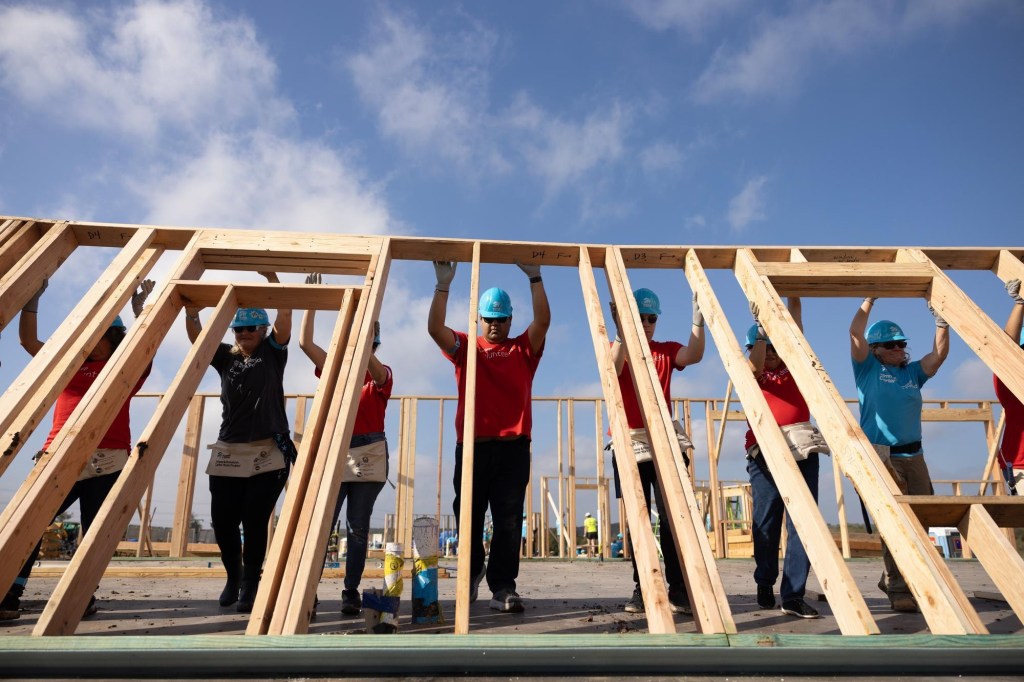
Volunteers raise a wall for the framework of a new home during the first day of building at Habitat for Humanity’s 2025 Carter Work Project. Globally, almost 3 billion people, including 1 in 6 U.S. families, struggle with high costs and other challenges related to housing. A crisis in itself, this also creates larger problems that affect families and communities in unexpected ways. People who lack affordable, stable housing are also more likely to experience financial hardship in other areas of their lives, since a larger share of their income often goes toward rent, utilities, and frequent moves. They are also more likely to experience health problems due to chronic stress or environmental factors, such as mold. Housing insecurity also goes hand-in-hand with unstable employment, since people may need to move further from their jobs or switch jobs altogether to offset the cost of housing.
Affordable homeownership creates a stable foundation for families to thrive, reducing stress and increasing the likelihood for good health and stable employment. Habitat for Humanity builds and repairs homes with individual families, but it also strengthens entire communities as well. The MicroBuild® Initiative, for example, strengthens communities by increasing access to loans for low-income families seeking to build or repair their homes. Habitat ReStore locations provide affordable appliances and building materials to local communities, in addition to creating job and volunteer opportunities that support neighborhood growth.
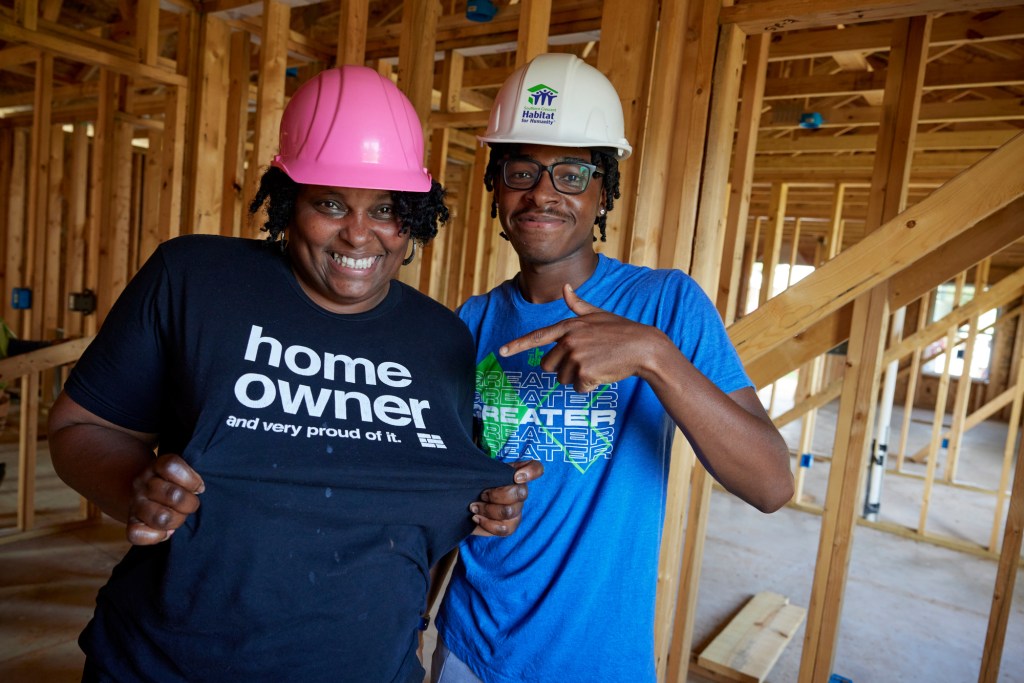
Marsha and her son pose for a photo while building their future home with Southern Crescent Habitat for Humanity in Georgia. Everyone can play a part in the fight for housing equity and the pursuit of a better world. Over the past 50 years, Habitat for Humanity has become a leader in global housing thanks to an engaged network of volunteers—but you don’t need to be skilled with a hammer to make a meaningful impact. Building an equitable future means calling on a wide range of people and talents.
Here’s how you can get involved in the global housing movement:- Speaking up on social media about the growing housing crisis
- Volunteering on a Habitat for Humanity build in your local community
- Travel and build with Habitat in the U.S. or in one of 60+ countries where we work around the globe
- Join the Let’s Open the Door movement and, when you donate, you can create your own personalized door
- Shop or donate at your local Habitat ReStore
Every action, big and small, drives a global movement toward a better future. A safe home unlocks opportunity for families and communities alike, but it’s volunteers and other supporters, working together with a shared vision, who can open the door for everyone.
Visit habitat.org/open-door to learn more and get involved today.
-
Long’uro the baby elephant lost his trunk in a vicious attack. He’s now thriving in the best way.
“Long’uro’s story is one of courage.”
An elephant’s trunk is more than just its defining physical trait. They use it to take in nutrition, to snorkel while swimming, to spray water or dust on their bodies for hygiene and protection, and to communicate, lifting it high to show a perceived threat, or intertwining it with another to display affection.
So you can imagine the profound loss that might have been experienced by Long’uro, the elephant calf left with only a third of his trunk after a hyena attack. And yet, his story is one of hope, not just tragedy.
A devastating start: a calf loses most of his trunk
About six years ago, the Reteti Elephant Sanctuary received a call that a gravely injured baby elephant was stuck in a nearby well, traumatized not only by the harrowing attack, but also by the abandonment of his mother.
A fight for survival that almost didn’t happen
As vets rushed to the scene, poor Long’uro’s situation looked dire. He could barely breathe and had lost a lot of blood. For a moment, euthanasia seemed to be the only option.
Yet, the team saw the calf fighting for his life and decided they wouldn’t give up hope either. So, they airlifted him to a place where they could properly care for him. He was named Long’uro, which loosely translates to “he who has been cut” in Samburu.
The caregiver who changed everything
After Long’uro underwent surgery, Mary Lengees, one of Reteti’s elephant keepers, was charged with keeping his wounds clean and managing his follow-up vet visits. But she ended up providing so much more than that. As Long’uro struggled to navigate the world without his trunk, Lengees provided constant comfort, patience, and care. Because of this, Long’uro’s spirits never dwindled, and the two developed a powerful bond.

Mary Lengees and baby Long’uro Reteti.org Then, a few more baby elephants joined the nursery, providing Long’uro with his own set of friends. Pretty soon, his “joyful, boisterous” personality began to come alive, the Reteti website recalled.
Thriving against the odds
Six years later, and sweet Long’uro has figured out life on his own terms. He’s able to feed and clean himself, has grown big and strong, and is well-received in his herd. And Reteti credits him for all of it.
“His unrivalled resilience in his fight for survival pulled him through…His life represents so much…but ultimately, Long’uro’s story is one of courage.”
A story that’s still moving people today
Recently, Nature on PBS posted a video where Lengees recalled Long’uro’s story, visibly getting teary as she did. This, in turn, left thousands completely moved.
“I’m so glad that the baby was saved and there are caring people looking out for him. You can tell the woman is very emotional about it. She’s an angel! I might be on the other side of the world, but my heart breaks, and my tears fall just the same.”
“He saw she was crying and sad, remembering his story, and came over to give her snuggles. What a sweet pair.”
“What a compassionate young woman. It’s evident that she cares deeply for the elephant and his plight.”
How you can help Long’uro’s next chapter
In celebration of Long’uro’s “6-year rescueversary,” Reteti is currently trying to raise $60,000 to support his care, which will ultimately help him return to the wild along with his herd. If you’d like to contribute to this next chapter, you can do so here.
-
What’s the average family of four spending on groceries these days?
How much do you spend compared to the average American?
For many, the biggest pain point in American life since the COVID-19 pandemic has been the rising cost of everyday necessities: rent, gas, and groceries. There’s been a perfect storm of government spending, tariffs, wars, labor disruptions, and supply-chain problems that have made costs rise with no end in sight.
It’s easy for the average American to look at their bank balance just a week after payday and wonder where all the money went and whether everyone else is feeling the same budget crunch. It’s normal to question whether you are overpaying for groceries or doing what’s necessary to get by.

Prices are going up. Photo credit: Canva How much does the average American spend on groceries?
A recent report by GroceriesTracker found that the average American grocery bill for a family of four is about $1,430, with bills ranging from $950 to $1,760. It arrived at these numbers using the U.S. Department of Agriculture’s official food plan data, which has four tiers of grocery shoppers, ranging from “thrifty” to “liberal.” The average number chosen by GroceriesTracker reflects how much the average American family spends on the moderate tier.
Of course, these numbers can fluctuate wildly based on where you live, whether you’re in the most expensive state, Hawaii, or the most affordable, Mississippi. It also depends on where you shop, whether it’s at a grocery outlet or an organic store. Families with teenagers are also going to spend much more on food than those with kids in elementary school.
Regardless, your grocery budget has probably steadily (and sometimes rapidly) increased since 2017.
Will inflation end anytime soon?
Unfortunately, trends suggest we will probably never return to 2020 food costs, but inflation should gradually decline to 2 to 2.5 percent over the next year. In simple English, things are going to get more expensive, but not as rapidly as before. A lot of this could change depending on the war in the Middle East, which could drive up transportation and energy costs, leading to more expensive items at the checkout aisle.

A man comparing prices. Photo credit: Canva How to lower your grocery bills
1. Plan meals before shopping
The USDA says that planning meals helps you save money and choose healthy options. Also, knowing what you need ahead of time can help you avoid overspending.
2. Make a simple list
When you make a grocery list and stick to it, you will be less likely to overspend on impulse buys that you probably don’t need.
3. Use unit pricing to get the best deal
When comparing products, look at the shelf tag below each product. Take a look at the price per ounce, per pound, or per count to get the most bang for your buck. This will tell you whether buying the smaller or larger box saves you the most money.
4. Clip coupons, sign up for loyalty programs
If you’re new to couponing, a great place to start is with digital apps for your local supermarket. There are also plenty of online coupon databases that aggregate coupons. Plus, don’t forget to check your mail and local newspapers for deals in your area.
5. Buy in bulk
With a little pre-planning, you can save around 27% by buying products such as frozen meats, canned goods, and toiletries in bulk at your local warehouse store.
-
Comedian nails the differences in how each generation arrives at someone’s home
British comedian Jake Lambert went viral for his breakdown of how each generation shows up at someone’s house
There’s no doubt that there are contrasts between the generations, as baby boomers, Gen X, millennials and Gen Z see and experience the world quite differently. While generation gaps have always existed, the tech age has widened those gaps in big ways, which sometimes creates challenges but often results in hilarity.
For instance, watching a Gen Zer try to figure out how to use a rotary phone is pure entertainment. The way emojis are used and interpreted varies vastly by age, making for some chuckle-worthy communication mishaps. Slang terms can be hard to keep up with the older you get, but they can also be manipulated by savvy elders to great comedic effect.
And now, comedian Jake Lambert compared how the different generations arrive at someone’s house in a viral video that’s been viewed millions of times.
Here’s how he describes each generation
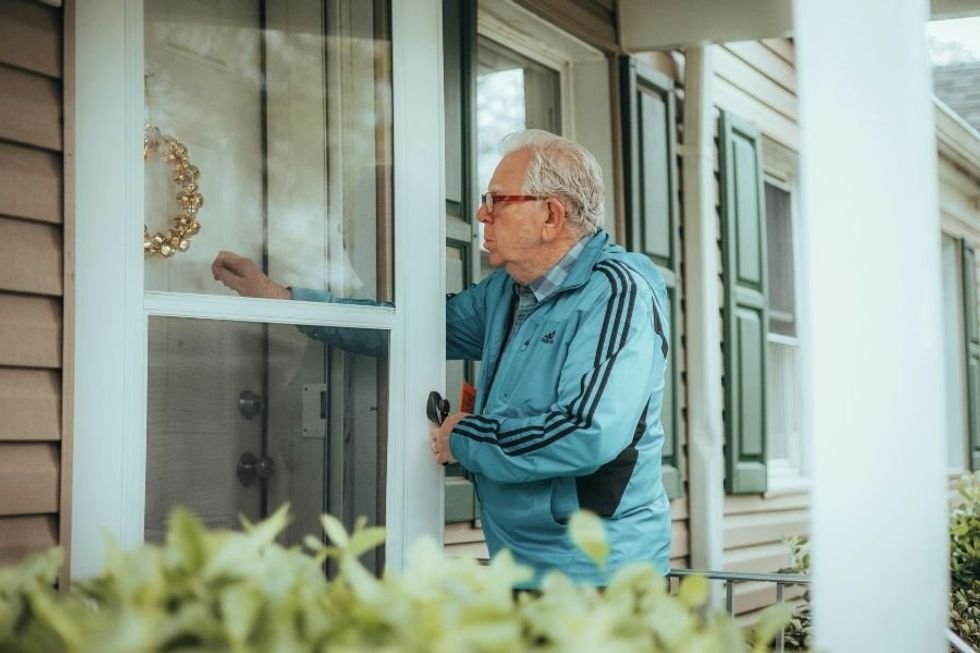
“You’ve basically got boomers who will turn up completely unannounced any time from about 7:00 in the morning and they will knock on your door just slightly louder than the police using a battering ram carrying out a house raid,” Lambert begins.
“And then you’ve got Gen X. They would have made the plans well in advance, and they would’ve also checked in a couple of days before just to make sure the plans are definitely still happening,” he coninues. “You see, Gen X is the forgotten generation and they’re so scarred by this title they would’ve assumed that you’d forgotten not only about the plans but about their very existence.”
“Millennials will have hoped that the plans would’ve been canceled. There’s no reason that a millennial will ever actually want to come to your house,” he continues. “They will arrive late, but they will text you to let you know they’re on their way, just as they’re about to get into the shower. And a millennial will never knock on your door. You’ll just get a text either saying ‘here’ or ‘outside,’ and that’s your cue to go and let them in.”
“Similarly, Gen Z will never actually knock,” he concludes. “But the chances are they won’t have to, as they would have been documenting the entire journey from their house to yours, maybe even on FaceTime using this angle [camera facing directly up at the chin] as they go along for some reason. Either that or they’ll just send a picture of your front door or a selfie of them outside it. And again, just like the millennial, that’s your cue to go and rescue them from the outside world.”
The comments were laughing at themselves
People feel alternately seen, attacked and validated by Lambert’s assessments, with the most common response being “accurate.”
“I‘m a millennial, my husband GenX. Scarily accurate! 😂“
“Described this millennial to a T.”
“This is surprisingly accurate 😂 I laughed slightly louder than the police using a battering ram…”
“Sooo accurate…guilty of the lateness and ‘here’ text 🙃”
“I must admit I’m a millennial. But knocking on the door feels so aggressive, uknow? 😅😇”
“Millennial texting to say almost there but just started getting dressed to go out. Why do we do this? It’s not intentional, at least not for me.”
“Honestly your observations are just brilliant! GenX-er here!”
“The Gen Z angle omg. 😂😂”
Naturally there are some people who don’t resonate with their generation’s description, but there are exceptions to every rule and some people will never fit a stereotype. However, judging by the wave of affirmative responses, Lambert has nailed the generational generalities across the board—and done so in a way that allows us all to laugh at ourselves.
You can follow Jake Lambert on Instagram.
This article originally appeared two years ago. It has been updated.
-
5 ways people with perpetually tidy homes see things differently than the rest of us
Messy people have more things than places. Neat people have more places than things.
Confession: I am not a neat freak, but I’ve always aspired to be one. I love neat and tidy spaces and envy those who have a natural knack for keeping their homes perpetually guest-ready. Because I live in a normal-messy home, I appreciate it when people say “No one’s house is tidy all the time!” but I also know it’s not true. There are people with always-tidy houses. I personally know multiple people whose homes never, ever devolve into cluttered chaos, whose kitchen sinks are always free of dishes, whose tables are never cluttered with stuff and whose master bedrooms look like hotel rooms.
Knowing that it is possible, I’ve spent years observing my naturally neat friends and family to understand what gives them the seemingly superhuman ability to keep their homes clean 24/7. As one might assume, some of it comes down to a fastidiousness and rigid adherence to routines that some of us simply do not possess. Some of it has to do with how often people are home and how much their home actually gets used. However, those things aside, I’ve figured out a handful of “secrets” in the form of minor habits and mindsets that we messier folks who yearn to be neater can glean from the naturally tidy.
Messy people think of ‘cleaning up’ as a separate task
Neat people see it as an inherent part of every activity.
Though it’s largely unconscious, we all have ways of thinking through completing any activity, from the first step to the last step. Take eating, for example. For a naturally messier person, “eating” starts with preparing the food and ends with swallowing your last bite. Cleaning up is not an inherent part of the eating process—it’s seen as something separate, an activity that has its own beginning and end, its own time frame, its own energy expenditure, etc.
For a naturally neat person, however, eating means preparing the food, eating the food, and then cleaning up whatever mess you made. That’s the whole cycle of eating. When you see cleaning up as part of the eating process, eating doesn’t “end” until the dishes are finished and the kitchen is clean. Without cleaning up, the eating activity is simply incomplete.
For some people, this sounds like a “duh” revelation. For some of us, it’s a life-changing mindset shift.
Messy folks tend to overestimate how much time cleanup takes
Neat people don’t
Struggling to accurately estimate how much time a task will take is called “time blindness,” and it’s a common ADHD trait. But even those of us without ADHD can misjudge how long a task will take and form habits around our erroneous assumptions or perceptions.
For instance, I used to put off unloading the dishwasher because it seemed like a huge chore. All those dishes having to go to all those different cabinets—surely that was something that took a significant chunk of time to do. My brain had it labeled as a “big task” and therefore something I needed to carve out time for.
Then I timed myself doing it one day. Not rushing at all, just casually unloading a full dishwasher. It took less than 3 minutes, which was a fraction of the amount of time my brain had assigned to the task. Did I feel silly having subconsciously made a mountain out of a molehill? Yes. Did finding out it only took 3 minutes change how I viewed that chore and make it so I didn’t procrastinate it anymore? Also yes.
For someone who is a little messy, in the future, they can budget time for the entire task. It probably takes around an hour and 10 minutes to cook a meal for a family and eat it. Loading the dishwasher only takes about 10 minutes at most, so budget an hour and 20 minutes instead of an hour and ten.
Neat people don’t put off small cleaning/tidying tasks that they know only take a minute or two. Messy people can utilize timers to help them figure out what those are, because surprisingly, most tasks don’t take as long as you think they will.
Messy people think of cleaning as all or nothing
Neat people utilize tiny time chunks for mini maintenance
A messy person will pop something in the microwave for two minutes and then zone out or stare at it while it cooks. A neat person will pop something in the microwave and then use those two minutes to wipe down the counter, unload the dishwasher, or sweep the kitchen floor. They’ll fold laundry while watching a show and go put it away during a commercial break. They utilize small snippets of time to do little cleaning tasks, which all add up to maintaining a neat and tidy space without having to take big chunks of time to organize or clean.
Think of it as two minutes here and there, when there is nothing else to do, instead of taking up the entire morning on Saturday, when you could be out having fun.
Messier folks tend to overlook little messes here and there, so they build up until suddenly there’s an overwhelming mess to deal with. It helps to think of cleaning and tidying not as one big chore that is either done or not done, but rather as a conglomeration of tiny tasks that can be done any time you have a minute or two. Eventually, using tiny time chunks to mini-clean becomes habitual.
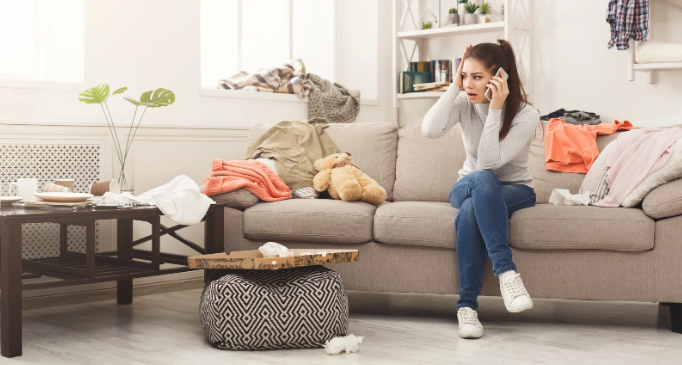
Woman in a messy room talking on the phone. Photo credit: Canva Mess makers set things down
Neat people put things back
“Clean up as you go” is a mantra to internalize if you aspire to have a perpetually neat home. If a neat person is baking, they will take out an ingredient, measure what they need, then put that ingredient back where they got it. They do this every time, so when the baked good gets put in the oven, all that’s left to do is clean the dishes they used in prep (which is, of course, seen as an inherent part of the baking task). And this isn’t just in the kitchen. They do the same thing with their toiletries in the bathroom, their clothes when choosing an outfit, etc. Everything gets put back rather than put down, preventing a mess from the get go.
A woman upset about her messy house. Photo credit: Canva
If a messy person is baking, they’ll take out an ingredient, measure what they need, and then set the ingredient down on the counter. Once the baked good gets put in the oven, there’s then a whole counter full of ingredients and dish mess to clean up. And because “cleaning up” is seen as a separate task, there’s a gearing up of energy that’s required as well as a separate time commitment, which makes procrastination more likely.
The key here is to recognize that putting things back where you got them really doesn’t take any more time than setting them down but saves tons of time and work later.
Messy people have more things than places
Neat people have more places than things
“A place for everything and everything in its place” is a mantra that neat people live by religiously and messy folks may not even realize is possible. If a neat person doesn’t have a place for something, they find one or make one by getting rid of something else. If a messy person doesn’t have a place for something, it sits on a table or countertop or entryway or some other placeholder for an indeterminate amount of time, often moving from surface to surface before eventually being shoved in a drawer or closet to be dealt with later.
Part of living like a neat person is being honest with yourself about the space you have and embracing inflow and outflow of things that enables you to live comfortably in that space. Messy people almost always have too much stuff for their space and therefore not enough places to put things. (This is true no matter how large or small your home is, sorry to say.) Neat people keep things pared down so that everything can have its own place. Regular purging of excess stuff and not holding onto things “just in case” is a huge key to staying neat and tidy.
I can’t say that I perfectly implement all of these things all the time, but I can say that being aware of these mindsets and habits and attempting to live more like my “neat freak” loved ones has made a big difference in my home and how I feel about living in it.
This article originally appeared two years ago. It has been updated.
-
Dad follows his daughter during her 5 a.m. jog for the sweetest reasons
“I have whatever the opposite of daddy issues are.”
A woman going out on an early morning run is showing everyone what being a good father looks like. Social media fitness influencer Orey shared a TikTok praising her father’s protection and motivation to achieve her goals.
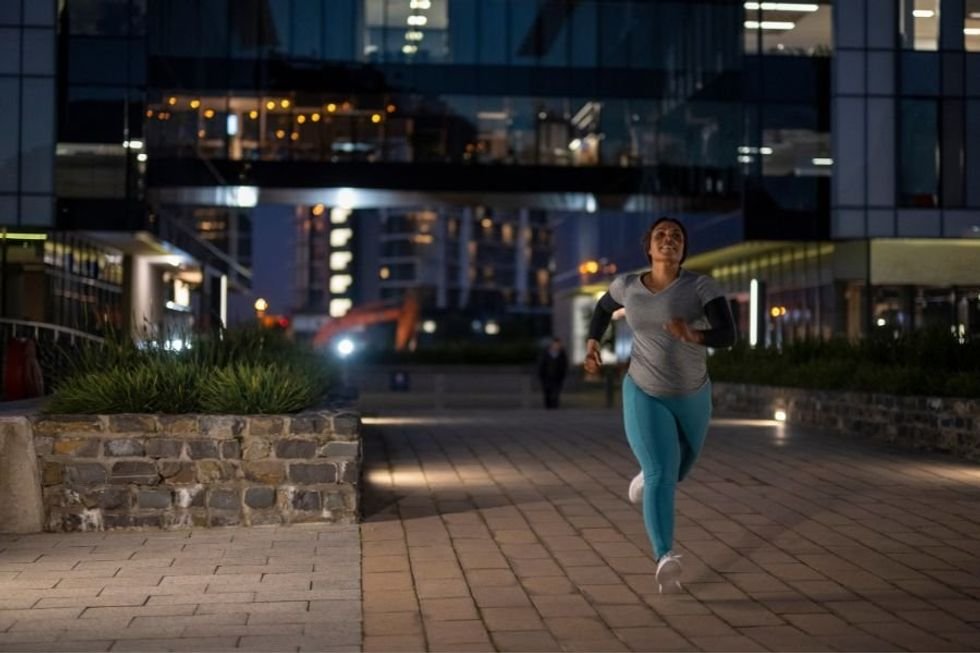
“I have whatever the opposite of daddy issues are because my dad drives behind me during my 5 A.M. runs to make sure that I’m safe,” said Orey in the video’s caption. In the video, Orey gives her dad a fist bump through the open driver’s seat window before running off into the dark streets as her dad monitors her from his car.
Why early morning runs can be dangerous for women
Most outdoor joggers prefer to get their run in early in the morning to avoid traffic and pedestrians that would clog up city streets. It’s also a more comfortable time to run for people who live in warmer climates that get significantly hotter during the day, such as in Los Angeles where Orey resides. Unfortunately, though, such runs aren’t always safe.
Running outdoors when it’s dark can be risky, especially for women. There have been several news stories over the years about primarily female runners being harassed or assaulted while alone on the streets or in a park. While there should be a conversation on how to permanently ensure the safety of the public while they exercise, it’s currently necessary to actively find ways to protect yourself. Or, in Orey’s case, reflect upon how special it is that someone steps up for you.
What other people shared in the comments
The commenters on Orey’s TikTok shared similar stories from their parents:
“My dad finds parking in the Bronx for me and moves his car when I come home. ”
“I didn’t have my dad, but my mom would follow me to work when I would have to be there at 5 A.M. to open and stay until another employee showed up.”
“My dad would walk to the beach a block from our house at 2 A.M. after his night shift to check on me on my night ‘walk’ and walk me home…I was in my 30s. ”
Orey has built a following on TikTok by sharing relatable and accessible videos of her fitness journey, especially with running:
Parents often protect their children through limitations, even when they’re grown. They might say, “Don’t do that at night,” or “That’s too dangerous of a commute,” or “You could get hurt; best to forget about it.” While well-intentioned, that approach can create a boundary in the relationship and a lack of trust in an offspring’s ability to be independent. If Orey’s dad had that mentality, it could create resentment from Orey and he would still be worried for her if she decided to run before dawn.
Why participation beats protection
Instead, Orey’s dad did something great parents do—he participated. It’s special when anyone inconveniences themselves to support their loved one’s goals. If he was going to feel restless knowing that his daughter was going to run at 5 a.m., might as well go along with her, right?
Supportive and participatory phrases might sound like, “Let me drive you there and back,” “Let’s make a plan together in case the worst happens,” or “Can I do it with you?” This approach not only creates peace of mind for the parent but also strengthens the bond with the child as a wonderful side benefit. And it isn’t just applicable for parents and their kids, but also between spouses, partners, and friends, too. You not only help keep them safe as they pursue their goals but are actively there when they achieve them.
It’s an unfortunate reality that safety is never 100% guaranteed, but providing protection in tandem with support creates something special between loved ones. That alone is worth an early alarm each morning.
This article originally appeared two years ago. It has been updated.
-
Mom blasted for not wanting to go to her kid’s parent-teacher conference. Is she in the wrong?
This was a surprisingly heated debate.
Parent-teacher conferences are considered a crucial tool in a child’s education and development. They help both parents and teachers get on the same page about a student’s progress, strengths, and areas where improvement is needed. What’s more, it helps parent maintain a participating role in this aspect of their child’s life, making them hopefully feel supported and cared for.
That said, with all the mandatory activities that parents today have to manage on top of their work and other household responsibilities…not to mention all the various ways parents are constantly inundated with information from schools…it’s understandable why some parents might question whether or not these one-on-ones are actually necessary. Or at the very least…if it could be sent in an email.
The video that started the controversy
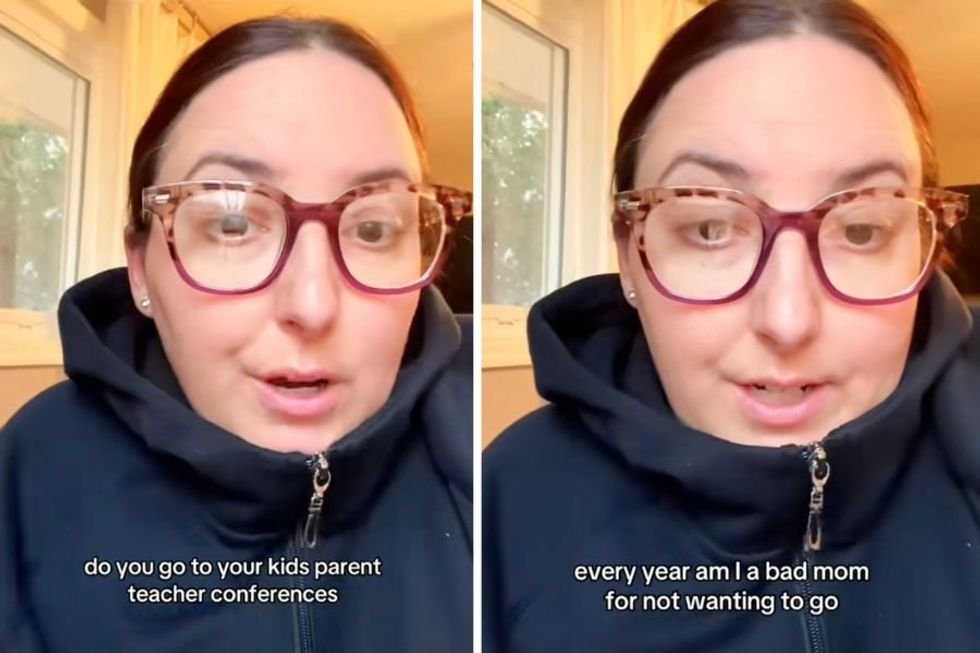
For mom Tatiana (@mamasreadingjournal), the dread of having to go to her kid’s parent–teacher conference was so strong that she posted a TikTok video asking if other moms and dads felt the same way. “Do you go to your kid’s parent-teacher conferences every year? Am I a bad mom for not wanting to go? Like I’m gonna go, but I really don’t wanna go, you know?” she asked in the clip, just before quipping, “sorry if his teacher finds this, it’s not you, I swear, it’s me, I’m lazy.”
Considering Tatiana is already in communication with her kid’s teacher through an app, she also couldn’t help but wonder why “this can’t be an email?” A very, very relatable thought for anyone in the 21st century. Tatiana’s confession was met with…a lot of concern. Clearly, people do, in fact, feel pretty strongly about this topic. And a common point brought up was how a child might feel if their parent doesn’t show an interest in their education in this particular way.
The comments did not hold back
“Your child is worth the effort, showing up to things like this is showing up for them,” one person wrote.
Another asked, “I guess the question is why aren’t you interested in learning from your child’s teacher about how their learning journey is going, if they’re a good friend to their classmates, etc? I see how it can be an inconvenience but being a parent means being involved in their life at school as well.”
A few teachers also weighed in, who admitted that even they didn’t exactly love parent-teacher conferences. Still, one advised, “always go. As a teacher it builds the connection we have with the parent, helps communication to overall support the child.”
Another teacher was a little more blunt, saying, “Girl, we don’t want to go! But you create so much work for us if you don’t go. We gotta document so many attempts of trying to get you in. Also, your kid wants you to go. I see HS kids sad that their parents don’t care to go. It’s important I swear.”
The conversation didn’t stop there
There was even a heated sidebar debate as to which parent, if only one, should be attending said parent-teacher conference: the stay-at-home-parent (SAHP), or the parent who works. Some argued that the SAHP should be the one to go as part of their at-home responsibilities. Others argued that SAHPs are the ones in regular correspondence with teachers, and therefore it’s the other parent that needs to get caught up.
But all moral judgments aside, this mom wasn’t necessarily saying she planned on skipping out. She was merely sharing a feeling that quite honestly a lot of folks can probably relate to. Even the most involved parent on the planet could get overwhelmed with the ever increasing amount of random school events that seem more or less mandatory. That goes double for parents who already have demanding schedules or social anxiety, which has to describe at least 99.9% of parents, right? It more so sounds like she was looking for commiseration than anything else.
To that point, Tatiana did make a follow-up video sharing that she “did not know” that not attending a parent-teacher conference results in more work for the teacher. She assumed it meant they’d “get to go home earlier if I didn’t go.” Honestly, fair assumption.
She also clarified that she did in fact go to the conference, and had always planned to go. However, she tells Upworthy that “outta my 15 minute slot we talked about my kid’s actual performance for maybe two minutes. Even my husband was shocked how much we chitchatted vs discussing actual grades and progress.”
But regardless, while she still feels that there’s “too much weight” put on this particular event, she will “go every year with bells on.”
“A mom who’s willing to accept feedback and adjust their attitude. We love to see it,” one astute viewer said.
This goes to show a few things. One, it’s a reminder of how so many aspects of education could stand for a revamp to fit with modern times. Two, productive conversations really can lead to better understanding. And three, parenting comes with going to a lot of things that you’d really rather not go to. Be it a parent-teacher conference or a Peppa Pig pop-up.
Not to mention, it can almost always be an email instead.
This article originally appeared two years ago. It has been updated.
-
‘Guys with alpaca hair’ and 14 other Gen Z fashion trends people hope disappear ASAP
Why does every teenage boy has a mullet and a mustache?
Online culture has had an incredible effect on fashion trends. It used to take a trend about 20 years to complete a cycle: introduction, rise, peak, decline, and obsolescence. However, in recent years, this cycle has been sped up incredibly due to several factors. Trends can be quickly introduced and adopted due to social media, online shopping and quick turnaround through fast-fashion distribution. The speed of adaptation also means they can fizzle out just as fast.
This means a fashion trends we’d usually see stick around for years can come and go in months. It’s an expensive pill to swallow for anyone trying to keep up with the latest (Gen Z, we’re looking at you), but it’s a blessing for those of us who have a problem with some of today’s polarizing looks.
The bad news is you may not like broccoli cuts. The good news is that they will be gone and forgotten before you know it.
A great conversation recently broke out on Reddit, where commenters weighed in on all the fashion trends they couldn’t wait to go away.
It seems that some of the most controversial styles are the work of Gen Z. Whether it’s the nose ring that looks like it belongs on a bell cow or big pillowy eyelashes, Gen Z has championed some looks that will probably look a little silly in a few years.
Here are 15 fashion trends currently “in” that people are already over.
The trends people are already over
1. Suits with shorts
“Took my cousin to prom and saw at least 30 dudes wearing a suit with shorts.”
This one is extremely hard for millennials and Gen Xers to wrap their heads around, but it is oh-too-real. It seems to be a natural evolution of the “suit with sneakers” look.
2. Anti-aging tweens
“Children (I’ve mostly seen around ages 9-13) going to Sephora for anti-aging serums and makeup. You all can hardly go to the park by yourselves, yet you’re plastered in expensive creams and makeup like you’re 20+.”
“This one really bothers me. It’s pretty dark, honestly, and the parents who allow this are weird as hell.”
The New Yorker says tweens are imitating influencers and popular “get ready with me” videos on social media.
3. Limp Biz-kids
“I’m a high school teacher and a surprising number of the boys dress like it’s 2000 and they’ve got Limp Bizkit’s ‘Nookie’ on repeat. There’s one kid that looks like he’s from 1977. Puka shells, feathered hair, big, open collars. I like that kid.”
4. Botox
“Excessive Botox in young people. I’m so tired of everyone having a frozen face. It’s not pretty. It’s just weird.”
“I swear there was a coordinated effort by some industry to convince girls in their 20s that they need to start Botox now because it’s preventative. That’s the reason given when I ask these early 20s girls why they use it. “It prevents future wrinkles” like there was a peer-reviewed study showing it does or something.”
Patricia Wexler, MD, of Wexler Dermatology in Manhattan, told Vogue that getting preventative Botox injections at a young age can lead to more wrinkles. “If you do too much Botox on your forehead for many, many years, the muscles will get weaker and flatter,” Wexler says. This means that surrounding muscles do more work when you make facial expressions. “If one stops using their forehead muscles, they may start squinting using their nose and have wrinkles along the side of their nose,” she continued.
5. Teen boys with alpaca hair
“I used to work reception at a salon and it was always fricken hilarious when these kids would come in to get a perm. They’d come sulking in behind their mommies, sit for 2 hours with curlers and stinky perm solution in their hair looking like cats being forced to take a bath, then prance out thinking they were the shit with their new poodle cuts lol.”
“Some of them are definitely embracing their natural curls, which is awesome! But a good chunk of them, especially the preppy ones with rich parents, are getting straight up 80s style perms. It’s great.”
Patrick Mahomes helped popularize this one, though he cut his signature curls in early 2025 — which may say something about where the trend is headed. Jake Paul, unfortunately, is still on board.
6. Laminated brows
“Eyebrows that are brushed upwards. That’s the only way I can think to describe it. I can’t see anything else when looking at someone who has that style brows. I just don’t know why people like it.”
“Almost every eyebrow trend ends up looking kinda silly. Let’s just all work with the eyebrows we have. Sure, clean it up a lil bit if you feel like it.”
In the 2000s, we had spiky hair. Now, we have spiky eyebrows. But don’t worry, it won’t last.
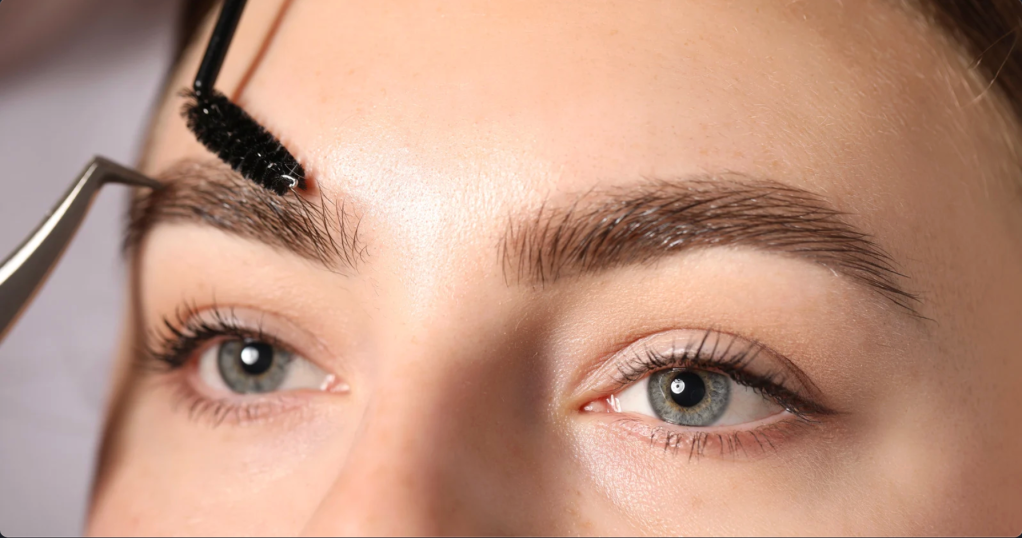
Woman gets work done on her eyebrows. Photo credit Canva 7. Over-the-top fake eyelashes
“The ridiculous false eyelashes. I get it. I’ve got no problem with the ones that at least have a semblance of being natural. But the uber thick ones that look more like fur are just…pointless. Someone I deal with at work wears them. And it’s so weird, because most of the time she dresses down in sweatshirts, jeans, sneakers, etc. And doesn’t pay much attention to her hair. But she’s got those stupid wooly caterpillar eyelashes in. They just call attention to how un put together the rest of her is. I know that everyone should just dress for themselves, but it’s just weird.”
8. Barrel jeans
“The barrel jeans have got to go. They’re the ugliest effing things I’ve ever seen. And people keep lying to these women about how they’re flattering and I’m like no! You look bowlegged!”
For years jeans got tighter and lower until they reached an inevitable breaking point. High-waisted jeans were a sign of the pendulum swinging back in the other direction, and now young peoples’ jeans look like inflated balloons.
9. ’80s moustaches
“Weird ’80s moustaches, I’ve seen good looking guys made to look like Ned Flanders. Ages them instantly, which I guess is the plan, but ages them past 20s to married with kids approaching teenage years.”
The number of young men with mullets and moustaches is absolutely staggering these days.
The ones that have been around way too long
10. Crocs
“I thought they were hideous when they first came out almost twenty years ago, and they’ve never gone away.”
“We always made fun of them and then suddenly everyone was wearing them. I don’t get it!”
How did Crocs go from the bargain bins to becoming one of the top footwear brands in the U.S.? The big reason is that comfort became more important during the pandemic than aesthetics. They were also quite a statement for people who wanted to rebel against traditional beauty standards. Add celebrity endorsements from Justin Bieber and Post Malone and Crocs came back in a big way.
11. Long nails
“Super long acrylic nails, they seem really impractical.”
“Especially the pointed ones that all the Hollywood people wear like claws. You look trashy and high maintenance.”

Woman with long ornate nails. Photo credit: Canva 12. Grunt style
“Patriot clothing and beards. Grunt style, nine line… all these fools dressing like they’re special forces, their entire identity tied to 1776. It’s embarrassing.”
If I never see a t-shirt of an American flag with an assault rifle superimposed on top, it will be too soon.
13. Hair parted in the middle
“Middle parts. You need an almost symmetrical face to be able to pull it off, which is pretty rare. Side parts all the way.”
“Middle parts look so harsh and unflattering on everyone. Side parts are a million times better.”
It was cool when Shawn Hunter and Jonathan Taylor Thomas did it. Let’s leave this one in the ’90s.
14. Nose rings
“That nose ring in the middle. Just doesn’t look good to me. You do you. But just think it doesn’t look good very often.”
“They always make me think of cattle.”
15. Political clothes
“Political attire as someone’s entire main wardrobe, no matter the side of the spectrum. You got more personality than that!”
“I have a bro-in-law who wears American flag t-shirts almost exclusively. He must have hundreds of them. And not the tasteful kind with like a little flag on the sleeve or chest. I’m talking about the most garish kind. The kind with a gigantic waving US flag along with a menacing bald eagle flying dramatically over snow-capped peaks. We like America too, Dan, but can you try to wear at least a polo to Grandma’s funeral?”
Fashion trends may come and go faster than ever, but some of these looks can’t go fast enough. And Reddit will always be sure to let everyone know it.
This article originally appeared two years ago. It has been updated.
-
Mom turns texts from teenage son into an emo ballad, and it has no right to be this good
Parents are wondering if they all have the same kid after hearing this.
Kids say a lot of hilarious things. It starts when they’re little and are just learning how to talk and string sentences together, and the unintentional comedy continues all the way into the overdramatic and angsty teen years.
As parents, we often wish we could remember these little nuggets of gold forever. Now, a new trend is turning teens’ most emotional and unhinged words into unforgettable earworms.
One mom turns texts into unbelievably catchy pop-punk song
Mandi Mansour, a hairstylist from San Diego, recently posted a Reel on Instagram of herself rocking out in the car while singing along to a song of her own creation.
The lyrics? Her own teenager’s frantic and melodramatic text messages.
It’s amazing to watch how messages like “Can I get Canes or Taco Bell? I know you said no, but I’m starving,” and “Can I have ten bucks? … Can I have seven dollars?” become such a catchy and convincing song. Of course, old early-2000s emo is the only musical style perfectly suited to capture the frantic angst, and the final product is honestly a banger. (The vocal run during “seven dollars” is absolutely priceless.)
A great detail from the video is how Mansour is driving and singing the lyrics without even looking at the screen. She’s clearly listened to her personalized song on repeat dozens of times and can’t seem to get enough of it.
Video is part of a trend making clever use of an AI music app
Mansour’s video isn’t the only one like it, not even close. These “emo songs” have become a huge viral trend over the last couple of weeks, with parents using the AI music app Suno (and similar ones) to turn these “lyrics” into full-blown songs, usually in the pop-punk genre.
It’s hard to say exactly where the trend originated, but Marcus Leshock, a reporter for WGN-TV, was one of the early prominent participants. Hundreds of thousands of parents followed suit shortly after.
Trend has parents asking: “Do we have the same kid?”
No matter how many clips you watch, all texts from the teenagers seem to fall into two buckets: wanting food and asking for money.
The series is an amazing glimpse inside the mind of the modern American Gen Z or Gen Alpha kid. It’s all Starbucks, açaí bowls, Raising Cane’s chicken—all fast food, really—e-bikes, and, of course, the classic requests for cash.
This is one of the first times we have such thoroughly documented evidence of how teens and preteens really think. About 85% of 11- to 13-year-olds have a cell phone capable of texting, with many getting their first phone under the age of 10.
Simply put, we’re in the frontier days of kids being able to text directly with their parents at all times. And the results are definitely something these moms and dads will want to remember when their kids are grown and self-sufficient.
Thanks to these infectious and unforgettable choruses, they most certainly will.
Turning texts into emo songs is really the best kind of AI trend. It draws humor from real-life experiences that connect all of us (well, all of us with moody teens), and uses a little assist from the technology to make it memorable and fun.
No one’s trying to top the Billboard charts here, but the commonalities between the songs really go to show that none of us are in it alone. Raising a teenager is tough, exhausting work—but it’s bringing parents all over social media a lot of comfort to know the challenges they’re dealing with are extremely common.
And those big feelings and dramatic outbursts just so happen to be perfect fodder for the type of songs many of us grew up loving.







Nature
Long’uro the baby elephant lost his trunk in a vicious attack. He’s now thriving in the best way.




Get stories worth sharing delivered to your inbox.
Advertisement