ADHD therapy

Some people are neat freaks and some people aren't. Most of us prefer a clean and tidy space, but not all of us are able to maintain one. Not only do people go through various stages of life that make keeping house trickier than other times, but some people have neurological, psychological, and emotional realities that make it harder than it is for others.

The problem is, a messy house is often a source of judgment and shame.

Licensed therapist and TikToker Kc Davis is turning that notion on its head with videos that explain how her own ADHD impacts her messiness and how she's learned "to clean as a messy person."

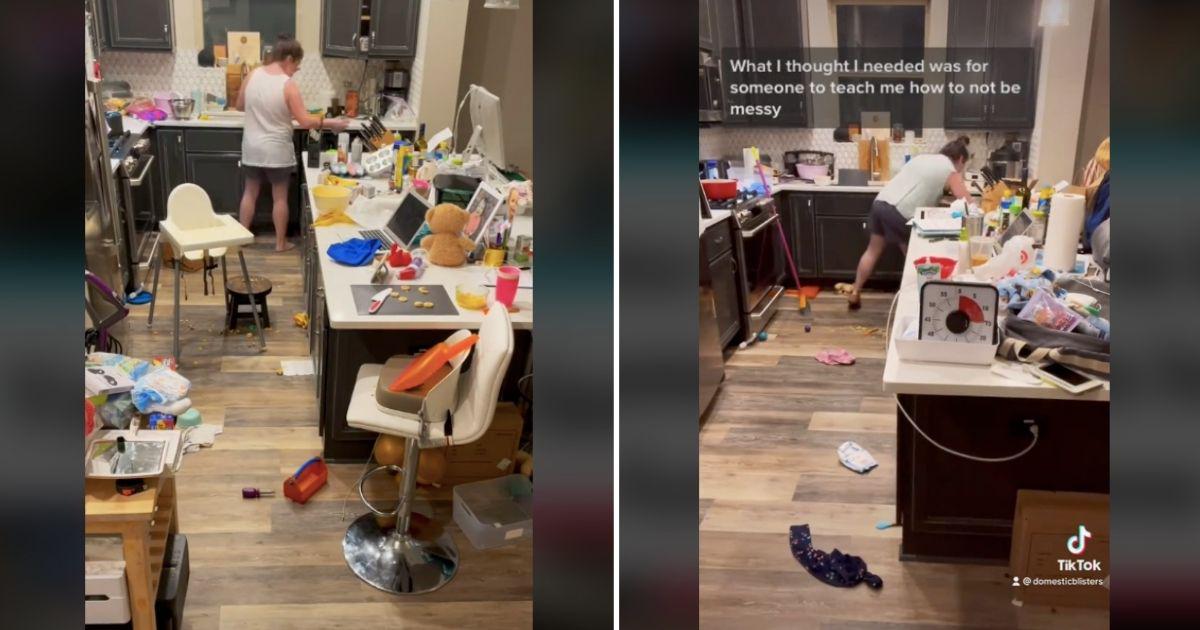
Davis shared a video showing her doing "a full reset" of her space while explaining the various reasons why some people don't have the executive function capabilities to "clean as they go." From ADHD to physical disabilities to having experienced abuse surrounding cleaning, some people find it impossible to keep things neat and tidy. For people who don't struggle with executive dysfunction, this video may not make sense, but for those who do, it's extremely validating.


"I don't often go into specifics about why my house is messy that day because at the end of the day it doesn't matter," she said. "It's not about me proving to some internet stranger that my house is messy for an acceptable reason. It's about getting a message of compassion and hope out there to anyone that struggles. Regardless of your level of functioning, you deserve kindness."

Her caption may be the most validating of all:

"Mess is morally neutral and shame is the enemy of functioning."

@domesticblisters

Mess is morally neutral and shame is the enemy of functioning. #strugglecare #findyourway #selfcompassion #cleantok

That video was viewed more than a million times.

In another video, which has been viewed more than 9 million times, Davis explained how she changed how she viewed cleaning.

"For the longest time, I thought what I needed was for someone to teach me how to not be messy," she said, "but every attempt at a ritual or routine that was aimed at making me not messy failed, and I thought I had failed.

"What I needed was not someone who was going to try to turn me from a messy person to a neat person, but someone to teach me how to clean as a messy person. Someone to give me the freedom to just live my day the way I wanted to live it without thinking about things and the tools to create a routine at the end of the night to reset the space to functional without feeling overwhelmed or exhausted."

As she's explaining this, she's "resetting" her kitchen space with the help of a 15-minute timer. Even just calling it "resetting" is a helpful mind-shift for people who feel overwhelmed by the idea of "cleaning."

@domesticblisters

The key to a functional home does NOT include changing who you are. #strugglecare #messy #LoveMeMode #cleantok


"The key to a functional home does NOT include changing who you are," she wrote in the caption. That permission to live as a messy person with tools to stay functional is huge, judging from the comments. While some naturally neat folks were mortified by the mess in her video, those who related to it felt seen and heard. Those are the people she's trying to reach.

Thanks, Kc Davis, for giving a voice to those with executive dysfunction and for helping everyone be more compassionate and understanding of one another.

See more of Kc Davis's videos on TikTok.

True

Shanda Lynn Poitra was born and raised on the Turtle Mountain Reservation in Belcourt, North Dakota. She lived there until she was 24 years old when she left for college at the University of North Dakota in Grand Forks.

"Unfortunately," she says, "I took my bad relationship with me. At the time, I didn't realize it was so bad, much less, abusive. Seeing and hearing about abusive relationships while growing up gave me the mentality that it was just a normal way of life."

Those college years away from home were difficult for a lot of reasons. She had three small children — two in diapers, one in elementary school — as well as a full-time University class schedule and a part-time job as a housekeeper.

"I wore many masks back then and clothing that would cover the bruises," she remembers. "Despite the darkness that I was living in, I was a great student; I knew that no matter what, I HAD to succeed. I knew there was more to my future than what I was living, so I kept working hard."

While searching for an elective class during this time, she came across a one-credit, 20-hour IMPACT self-defense class that could be done over a weekend. That single credit changed her life forever. It helped give her the confidence to leave her abusive relationship and inspired her to bring IMPACT classes to other Native women in her community.

I walked into class on a Friday thinking that I would simply learn how to handle a person trying to rob me, and I walked out on a Sunday evening with a voice so powerful that I could handle the most passive attacks to my being, along with physical attacks."

It didn't take long for her to notice the difference the class was making in her life.

"I was setting boundaries and people were either respecting them or not, but I was able to acknowledge who was worth keeping in my life and who wasn't," she says.

Following the class, she also joined a roller derby league where she met many other powerful women who inspired her — and during that summer, she found the courage to leave her abuser.

"As afraid as I was, I finally had the courage to report the abuse to legal authorities, and I had the support of friends and family who provided comfort for my children and I during this time," she says.

Keep Reading Show less

Since three coronavirus vaccines received emergency use authorization from the FDA early in 2021, the question of how to get a high percentage of the population vaccinated has haunted public health officials. As hospitals across the country fill with severely ill COVID-19 patients, the vast majority of whom are unvaccinated, the question remains.

A funeral home in North Carolina is taking a unique tack in advocating for vaccinations, one that's striking and to-the-point.

A truck advertised as Wilmore Funeral Home drove around Bank of America Stadium before the Carolina Panthers football game in Charlotte over the weekend, and it had a simple message: "Don't get vaccinated."

Keep Reading Show less