This glacier was featured on a postcard in 1900. A camera captured where it is today.
Whoa.

116 years ago, the Pasterze glacier in the Austria's Eastern Alps was postcard perfect:

Photo via Library of Congress/Wikimedia Commons.
Snowy peaks. Windswept valleys. Ruddy-cheeked mountain children in lederhosen playing "Edelweiss" on the flugelhorn.
But a lot has changed since 1900.
Much of it has changed for the better! We've eradicated smallpox, Hitler is dead, and the song "Billie Jean" exists now.
On the downside, the Earth has gotten a lot hotter. A lot hotter.
The 15 warmest years on record have all occurred since 1998. July 2016 was the planet's hottest month — ever.
Unsurprisingly, man-made climate change has wreaked havoc on the planet's glaciers — including the Pasterze, which is Austria's largest.
Just how much havoc are we talking about? Well...
A series of stunning photos, published in August, show just how far the glacier has receded since its heyday.
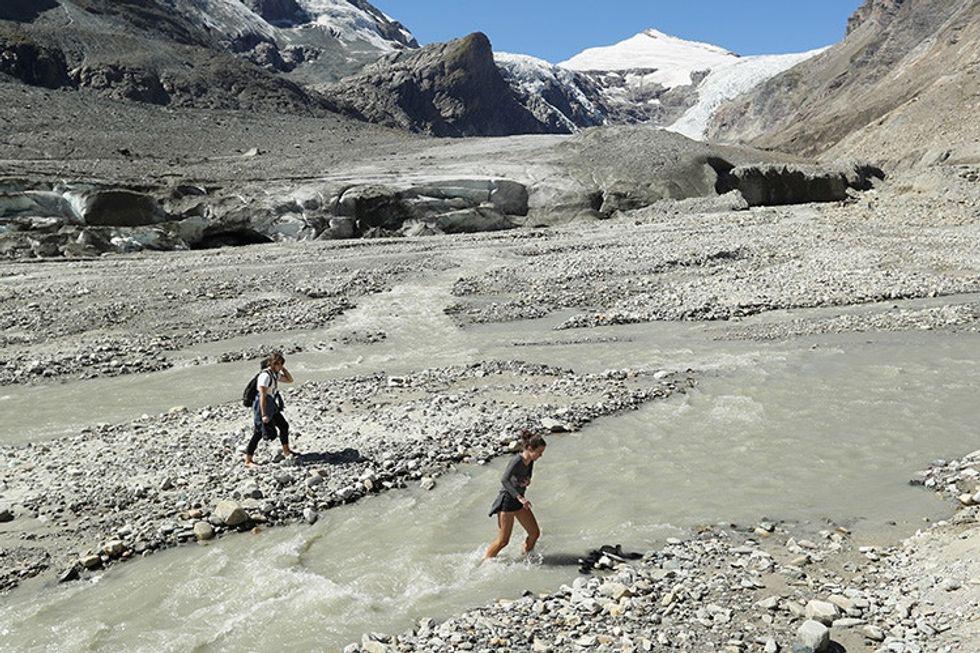
Photo by Sean Gallup/Getty Images.
First measured in 1851, the glacier lost half of its mass between that year and 2008.
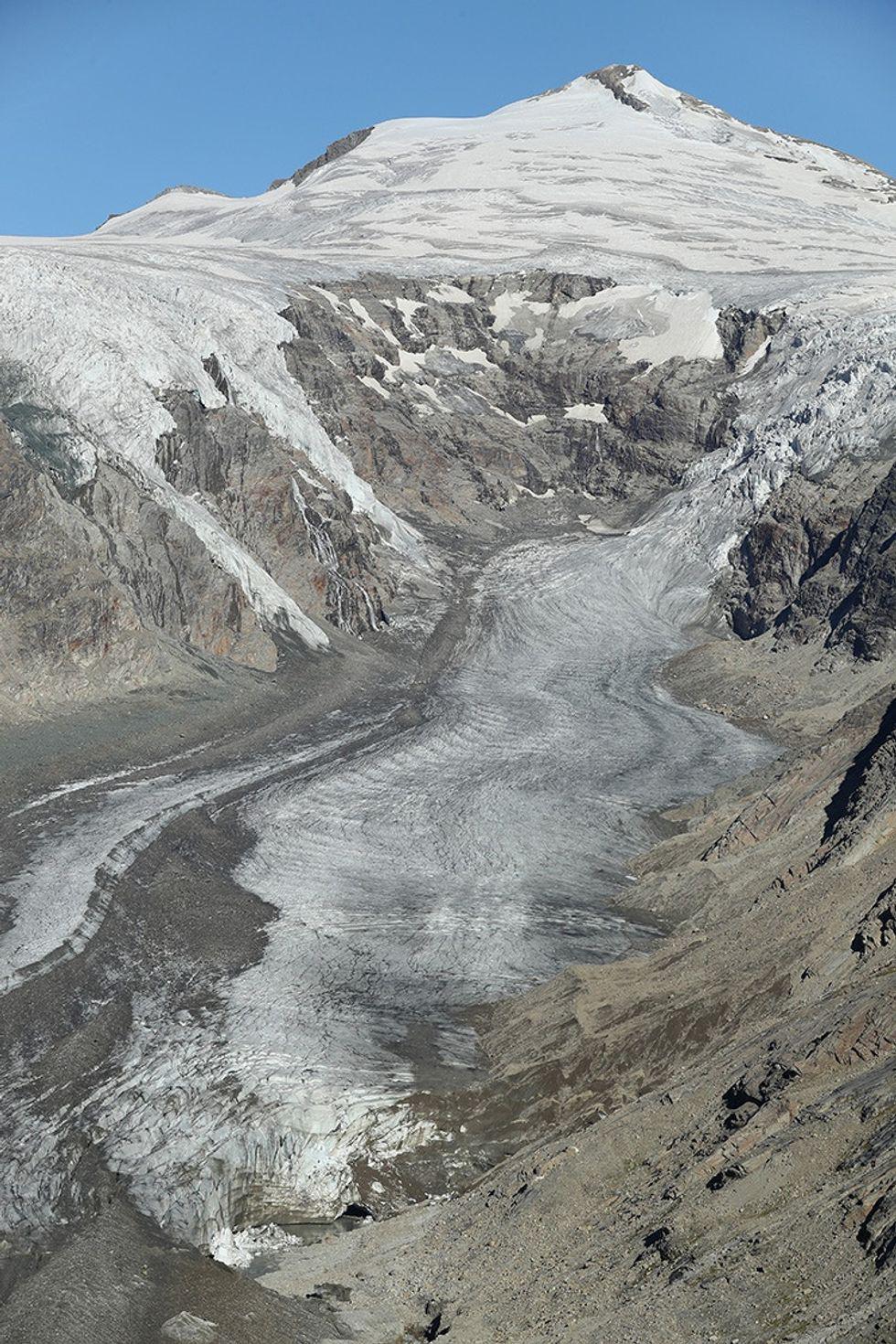
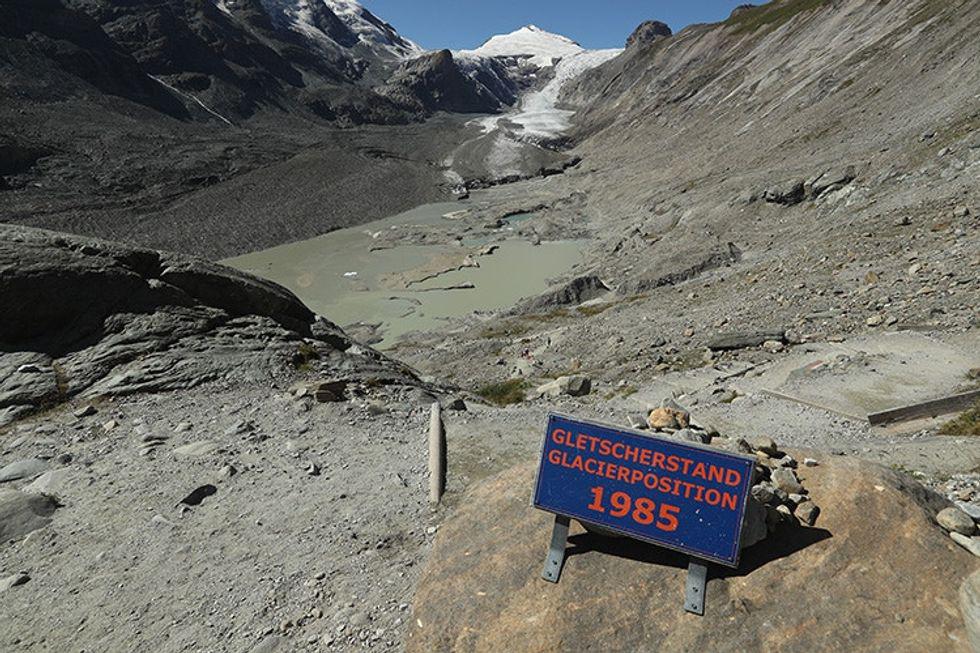
The glacier today.
Photo by Sean Gallup/Getty Images.
A marker placed in 1985 shows where the edge of the glacier reached just 31 years ago. You can still see the ice sheet, but just barely, way off in the distance. In between is ... a big, muddy lake.

Photo by Sean Gallup/Getty Images.
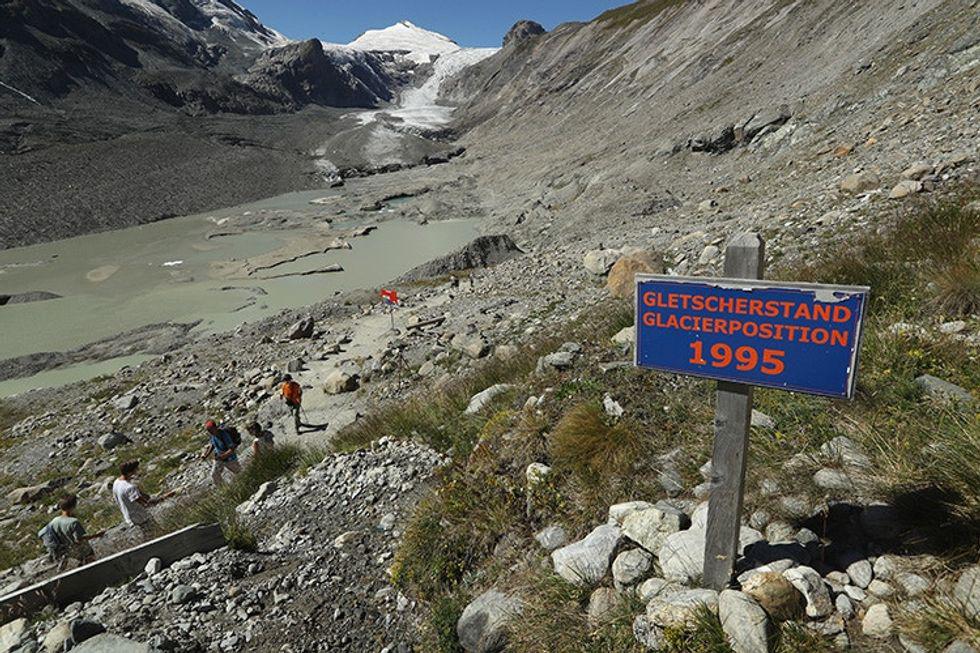
The view from the glacial foot marker from 1995 — 10 years later — isn't much more encouraging.

Photo by Sean Gallup/Getty Images.
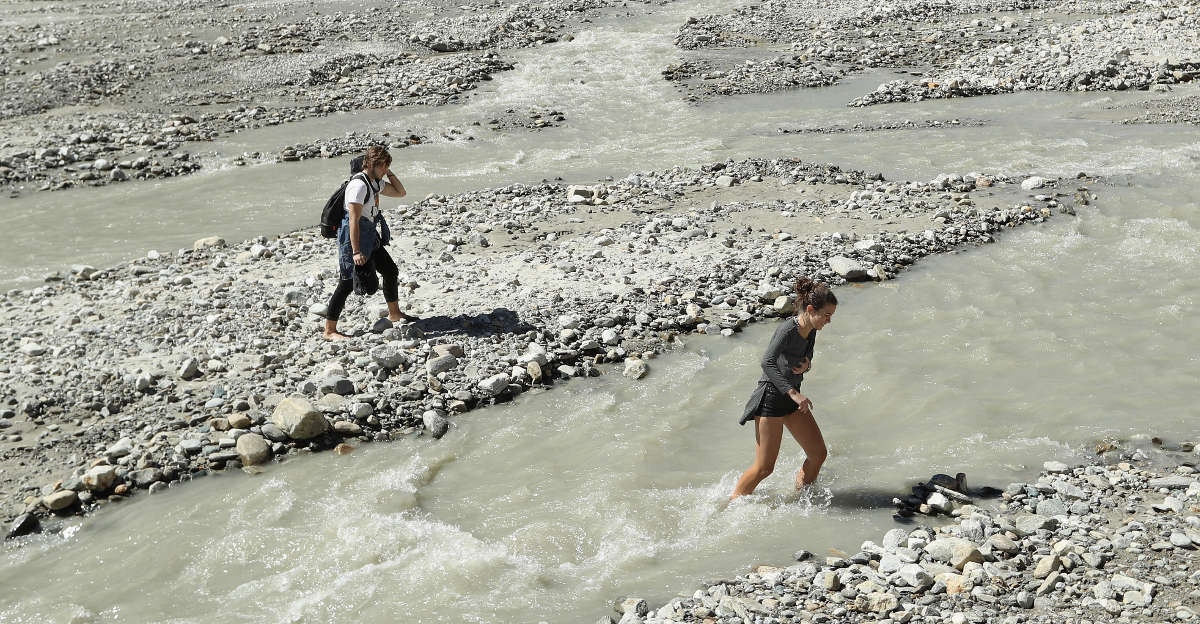
Even in just one year, 2015, the glacier lost an astounding amount of mass — 177 feet, by some estimates.
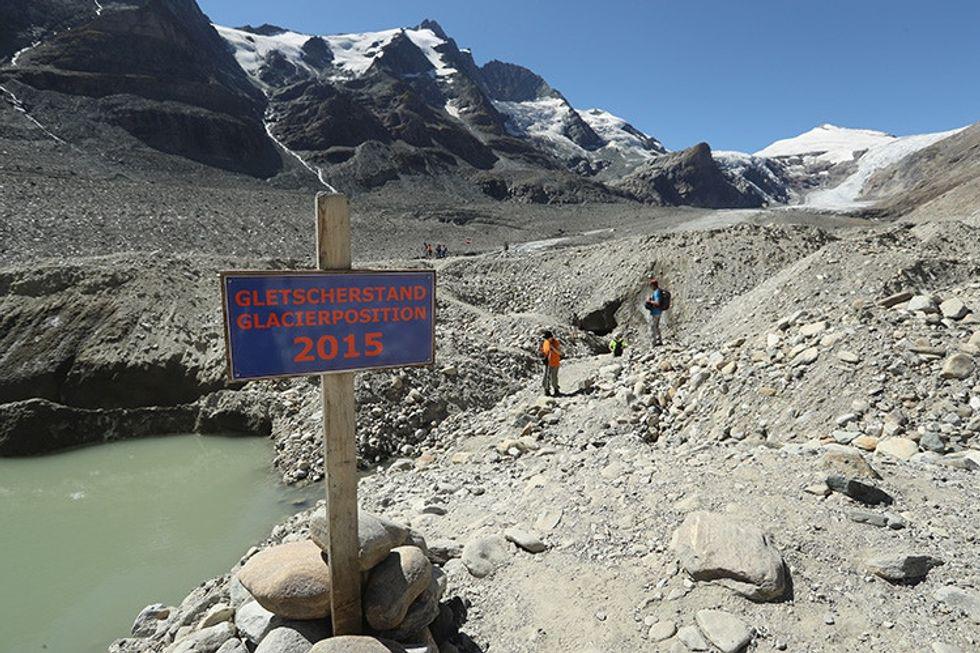
Photo by Sean Gallup/Getty Images.
Ice continues to melt daily, and while the dripping makes for a good photo, it's unfortunate news for planet Earth. Glacial melting is one of the three primary causes of sea-level rise.
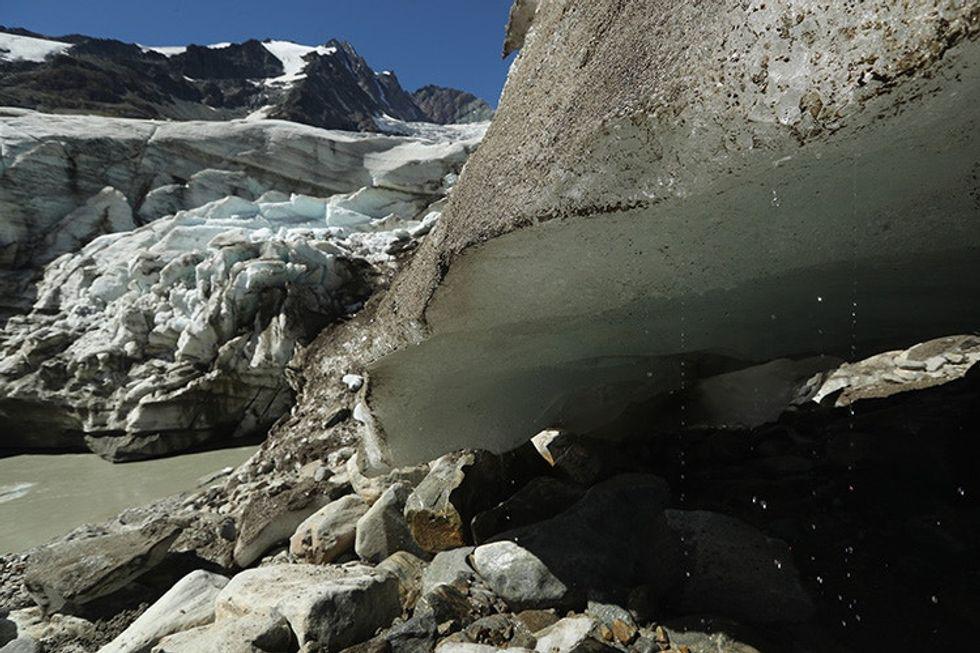
Photo by Sean Gallup/Getty Images.
According to a European Environment Agency report, the average temperature in the Alps has increased 2 degrees Celsius in the last 100 years — double the global average.
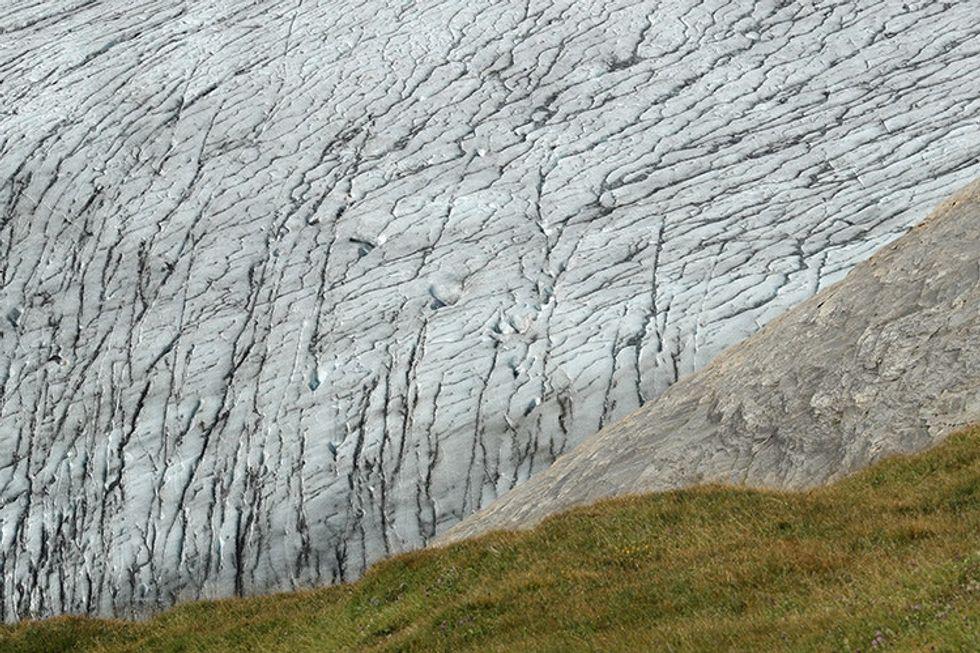
Beautiful, but ominous, fissures in the glacier.
Photo by Sean Gallup/Getty Images.
It's not unreasonable to assume that that's why this mountain hut has been abandoned by the flugelhorn-playing children who once probably lived in it.
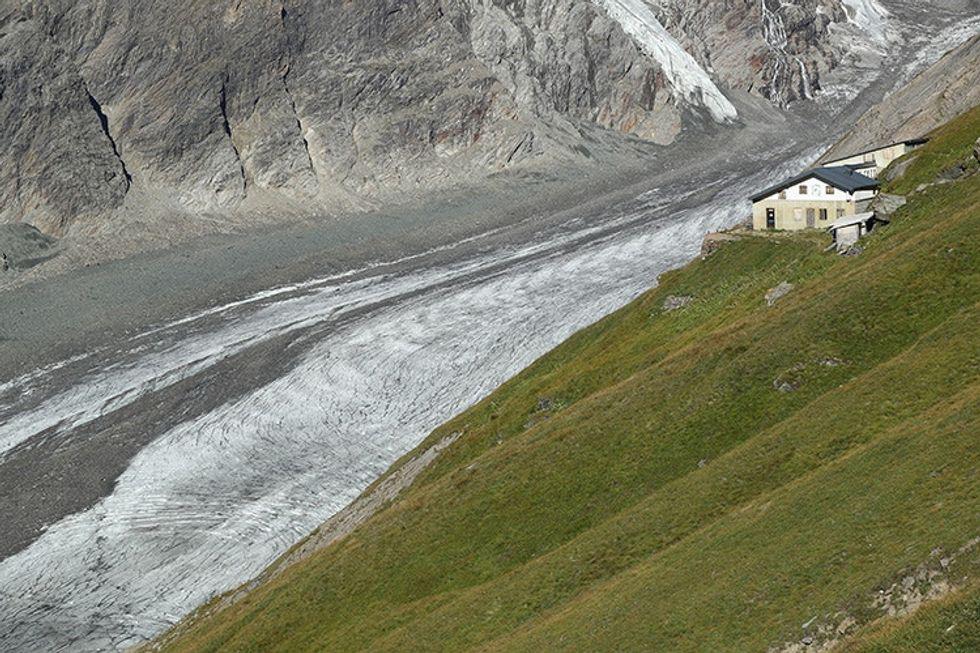
Photo by Sean Gallup/Getty Images.
Is there anything we can do to stop climate change besides look at scary glacier photos?
Climate change is, unfortunately, still a robust debate in the United States as many of our elected officials refuse to acknowledge that we humans are the ones doing the changing. As of last year, that list included a whopping 49 senators. Calling them to gently persuade them otherwise would be helpful. Not voting for them if they don't change their minds would be even more so.
There is some tentative good news — the Paris Agreement signed in December 2015 commits 197 countries, including the U.S., to take steps to limit future global temperature rise to 2 degrees Celsius. While it may be too late for the Pasterze glacier, if we really commit as a world, we might be able to stop ourselves from sinking whole countries and turning Miami into a swimming pool and stuff like that.
And who knows, with a little luck, and a little more not poisoning the sky, we just might recapture a little of that Alpine magic one day.
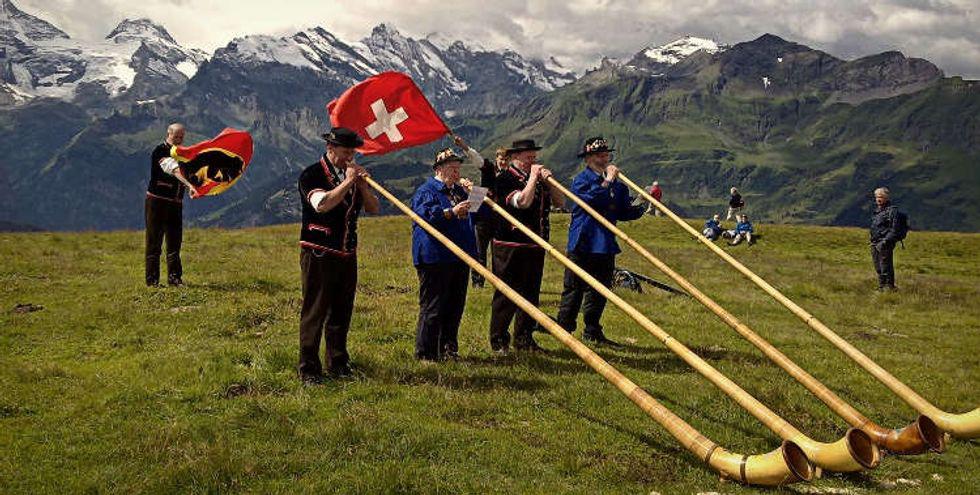
OK, these guys are Swiss. But who's counting?
Photo by Cristo Vlahos/Wikimedia Commons.
This article originally appeared seven years ago.



a man sitting at a desk with his head on his arms Photo by
Can a warm cup of tea help you sleep better? If you believe it, then yes. Photo by 
A woman is getting angry at her coworker.via
A man with tape over his mouth.via
A husband is angry with his wife. via 
Three women sit on a blanket in the park. 
Two women engaging in a pleasant conversation inside a coffee shop
Two men engaging in a peaceful disagreement.
Resurfaced video of French skier's groin incident has people giving the announcer a gold medal
"The boys took a beating on that one."
Downhill skiing is a sport rife with injuries, but not usually this kind.
A good commentator can make all the difference when watching sports, even when an event goes smoothly. But it's when something goes wrong that great announcers rise to the top. There's no better example of a great announcer in a surprise moment than when French skier Yannick Bertrand took a gate to the groin in a 2007 super-G race.
Competitive skiers fly down runs at incredible speeds, often exceeding 60 mph. Hitting something hard at that speed would definitely hurt, but hitting something hard with a particularly sensitive part of your body would be excruciating. So when Bertrand slammed right into a gate family-jewels-first, his high-pitched scream was unsurprising. What was surprising was the perfect commentary that immediately followed.
This is a clip you really just have to see and hear to fully appreciate:
- YouTube youtu.be
It's unclear who the announcer is, even after multiple Google inquiries, which is unfortunate because that gentleman deserves a medal. The commentary gets better with each repeated viewing, with highlights like:
"The gate the groin for Yannick Bertrand, and you could hear it. And if you're a man, you could feel it."
"Oh, the Frenchman. Oh-ho, monsieurrrrrr."
"The boys took a beating on that one."
"That guy needs a hug."
"Those are the moments that change your life if you're a man, I tell you what."
"When you crash through a gate, when you do it at high rate of speed, it's gonna hurt and it's going to leave a mark in most cases. And in this particular case, not the area where you want to leave a mark."
Imagine watching a man take a hit to the privates at 60 mph and having to make impromptu commentary straddling the line between professionalism and acknowledging the universal reality of what just happened. There are certain things you can't say on network television that you might feel compelled to say. There's a visceral element to this scenario that could easily be taken too far in the commentary, and the inherent humor element could be seen as insensitive and offensive if not handled just right.
The announcer nailed it. 10/10. No notes.
The clip frequently resurfaces during the Winter Olympic Games, though the incident didn't happen during an Olympic event. Yannick Bertrand was competing at the FIS World Cup super-G race in Kvitfjell, Norway in 2007, when the unfortunate accident occurred. Bertrand had competed at the Turin Olympics the year before, however, coming in 24th in the downhill and super-G events.
As painful as the gate to the groin clearly as, Bertrand did not appear to suffer any damage that kept him from the sport. In fact, he continued competing in international downhill and super-G races until 2014.
According to a 2018 study, Alpine skiing is a notoriously dangerous sport with a reported injury rate of 36.7 per 100 World Cup athletes per season. Of course, it's the knees and not the coin purse that are the most common casualty of ski racing, which we saw clearly in U.S. skier Lindsey Vonn's harrowing experiences at the 2026 Olympics. Vonn was competing with a torn ACL and ended up being helicoptered off of the mountain after an ugly crash that did additional damage to her legs, requiring multiple surgeries (though what caused the crash was reportedly unrelated to her ACL tear). Still, she says she has no regrets.
As Bertrand's return to the slopes shows, the risk of injury doesn't stop those who live for the thrill of victory, even when the agony of defeat hits them right in the rocks.