upworthy
Add Upworthy to your Google News feed.
Google News Button
Wellness

That 'Plandemic' conspiracy video has been thoroughly debunked, people. Stop pushing it on us.

That 'Plandemic' conspiracy video has been thoroughly debunked, people. Stop pushing it on us.

The coronavirus pandemic has brought out a whole slew of interesting human tendencies, including a veritable tsunami of conspiracy theories. Like, holy cow, folks. When did everyone start pulling out their tinfoil hats?

There are several reasons for this, from the emotional and psychological needs that conspiracy theories fulfill (especially during such an uncertain time), to the intellectual habits that enable people to fall prey to such theories.

And of course, there's always a shred of truth in any conspiracy theory, which pulls people in. But just as a shred of fabric doesn't make a shirt, a shred of truth in a conspiracy theory doesn't make it credible or true.

By now, you've undoubtedly seen or at least heard about the Plandemic video making the rounds. YouTube keeps taking it down because of its policy against spreading harmful misinformation about the coronavirus, but that of course just fuels the fire of conspiracy theorists who think the truth is being silenced. The good news is that the claims in the video have been debunked many times over at this point. The bad news is that the people who need to see these debunkings have probably not even read this far into the article, and are definitely not going to take the time to read and process what we share past this point.


But we're gonna go ahead and share these well-cited debunkings anyway, because facts matter, sources matter, not all opinions are equal, and we can't keep letting paranoid theories that don't hold up to scrutiny and can't be backed up with well-done science go unchecked.

(And yes, there is such a thing as well-done science. The scientific world has spent many, many decades improving and systematizing processes for checking data, replicating studies, peer-reviewing findings, etc. so that we have a good idea of what science we can trust and what science is not credible. The only way to refute well-done science is to toss the entire systematized scientific process out the window and instead listen to random individual scientists who refuse to accept that their work was shoddy. Not all scientists are credible, and if a scientist is publishing their opinion outside of the scientific community—especially via YouTube—you should immediately be skeptical and look for whether or not their claims have been debunked by well-done science.)

Case in point, Judy Mikovitz, the scientist at the forefront of the Plandemic video.

Since there are so many clear refutations of the claims in that video and there's no need to reinvent the wheel, we're just going to share a bunch of them with you. Off we go:

- Here's an explanation from Kat Montgomery, a surgical pathology fellow in the Department of Pathology, Microbiology, and Immunology at Vanderbilt University Medical Center.

- Here's an explanation from a social epidemiologist with a PhD from Johns Hopkins:


- Here's an explanation from a microbiologist (see her credentials here) who outlines some of the most blatantly wrong things in the Plandemic video with links to back her up:

- Here's an explanation of the difference between a scientific theory and a conspiracy theory, for those who think that the conspiracy theories are using science as their basis:

- Here's a Snopes piece that details the issues with Judy Mikovitz's research and history and why she is no way a credible source. (It's worth noting that this was written in 2018, long before the pandemic. This woman has been discredited in the scientific world for years.)

- And here's another Snopes piece about the issues with the chiropractor in the video who advocates drinking tonic water as a way to prevent coronavirus.

(I realize that most conspiracy theorists don't trust Snopes because...well...they think the site is part of a liberal conspiracy. But the Snopes debunkings include links to reputable sources to back up their facts checks, so if the conspiracy theorists really look at everything and think critically like they claim to do, they have to look at the information and sources claiming to debunk their theories. Then they have to either refute them with actual science from reputable sources or admit that they have no credible basis for their beliefs.)

- Here's an article I wrote about how medical associations as well as statistical experts have condemned the Bakersfield doctors shown in the video (which is a bit unnecessary since the docs issued a public statement condemned the Plandemic filmmakers for using footage of them anyway).

- Here's a decently thorough debunking by surgical oncologist David Gorski.

- Here's a very thorough explanation of the Plandemic erroneousness on Reddit, where you can also see discussion on the video and the debunking (for those of you who say, "Let's at least have a debate!" about already thoroughly debunked claims—here's where you can have at it.)

- If you prefer doctors on YouTube sharing their professional opinions on all things pandemic—which seems to be the favorite method for conspiracy theorists to do "research"—here's a doctor who explains a bit about the psychology of the Plandemic video and also explains the shoddy research behind it.

"Plandemic" Video Analysis | Did Judy Mikovits Connect the Dots?www.youtube.com

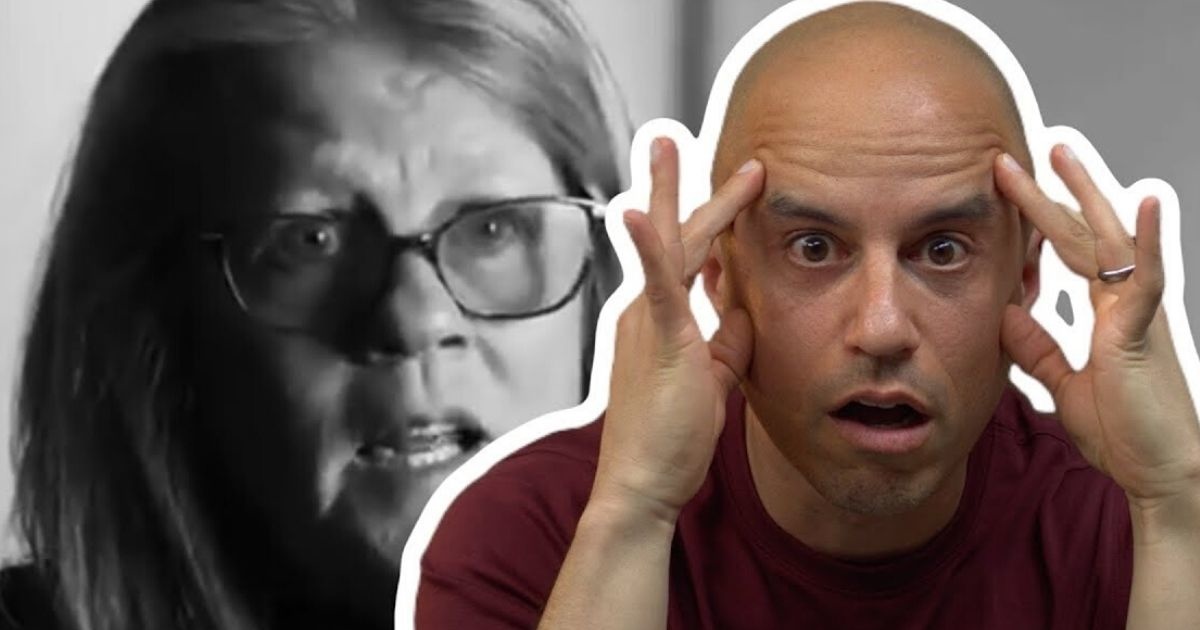
- This final one from Stanford-trained physician Dr. Zubin Damania might be just be my favorite (but only after reading everything above for the facts). For those of us who are trying not to lose our minds over having to continually fact-check all of this misinformation for people who really should be able to do it themselves, this 3-and-a-half minutes is quite cathartic. Enjoy.

A Doctor Reacts To “Plandemic"www.youtube.com

Bottom line: The video is bunk, but conspiracy theorists will keep on insisting that it's not. (Wake up! You're all sheep following the mainstream media! Experts who provide data backed up by multiple peer-reviewed studies can't be trusted! Individual doctors and scientists are more trustworthy than professional associations of thousands of doctors and scientists! Everyone is getting paid off, except these conspiracy theory pushers because I trust them because they say they're being persecuted by the science community for no reason and that sounds totally legit! And maybe the earth really IS flat—scientists have been wrong before!)

Did I miss anything?

Joy

People from around the globe share 15 signs that someone is obviously an American

"An Italian told me that Americans walk confidently in the wrong direction."

tourists, american tourists, us tourists, vacation, american style

Americans on vacation.

One of the fun things about traveling to different countries is that you not only get to learn about other cultures, but you also learn some things about your own. Americans who travel abroad often learn that people around the world appreciate them for being open, friendly, and good at spreading hope and optimism.

On the other hand, people in other countries can often tell when an American is coming from a mile away because they speak loudly, whether indoors or outdoors. Americans also have a very peculiar body language and are known to lean on things when they have to stand for an extended period.


A Reddit user posed a question in the AskReddit subforum to learn more about how Americans stand out abroad: What's an "obvious" sign that someone is American? The post received more than 35,000 responses, with an overwhelming number of commenters noting that Americans are all smiles and love to make small talk, something most people appreciate.

According to Redditors, here are 15 "obvious" signs that someone is American:

1. They have a unique confidence

"An Italian told me that Americans walk confidently in the wrong direction."

"Been taught to walk fast, and look worried.. People think you know what you're doing."

2. They're friendly

"I worked as a cashier in a tourist place in Paris, I always recognised Americans because they were kinda friendly to me and they always left tips."

"I guess there are worse things than friendly and generous."


3. Time = distance

"If someone asks how far away something is, an American will tell how you long it takes to get there as opposed to a physical distance."

"It actually pisses off some Americans to give a distance in miles, unless they're calculating gas mileage. In some places, you have to give with and without traffic options. I think it's more valuable info in time than in distance."

4. Grinning at strangers

"The gentle grins you give to strangers if you make eye contact with them as you pass by, at least in the Midwest. was not well received in Germany."

"I dated a European man here in the US. When we walked together, every time I made eye contact with someone on our path I would smile at them, and they would always smile back. Boyfriend was so confused at all these strangers smiling at me. Kept asking if I knew all these people. It was hilarious."


5. They like personal space

"How much personal space they give themselves. Americans like at LEAST an arm's length."

"We're conditioned to fill spaces evenly. I noticed when i worked delivery, spending lots of quality time on elevators that for every new person that enters, everybody shuffles to even things out. Similar thing plays out in social gatherings and bars. Not sure if that's universal or not, but I find it interesting. I think the size of our personal bubbles is because our spaces are generally much larger because we've got the space (heh) to build bigger buildings, sidewalks, roads etc. Might also explain why we're louder. Used to filling larger spaces with volume."

Body language expert Joe Navarro says that among Americans, the social zone for acquaintances and casual interactions is four to 12 feet, while family and close friends stand 1.5 to four feet apart. The intimate zone, for those closest to us, ranges from the skin to about 18 inches.


6. They lean

"According to the CIA, when training to be a spy, you have to unlearn how to lean. Americans tend to lean on things when standing still."

All of this is true, according to Jonna Mendez, the former chief of disguise at the CIA, who has shared some of her tips and tricks for making Americans seem more European. "So we would de-Americanize you," Mendez told NPR. "They think that we are slouchy, a little sloppy. And they think that they can almost see that in our demeanor on the street because they stand up straight. They don't lean on things."


7. They don't have an indoor voice

"I've lived in America for 25 years, and it still irritates me that instead of lowering their voices in restaurants so everyone can hear, Americans just scream over each other and make their restaurants as loud as clubs."

"For some reason, my otherwise smart and wonderful American friends will speak in the same volume, diction, and speed regardless of any outside factor unless specifically asked."

8. Dessert for breakfast

"In my homestay in London, I was told that I was 'so American' for enjoying a piece of cake for breakfast (not frosted cake, but like a nuts and dried fruit spiced coffeecake kind of thing). Apparently, that's exclusively for like a 4 pm snack, and breakfast is more of a savory meal."

"A lot of American breakfast items in my mind are desserts (pancakes, muffins, waffles, etc.). It doesn't mean I won't eat them, but it's kinda weird to do so."

9. They wear their clothes differently

"A British man once told me he knew I was American because I was wearing a baseball cap backwards."

"An Italian told me they could tell I was American because I wore my sunglasses on the top of my head when I wasn't using them."


10. Exposed soles

"While visiting Turkey, I was told that I looked American because I was sitting with one leg across the other, and the bottom of my shoe was exposed. Apparently, it's rude idk."

"In a lot of places outside of the US, showing the bottom of your shoe is rude."

11. Tactical gear

"Tactical sunglasses."

"I'm in the US, and virtually anything marketed towards men has the word 'tactical' in front of it."

12. They love small talk

"I'm from California (though a smallish town), and we wave to neighbors on our road, even if we haven't met, and start conversations in the grocery line with people if the opportunity presents itself. Also, smiling and saying hello to someone you happen to walk by and make eye contact with is quite normal. We are a social species, it would be so weird not to be friendly, even to strangers, for me, and I'm not even that social of a person."

"What really gets me to it is not that Americans do small talk constantly, but the fact that they are so good and fast at it. I mean, I say 'yeah, it's hot,' and they reply with some interesting fact or make a connection to their hometown. I feel less of myself after this. They must have some small talk class in school or some sh*t."

13. They like to point

"I've always observed my US friends like to point at stuff while walking and say what it is…. We were out walking around Amsterdam recently and they were like 'hey look it's a smoke shop'…. 'Oh look a sex shop'…. 'Oh hey, it's a prostitute' …. 'Look at the canal'…. 'Wow it's another prostitute'….. 'another canal' etc etc. It was like watching Netflix with Audio Descriptions turned on."

"You know that little voice inside your head, your internal monologue? Americans seem to monologue their thoughts."


14. Optimism and enthusiasm

"Dunno in all context, but Americans in Europe stand out with their ceaseless optimism and enthusiasm."

"I'm reminded a lot of Ted Lasso. Everyone I know (all Americans) loves the show. I wonder what kind of European fan base it has."

"Americans are so positive and have such a thirst for life. It sickens me."

15. They eat while walking

"When I lived in Europe, people said only Americans eat while walking. I'd be eating a bagel or something on the way to work or class, and multiple people asked if I was American lol."

"Jay Leno said on Top Gear, I think it was, that Americans are also the only people who eat while driving. I don't do this, but I constantly see people who do, haha, especially in LA, where people spend a lot of time in their cars."

crowd, unique, personality type, nonconformist
Photo Credit: Canva

A person stands out in a crowd.

So many of us have the desire to compartmentalize our personality traits into neat little boxes. "Oh, she's such an INFJ. Oh, he's such a Gemini." Some of it is rooted (well sort of) in psychology, such as the Myers-Briggs Type Indicator, based loosely on Jungian ideas. Others rely on arguably less scientific data like stars and "rising signs." Humans aren't usually that simple.

That said, there's still value in understanding one's own personality and inclinations. Here's a confession: I've taken countless personality tests because I just couldn't figure out if I was an extrovert or an introvert. Neither description quite fit, and as someone constantly trying to understand what makes me tick, this has been frustrating.


Turns out, there are other options. The term "ambivert" got popularized in the 1930s (after being coined by Edmund S. Conklin in 1923), and it refers to a person "who has features of both an introvert (someone who prefers to spend time alone) and an extrovert (someone who prefers to be with other people) in their personality."

@tedtoks

Replying to @Factura🛄 now knowing what an ambivert is, how would you describe yourself? #ambivert #introvert #extrovert #adamgrant #psychology #TEDTalk #worklife

But for those who still don't quite relate, meet the otrovert. Just recently, psychiatrist Rami Kaminski published The Gift of Not Belonging, in which he discusses his coined term to describe a whole new type of personality. In an Insta-reel captioned "What is an Otrovert?" Kaminski mentions the polarization of introverts and extroverts. "When Jung invented the terms extrovert and introvert, he saw them as two fundamental orientations of the personality. I see the otrovert in the same way. A personality trait that faces away from the group."

He continues, "Extroverts and introverts are inherently communal, while the otrovert is an outsider to the group. In itself, it is not a problem or condition, nor is it a diagnostic label. It simply means that while most people learn to develop a sense of belonging to a specific group through social conditioning, otroverts remain social but not communal."

In writer Sarjna Rai's piece, "Struggle to Fit the Mold? The 'Otrovert' Personality Explains Why" for Business Standard, they write: "Unlike introverts or extroverts, otroverts are not defined by where they draw their social energy. Instead, the concept captures people who constantly feel like outsiders, and tend to look in a different direction altogether, not necessarily aligned with the rest of the group."

While it's impossible to group people into perfect categories, Rai explains that Kaminski claims the main thing that sets otroverts apart is their "reluctance to conform to group norms."

Writer Avery White lists signs one might be an otrovert in the article "7 Signs You Might Be an Otrovert" for VegOut. Among them is preferring "high-signal conversations and low-maintenance relationships." They give this as an example: "You’ll happily spend three hours exploring one idea with one person—and then not speak for weeks without either of you taking it personally. In other words, low pressure, low expectations, high connection.

Another on the list—and this is a big one according to Kaminski—is: "You can look extroverted in public—yet feel fundamentally 'other.'" This is actually the crux of the term, and in fact, what Kaminski formed The Otherness Institute for: as their website says, "those who feel they don't belong."

The site also shares that recognizing aspects of this type in yourself and others (if it applies) will help "balance between your individuality and your function as part of the social matrix that determines your well-being. The experience of otherness in a togetherness-minded world can be emotionally bruising. Often misunderstood and misdiagnosed, otherness may lead individuals to feel strange, lonely, and unwelcome in groups. Left unidentified, otroverts' non-belonging can result in a frustrating, futile lifetime effort of trying to 'fit in.'"

Some Redditors are scrambling to figure out if they fit into this category. In the subreddit r/INTP (referencing one of the Myers-Briggs personality types), the OP asks, "Maybe I am an 'otrovert?'" Under this, they write, "Dr. Kaminski described the otrovert child as 'neurotypical, friendly, curious, well-adjusted, and often popular' yet 'they resist being pressured into group activities.'"

While this can seem inconsequential in childhood, joining the peer group "becomes critically important" in adolescence, said the psychiatrist, and teens "start to gauge their self-worth based on the group’s ranking of popularity (or unpopularity).'

"Membership in a group, no matter how lowly, is better than being an outsider," he added. "Otroverts, however, are comfortable with being outsiders and find it impossible to feel like insiders, regardless of how welcome they are.'

There are a handful of commenters who feel seen, but many push back, claiming the term could easily apply to other personality traits. One writes, "I think it's easy to resonate with this description... but as some warning noted, there aren't enough studies done about this term that people should be running to adopt it. I resonated with it after reading about it... But I have ADHD and persistent depressive disorder... both of which coincide with the descriptions of an otrovert."

Time will tell if this new term sticks, but for now, it's helping a lot of people feel more understood.

This article originally appeared last year.


Culture

Frugal people share the best money-saving advice from parents and grandparents they still use

"My mother taught me how to compare prices per item or ounce rather than by the package."

frugal, frugal lifestyle, frugal advice, frugal living, money saving tips
Images via Canva/spxChrome, irynakhabliuk

People who live frugal lifestyles share best frugal advice from older generations.

For those with great grandparents, grandparents, and parents from the Greatest Generation (those born 1901 to 1927) and the Silent Generation (those born 1928 to 1945), much can be learned from how to live a frugal lifestyle. These two generations lived through the Great Depression and World War II, two events that forced Americans to become more resourceful due to difficult financial situations, food scarcity, and rations.

Today, people who consider themselves frugal are always looking for more ways to save money. To glean frugal wisdom from older generations that would still be applicable today, one frugal person posed the question on Reddit: "What frugal lesson from your parents or grandparents you still use today?"


And many frugal people offered their best money-saving tips from their relatives that they still use today. From how to save on money to utilities, these are the best frugal tips from Redditors:

- YouTube www.youtube.com

Reuse from your kitchen

"My grandma rinsed and reused foil until it crumbled. I rolled my eyes then, now I catch myself doing it. Funny how those 'silly' habits end up smart. Mine also saves glass jars, labeled lids with tape, turned t-shirt into rags, and froze veg scraps for stock. :)" - YourxCherry

"I save butter wrappers in the fridge to use for greasing baking pans. To get everything out of empty condiment bottles, I pour a little vinegar, milk or whatever is fitting, then shake it up and use that for salad dressing or other cooking needs." - so-many-cats

"I love Tostitos salsa jars. Whatever I cook, such as soup, ground beef, pasta, the extras, or leftovers, everything goes into these jars. They are so perfect for portioning. One jar = one person's meal portion. I literally have more than 30 jars, and they are incredibly convenient!" - Proud_Possibility256

"I do not go grocery shopping until my fridge is empty including my freezer zero food waste. I have become very creative with recipes. Saves me money. Always take lunch to work." - Samantha-the-mermaid

"My grandmother took care of her five siblings during the depression after her parents died on .45¢ an hour. I make more money in an hour than she made in a week. She never wasted ANYTHING. She taught me to save bacon grease for seasoning, bread ends for bread pudding, leftovers for soup, and coffee grounds and eggshells for the garden. We didn't carve our pumpkins- we painted them and made pumpkin pie out of it after Halloween." - That-Response-1969

"I sometimes hate it that I am like this, but one of the first odd things that come to mind is labeling bottles of home goods like dish soap, body wash, bars of soap, hand soap, etc. so you know which one lasts the longest after purchase. Keep in my mind, my grandmother grew up during the Great Depression. I also spent a majority of my days with her making food (predominately just standing around doing nothing useful). All of the meals we hold dear to our hearts are actually just frugal meals to stretch out. She would get extremely nervous if she came to your home and there were not canned goods. This is winter in the upper Midwest during the Great Depression to put it into perspective, along with canning and preparing for everything. This is a person that lived by candle light basically. When she finally had a icebox, every last meal had to be frozen. No matter what you made, it had to be able to sit there when necessary. You make no meal that cannot be eaten for three days or frozen solid for the next month. I still live by this routine." - WideRoadDeadDeer95

- YouTube www.youtube.com

Make your money go further

"My mother taught me how to compare prices per item or ounce rather than by the package." - Chicpea09

"My parents always framed purchases by how much time I would have to exchange for the item. So when I was in 6th grade and I wanted a TV for my bedroom and it was $120, I would have to do 6 to 10ish baby sitting jobs - then ask myself is it worth that exchange. This is still how I frame most purchases." - BagNo349

"My grandfather told me as a teenager that debt is how other people control you. I didn't realize how true this was until my early 20s when I got into mild debt problems. Since then I have been majorly debt averse." - Egon88

"Mine told me if you cant pay the milkman 6pence this week, how will you pay him 12pence next week? Lesson learned. I pay my bills on time ALWAYS." - Mundane_Sail_4155

"My dad always said it's not a deal if you can't afford it. Of course he didn't have slickdeals either lol." - JasonG5

"My grandpa always said ‘Pay yourself first.’ Even when money was tight, he’d stash $5–10 in savings before paying bills. I thought it was silly but that habit built a nice cushion over time." - samdaz712

- YouTube www.youtube.com

Save on utilities and living expenses

"I hang dry my clothing whenever possible. I find it strangely relaxing to stand outside and carefully hang everything up so it has good airflow. It reminds me of helping my grandmother hang out laundry on their farm. The only thing I changed was painting the tips of my clothespins so I can see them better and don’t forget them on the line accidentally." - SpecificSkunk

"MAINTAIN and REPAIR what you already own. Lubricate, tighten, clean. Change filters. Replace belts. Flush. Air out. Condition. Resurface. Store properly. Take care of your stuff." - i_know_tofu

"I patch and repair clothes that can be repaired instead of immediately buying new. For instance, we have a comforter that has gotten holes from the washing machine - cheap materials. I'm learning the Japanese art of Shashiko to patch it over my Thanksgiving week break. I find a used item instead of buying new immediately, when our dryer went out, I bought one from an estate sale for the same price as repairing the old one would have cost (and since it was on it's 3rd repair - heavy eye roll on cheaply made crap - I don't feel so bad. I line dry a lot of things. Not everything but a lot." - LeftwingSH

"I put on hoodies and blankets and refuse to turn the heater on until the outside temps are about 45 degrees." - thedoc617

"How to drive in order to maximize your miles per gallon and reduce wear and tear on the car. Accelerate slowly and try to keep under 2 RPMs. Leave a wide berth between yourself and other cars. Anticipate traffic/stopping, then let off the gas and cruise. Don't ride the brakes." - OrdinarySubstance491

This article originally appeared last year

ableism, disability, inclusion, conversation, identity

Jackie Lopez is eating soup and spouting her truth.

When she was three years old, Jackie Lopez lost her arms in an accident. Growing into adulthood without those appendages, she has learned and trained to use her legs as arms and her feet as her hands to feed herself, make meals, play video games, wrap Christmas gifts, and any other activity a person could do. Throughout her life, people have remarked about how tough her circumstances are and how strong she is, and to all of those people she has one request: Please stop.

“Because I don’t have arms, I get these comments a lot and a lot of people think it’s a compliment when it really isn’t. It’s so annoying and irritating to see and hear all the time,” Lopez explained on social media.


@minjacks

[my audio got messed up 🫩]this how I FEEL, maybe other disabled ppl don’t mind but i do. #foryou #disabilitytiktok #disabled #disabilityawareness #imjustagirl

In her video, Lopez shared the three most common comments she receives as a disabled person that aren’t outwardly or intentionally mean, but annoy and actually hurt her. She prefaced her video saying that, while these comments are mostly her pet peeve and other disabled folks may not mind them, it might be a good idea to not say these things to other disabled people either.

“I could never…”

Lopez shared how hearing people say “I could never be like you/use my feet like you/live like you/etc.” really annoyed her because she had no other option but to use her feet as her hands. Saying “I could never” can be interpreted as a form of othering, even though the intention of the comment was good.

“Oh, my problems are suddenly small.”/ “I should stop complaining about my life.”

Lopez shared that this type of comment made her feel guilty, both for herself and for those who say it to her. She explains that just because an able-bodied person’s problems are different, it doesn't invalidate them. Her having no arms doesn’t make the able-bodied person’s problems go away or mean those problems should be unaddressed.

“Girl, just complain,” said Lopez. “If I were you and I had hands, best believe I would complain, too.”

@minjacks

how i play my switch 🎀🎮✨. #foryou #latina #chapina #armlessgirl #disability #disabilitytiktok #howtotiktok #girlgamer #GamerGirl #nintendo #nintendoswitch #nintendoswitcholed #oledswitch

“God gives the hardest struggle to the strongest people.”

This comment really annoyed and hurt Lopez, especially when she was growing up in the church. Aside from the presumption of faith with a comment like this, the framing of it makes it seem like Lopez’s disability was destined or given as some form of divine “test” after going through a life-altering experience.

“Keep your belief to yourself and don’t put it on me,” she asked. “I went through this, not you.”

Other comments and thoughts

Commenters noted how impressed they were by what Lopez could do with her feet, while other commenters immediately replied to them with versions of, “This is the type of stuff she’s talking about.” In spite of that, several other commenters cosigned Lopez’s feelings with some of them sharing “kind” comments that bothered them:

“While you’re sitting commenting that you ‘couldn’t imagine’ living her life, she’s eating soup and making a TikTok like any other person.”

“I hate when people say ‘You're such an inspiration’ like in what way have I inspired you? Are you trying to become disabled?”

“‘Suddenly my problems are small’, translation ‘I’m happy that I’m not like you and I see you as your struggles.’”

“‘You’re so strong, I just would’ve died’ Like, oh, okay, so you’d rather choose death than what I went through? What should I do with that information?”

“Those are very valid points. People need to be more considerate about what they say.”

“‘I could never.’ Well yeah, it didn't happen to you, it happened to her and as we can all see she could and can. You aren't obliged to make fantasy scenarios to be horrified at.”

“I get so annoyed for you. Even in this current comment section people are saying similar-ish things.”

“Some of them come from a place of kindness, but like you said, it gets to a point where you need to stop infantilizing and pitying every single disabled person you meet by reminding them that their life and their normal is different to everyone else’s.”

Lopez's video went viral, encouraging her to make a second one with even more "compliments" or "nice" comments that she frequently hears that aren't boosting or helpful at all.

@minjacks

if u ain’t disabled stop telling me how i should feel bout these comments. #foryou #disabilitytiktok #disabled #disabilityawareness #imjustagirl

She ends her video saying that those types of comments have formed into a type of ableism—and she has a point based on anecdotes from others who are blind, paralyzed, or are otherwise differently-abled. Based on hearing these experiences, it's best for everyone to stop, slow down, and take an intentional beat to consider their words before saying them—even if they have the best intentions.

interruptions, conversation techniques, problem solving, psychology, behavior

Stop being interrupted.

There are times when you end up with that one friend who never lets you get a word in. They constantly cut you off or interrupt. You know they're not intentionally trying to hurt or annoy you, but you still wish you could bring it up in a way that won't cause friction or put them on the defensive.

Fortunately, a behavior researcher has a three-part tip that allows you to raise the issue naturally and without being harsh.


Former lawyer turned self-leadership expert Dr. Shadé Zahrai took to social media to share a simple technique for getting interrupters to slow down and let you finish your thoughts. Here are the three steps she recommends:

@shadezahrai

Someone keep cutting you off? Try this.

1. Identify their behavior

Zahrai recommends starting a one-on-one conversation with a chronic interrupter by saying, "When you interrupt me…" or something similar.

This approach lets you point out the behavior itself without judgment, passive aggression, or labels like calling it "rude" or "mean."

2. Express how their interruptions impact you

Zahrai says to follow up by acknowledging the interrupting behavior and using "I feel…" statements.

This shifts the focus to you rather than the interrupter, helping them understand that the behavior makes you feel annoyed, hurt, unheard, or however you feel when they cut you off mid-conversation. This approach is less accusatory because you're explaining how the interrupting behavior affects you, not criticizing the person themselves.


@boots.withthefurr

i’m sorry to people who have to have a conversation with me #foryoupage #fyp #funny #relatable

3. Give opportunity for explanation

In the final step, Zahrai recommends offering the floor to the interrupter by asking questions like, "Can you help me understand…?"

This gives the interrupter their "day in court," allowing them to take ownership and explain why they keep interrupting you. It can help you better understand where they're coming from, give them space to recognize their behavior and adjust it, or open a dialogue to establish ground rules for future conversations. Instead of sounding accusatory with a "You need to fix your behavior"–type statement, this approach puts them in control and helps prevent conflict.

Other options

Along with Zahrai's method, there are other effective tips for handling interruptions that can be incorporated into her three-step technique or used on their own.

For example, if you plan to use Zahrai's advice, it can help to make this a separate, private conversation rather than addressing it in the moment you were interrupted. This allows you to approach the discussion calmly and ensures the interrupter doesn't feel embarrassed or shamed by others who might overhear.

If you notice someone being interrupted in a conversation, you can casually give them a second chance to finish their thought by inviting them back in. For example: "Carol, you were mentioning something about ____. Could you elaborate on that?"

After you've spoken with the interrupter about their behavior, and they're still struggling, different solutions may help depending on why they interrupt. For example, if they're afraid of losing a thought, you might suggest a simple nonverbal signal, like raising a finger or hand, so you can acknowledge them and return to their point after you finish your sentence.

Regardless of the solution you and the interrupter settle on, Zahrai's tips help ensure the conversation happens with as little friction, hurt feelings, and conflict as possible.