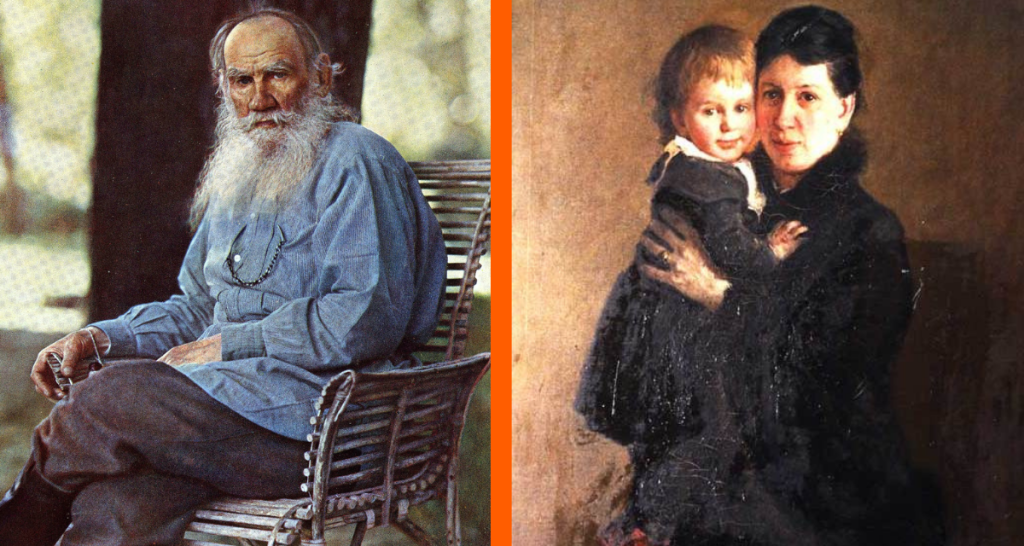
Russian writer and philosopher Leo Tolstoy created many literary masterpieces during his lifetime, including Anna Karenina and War and Peace. Works of love and tragedy, Tolstoy’s real life mirrored the full spectrum of the human experience—including in his marriage.
Tolstoy married his wife Sophia Bers (also ‘Sofia’ and ‘Sofya’, as well as ‘Sonya‘, which is the common Russian diminutive for Sofya), in 1862. He was 34, she was 18. Her father was a successful doctor in Moscow. Their marriage was famously tumultuous, but lasted 48 years.
Tolstoy shared his insights into marriage, summing up his wisdom in a single sentence that holds true in modern day life:
“What counts in making a happy marriage is not how compatible you are but how you deal with incompatibility.”
Despite their differences, Tolstoy and his wife put his advice into practice.
Leo Tolstoy’s marriage
Tolstoy’s marriage to Sophia began like many: happy. Leah Bendavid-Val, author of Song Without Words: The Photographs and Diaries of Countess Sophia Tolstoy, told NPR that, “They were madly in love when they got married in 1862, and they shared everything, including their diaries. They used their diaries to talk to each other.”
The couple had 13 children together, with eight making it into adulthood. Sofia was an asset to Tolstoy’s writing.
“She copied his manuscripts and he listened to her opinions, which was very gratifying to her,” Bendavid-Val said.
However, their relationship evolved into one described as “love-hate.” Bendavid-Val explained that their relationship was “very emotional, very passionate, and their love was full and passionate and deep and rich—and so was their hatred. And unfortunately, the hatred seems to have won out in the end.”
According to The New York Times, Sophia served as “secretary, copy editor and financial manager” for her husband. In 1869, she copied the manuscript for War and Peace by hand eight times for him.
A devoted wife, she struggled to meet Tolstoy’s demands and principles. She honestly journaled about her feelings, and many have been translated.
“All the things that he preaches for the happiness of humanity only complicate life to the point where it becomes harder and harder for me to live,” she wrote in a diary in 1865, per The Guardian. “His vegetarian diet means the complication of preparing two dinners, which means twice the expense and twice the work. His sermons on love and goodness have made him indifferent to his family, and mean the intrusion of all kinds of riff-raff into our family life. And his (purely verbal) renunciation of worldly goods has made him endlessly critical and disapproving of others.”
Toward the end of his life, an argument over Leo’s will resulted in him leaving their family home called Yasnaya Polyana. Although their relationship had its challenges, the couple did remain married until her husband’s death shortly after he left their home in 1910.
“They needed each other. Neither of them could have lived as full and rich a life without the other,” Bendavid-Val said.
From Pakistan to Tanzania, the most effective education solutions are community-led. Here’s how local leaders, in partnership with Malala Fund and supported by Pura, are mobilizing entire communities.
When asked to describe what Tanzania smells like, Grace Isekore closes her eyes and breathes in deep. For a moment, she’s somewhere else entirely. Tanzania is a rich tapestry of sights and scents, from the smell of sea mist that permeates the coastline to the earthy cardamom and cloves she cooks with in her kitchen. But when Grace emerges from her reverie, her answer is unexpected.
“Tanzania smells like peace,” she says, her eyes still closed. “I see a beautiful country where we are free to move, free to speak. And there is peace within the community.”
For Grace, that sense of peace isn’t just something she smells; it’s something she works toward every day. As a project coordinator with Pastoral Women’s Council (PWC), a women-led organization that empowers pastoralist communities in northern Tanzania, she has seen firsthand how girls flourish when they have the opportunity to attend school. Like scent, education not only connects girls to their own culture, but also helps broaden their horizons, realizing new possibilities for themselves and others. That transformation reshapes entire communities and ripples outward, with the potential to change countries and transform the world for the better.
Different scents, different approaches, and communities driving change
Spices in Tanzania. Captured by James Roh for Pura
For Grace and others around the world, education is freedom, as well as a pathway to a stronger community. Rooted in that shared belief, Pura, a home fragrance company, was inspired to build on their four-year partnership with Malala Fund to create something truly unique: a fragrance collection that connects people through scent to communities in Tanzania, Nigeria, Pakistan, and Brazil, where barriers to girls’ education are among the highest.
Using ingredients from each region, the new Pura x Malala Fund Collection uses scent to transport people to these regions directly. “Future in Bloom,” for example, invokes Pakistan’s lush valleys through notes of jasmine, cedarwood, and mango; while Tanzania’s fragrance, “Heart on Fire,” evokes the spirit and joyfulness of the girls who live there through cardamom, lemon, and green tea.
The new Collection honors the work Malala Fund does every day, partnering with locally-led organizations in these four countries to ensure every girl can access and complete 12 years of education. Each scent celebrates the joy, tenacity, and courage of the women and girls driving change on the ground, while also augmenting Pura’s annual grant to Malala Fund by donating eight percent of net revenue from the Pura x Malala Fund Collection to Malala Fund directly.
Just as each country’s scent is unique, so too are their needs related to education. But with support from Malala Fund and Pura, local leaders are coming up with creative ways to mobilize entire communities (parents, teachers, elders, and the students themselves, in their pursuit of solutions, understanding that educating girls helps everyone thrive. Here’s how their efforts are creating real, durable impact in Tanzania and Pakistan, and creating a ripple effect that changes the world for the better.
Parent-teacher associations help Maasai girls and their communities in Tanzania problem-solve
A girl’s school in Tanzania. Captured by James Roh for Pura
Northern Tanzania, Grace’s home, is home to pastoralist communities like the Maasai, a nomadic people who have moved with the seasons to nurture the land and care for their livestock for centuries. The nomadic nature of this lifestyle creates significant and unique barriers to girls’ education. Longstanding gender roles have enabled Maasai to survive in the harsh environment and have placed great value on both women and men. Over time, as nomadic life has been threatened by the privatization of land and stationary education models have been implemented, the reality of pastoralist livelihood has shifted and introduced new complexities. Now, the sheer distance to schools is both a practical challenge and one that often comes with danger from the landscape, predators, and potential exposure to assault along the journey. Girls shoulder the responsibility of household chores and there is often cultural pressure around early marriage – both leading to boys’ education being prioritized over girls’.
“There are very, very good [pastoralist] cultural practices, which are passed from generation to generation,” says Janet Kimori, an English teacher at Lekule Girls Secondary School in Longido, Tanzania. But when cultural practices act as educational barriers, “you have to sit down and look for where you are going to assist. As a school, as an individual, the school administration—all of us will chip in and know how we are going to deal with this problem.”
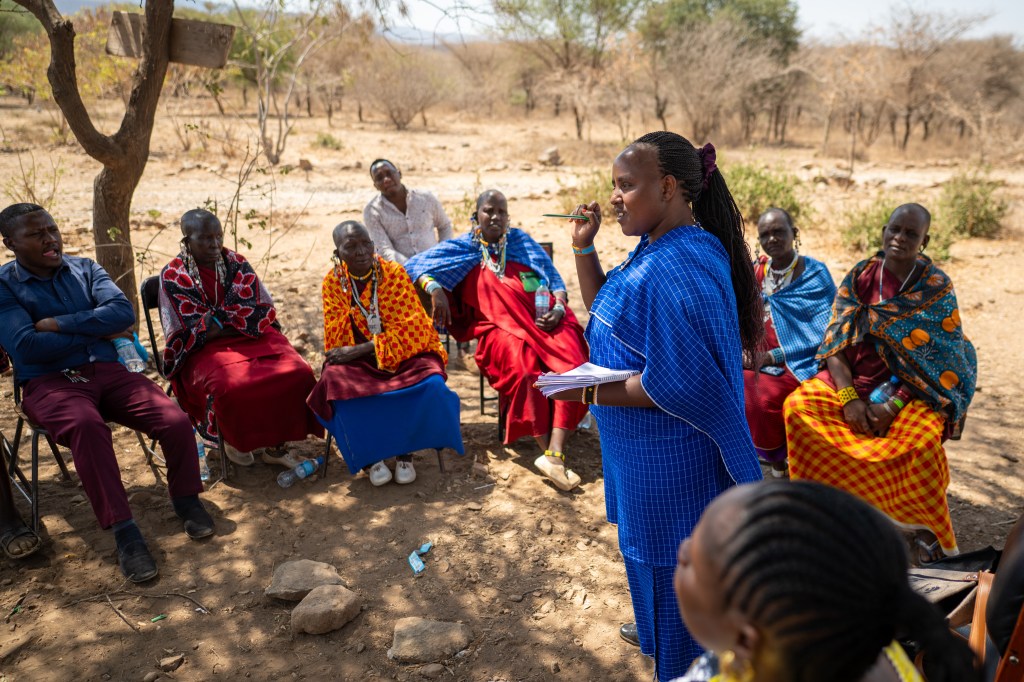
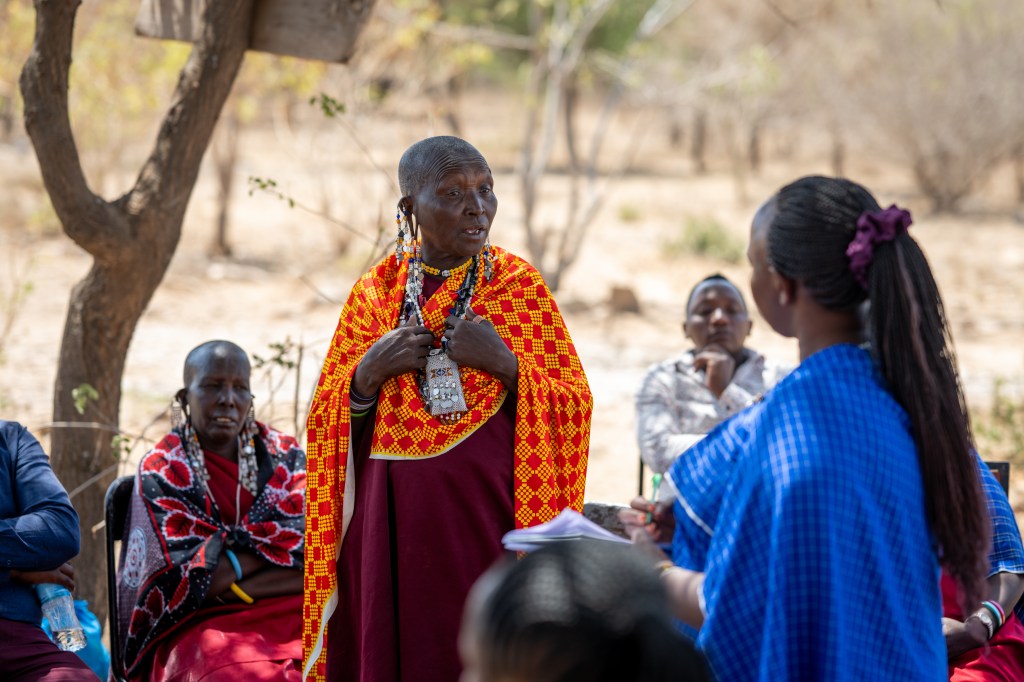
PWC works to ensure girls are able to exercise their right to an education while also preserving pastoralist culture. One successful approach, the organization found, has been the formation of Parent Teacher Associations (PTAs), created with help from Malala Fund. In PTA meetings, students, parents, teachers, elders, and government officials meet, discuss educational barriers, and come up with community-led solutions that preserve and honor their culture while advancing educational outcomes.
PTA meeting in Tanzania. Captured by James Roh for Pura
One recent PTA meeting highlights how these community-led solutions are often the most effective. At Lekule Girls Secondary School, the lack of fresh water forces girls to walk long distances to collect water for the school’s kitchen during the school day, and these long journeys not only disrupt class time but can leave girls vulnerable to sexual assault in isolated areas. Through facilitated discussion, PTA members landed on a solution: installing a borehole to pipe in fresh water to the school. Reliable access to water creates a better learning environment for the girls, but it also benefits the community at large, as local governments are then more likely to invest in health clinics and other community resources nearby.
With a solution in place, the PTA was then able to discuss ideas and map out a course of action. The women would raise money for the cost of the borehole, while the men would recruit workers to dig the hole and lay the pipe. Together, they would ask government officials to match their investment.
The benefits of PTA meetings within the pastoralist communities are undeniable. “The girls are talking and addressing issues in a confident way, and parents feel they are part of the resource team to solve challenges happening at school,” Grace says. One unexpected benefit: The larger cultural impact these PTA meetings have created. Thanks to the success of PTAs within pastoralist communities, the models are now being endorsed on a national level, and schools across Tanzania are starting to use them to solve problems in their own communities. When a community creates opportunities for girls to learn, everyone benefits.
Safe spaces in rural Pakistan help students and their parents connect, then drive change
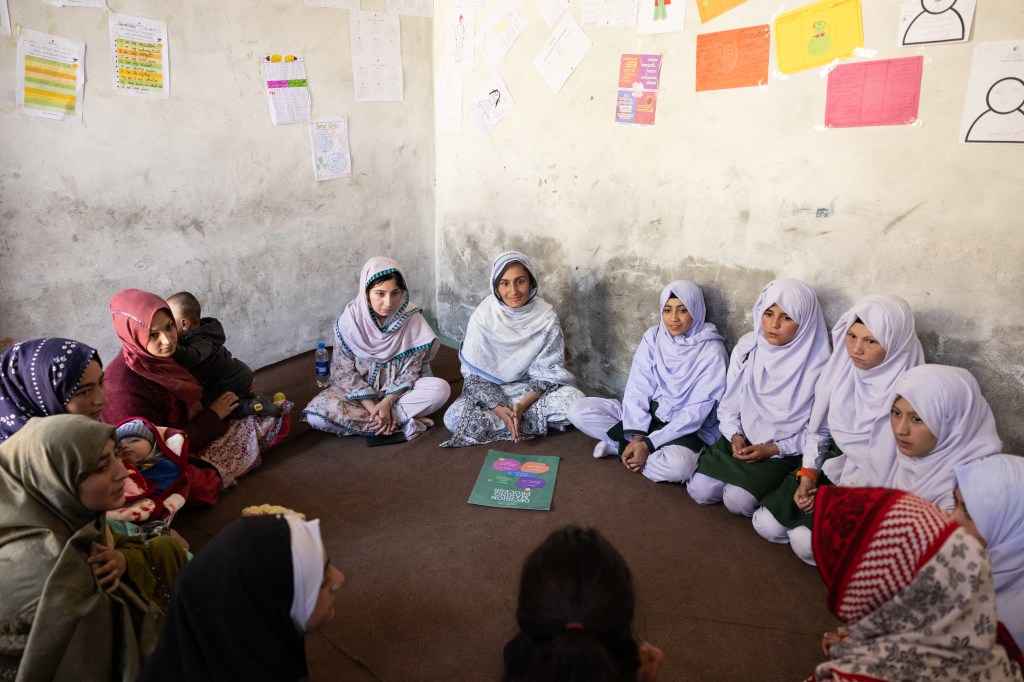
Safe space for girls meeting in Pakistan. Captured by Insiya Syed.
A continent away in Pakistan, the country’s northernmost region of Gilgit-Baltistan seems like a land untouched by time. The region’s looming mountains, snow-capped peaks, lush valleys and crystalline lakes draw nature lovers and landscape photographers from around the world, but living among this kind of breathtaking scenery has its drawbacks. Schools in the region are few and far between, and the area’s harsh climate often makes roads inaccessible for travel. Poverty and gender-based discrimination are additional obstacles, making school even further out of reach, and girls are affected disproportionately. Going up against these barriers requires a persistent, quiet strength that’s found in the women who live there and reflected in Pakistan’s signature scent.
Saheli Circles are how local leaders in Gilgit-Baltistan are bridging the gap between girls and education. An Urdu term for “female friend,” Saheli Circles are after-school safe spaces where girls explore subjects like art and climate change, while also developing skills that help them manage emotions, set goals, and build positive relationships. Girls study in groups, visit the library, play sports, and tackle filmmaking and photography projects, all designed to develop self confidence and teach the girls how to advocate for issues that matter to them. But the work doesn’t stop there.
“What we’re trying to achieve here will only be impactful if it trickles down to the home environment and the school environment,” says Marvi Sumro, founder and program director of Innovate, Educate, and Inspire Pakistan (IEI), the local organization that developed the Saheli Circles model and partnered with Malala Fund in 2021 to make it a reality. Ever since, Saheli Circles have grown to involve teachers, elders, and parents to encourage relationship building that’s essential for young girls and adolescents. “Our spaces can give mothers and daughters an opportunity to interact a little differently—do an art activity, or have a cup of tea together, or some good conversation,” Marvi says.
The relationship building is what makes the biggest positive impact throughout the community. Recently, one Saheli Circle was able to bring together parents, teachers, and administrators to advocate for better education at their local school, and together they convinced the department of education to hire a science teacher. Another Saheli Circle organized a fund where members of the community can contribute monthly to pay for uniforms, books, and other school expenses for the girls in their village, eliminating those small, hidden costs that are often a barrier to education for many. A third Saheli Circle was able to produce a short film about how gender-based household chores can take away valuable study time from girls, leaving them at a disadvantage. “The girls put the film together and showed it to the mothers, and the response from the mothers was just beautiful,” Marvi says.
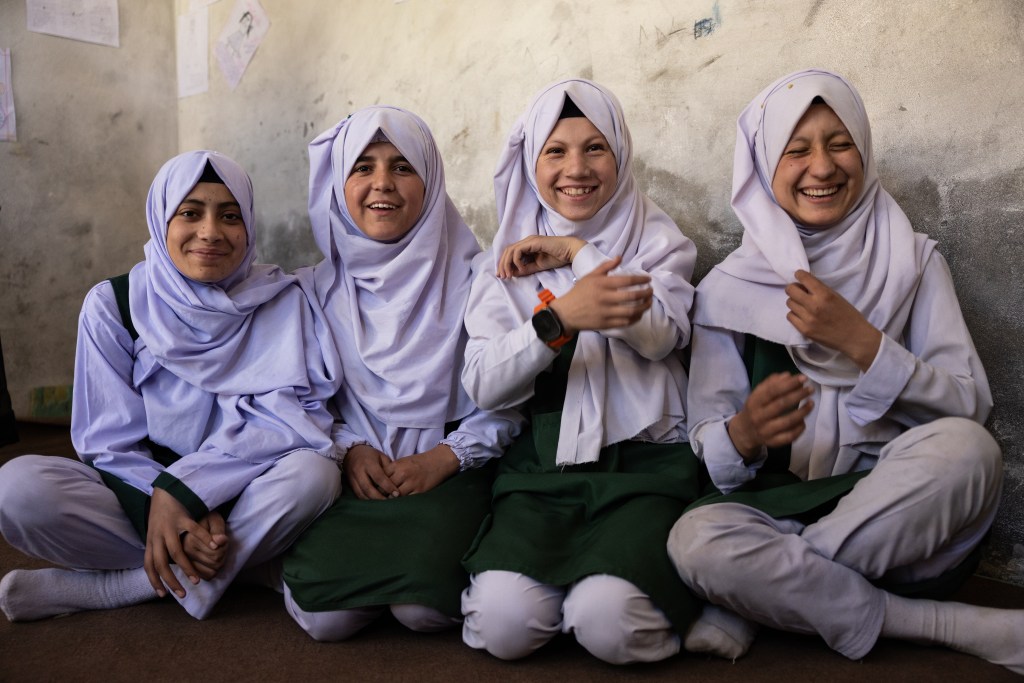
Girls smiling in Pakistan. Captured by Insiya Syed.
The education and relationship building that the girls receive in Saheli Circles connects them to larger opportunities and economic freedom that are not possible in their hometown. “For girls in Gilgit-Baltistan, education is extremely important because of the fact that we’re so far away from where the economy is, where the opportunity is. Education becomes this bridge for us, for our girls, to access all the opportunity and economy that exists in [larger cities].”
From rural Tanzania to remote Pakistan, local organizations prove every day that prioritizing girls’ education benefits everyone. Communities that lift up girls are able to secure resources like clean water and well-staffed schools, as well as build stronger relationships.
These outcomes are only possible because of the women and girls who work tirelessly in these regions to overcome barriers and drive progress. The Pura x Malala Fund Collection is a way to honor them, celebrate their achievements, and unite people the world over around a shared belief that education is freedom. Like scent, that belief can build, travel, and has the possibility to transform the world.
Experience the Pura x Malala Fund Collection here, and connect with the stories of real girls leading change across the globe.
Here’s something nobody warns you about adulthood: staying connected to your friends requires actual effort. Everyone’s busy. Everyone’s tired. And between work, family obligations, and that never-ending to-do list that lives in your notes app, the idea of hosting a get-together can start to feel less like something you want to do and more like something you’d need to recover from.
But what if hosting didn’t have to be such a production?
The less you have to do alone, the more fun everyone has together. Canva
These six party ideas are built around a beautifully simple premise: community. The less you have to do alone, the more fun everyone has together. So, no five-course meals. No obsessive cleaning. Just good people, a loose theme, and, if all goes well, the kind of easy laughter that reminds you why you love these people in the first place.
The Sandwich Party
The genius of this party lies in its simplicity. You supply the bread, your wonderful guests bring everything else. Deli meats, cheeses, roasted vegetables, the pesto from Costco that you’re convinced wipes the floor with every other brand, and whatever else they feel like contributing. Maybe you throw in some plates and napkins, too. Then everyone gathers around the table and builds their perfect sandwich. It’s like Subway… but this time, you’re the sandwich artist. Everyone is.
This genius idea comes from Michaela (@luckylamb420 on Twitter/X), who posted:
Because who wouldn’t want to get involved in a sandwich party? It’s interactive, requires approximately zero cooking skills, and for some reason, making a delicious little sandwich with good company is just wholesome and sweet.
Pro tip: Experiment with new flavor combinations. Interesting condiments work great here, like truffle mustard, spicy fig jam, or a good pesto (I hear Costco carries a great one…). Suddenly, your sandwich party has a proper spread. Tada!
The Swap Party
The one thing that unites us all? We have things sitting in random drawers or cabinets that we’ve never used. Never touched, really. A candle, still in the box. A skirt from a brand you no longer adore. A kitchen gadget (unused) that was purchased with the best of intentions. A swap party gives it all a second life.
Photo credit: Canva – We have things sitting in random drawers or cabinets that we’ve never used.
Here’s how it works: Everyone brings a handful of high-quality unused (or, in the case of clothes, gently used) items, and you trade them for something new to you. Think of it like free shopping with your favorite humans and no evil parking structures involved.
Pro tip: Curate the perfect shopping experience with a nice playlist bumping in the background (may I suggest one hour of Iranian jazz?), a delightful beverage option (perhaps aperol spritzes or chilled limeade?), and plenty of bags for your partygoers’ “purchases.” Also, whatever doesn’t get claimed at the end of the party? Box it up for a local charity that could put it to use.
The Productivity Party
This one sounds like it shouldn’t work, but it does. Imagine all the tasks you’ve been putting off: clearing out your inbox, paying a bill, and finally scheduling that routine dentist appointment. A productivity, or “forcing,” party gathers friends together with their laptops and their most dreaded to-do bullet points. As it turns out, working alongside other people makes the boring stuff more manageable. There’s even a name for it: body doubling. Psychologists say just being in the presence of others helps people focus and follow through.
Pro tip: Ask guests to bring something achievable—not their tax returns from three years ago (no judgment)—and realistic, something they can actually finish in an evening.
The PowerPoint Party
If you haven’t been to a PowerPoint party yet, here’s your invitation to host one. Each guest prepares a short, completely self-chosen slideshow on a topic they care deeply about or find deeply hilarious. Here are some ideas to get your creative juices flowing:
“Why [INSERT FAMOUS SINGER HERE] is overrated
Similar-looking celebrities
Things you’ve learned from watching TikTok videos
What I would do if there were no consequences for 24 hours
How everyone’s exes would fare in a zombie apocalypse
Our 2nd annual Power appoint Presentation Party and what we learned ✨ Not shown is Alex’s presentation on Money Trees and the propagations she gave everyone And Melanie’s presentation on the Real Fun Kamp!! #fyp#powerpoint#powerpointnight @Heather @Kelsey Leigh @Ash @NotEarlHickey @Tráshmañ @idesignawesome
The result? You’ll get someone earnestly arguing that a specific cartoon character is underrated, and someone else presenting a very detailed case for why their coffee order is objectively correct. It’s funny, it’s revealing, and it brings out sides of people you don’t always see.
Pro tip: The weirder the topic, the better the night. Encourage guests to go specific and strange.
The Candy Salad Party
Every so often, you need a party with exactly zero agenda other than joy…and maybe a sugar rush. That’s where the candy salad party comes into play. Ask each guest to bring a bag of candy. Dump it all into one big bowl. Eat it. That’s it. The mix of sweet, sour, fruity, and chocolatey is weirdly satisfying, and there’s something about the whole thing that just loosens people up immediately. And it’s a fun excuse to hang out.
Pro tip: Speaking of chocolate…fruity and sour candies tend to play better in the mix than chocolate. Think gummies, Sour Patch, mini Starburst. Chopped up SweeTarts Ropes… Though honestly, there are no rules.
The Potato Party
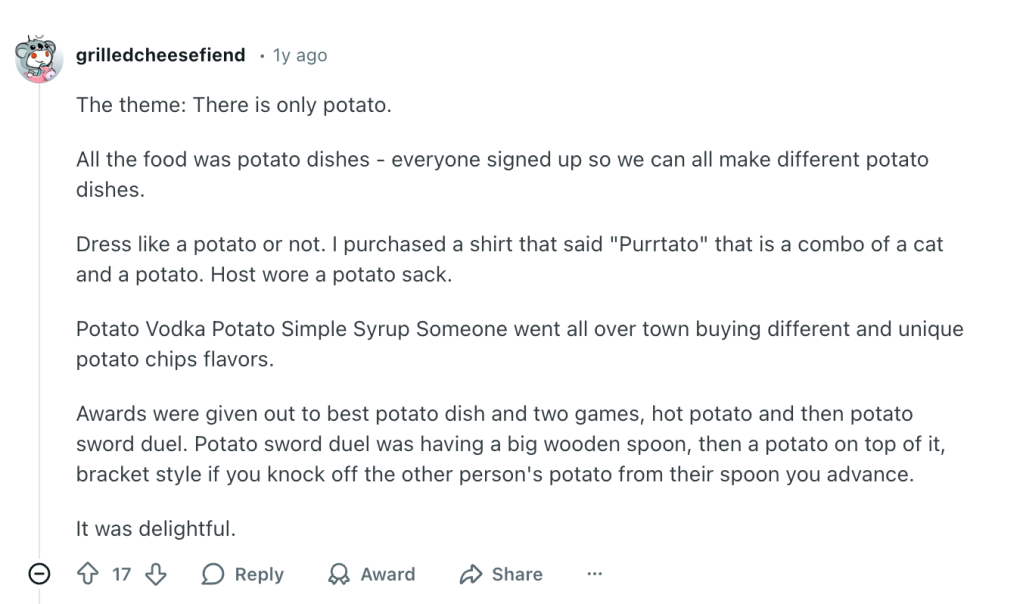
Some ideas are great precisely because they’re a little ridiculous. The potato party is spudtastic; a full commitment to a theme. Guests each bring a potato dish—fries, twice-baked, mashed, latkes, whatever speaks to them—and if anyone wants to show up in a potato-inspired costume, go ahead! You encourage it. Throw in a round of potato trivia if the mood strikes. It’s the kind of night you’ll reference for years: “Remember the potato party?”
Photo credit: Reddit – Thanks for the potato idea, Reddit!
Pro tip: Learn from a famous Bad Bunny song and lean all the way in on the décor. Take pictures. Lots of them.
Connection, that’s what we’re after
At the end of the day, these party ideas share something in common: they shift the weight of hosting from one person onto everyone, which means you actually get to enjoy your own party. Your friends leave having contributed something, made something, swapped something, or, at the very least, eaten a truly chaotic bowl of candy together.
That’s connection, baby. And it turns out you don’t need a perfect house or a spotless kitchen to make it happen. You just need to send the text.
It happens to the best of us. Sometimes we mark down important dates in our calendars only to completely space out and oops, the day has come and gone. That’s, seemingly, exactly what happened to Redditor Sure_Count_3890, a 31-year-old male who accidentally forgot his girlfriend’s birthday.
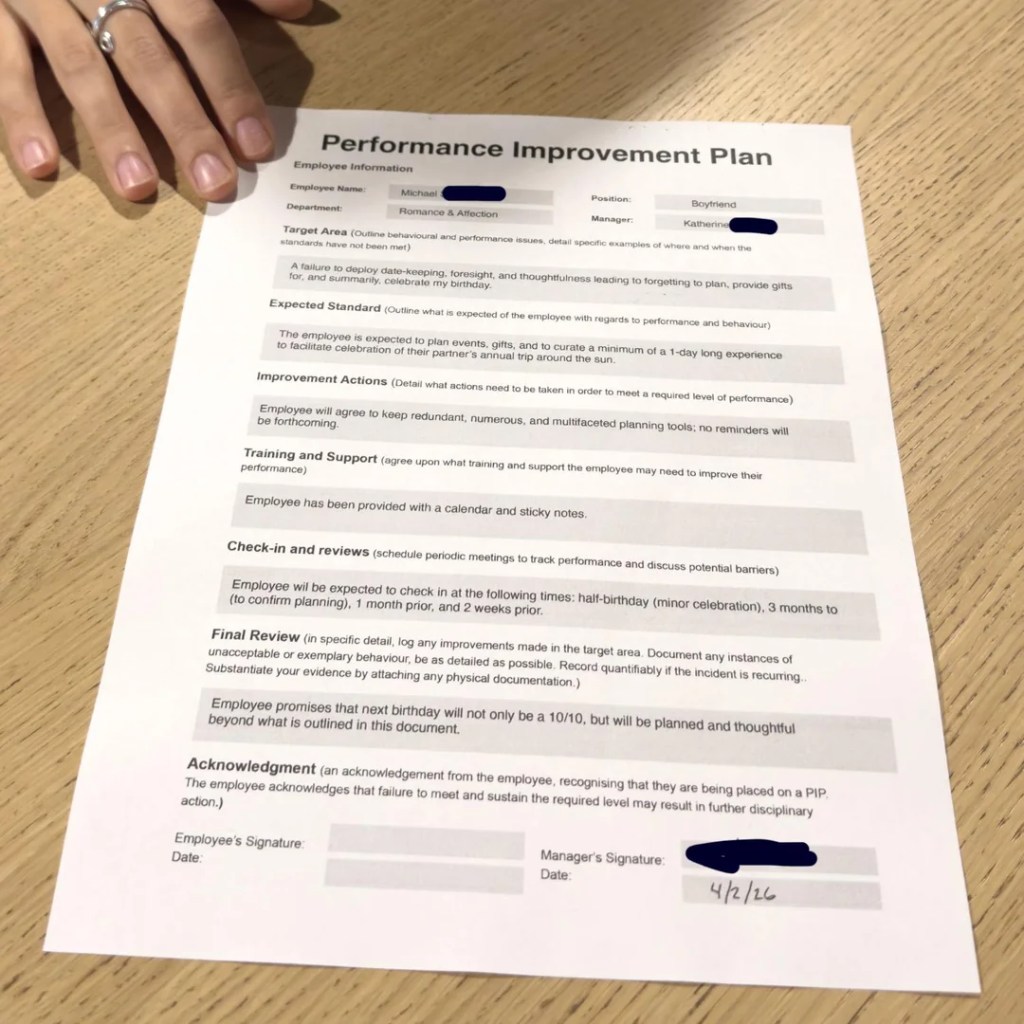
On a Reddit post entitled “Forgot my GF’s birthday and she wanted me to sign this,” he shares what looks like a performance improvement plan, not unlike one someone might get at a job review.
He further explains, “Obviously, I signed it but I feel weird about it. She (28F) hasn’t done something like this before and was kind of laughing, but when I asked if she was serious, she said she expected me to take it seriously. Note that we did have a make-up bday night already, I said sorry a lot, and I took her out for a movie and really nice dinner. She told me to post it bc she ‘knows people will back her up.’” And wow, did they ever!
Performance Improvement Plan for boyfriend, Photo Credit: Sure_Count_3890
The contract
At the top of the “contract,” it reads, “Performance Improvement Plan,” with the department listed as “Romance and Affection.” Michael (last name redacted) has the position of “boyfriend,” with Katherine as his “manager.”
The contract is pretty cut and dry. She includes a “target area,” wherein she describes the issue. “A failure to deploy date-keeping, foresight, and thoughtfulness leading to forgetting to plan, provide gifts for, and summarily plan my birthday.”
She then helpfully lays out the “employee standard.” “The employee is expected to plan events, gifts, and curate a minimum of a 1-day-long experience to facilitate celebration of their partner’s annual trip around the sun.”
The good news is she has a plan. In her idea for “Improvement Actions,” she suggests that Michael keep a record. “Employee will agree to keep redundant, numerous, and multifaceted planning tools; no reminders will be forthcoming.”
And finally, she offers a “Training and Support plan,” should Michael need assistance. “Employee has been provided with a calendar and sticky notes.”
Reddit weighs in
The Reddit comments did not disappoint. At over 34,000 upvotes, nearly 7,000 people weighed in with their thoughts. One seemed to believe that the performance review itself was in good fun, but the importance behind it was dead serious. “Sounds like she was joking about the document but said she was serious about remembering your girlfriend’s damn birthday. Remember your damn girlfriend’s birthday.”
And though quite a few were slightly tough on the lad, they noted that his girlfriend’s ability to be clear with her feelings, but in a fun, lighthearted way, was a wonderful reflection on her character. “Forgetting your partner’s birthday is a huge f#$-up at a fundamental level of a relationship. Making sure that never happens again is not a joke. The pretend ‘PIP’ and her laughing while giving it is her effort to find a way to tell him it matters, but break up the tension a bit. That’s part of the ‘joke’.”
Another Redditor simply raved about her. “Honestly, I think the whole situation is absolutely fantastic on her part. She’s giving an incredibly hurtful situation some levity to show him that she’s upset, but not furious at him, and is willing to give him a chance to make it up to her by being more thoughtful in the future. All while being hilarious.”
A learning experience
As for the OP, this comment advises them to learn from the unfortunate situation: “OP, YTA, but only because you missed her birthday in the first place. Take the L here and actually remember her birthday next time. In fact, most of what’s in this PIP is actually good advice for planning an important long-term date.”
And this commenter could totally relate to the situation: “In these days of constant phones-in-our-hands and electronic calendars, it’s not that hard to set up recurring reminders in your phone.
After my first Christmas with my boyfriend passed and he didn’t buy me anything (he’s not a gift giver, but neither am I, so no major judgment), I put a reminder in his phone for two weeks before Christmas to remember to buy his girlfriend something for Christmas. 10 years later, the ‘buy your girlfriend something for Christmas’ reminder still pops up every year, and we both have a good laugh about it because I’m his wife now. He remembers, though.”
The term “gaslighting” has become a popular, everyday term, but there’s still some confusion about what it means. Part of the reason is that the word has been misused so many times that the definition has become fuzzier. But another reason is that gaslighting itself is confusing for the person on the receiving end. Even if you know what gaslighting is, it’s not always clear when or if it’s happening to you.
To provide a brief explanation, gaslighting is a manipulation technique in which someone purposefully and maliciously makes someone question their reality. Abusers and narcissists will often use gaslighting to wear down their victims’ sense of self as a means of establishing and maintaining control over them.
In a relationship, gaslighting can look like denying that something happened and telling the person they’re crazy for how they’re remembering it. It can look like flat-out lying about something the victim knows for sure to be true. It can look like invalidating someone’s feelings and telling them they’re overreacting. It can look like being cruel and then claiming it was just a joke or making the victim believe they’re at fault for something the perpetrator did.
Woman looking tired and confused. Photo credit: Canva
Sometimes, however, people use gaslighting to describe basic disagreements or arguing from different perspectives, like simply saying, “That’s not what happened,” or “That’s not how I remember it.” Actual gaslighting is intentional in its impact on the victim. People can have different memories of how something happened and disagree vehemently, but if a person isn’t purposely trying to alter someone’s sense of reality, it’s not gaslighting.
Similarly, telling someone to calm down and not take things personally may not be a sensitive way to respond to a person who’s upset, but it doesn’t automatically equate to gaslighting, either. Gaslighting requires a malicious intent to manipulate and control.
“Gaslighting is a form of emotional abuse where one person’s psychological manipulation causes another person to question their reality. Gaslighting can happen between two people in any relationship. A gaslighter preserves his or her sense of self and power over the gaslightee, who adopts the gaslighter’s version of reality over their own.”
Gaslighting also isn’t confined to a one-time event, but is more a pattern of behavior. The gaslighter’s repeated distortions and denials wear the victim down over time, making them doubt themselves and question their reality. That’s part of what makes it hard to spot from the inside, since someone being gaslit is likely to question whether it’s really happening.
If you detect an unhealthy dynamic in your relationship, it’s important to seek professional help from therapist, especially if you suspect gaslighting may be at play. But having a tool to clarify what you’re experiencing and help determine what kind of help is needed can be useful.
Psychology Today offers a 20-question online self-test to help you assess whether gaslighting might be a problem in your relationship. The test takes about three minutes and includes statements like “This person makes me feel like I’m unstable,” “This person tells me that other people are not trustworthy,” and “I choose my words carefully when I’m with this person.” After responding to each statement with one of five answers ranging from Always to Never, the test tells you how likely it is that gaslighting is an issue in that relationship based on your answers. Possible outcomes include no signs, few signs, some signs, strong signs or very strong signs of gaslighting.
The test results page also provides more detail about what gaslighting is, things to watch out for so you can spot it, and tips for what to do if you are being gaslit in you relationship.
“The healthiest course of action, in most cases, is to end the relationship or significantly reduce contact,” the site states. “Leaving a gaslighting relationship is challenging but possible. Confrontation is rarely effective; instead, trust your instincts, gather evidence, reduce or cut off contact, and seek help from friends, family, or a therapist.”
Find the Psychology Today gaslighting self-test here. (And if you need a therapist to help you with your relationship struggles, you can search by location, insurance, and specialty on the website’s “Find a Therapist” database of providers here.)
This article originally appeared two years ago. It has been updated.
According to the authors, the key to happiness isn’t just love itself—it’s about “feeling loved.”
“I do know people who are happy, and I know people who are unhappy, and I can tell you the main difference between them: Happy people feel loved,” Reis said in a recent interview.
However, they explain that many people don’t know the difference between “being loved” and “feeling loved.”
“Being loved” vs. “feeling loved”
The difference between the two is key to true happiness.
“Many of us are actually loved by other people, and yet we don’t feel it,” said Reis. “Many people believe that in order to feel love, they need to make themselves more lovable.”
Reis and Lyubomirsky explain that people often try to attain love through performance, such as being impressive, attractive, or successful. But “feeling loved” comes down to vulnerability.
“To feel that the people in your life truly get you, value you, and love you is what makes life worth living,” they wrote in the book. “This is what makes people happy.”
To feel loved, you have to be known.
“Truly being seen and heard is what creates that deep sense of security about feeling loved,” Lyubomirsky said in an interview. “It doesn’t mean you need to overshare or unload your burdens on someone in the first 10 minutes of meeting them; it’s about progressively revealing what really matters to you.”
How to “feel” loved
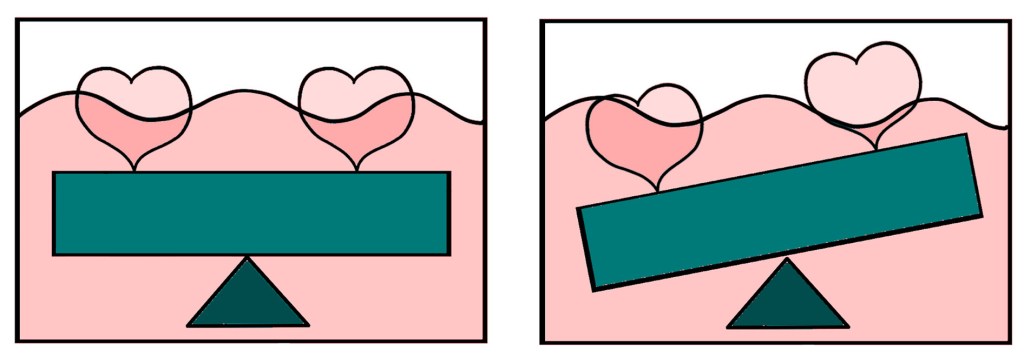
The “relationship sea-saw” is a tool that Reis and Lyubomirsky created to represent how connection works, and why it’s key to feeling loved. The relationship sea-saw mirrors a seesaw on a children’s playground, but on water. As each side dips into the water, it becomes “hidden”—an allusion to feeling hidden in relationships.
“When we lift up the other person, it’s as if we lift them above the waterline,” Reis explained. “All of a sudden, parts that were previously hidden are now visible.”
Two things lift a person in a relationship out of the water: paying attention and showing care. Reis and Lyubomirsky believe that showing more love in these ways can create a cycle of reciprocation.
“Most of who we are is hidden beneath the surface, and we usually only show that highlight reel,” Lyubomirsky said. “When I show warmth, curiosity, and acceptance toward you, I help lift you up out of the water. As I listen carefully, you’re able to share more of your full self. Then, the idea is that you will reciprocate, showing interest in my inner life and helping to lift me out of the water in return.”
She had a rule about meeting men from the internet: full CIA mode before any date. Look up the name, run it through public records, confirm the person is who they say they are. She’d done it enough times that it was second nature.
This time, she was running late.
In a TikTok that has been circulating widely, @maddybingbong walked through what happened when she skipped her usual process and nearly paid for it. She’d matched with a guy on Facebook Dating, they’d exchanged a few messages, and when he asked if she was free that evening she said sure. She got ready, got in the car, and started the 30-minute drive to meet him for dinner.
Her mom, feeling uneasy, started digging while her daughter was on the road.
There had been one small thing that hadn’t quite registered. When she’d asked the man for his full name, the screenshot from his Facebook profile showed his last name spelled backward. She ran a quick search, found only minor traffic violations, and kept driving. What she hadn’t done was search his actual name.
Her mom did. Using MyCase.gov, Indiana’s public court records database, she looked him up with the correct spelling and found several charges: battery, strangulation, and multiple counts of breach of privacy.
The call came just as the daughter was pulling into the parking lot. “Do not go inside,” her mom told her.
She didn’t. Instead, she called the man directly. She told him her mom had looked him up and found some things. He confirmed the charges were real but tried to minimize them, telling her it wasn’t as serious as it sounded and that she had nothing to worry about. She told him she didn’t know him personally and couldn’t take that on faith. “I’m going home,” she said. “I can’t make that risk.”
As the Daily Dot reported, she later said in a DM: “All I can say is that it definitely was an eye-opening experience to never let my guard down.”
Back home, she blocked him on every platform. In the video she pushed back on anyone tempted to frame what she did as standing someone up. She was clear: you don’t owe a stranger your time, your presence, or an explanation. The plans were made, the information changed, and she made a different call.
The comments filled up with people sharing their own versions of the story and swapping safety tips. Several pointed to public court records databases as an underused resource, and a few others noted that a name spelled backward on a dating profile is itself worth a second look.
For more dating videos, follow @maddybingbong on TikTok.
This article originally appeared earlier this year.
Making friends isn’t always easy for kids, but it’s pretty straightforward. Kid friendships usually start with something like, “Hey, cool bike.” Or “Hey, want to run across the field with me?” Or “Hey, let’s pretend [fill in imaginary scenario].” If the other kid responds positively, boom, you’re friends. If only it were that simple for…
Making friends isn’t always easy for kids, but it’s pretty straightforward. Kid friendships usually start with something like, “Hey, cool bike.” Or “Hey, want to run across the field with me?” Or “Hey, let’s pretend [fill in imaginary scenario].” If the other kid responds positively, boom, you’re friends.
If only it were that simple for grown-ups. Making friends in adulthood can be tough, and for some it might feel impossible. There are several reasons for that, but let’s start with one that may be easier to change than you might think.
The “liking gap”
One reason it can be hard to make friends as an adult is that we fear feeling rejected. Are other adults even looking for new friends? Will they like us enough to want to become our friend?
That fear may itself be the problem, or at least part of it. Researchers who studied people talking to strangers in various settings found that “following interactions, people systematically underestimated how much their conversation partners liked them and enjoyed their company.” In other words, people tend to be more likable than they think. The study’s authors called this illusion the “liking gap.”
If you chat with someone and come away thinking they didn’t enjoy it, you may have fallen into the liking gap. “Our studies suggest that after people have conversations, they are liked more than they know,” the researchers wrote.
Help fix the Liking gap by telling everyone important to you how much you love them pic.twitter.com/CNbONeYSlP
What’s the solution? Another phenomenon known as the “acceptance prophecy,” which is based on research showing that when we believe others are going to like us, we tend to be more open and warm in our behavior toward them—thereby making them like us. The reverse is also true. When we think people won’t like us, we’re more closed off. It’s a self-fulfilling prophecy: when we think we’re likable, we behave in more likable ways, leading others to like us.
Essentially, we close the liking gap by seeing ourselves as likable. That may be harder than it sounds in practice, but it’s a pretty simple fix. (If you can convince your brain to cooperate, of course.)
But what about the harder problems to solve?
The time and energy problem
One of the biggest obstacles to making friends as an adult is simply time. Between work, family, keeping a home in order, taking care of our health, and everything else, grown-up life is busy. And yet, many adults yearn for more friend connections in the free time they do have.
Then there’s the energy question. “After a long workday, the idea of a night out with friends may not sound as appealing as it once did,” wrote psychologist Loren Soeiro. “This energy shortage can also make it difficult for friends to sustain their bonds: When both people feel depleted, neither is likely to take the initiative.”
How do we make or maintain friendships when we’re so often short on time and energy?
Adult friendships are more complex
What formed the basis of friendships in our childhood may not be sufficient to sustain a friendship in adulthood. Shared interests, or simply enjoying someone’s company, are often how friendships begin. But is that enough to overcome the time and energy constraints that make friendship harder?
As Emma Barr, LPA, pointed out, they may not be: “What becomes more important are character traits like dependability, supportiveness, or loyalty. Those are things that aren’t immediately self-evident. That can make it hard to tell if this is a person you really want to be friends with.”
We have fewer shared experiences baked into daily life
When we’re young, much of our day is structured around group experiences like school and after-school activities. In adulthood, our work might be a group experience, but it might not be. Many people work from home, which makes forming friendships at work difficult. Some people belong to churches or religious groups and might be able to form friendships there. Beyond that, much of adult life is individually oriented. We simply don’t have as many structured social experiences as we did when we were young.
The 3 conditions that facilitate the formation of close friendships: 1) proximity 2) repeated unplanned interactions 3) a setting that allows for letting ones guard down
Forming deep friendships as an adult can be tricky because these aren’t built as naturally into daily life
Friendships can be complicated, but there are some ways to make and maintain them better:
Be the one to reach out
“Don’t wait for others to suggest socializing opportunities,” Soeiro wrote. “You may wish your old friends would reach out to you, but the odds are your friends harbor the same wishes, the same needs. Break the logjam by initiating plans yourself.”
Be honest about wanting to keep friendships up
As adults, sometimes the best bet is to refresh the friendships you already have, especially if they’ve begun to fade.
“Because your friends probably also think their peers have more friends than they do, it makes sense to talk about the problem,” Soeiro wrote. “Letting them know you want your friendships to stay strong, or that you sometimes feel distant, can help normalize these feelings. (Remember, when you can share your vulnerability and feel accepted in return, relationships grow stronger.)”
Adult friendships require grace. People are very busy. People are healing. People are growing. People are taking time for self care just like you.
Less communication isn’t less love. Check in don’t check out.
Therapist Kati Morton shared that as she’s gotten older, she’s felt like every friendship needs to be a deep, sisterly relationship.
“That’s just not possible,” she said. “And so I have to almost recalibrate my own brain to be like, no, it’s okay to have different friends for different reasons. We can have a friend that is helpful at work. We can have a friend who is great for holding us accountable to go to our yoga class or go walking. We can have a friend as part of our book group.”
Don’t let social media fool you
It’s easy to see people posting pictures of friend hangouts and assume that everyone else is better at friendship than we are.
Soeiro described findings from researcher Kristine Lehman, saying she “noted that on apps like Instagram, other people appear to have more friendships, and more satisfying ones, than we do. This perception can heighten a sense of FOMO, magnifying our feelings of shame and isolation.”
Give it time
As kids, forming a friendship may have been as simple as asking, “Want to be friends?” As adults, the process isn’t so cut and dried.
“Allow the process to take time,” Barr wrote. “A friend is someone you trust, but trust takes time to build. You may find that there isn’t a moment where you went from not being friends to being friends; people tend to grow on us slowly.”
Grown-up friendships may be trickier, but they are no less valuable than those we made as kids.
Dating is hard, no matter who you are. Some people struggle to find any dates at all. Others come by them easily but can’t seem to make a genuine connection. By and large, many Americans report being frustrated by a dating-app culture that promised to make things easier but, in most cases, has not. If…
Dating is hard, no matter who you are. Some people struggle to find any dates at all. Others come by them easily but can’t seem to make a genuine connection. By and large, many Americans report being frustrated by a dating-app culture that promised to make things easier but, in most cases, has not. If you’re someone who’s fresh off a divorce, you’re playing on hard mode. It can all feel a little hopeless.
But it shouldn’t. One social media user is going viral for taking a stand: She said dating divorced men has led to some of the best dating experiences of her life. And she’s not the only one.
Artist and musician Kady Brown caused a stir on Threads recently when she shared her controversial opinion:
“Dating a divorced man has been one of the most agreeable dating experiences of my life. It makes sense but I don’t think I expected that. It’s like he has relational basics like consideration, accountability, and resolution skills down in a way I haven’t always seen in single (never married) men without asking or explaining. It’s kind of lit … and very attractive”
“Second wife perks. His first wife molded him. The second reaps the benefits,” another added.
“Certified preowned…but seriously he already been thru the trenches…learned some lessons…understands dynamics…and overstands communication and consideration,” a commenter noticed.
“I agree. He’s taught me that I’m not as good with communication as I thought I was. It’s been refreshing,” another wrote.
Divorce is not generally considered a good thing. But there can be a bright side.
Few people are happy about the failure of a marriage they had hoped would last a lifetime. Interestingly, many people do not report feeling happier after ending a conflict-fueled marriage. But in certain situations, it can be the right move for all parties involved.
Like any breakup, a divorce can be a tremendous opportunity to learn from your mistakes and grow as a person. According to Psychology Today, people who have been honest about their role in the split, taken the opportunity to discover what they want out of a partner and out of life, and allowed enough time to heal can become terrific partners to someone new down the road.
But as many commenters on Brown’s post pointed out, not everyone will take that path.
“[Maybe] he just got good at masking the parts on himself that likely ran the last woman away,” one commenter wrote.
“I fell in love with a divorced man. Later, I realized he was just parroting what his ex wife and ex girlfriend had they wanted and he was lacking,” someone added.
“Ok but anecdotally, some divorced men are just teenagers who will never realize they’re the reason all their relationships are burnt bridges, smoldering stacks of self-centered arrogance,” wrote another commenter.
The “good ones” are out there
Laura Bonarrigo, a divorce and life coach, said the same is true for anyone who finds themselves dating a woman who’s been through a divorce.
The “good ones,” she wrote, are out there in spades, and dating one can be a massively refreshing experience after the unpredictability, flakiness, and ghosting of modern dating.
“There’s accountability in the way she reflects on her history, and rather than reenacting old wounds, she’s choosing to build something healthier moving forward,” she added. “Instead of clinging, chasing, or disappearing only to resurface with flimsy explanations, she moves through dating in a steady and predictable way. Reliability matters to her. She’s looking for a connection that feels mutual, grounded, and emotionally safe, not a dynamic filled with mixed signals or chaos.”
Whether this outcome requires growing up, therapy, a period of focusing on self-improvement, or just some time, it’s safe to say that divorced people bring more than just “baggage” to the dating scene. There’s a heavy stigma against divorced folks, who are often viewed as failures or damaged, but it’s steadily getting better—partly thanks to voices like Brown’s, who are willing to challenge that outdated notion head-on.
In its survey of nearly 6,000 singles, Plenty of Fish found that in 2025, 42% of respondents were already choremancing in their own lives, whether they were familiar with the term or not. This trend is far from niche—it’s a cultural shift.
But what’s driving this trend? And will it stick around after the novelty wears off? Let’s explore why choremancing is so popular right now, what science says about bonding over mundane tasks, and when this trend might spell doom for your relationship.
The rise of low-pressure dating
Somewhere between swiping fatigue and the pressure of planning the “perfect” first date, something in the dating world cracked. A growing number of singles—particularly Millennials and Gen Z—have grown tired of the performative side of dating: the carefully curated profile, the buzzy restaurant reservation, the rehearsed talking points that make you look cool and totally not damaged by your ex. All of it can feel exhausting before you even shake hands.
In its survey of 1,000 singles, Arrows (a modern matchmaking service) found that 65% of respondents are done with high-pressure first dates and prefer low-key meetups centered around everyday tasks. The numbers don’t lie: young singles today crave connections that feel natural.
Eva Gallagher, a resident expert for Plenty of Fish, put it this way:
“What we’re seeing for 2026 is a real shift in mindset. Trends like Choremance and Love Bubbling show that people are no longer waiting for the perfect moment; they’re making everyday experiences meaningful and embracing connection wherever it shows up. There’s a growing confidence amongst singles, and that optimism is exactly what gives people hope in their dating lives.”
The shift toward casual dating has been brewing for a long time. Authenticity is no longer a buzzword; it’s a real priority. When you meet someone at a farmers’ market in your worn-out blue jeans and the stained T-shirt you got in middle school after qualifying for the regional spelling bee, it’s harder to keep your social mask on than at, say, a cocktail bar downtown. That’s the point.
The psychology of boring
There’s a scientific reason why doing chores together can make you feel closer to someone. When you cooperate on a shared task, your brain releases oxytocin, a chemical that helps people bond. The effects become even stronger when the activity involves working together in close proximity. Completing an errand—like finding the best, perfectly ripe avocados at the grocery store—creates a shared sense of accomplishment, and your brain links that positive experience to the person you’re with.
Shared routines build consistency and familiarity, which our brains interpret as safety. This sense of security is essential for deeper emotional vulnerability, meaning that, yes, doing the dishes together might open the door to conversations that a romantic candlelit dinner might not.
And it’s not just a hunch—the research agrees. Daniel Carlson, a sociologist at the University of Utah, discovered that couples who shared three or more household tasks reported greater relationship satisfaction than those who divided the chores. A study from Brigham Young University found something similar: the way couples did housework mattered more than who did what. It was the quality of their teamwork, not just how they divided the work, that made all the difference.
Dr. Bruce Y. Lee, a contributor to Psychology Today, put it best:
“Through chores, you can see how both of you handle a little work and potential challenges. You can see who a person really is—helpful, adaptable, and resourceful versus selfish, inflexible, and easily frazzled.”
The case against choremancing
Before you cancel every dinner date on your calendar, there are a few cautions about choremancing you should know.
The Guardianhighlighted a key tension in the trend: while choremancing can be a great compatibility test, it could also be a “horrible indictment of the societal pressures that have transformed love into yet another tick-box on a constantly updating to-do list.” That’s a critique with some merit.
Psychologist Lordy Santos told PhilSTAR L!fe that, with choremancing, people may “begin to treat productivity or practicality as the sole metric for determining romantic compatibility,” thereby completely sidelining emotional connection or attraction.
Another caution: don’t get too comfortable. While choremancing creates casual, low-stakes dating opportunities, sometimes you still want to dress up, put on your best unstained clothes, and eat at a fancy restaurant. It’s nice to feel like someone planned a date for you. Dating should feel intentional, too.
In short, choremancing should complement intentional quality time, not substitute for it. Research also shows that relationships still need novelty, planned dates, and genuine fun to thrive. Yes, shared errands build familiarity, but shared adventures build memories. Both are essential for a healthy partnership.
Top choremancing activities to try
Ready to give choremancing a shot? Data from Plenty of Fish found that the most popular activities for sparking a connection are walking (52%), running errands (51%), and grocery shopping (41%). If you’re looking for more ideas, here are a few other activities to consider:
Cooking a meal together can be low-pressure and very cute. Photo credit: Canva
Cook a meal together: Sharing the whole process—from the Trader Joe’s run to the finished product—makes it a flirty and fun joint effort.
Visit a farmers’ market: A low-pressure outing with fresh air, plus plenty of sensory details to spark easy, natural conversations.
Meal prep for the week: A practical and collaborative task that can reveal a lot about your priorities and lifestyle habits. And even if the date goes poorly, at least you’ll wind up with a week’s worth of food.
Browse a thrift store or bookstore: A relaxed and exploratory way to learn about the other person’s tastes and sense of humor.
Tackle a small DIY project: Assembling furniture or mounting a television is a great way to test your teamwork, communication skills, and patience.
Go for a walk: Movement helps reduce social anxiety and awkwardness, allowing conversation to feel more organic.
Run errands together: A quick trip to the post office or dry cleaner can be surprisingly fun and revealing.
The key to all of these activities is that they serve a primary goal: connection. The errand is simply the vehicle, not the destination.
Finding the delicate balance
Choremancing isn’t a replacement for traditional romance; it’s an expansion of it. The healthiest relationships have a balance of both: the “everyday togetherness” of shared tasks and the “intentional dates” that remind you why you fell for each other in the first place.
Perhaps the truest definition of compatibility isn’t found across a candlelit table, but in the simple ease of an ordinary Tuesday. Give it a try. You might be surprised by what you learn from a simple trip to the grocery store.