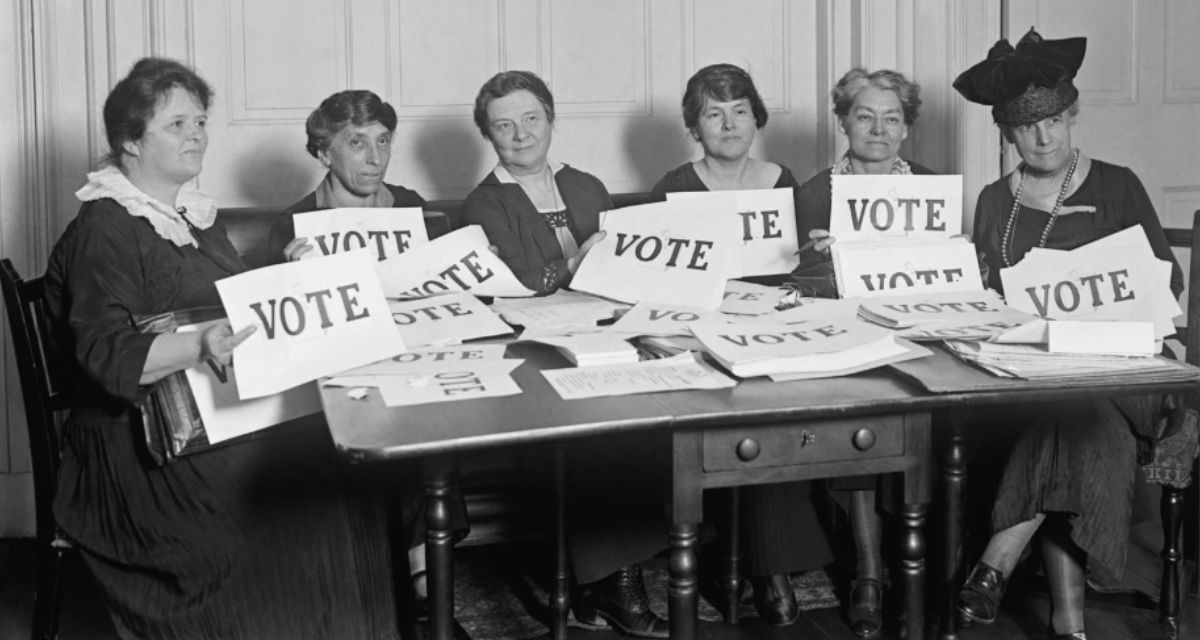
From the first organized movement for women’s suffrage in the United States, it was many long years before the 19th Amendment officially granted American women the right to vote. In July 1848, the first group of suffragists, led by Elizabeth Cady Stanton and Lucretia Mott, met in Seneca Falls, New York, for a groundbreaking convention to discuss the fight for women’s right to vote.
Although all but one of the convention attendees would not see a final victory in their lifetime, they laid the groundwork. Seventy-two years later, on August 18, 1920, the state of Tennessee ratified the 19th Amendment, giving women the right to vote throughout the country.
But Tennessee would not have passed it without one very important person: Febb Ensminger Burn. She was the mother of Tennessee State Rep. Harry T. Burn, and she changed the trajectory of history with a simple letter to her son.
The 19th Amendment vote in Tennessee
The 19th Amendment reads: “The right of citizens of the United States to vote shall not be denied or abridged by the United States or by any State on account of sex. Congress shall have power to enforce this article by appropriate legislation.”
In June 1919, Congress passed the 19th Amendment. However, to be certified as part of the U.S. Constitution, the amendment required ratification by 36 states to pass at the federal level.
When the 19th Amendment came before the Tennessee state legislature, 35 states had already ratified it. It needed approval by just one more state—and it came down to State Rep. Burn’s vote at the State Capitol in Nashville on August 18.
Burn and the battle for suffrage
At the time of the historic vote, a lobbying battle, known as the War of the Roses, was brewing between Tennessee’s suffragists and anti-suffragists.
Those in favor of suffrage wore yellow roses to show their support, while the anti-suffragists wore red roses.
Burn was just 24 years old. He wore a red rose, came from a conservative district, and had previously voted nay in two votes that ended in ties.
At the calling of the third vote, the other representatives assumed his vote would stay the same. However, that morning, Burn had read a letter from his mother.
Febb Ensminger Burn’s convincing letter
Burn received the pivotal letter from his college-educated mother on the morning of August 18. Although he planned to vote nay, the 7-page letter convinced him otherwise.
Febb Ensminger Burn wrote: “Hurrah and vote for Suffrage and don’t keep them in doubt … I’ve been watching to see how you stood but have not seen anything yet … Don’t forget to be a good boy.”
When the time came for him to vote, the count was 48-48. His “aye” surprised many members of the Tennessee House of Representatives and solidified the 19th Amendment’s ratification.
The next day, State Rep. Burn stood by his decision in an address.
“I knew that a mother’s advice is always safest for a boy to follow and my mother wanted me to vote for ratification,” he said. “I appreciated the fact that an opportunity such as seldom comes to a mortal man to free 17 million women from political slavery was mine.”