A new camera developed at MIT can photograph a trillion frames per second (fps).
Compare that with a traditional movie camera which takes a mere 24fps. This new advancement in photographic technology has given scientists the ability to photograph the movement of the fastest thing in the Universe: light.
The actual event occurred in a nano second—that is one billionth of a second—but the camera has the ability to slow it down to twenty seconds.The amazing camera. <a href="https://youtu.be/7Z8EtlBe8Ts"></a><a href="https://youtu.be/7Z8EtlBe8Ts">Photo from YouTube|Nova50</a>
For some perspective, according to New York Times writer John Markoff, “If a bullet were tracked in the same fashion moving through the same fluid, the resulting movie would last three years.”
In the video below, you’ll see experimental footage of light photons traveling 600-million-miles-per-hour through water.
It’s impossible to directly record light, so the camera takes millions of scans to recreate each image. The process has been called “femto-photography” and according to Andreas Velten, a researcher involved with the project, “There’s nothing in the universe that looks fast to this camera.“
An Operation Smile volunteer reverses an oxygen mask so a child with a cleft condition can blow a bubble for the first time in Guadalajara, Mexico. (Operation Smile Photos)
For thousands of children born with cleft conditions, Operation Smile provides simple, playful tools—like bubbles—to strengthen the skills they need to speak and thrive.
While a bottle of bubbles might seem out of place in a hospital setting, you might be surprised to learn that, for thousands of children around the world born with cleft lip and palate, they can be a helpful tool in comprehensive cleft care. Lilia, who was born with cleft lip and palate in 2020, is one of the many patients who received this care.
As a toddler, Lilia underwent two surgeries to treat cleft lip and palate with Operation Smile’s surgical program in Puebla, Mexico. Because of Operation Smile’s comprehensive care, it wasn’t long before her personality transformed: Lilia went from a quiet and withdrawn toddler to an exuberant, curious explorer, babbling, expressing herself with a variety of sounds, and engaging with others like any child her age.
Lilia is now a healthy five-year-old, with the same cheerful attitude and boundless energy. Her progress is the result of care at every level, from surgery to speech therapy to ongoing support at home—but it’s also evidence that small, sustained interventions throughout it all can make a meaningful difference.
Lilia at age 1, before surgery, and at age 5, 4 years post-surgery
Cleft Conditions: A Global Problem
Since 1982, Operation Smile has provided cleft lip and cleft palate surgeries to more than 500,000 patients worldwide with the help of generous volunteers and donors. Cleft conditions are congenital conditions, meaning they are present at birth. With cleft lip and palate, the lip or the roof of the mouth do not form fully during fetal development. Cleft conditions put children at risk for malnutrition and poor weight gain, since their facial structure can make feeding challenging. But cleft conditions can have an enormous social impact as well: Common difficulties with speech can leave kids socially isolated and unable to meet the same developmental milestones as their peers.
Surgery is a vital step in treating cleft conditions, but it’s also just one part of a much larger solution. Organizations like Operation Smile emphasize the importance of multi-disciplinary teams that provide comprehensive, long-term care to patients across many years. This approach, which includes oral care, speech therapy, nutritional support, and psychosocial care, not only aids in physical recovery from surgery but also helps children develop the skills and confidence to eat easily, speak clearly, and engage in everyday life. This ensures that each patient receives the full range of support they need to thrive.
Marie, 11 months, with her mother at Operation Smile Madagascar before her cleft surgery (Operation Smile Photos)
A Playful (and Powerful) Solution
Throughout a patient’s care, simple tools like bubbles can play a meaningful role from start to finish.
Immediately before surgery, children are often in a new and unfamiliar environment far from home, some of them experiencing a hospital setting for the first time. When care providers or loved ones blow bubbles, it’s a simple yet effective technique: Not only are the children soothed and distracted, the bubbles also help create a sense of joy and playfulness that eases their anxiety.
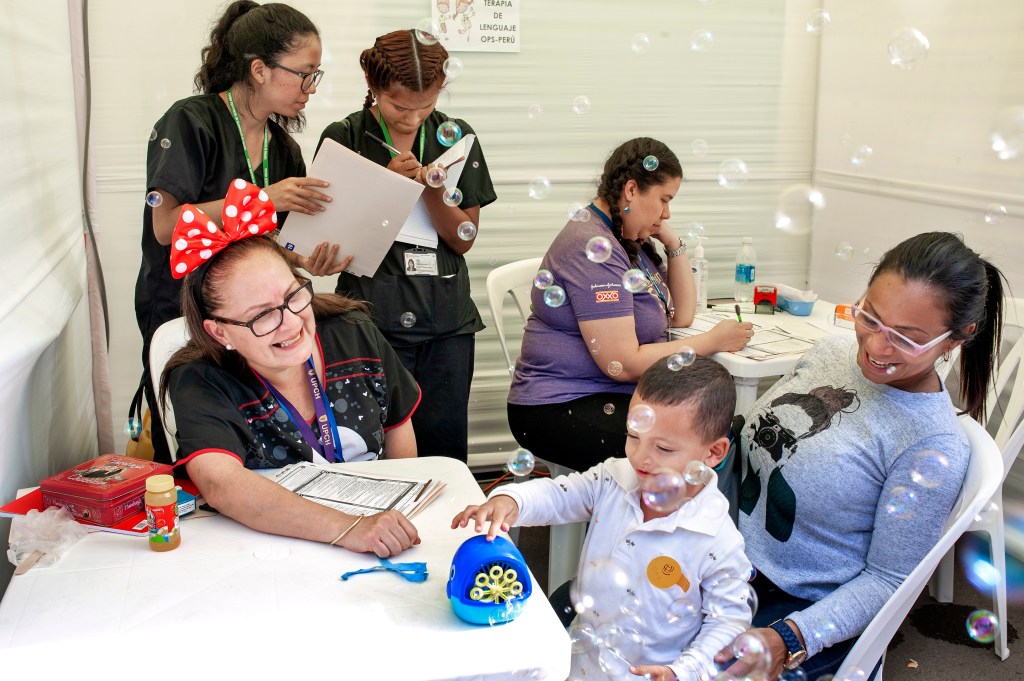
Milagros Rojas, a volunteer speech therapist in Peru, using bubbles in a screening with a patient. (Operation Smile Photos)
In speech therapy, bubbles can take on an even more important role. Blowing bubbles requires controlled airflow, as well as the ability to form a rounded “O” shape with the lips, which are skills that children with cleft conditions may struggle to develop. Practicing these skills with bubbles allows children to gently strengthen their facial muscles, improve breath control, and support the motor skills needed for speech development. Beyond that, blowing bubbles can help kids connect with their parents or providers in a way that’s playful, comforting, and accessible even for very young patients.
Finally, bubbles often follow patients with cleft conditions home in the “smile bags” that each patient receives when the surgical procedure is finished. Smile bags, which help continue speech therapy outside of the hospital setting, can contain language enrichment booklets, a mirror, oxygen tubing, and bubbles. While regular practice with motor skills can help with physical recovery, small acts of play help as well, giving kids space to simply enjoy themselves and join in on what peers are able to do.
Bubbles at Home and Beyond
Today, because of Operation Smile’s dedication to comprehensive cleft care, Lilia is now able to make friends and speak clearly, all things that could have been difficult or impossible before. Instead of a childhood defined by limitation, Lilia—and others around the world—can look forward to a childhood filled with joy, learning, discovery, friends, and new possibilities.
CTA: Lilia’s life was changed for the better with the care she received through Operation Smile. Find out how you can make an impact in other children’s lives by visiting operationsmile.org today.
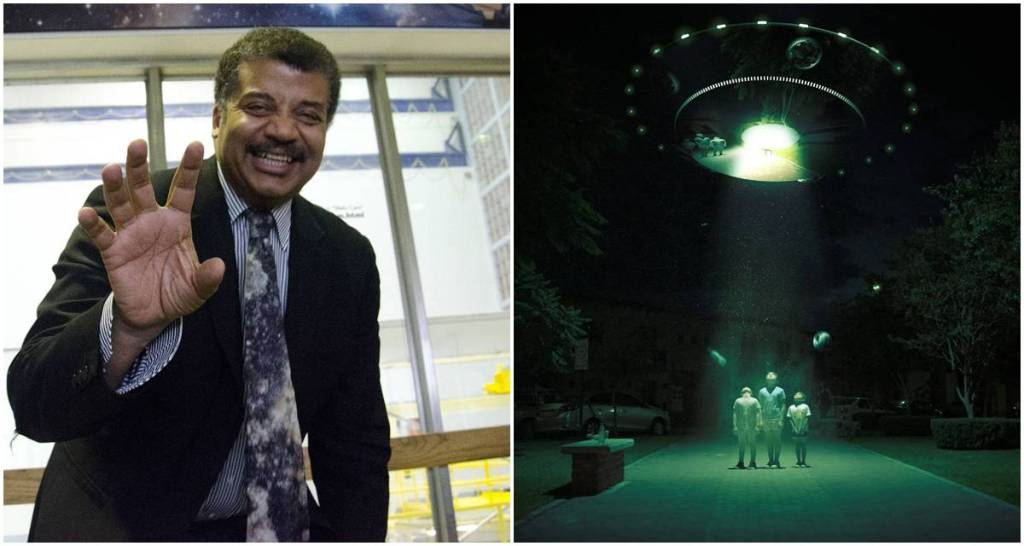
Neil deGrasse Tyson—astrophysicist, director of the Hayden Planetarium, and host of the StarTalk podcast—is one of America’s most popular science communicators. He has worked tirelessly for more than four decades to improve scientific literacy and instill a greater sense of awe about the cosmos.
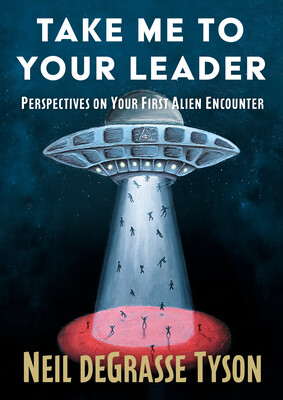
In his new book, Take Me to Your Leader, Tyson loosens his space tie a bit and has fun examining the possibility of aliens visiting Earth from scientific, historical, and pop-culture perspectives.
Upworthy spoke with Tyson about why he chose this moment to discuss aliens, how we should greet them if—or when!—they land, and how he hopes to broaden people’s perspectives through the alien narrative.
“The real transition for me was the high-ranking officials who came forth in Congress,” Tyson said. “Much of which landed in that two-hour, hour-and-fifty-minute documentary, Day of Disclosure. So it elevated once it hit that level. It was no longer the sleepy farmer in the back 40 reporting on a glowing object over his farm. It was no longer the drunken revelers coming out of the bar at 2 a.m. reporting on the glowing thing in the sky. Upon reaching that, I said, ‘All right, I can’t sit back any further. I have to write this book.’”
The turning point in the public discussion about aliens inspired Tyson to examine extraterrestrials from a practical, science-based perspective.
“It’s an attempt to anchor the conversation, to celebrate the imaginations that have created aliens in our pop culture, and to pose a set of questions for those who may have had a one-on-one encounter with aliens,” he said.
Who should represent humanity if aliens arrived on Earth?
What if aliens were to visit Earth, as his book’s title suggests, and demand, “Take me to your leader”? The Earth doesn’t have a singular leader to turn to, so who would Tyson anoint to make first contact with the alien delegation? His choice: former president Barack Obama.
Tyson says that Obama would be a great representative of Earth after a recent conversation the 44th president had with Stephen Colbert, in which he said he “would be a good emissary for the planet. I feel I have a diverse background, some experience in statecraft and diplomacy. I’m friendly. I actually think I can do a pretty good job.”
“He thinks he would be a good emissary for Earth, and that would be true,” Tyson shared. “First, he’s a nice guy, plus he’s smart, and he’s also scientifically literate. I think he sees his value there because a politician who’s also a diplomat would value that role if you’re meeting someone from another land, another place, another time.”
However, Tyson wouldn’t send Obama alone to greet the aliens. He said Obama would need a team of experts to greet the delegation, including a cryptographer, an astrophysicist, an engineer, and a mathematician, “because math is the language of the universe.”
Who would be the astrophysicist? Tyson, of course. “I’d be the astrophysicist just for good measure,” he joked. That’s no surprise, considering one of the first lines in his book is: “Ever since childhood I’ve wanted to be abducted by aliens.”
Tyson adds that it would be dangerous for humanity if we sent conspiracy theorists to meet our new friends.
“There are people who don’t think we went to the moon, people who think Earth is flat. And I say without hesitation to leave them behind on your first encounter with the alien,” he warned. “You’ve got to leave the best impression on them as you possibly can. So, you want humans to have a fighting chance to be respected by our new friends.”
Tyson challenges Hollywood’s conceptions of alien life
In Take Me to Your Leader, Tyson deconstructs the notion that if aliens were to visit Earth, they would be humanoid creatures, such as the bar patrons on Mos Eisley in Star Wars or the big-eyed “gray” aliens popularized by Whitley Strieber’s Communion series.
“I’d like to think of it as a force for Hollywood to up its game. That’s what [author] Andy Weir did with Project Hail Mary. His alien was crab-oid, not humanoid, and it was made of a material that resembled rocks, and they were really good engineers,” Tyson said. “So, Andy Weir tried to break that mold. And I would be happier if I saw more of that.”
See it and believe in it. Project Hail Mary, now available to rent or buy on Prime Video. pic.twitter.com/b0kz4nsaeE
Ultimately, Take Me to Your Leader is a lighthearted look at how aliens appear in American culture through movies and TV, conspiracy theories, sci-fi speculation, quasi-encounters, and our collective imaginations. Some may be disappointed that it doesn’t provide hard evidence of alien existence. But its real accomplishment is helping humans better understand themselves through imagining otherworldly beings.
“It is the summation of my life’s thinking and observing. Humans, what we believe, what we count as evidence, what convinces us. The universe is quite susceptible to people’s personal theories about things,” Tyson said. “A lot of the cultural references, it’s not because I am some deep anthropologist, although in a small way, we all are. My father was a sociologist, so I have some baptism in thinking about people and what makes us tick. So the referencing to aliens and our relationship with them and their relationship with us was pumped by these very factors.”
Levi Kelly wanted to go small. Verysmall. As someone who loves building and touring tiny homes, along with unique Airbnbs and cabins, he wanted to create something truly special. Though the idea of a tiny home isn’t new and certainly began picking up steam in the early 2000s, Kelly wanted to raise— or, in this case, lower—the bar and make a statement about just how efficient he could get.
In an Instagram clip originally posted just over a year ago, but now making the rounds on social media again, Kelly shows viewers this extraordinary tiny home. Reminiscent of a tree house, its dark brown exterior and cheery windows look genuinely inviting. The most shocking part? It’s only 19.46 square feet.
The quick tour begins with an exterior view of the home, which is hitched to a two-wheeled trailer. Kelly explains, “I built the world’s smallest tiny house by square footage. It’s 19.46 square feet. Totally off-grid. You can see the solar panels up there. And it’s on a trailer. Take it anywhere you want to go.”
He then pulls open the door and says, “Walking inside, let’s see how I fit everything in here.” The door opens to an extremely narrow hallway. On one side is a small sitting area with wooden drawers underneath. Straight ahead is a sink beneath a rather large window, at least relative to the size of the space.
Kelly’s tour continues: “There is a seating area here to the left. Underneath, we have your AC and heating units, and it comes out of this little vent right there. And then on the other side is a battery bank for the solar panel. And that’s how everything in here gets plugged in.”
Running water, too
Blink and you’re in the kitchen, where a tiny fridge sits atop the counter. “Up here is your kitchen. We have a mini fridge up here for some drinks.” He removes a light brown cover from a square opening, almost like a jigsaw puzzle piece, revealing that the countertop also doubles as a sink. “Here’s your sink. Open this up and it unfolds.” He turns on the water. “Check that out. Running water. So we’ll shut that back up for more countertop space.”
He opens a cabinet beneath this area. “Underneath, we have our water tanks, and you can have a little electric grill to take out and put there if you need to.” He then points to another tiny space on the counter.
Can’t be taller than 5’10”
Some, at this point, might wonder where someone would sleep in this house. “You’re wondering about the bed situation. Well, it’s up here.” He then points upward, where a platform is hooked to the ceiling. That is indeed the bed. He explains, “It folds down and can fit somebody that’s 5’10” or shorter.”
As for the bathroom? Kelly has that covered. Once again, he takes the camera outside and shows a small shower head attached to the corner of the house. “You’re probably wondering about the bathroom situation. The outdoor shower is right here. Set this up and turn on the water and you’ve got yourself a little shower.”
And what about the toilet? Off to the side, there’s an even smaller “storage area.” He explains, “You can take the lid off. The storage is stored in there, which is now right behind me.” The camera then cuts to a fresh white toilet sitting on the lawn. “You can go use the bathroom in nature anywhere you want. And it does flush.”
Only a month and $5,000
In a more detailed tour of the tiny home posted on YouTube, Kelly shares additional details:
“This took over a month and $5,000. It’s a truly functioning tiny house. It has power, running water, kitchen, separate seating, separate bed, shower, flushing toilet, AC, and heating—everything a modern house has, just in the size of 19.46 square feet (1.8 square meters). The nicest tiny house of this relative size I have ever seen.”
He also shares more details about the materials used, including the padauk wood on the window sills and the walnut kitchen countertops. He even demonstrates what it’s like to have three people sitting in the bench area at the same time. “Here’s a clip of me, Weston (his son), and my wife.”
We also get a full look at how the “bed” works, which Kelly admits was his one slight miscalculation. There isn’t much space to climb up to the bed, but he demonstrates how to do it by stepping onto the countertop and hoisting himself into the small cubby.
One YouTube commenter joked that if the bed doesn’t work, “you can sleep on the roof like Snoopy.”
Another commenter was a big fan, even imagining what it could look like during the holidays: “Imagine adding tiny picture frames or minuscule paintings to the walls, and Christmas decorations outside in winter. The absolute coziest house ever conceived.”
A few commenters were concerned about the complete lack of storage, joking that someone might have to keep their belongings in their car. But if you like the idea of the tiny house and don’t necessarily want to break any records, Kelly has other tiny homes with a bit more room. One can even be packed up and “unfolded in a single day.”
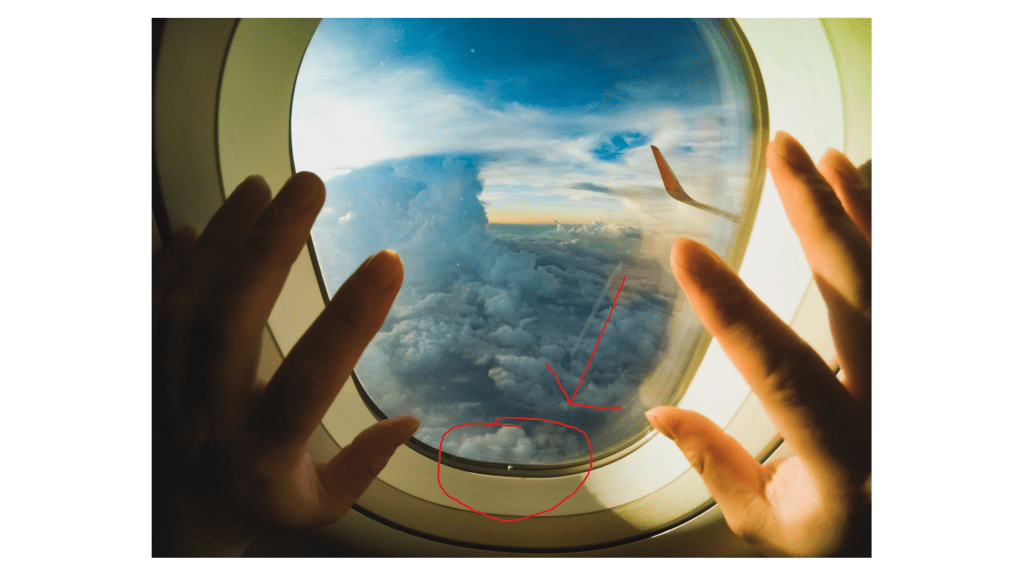
Have you ever been crammed into the window seat in a plane and, while gazing down at the terra firma beneath you, noticed that there was a tiny hole in the window? According to Petter Hörnfeldt, aka Mentour Pilot, a Swedish commercial airline captain, those holes could one day save your life.
In a TikTok video, Hörnfeldt explains that there are three layers to the windows on a commercial airliner. The outside window is the strongest because it was designed “to handle any impacts as well as the pressure difference between the thin high altitude air outside of the plane and a pressurized air inside,” Hörnfeldt says.
Then there is the middle layer, with a tiny hole, designed to protect the outer layer. The final layer is the one you can touch or press your nose up against to see what you’re flying over.
“So why the hole then? Well, because there is air between those layers. Differences in pressure and temperature would otherwise start causing forces to build up between the layers, trying to bend them inwards or outwards, which is something that we obviously do not want, since especially the inner two layers are not designed to take those kind of forces. So that little hole is put there to allow air to flow through slowly and relieve that potential pressure difference. Hence the name breather hole,” Hörnfeldt says.
The tiny hole in an airplane window. Credit: Canva
“Now, the inner window layer, the one that’s closest to you, doesn’t really need a hole because it’s fitted in a way that allows air to flow around it. But that breather hole also serves a different job, which is to make it more difficult for moisture to become trapped between the layers and start fogging up your window, stopping you from admiring the view outside,” Hörnfeldt continues.
In his most popular video, Hörnfeldt admitted that commercial airline pilots know when you’ve flushed the toilet on a plane.
Do pilots know when you flush the toilet on a plane?
According to Hörnfeldt, pilots don’t know that you’ve flushed a toilet based on an alert, security camera footage, or a sudden power surge. They know that the toilet has been flushed because of a slight change in cabin pressurization. Airplane toilets use a special vacuum flushing mechanism to suck the contents out. The vacuum system is calibrated to the cabin air pressure. “But that flushing actually does show up on our instruments as a sudden cabin climb on our cabin vertical speed indicator,” Hörnfeldt says. “So we can see it. And it kind of makes sense, if you think about it.”
Next time you see the tiny hole in an airplane window as you gaze upon your hometown at 35,000 feet, you know that it’s not a manfcatingring mistake. It’s here to keep you safe in a cabin with a pressurized system that also knows if you used the bathroom. Aren’t airplanes just incredible?
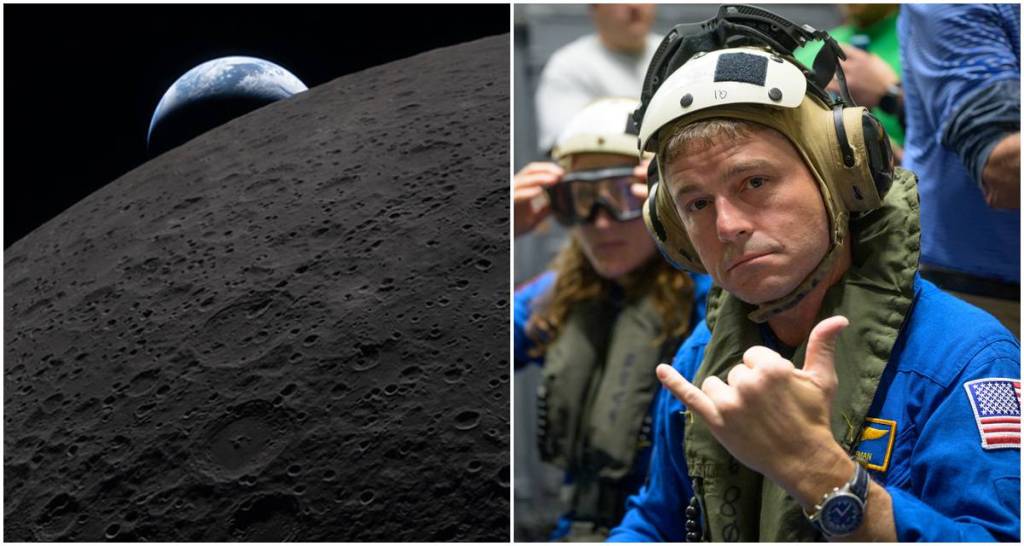
After going into space for the first time, astronauts experience a profound shift in perspective known as the overview effect. When they look down on Earth, they no longer see borders, politics, or religion. Instead, they see a beautiful blue marble floating in space where everything on its surface is magically connected. After seeing the Earth from afar, many of humankind’s squabbles and battles seem petty and inconsequential. This incredible shift in perspective can be exhilarating, but also isolating.
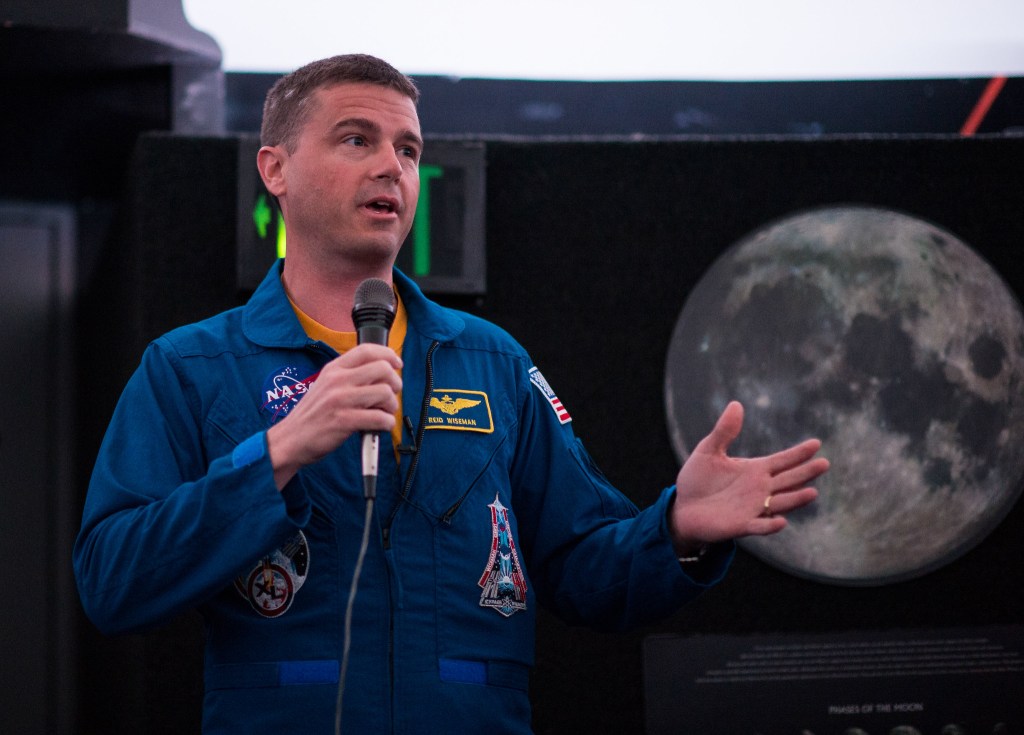
The four astronauts who were aboard the recent Artemis II mission, NASA‘s first trip around the moon since Apollo 17 in 1972, shared their experiences of the overview effect upon returning home on April 10. Astronaut Reid Wiseman struggled to find words to express his incredible, unique experience.
Seeing Earth from space was life-changing for astronaut Reid Wiseman
“I’m not really a religious person, but there was no other avenue for me to explain anything or experience anything,” Wiseman said. “So I asked for the chaplain on the Navy ship to just come visit us for a minute. When that man walked in, I’d never met him before in my life, but I saw the cross on his collar, and I just broke down in tears.”
Wiseman added that it is “very hard to fully grasp what we just went through.”
“When the sun eclipsed behind the moon, I turned to [astronaut Victor Glover] and said ‘I don’t think humanity has evolved to the point of being able to comprehend what we are looking at right now,’” Wiseman said.
Astronaut Jeremy Hansen also said that he had trouble “trying to find words” to describe his time in space accurately. “But what kept grabbing my attention, when the lighting was right, and we were looking out the window, is that I kept seeing this depth to the galaxy,” he said. “That was mind–blowing for me. The sense I had of fragility and feeling infinitesimally small.”
A thin blue line separates life on Earth from the darkness of space
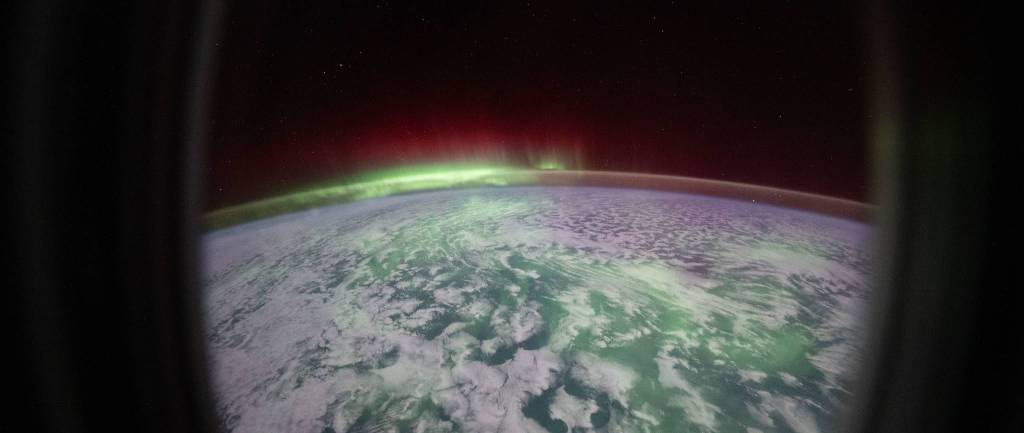
Another profound realization astronauts have is that Earth’s atmosphere appears remarkably thin from space. “You see the thin blue line of the atmosphere, and then when you’re on the dark side of the Earth, you actually see this very thin green line that shows you where the atmosphere is,” Mission Specialist Christina Koch said, according to NASA. “What you realize is every single person that you know is sustained and inside of that green line, and everything else outside of it is completely inhospitable.”
The aurora australis glowing over the Indian Ocean. Credit NASA Johnson/Flickr
Ultimately, when someone experiences a major shift in perspective, the important thing is how they incorporate it into their lives. “You come back to sea level, and then you have a choice,” Glover told NASA. “Are you going to try to live your life a little differently? Are you going to really choose to be a member of this community of Earth?”
When Jorge Alvarez arrived at Rutgers University as a first-generation college student, he couldn’t find anyone who looked like him, a Latino man, talking openly about mental health. “I felt very lost,” he later said. So he decided to be that change. He revived the Active Minds chapter at Rutgers and built it into the largest student-run mental health organization on campus, with an intentional focus on creating space for Black and Brown students. He took that same energy online, building a community of over 115,000 TikTok followers through educational content on mental health, generational trauma, and cultural identity.
That trajectory led him, in 2022, to the White House, one of just 30 young advocates invited to the first-ever Mental Health Youth Action Forum, where he joined a conversation with Dr. Jill Biden, Selena Gomez, and Surgeon General Dr. Vivek Murthy to make the case for culturally relevant mental health care. He returned again in 2024.
To champion MentalHealthAction, #FLOTUS Dr. Jill Biden, SelenaGomez, and Surgeon General Dr. #VivekMurthy teamed up with @mtv to amplify the voices of youth activists and chart the path forward. @dometipongo spoke to Gomez about why it’s “OK not to be OK” and more. Head to mentalhealthishealth.us
Today, Alvarez is being recognized by Engage for Good as its first-ever Emerging Leader of the Year.
Now in its 24th year, the Halo Awards have long recognized the best corporate-nonprofit partnerships in the country. This year, for the first time, the organization is also recognizing the people behind the work: a pioneer who built the field before it had a name, a leader who has made it sharper and more responsive, and a younger voice who is pushing it somewhere new.
The Pioneer: Carol Cone
In 1983, a small shoe company called Rockport had a problem: nobody knew who they were. Carol Cone had an idea. Link the brand to something bigger than footwear — the emerging walking-for-health movement — and make the company a genuine champion of it. Rockport grew from a $20 million unknown into a $150 million brand. More importantly, Cone had stumbled onto something she would spend the next forty years proving: that a company’s values, done right, are a business strategy.She’s now known as the Mother of Cause Marketing, and the résumé backs it up. Cone founded the nation’s first cause marketing consultancy in 1980, produced more than 30 research reports that helped turn the field into a discipline, and has executed more than 250 purpose programs for some of the world’s leading companies. She’s directed $5 billion toward social causes through initiatives like the American Heart Association’s Go Red for Women, the Avon Breast Cancer Crusade, and Aflac’s My Special Aflac Duck. She wrote the book — literally, Breakthrough Nonprofit Branding — hosts the Purpose 360 podcast, now more than 220 episodes in, and has mentored over 1,000 people coming up in the field.
Engage for Good is honoring her with its Lifetime Achievement Award. “She didn’t just contribute to this space,” said EFG CEO Muneer Panjwani. “She defined and legitimized it.”
The Collaborator: Karen Little
What sets Karen Little apart isn’t just what she’s built, it’s how she builds it. The head of Rapid Response at PayPal is known across the social impact sector for bringing people together in moments when most organizations are still figuring out what to do.
When wildfires tore through Los Angeles in January 2025, Little didn’t wait for the smoke to clear. She activated PayPal’s financial tools, nonprofit partnerships, and giving infrastructure, moving resources to the organizations that needed them while the crisis was still unfolding. She has since helped write the playbook on strategic disaster philanthropy — the kind other companies can actually follow.
Her instinct for convening shows up elsewhere too. Little founded the Bay Area Social Impact Gathering, which started as a dozen peers talking over drinks and has since grown into a network of more than 250 professionals spanning corporate, nonprofit, and foundation sectors.
“Her balance between strategy and humanity is what sets her leadership apart,” said Panjwani. She is the inaugural recipient of EFG’s Impact Leader of the Year Award.
The Next Generation: Jorge Alvarez
Back at Active Minds, Alvarez has built that same personal conviction into a career. As Senior Manager of Corporate Partnerships & Engagement, he’s helped raise $6M+ for youth mental health and guided the A.S.K. campaign to reach more than 28 million people. He serves on the board of Youth MOVE National and was recognized as a 2023 Young Innovator in Behavioral Health.
“Youth and young adults are eager to lead,” he said when he received the award. “They just need organizations and allies to listen.”
What Comes Next
Carol Cone built the foundation. Karen Little is strengthening it. And Jorge Alvarez is one of the people who will decide what gets built on top of it. That’s what this year’s Halo Awards are really about, not just celebrating what the corporate social impact field has accomplished, but taking stock of who’s carrying it forward.
“Together, they represent a field that is evolving, deepening, and rising to meet a more complex moment,” said Panjwani.All three will be recognized at the Halo Awards Gala during the Engage for Good 2026 Conference, April 21–24 in Palm Springs.
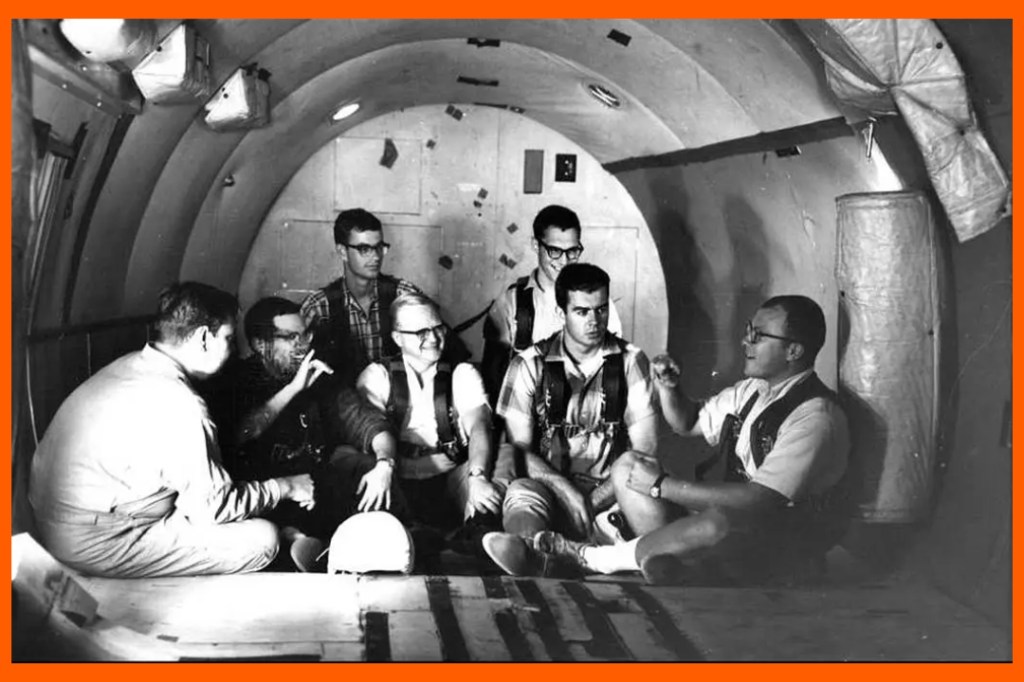
We are constantly being reminded of Isaac Newton’s famous quote, “If I have seen further, it is by standing on the shoulders of giants.” Eleven such giants were recruited as volunteers from Gallaudet University (then Gallaudet College) in Washington, D.C. in 1958. Their task was to help researchers understand the effects of weightlessness on Deaf people who didn’t experience motion sickness.
Deemed the Gallaudet Eleven, they helped pave the way for hundreds of space flights, including the most recent Artemis II. Ranging in age from 25 to 48 years, the eleven men included Harold Domich, Robert Greenmun, Barron Gulak, Raymond Harper, Jerald Jordan, Harry Larson, David Myers, Donald Peterson, Raymond Piper, Alvin Steele, and John Zakutney. Each and every one of them selflessly gave their time and their bodies to what would become monstrous breakthroughs in astrophysics.
Houston had a problem
Actor and Deaf activist, Nyle DiMarco, recently took to social media to share the historical tidbit, lest people forget. In an Instagram reel, he wrote,
“Everyone’s talking about Artemis II. The first humans to travel to the moon in 50 years. Historic mission. But nobody’s talking about the Deaf men who made it possible.
In the late 1950s, NASA had a problem. They needed to understand what weightlessness does to the human body. But every test subject kept getting violently motion sick.
So they came to Gallaudet.
Eleven Deaf men. Most of them had lost their hearing to spinal meningitis as children, which also damaged their vestibular system. Their inner ears couldn’t be overwhelmed. They were immune to motion sickness.
NASA put them in centrifuges. Zero-gravity flights. A rotating room for twelve straight days. One experiment on a ferry in choppy Nova Scotia waters. The researchers got so seasick they had to cancel it. The Gallaudet Eleven? They were playing cards.
Their bodies gave NASA the data it needed to send humans into space.
No Gallaudet Eleven — no Mercury. No Mercury — no Apollo. No Apollo — no Artemis II.
Sixty years later, four astronauts just flew 252,000 miles from Earth and came home safely. They stood on the shoulders of eleven Deaf men most people have never heard of. Now you know! #nasa #gallaudet11 #artemisii @nasa”
The post has already received nearly 400,000 likes and over 6,000 comments. One Instagrammer writes, “Diversity in all its forms is what makes us great. And all of us working together is what helps us advance as a civilization! Thank you for sharing this and bringing visibility to this piece of history, and thank you Gallaudet 11 for your contribution.”
The tests
The official NASA website shared some of the tests in which the brave volunteers took part. “One test saw four subjects spend 12 straight days inside a 20-foot slow rotation room, which remained in a constant motion of ten revolutions per minute.”
Then, of course, there were the zero-g flights. “In another scenario, subjects participated in a series of zero-g flights in the notorious ‘Vomit Comet’ aircraft to understand connections between body orientation and gravitational cues.”
They even took the volunteers to Nova Scotia to test big waves. “Another experiment, conducted in a ferry off the coast of Nova Scotia, tested the subjects’ reactions to the choppy seas. While the test subjects played cards and enjoyed one another’s company, the researchers themselves were so overcome with seasickness that the experiment had to be canceled. The Gallaudet test subjects reported no adverse physical effects and, in fact, enjoyed the experience.”
The test subjects themselves shared their experiences. Barron Gulak reminisced, “In retrospect, yes, it was scary…but at the same time we were young and adventurous.”
On DiMarco’s identical Facebook post, Harry Larson’s child, “Moose” Larson, shared a photo and wrote, “They were recently recognized with a cool plaque at Gallaudet! My dad is one of them and, funny enough, never really talked about it.” A commenter responded, “I’ve worked with your dad a lot on this project during the museum exhibition several years ago. He’s been so wonderful, always willing to come to events. I’m so glad he’s sharing his story now.”
It’s a parent’s worst nightmare: Taking your child to the doctor and receiving a life-changing diagnosis. It only adds to the heartbreak when they find out there may be no effective treatment at all, and that all they can do is hope for the best.
Few diagnoses strike fear in the heart of parents and doctors more than a cancer called diffuse intrinsic pontine glioma, or DIPG. Primarily found in children, DIPG is a highly aggressive brain tumor that is uniformly fatal, with less than 10 percent of children surviving longer than two years after diagnosis. The tumors grow fast and on extremely vital areas like the spine and brain stem, making them exceptionally hard to remove. Though young patients have been treated with radiation, chemotherapy, and surgeries, no one had ever been cured of the fatal cancer.
But for the first time ever, a 13-year-old boy from Belgium named Lucas Jemeljanova has beaten the odds.
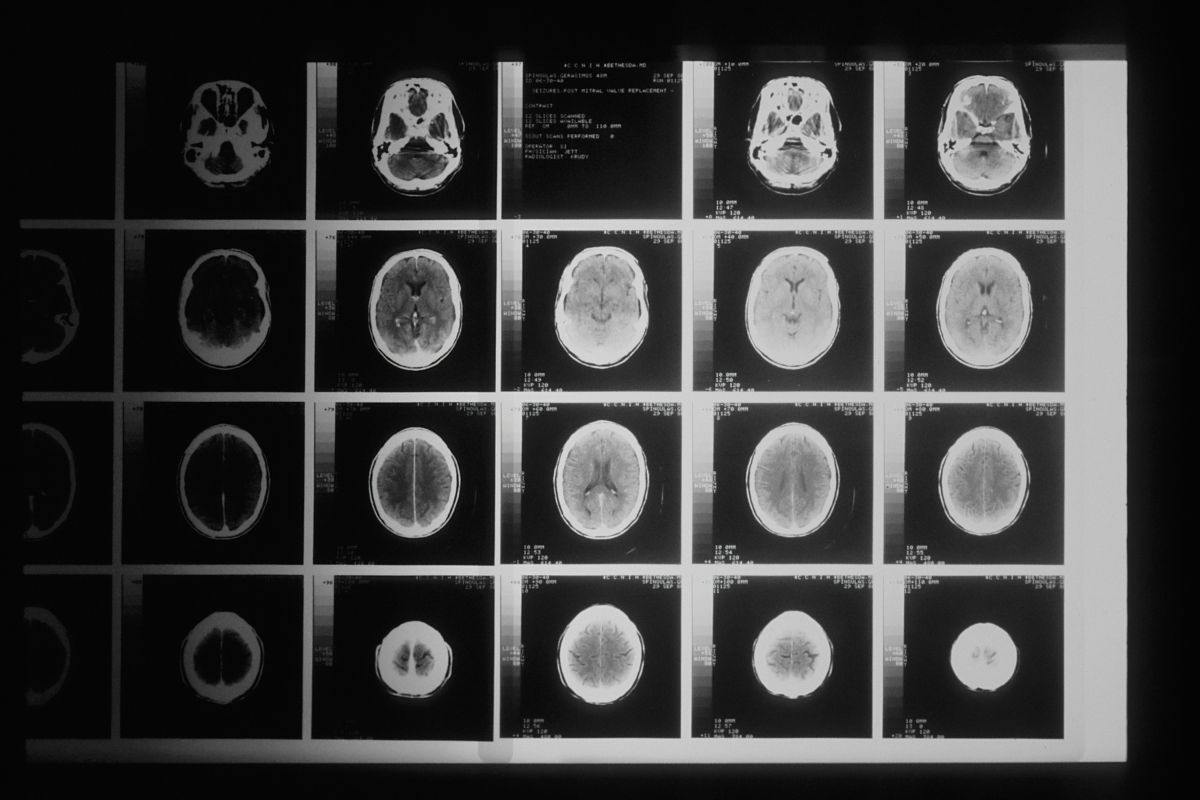
Various brain scans. Photo credit:
Diagnosed with DIPG at age six, Lucas’ doctor Jacques Grill told Lucas’ parents, Cedric and Olesja, that he was unlikely to live very long. Instead of giving up hope, Cedric and Olesja flew Lucas to France to participate in a clinical trial called BIOMEDE, which tested new potential drugs against DIPG.
Lucas was randomly assigned a medication called everolimus in the clinical trial, a chemotherapy drug that works by blocking a protein called mTOR. mTOR helps cancer cells divide and grow new blood vessels, while everolimus decreases blood supply to the tumor cells and stops cancer cells from reproducing. Everolimus, a tablet that’s taken once per day, has been approved in the UK and the US to treat cancers in the breast, kidneys, stomach, pancreas, and others—but until the BIOMEDE clinical trial, it had never before been used to treat DIPG.
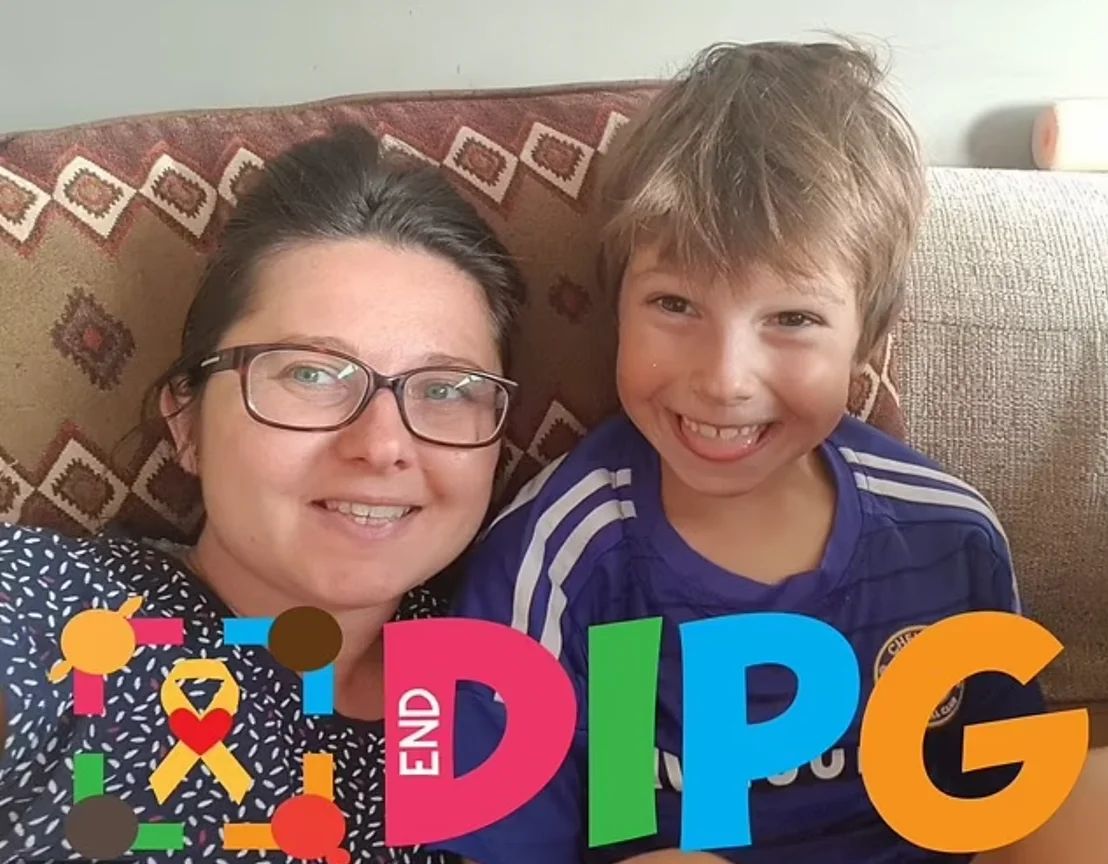
Lucas Jemeljanova poses with his mother. Photo credit: Lesja Jemeljanova via Facebook
Though doctors weren’t sure how Lucas would react to the medication, it quickly became clear that the results were good.
“Over a series of MRI scans, I watched as the tumor completely disappeared,” Grill said in an interview. Even more remarkably, the tumor has not returned since. Lucas, who is now thirteen, is considered officially cured of DIPG.
Even after the tumor was gone, Grill, who is the head of the Brain Tumor Program in the Department of Child and Teenage Oncology at Gustave Roussy cancer research hospital in Paris, was reluctant to stop Lucas’ treatments. Until about a year and a half ago, Lucas was still taking everolimus once every day.
“I didn’t know when to stop, or how, because there was no other reference in the world,” Grill said.
While Lucas is the only one in the clinical trial whose tumor has completely disappeared, seven other children have been considered “long responders” to everolimus, meaning their tumors have not progressed for more than three years after starting treatment.
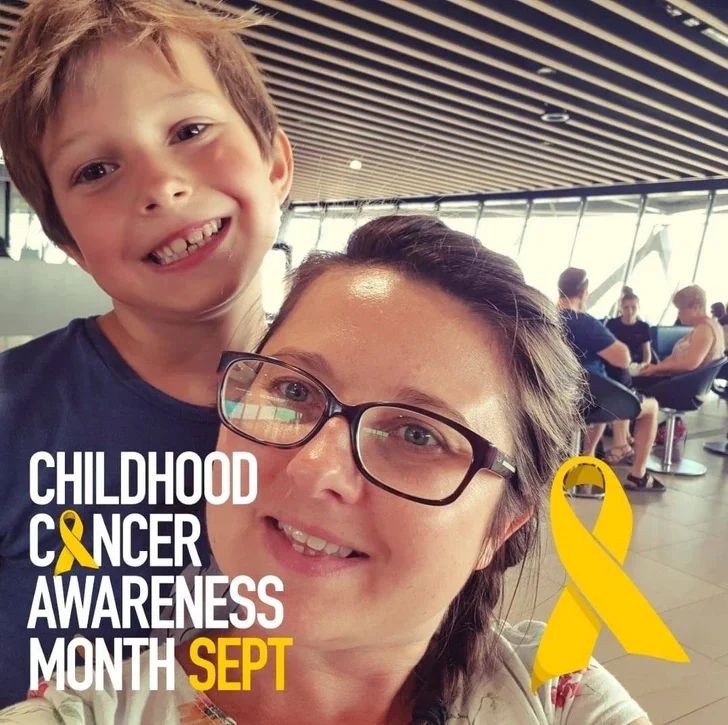
Lucas with his mother. Photo credit: Lesja Jemeljanova via Facebook
So why did everolimus work so well for Lucas? Doctors think that an extremely rare genetic mutation in Lucas’ tumor “made its cells far more sensitive to the drug,” Grill said, while the drug worked well in other children because of the “biological peculiarities” of their tumors.
While everolimus is by no means a cure, the trial has provided real hope for parents and families of children diagnosed with DIPG. Doctors must now work to better understand why Lucas’ tumor responded so well to the drug and how they can replicate those results in tumor “organoids”—artificially-grown cells that resemble an organ. After that, said Marie-Anne Debily, a researcher in the BIOMEDE trial, “the next step will be to find a drug that works as well on tumor cells.”
A more recent clinical trial tested a new immunotherapy treatment on young DIPG patients and showed promising results. Many of the patients’ tumors shrank and several participants saw functional improvements in their symptoms and day-to-day lives. But only one of the 11 patients has seen success that rivals Lucas’ — a young man identified only as Drew, who has been thriving tumor-free for over four years after receiving treatment.
Once considered a definitive death sentence, there is real hope for the first time. But there’s much more research and work to be done. Until then, however, Lucas’ doctors are thrilled.
“Lucas’ case offers real hope,” said Debily.
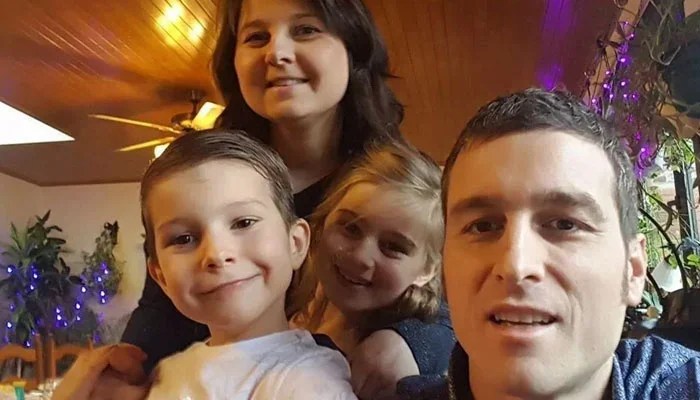
Lucas with his parents and sister. Photo credit: Lesja Jemeljanova via Facebook
This article originally appeared two years ago. It has been updated.
A young man named He Tongxue from HTX Studio, a team of DIY innovators from Hangzhou, China, wanted to be able to “see music.” He had just started learning piano and felt like the visible dimension was missing. There are plenty of computer programs that create digital visual effects with music, of course. But the goal was to make music visible in real life.
It took the studio three years, four prototypes, and endless tests to come up with just the right combination of elements. They wanted something that would rise from the piano and light up when the keys were pressed.
“Our first thought was smoke,” he said. They figured they could line up smoke machines that would be triggered by the piano keys and use lasers to light up the smoke as it rises.
The studio built a prototype, and at first, it looked pretty cool. But after playing the piano for a few minutes, the cool factor wore off. He later described it as “a disaster.”
“The smoke drifts everywhere,” he said. “You can’t tell which light matches which note. It feels like a genie is coming out. And after a while, it feels like someone is barbecuing inside the piano.”
They wanted the smoke to rise in chunks, like solid musical notes, instead of spreading out. That led them to the idea of vortex rings. Essentially, they could make smoke rings that would give the visible “notes” more structure.
A second prototype was made to test out this idea. And it did look really cool…at first. The vortex rings worked, but there was too much extraneous smoke that eventually built up and made it hard to see the rings. The contraptions that made the rings were also too large to make separate ones for all 88 keys of the piano, and making them smaller rendered them unusable.
Back to the drawing board again.
Since a vortex ring is essentially rotating fluid, they shifted to different fluids: water and paint. They created yet another piano prototype that would shoot paint vortex rings into water. Yet again, cool at first, but soon the water simply clouded up as the paint rings dissipated. They tried using oil paints, which wouldn’t dissolve in water, but that also disappointed. Oil paint didn’t form rings, but rather broke apart into small spheres in the water.
However, the spheres gave them the idea of simply using droplets. They created a piano that would push up a droplet of colored glycerin into the water tank with each note played. Lights would illuminate them.
The idea was solid, but the execution left something to be desired. The beauty of the lit-up droplets didn’t extend throughout the tank. The droplets drifted, and attempts to rein them in with glass tubes ruined the magical effect.
“By this point, the project had dragged on for two years,” he said. “We had tried everything we could think of. I honestly didn’t know what I was to do. We’ve abandoned projects before. But never one that consumed this much time, energy, and effort from almost everyone in the studio.”
Then disaster struck. One night, the glass tank shattered under the water pressure, destroying the entire system.
Watch the full story here:
“If the universe was telling me to stop, this felt like the sign,” he said. But in the midst of significant setbacks and creeping self-doubt, the idea of turning to nature arose. What if they used bioluminescent algae, which light up all on their own?
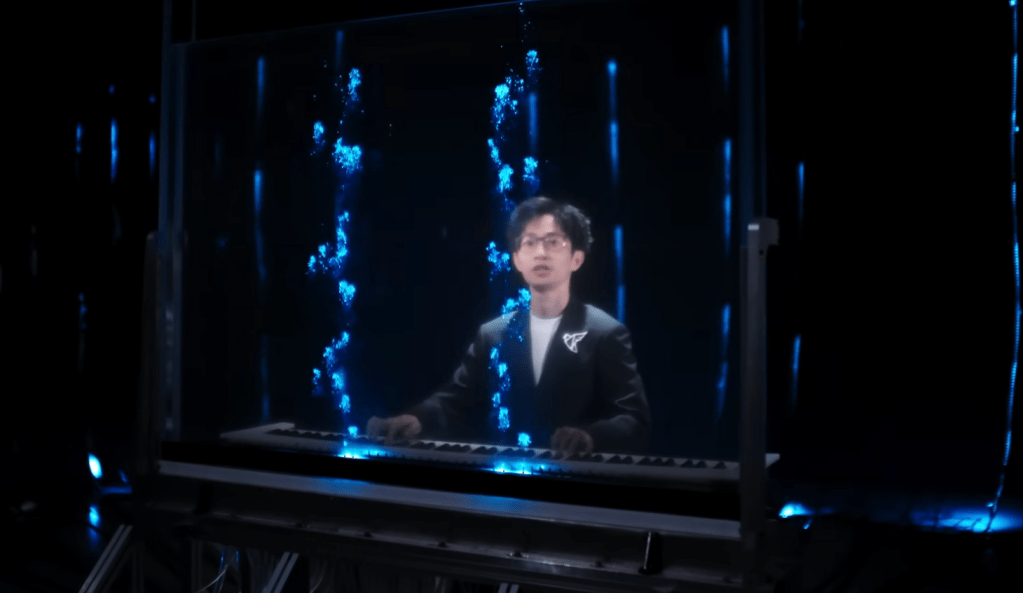
“Around the world, you can see this blue glow in coastal waters,” he said. “It’s caused by a reaction between luciferin and luciferase when the algae are stimulated. We didn’t spray algae into water. We filled the entire tank with them, then disturbed them with bubbles so they would glow all the way to the surface.”
He and his studio mates did it. No AI. No digital effects. Real-life, 3D visible music with an assist from nature. They named it the Blue Tears Piano.
Here’s German pianist Oskar Roman Jezior playing “Golden Hour” on it: