upworthy
Add Upworthy to your Google News feed.
Google News Button
Health

Inside the heads of people who are always late, as explained by stick figures.

Everyone knows a person like this or is one themselves!

relationships, brain, time

I’m late.


This post was written by Tim Urban and originally published on Wait But Why.

I woke up this morning to a text. It was a link:

"optimistic-people-have-one-thing-common-always-late.”

Intriguing. Nothing's better than the headline: "The reason people are [bad quality that describes you] is actually because they're [good quality]."

I got to reading. And as it turns out, according to the article, late people are actually the best people ever. They're optimistic and hopeful:

"People who are continuously late are actually just more optimistic. They believe they can fit more tasks into a limited amount of time more than other people and thrive when they're multitasking. Simply put, they're fundamentally hopeful."

They're big-thinking:

"People who are habitually late don't sweat over the small stuff, they concentrate on the big picture and see the future as full of infinite possibilities."

Late people just get it:

"People with a tendency for tardiness like to stop and smell the roses…life was never meant to be planned down to the last detail. Remaining excessively attached to timetables signifies an inability to enjoy the moment."

By the end of the article, I had never felt prouder to be a chronically late person.

But also, what the hell is going on? Late people are the worst. It's the quality I like least in myself. And I'm not late because I like to smell the roses or because I can see the big picture or because the future is full of infinite possibilities. I'm late because I'm insane.

So I thought about this for a minute, and I think I figured out what's going on. The issue is that there are two kinds of lateness:

1. OK lateness. This is when the late person being late does not negatively impact anyone else — like being late to a group hangout or a party. Things can start on time and proceed as normal with or without the late person being there yet.

2. Not-OK lateness. This is when the late person being late does negatively impact others — like being late to a two-person dinner or meeting or anything else that simply can't start until the late party arrives.

John Haltiwanger's Elite Daily article is (I hope) talking mostly about OK lateness. In which case, sure, maybe those people are the best, who knows.

But if you read the comment section under Haltiwanger's article, people are furious with him for portraying lateness in a positive light. And that's because they're thinking about the far less excusable not-OK lateness.

1. OK lateness. This is when the late person being late does not negatively impact anyone else — like being late to a group hangout or a party. Things can start on time and proceed as normal with or without the late person being there yet.

2. Not-OK lateness. This is when the late person being late does negatively impact others — like being late to a two-person dinner or meeting or anything else that simply can't start until the late party arrives.

John Haltiwanger's Elite Daily article is (I hope) talking mostly about OK lateness. In which case, sure, maybe those people are the best, who knows.

But if you read the comment section under Haltiwanger's article, people are furious with him for portraying lateness in a positive light. And that's because they're thinking about the far less excusable not-OK lateness.

All of this has kind of left me with no choice but to take a quick nine-hour break from working on a gargantuan SpaceX post to discuss not-OK late people.

When it comes to people who are chronically not-OK late, I think there are two subgroups:

Group 1: Those who don't feel bad or wrong about it. These people are assholes.

Group 2: Those who feel terrible and self-loathing about it. These people have problems.

Group 1 is simple. They think they're a little more special than everyone else, like the zero-remorse narcissist at the top of Haltiwanger's article. They're unappealing. Not much else to discuss here.

Punctual people think all not-OK late people are in Group 1 (as the comments on this post will show) — because they're assuming all late people are sane people.

When a sane person thinks a certain kind of behavior is fine, they do it. When they think it's wrong, they don't do it. So to a punctual person — one who shows up on time because they believe showing up late is the wrong thing to do — someone who's chronically late must be an asshole who thinks being late is OK.

But that's misunderstanding the entire second group, who, despite being consistently late, usually detest the concept of making other people wait. Let call them CLIPs (Chronically Late Insane Persons).

While both groups of not-OK late people end up regularly frustrating others, a reliable way to identify a Group 2 CLIP is a bizarre compulsion to defeat themselves — some deep inner drive to inexplicably miss the beginning of movies, endure psychotic stress running to catch the train, crush their own reputation at work, etc., etc. As much as they may hurt others, they usually hurt themselves even more.

I spent around 15% of my youth standing on some sidewalk alone, angrily kicking rocks, because yet again, all the other kids had gotten picked up and I was still waiting for my mom. When she finally arrived, instead of being able to have a pleasant conversation with her, I'd get into the car seething. She always felt terrible. She has problems.

My sister once missed an early morning flight, so they rescheduled her for the following morning. She managed to miss that one too, so they put her on a flight five hours later. Killing time during the long layover, she got distracted on a long phone call and missed that flight too. She has problems.

I've been a CLIP my whole life. I've made a bunch of friends mad at me, I've embarrassed myself again and again in professional situations, and I've run a cumulative marathon through airport terminals.

When I'm late, it's often the same story, something like this:

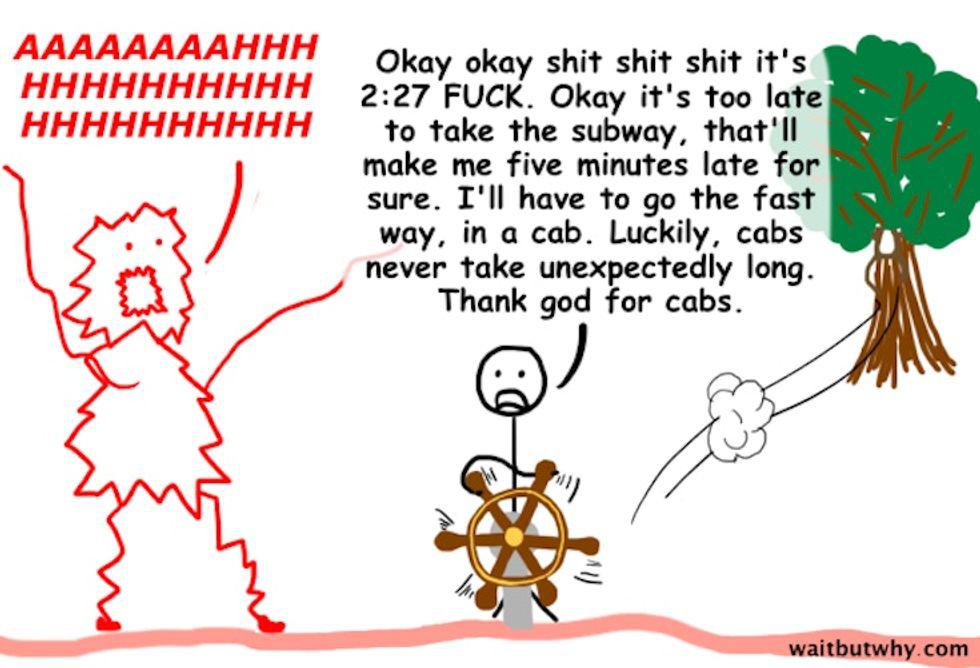
I'll be meeting someone, maybe a professional contact, at, say, a coffee place at 3:00. When I lay out my schedule for the day, I'll have the perfect plan. I'll leave early, arrive early, and get there around 2:45. That takes all the stress out of the situation, and that's ideal because non-stressful commutes are one of my favorite things. It'll be great — I'll stroll out, put on a podcast, and head to the subway. Once I'm off the subway, with time to spare, I'll take a few minutes to peruse storefronts, grab a lemonade from a street vendor, and enjoy New York. It'll be such a joy to look up at the architecture, listen to the sounds, and feel the swell of people rushing by — oh magnificent city!

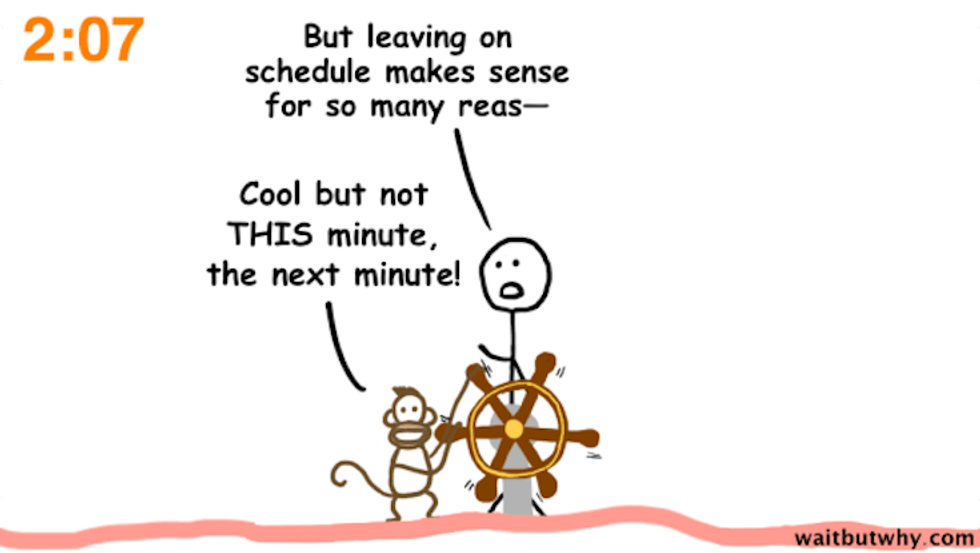
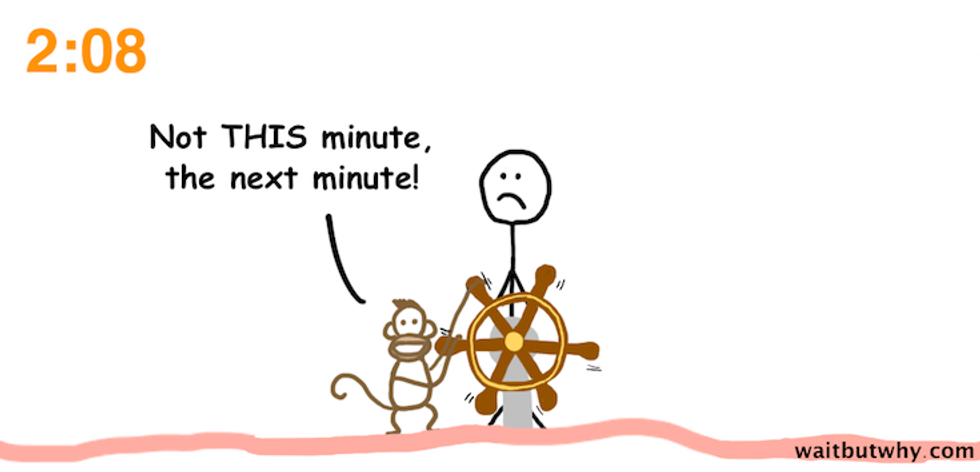
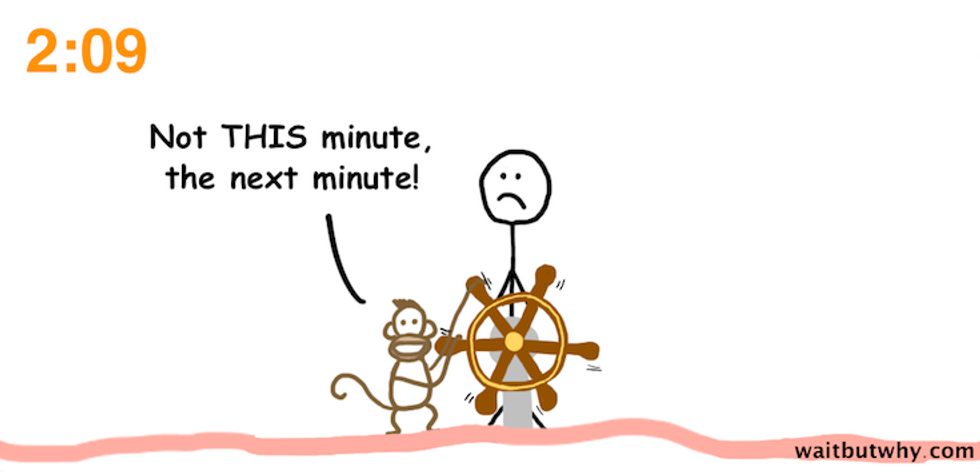
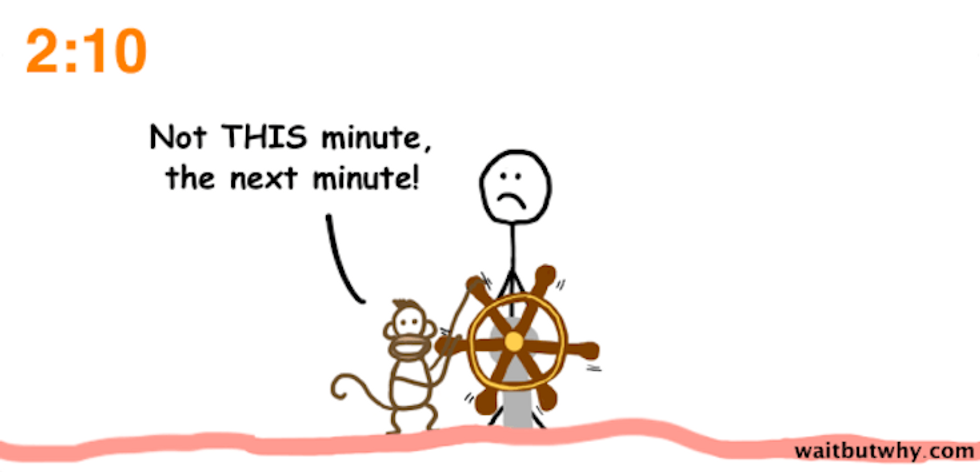
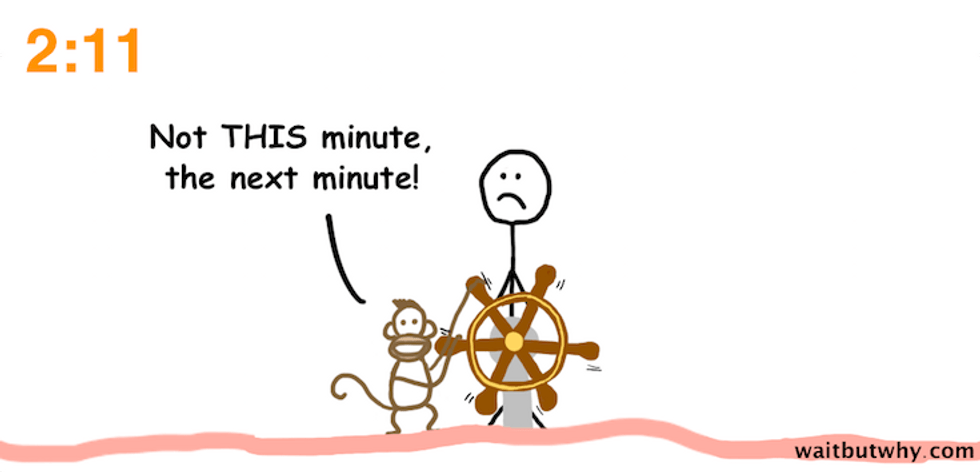
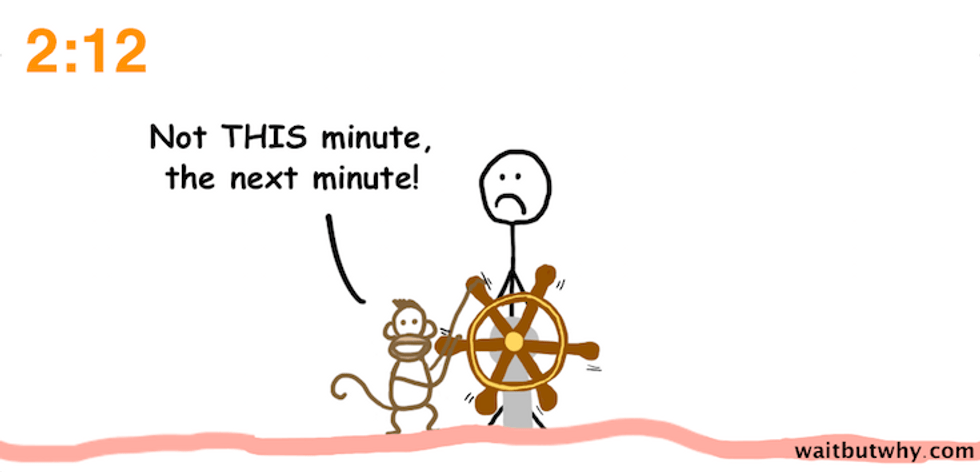
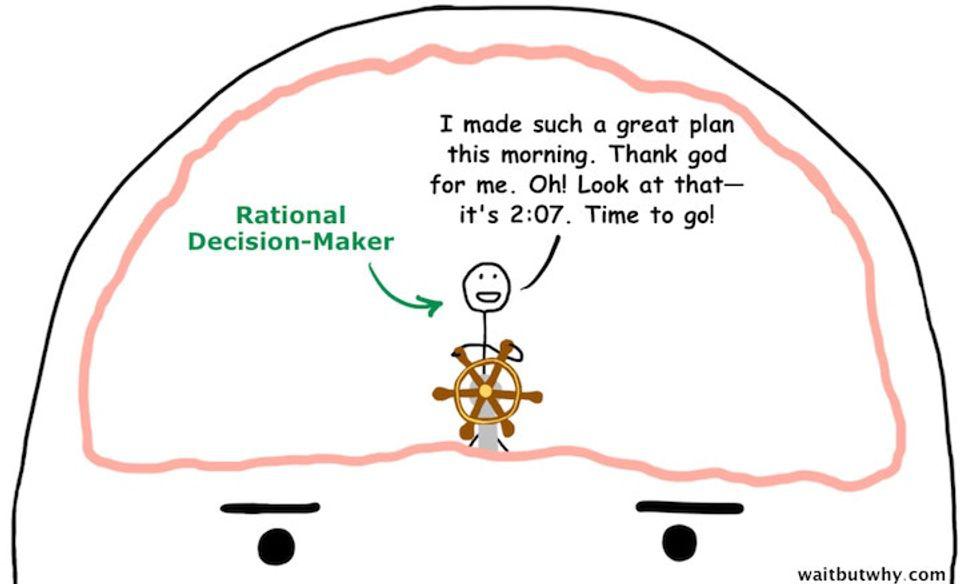
All I have to do is be off the subway by 2:45. To do that, I need to be on the subway by 2:25, so I decide to be safe and get to the subway by 2:15. So I have to leave my apartment by 2:07 or earlier, and I'm set. What a plan.

Here's how it'll play out (if you're new to WBW, you're advised to check this out before proceeding):
lateness, behavior, science

Making plans on time.

psychology, procrastination, patient

Maybe some procrastination.

avoidance, mental health, mistakes

Avoiding the issues.

delay, loafing, trifling

Arguing over avoiding the issues.

toying, delaying, loitering

Some dawdling.

dabbling, frittering, dilly-dallying

Some more dawdling.

frizzling, puttering, excuses

And some lingering.

last-minute, slow, delayed

And some more lingering.

belated, tardy, jammed

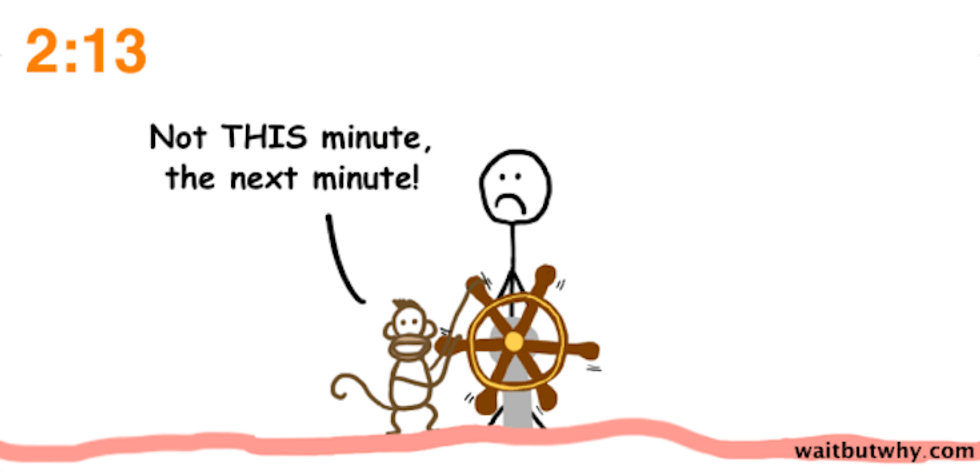
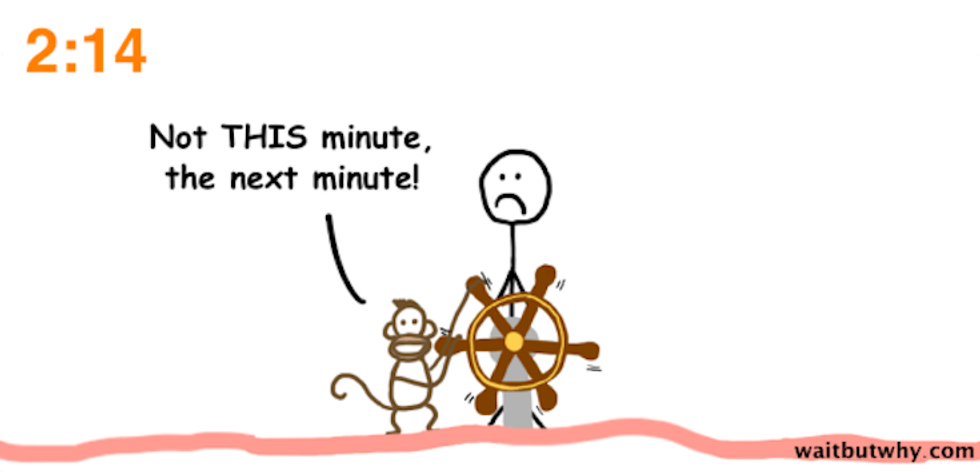
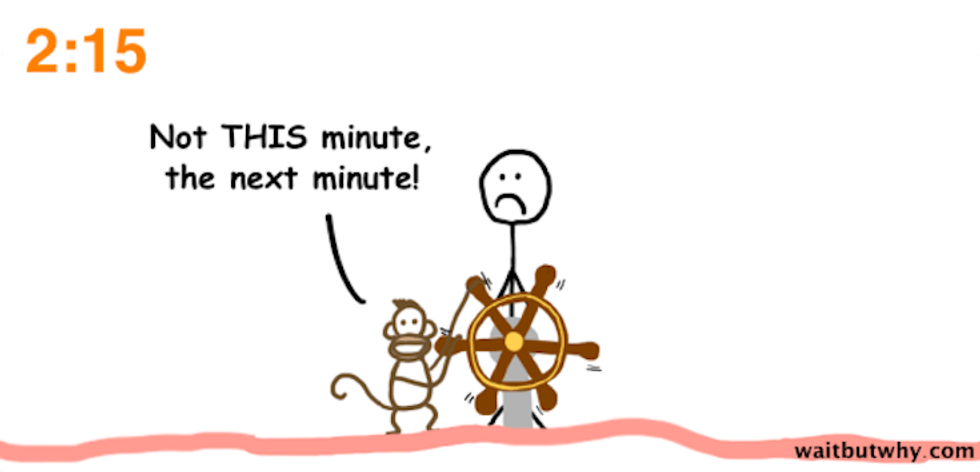
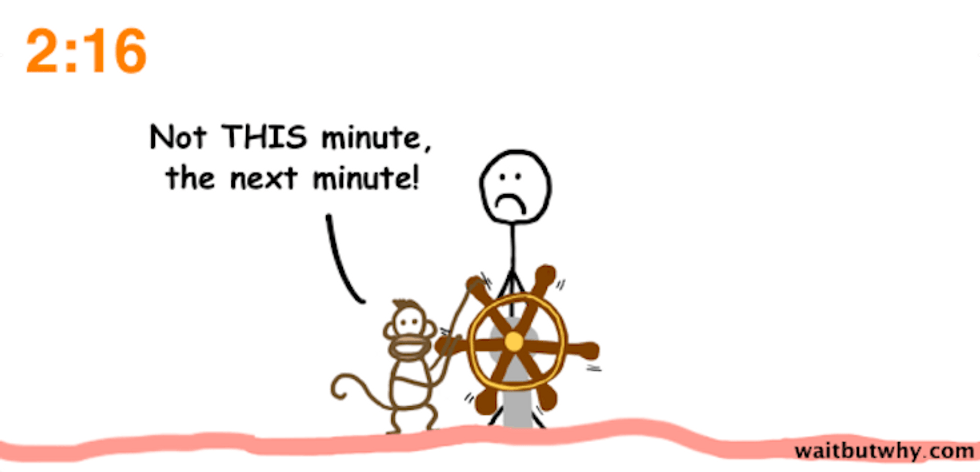
Is this dragging my feet?

lagging, dilatory, unpunctual

This is dragging my feet.

held up, in a bind, missed the boat

This is becoming a problem.

tired, worn, strained

This is feeling uncomfortable.

thin, peaked, pinched

This IS uncomfortable.

fraught, haggard, worn

This IS a problem.

dependable, accurate, conscientious

But I’m cool.

periodic, timely, ready

So cool.

quick, reliable, heedful, meticulous

Ice cold like a fighter pilot.

minutes, seconds, careful

I’m a chillin’.

lag, postpone, setback

Now worries my way.

stoppage, filibuster, hindrance

Not thinking about it.

bind, lingering, tarrying

Positive thoughts.

stoppage, difficulty, gridlock

Positive action... well now.

obstinate, customs, method

It will all workout.

madness, mental health, regulations

Maybe I’m gonna be late.

anxiety, despair, dismay

I’m gonna be late.

aversion, disquiet, distress

Oopsie.

fearless, logjam, impasse

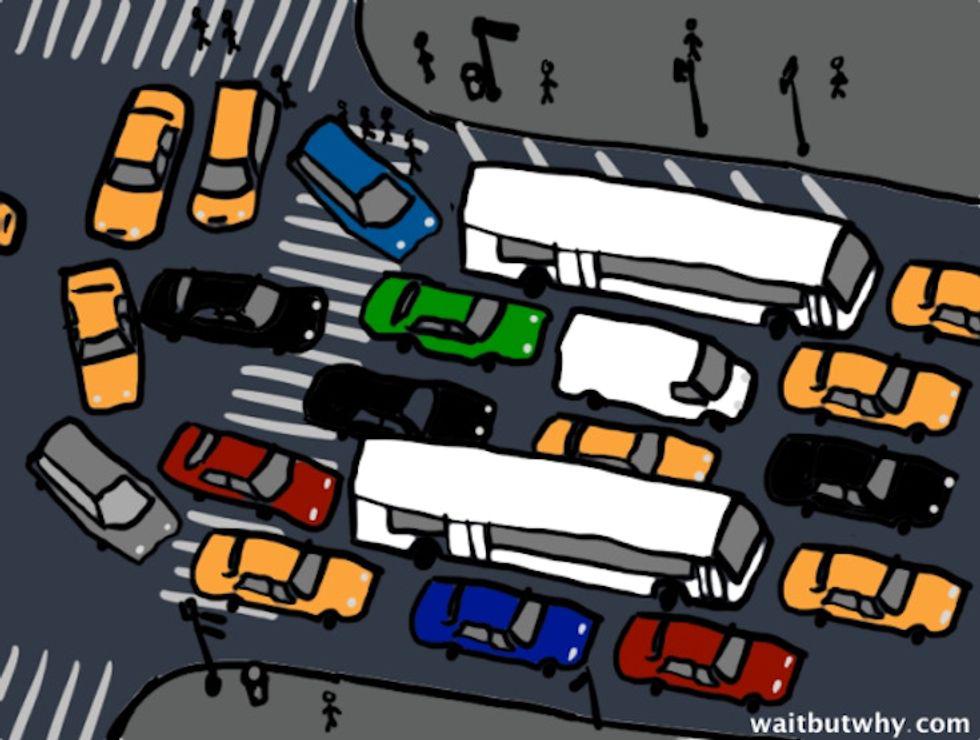
And that’s the traffic.

furious, frantic, rash, audacious

It’s the traffics fault.

careless, foolhardy, hopp

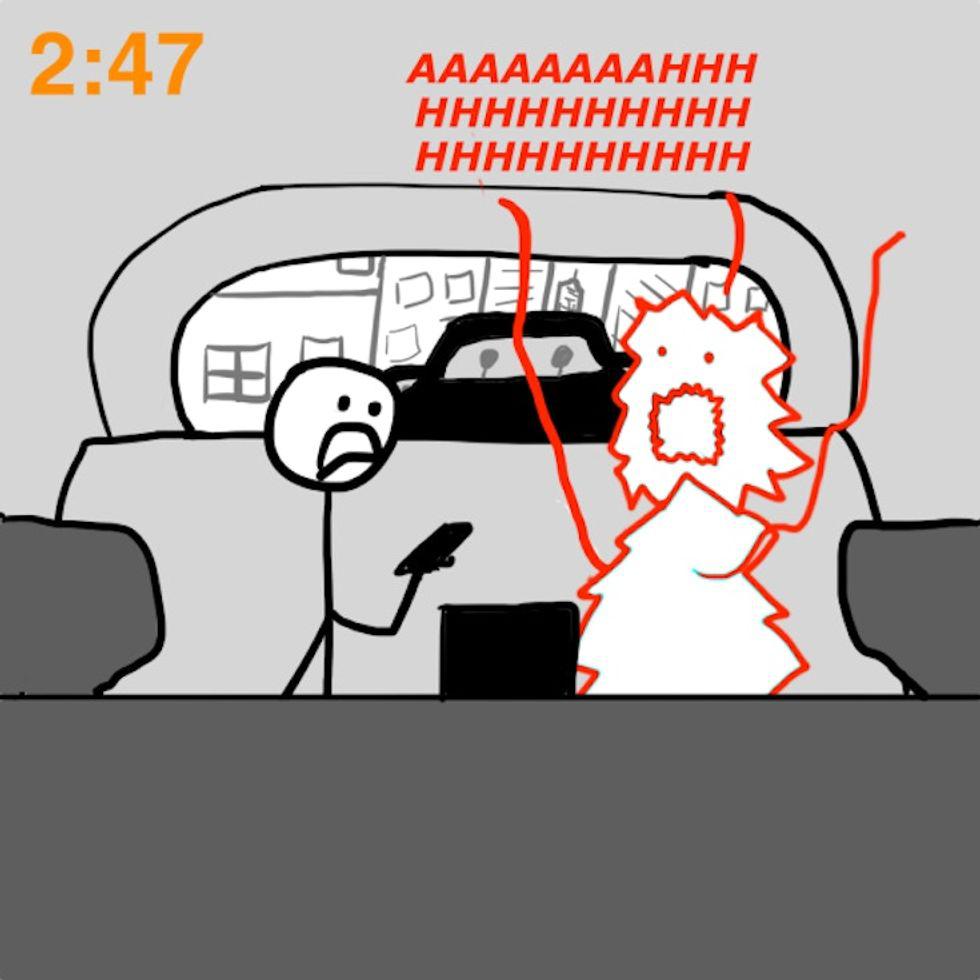
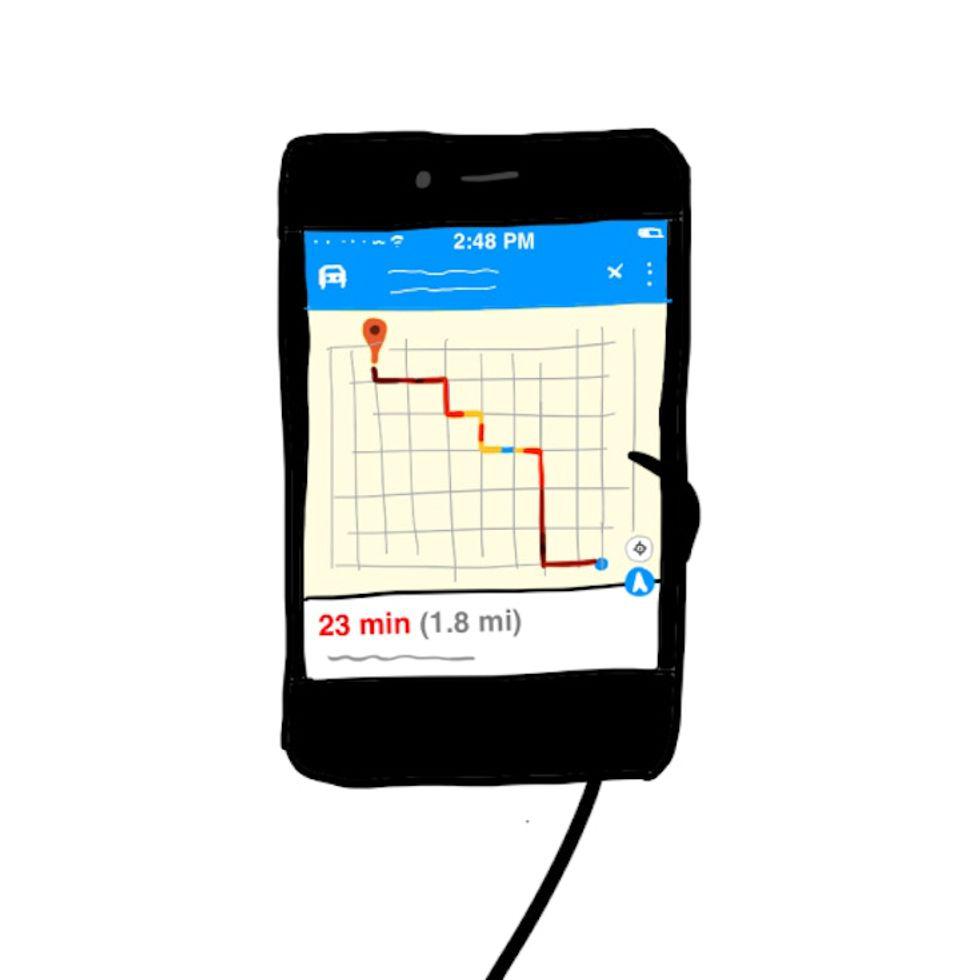
This map is broken.

denial, circumstances, schedule, madcap, impetu

Perfect timing on being late. Nailed it.

CLIPs are strange people. I'm sure each CLIP is insane in their own special way, and to understand how they work, you'll usually have to get to some dark inner psychology.

For me, it's some mix of these three odd traits:

1. I'm late because I'm in denial about how time works.

The propensity of CLIPs to underestimate how long things take comes out of some habitual delusional optimism. Usually what happens is, of all the times the CLIP has done a certain activity or commute, what they remember is that one time things went the quickest. And that amount of time is what sticks in their head as how long that thing takes. I don't think there's anything that will get me to internalize that packing for a weeklong trip takes 20 minutes. In my head, it's eternally a five-minute task. You just take out the bag, throw some clothes in it, throw your toiletries in, zip it up, and done. Five minutes. The empirical data that shows that there are actually a lot of little things to think about when you pack and that it takes 20 minutes every time is irrelevant. Packing is clearly a five-minute task. As I type this, that's what I believe.

2. I'm late because I have a weird aversion to changing circumstances.

Not sure what the deal is with this, but something in me is strangely appalled by the idea of transitioning from what I'm currently doing to doing something else. When I'm at home working, I hate when there's something on my schedule that I have to stop everything for to go outside and do. It's not that I hate the activity — once I'm there I'm often pleased to be there — it's an irrational resistance to the transition. The positive side of this is it usually means I'm highly present when I finally do haul my ass somewhere, and I'm often among the last to leave.

3. Finally, I'm late because I'm mad at myself.

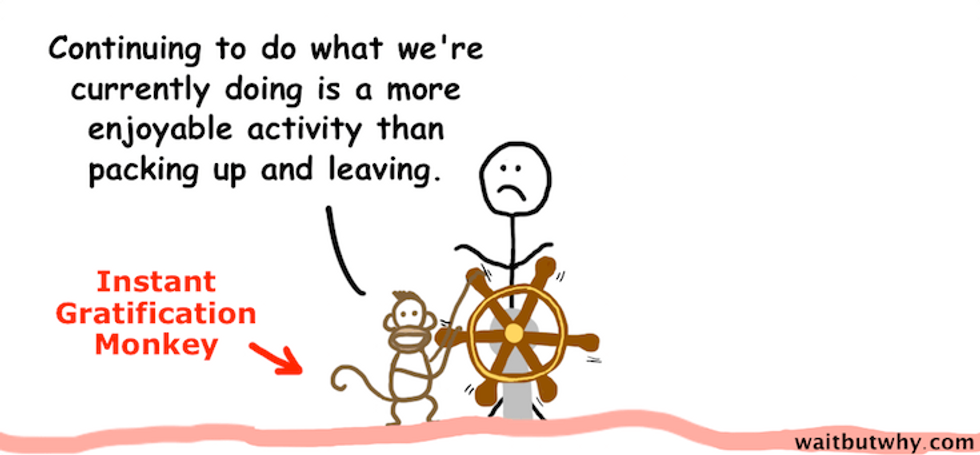
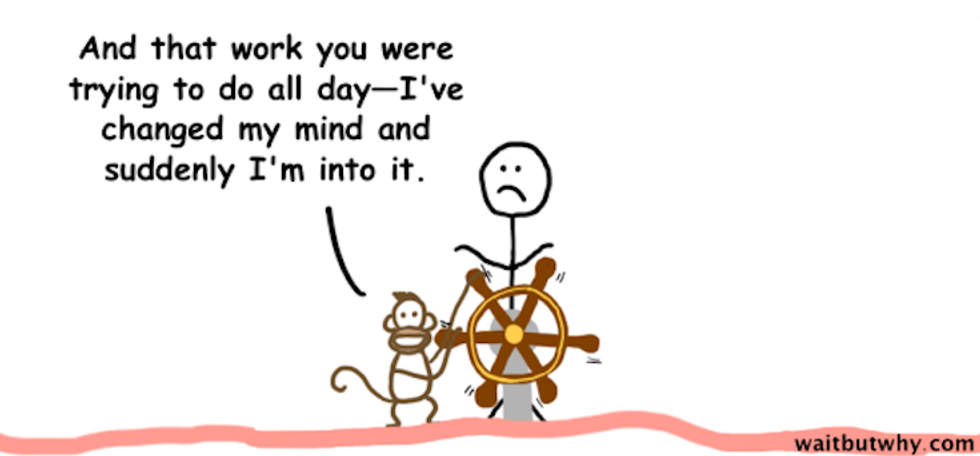
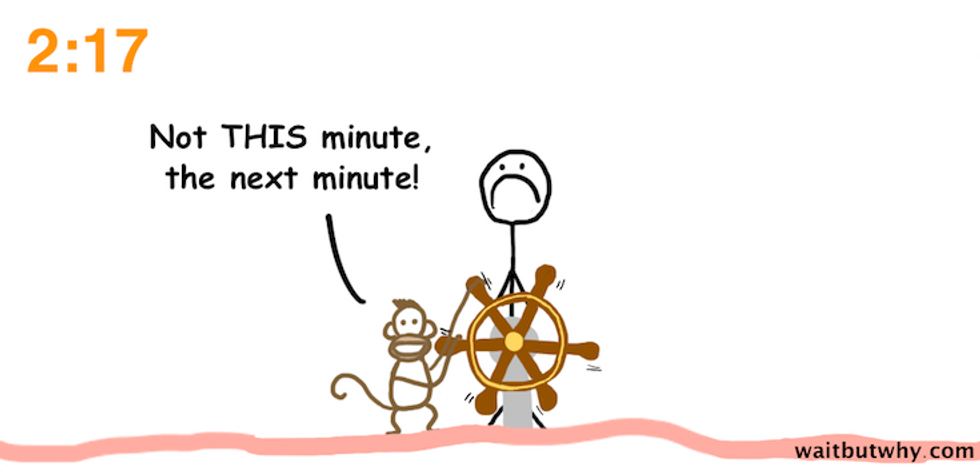
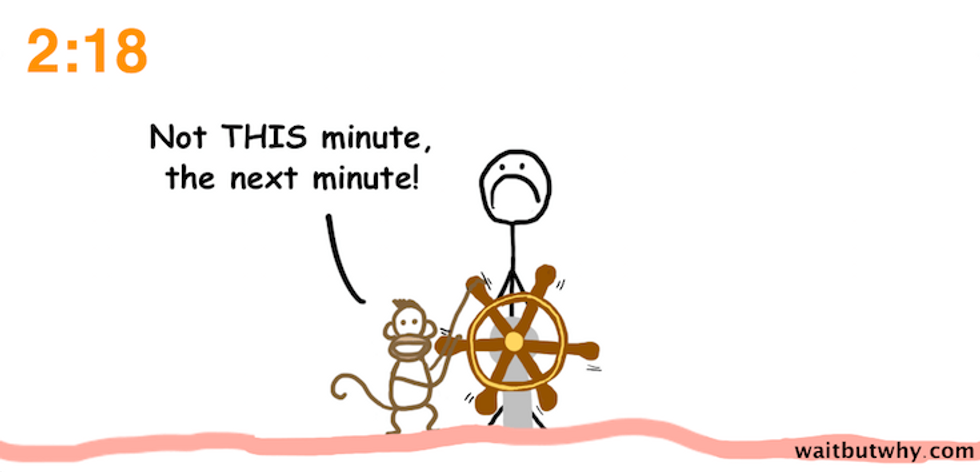
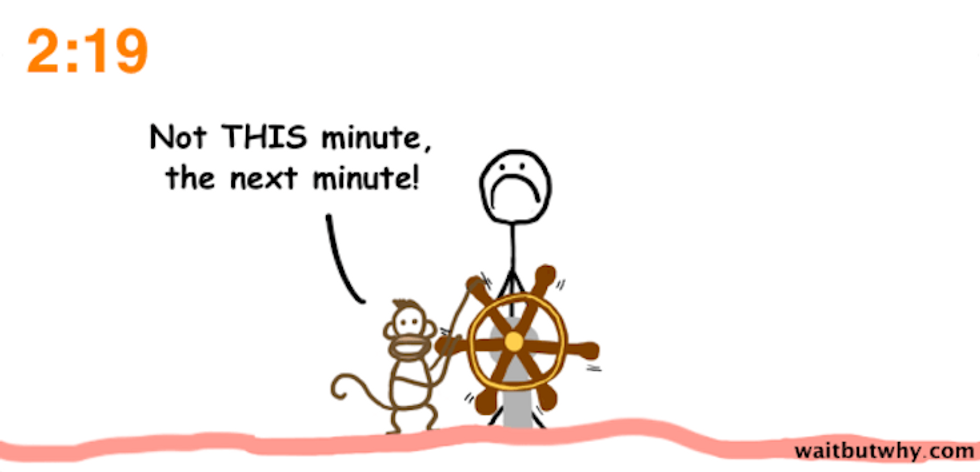
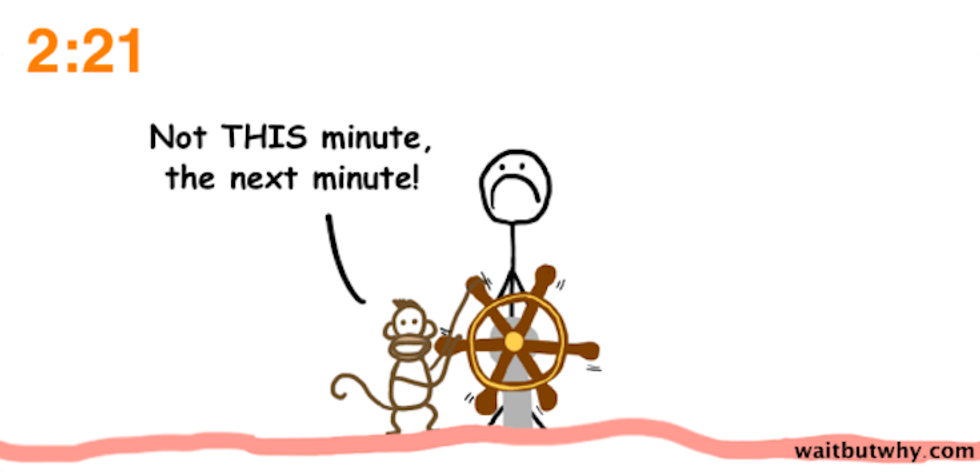
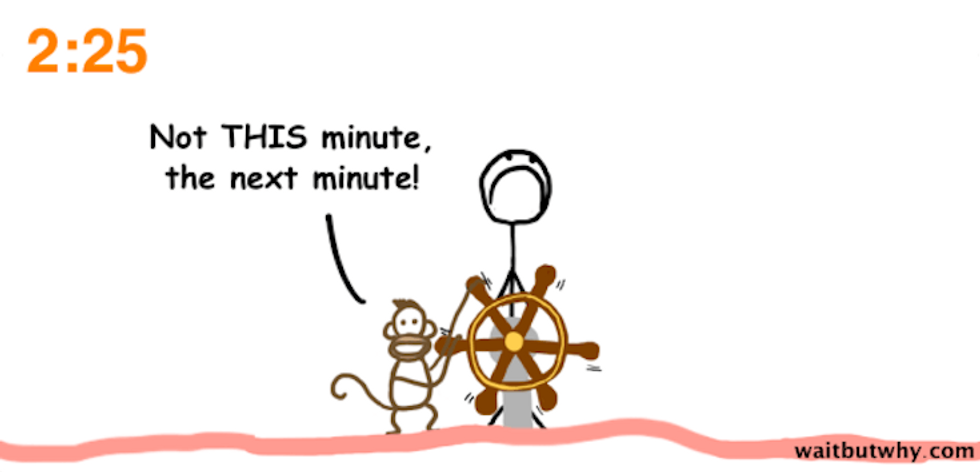
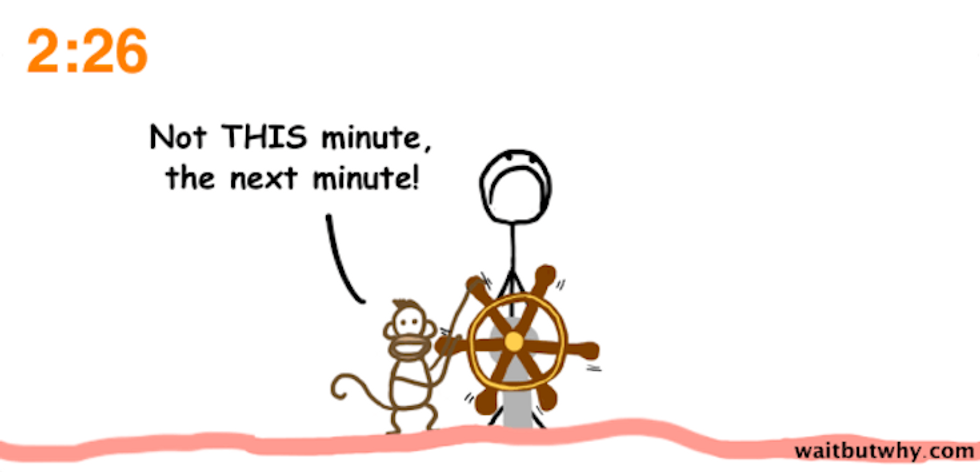
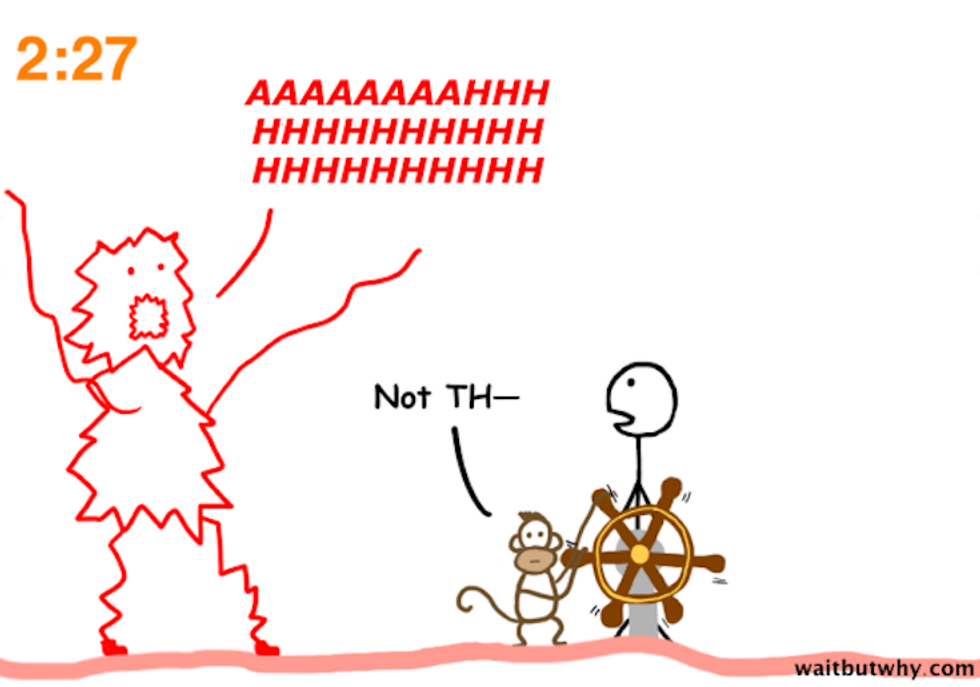
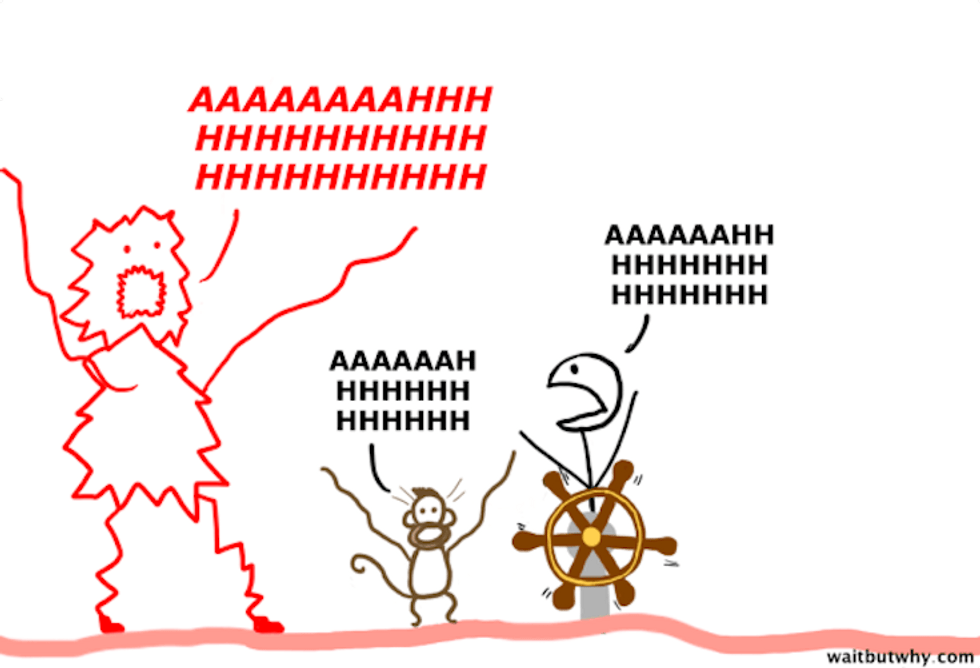
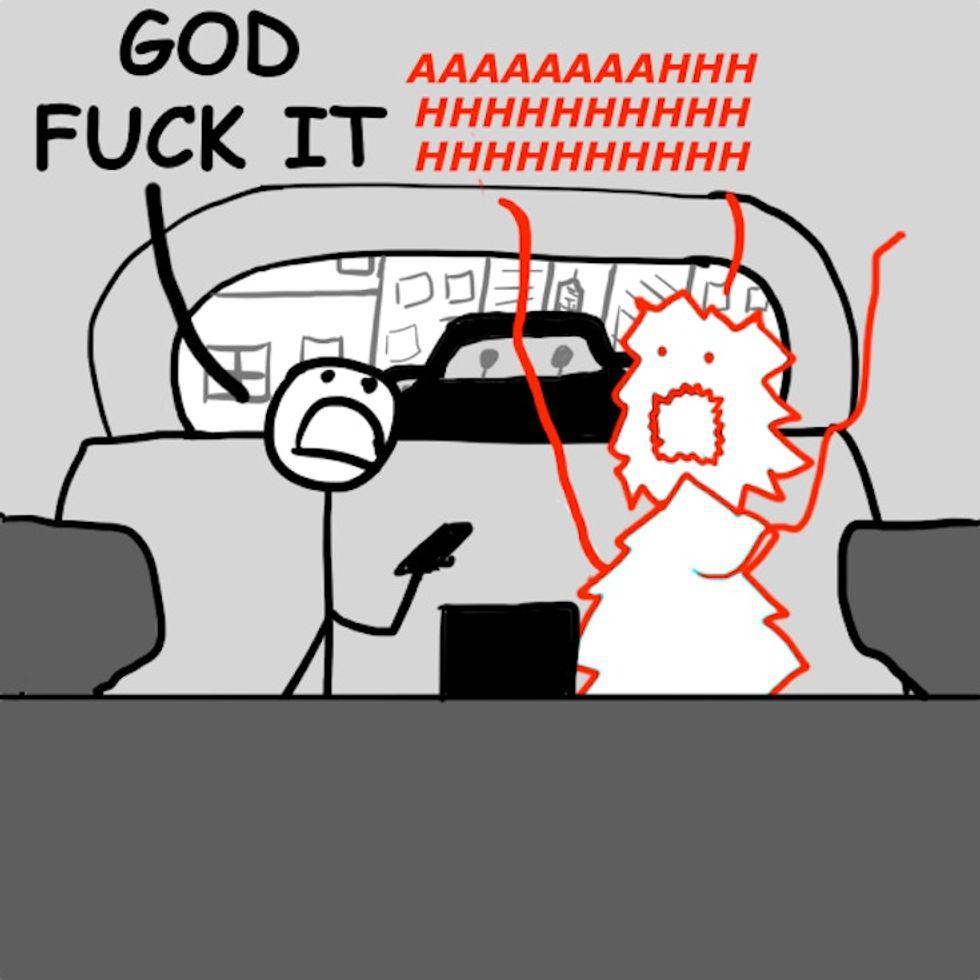
There's a pretty strong correlation here — the worse I feel about my productivity so far that day, the more likely I am to be late. When I'm pleased with how I've lived the day so far, the Rational Decision-Maker has a much easier time taking control of the wheel. I feel like an adult, so it's easy to act like an adult. But times when the monkey had his way with me all day, when the time rolls around that I need to stop working and head out somewhere, I can't believe that this is all I've gotten done. So my brain throws a little tantrum, refusing to accept the regrettable circumstances, and stages a self-flagellating protest, saying, "NO. This cannot be the situation. Nope. You didn't do what you were supposed to do, and now you'll sit here and get more done, even if it makes you late.”

So yeah, that's why I'm late. Because I have problems.

Don't excuse the CLIPs in your life — it's not OK, and they need to fix it. But remember: It's not about you. They have problems.


This article originally appeared on 04.07.16



Health

From trials to treatments: one family's journey with "Brittle Bone Disease"

For Alex and his family, osteogenesis imperfecta spans four generations — and Shriners Children’s has been there every step of the way with life-changing care.

Four generations, one diagnosis: A family’s lifelong journey with “Brittle Bone Disease”
True

Like his mom, grandma and great-grandma before him, Alex was born with a condition called osteogenesis imperfecta, otherwise known as “brittle bone disease.” For every family member before him, the condition meant a lifetime of broken bones, hospital visits, and constant worry — but that story is now changing. With the support from Shriners Children’s™, Alex is experiencing a level of freedom and quality of life that former generations had only hoped for.


A family affair

Alex’s family’s story began in 1934, when his great-grandma June started fracturing her bones at the age of 10. June would be nearly a teenager before she received a diagnosis of osteogenesis imperfecta — and, with that, she became one of the first patients with the condition to be treated at Shriners Children’s.

June’s daughter, Wanda, was diagnosed with the same condition at Shriners Children’s shortly before she was born in 1955. Like her mom Wanda spent a significant part of her childhood in the hospital, often watching her siblings line up outside the hospital window to wave and wish her luck between surgeries.

When Wanda’s daughter was born, Chandra spent years undergoing treatment at Shriners Children’s for osteogenesis imperfecta, like her mom and grandma before her. Experiencing more than 200 fractures in her early years, she was unable to walk before age 22 — but no less determined to make life better for others with her condition. Chandra donated her bone marrow to be used in a study, and the results contributed to the OI protocols and treatment that are now the standard of care all over the world. Best of all, this study would go on to benefit her own son, Alex.

Care that feels like family

While her treatment journey was challenging, Chandra also cherished her experience at Shriners Children’s. “The staff was like family to me,” she said.

Shriners Children’s has been providing that same level of professional care for families across the country. Founded in 1922 — just two years before June was born — Shriners Children’s has been providing specialty care to children with a wide variety of complex conditions, such as orthopedics, burn injuries, cleft lip and palate, and others.

But Shriners Children’s doesn’t provide this care alone. All services are made possible by generous donors. Through their giving, patients are able to access specialty care as well as adaptive equipment, long-term rehab, surgeries, and more. In one year alone, Shriners Children’s performed more than 24,000 life-changing surgeries, as well as 446,000 procedures. On top of that, they delivered tens of thousands of prosthetic and orthotic devices for patients in need and welcomed an additional 62,000 patients on top of that.

Hope for a new generation

With Chandra’s bone marrow donation, along with the compassionate care he was able to receive through Shriners Children’s, Alex is now able to live a life his family only dreamt of. To treat his condition, Alex receives infusions that regulate calcium levels in his blood and slow bone breakdown.

“When Alex started walking between one and two years old, I was shocked,” Chandra said. “The fact that he was able to walk, even run, and knowing I had a part to do with that, makes my heart happy.”

Without consistent treatment, Alex’s family believes he might still be spending most of his time in the hospital, facing broken bones and countless fractures. Instead, the compassionate care he receives has given him a bright future — and has made Chandra eternally grateful.

“Shriners [Children’s] is amazing with him,” she said. “I love Shriners [Children’s] so much.”

Shriners Children’s helps children heal and thrive so they can chase their dreams. Learn more about how they’re making it possible and share this article to inspire others to join you. Shriners Children’s relies on generous donors to make a difference.

Donate today during the 3X Match Challenge to make 3X the life-changing impact for patients.

black lab, dog walker, dog walker near me, dog walker ap, neighbors, good news, pets, feel good news

black lab (left. Handwritten letter (right)

If you've lived your whole life with a dog, a home has to feel pretty empty without one. Your heart has to feel like there's something missing as well. When Jack McCrossan, originally from Scotland, moved to Bristol, England with his three friends, they were bummed out to learn that their landlord didn't allow dogs.

So when they saw a beautiful black Sheprador (a German Sheppard Lab mix) in their neighbor's window, they knew that had to become buddies with her. They wrote the dog's owner, Sarah Tolman, a letter asking to arrange a play date with the dog. "If you ever need someone to walk him/her, we will gladly do so," they wrote.


"If you ever get bored (we know you never will, but we can dream), we are more than happy to look after him/her. If you want to come over and bring him/her to brighten our day, you are more than welcome. If you want to walk past our balcony windows so we can see him/her, please do," the letter continued.

"We hope this doesn't come too strong, but our landlord won't allow pets, and we've all grown up with animals. The adult life is a struggle without one," they wrote. "Yours sincerely, The boys from number 23," the letter concluded.

Soon after, the boys in 23 received a response from the dog herself, Stevie Ticks, accepting the offer. However, it may have been written by her human, Sarah Tolman. In the letter, Stevie shares a bit about herself, saying she's two years and four months old, was adopted in Cyprus, and that she's "very friendly and full of beans." (The boys shouldn't worry about a gassy hound, in England, "full of beans" means lively.)

"I love meeting new people and it would be great if we can be friends. I must warn you that the price of my friendship is 5 x ball throws a day and belly scratches whenever I demand them," the letter continued. A few days later, the boys got to meet Stevie.

"Meeting Stevie was great!" McCrossan told Buzzfeed. "She was definitely as energetic as described. We got to take her for a walk and she wouldn't stop running!"

Tolman thought the boys' letter was a fantastic gesture in an era where, quote often, neighbors are strangers. "In a day and age where people don't really know or speak to their neighbors, it was really nice for them to break down that barrier," she said. After the story went viral, she saw it as an opportunity for people to share their love of dogs with the world. "My mother and I are amazed at all the love we've received from around the world these past few days," Tolman wrote as Stevie. "If you have a doggo in your life, share that love with those around you."

A lot has changed since this story first warmed hearts around the globe. The boys have since moved away, but as of September 2024, Stevie is around 8 years old and still living her best life. Recently, she even made it to the doggie wall of fame at her local coffee shop.

In the years since this story first went viral, pet-sharing and neighbor dog borrowing have actually become more common, especially in cities where landlords restrict pets. Several platforms (like BorrowMyDoggy) and community groups now exist to pair dog owners with trusted neighbors who want occasional playtime, walks, or dog-sitting without having to own a pet. It’s a small but growing trend that reflects how deeply animal companionship is needed—even for people who can’t adopt a dog full-time. In many apartment buildings, these kinds of informal arrangements help reduce loneliness, build community, and give non-owners the emotional benefits of living with pets.

Just goes to show the power of a dog's love…even if that dog isn't your own.

This article originally appeared six years ago.

boomers, boomer parents, millennials, millennial parents, parenting, family, love, relationships, generations

People share their theories about why Boomer parents won't tell you what's going on with their health.

Generational differences can make it seem like we're not living in the same reality as those just a few years younger or older than us. But it's the Baby Boomers who, perhaps, are the most perplexing to their children and grandchildren who want to understand and relate to them.

Even a therapist who specializes in family dynamics day in and day out struggles to understand one peculiar habit that seems to be nearly universal among those in the 60 and above age bracket.


Mary Beth Somich, LCMHC, who has been a family therapist for 10 years, recently posted a TikTok that struck a nerve. The caption reads, "Help me understand this Boomer parenting behavior."

"There is this thing that Boomer parents consistently do that I have to admit, I truly do not understand. I would really like to understand this, as I think it would really help my Gen X and Millennial adult clients."

In her experience, Somich says, older adults tend to withhold important medical information from their adult children, sometimes until way after the fact. It often comes wrapped in a cushioning phrase like, "We just didn't want to worry you."

In the video, she acts out a few scenarios that are all too familiar to many adults with Boomer parents: Mom springing it on you out of the blue that Dad had "open heart surgery yesterday." Or one of your parents suddenly disclosing that "Grandma has been on life support for a week."

"These are adult children now. These are adults." She says her adult clients come into her practice after moments like this feeling upset, sad, and even betrayed. In short, they're far more upset than they would have been hearing the hard news sooner.

"If the idea here was to spare your adult child some anxiety, it has backfired," she says. But the question still remains: Why do they do it?

@yourjourneythrough

Respectfully, why? If this hits home and you want to talk it through, message us the word “contact” to chat or book a session. 💌 #raleigh #boomerparents #parenting #raleighmoms #familydynamics

The video racked up over a million views on social media, and viewers had no shortage of things to say about this frustrating phenomenon.

Theories abound as to why Boomers tend to withhold health-related updates. Some called out the behavior as manipulative or selfish:

"They don't want to deal with our emotions. Surely you know that"

"Emotional immaturity is likely a part of it - avoiding having to acknowledge their own distress about it and also avoiding experiencing their kids’ distress. Sweep it under the rug until you can’t not trip over it."

"They will give you every health update of the neighbor down the street that you don’t even know but won’t tell you when they have cancer. Then they make you feel bad that you didn’t know because you don’t come around enough."

"It’s a form of punishment and control. 'If we cared, we would have asked.'"

Several people theorized that it's hard for parents of any age to think of their own kids as adults, so the urge to protect and shield them is tough to break even once they're truly grown. Others were more empathetic, recalling that Boomers weren't exactly raised with a lot of tender affection and care in the '50s and '60s:

- YouTube www.youtube.com

"Boomers had f-ed up parents and so were their parents. Etc. There was no counseling, no mental health talk. It was non existent. OUR feelings were dismissed and communication skills were not taught to us. we were taught to brush everything under the rug and I think all of this is reflection of how we react to things now."

"Late Boomer here (Gen Jones). Our parents kept everything from us. No talking about money, relationships, or coping skills. We never learned how to relate to our adult children unless we taught ourselves."

Parents in the '60s and thereabouts were heavy on authority and much lighter on warmth than parents today. The phrase, "Children should be seen and not heard," was a common refrain of the day, so it's no wonder they might have trouble opening up and communicating.

Experts say the truth is really a bit of both: A genuine (if misguided desire) to protect or not "burden" adult children, mixed with difficulties in being vulnerable as a result of their upbringing.

boomers, boomer parents, millennials, millennial parents, parenting, family, love, relationships, generations Kids raised in the '50s and '60s were not taught much about openness and vulnerability. Photo by Flaviu Costin on Unsplash

"Boomers are extremely independent and are used to making their own decisions," Marianne Matzo, PhD who specializes in palliative care and gerontology, told Upworthy. "Remember, they came of age during the Vietnam war, and one of the legislative changes at that time was people were legal adults at age 18. At a young age they had the legal right to make major decisions and want to keep that freedom. They don’t need the family to drive them to the doctor, nor be involved in making decisions about their lives. The tendency is to make decisions and inform the family afterwards.

Jenna Budrea-Roman, a licensed clinical psychologist, tells Upworthy that, unfortunately, parents and their adult children can find themselves in a vicious cycle:

"These older adults still have a sense of obligation and it might feel wrong not to share something significant with their child ...They might avoid bringing it up until the last possible moment, then creating an emotional boomerang for their child ('Wait, what do you mean you might have cancer and are getting a biopsy tomorrow?'). The adult kid feels equal parts concerned, angry for not being trusted with the information earlier, and confused as to what they should do to be supportive. This reaction reinforces to the parent that they should have kept the information to themselves and have "now caused more problems." No one gets what they need in this dynamic to feel emotionally safe and connected."

As in most cases in life, the way forward is to not shy away from direct and uncomfortable conversations, and to handle them with empathy. It's fair to be upset and anxious because of how sensitive health updates are handled, and to communicate that, but remember not to attack your parent's independence, their right to privacy, or their struggles with vulnerability.

Pets

Man's unique gift for naming cats has strangers asking him to name their kittens

Hersberry, O'dis, Nuffin—watch how "Unc" comes up with his adorable names.

kittens, cats, pets, naming cats, naming kittens

What would Unc name these kitties?

"The Naming of Cats is a difficult matter, it isn't just one of your holiday games…" – T.S. Eliot

One of the best parts of getting a new pet is choosing a name for them. Unlike children, who have conscious feelings about their names and may object to off-the-wall choices at some point, a pet presumably couldn't care less what the humans in their lives call them. A dog could be named Fred, Red, or Potatohead and be none the wiser. We've seen cats with names that go far beyond the norm even for pet names, like Parking Lot, Crunchwrap Supreme, and Missile Launcher (Missy for short) among other creative monikers.


But if any animals were going to care about what we name them, surely it would be our finicky feline friends. And one man, whom we'll call Unc (for his @UncGotThaMunchies handle), seems to have a gift for giving kitties very special (or rather, "pecial") names. Unc has become the father of 13 kitties, and his naming of cats has become a bit of a viral phenomenon.

@uncgotthamunchies

#cat #cats #catsoftiktok #kitten #kittensoftiktok

First, there's Blackaroni and Cheese, a black and orange kitten pair that people are just gaga over. But Unc has begun a whole movement of naming kitties in a "berry pecial" way, with Hersberry leading the way. Why Hersberry? Because her's berry pecial to Unc, of course.

@uncgotthamunchies

#cats #cat #kitten #kittens #catsoftiktok

Among the other kittens, we have another pair named Thor and Lowkey (yes, spelled Lowkey) and another orange kitty that Unc named Midas, "because there Midas well be no other kitties on the whole planet."

@uncgotthamunchies

#cat #catsoftiktok #kitten #kittens #kittensoftiktok

People have become so enamored with these cute and clever kitty names that some have started asking Unc to help them name their own kittens. One person shared a photo of their adorable orange kitten and asked if Unc could name him because they couldn't think of a good name. Unc didn't disappoint.

"When people see dis kitty right here," he said in a response video. "They will say, 'Oh, dis kitty is so beautiful. Oh, dis kitty is so pecial.' So I think his name should be O'dis." Then he explained all the nickname benefits of the name O'dis and how special this name would make the kitty feel.

@uncgotthamunchies

Replying to @glitterdiamondsparkles #greenscreen #cat #catsoftiktok #kitten #kittens

Someone else shared a photo of their fuzzy little tabby kitten, writing, "First I saw your Hersberry video then Midas and now the universe sent us a kitten and we can't think of a name for her. Can you help name her??" Unc responded with a video saying that he'd had a premonition as he was laying around looking at kitties on TikTok that a beautiful little girl kitty was going to come to him needing a name, and he should have the name ready for her when he saw her. Watch how that played out:

@uncgotthamunchies

Replying to @megan_elizabeth__ #greenscreen #cat #catsoftiktok #kitten #kittensoftiktok

Did he choose a perfect name or what? The kitten's owner responded in the comments and said, "Won’Da it is!! 🥰 Thank you!!"

Unc got another orange kitten sent to him with a name request. This one got the name Nuffin:

@uncgotthamunchies

Replying to @Raegan Schafer #greenscreen #cats #cat #kittens #kittensoftiktok

"Because there is nuffin on dis Earf more cuter than this kitty. And there is nuffin on dis Earf that I would not do for this kitty. And there is nuffin on this whole Earf that could keep me from loving this kitty," explained Unc. Of course.

People are loving watching Unc name other people's kitties, with multiple people calling him a walking green flag.

"There is nuffin on this earf as precious as you naming kitties 😍😂🫶🏼," wrote one commenter.

"There is nuffin I love more than a man who loves his kitties as much as you do!!"

"Another perfect name!!! My sister is adopting a kitty today and I’ve been telling her about your names and how you come up with them. It’s great. 🥰"

Ultimately, the way Unc interacts with his kitties is what keeps people coming back. There's something so endearing about the mutual affection between him and the whole lot of them. Not all cats are sweet and snuggly, but Unc's kitties seem to be quite affectionate. People with more standoffish cats may be wondering why this man's cats and kittens are so loving. Well, here you go:

@uncgotthamunchies

#cat #catsoftiktok #kitten #kittensoftiktok #kittens

So berry, berry pecial. You can follow Unc on TikTok.

Humor

Hilarious fake beer advertisement introduces us to the 'most Gen X man' ever and it's perfect


"Scrolling through the comments here and it feels like I finally made it home."

Gen X, Generation X, boredom, funny, 80s, 90s
Photo Credit: Canva

A man looks noticeably bored.

Sometimes Gen-Xers just want to feel seen, something that doesn't always happen for us. So when a YouTube account called Null Parade created a Gen X–themed ad inspired by Dos Equis, many in this latchkey sandwich generation truly showed their love.

In a video titled "The Most Gen X Man in the World - Dos Equis Ad," the description reads: "He was raised in malls, still listens to grunge music, and approaches life with one sacred philosophy: whatever. He is... the most Gen X man in the world."


The Most Gen X Man in the World. www.youtube.com, Null Parade

We see a man in his late 40s or 50s (it's Gen X, who can really tell?) sitting in a sad cubicle, sighing. A voiceover shares, "He waited 20 years for boomers to retire, only to be told millennials were the future."

We next see him sitting on a couch, playing a video game and wearing a red-and-black, '90s-style checkered shirt. The voiceover continues, "He once spent the entire weekend alone…" The screen cuts to a child playing a video game in an arcade. "…at age nine."

Shots of him staring at the iCloud on his computer are juxtaposed with him nodding on what looks like a date. "He treats The Cloud the same way he treats horoscopes—with confusion and deep distrust."

Cut to: he's sitting on a therapist's couch (same '90s checkered shirt, disheveled hair, 5 o'clock shadow). "He once tried therapy. It didn't go well." The man then speaks, sarcastically telling her, "Everything's just super. Can't you see the joy leaking out of my face? So how much does Big Pharma pay YOU to get guys like ME on pills?"

"He grew up on microwave dinners and Mountain Dew. Which is why he has to take Tums five times a day." We then see him "not" meditating behind an old-school, '80s-style boombox. "He doesn't meditate. He blasts grunge until the emotions go numb."

Gen X, Generation X, MTV, latch key kid, TV dinner A Gen X kid watches MTV with a TV dinner.Photo Credit: YouTube, Null Parade

On a hopeful note, we then see a child drinking from a garden hose, while the sun sparkles behind him. It cuts quickly to our Gen X guy drinking from a pool hose, and it's slightly less enchanting. "He still drinks from garden hoses from time to time. Not because he's thirsty, but because it tastes like danger."

Now we see him with various technology, like televisions and remotes. "His approach to fixing technology is simple. Blow on it first, hit it second."

Now he's driving. "He still refers to re-starting a song on Spotify as… 'Alexa, rewind the tape.'"

"His wardrobe hasn't changed since 94. Faded band tee, flannel, cargo shorts and sneakers that are old enough to drink. Boomers respond with anger. Millennials respond with anxiety. And him?" He looks directly into the camera and says, "Couldn't care less."

He walks slowly through a deserted parking lot. "He still gets emotional walking past abandoned malls." Flash to a young child looking overjoyed to be surrounded by an Orange Julius and a KB Toys. The voiceover carries on, "Because those places raised him better than anyone else did."

Gen X, Generation X, Mountain Dew, video games, Hungry-Man A Gen X man plays video games.Photo Credit: YouTube, Null Parade

Our Gen X guy stares suspiciously as an orange lava lamp floats behind him. "He suspects the government is lying, corporations are evil, the Wi-Fi is listening, but he's too tired to give a damn." He looks up and says, "Enjoy the soundtrack of my misery. It's boring as hell."

He stands between an older boomer and younger millennial. "He's the middle child of history, overlooked, underappreciated and ignored his entire life. But he's used to it."

We now see a backlit shot of him sitting in the garage. "He is… the most Gen X man in the world." As he sits on a dirty recliner, he holds a bottle of beer and says with purpose, "I don't always drink. But when I do, it's to give even less of a f**k. Stay Gen X, my friends."

The comment section lit up, at least as much as a group of Gen X-ers can. Many of the comments are pure self-compliments. "None of us aged a day," one person writes. "We were all 30 the day we were born." Another adds, "We grew up on hose water and neglect. We were feral. It was glorious."

Generation X, Gen X, childhood, summer, water hose A Gen X kid drinks water from a hose.Photo Credit: YouTube, Null Parade

So many feel totally seen: "Scrolling through the comments here and it feels like I totally made it home." This YouTuber astutely adds, "The happiest person is one who accepts who they are. Warts and all. That's Gen X. We're not worried about the future, because we've already imagined and accepted all the negative possibilities, and made peace with them."

And perhaps the most Gen X comment of them all? "I'm 57. I approve this message, but I really don't give a f#$%."

tawny platis, teen girls, voice actor, voiceover work, women's history

Teen girls in film and TV have changed a lot over the decades.

Voice actor Tawny Platis has become a viral sensation with her wide range of voiceover talents and videos demonstrating a variety of different voices. But one video that explores the evolution of teen girl voices in television and film over the last 75 years has people praising both her voice acting talent and the history of female representation she's providing.

Platis describes her video as "A very brief and at times hyperbolic look into the evolution of how teenagers have been portrayed in film and tv from the 1950s until today." Some of it is from her own experience and observations in the industry, but she shared that she also referenced more than 30 different academic and media sources to explain what contributed to the differences between the decades.


The best part is that she explained each vocal shift while actually using the stereotypical teen girl voice of the decade.

"Teenagers in the 1950s had higher-pitched, perky, breathy voices that signaled they were squeaky clean and conformed with traditional family values," she said. "Post WWII prosperity had created a generation with disposable income and leisure time, which had never really happened before, and sure does explain an awful lot."

A classic example of this 1950s teen girl is Gidget.

- YouTube www.youtube.com

A big shift happened in the '60s, though, and the girls' voices took on a whole different tone, a much deeper one.

"By the 1960s, teens were either partying on the beach or really into counterculture, man. It reflected two distinct responses to social upheaval, either living in a bubble of upper-middle-class wealth or rebelling against the status quo by embracing far-out but groovy ideas like peace and love," she said.

The '70s saw the teen girl voice drop even deeper, as "disillusionment and a loss of innocence due to counterculture failing to change society" led to jadedness. "Nobody was trying to be good or revolutionary. They were either trying to survive or embracing disco hedonism."

- YouTube www.youtube.com

Then came the Reagan-era '80s, where teen girl voices went back up an octave, added "like" every other word, and reflected the "conspicuous consumption" that led young women to "perform vapidities as a form of privilege." Rich and safe again, "we're just going to act like nothing bad ever happened." (Think "valley girl.")

The '90s saw the angsty Gen X teen girl, "materialistic and largely privileged, but self-aware and ironic," which dropped the voice way down again. Vocabulary from the '80s spilled over into the '90s, but was delivered "with an eye roll instead of a giggle." Alternative and grunge culture arose in response to things like the fall of the Berlin Wall. This decade was marked by "aimlessness and detachment, but genuine care."

- YouTube www.youtube.com

Then came 9/11 and soon after "a return to superficial concerns after brief unity." Reality TV replaced the "90s sarcastic speak" with the dreaded vocal fry, "which was often used to sound more authoritative and professional." (Platis points out that this came about after girls and women had been criticized for "uptalk.")

As the 2010s rolled in and social media became popular, a voice that indicated authenticity came along, partially in response to "a growing backlash against fakeness." Platis said, "Teen girls stopped trying to sound like reality stars and started trying to just sound like themselves." A class consciousness also came into play that made conspicuous consumption less attractive.

- YouTube www.youtube.com

And now the 2020s, in which we've seen a shift from "authentic vulnerability to hybrid performance that reflects the generation's unique position as digital natives who've seen all previous iterations of teen culture archived online and can literally consciously choose elements from each era, as well as just hijack any words they like from AAVE and the drag community." The isolation of the pandemic years also resulted in a "hyperaware and genuinely expressive" tone. That sounds about right.

People love Platis's breakdown, but one of the best comments came from Amanda Palmer, who described how all of these changes reflect some of the real-life expectations women often feel surrounding their voice:

"Can we just talk about the incredible value to women and girls, period, about understanding how much of what we consider our 'authentic' voice really is a construct of so many inputs and cultural norms and expectations. I was so shocked when I went into vocal surgery (for nodes) in 2007 and was told that I was 'pushing my voice' down. And indeed I was. And I still have to constantly try to wrestle myself away from the habit. But years on the road with men and in a male industry has definitely left its mark. Finding my true voice, the one without weight on it, and damage wrought by using it, is a lifelong goal. Always working towards it. Amazing work, thank you so so much. 👏👏"

You can follow Tawny Platis on Instagram and TikTok.