Idioms from around the world that become hilarious when translated into English
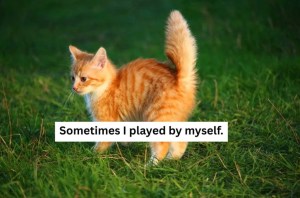
It can rain a lot more than just cats and dogs.

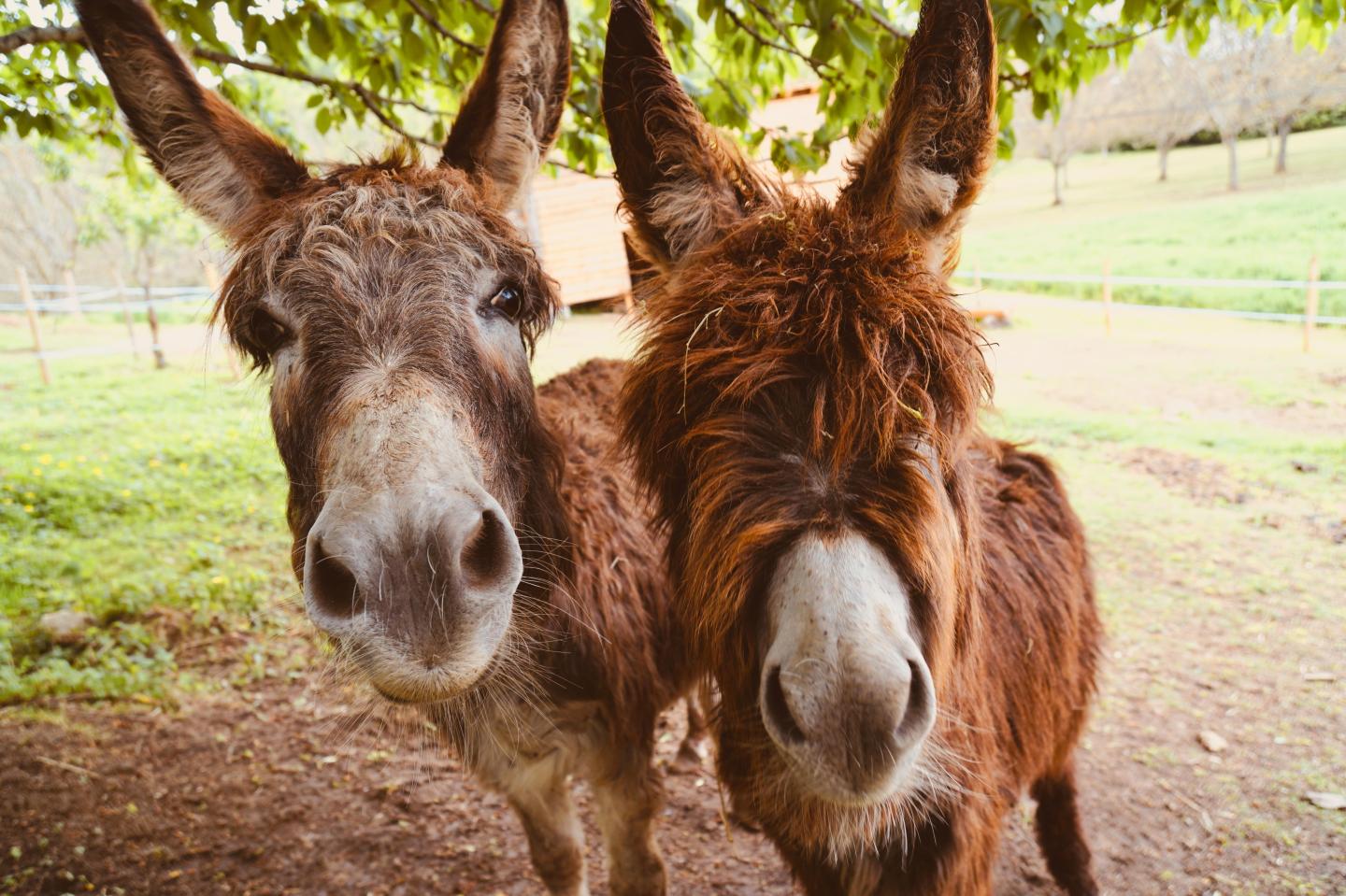
Two donkeys are better than one—'repetition teaches the donkey.'
You probably know what it means to hit the hay, tie the knot or buy a lemon. Maybe you’ve already killed two birds with one stone today, so effortlessly that it was a piece of cake. But to a non-English speaker, using these phrases would probably make you sound crazy … or should I say gone crackers?
That’s the fun thing about idioms. They change depending on the time, place and culture creating them. In other words, they usually sound ridiculous to anyone except those who normally use them. Looking at turns of phrase in different languages helps us see the world through different eyes. And man does it seem impressive at a party.
Just think, instead of saying “it’s raining cats and dogs,” next time you could incorporate a more Lithuanian take, and say “it’s raining axes.” How metal is that?
It can also be raining old women, barrels, buckets, pipe stems, frogs, female trolls, fire and brimstone … depending on where you’re from.
Some of these idioms from around the world make a lot of sense. Others get so lost in translation, you can’t help but get tickled pink.
Swedish
”Nu ska du få dina fiskar värmda.”
Literal translation: Now your fishes will be warmed.
It's another way of saying someone’s in trouble, or their “goose is cooked.”
The Swedish language is definitely not lacking in the threats department. They also have a saying, “nu har du satt din sista potatis,” which translates to “now you have planted your last potato.”
Imagine hearing Batman say “You’ve planted your last potato, Joker.” Doesn't have quite the intended effect.
Italian
“Avere gli occhi foderati di prosciutto.”
Literal translation: To have one’s eyes lined with ham.
Leave it to the Italians to have food-related phrases. You can use this when someone can’t see what’s right in front of them. It can also be used when someone is blinded by love. Sadly, there is no “ham-colored glasses” idiom.
Icelandic
“Að leggja höfuðið í bleyti.”
Literal translation: To lay your head in water.
You say this when you “need to sleep on something,” or “put your thinking cap on.” This one is hilarious because I cannot fathom getting any mental clarity from holding my head in the water.
Arabic
"At-Tikraar yu’allem al-Himaar.”
Literal translation: Repetition teaches the donkey.
Practice makes perfect, but it especially does for donkeys. Animal-themed wisdom at its finest.
German
"Ich verstehe nur Bahnhof."
Literal translation: I only understand train station.
It's another way of saying “it’s all Greek to me.”
The history of this one is a bit mysterious. One theory is that it originated from WWI soldiers who had only one thing on their mind after getting discharged: returning home. Meaning, they could only comprehend the train station that would lead them there. Others say it refers to tourists new to Germany who have really only learned the German word for “train station.” Which would indicate that everything else is foreign to them.
And let’s not forget “nicht mein bier, nicht meine sorgen,” translating to “not my beer, not my worries.”
(Fun fact: The term “not my circus, not my monkeys” actually stems from a Polish proverb, not an English saying at all.)
Norwegian
“Å snakke rett fra leveren.”
Literal translation: To speak directly from the liver.
When you say something without sugar-coating it, you are speaking directly from the liver. This dates back to a time when the liver was thought to be the magical organ that produced courage. So speaking from the liver is just like speaking from the heart, only down and to the right a little.
Chinese
“Mama huhu.”
Literal translation: Horse horse, tiger tiger.
You can use it to say something is just okay. Not good, not bad, just … meh.
As the story goes, a Chinese painter who, not very good at his craft, created a drawing of an animal that looked sort of like a tiger, and sort of like, you guessed it, a horse. That story actually has a tragic ending that serves as a cautionary tale against carelessness. But nowadays it takes on a lighter connotation.
And like “comme ci, comme ca” in French, “horse horse, tiger tiger” isn’t quite as commonly spoken as non-native speakers would assume.
Language continues to be an ever-evolving and always entertaining way to not only appreciate other cultures, but also note the similarities. Words might change slightly, but ultimately we're all expressing the same things.
This article originally appeared three years ago.

- The fascinating origin of the phrase "dead as a doornail" - Upworthy ›
- Why Americans throw the word 'like' into the middle of seemingly ... ›
- Can't find the right word for a hard-to-describe emotion? Meet a man ... ›
- Song explores naming things the way pineapples were named - Upworthy ›
- 13 idioms that make zero sense until you know where they come from - Upworthy ›
- 13 everyday idioms that make zero sense until you know where they come from - Upworthy ›
- 15 awesome, endangered idioms almost no one says anymore, but should - Upworthy ›
- 'Anchors aweigh' vs. 'anchor's away' and 9 other idioms most of us get completely wrong - Upworthy ›
- 19 weirdly-specific everyday things that you didn't know had names - Upworthy ›
- Chinese teacher shares American names with funny Mandarin meanings - Upworthy ›
- 9 common English words and phrases that take on entirely different meanings in England - Upworthy ›


a man sitting at a desk with his head on his arms Photo by
Can a warm cup of tea help you sleep better? If you believe it, then yes. Photo by 
A woman is getting angry at her coworker.via
A man with tape over his mouth.via
A husband is angry with his wife. via 
Three women sit on a blanket in the park. 
Two women engaging in a pleasant conversation inside a coffee shop
Two men engaging in a peaceful disagreement.
Resurfaced video of French skier's groin incident has people giving the announcer a gold medal
"The boys took a beating on that one."
Downhill skiing is a sport rife with injuries, but not usually this kind.
A good commentator can make all the difference when watching sports, even when an event goes smoothly. But it's when something goes wrong that great announcers rise to the top. There's no better example of a great announcer in a surprise moment than when French skier Yannick Bertrand took a gate to the groin in a 2007 super-G race.
Competitive skiers fly down runs at incredible speeds, often exceeding 60 mph. Hitting something hard at that speed would definitely hurt, but hitting something hard with a particularly sensitive part of your body would be excruciating. So when Bertrand slammed right into a gate family-jewels-first, his high-pitched scream was unsurprising. What was surprising was the perfect commentary that immediately followed.
This is a clip you really just have to see and hear to fully appreciate:
- YouTube youtu.be
It's unclear who the announcer is, even after multiple Google inquiries, which is unfortunate because that gentleman deserves a medal. The commentary gets better with each repeated viewing, with highlights like:
"The gate the groin for Yannick Bertrand, and you could hear it. And if you're a man, you could feel it."
"Oh, the Frenchman. Oh-ho, monsieurrrrrr."
"The boys took a beating on that one."
"That guy needs a hug."
"Those are the moments that change your life if you're a man, I tell you what."
"When you crash through a gate, when you do it at high rate of speed, it's gonna hurt and it's going to leave a mark in most cases. And in this particular case, not the area where you want to leave a mark."
Imagine watching a man take a hit to the privates at 60 mph and having to make impromptu commentary straddling the line between professionalism and acknowledging the universal reality of what just happened. There are certain things you can't say on network television that you might feel compelled to say. There's a visceral element to this scenario that could easily be taken too far in the commentary, and the inherent humor element could be seen as insensitive and offensive if not handled just right.
The announcer nailed it. 10/10. No notes.
The clip frequently resurfaces during the Winter Olympic Games, though the incident didn't happen during an Olympic event. Yannick Bertrand was competing at the FIS World Cup super-G race in Kvitfjell, Norway in 2007, when the unfortunate accident occurred. Bertrand had competed at the Turin Olympics the year before, however, coming in 24th in the downhill and super-G events.
As painful as the gate to the groin clearly as, Bertrand did not appear to suffer any damage that kept him from the sport. In fact, he continued competing in international downhill and super-G races until 2014.
According to a 2018 study, Alpine skiing is a notoriously dangerous sport with a reported injury rate of 36.7 per 100 World Cup athletes per season. Of course, it's the knees and not the coin purse that are the most common casualty of ski racing, which we saw clearly in U.S. skier Lindsey Vonn's harrowing experiences at the 2026 Olympics. Vonn was competing with a torn ACL and ended up being helicoptered off of the mountain after an ugly crash that did additional damage to her legs, requiring multiple surgeries (though what caused the crash was reportedly unrelated to her ACL tear). Still, she says she has no regrets.
As Bertrand's return to the slopes shows, the risk of injury doesn't stop those who live for the thrill of victory, even when the agony of defeat hits them right in the rocks.