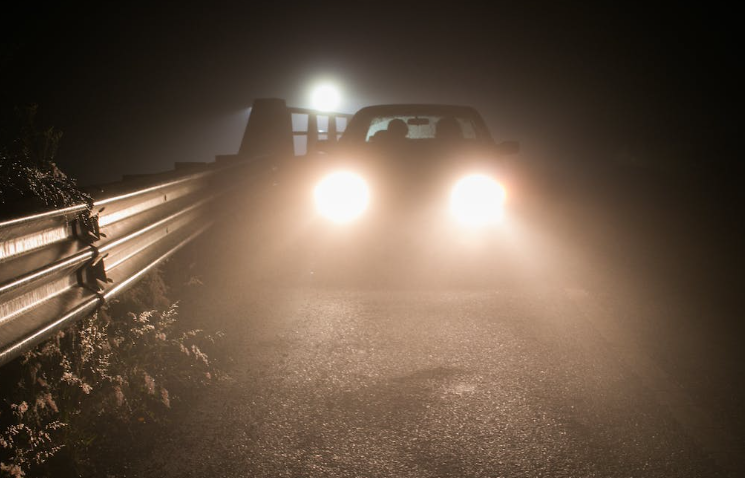
In recent years, a trend on the roads has frustrated many drivers: the increasing brightness of car headlights. While driving at night, drivers often forced to squint or are momentarily blinded by these ultra-bright lights, especially on high beams.
It’s annoying, and it’s also a safety hazard. But it doesn’t seem like anyone is doing anything about it.
New cars have brighter headlights because of the shift in manufacturing from halogen headlamps with a softer, orange color to blue-colored LED lights. “Imagine a car with two headlights: one halogen, one LED. They’d both meet the requirements. The light meter would say they’re the same, but the LED would look 40% brighter,” Mark Rea, professor at the Icahn School of Medicine at Mount Sinai in New York, said, according to The Hill.
What makes things worse is that many Americans drive trucks and SUVs with lights that are higher on the vehicle than a typical sedan. So drivers in the smaller cars often get intense beams of light shot directly at their eyes.
The problem is so bad that the Soft Lights Foundation calls for a ban on “blinding headlights.”
“I’ve got a small car. This truck is so much higher than me. Those headlights are going straight into my eye,” Mark Baker, President of the Soft Lights Foundation, told ABC News. “How is that going to be safe? So there’s a mismatch between small cars and super large cars that NHTSA should be having standards for.”
In the video below, Vicky Nguyen from NBC News explains the problem with new headlights and the solution, adaptive headlight technology.