upworthy
Add Upworthy to your Google News feed.
Google News Button
Identity

Formerly enslaved man's response to his 'master' wanting him back is a literary masterpiece

"I would rather stay here and starve — and die, if it come to that — than have my girls brought to shame by the violence and wickedness of their young masters."

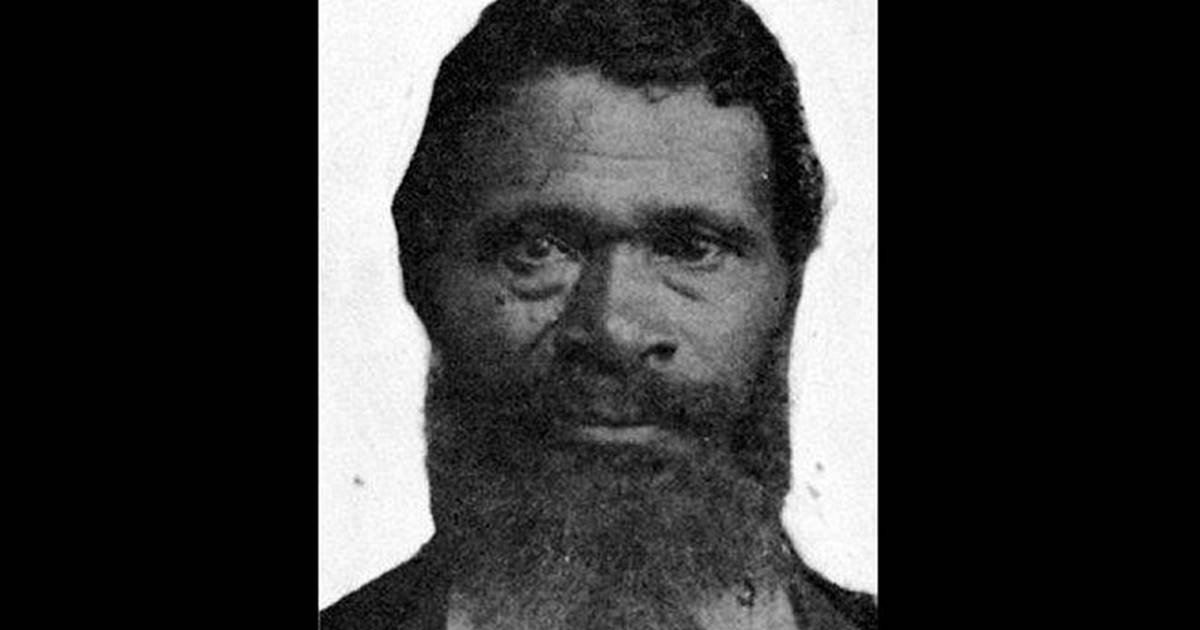
portrait of former enslaved man, Jordan Anderson

A photo of Jordan Anderson.

In 1825, at the approximate age of 8, Jordan Anderson (sometimes spelled "Jordon") was sold into slavery and would live as a servant of the Anderson family for 39 years. In 1864, the Union Army camped out on the Anderson plantation and Jordan and his wife, Amanda, were liberated. The couple eventually made it safely to Dayton, Ohio, where, in July 1865, Jordan received a letter from his former owner, Colonel P.H. Anderson. The letter kindly asked Jordan to return to work on the plantation because it had fallen into disarray during the war.

On Aug. 7, 1865, Jordan dictated his response through his new boss, Valentine Winters, and it was published in the Cincinnati Commercial. The letter, entitled "Letter from a Freedman to His Old Master," was not only hilarious, but it showed compassion, defiance, and dignity. That year, the letter would be republished in the New York Daily Tribune and Lydia Marie Child's The Freedman's Book.

The letter mentions a "Miss Mary" (Col. Anderson's Wife), "Martha" (Col. Anderson's daughter), Henry (most likely Col. Anderson's son), and George Carter (a local carpenter).

Dayton, Ohio,
August 7, 1865
To My Old Master, Colonel P.H. Anderson, Big Spring, Tennessee

Sir: I got your letter, and was glad to find that you had not forgotten Jordon, and that you wanted me to come back and live with you again, promising to do better for me than anybody else can. I have often felt uneasy about you. I thought the Yankees would have hung you long before this, for harboring Rebs they found at your house. I suppose they never heard about your going to Colonel Martin's to kill the Union soldier that was left by his company in their stable. Although you shot at me twice before I left you, I did not want to hear of your being hurt, and am glad you are still living. It would do me good to go back to the dear old home again, and see Miss Mary and Miss Martha and Allen, Esther, Green, and Lee. Give my love to them all, and tell them I hope we will meet in the better world, if not in this. I would have gone back to see you all when I was working in the Nashville Hospital, but one of the neighbors told me that Henry intended to shoot me if he ever got a chance.

I want to know particularly what the good chance is you propose to give me. I am doing tolerably well here. I get twenty-five dollars a month, with victuals and clothing; have a comfortable home for Mandy, — the folks call her Mrs. Anderson, — and the children — Milly, Jane, and Grundy — go to school and are learning well. The teacher says Grundy has a head for a preacher. They go to Sunday school, and Mandy and me attend church regularly. We are kindly treated. Sometimes we overhear others saying, "Them colored people were slaves" down in Tennessee. The children feel hurt when they hear such remarks; but I tell them it was no disgrace in Tennessee to belong to Colonel Anderson. Many darkeys would have been proud, as I used to be, to call you master. Now if you will write and say what wages you will give me, I will be better able to decide whether it would be to my advantage to move back again.

As to my freedom, which you say I can have, there is nothing to be gained on that score, as I got my free papers in 1864 from the Provost-Marshal-General of the Department of Nashville. Mandy says she would be afraid to go back without some proof that you were disposed to treat us justly and kindly; and we have concluded to test your sincerity by asking you to send us our wages for the time we served you. This will make us forget and forgive old scores, and rely on your justice and friendship in the future. I served you faithfully for thirty-two years, and Mandy twenty years. At twenty-five dollars a month for me, and two dollars a week for Mandy, our earnings would amount to eleven thousand six hundred and eighty dollars. Add to this the interest for the time our wages have been kept back, and deduct what you paid for our clothing, and three doctor's visits to me, and pulling a tooth for Mandy, and the balance will show what we are in justice entitled to. Please send the money by Adams's Express, in care of V. Winters, Esq., Dayton, Ohio. If you fail to pay us for faithful labors in the past, we can have little faith in your promises in the future. We trust the good Maker has opened your eyes to the wrongs which you and your fathers have done to me and my fathers, in making us toil for you for generations without recompense. Here I draw my wages every Saturday night; but in Tennessee there was never any pay-day for the negroes any more than for the horses and cows. Surely there will be a day of reckoning for those who defraud the laborer of his hire.

In answering this letter, please state if there would be any safety for my Milly and Jane, who are now grown up, and both good-looking girls. You know how it was with poor Matilda and Catherine. I would rather stay here and starve — and die, if it come to that — than have my girls brought to shame by the violence and wickedness of their young masters. You will also please state if there has been any schools opened for the colored children in your neighborhood. The great desire of my life now is to give my children an education, and have them form virtuous habits.

Say howdy to George Carter, and thank him for taking the pistol from you when you were shooting at me.

From your old servant,
Jordon Anderson

Learn more about Jordan Anderson here.


This article originally appeared eight years ago.


ideas, homelessness, prodigy, social work, solutions
Photo credit: @ribalzebian on Instagram

Ribal Zebian is going to test a house he designed by living in it for a year.

Ribal Zebian, a student from the city of London in Ontario, Canada, already made headlines last year when he built an electric car out of wood and earned a $120,000 scholarship from it. Now, he's in the news again for something a little different. Concerned with homelessness in his hometown, Zebian got to work creating a different kind of affordable housing made from fiberglass material. In fact, he’s so confident in his idea that the 18-year-old plans on living in it for a year to test it out himself.

Currently an engineering student at Western University, Zebian was concerned by both the rising population of the unhoused in his community and the rising cost of housing overall. With that in mind, he conjured up a blueprint for a modular home that would help address both problems.


Zebian’s version of a modular home would be made of fiberglass panels and thermoplastic polyethylene terephthalate (PET) foam. He chose those materials because he believes they can make a sturdy dwelling in a short amount of time—specifically in just a single day.

“With fiberglass you can make extravagant molds, and you can replicate those,” Zebian told CTV News. “It can be duplicated. And for our roofing system, we’re not using the traditional truss method. We’re using actually an insulated core PET foam that supports the structure and structural integrity of the roof.”

Zebian also believes these homes don’t have to be purely utilitarian—they can also offer attractive design and customizable features to make them personal and appealing.

“Essentially, what I’m trying to do is bring a home to the public that could be built in one day, is affordable, and still carries some architecturally striking features,” he said to the London Free Press. “We don’t want to be bringing a house to Canadians that is just boxy and that not much thought was put into it.”

Beginning in May 2026, Zebian is putting his modular home prototype to the test by living inside of a unit for a full year with the hope of working out any and all kinks before approaching manufacturers.

“We want to see if we can make it through all four seasons- summer, winter, spring, and fall,” said Zebian. “But that’s not the only thing. When you live in something that long and use it, you can notice every single mistake and error, and you can optimize for the best experience.”

While Zebian knows that his modular homes aren't a long-term solution to either the homeless or housing crisis, he believes they could provide an inexpensive option to help people get the shelter they need until certain policies are reformed so the unhoused can find affordable permanent dwellings.

@hard.knock.gospel

What to buy for the homeless at the grocery store. 🛒 Most people get it wrong. After being there myself, these are the survival items that actually matter 💯 The 2nd to last one is about more than survival—it’s about DIGNITY. We are all one circumstance away from the same shoes 🙏 SAVE this for your next grocery run. 📌 IG@hardknockgospel Substack@ Outsiders_Anonymous #homelessness #helpingothers #kindness #payitforward #learnontiktok

Zebian’s proposal and experiment definitely inspires others to try to help, too. If you wish to lend a hand to the unhoused community in your area in the United States, but don’t know where to look, you can find a homeless shelter or charity near you through here. Whether it’s through volunteering or through a donation, you can help make a difference.

mailman paycheck, mail carriers pay, job market, job hunting, mailman shares check, pay transparency, jobs, economy

Mailman reveals his massive paycheck to recruit others.

No matter how often we encounter them, people often overlook the "people in our neighborhood," as Mister Rogers would call them. Their presence is so common that we don't always notice them until they're gone for a day or two. These are people like school bus drivers, sanitation workers, delivery drivers, and postal workers. Of course, people know they exist and that they do a job, but because their presence is in the background of daily life, we may not give their jobs much thought.

There's the thought that "someone has to do it" when it comes to the service they provide, but sometimes that "someone" is you. Or at least it could be you, especially after hearing how much one of those jobs pays. It's a common misconception that work like sanitation or postal service is menial and low-paying, but the truth is that this essential work can be quite lucrative in the right circumstances.


A U.S.P.S. mailman shared his paycheck on social media to help recruit more mail carriers.

The post office continues to have a shortage of mail carriers in certain areas, especially in rural settings. This shortage causes delays in receiving mail and longer hours for current mail carriers. While the post office has been working to fill gaps by increasing hiring, it still isn't enough, given the large number of USPS workers nearing retirement. It seems to be a constant struggle to keep an adequate number of mail carriers throughout the areas that need them most.

mailman paycheck, mail carriers pay, job market, job hunting, mailman shares check, pay transparency, jobs, economy The pay is good and you get to drive this sweet truck around!Photo by Joel Moysuh on Unsplash

One barrier to people applying to the Postal Service may be that they don't realize the Postal Service is hiring, since some people may see mail carriers as background characters.

Another concern may be whether people can earn a livable wage working for the post office, but Lukas' video can help fill in the blanks.

In response to viewers who don't believe he actually makes six figures, the Missouri mailman and TikTok creator shares a screenshot of his paycheck showing he brings home $4,423.09 every other week, which averages out to just over $100K a year.

Being fully transparent, Lukas shares that his paycheck includes 23 hours of overtime because he has to work extra hours due to being short-staffed.


How much do U.S. postal workers make?

"On one of my previous videos, somebody said, 'prove it' on one of my checks, so here's one of my last checks. As you can see, the overtime hours, plus my normal pay all equals up to $4,423...so, and that's for two weeks of work. I'm working too much, but if you were to multiply that by 26 weeks, that's over $100,000. We need help, and the post office pays well," he says.

Lukas repeatedly states in his video that the post office is hiring and needs help desperately, but comments were mixed on whether working at the post office was a good move.


@lukasthegiant

We're Hiring and Yes, We Pay Well. In some cases, over 100k!#greenscreen #werehiring #paidwell #tallestmailman #needhelp #getpaid #100k #usps #apply

"I mean he’s technically making 25.00 hourly and $38 for each hour of OT. You’re forgetting the minimum wage in majority of states is 7.25," one person writes.

"Post office is recession-proof. Been there 30 years," another commenter shares.

Someone else chimes in, "been working at the post office for 5 years just made regular. it is not easy when you start but once you know how to do it it's a BREEZE."

mail, usps, mailbox, letter, mailman, letter carrier, express mail Three USPS boxes. via Canva/Photos

A former postal worker reveals, "I worked there 6 years and had no life. Worked 12 + hrs for 7 days a week. I wasted most of my 20s working. NO THANK YOU!!!!, before adding. "When I started years ago it was $15 an hr when I left it was $25."

To be fair, while Lukas is doing well for himself (and working quite hard for the money), many mail carrier shortages are partly due to wages that don't cover the cost of living in certain areas. So there's definitely room for improvement, and the American Postal Workers Union is fighting for higher pay and better hours all the time.

What's the average USPS mail carrier salary?

According to Glassdoor, the median pay for a USPS mail carrier is $66,000 a year, with an average range of $55,000 to $81,000, and that's before overtime. In addition, they receive generous benefits, including health, dental, and vision insurance; flexible spending accounts; long-term care insurance; a retirement package; up to 15 days of leave; and 11 Postal Service holidays.

The post office seems to be much like any other job. Some people have a great experience working there, while others do not, but if someone is looking for a chance at a new career with retirement benefits, USPS could be a place to land.

This article originally appeared last year. It has been updated.

party, chatting, likable, drinks small talk, men and women

A woman speaking with two men at a party.

When we think of someone likable, we often imagine a person with a big personality who's the life of the party. We conjure up images of social butterflies and people who keep everyone at the dinner party glued to their every word when they tell a story. The funny thing is, according to research, that's not really the case.

Studies show that the easiest way to make someone like you is to show interest by asking questions during the conversation and making it clear that you like them. People also really love those who come off as genuine.


Michael Gendler, a co-founder of Ultraspeaking, a platform that helps people master the art of public speaking, recently shared three "magic" phrases that make you more likable, all of which align with what science tells us.

Three phrases that make you more likable

Phrase 1: "Here's what really scares me..."

This phrase resonates with people because it shows you're genuine by admitting your vulnerability. "Man, talk about your feats, real fears, not like 'Oh, I'm scared I'm going to be too successful.' Tell us about something that actually scares you. Don't be guarded. Be open, and other people will appreciate that," Gendler says.

Phrase 2: "You know what I really like about you?"

This phrase makes people like you because it counters a psychological phenomenon known as signal amplification bias, which suggests we tend to overestimate how clearly we express our feelings to others. This means that, many times, when we think others know we like them, they may not be so sure. So a little assurance goes a long way toward showing them the feeling is mutual. "People love being complimented as long as it is genuine," Gendler says.


Phrase 3: "Tell me more"

As Dale Carnegie wrote in How to Make Friends and Influence People, the key to interacting with others is focusing on being interested in them rather than trying to impress them by being interesting. "Be interested, not interesting," Carnegie writes.

A Harvard study supports this, showing that when you first start speaking with someone, you should follow your first question with two more. People who do this are rated as much more likable than those who, after one question, shift the conversation to themselves. "People love feeling like what they're saying is interesting. So invite them to speak more," Gendler continues.


Don't forget to be genuine

Ultraspeaking's post is a breath of fresh air for those who aren't comfortable trying to impress others at parties, on dates, or in the office. The video shows that if you make people feel important, they're much more likely to like you in return. The key is that it has to come from the heart.

"Remember, don't just use these phrases and expect them to work," Gendler says. "They have to be genuine and open. That's what makes people likable."

kids, children, child prodigies, parenting, dads, painting, art, artists, creativity, family
Unsplash & bruncvik/reddit
A dad posted his 5-year-old's paintings online and couldn't believe the huge response

One of the toughest things about being a parent has to be helping your child discover and nurture their talents. You seek to encourage them to try new things without overwhelming them. You want them busy with lots of enriching activities but not so busy they don't have time to just be a kid. And when you do stumble on something they have a knack for, you tread lightly, wanting to give them every opportunity to pursue it without pushing too hard.

It's a really tricky balance to get right. Maybe that's why we're so fascinated with child prodigies, or even just talented kids whose parents have done a bang-up job of giving them the space and encouragement to explore their creativity.


Joseph, a dad from Dublin, Ireland says he started drawing and painting in the evenings about a year ago to help him unwind from work. It's a great idea, because adult coloring has been shown to have a ton of positive mental health effects. Plus, it's fun! But one unintended and adorable side effect of Joseph's coloring was that his young son, Philip, decided he wanted to emulate him.

Philip had always loved coloring but, Joseph says, "I had to get him some pastels, and he started trying on the same drawings as I did," Joseph says. "I found it absolutely adorable when he was seriously repeating the same movements as me: cleaning the tips of the pastels, blend the edges of colors, etc."

One thing quickly became apparent: Philip was much, much better than his old man.

Last year, he made a painting that was so good he couldn't resist sharing it on Reddit. Within two days, it generated over 100,000 views and 3000 likes."

The overwhelming response? "Uh, 5-year-olds can't do that."

Have a look and see for yourself. Not bad, eh?

kids, children, child prodigies, parenting, dads, painting, art, artists, creativity, family Philip painted this blue mountain lake piece with help from a YouTube tutorial. bruncvik/reddit

The first piece Philip shared is wildly impressive. Some commenters couldn't believe that a 5-year-old could have made it, but I think you can see it pretty clearly. It has just enough childlike crudeness, but the stylistic flair is just off the charts, from the whispy sky to the slightly foreboding trees. Redditors agreed that it was incredible.

"Thats better than I can do now at 25," one Reddit user wrote.

Others questioned whether the boy might be related to Bob Ross.

"I told [Philip] about it, and I guess that was his first big dopamine hit," Joseph says of going viral. "Since then, he is asking to draw more often, and there's often an intrinsic reward for him. One painting got submitted to a charity auction at his school ... I don't pressure him to draw; he's coming to me to ask whether he can use my pastels"

One critical part of the story is that Philip often follows along with YouTube videos that his dad finds for him. Lest you think this should diminish how impressive the painting is, quite the contrary. As someone with an almost-5-year-old of my own, I've seen the kind of stuff kids this age are capable of drawing — and it's not this! No matter how much instruction they have.

The structured YouTube videos were able to unlock Philip's natural talent and guide him in a way that his dad never could.

Here's the finished painting he was following along with. Honestly? I like Philip's better! It has a lot more personality.


kids, children, child prodigies, parenting, dads, painting, art, artists, creativity, family Here's what the painting was "supposed" to look like. She'z ART/YouTube

The response to Philip's first painting was so positive that his dad decided to post another piece.

You gotta give the people what they want!

I love this one, too. The youngster's talent is on display again, with an excellent color palette and aggressive strokes giving it life. Remember — the kid is five years old! Five! Usually they can barely muster a convincing stick figure.


kids, children, child prodigies, parenting, dads, painting, art, artists, creativity, family I love this haunting purple and orange piece Philip painted! bruncvik/reddit

And again, here's the model painting from YouTube. Joseph said his own versions of these paint-alongs come out looking a lot like the example, but that his son has an incredible way of making them his own.

As you might expect from a 5-year-old, the brush strokes are a little more crude and dramatic — but they're purposeful, as well! Philip's renditions have a lot of energy and seem to leap off the page.

But what do I know? I'm no art critic. However, the huge social media response definitely shows that Philip is onto something here.

kids, children, child prodigies, parenting, dads, painting, art, artists, creativity, family A YouTube tutorial of a sunset river helped Philip learn to paint the scene. She'z ART/YouTube

Philip's dad gives a lot of thought to the right way to nurture his son's talent without pushing too hard and snuffing it out.

"He attended an afterschool art club, where they experimented with different media, but he found it too restrictive. He is still bringing home new art at least twice per week, but it's something he does on his own," dad says, not sure if pushing his son into formal art instruction is the right thing to do.

Experts say that pushing too hard when your kid shows a flair for something, especially regarding longterm goals (like going to art school or becoming a professional artist one day), can backfire big time and make them feel overwhelmed and resentful.

Believe it or not, the process of nurturing and teaching starts super early. Art teachers and experts agree that how you react to something as simple as your toddler's nonsensical scribbles can have a big impact on their self-esteem and enjoyment of making art.

@susanstrikeryoungatart

Scribbles provide an important opportunity to talk to your toddler, provide vocabulary, and promote literacy! #reading #readiness #scribbles #Vocabulary #todddler #art #kidsart #childrensart #childrenspainting #goodartprojects #teachingontiktok #criticalthinking #fypシ #fypage #teachingart #artlessons

Heidi Hass Gable, a former gifted child, says in a TedX talk that prodigies and brilliantly talented children can be extremely sensitive.

They often have to suppress their talents in a desire to fit in with all the other kids. That makes raising them and nurturing that talent a delicate high-wire act. Experts recommend making sure gifted kids get lots of downtime and to not place too much emphasis on achievements like grades, awards, contest wins, etc. Praise the hard work and the process but try to help them avoid attaching their self-worth to external validation.

- YouTube www.youtube.com

Joseph finds lots of subtle ways to encourage his son's interest.

"One thing I do with him, though, is to talk about painting when we are out and about. Last weekend, we went to watch the sunset, and I asked him what colors he'd use for the clouds. ... Philip is just as obsessed with different shades (his current favorite word is 'vermilion' and his favorite color is 'turquoise'), and how they mix."

Being the parent of a talented or gifted kid is no easy job. There are a lot of pitfalls and plenty of ways to bungle your attempts to nurture that talent. As impressive as Philip's artwork is, especially for his age, the thoughtful parenting on display in this story is just as awesome.

This article originally appeared in January. It has been updated.

Innovation

Innovative farm in Virginia can grow 4 million pounds of strawberries on less than an acre

This method uses 97 percent less land and up to 90 percent less water than conventional farming.

strawberry, strawberries, vertical farm, berry farm, farming

Strawberries can be grown more sustainably.

Question: If the average American eats 8 pounds of strawberries a year, and an average strawberry farm yields approximately 20,000 pounds of berries per acre, how many people could a 200-acre strawberry field yielding 4 million pounds of strawberries feed?

Don't worry, you don't have to do the math. The answer is 500,000 people. But what if that same 4-million-pound crop, providing enough strawberries for half a million people, could be grown on just one acre instead of 200? It's possible. You just have to go—or rather grow—up, up, up.


Indoor vertical farm company Plenty Unlimited knows a lot about growing up. In fact, it's their entire business model. Instead of the sprawling fields that traditional farming methods require, "vertical farms" have a much smaller land footprint, utilizing proprietary towers for growing. Plenty has used vertical farming methods to grow greens such as lettuce, kale, spinach and more for years, but now it boasts a vertical berry farm that can yield a whopping 4 million pounds of strawberries on a little less than an acre.

Growing indoors means not being at the mercy of weather or climate unpredictability (barring a storm taking out your building), which is wise in the era of climate change. Unlike a traditional greenhouse, which still uses the sun for light, Plenty's indoor vertical farms make use of the latest technology and research on light, pinpointing the wavelengths plants need from the sun to thrive and recreating them with LED lights. Plenty farms also don't use soil, as what plants really need are water and nutrients, which can be provided without soil (and with a lot less water than soil requires). Being able to carefully control water and nutrients means you can more easily control the size, taste and uniformity of the berries you’re growing.

If that sounds like a lot of control, it is, and that idea might freak people out. But when a highly controlled environment means not having to use pesticides and using up to 90% less water than traditional farming, it starts to sound like a solid, sustainable farming innovation.

Plenty even uses AI in its strawberry farm, according to its website:

“Every element of the Plenty Richmond Farm–including temperature, light and humidity–is precisely controlled through proprietary software to create the perfect environment for the strawberry plants to thrive. The farm uses AI to analyze more than 10 million data points each day across its 12 grow rooms, adapting each grow room’s environment to the evolving needs of the plants – creating the perfect environment for Driscoll’s proprietary plants to thrive and optimizing the strawberries’ flavor, texture and size.”

Plenty even has its own patent-pending method of pollinating the strawberry flowers that doesn’t require bees. Just the fact that this enormous crop of strawberries will be coming from Virginia is notable, since the vast majority of strawberries in the U.S. are grown in California.

strawberry, strawberries, strawberry farm, berry farm, farming Traditional strawberry farming takes up a lot of land.Photo credit: Canva

Is Plenty’s model the farm of the future? Perhaps it’s one option, at least — though there are major questions about whether the vertical farming method is truly economically sustainable in the long run. Though Plenty had been growing diverse crops, the company completed a chapter 11 reorganization in the spring of 2025, narrowing the focus of its vertical farming model to strawberries.

“This emergence is the start of a new, focused era for Plenty,” said Dan Malech, Plenty’s Interim CEO. “Our technology has the power to make fresh food accessible to everyone. To accelerate our impact, we are laser focused on strawberries. We’re expanding the growing capacity in the Plenty Richmond farm and pursuing opportunities to bring Plenty’s vertical strawberry farming technology to new locations through farm sales – something Plenty is uniquely positioned to offer based on its proprietary technology.”

strawberry, strawberries, strawberry farm, berry farm, farming Strawberries are a wildly popular fruit. Giphy

Plenty is not the only vertical farm company out there, which is great. The more we grapple with the impact of climate change and outdated, unsustainable farming practices, the more innovative ideas we’ll need to feed the masses. If they can get four million pounds of strawberries out of an acre of land, what else is possible?

This article originally appeared in February. It has been updated.