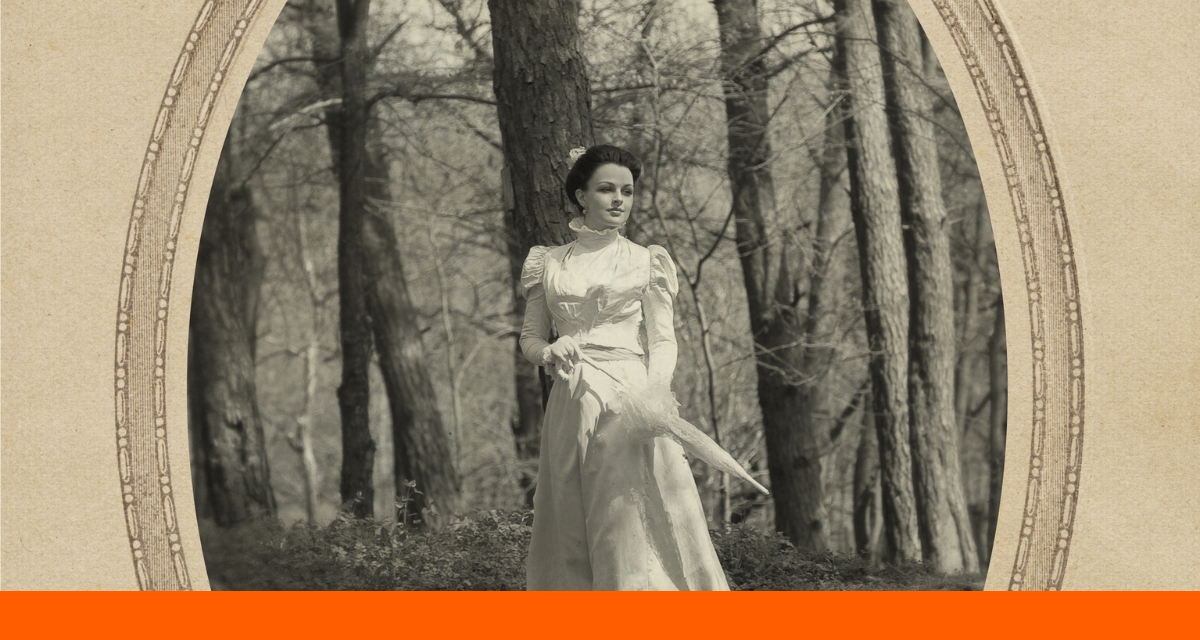
It’s often fascinating how history is written. Perhaps it’s not for nefarious reasons, but it can lead to misconceptions about the reality of the past. From history to art to fashion, we see through certain filters often applied without us knowing.
Fashion historian Dr. Serena Dyer has become popular online for sharing what clothing trends looked like decade by decade through the centuries. In a recent clip posted to social media, she shares a video of a 19th century gown with a thirty-nine inch waist. She points out that despite often seeing much smaller garments from this time period, larger ones were actually quite as common.
Thirty-nine inch waist
Dyer explains why this phenomenon happens. “This Victorian gown has a thirty-nine inch waist,” she begins. “And in the 19th century, this was not uncommon. Survival bias means that garments with enough fabric to be remade were recycled or worn as fancy dress. But tiny garments that were too small to be re-worn were disproportionately preserved in our attics and museum collections.”
We zoom in on the exquisite brown silk garment. “This chocolate brown silk gown from 1864 in the collection of Bankfield Museum is a rare, glorious exception. Its large skirt, supported by a crinoline, and curvy bust supported the Victorian emphasis on proportion over tininess. So let’s stop pretending that the eighteen-inch waist was the standard and start accepting that bodies of all shapes and sizes have always existed.”
The clip delighted some of the commenters. One Facebooker wrote, “Love this!! I adore the dresses from the era and have always thought, thank goodness I did not live back then, those dresses would look awful on me. Now I see they are just as beautiful in normal sizes!!”
Survival bias
In the piece, “Understanding Survival Bias in Vintage Plus-Size Clothing”, licensed aesthetician, makeup artist, massage therapist, and fashion expert who goes by Christine “The Glambassador,” explains what survival bias is and gives an example, unrelated to fashion. “Survival bias occurs when we form conclusions based only on what has lasted over time while overlooking everything that didn’t survive. A classic example of this comes from WWII, when statistician Abraham Wald analyzed bullet holes on returning planes. The military initially thought they should reinforce the areas that had been hit, but Wald realized they were only looking at the planes that made it back—meaning the planes that didn’t return were likely hit in the areas without visible damage.”
She then reiterates what Dyer posted in her clip: “How does this relate to vintage plus-size fashion? The reality is that plus-size garments were often worn more frequently, handed down to younger family members, or altered over time, meaning they simply didn’t survive as well as their smaller counterparts. Unlike smaller garments, which were often stored away and preserved, larger garments had a higher likelihood of being used until they were unwearable.”
1930s
On “The Glambassador”‘s YouTube page one person shared a similar bias from the 1930s in the comments, writing, “I have a quilt made in the 1930s by my great-grandmother from the scraps of clothing during the 1930s. She told us that it was cheaper to cut down outgrown childrens’ clothing and make quilt than it was to buy a new blanket at the time. So, yeah, that was also something that happened to clothing at the time – remaking garments into quilts, throws, or even toweling.”
“Curation is an art form”
In a 2024 paper for New York University Gallatin School of Individualized Study, one student writer explains that relics of fashion or art in general are not only selection-biased, but often at the whim of the curators. “The priorities within museum curatorship dangerously contribute to our connection with the past by utilizing a limited selection of women’s garments to represent a general population. Curation is an art form. A curator’s choices can shape how visitors understand a topic or time period. Deciding what to display and where to place it creates a narrative of the topic the exhibition delves into, all for visitors to interpret as they explore each piece of art.”