No one would get a dog expecting it to not bark, try to eat human food, or need daily walks. And yet people regularly get flummoxed when their just-as-loveable cat exhibits completely natural behaviors like climbing tabletops or scratching at furniture.
Cat people, who delight in adapting their lives to make them as enriching as possible for their feline family members, know the flaw in this logic. After all, most cats spend more time in the house than their human counterparts. So shouldn’t the house belong just as much to them?
If you answered yes, then this response video from a vet should have you feeling pretty vindicated. If you answered no, prepare to reconsider.
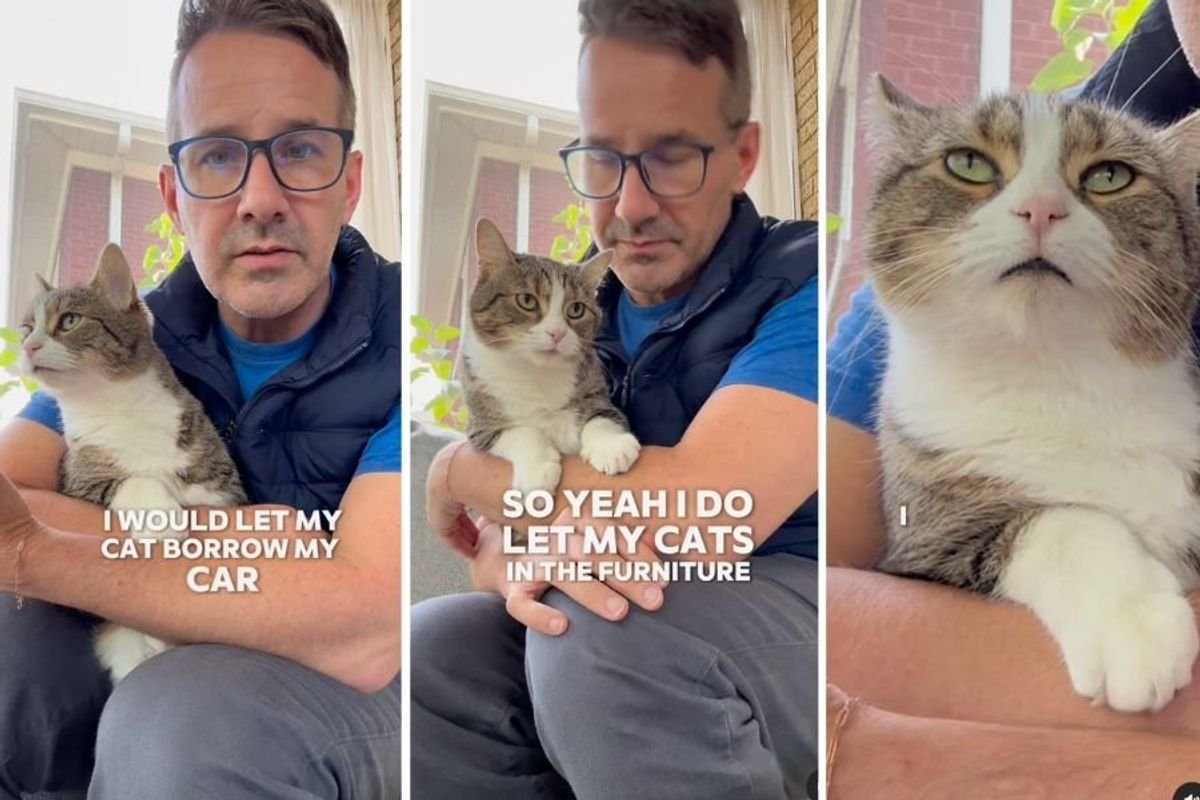
Dr. Matt McGlasson is a veterinarian and chief medical officer at Noah’s Ark Animal Clinics in Kentucky, where he oversees a four-hospital network, and also happens to be the proud dad of a special needs cat named Rupaul. As he told Newsweek, he gets several comments each week saying it’s gross to have cats on the furniture. One viewer went further and called it “disgusting.”
McGlasson’s response to that comment racked up 11.8 million views on Instagram, and with good reason.
In the clip, McGlasson holds up Rupaul, who can’t use her hind legs, and lists off everything he would do for his cat, including co-signing a loan for her, letting her do his taxes, giving her the passwords to all his accounts, going into business with her, giving her $20,000 for bringing him a dead mouse, and making her the beneficiary on his life insurance policy. He also mentioned capital punishment, which he’s not normally in favor of, but “if someone hurts Rupaul, that’s another story.” And last, but certainly not least, letting Rupaul on the furniture.
Put simply: “My cat can do whatever she wants. It’s her world. I’m just living in it.”
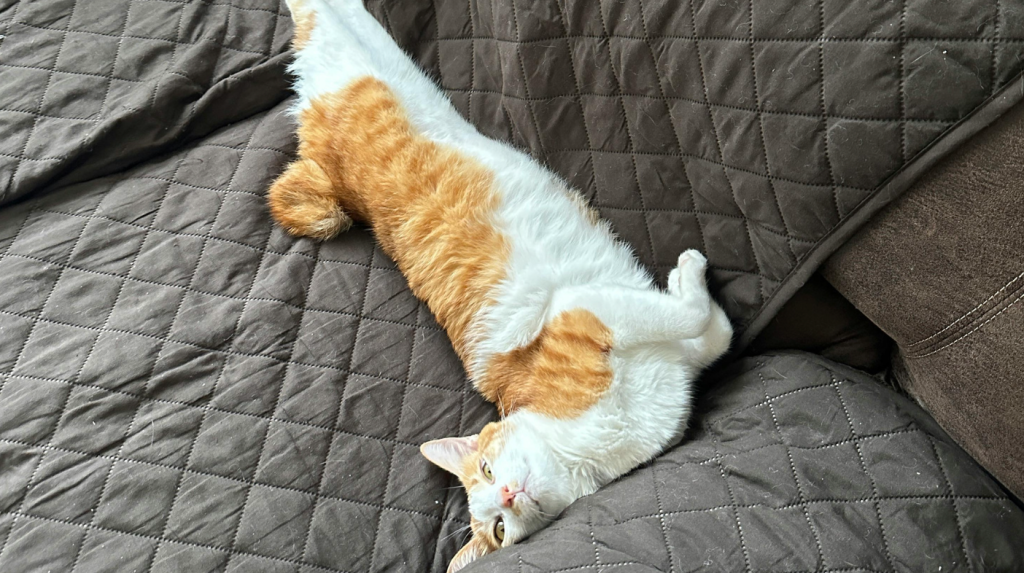
Fellow cat owners in the comments could not agree more.
“My husband picked his new chair based on the cat. The arm had to be wide enough for her to sit whenever she chooses to have quality time with him.”
“I would donate my kidneys to Square if she needed them. Yes, I mean both.”
“‘You let your cat sleep with you?’ Ma’am, I’d let him represent me in court.”
“I bought my house for my senior kitties. I wanted to get out of our apartment so they could feel grass beneath their paws again before their time was up.”
Bottom line: climbing is part of a cat’s inherent programming. If cat owners truly want their home to be a safe space for their cat, this needs to be part of the equation. The good news is there are plenty of ways to redirect those instincts without conflict, like making sure there are dedicated cat trees to climb and scratching posts to use, or opting for furniture fabrics that cats tend to avoid, like microfiber.
And as a general rule, cats respond to positive reinforcement rather than punishment. Contrary to popular belief, cats don’t “know” when they’re being bad. Scolding them just teaches them to associate their behavior with negative attention, which isn’t fun for anyone.
As McGlasson, now with nearly 800,000 TikTok followers and a book called “How to Rate a Cat,” would tell you: having a pet in your home provides so much fulfillment and connection that small compromises, or large bank loans, are well worth it.
By the way, McGlasson’s TikTok and Instagram are full of hilarious (and informative!) cat content. Here’s a small sampling:
For more pawsome videos just like these, be sure to give McGlasson a follow.
This article originally appeared last year.