After his wife of 50 years died, he found a secret letter she had hidden from him for decades

The letter was sent in 1959 and she never let him see it.

old letter, 1959, tony trapani
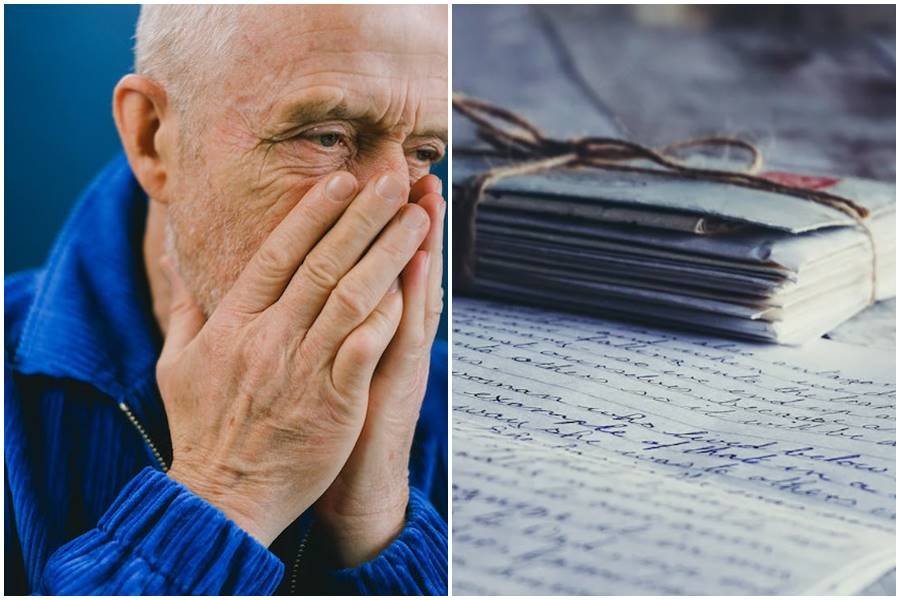
Photo credit: via SHVETS production/Pexels and Suzy Hazelwood/PexelsTony Trapani discovers a letter his wife hid from him since 1959.

Tony Trapani and his wife were married for 50 years despite the heartache of being unable to have children. “She wanted children,” Trapani told Fox 17. “She couldn’t have any. She tried and tried.” Even though they endured the pain of infertility, Tony’s love for his wife never wavered and he cherished every moment they spent together.

After his wife passed away when Tony was 81 years old, he undertook the heartbreaking task of sorting out all of her belongings. That’s when he stumbled upon a carefully concealed letter in a filing cabinet hidden for over half a century.

The letter was addressed to Tony and dated March 1959, but this was the first time he had seen it. His wife must have opened it, read it and hid it from him. The letter came from Shirley Childress, a woman Tony had once been close with before his marriage. She reached out, reminiscing about their past and revealing a secret that would change Tony’s world forever.

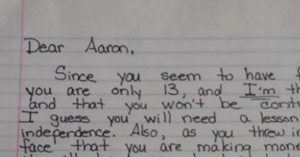
“Dear Tony, I bet you are surprised to hear from me after so many years. I was just thinking about you tonight like so many other nights. But I thought I would write you and find out how you are,” the letter reads. “Tony, please don’t be angry or surprised to hear this. I have a little boy. He is five-years- old now – grey eyes and beautiful black hair. What I am trying to say Tony is he is your son.”

“Please, Tony if you can find it in your heart to forgive me, please come and see him,” Shirley wrote in the letter. “Every day he asks me where is his daddy and believe me Tony I can’t even answer him anymore. If would be forever grateful to you if you would just see him. … I’ll close now hoping and praying you will answer. P.S. His name is Samuel Duane.”

Now, Tony faced the fact that he had a son that would be around 60 years old and he set out to find him. For over a year, Trapani’s sister tried to track down the mysterious Samuel Duane Childress, until she finally contacted his wife, Donna.

Tony and Samuel met in January 2015 and he felt like a new dad. After meeting his father, Samuel said his mother told him she sent the letter, but Tony never responded. “Why my wife didn’t tell me,” said Trapani. “I don’t know. She wanted children. She couldn’t have any. She tried and tried.”

“I always asked my mom, I said, ‘Well what does he look like?” Samuel said. “She said, ‘Well, go look in the mirror.”

The two met and caught up on a lifetime of memories with the understanding that they could never change the past. “Just to know him now is so important to me. It’s going to fill that void,” Samuel said. But just to be sure, Tony took a paternity test to ensure they were father and son.

The test came back negative, revealing that Tony was not the father. The news upset Tony and Samuel, but they still had a unique bond. They shared a relationship with Samuel’s mother and both have been on an incredibly wild ride after Tony found the mysterious letter.

“They’re keeping that bond,” Donna said. “That paper doesn’t mean anything to him. That bond has been made—and we’re going to move on from here.”


This article originally appeared last year.

  • Mom shares ‘kind can’ idea after 7-year-old expresses struggles with friends at school
    The "kind can" is a tool for helping kids connect with others.
    ,

    Mom shares ‘kind can’ idea after 7-year-old expresses struggles with friends at school

    She described the “kind can” as “a way to keep our hearts open even when they want to close.”

    At some point, most parents have to field questions, concerns, worries, anxieties, and, sometimes, outright despair from their kids about their relationships with other kids. Friendships can be messy. Bullying is a thing. When you pool together a couple of dozen kids who are growing, changing, and figuring out their emotions for most of the day, all manner of relational dynamics can emerge.

    Navigating the social landscape with our kids isn’t easy. Each child is unique, some are more sensitive or aware of what’s happening than others, and some need assistance with figuring out how to handle tough social situations. As parents, we don’t want to swoop in and solve their problems, but we also don’t want to leave them rudderless in a storm. We want to provide them with the tools and help them build the skills they’ll need to steer their own ship.

    A mom’s idea that went viral for good reason

    One tool that can help a kid who is struggling to connect with their peers is intentional kindness. However, a blanket admonition to “be kind” is often too vague to help a kid in the midst of a social crisis. That’s why one parent’s “kind can” idea has gone viral. It offers a specific way to practice kindness in a way that’s not overwhelming.

    In a 2022 post on LinkedIn, mom Sasja Nieukerk-Chomos shared the idea, writing:

    “‘Mom, I hate them.’

    ‘Them’ being her friends at school.


    This is what my 7-year-old confided to me as I was putting her to bed the other night.


    I could have made light of her hatred, like I’ve done when she tells me she hates broccoli.


    I could have gotten caught up in her anger: ‘Who are these kids upsetting my daughter!?’


    Instead, I asked her what was going on that her heart hurt so much.


    Because under anger is usually hurt.”


    kids, parenting, parents, tweens, issues
    Finding the right balance can be tough. Image via Canva
    kind can, linkedin, post, social media, mom, parenting

    “Sure enough, the tears came pouring out as she told me about how her best friend only wanted to play with another girl, and how when she went to find others to play with they told her to go away.

    This had been happening all week.


    ‘Why doesn’t anybody like me?’


    I didn’t have an answer for that, but I did have a thought: It’s time for the Kind Can.


    Suddenly I was 8 years old again, a grade 3 student who was having a rough start to the school year.

    I had a teacher I didn’t like, friendships had shifted, and I couldn’t seem to get along with anyone. I hated going to school.


    My mom created a Kind Can.


    She used a big Nescafe tin can (remember those?)


    In the can went the names of every single one of my classmates. Each morning before school I
    would pull a name out of the can. That day I had to go out of my way to do something kind for them.


    Not to have them do something in return.


    For no other reason than to do something kind.


    It wasn’t easy at first, but my mom encouraged me to keep trying, and helped me think of all the different ways I could show kindness to others.


    It started to get really fun!


    And then things shifted.


    No longer caught up in my own mind about what others were ‘doing to me’, I was now focused on what I was doing for others.


    Though there were no expectations of kindness in return, more and more kindness is what I got. I loved going to school!


    I told my daughter about the Kind Can and her eyes got that little spark — the one that tells me she’s about to get creative.


    So yes, she has big plans for just how fancy this can will be– much better than an old tin can she proclaimed! That’s our project.


    A Kind Can.


    A way to create more kindness.


    A way to keep our hearts open even when they want to close.”

    Why this simple idea still resonates

    People loved the “kind can” idea, with the post being shared more than 3,000 times. Some people pointed out the beauty of the wisdom in it being passed down through generations. Several parents wished that they had seen the idea when their own kids were going through some social struggles. Many commenters said that a lot of adults could use a kind can as well.

    With bullying becoming more widespread thanks to the Internet and social media, many parents are aware of the importance of instilling kindness in their children. On social media, parents are making a point to highlight moments of kindness from their own kids or from another kid to theirs, and the videos are warming hearts and reminding viewers that the kids really are all right, and will continue to be so long as we continue to model kindness like Nieukerk-Chomos.

    A “kind can” won’t solve every friendship woe a child has, but goodness knows the world could use more kindness. Helping kids practice that virtue with a tool that makes it specific and fun is definitely a win-win.

    This article originally appeared four years ago. It has been updated.

  • Albert Einstein’s advice to his son is applicable wisdom for parents today raising resilient kids
    Photo credit: Wikipedia & CanvaAlbert Einstein and a father helping his daughter ride a bicycle.

    Kids today are struggling with resilience. A study from the Johns Hopkins Bloomberg School of Public Health found that only 40% of school-age children in the United States were “flourishing.”

    Study leader Christina D. Bethell explained more about how researchers defined “flourishing.” She noted, “Family resilience and connection were important for flourishing in all children, regardless of their level of adversity. Parent-child connection had a particularly strong association with child flourishing.”

    And it’s that lack of resilience that highlights the struggle many kids face today, as well as the challenge for parents trying to instill it in them. It’s something Albert Einstein was aware of in the early 1900s and worked to cultivate in his three children.

    Einstein’s advice on resilience

    Einstein was the father of three children with his first wife, Mileva Marić: a daughter named Lieserl, and two sons, Hans Albert and Eduard. Eduard was the youngest and had great intellectual potential, and he was studying for a career in medicine.

    However, Eduard was afflicted by schizophrenia, which derailed his professional life. He was in and out of a psychiatric sanatorium in Zurich, Switzerland, throughout his life. Einstein described Eduard as having a “delicate nervous system.”

    But the relationship between father and son produced a famous quote from Einstein on raising resilient children, drawn from a 1930 letter to his son Eduard:

    “Life is like riding a bicycle. To keep your balance you must keep moving.”

    Einstein encouraged his son to keep moving forward despite his challenges, comparing life’s difficulties to riding a bike and the skills needed to do so, such as balance and momentum.

    How to raise resilient kids

    According to the American Psychological Association (APA), resilience is the “process and outcome of successfully adapting to difficult or challenging life experiences, especially through mental, emotional, and behavioral flexibility and adjustment to external and internal demands.”

    Many parents want to raise resilient children. The APA has shared several helpful ways parents can strengthen their children’s resilience:

    Be a healthy parent

    A child’s resilience begins with having a healthy caregiver. “If you want a child to be functioning well, tend to the person who’s tending the child,” Suniya Luthar, PhD, a professor of psychology at Arizona State University, explained.

    Parents who sought extra support from resources like community support groups and mental health services showed more positive parenting outcomes.

    Stick with a daily routine

    Structure is key to raising resilient kids. Keeping things consistent with schedules, such as setting times for schoolwork and play, creates an environment of comfort and can better help them develop emotional regulation.

    Establish time to check in

    Having regular talks with kids can help them feel safe, express themselves, and receive support. The APA recommends that parents “listen to their concerns and fears when they address them with you and let them know you are there for them.”

    Build them up by reflecting

    Focusing on past “wins” and moments of strength during difficult times is another important way to continue building resilience. Discuss times of accomplishment, such as when kids trusted themselves or made “appropriate decisions.”

  • 9-year-old turns Mom into villain in brilliantly creative comic. She can’t stop laughing.
    Photo credit: Canva PhotosA mom told her son "No" and found herself cast as the villain in his latest drawing.

    As a parent, if your kids don’t occasionally hate you, you’re probably not doing your job. It’s never fun, but it is a mom or dad’s main responsibility to keep their children safe, healthy, and to help them develop into a well-rounded adult. That often means saying the dreaded “No.” A lot.

    The uncomfortable part is that children rarely see the wisdom in their parents’ decisions. And sometimes they make their displeasure very well known in ways that can sting.

    Mom stumbles upon 9-year-old’s hand-drawn comics, finds a surprise villain

    Utah-based mom Stacy Goulding happened upon a couple of homemade comic books her nine-year-old son had drawn. Filled with creative titles and lively artwork, they made for an impressive collection.

    Goulding took to Instagram to show off how the hero, a character named Emerald Warrior, did battle in each edition with a new foe: Emerald Warrior vs Farty Balloon, Emerald Warrior vs Mean Clown, and Emerald Warrior vs Bad Spider, to name a few.

    But it was the last comic book that prompted Goulding to title her video: “Moms, if you want ot feel better about yourself, continue watching.”

    In a comic titled “Emerald Warrior vs No Mom,” the hero takes on a mean looking lady in a red dress who says “No” to everything. “Once upon a time there was a mom that never answers her kids questions and always says No,” the comic reads. “Her kids were really sad.”

    Ouch!

    But don’t worry, Emerald Warrior would soon come to the rescue. On the next page, he appears out of nowhere and sprays “Yes Spray” on the mean mom, fixing everything. All the children cheered. The end.

    Mom points out the irony of the story

    Goulding clearly got a good laugh out of the situation, but couldn’t help but notice the overdramatic irony of her being cast as the villain in the story.

    “It’s always interesting seeing ourselves through the eyes of our children,” Goulding wrote in the caption, before going on to explain that her son made the comic after a spring break full of swimming, hiking, birthday parties, late night movies, biking, and more.

    “I think for having a ‘no mom’ they have it pretty good,” she writes of her kids.

    Other parents can relate

    Some reassured Goulding that she was on the right track:

    “The creativity and imagination of it all clearly does say that yes, you are killing it! And the entire series?!? AMAZING.”

    “mine told me I was an evil villain yesterday..bc she couldn’t jump off her top bunk into a pile of stuffed animals..I’d rather be the evil villain instead of the ambulance driver”

    Others were impressed by the boy’s drawing and writing skills. Clearly his boredom and frustration were channeled beautifully into his art:

    “This might be the best parenting advice on the internet! Tell your kids ‘no’ more often so they have to learn how to entertain themselves, develop creativity and writing skills and discover the power of persuasive rhetoric …
    I think you’ve solved parenting”

    moms, motherhood, parenting, boys, kids, family, humor, funny, child psychology, parenting tips, parenting humor, viral instagram, art, drawings
    It can be frustrating for kids to hear ‘No’ all the time, but that doesn’t mean you should stop. Photo Credit: Canva Photos

    Others, still, just wanted to know where they could get their hands on this magical Yes Spray.

    Kids being frustrated is extremely common and normal

    Rest assured, parents, it’s OK and totally normal for your kids to say they hate you—or even to cast you as the villain in their life story. They don’t actually hate you, but it’s sometimes the only way for their brain to process the big feelings of rejection, anger, and frustration at not getting what they want.

    Drawing, and art in general, is another way they process these emotions.

    Goulding, for her part, handled the discovery of the comics like a total pro. Experts say the best way to handle something like this is to “kill it with kindness,” according to Today’s Parent. Don’t react, laugh it off, and remind them that you love them no matter what.

    Bonus points if you can post their moody artwork on the Internet to let hundreds of thousands of other parents know they’re not alone.

  • Is it rude not to share a family recipe? Here’s how to decline the right way.
    Photo credit: CanvaProtect your peace in the kitchen.
    ,

    Is it rude not to share a family recipe? Here’s how to decline the right way.

    “I don’t share the full recipe, but I can tell you the essentials.”

    The office potluck was a success! People went back for seconds; someone joked about licking the pan (and actually got a few laughs). And now you find yourself in the kitchen, alone with your overeager coworker, her phone already out and eyes bright with a burgeoning question. 

    “That short rib. I need the recipe.” 

    She means it with her whole heart. She loved it and probably wants to make it for her family on Christmas Eve, or on the first cold night that feels like an excuse to stick something in the oven for hours. The warmth in her voice is so real. 

    family, recipe, sharing, etiquette, boundaries
    It’s more than a recipe. Photo credit: Canva

    And so is the tiny knot in your stomach. This recipe means something to you—it was passed down from your grandma, you got it from an esoteric cookbook online, or you invented it yourself—and right now, you don’t want to share it.

    Here’s the truth: keeping a recipe to yourself isn’t rude. It’s not selfish or petty, nor is it a power move. You know how to share. But more importantly, you know when not to.

    When it comes to family recipes—or any recipes, for that matter—there are countless ways to protect your peace. 

    Let’s get into it. 

    More than a recipe

    Think about a specific spice: how does it smell? Where does it show up in your memory? Maybe it’s cardamom in December, folded into the sweet, enriched dough of Swedish Christmas braids, or dried chiles toasting in a pan. 

    That act of remembering is powerful and all-encompassing. It represents many things: a place, a person, an era of your life. Food scholars argue that this is exactly what recipes are built to do: carry culture in the body through smell, muscle memory, and repetition. Recipes live within us, not only on the page.

    New York University food scholar Krishnendu Ray has observed that, for most of human history, food knowledge was traditionally passed down in close physical proximity (e.g., grandmother to grandchild). And it’s this intimacy—a shared moment between two people—that gives a recipe its meaning, just as much as its ingredients.

    “Caregiving comes at a cost. Whenever there is a labor of love, there is also a labor of resentment.” – Krishnendu Ray

    This is why sociologists describe family recipes as a form of cultural capital, a resource tied to identity, memory, and belonging. To hold that recipe is to hold a piece of a transmission chain: an artifact of care, repetition, and survival.

    Cooking it for someone else adds another layer of complexity. The French sociologist Marcel Mauss argued that a gift is never just a gift; it creates an ongoing bond between giver and receiver. A dish cooked for others already works that way. When someone asks for the recipe on top of that, they’re asking for the gift to be extended: not just the meal, but the means to carry it forward. That’s a meaningful escalation, even when it’s asked warmly, which is exactly why your coworker’s question, however kind, however well-meant, can land as so much more than a simple request.

    How to say “no” and still be kind about it

    Here’s something etiquette experts agree on: the problem is almost never the “no.” A refusal delivered with warmth, gratitude, and a clear boundary is never rude. In some cases, it’s the kindest thing you can offer because it’s honest.

    The following strategies offer five different ways to refuse requests for family recipes with grace. 

    Start with real gratitude

    The ask is a compliment: someone loved what you made so much that they now want it on their own table, with their own people. That’s beautiful. Honor that.

    A simple script: 

    “I’m so glad you liked it! That means a lot to me. But the recipe is a family tradition I keep private.” 

    Full stop. No nervous laugh, no extra spiral of “I’m so weird, sorry.” Warm, clear, closed.

    If you explain, keep it short and specific

    You don’t owe anyone a backstory. But if you want to offer one, a single concrete line can make it clear that the “no” revolves around what the recipe means to you, not your opinion of the other person.

    For example:

    • “My aunt spent years perfecting this and made us promise to keep it in the family.”
    • “It’s one of the few things we have left from my grandmother’s kitchen. Keeping it private helps me feel close to her.”

    People can sit with disappointment and still respect a story. The key is brevity: you’re offering context, not building a legal case.

    Share the “vibe,” not the blueprint

    Sometimes, they don’t even want the recipe, but they are looking for cooking tips. In those cases, you can share little snippets without handing over the entire thing: a key ingredient, a basic technique, or how you approach spices.

    For example:

    “I don’t share the full recipe, but I can tell you the essentials. It starts with sautéed garlic, and the real magic is how low and slow you go.”

    You’re not giving away the recipe. You are simply pointing in the right direction and letting them explore on their own.

    family, recipe, sharing, etiquette, boundaries
    Instead of sharing the recipe, forge connection in other ways. Photo credit: Canva

    Offer a different kind of “yes”

    If you feel comfortable, find a different way to connect. You can invite them into the process instead:

    • “I can’t give you the recipe, but I’d love to make it together sometime.”
    • “I don’t share this one, but I’ll bring it to every potluck we have. Consider me your short rib supplier.”

    Those lines tend to land well because they’re both generous and specific. The boundary stays intact, and the relationship feels even warmer.

    Stay gentle, even if they keep asking

    Some people will circle back. Not because they’re trying to bulldoze you, but because they really want to know how to make that dish. 

    It’s natural to want to come up with new reasons each time, but that can sound like negotiating, which invites even more pushing. 

    Instead, try a kind, consistent repeat:

    • “Still keeping that one close, I’m afraid. But truly, I appreciate you asking.”
    • “You’re persistent! Thank you, I’ll take it as a compliment. But the answer’s still no.”

    Said with a real smile, that’s a firmly closed door. 

    Some things were never meant to be shared

    Keeping your cherished family recipe private isn’t selfish. This is what it looks like when food, memories, and shared history travel between people who love each other. 

    And a quick note to the person who was told no: this was almost certainly never about you. It’s lovely that you asked, but don’t take it personally. There’s something much older than this conversation at play, something that existed long before you tried that dish and will exist long after. 

    What matters is that the ask was kind, and the “no” was kind. Neither of you did anything wrong. Besides, the goal was never really the recipe. It was to stay close to the person who made it.

  • Single dad gets suspicious letter from his late wife and rushes to get a DNA test
    Photo credit: via Nathan Cowley/Pexels A devastated man sitting by the ocean.
    ,

    Single dad gets suspicious letter from his late wife and rushes to get a DNA test

    “She told me how sorry she was that she didn’t have the guts to tell me this to my face when she was alive.”

    Ten months after a man’s wife passed away, he finally got the courage to read a letter she left him, which contained a devastating admission. The son they had together may not be his.

    “My ‘darling’ wife passed away 10 months ago,” the man wrote on Reddit’s Off My Chest forum. “She wrote a letter for me before she died, but I couldn’t bring myself to read it until now. She told me how sorry she was that she didn’t have the guts to tell me this to my face when she was alive.”

    A letter that changed everything

    In the letter, the wife revealed that there was a “good chance” that the son he thought was his wasn’t his biological child. A few weeks before their wedding day, the wife got drunk at her bachelorette party and had a one-night stand with another man. Soon after that night, she became pregnant but was unsure who the father was.

    DNA, DNA test, paternity test, letter from deceased spouse, Reddit, family, parenting
    A man reads a lettter. Photo credit: Canva

     The man was torn whether or not to have the paternity test done. The child had only one parent in this world, and he would have to take care of him regardless. He also thought it was cowardly that his former wife would wait until she was no longer around to share the truth with him.

    “So she thought she’d rather drop this bomb on my life when I could no longer confront her about it,” the man wrote. “Now that my son would only have one parent looking out for him, and she’d have no idea how I would even react. Maybe I should not have got the paternity test done. Maybe it might be better to live in ignorance. But I just had to know.”

    The paternity test result

    The man took the paternity test and learned he wasn’t the child’s biological father.

    “I’m devastated. This doesn’t change how I feel about my son,” he wrote. “He’s my whole world and he’s innocent. But boy, does it hurt. There’s so much going on in my head right now. I haven’t stopped crying. Thank god my son is at my parents’ place for the day. I’d hate for him to see me like this.”

    Facing a pain nearly too much for him to bear, the only outlet he had at the moment was reaching out to Reddit to find some solace. “I just needed to let this all out. Don’t have it in me to tell anyone in my life about this right now,” he wrote.

    DNA, DNA test, paternity test, fatherhood, parenting, life advice, Reddit
    A man holds his head in his hands Image via Canva

    How Reddit responded

    The commenters sent him hundreds of messages of support to get him through the shock of first learning the truth about his family.

    “All your feelings are valid, a lot of people will react with some kind of toxic positivity to things like these. Your feelings are valid. Each and everyone,” – femunndsmarka

    “He is going to find out the truth one day. Imagine how much more he will love you knowing you didn’t leave him, even though he wasn’t yours.” – ImNotGoodatThis6969

    “As an adopted child, I just want to thank you on behalf of your son. I deeply believe it changes nothing, family is not about blood, its about who you love, want to have by your side, and care for the most. Sending hugs, strength and gratitude.” – Mariuuq

    The father at the heart of this story is understandably devastated because his life was upended almost overnight. But the hope in the story is that his trials also taught him a powerful truth: his love for his son goes much deeper than blood.

    This article originally appeared three years ago. It has been updated.

  • What parents teach kids when we allow them to take a ‘mental health day’
    Photo credit: Photo by Darwin Vegher on Unsplash With one turn of the wheel, my dad taught me a lesson about self-care in high school that I'll never forget.
    ,

    What parents teach kids when we allow them to take a ‘mental health day’

    With zero hesitation—just a simple, “OK”—he turned the car around and took me home, and it’s a lesson I’ve never forgotten.

    When I was in high school, I woke up one morning feeling overwhelmed. I was an honors student, I was involved in various activities and clubs, and for whatever reason, I felt thoroughly unprepared for the day. I don’t recall if I had a test or a presentation or if it was just a normal school day that I couldn’t face. I just remember feeling like I’d hit a wall and couldn’t make my mental gears turn right.

    I usually walked the mile and a half to school, but I was running late so my dad offered to drive me. In the car, I tried to keep it together, but halfway to school, the tears started to fall. My dad looked over and asked if I was OK.

    “I don’t know,” I sobbed. “I feel like … I just … I need a day.”

    He knew I wasn’t sick. He could have told me to tough it out. He could have given me a pep talk. He could have forced me to go. But he didn’t do any of those things.

    With zero hesitation, and just a simple “OK,” he turned the car around and took me home.

    I have no memory of what I did the rest of that day. Three decades later, the only thing that sticks out is the basic-but-profound lesson my dad instilled in me the moment he turned that steering wheel: It‘s totally OK to take care of yourself.

    We talked about it briefly on the way home. As it turned out, he was also taking a “mental health day.” My dad was a social worker and, as an adult, I can totally understand why he would need to take a random day off sometimes. But it didn’t really matter what he did for a living. Most of us need an occasional mental health day: adults, teens, and kids alike.

    Why more schools are officially recognizing mental health days

    Some schools have begun incorporating this understanding into their school attendance policies. Utah was among the first states to allow a mental health day to count as an excused absence from school. Oregon followed in 2019, and today a total of 12 states have enacted similar laws, including Arizona, California, Colorado, Connecticut, Illinois, Kentucky, Maine, Nevada, Virginia, and Washington. Education Week and other outlets have tracked the growing list of states that allow student mental health days or have proposed bills to expand access.

    “Mental health days are not only good for the practical aspect of giving young people a break,” psychologist Caroline Clauss-Ehlers, Ph.D., told Healthline, “but they also validate that the community and society are saying, ‘We understand and we’re supporting you in this way.’”

    Occupational therapist Shelli Dry concurs, telling Healthline that acceptance of mental health days can help eliminate the stigma that often comes with mental illness.

    “For schools to recognize that sometimes it’s better to take a mental health day than push through when you cannot seem to cope, is a tremendous support for students to feel understood and accepted, and [this, in turn, encourages] students to understand and accept themselves more,” she said.

    Kids are carrying more than we realize

    Sometimes we forget how hard it is being a kid. In some ways, I think it’s way harder than being an adult. Considering the fact that nearly 1 in 5 children between the ages of three and 17 have been diagnosed with a mental, emotional, or behavioral health condition, according to the CDC, we need to acknowledge that a lot of kids have days where they’re struggling. But even kids who don’t deal with mental illness sometimes need a down day. Modern life is busy and complex, no matter our age. Keeping up with daily life while handling whatever extra stuff gets thrown our way is no small thing.

    Part of good parenting is teaching kids to persevere through challenges, but encouraging perseverance has to be balanced with insight and wisdom. Sometimes kids might cry wolf, but it’s important for parents to understand that kids might be dealing with more than we know. Sometimes kids need to be encouraged to dig deep for resilience. Sometimes kids have already been resilient for a long time and need a little time and space to just be.

    My dad knew me. He understood that I wasn’t just being lazy or trying to get out of doing something hard. He trusted me to know what I needed, which in turn taught me to listen to my inner alarm and trust myself. As a result, I’ve spent my adult life with a good sense of when I need to push through and when I need to pause and reset. It’s a gift I’m immensely grateful for.

    A word of caution for parents

    All of that said, this advice does come with a caveat. As a parent of kids who are learning to manage anxiety, mental health days can be a mixed bag. There’s a difference between taking a mental health day because you really need it, which happens, and taking a mental health day to avoid facing fears, which also happens. Avoidance feels good in the moment but fuels anxiety in the long run, so parents and kids have to be aware of how the idea can be misused and unintentionally make certain mental health issues worse.

    mental health, discernment, parents, kids, self care, good parenting
    A dad walking his kid to school. Photo credit: Canva

    The bottom line, however, is that kids need breaks sometimes. And when you allow them to take an occasional day here and there to breathe, to do some self-care, to reconnect with themselves and reset their mental and emotional barometer, you teach them that their well-being matters. You teach them that it’s OK to acknowledge when they’ve hit a limit and pause to recoup their strength.

    It’s OK to turn the car around when you know you need to. That’s a lesson we all need to learn, and one we need to support with work and school policies in addition to internalizing individually. We’re making some good strides toward that goal, and the sooner we all get on the same page, the better everyone’s well-being will be.

    To learn more about how to help kids and teens with their mental health and self-care practices, The Kids Mental Health Foundation has tons of resources for parents, caregivers, teachers, coaches, and more.

    This article originally appeared four years ago. It has been updated.

  • Family of 4 ‘sold everything’ to live in an RV at Disney World over 200 days out of the year
    Photo credit: The Ewing Family/InstagramA family of four decided to get in an RV and leave their life behind. They park it at Disney World 300 days per year.

    Ever been on vacation and wondered what would happen if you just…never left? Well, some people do just that. A growing number of people live full-time on cruises, at resorts, or in comfy RVs that allow them to explore the world as their leisure.

    One such family recently joined the movement, and they picked a perfect, if a little peculiar, place to call their Home Base.

    Family of four lives at Disney World year-round

    In 2021 and 2022, the Ewing family suffered some devastating losses of people that were close to them.

    Lauren Ewing tells Upworthy that the shockwave of those losses caused the family to really take stock of the way they were living. “That made us want to live and not just exist,” she says.

    So, they decided to sell everything, including their home near Athens, Georgia and buy an RV. Adam Ewing, a real estate developer, could work remotely while Lauren was already well-practiced at homeschooling the kids thanks to COVID.

    They began traveling and seeing the country and, more importantly, enjoying each other as much as possible. But they needed a home base. And for the Ewings, the choice was obvious.

    “Disney has always been our ‘happy place,’” Lauren says. So even though they take the RV out exploring a few times a year, they always “have a desire to come back home.”

    It’s not cheap, but it’s meaningful

    Some people live on cruise ships because the math works out and the all-inclusive lifestyle winds up being cheaper than a mortgage.

    The Ewings don’t make any bones about it: Living in the Disney Bubble isn’t cheap, but for them, it’s well worth it.

    The family parks their RV at Disney’s Fort Wilderness Resort RV Park. Lauren says it costs about $155-300 per night, depending on the time of year. That’s a hefty price tag before food and the costs of maintaining the RV. They also pony up for season passes to the parks so they can visit any time they want, and membership to the nearby Four Season Golf Club.

    There is one catch with living at Disney World in an RV: You technically can’t live there all the time.

    “We are able to stay 26 days and have to leave for 24 hours before we can come back. We go to a nearby campground for the night and come right back!” Lauren says. That means the Ewings, including other trips, end up parked at Disney over 200 days out of the year.

    It speaks volumes that, despite the cost and their unlimited freedom, they choose to keep coming back to the same spot.

    What living at Disney World is really like

    People ask the Ewings all the time: Why not stay somewhere nearby, but not technically on Disney property? It would be far cheaper.

    But Lauren says the family adores being inside the “Disney bubble.”

    The resort’s transportation makes it easy to get anywhere. The resort is sparklingly clean, the food is world-class, and best of all, people love to visit the Ewings. Who wouldn’t?

    Still, the family has to live a somewhat normal life. The kids have school, and dad has his real estate business to run. They try to cook their own food whenever possible, exercise, have family time, explore hobbies. You know, regular everyday things. They don’t spend all day every day at the parks unless friends or family are visiting.

    But the easy access allows them to make incredible magic memories. They’ll pop into Epcot and enjoy the fireworks over the lake, grab a funnel cake at Magic Kingdom, or do just a small handful of rides before the park closes.

    Crucially, Lauren and Adam use the proximity they pay so much for to make sure they’re enjoying their kids’ youth as much as possible:

    “It is really special to also just do a date with one of the kids. Come over for a ride or two, get a sweet treat, reconnect with some one on one time with them!” Lauren tells Upworthy.

    Living at Disney World is every kid’s dream

    The Ewings reject the idea of deferring joy, travel, and whimsy in their lives in favor of saving everything for retirement. They’re a young, happy, and healthy family right now, and they’re going to enjoy every second of it no matter the costs because there’s no guarantee what tomorrow might hold.

    The Ewings aren’t alone. A growing number of people, especially younger generations, would rather spend their money on the here and now. The scale might be different from the Ewings’: It’s taking that vacation instead of saving the money. It’s going to your favorite restaurant instead of cooking at home. Or maybe it’s quitting your job to travel and figure out the rest later. Everyone’s version of living in the here and now is different, but it’s becoming an increasingly universal sentiment.

    Almost anyone would love to experience what it’s like to live at their ‘happy place’ with the people they love the most. Lauren and Adam just so happen to have the means to make it a reality. The rough times in their recent lives convinced them without a doubt that it would be a choice they wouldn’t regret.

  • Stepmom makes bold move after being pressured to quit her job to raise stepdaughter’s baby
    Photo credit: CanvaFolks wholeheartedly agreed with her decision.
    ,

    Stepmom makes bold move after being pressured to quit her job to raise stepdaughter’s baby

    It ignited a powerful conversation about what a grandparent’s responsibilities really are.

    What is a grandparent’s role in taking care of their grandchildren? This is a question with a billion different answers, depending on who you ask, and one that can lead to a lot of conflict within a family.

    Some grandparents want to take on an active role in their grandkid’s lives, which can lead to unsolicited visits and other forms of boundary crossing. Others feel that their child rearing days are over, and that they’ve earned the right to take on less responsibility, which can also lead to stress and hurt feelings.

    A story that went viral on Reddit’s AITA forum further complicated this conundrum, since the woman at the center of the controversy was a stepparent.

    The backstory behind the viral post

    At the time of writing her post, the woman, 38, met her husband Sam, 47, ten years ago, when his daughter, Leah, 25, was 15 (Leah’s mom passed away when she was 10). The couple married five years ago after Leah had moved out to go to college.

    When Leah became pregnant she wanted to keep the baby, but her boyfriend didn’t. After the disagreement, the boyfriend broke up with her. This forced Leah to move back home because she couldn’t afford to be a single parent and live alone on a teacher’s salary.

    Leah’s story is familiar to many young mothers facing similar difficulties. The father isn’t involved in the baby’s life as a caretaker or financially. Sadly, according to the U.S. Census Bureau 40% of all children in the U.S. are born without their biological fathers living in the home.

    The new mother is a teacher and can’t afford to live on her own with a child. According to a 2024 Redfin study, Portland, OR leads the nation with teachers able to afford 91.3% of apartments near their schools, followed closely by Pittsburgh at 83.9%. Still, nationally the average teacher can afford less than half of nearby rentals, and homeownership remains out of reach for most educators.

    The situation gets complicated

    The author of the Reddit post, now a new stepgrandmother, had reservations. She says, “I had concerns about how she was going to raise a child on a teacher’s salary by herself. I suggested getting him to pay child support. She did not want that. Sam thought I should stay out of it.” 

    Unfortunately, any trepidations she had were confirmed. She writes, “Once she had the baby around 4 months back, Leah seemed to realize having a baby is not the sunshine and rainbows she thought it was. She barely got any sleep during the last four months. All the while Sam was helping her with the baby while I did almost all chores myself.”

    She continues to say, “Now her leave is ending. She did not want to leave the baby at daycare or with a nanny. Sam and I both work as well.”

    A grandmother cares for her grandchild. Photo credit: Canva

    Leah asked her stepmother if she would stay home with the baby. The stepmother said no because she never wanted to have a baby and she has a job. “I asked why Leah can’t stay home with the baby herself,” the woman wrote. “She said how she was young and had to build a career. I said many people take breaks to raise kids, and she broke down crying about how she was so tired all the time being a mom and needed something else in her life too.”

    After the woman told her stepdaughter no, her husband pressured her to stay home with the baby. But she refused to give up her job to raise her stepdaughter’s child. “Leah said yesterday how she wished her mom was alive since she would have had her back. She said I didn’t love her, and my husband is also mad at me,” the woman wrote. The woman asked the Reddit community if she was in the wrong for “refusing to help my stepdaughter with the baby,” and the community responded with rapturous support.

    The Reddit comments were supportive

    “[The woman] should tell her husband to knock it off and stop trying to pressure her into raising his daughter’s baby. If he wants a family member to look after her baby while she works, then he can do it,” one person wrote.

    “This is Leah’s baby that she alone chose to have. That doesn’t obligate you to change YOUR life to suit her desires. The whole business of saying you don’t love her because you won’t quit your job to watch her baby is manipulative and messed up, and I’m shocked your husband is siding with her,” another added.

    Leah and many women like her are in this situation because, in many places, teachers are underpaid, rent is high, and not all dads pay child support, even those required by law.

    Another commenter noted that the baby is much more the father’s responsibility than the stepmother’s, saying ” Leah should consider seeking child support from her ex. Her kid should be getting that money.”

    While there are resources to help stepparents connect with their stepchildren and step-grandchildren, it’s important to remember that the responsibility to raise a child ultimately rests with the parents.

    This article originally appeared three years ago. It has been updated.

Wholesome

All 60 employees of Toledo restaurant win the ‘boss lottery’ with a free Caribbean cruise

Parenting

Albert Einstein’s advice to his son is applicable wisdom for parents today raising resilient kids

Nutrition

Chicken noodle in, Frosted Flakes out. A new trend has people ditching cereal for soup.

Life Hacks

Happiness expert shares the ‘real science’ in placing a hand over your heart to lower anxiety