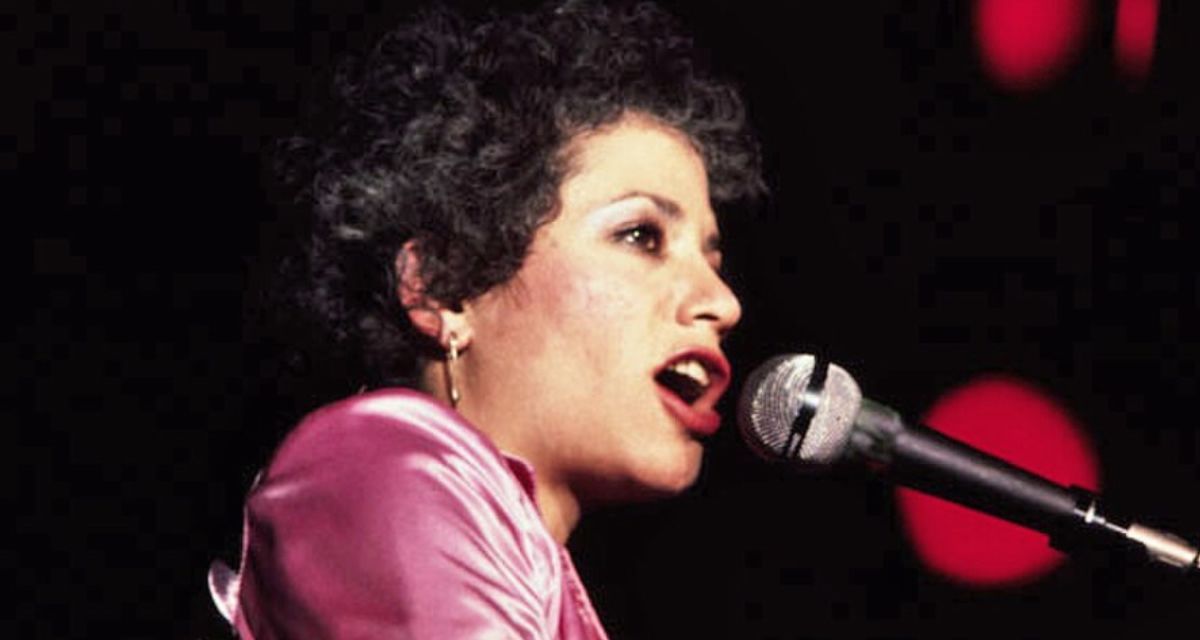
“I learned the truth at seventeen, that love was meant for beauty queens…”
Janis Ian’s 1975 folk-pop hit “At Seventeen” has resonated with lonely teens for generations. The simple composition, just a girl and her guitar, reinforces the lyrics lamenting how the pretty and popular win the game of love, while the ugly ducklings with “ravaged faces” stay at home “inventing lovers on the phone.”
It’s a tale as old as time, but Ian told it in a way that felt personal to every teen (and even former teen) who relates to it. Ian herself has said the song is about “opening up to your worst fears about yourself and laying them on the table,” an acknowledgement so many teens are desperate for.
She wrote the song at 23
Ian was well past teen angst when she wrote “At Seventeen.” The song was inspired by her own experiences, though the opening line came from an article she read by a woman who had expected her life to be perfect after her debutante ball. “I learned the truth at 18,” the article began. Ian changed the age to 17 for the rhythm and started writing her hit song about feeling like an ugly duckling.
“It took three months to write, because it was scary,” Ian shared in The Guardian in 2018. “This was the mid-70s, before confessional songs, and I’d never been that honest about feeling ugly and never being asked out. I kept picking it up and putting it down, saying: ‘I can’t do this.’ In the third verse, the narrator steps forward and you realize it’s about her. ‘Those of us with ravaged faces,’ she says, but near the end there’s the line: ‘Ugly duckling girls like me.’ Well, ugly ducklings become swans, so there’s hope.”
Ian said she felt like she’d written a hit. In fact, she worried that she had inadvertently lifted the melody from somewhere else because it felt so familiar. She had to call three musician friends to reassure her that they’d never heard it before.
The making of a hit song
“At Seventeen” hit No. 1 on the Billboard Adult Contemporary chart and No. 3 on the Billboard Hot 100. Ian knew she had a hit on her hands as soon as she wrote it, but she wasn’t the only one.
“I melted the first time Janis played the song,” producer Brooks Arthur told The Guardian. “It wasn’t folky, it wasn’t pop – it was just honest and straight from her heart. She was powering through her feelings, which was very delicate territory…”
“There was a moment during recording when I suddenly felt like we were in a spaceship blasting off from Earth,” he continued. “It was the most incredible feeling and it’s only happened a couple of other times – while I was recording Bruce Springsteen’s first albums. Two or three hours later, we landed safely. We listened to the track and knew we were making some kind of wonderful. But I didn’t feel it was a hit. I’d just been trying to make Janis sound as good as she did on Stars. But then Allen Klein, who’d managed the Beatles and the Rolling Stones, dropped by and said: ‘This is a hit.’”
Fun fact: Ian sang “At Seventeen” as the very first musical guest on the debut broadcast of Saturday Night Live in 1975.
Ian’s vulnerability resonated with teens everywhere
Ian is humble and honest about her songwriting talents. “Plenty of other artists have a gift for melody and vocals and great lyrics,” she told The Irish Times. “The only thing I think I do better is to talk about things that people have a hard time voicing. I give them a safe way to voice them.”
Giving voice to a familiar but hard to describe experience is exactly what made “At Seventeen” a generational hit.
However, even after it came out, Ian found the song scary to sing. “I would sing it with my eyes closed because I was so sure the audience would laugh at me,” she told the Times. “It was astonishing to me to realize, first, that they weren’t laughing. And, second, that it applied to boys too.”
Ian has shared that she received 461 valentines in the mail from fans inspired by the song’s lyrics:
To those of us who knew the pain
Of valentines that never came
And those whose names were never called
When choosing sides for basketball
What a sweet gesture from fans who understood what that felt like.
A multigenerational hit gone global
The song was never a hit in any other country, but Ian started noticing in the late 1990s that people in the Netherlands, the U.K., and Japan knew the song.
“The most amazing thing to me about ‘At Seventeen’ is not that it was such a big hit here, not that it’s sold so much, but that it still gets played so much and it still has such an effect on people,” Ian shared in a 2006 Top 2000 a gogo documentary. “I must get easily 15 or 20 emails a week from somebody who’s just heard it for the first time. It’s almost like some songs enter the consciousness and just stay.”
Clearly, it still hits a nerve in the best way, more than 50 years later.