upworthy
Add Upworthy to your Google News feed.
Google News Button
Heroes

7 kinds of animals that you can eat with no factory farm involved

cattle, factory farming, meat, environment
Photo via Pixabay.

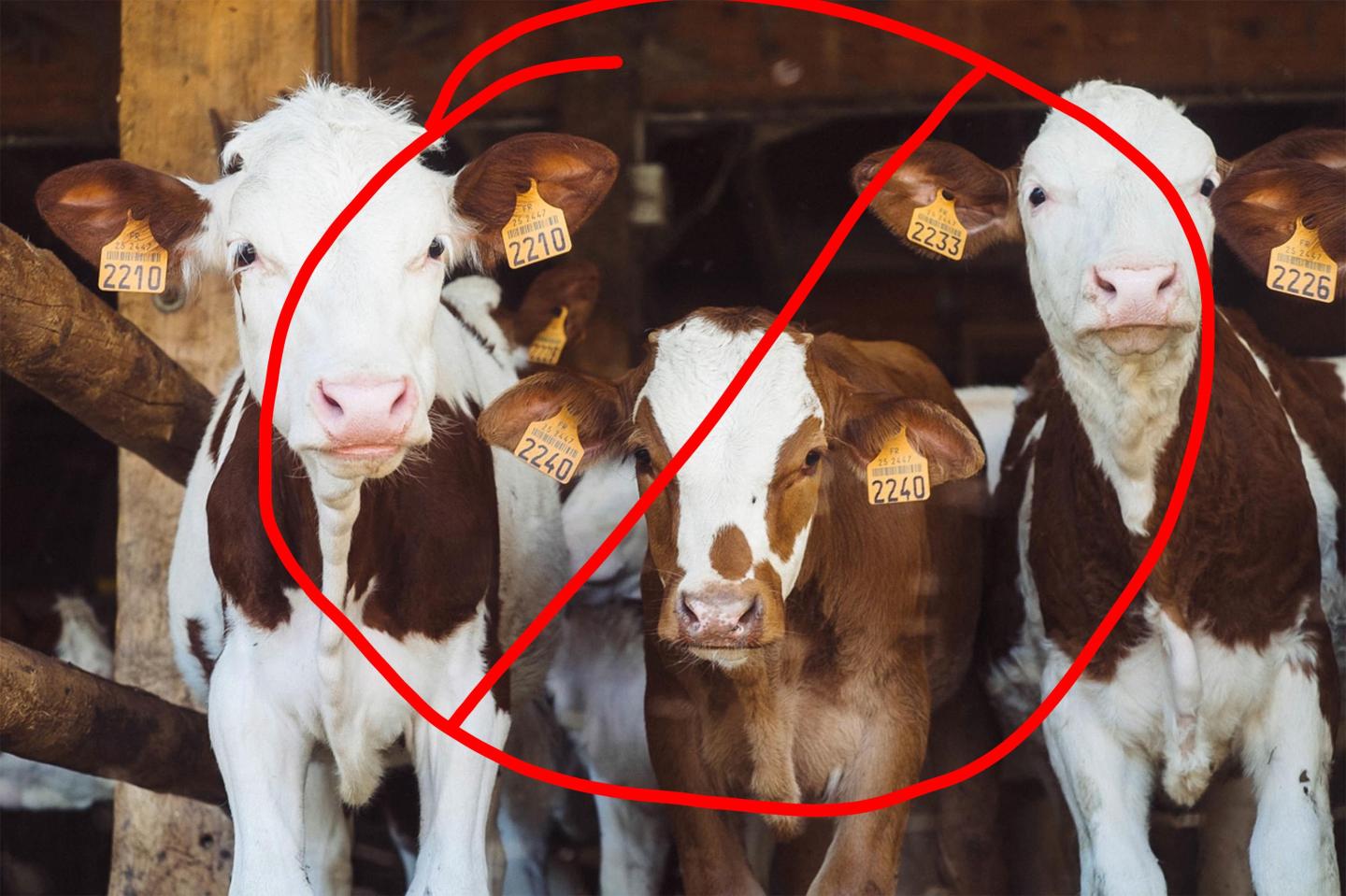
Cattle tagged on a factory farm.

So you want to eat meat, eh? There's a dilemma.

Ever since the release of Michael Pollan's seminal book, "The Omnivore's Dilemma," more people all over the world have been trying to decide if their lives could use more locally harvested food — including meat.

The existing meat production pipeline is flawed. Pollan and many others — like Eric Schlosser (of "Fast Food Nation" fame) and the documentary "Samsara" — have showed us just how bad it really is. Some folks go vegan or vegetarian, but others have tried to figure out ways to get locally raised animals.


“Were the walls of our meat industry to become transparent, literally or even figuratively, we would not long continue to raise, kill, and eat animals the way we do."
— Michael Pollan, "The Omnivore's Dilemma"

Can you eat meat ethically?

What is there to do if you would prefer meat to be a source of protein in your diet but want to have it in an ethical and eco-friendly way?

The answer might be in your backyard. Literally.

If you live in an area that has access to wild game, you may want to consider hunting. Seriously! Many people have turned to personally hunting their meat, and the vast majority of those who are passionate about it harvest game in ways that are safe, clean, and quick.

Ask yourself: Is that more or less ethical than, for example, a cow grown while standing on piles of manure, force-fed antibiotics, and unable to turn around or even move? Or a chicken with its beak cut off, unable to move in its cage or do anything except eat and … well, you know. How about what happens when animals reach the "killing floor" where they're executed en masse and "disassembled" before they make it to the local "Mall*Wart" in your city?

If you do it yourself, it can get you closer to your food supply and in touch with its life cycle.

Even though I've hunted since I was a kid, "Omnivore's Dilemma" got me even more interested in putting wild game into my freezer and onto our table. Knowing a lot more about your food sources is key to understanding why it matters so much to your health and happiness. And, prepared right, wild game is absolutely delicious.

Also, I still thank every animal I take for giving food and sustenance to my family.

Replacing things like factory-farmed cows and chickens with wild game is possible.

You can also look into organic/grass-fed animals on local farms, but that can get pricey. We've done it to the tune of $900 for a half cow, and you must have a deep freeze on hand to store it.

But small-game hunting can be cost-effective and good exercise, and it's not a big lift when it comes to cleaning and cooking.

Some people use a bow and arrow, a small-caliber rifle like a .22, or even a simple single-shot shotgun available for $100. For that matter, there are many people who like to hunt with birds of prey — trained falcons, hawks, and more.

Whatever method you use, once you've got your license, it's time to get out there!

What are some good options to hunt?

Let's go through some varieties of game that can usually be found in open areas around the United States.

1. Rabbits

alternative meats, rabbits, wild game, responsibility

Thumper ... I mean, the cottontail rabbit.

Photo by Gary Bendig on Unsplash

Cottontails, hares, and jackrabbits all provide a great meal when you harvest them humanely and ethically. Rabbit season starts in September or October in most parts of the country. The taste? A lot like chicken, but a little stronger flavor. You can really make it tasty with a good ol' hasenpfeffer recipe (or as Bugs Bunny would call it ... rabbit stew).

2. Squirrels

food, nature, industry, omnivore

The common fox squirrel stands up on its hind legs.

Photo by Patti Black on Unsplash

Bushy tail (fox) squirrels, chipmunks, woodchucks, and prairie dogs are all in the same scientific family. As opposed to hoofing it through the woods and grasslands for rabbits, squirrel hunting is more for people who like to sit for a while. The taste is also kinda like chicken, but a lot greasier. Think dark meat.

3. Upland birds

birds, migration, wild, available food source

A pheasant struts through brown grass.

Photo by Jack Seeds on Unsplash

Pheasant, quail, grouse, Hungarian partridge, and other species are actively eating and preparing for the winter months late in the year, starting around September. Definitely a way to burn some calories because hunting them requires hikes through woods, grasslands, and farm fields, where you can see them flush, often with a great flourish of color.

As you might have guessed, the taste is very much like chicken!

4. Waterfowl

sustainable, nature, hunting, eco-freindly

"Honkers," as they're sometimes called. If you've ever been close to a flock, you know why.

Image taken by Alan D. Wilson (modified), Wikimedia Commons.

Waterfowl include geese, ducks, and other birds that stay close to water. At 12 to 15 pounds per bird for an adult goose, they can easily feed a family. It's very much a dark meat; in fact, goose breasts look as dark as steaks before and after you cook them. The taste is very much like duck, rather than turkey. All are fabulous, on the grill or slow-cooked in the oven or pressure cooker.

5. Deer, elk, and other cervids

big game, hunting, elk, deer, healthy foods

A young-bull-elk stands on the mountain side.

Image via Pixabay.

This is definitely deep-end-of-the-pool hunting — not small game. And it takes a deeper relationship with the local population to really make it ethical.

A word on "trophy" animals (i.e., those with a lot of antlers) versus those intended for food and culinary delights: Though the picture I took here is of bucks, I take the female variety ("does") too. There's a reason why.

If the herd gets out of balance from too many does, then bucks can die from food scarcity in the winter months. Read: They starve.

I've been regaled with many a tale of winters being so harsh in parts of the country that deer eat tree bark and pine needles to survive. That's not good, and they suffer, so it's far better to harvest enough of them each year so that the herd is strong.

"Hiya, human!" Photo of bull elk in Rocky Mountain National Park by Brandon Weber/Upworthy.

In the mountain states, elk and other cervids (ruminant mammals that are members of the Cervidae family) are also frequently harvested. These will supply hundreds of pounds of venison at a time.

I'm a bow hunter myself, and it takes tons of patience, practice, skill, and the ability to sit quietly for hours on end. My 7-year-old wants to go deer hunting in a few years, but I've already warned him that he cannot talk for hours at a time — a feat I do not think it's humanly possible for him to accomplish.

The taste is like beef, with much less fat. Cooking venison is a skill unto itself, and you frequently will have to cut the cooking time in half versus beef, or it will be very dry. They're much like grass-fed beef in that regard. The varying types of cervids produce subtle taste differences. I am fond of whitetail deer and elk, but some folks love caribou and antelope, too.

Bonus: If you want to go full-on mountain person, you can learn how to make a coat or blanket from the hides, as well as other fancy things from other parts. Double bonus: If you have dogs, venison bones are great for them to chew on. (Just be sure to do it safely!)

6. Wild turkey
Thanksgiving, wild turkey, chicken, substituion, fiscal responsibility

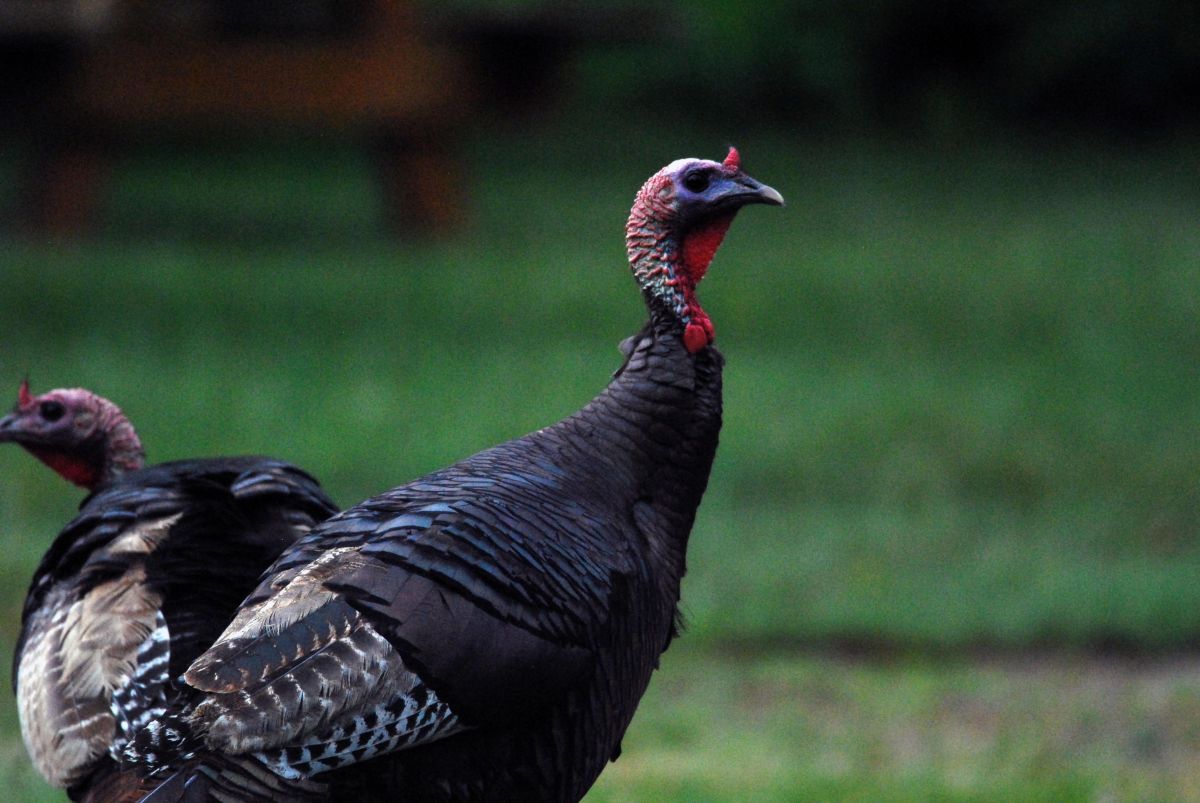
Wild Turkeys walking around a green field.

Photo by Tyler Moulton on Unsplash

No, not THAT Wild Turkey...

This is another "sit and wait" creature to hunt, and they have extremely acute eyesight and hearing, so they're not easy. But taste one — even if you've had "free-range" turkey before — and you might just be hooked.

7. Wild boar/pig
boars, pigs, wild animals, factory farming

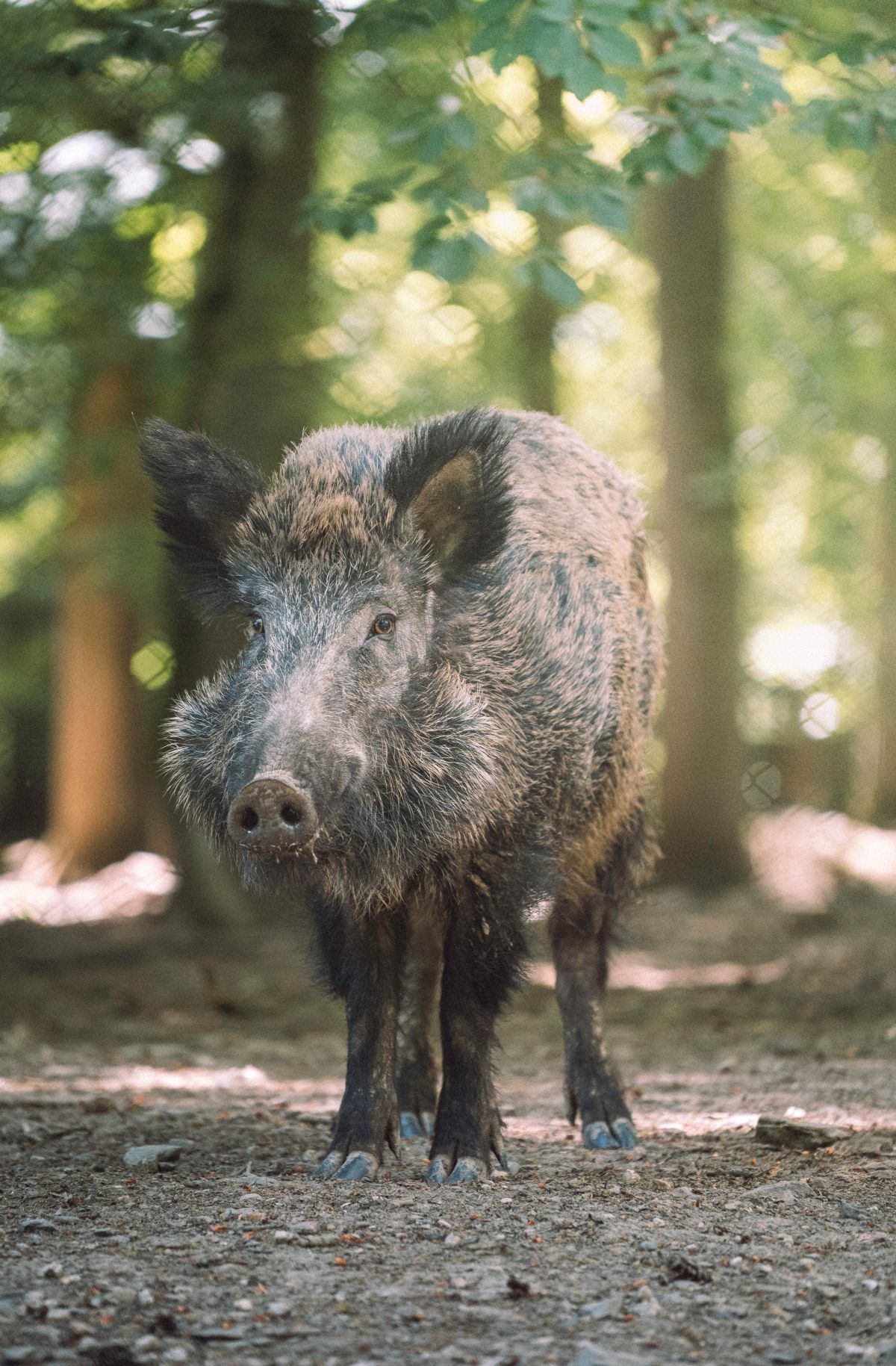
A black wild boar walking around.

Photo by Max Saeling on Unsplash

I've not yet had the experience of hunting these, but (SPOILER ALERT!) it is the critter that Pollan ends up harvesting at the end of "The Omnivore's Dilemma," along with local mushrooms and vegetables. In some parts of the country — especially the South — they are frequently harvested year-round. The taste is definitely pork, with older animals having a "musky" flavor.

"Oink? Not quite, Bub."

Bonus!

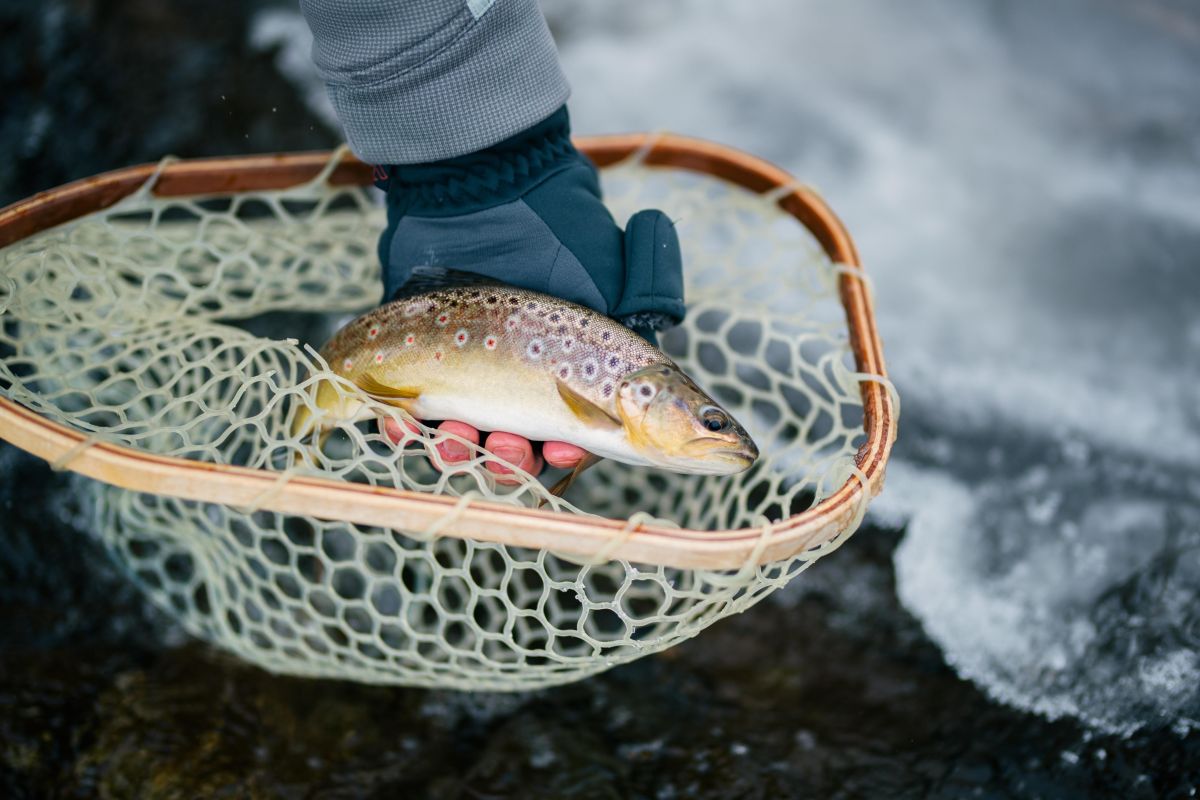
For the pescatarians out there, catching and cooking your own fish can be magical. You only need access to waterways, ponds, or lakes, and a simple cane pole with a hook and night crawler will do. The kids will love it, and cooking fresh catfish or trout over a campfire is a great experience.
fishing industry, rivers and oceans, camping

Pulling a fish out of a net basket.

Photo by jack murrey on Unsplash

There are, of course, tons of other critters in pockets of the country that can also be harvested as well, like alligators, goats, crabs, lobsters, bears, and more.

Hey, it beats store-bought, right? Check with local ethical hunters to see what might be available to you!

What if the whole idea of hunting game yourself is still not for you? That's fair.

Here's an idea: Why not trade with someone for locally sourced meat?

If you don't want to go through with hunting and taking your own animals, you could arrange a trade with someone you know. "Hey, Jane, I'll prepare the bread from locally raised grain and roast some locally-grown vegetables if you can harvest the venison steaks. Deal?"

Or even get together with friends and family who hunt and make it a feast!

Bon appétit!

Also, for a little taste of what "The Omnivore's Dilemma" is all about, check this video out:

34 broken bones, a mural, and Buddy the Elf—what these three things have in common
True

The Bank of America Chicago Marathon took place on Sunday, October 12th. Every runner who took on the enormous feat of 26.2 miles is truly an inspiration. We’re proud to share three outstanding stories about the power of community, giving back and crossing the finish line. Not only did they run an outstanding distance, but they each also gave back by fundraising for an organization that changes lives for the better.

Running a marathon is so much more than race day. It’s sticking to a schedule, getting enough rest, learning how to fuel your body for long distances, and—perhaps the most challenging of all—building mental resilience.


Meet Leanne: Running after 34 Bone Fractures

Leanne was only 12 years old when during her middle school cross country practice, she fractured her right tibia, the shin bone in her leg. This wasn’t Leanne’s first time breaking a bone—it was actually her 34th fracture. After many years of being overlooked as "clumsy," Leanne felt immense relief and recognition when a doctor diagnosed her with brittle bone disease, an incredibly rare condition.

Lurie Children’s provided a care plan for Leanne to build strength and start running again. And as of October 12th, Leanne ran her second Bank of America Chicago Marathon. She said in an interview, “I never thought I’d run again. But against the odds, here I am, training for my second Bank of America Chicago Marathon... all because of Lurie Children’s.”

Leanne’s impressive journey is a testament to the incredible research of Lurie Children’s, where she gives back by volunteering at the hospital and running on its behalf. Talk about being a true inspiration.


Meet Everett: Running to Inspire Through Art

Everett is an artist who creates beautiful murals around the city of Chicago. He uses his art as a tool for storytelling for community and connection.

In addition to being an artist, Everett is a runner. He ran the 2025 Bank of America Chicago Marathon on behalf of Peace Runners 773, a non-profit organization that strengthens the community of Chicago. In this video, we follow Everett on a run to visit some of his favorite murals. The run ends at Garfield Park, where Everett just finished a mural that he dedicated to the organization—symbolizing growth, strength and togetherness. Everett didn’t stop there.

While building his strength as a runner, Everett is strengthening his city of Chicago. Through his running and artwork, Everett has brought more awareness and resources to his community.

Meet Joseph: Running on Behalf of Special Olympics


Joseph ran the Chicago Marathon on behalf of Special Olympics, dedicating each mile to one of 26 friends with a developmental disability. The last 1.2 miles were extra special. It was for one of his closest friends, Matt.

In this video, Joseph runs to Matt’s house. For every mile of this training run, he tells us a heartwarming anecdote about Matt. They met at camp and soon, Matt will be a groomsman in Joseph’s wedding. The duo even sends a Christmas card every year—most notably dressing up as Buddy the Elf and sharing a bowl of spaghetti with maple syrup (spoiler: it doesn’t taste good).

As Joseph runs, he says, “Before we get to Matt, a quick note about why I’m running on behalf of Special Olympics. Matt and I love sports. And so do many of my other friends. Donations help provide year-round sports training and competition for more than 20,000 people with intellectual disabilities across Illinois.”

Joseph is the perfect example of inspiration. Not only did he run an entire marathon, but he also found inspiration in his friends who love sports as much as he does.


Leanne, Everett and Joseph are three incredible people who have shown how much strength and perseverance it takes to run a marathon. Each runner is both empowering themselves and their community. Their dedication to the Bank of America Chicago Marathon shows that the people of Chicago have a passion for the city, their neighbors and their personal achievements.

cruise ships, cruise living, vacation, lifestyle, alternative living, alternative lifestyles, aging, seniors
via Alonso Reyes/Unsplash

A couple lives permanently on cruise ships instead of paying for assisted living.

It comes as no surprise to many of us, but cost of living in the United States has gone up so by leaps and bounds in recent years. So much so that living on a cruise ship has become a reasonable idea for some retirees. When Nancy and Robert Houchens of Charlottesville, Virginia, retired, they decided to sell almost everything they had and live out their golden years hopping from cruise ship to cruise ship.

"We had a 3,000-square-foot home full of furniture...and everything we own now would fit in the back of a pickup truck," Robert told USA Today.


“We sold all of our estates except for a little condominium we have in Florida, so when we get too old to cruise, we have somewhere to live,” Nancy added. “And we did keep two vehicles, and what we kept is in half of (Robert's mother's storage unit), which is, I don't know, 10x10 or something. We just walked away from everything.”

Life on a cruise ship is stress-free for the couple because their needs are taken care of on the ship. "It's been great. I don't cook. I don't clean," Nancy told the Miami Herald.

- YouTube www.youtube.com

The couple has found that living on a cruise ship isn’t as expensive as some may assume. Even though inflation has driven up the cost of travel in the U.S., it hasn’t significantly impacted the cruise industry.

“It's much cheaper than a nursing home or assisted living. It was just a good fit for us. It's a good fit for a lot of people,” Robert told the Miami Herald.

The cost of a nursing home for one person usually runs anywhere from $8-10,000 per month, for reference.

The couple plans their trips differently than someone who is going on vacation. “We look for the best deal, not the destination,” Nancy told Cruise Passenger.

The couple initially planned to spend $4,000 a month living on the ships. “Our original budget was $4,000 a month. This included gratuities. Of course, things are more expensive now, so that budget has had to increase a little. Depending on where we go, we may or may not need the internet,” she told Cruise Passenger.

cruise ships, cruise living, vacation, lifestyle, alternative living, alternative lifestyles, aging, seniors Literally sailing off into the sunset. Giphy

“Our phone plan covers most everywhere for 25 cents a minute to call with free internet and texting,” Nancy continued. “We have an annual travel insurance plan, and one of our credit cards also has travel insurance.”

The roughly $4,000 the couple spends a month includes food, and they don’t have to bother paying for a car. They also try to book their cruises consecutively so they don’t waste money paying for expensive hotels when transferring between cruise lines.

Not a bad deal.

Last July, the Houchens celebrated their 1,000th day sailing with Carnival Cruise Line since the 1980s, and they look forward to countless more days at sea with each other and the new friends they’ve made on their never-ending cruise. And today, they're still going strong.

They're not alone in loving their new lifestyle. CBS News reports in 2025 that "cruise retirements" are more popular than ever.

@lovepeacecruise

Nancy and Robert Houchens of Charlottesville, Virginia - Couple retires to live on cruise ships because it's 'cheaper than a nursing home' #livingonacruiseship #retirement #carnival #carnivalcruise #funship #carnivalship #carnivalshiptok #cruiseship #cruise #cruiser #cruiselife #vacation #travel #cruisevacation #cruisetravel #cruisetok #cruisetiktok #cruiseaddict

“We cruise Carnival because of the people,” Richard told Travel Pulse. “It isn’t the destinations for us anymore, it’s the journey—and the biggest part of the journey is the people.”

This article originally appeared two years ago. It has been updated.

Learning

4 everyday phrases that may indicate someone is highly intelligent

It's time to rethink what we consider to be "smart."

intelligence, Einstein, change, openness, art
Photo by Taton Moïse on Unsplash

Einstein in a hoodie on a mural.

So often, we equate intelligence with standardized testing, or say, degrees or rank in a graduating class. The person who has a 4.0 GPA and high SAT score probably is pretty book-smart. And sure, various amounts of degrees do imply that most likely they've had a lot of education.

But there is another measure of intelligence that is often overlooked: the ability to be wrong. A doctor named Emma Jones, MD (self-described hospice doctor and "burnout coach") has recently gone viral on social media for a video wherein she talks about intelligence. The clip is entitled "Here's how you know someone is highly intelligent." In just a couple of minutes, she lays out ways you can easily spot someone who is ultra-bright.


Quoting Oscar Wilde, she says, "Consistency is the last refuge of the unimaginative." She then explains that he meant, "highly intelligent people know how to change their minds."

Here's where the phrases of (most likely) highly intelligent people come in. She says to listen for sentences like:

"I used to think…"

"That's a good point."

"Let me reconsider."

"I've changed my mind."

She adds, "Most people double down to protect their ego. But intelligent people update their beliefs. They get more curious instead of more defensive. And they ask things like 'what am I missing?' instead of trying to win an argument. They don't tie their identity to being 'right.' And they treat being wrong like data, not humiliation."

She also quotes Albert Einstein, who once said, "The measure of intelligence is the ability to change." She notes that the "real flex" is being able to have your mind changed "without shame."

The comments, and there are thousands in just a short amount of time, support the notion. One (somewhat sarcastically) writes, "So in other words, you’re saying that intelligence correlates with a combination of critical thinking skills and the humility to know that oneself doesn’t know everything?"

Another jokes, "I used to say that my 'need to be right' is so strong that if someone shows me a better path, or shows me that my thinking is off, I will quickly recalibrate and change my mind so I can be 'right' again." Jones responds to this: "That is quite a strong and intelligent reframe."

Another Instagrammer backs it up with a book they love, writing, "One of the best books I have ever read is called But What If We're Wrong by Chuck Klosterman. I base most of my life on the assumption that some part of the system is built on inherently incorrect information. It makes it easier to be flexible and make connections to other information that may have otherwise been missed."

But, of course, admitting there's usually room for debate and the ability to change one's mind is just one of many signs someone is intelligent. Writer and reviewer Jordan Cooper shared his subtle signs someone might be intelligent in an article for VegOut.

Among eight examples, his first is "talking to yourself out loud," which I mentioned in a recent Upworthy article. He adds, "A 2012 study in the Quarterly Journal of Experimental Psychology showed that talking out loud can actually improve focus and object recognition. Why? Because verbalizing engages additional sensory channels. When you speak your thoughts aloud, you’re not just thinking—you’re hearing yourself think, which reinforces memory and decision-making. Einstein did it. So do a ton of high-performers who swear by this trick for brainstorming, debugging their code, or preparing for presentations."

richard pryor, intelligence, openness, being wrong Richard Pryor admits he was wrong. Giphy

Other examples, some of which have also been pointed out on Upworthy over the years, are: "zoning out," "being sensitive to noise, light or texture," "having messy handwriting," "swearing a lot," and to the earlier point, "doubting your intelligence constantly." (In other words, staying open to being wrong.)

So, while having good grades and a plethora of degrees is excellent, always being open to learning and changing course adds a layer to any good mind.


Education

Social skills expert shares 3 'magic phrases' that make you more likable

Sometimes, we need to overcommunicate how we feel about others.

vanessa van edwards, likability, communications skills, people skills, people laughing, good advice

Vanessa Van Edwards and people at a party.

A familiar misstep people make when trying to be likable is trying to impress others. They want to show they are funny, intelligent, and a great storyteller. They think being the life of the party is the road to likability. However, study after study shows that it’s a lot easier to be likable. All you have to do is show interest in others. To put it simply: If you like people, you will become more likable.

There’s a slight wrinkle in the notion that liking more people makes you more likable. Many people you like aren’t sure that you like them. The psychological phenomenon known as signal amplification bias says it best. We tend to overestimate how clearly we broadcast our feelings and intentions towards others. So, the person we like and who likes us may not know the feeling is mutual.


“We think our signals are obvious,” Vanessa Van Edwards told Steve Bartlett on the Diary of a CEO podcast. “If we like someone or if we’re having a good time, we think, ‘Oh, they for sure know it.’ They don’t.” Van Edwards is a communications expert and the author of Captivate: The Science of Succeeding with People.

To help people clearly communicate their feelings, Van Edwards suggests three “magic phrases” to show you care. Check out the video below.


Phrase 1: ‘I was just thinking of you’

“You think of a lot of people in your life all the time,” she said. “If you are thinking of someone and you can text them: ‘I was just thinking of you, how are you?’ I was just thinking of you, how’d that project go?’ was just thinking of you. It has been a while since we talked.’ You see a movie, you see a documentary, you see a matcha latte, you see a mug, you see a ceramic candle, and you’re like, ‘Ah, this made me think of you,’” Van Edwards said. “My text messages, my conversations, are full of actual moments where I was triggered to think of that person, actually,” she said, noting the importance of being genuine. “If you don’t think of someone, they’re not a person you need to have in your life.”


Phrase 2: ‘You’re always so …’

"So if you're with someone and you're impressed by them or they're interesting or they're funny, say, 'You always make me laugh. You’re always so interesting,’ or ‘You’re always so great in interviews.' Giving them a label that is a positive label is the best gift you can give someone, because it's fighting that signal amplification bias,” she continued.


Phrase 3: ‘Last time we talked, you mentioned …’

“We are so honored when we get brain space—that you remembered and you’re going to bring it up,” she said. “And you specifically bring up something that they lit up with, something they were like, ‘Ah, it was great, it was exciting, it was wonderful.’”


If studies show the more you like other people, the more likable you become, Van Edwards has the next logical step in becoming more likable. She makes it clear that, due to signal amplification bias, many people you like may not even know it. When we employ her three ways to be more likeable, though, we can let people know we like them without making them feel uncomfortable, thus establishing bond to build on.

Internet

Gen Xers and Boomers share ‘grimy’ parts of the 70s they were happy to leave behind

Such a good reminder of the progress we’ve made in the past 50 years.

Times square, 42nd street and 7th ave, new york city, NYC, 1970s

Times Square in 1973 was pretty "sleazy."

When people talk about the world older generations grew up in, it's often looked at through the rose-colored glasses of nostalgia. Life was simpler back then. We didn't have all the trappings of technology or the burdens of busy modern life. Sure, we had to do more things manually, but the world was safer and cleaner and generally better back then, right?

Not so fast. As some of the younger generations have noticed, the 1970s is often spoken about with nostalgic fondness but portrayed differently in entertainment. That observation led someone to ask Gen Xers and Boomers, "Were the 1970s really as grimy and gloomy and sleazy as the movies make it look?" Surprisingly, folks who lived through the '70s took off their rose-colored glasses to remind us all of how far we've actually come in the past 50 years.


While "grimy" and "gloomy" and "sleazy" may be strong terms, they're not entirely inaccurate, according to the older folks who responded to the question. Of course, some places had more problems than others and big cities had it the worst, but some of the "grime" was widespread. Here are the truths behind the film portrayals:

Smog in Los Angeles

While L.A. still struggles with air quality, it has seen a vast, visible improvement since the days of thick, brown smog hovering over the city and people mistaking it for a gas attack.

"I lived in Los Angeles as a kid, and it wasn't unusual to have days we weren't allowed to go outside at school because the smog was so bad it literally hurt to breathe."

"A old joke that probably doesn't make sense nowadays: 'What do you see in California when the smog lifts? UCLA.'"

"We called them Smog alerts. We couldn’t go out for recess on those days."

"The mountains were mythical, growing up in L.A. On the occasional clear day you’d hear people saying, 'Wait, those are there all the time?' Thank goodness for better emissions control."

Air and water pollution in general

The Environmental Protection Agency was begun under President Nixon in 1970, and it would take awhile for the new department to get established and policies to take hold.

"Yes. 60’s and 70’s every major American city had days where there was really low visibility, distant landmarks obscured, brown, white, rusty, hazy cast and layers. Car, truck and bus exhaust pollution. In some areas, strong chemical and odors fr factories and animal processing plants. In the winter you could taste the sulfur in the air from some smaller city power stations burning coal. Flying into some cities was a descent from clean air into a dark brown layer of pollution."

"Bad enough that the EPA was born at that time; Woodsy Owl, the 'Give a Hoot, Don't Pollute' mascot was born; the Crying Indian commercial was first broadcast; the Clean Water Act was amended (originally from 1948 and called Federal Water Pollution Control Act).

We lived near a refinery town in the 60s and 70s. Gawd, I had asthma and was constantly having to go to the hospital, to the point the doctors told my parents to keep me inside. Or course, them being smokers made it pretty much from the frying pan to the fire.

The 70s were the years of introducing environmental awareness to a population that was coughing, hacking and used to brown air."

"That was when people finally said 'Wait, you mean rivers aren't supposed to catch fire when a train passes by and some sparks fly off the rail?' and 'What do you mean they're actually supposed to have flowing water in them, instead of oozing sludge?'"

Littering was commonplace

It might be hard to imagine now, but it was totally normal in certain eras to just throw your trash out the window of your car or leave your bottles or cans wherever you finished them.

1977 TV public service announcement www.youtube.com

"I think everyone kinda forgets how much trash there was. My generation grew up with the crying Indian and 'give a hoot, don't pollute.' Before that, people really did just throw their trash out the car windows. There was a LOT more trash on the roads."

"We used to make a fair bit of money picking up aluminum cans, and smashing them to sell for scrap. Loads of them."

"It was quite common for people to throw trash out of their cars. beer bottles by the side of the road. In the late 1970s, Michigan voted in bottle deposits, and afterwards there was quite a difference in the roadside as you crossed the Ohio border in I-75. With the deposits, there was more incentive to pick them up, too, because each one was worth a dime. Didn't take too many to pay for a $1 movie that had already been in the big theaters for a month or two."

"Recycling was pretty much non-existent. It seemed that people burned trash a lot more commonly, as well."

"There's a scene in Mad Men where they have a picnic and Don casually pitches his beer can into the woods. It used to be like that."

Times Square was NSFW

If people think Times Square is tacky now, with all of its flashy billboards, it's a far cry from the "sleazy" strip it used to be.

Times square, 42nd street and 7th ave, new york city, NYC, 1970s A photo near Times Square from 1973.Dan McCoy/Wikimedia Commons

"That Times Square scene in Taxi Driver was Cinema Verite, it was exactly like that."

"Yeah, I used to have to travel to New York in the late ‘70s. The sleaze factor around Times Square was significant."

"Times Square was full of porn theaters and you didn’t go to what is now the High Line neighborhood unless you wanted hookers and blow."

"First time I went to NYC as a kid in like 1994 I remember a ton of porn theaters. They must have cleaned them all up within a few years, because I never saw them again on later visits."

People smoked everywhere

"Everyone smoked. Everyone and everywhere. I can’t believe we all don’t have lung cancer. Even us nonsmokers."

"Restaurants and Bars were smoky greasy and pretty grimy. It had to be a really nice place to smell fresh. The lighting was terrible. Most places had terrible air circulation. Everywhere reeked of cigarette, pipe and cigar smoke. Food odors. Old grease."

"Grimy? Yes. People smoked in their offices. After hours outside in the unemployment line, get to stand in line an oxygen free smoke filled enclosed sea of humanity with one bathroom to be insulted by cranky civil servants. Seems every building had cigarette and cigar tar wall and ceiling coatings."

Were there a lot of great things about the 1970s? Of course. There's a lot that we can take from every decade that was positive, including the one we are living through now. But this reflection on the less-than-stellar elements of the '70s and the big improvements we've made since then on all of these fronts should give us hope that we are capable of collectively moving in the right direction.