Watch this gorilla use sign language to warn humans about their impact on the earth.
You remember Koko the gorilla, right? Koko was born in the ’70s at the San Francisco Zoo. Francine (Penny) Patterson, then a Ph.D. candidate at Stanford, started studying young Koko’s linguistics capabilities and eventually taught her a rudimentary version of sign language. Image via Noé ONG/YouTube. Over the years, Koko has become a gorilla celebrity…
Koko was born in the ’70s at the San Francisco Zoo. Francine (Penny) Patterson, then a Ph.D. candidate at Stanford, started studying young Koko’s linguistics capabilities and eventually taught her a rudimentary version of sign language.
Over the years, Koko has become a gorilla celebrity and spokes-ape for global conservation efforts. She adopted a kitten (several, actually), helped sell an award-winning children’s book, befriended a ton of celebrities, and Dr. Patterson went on to start the Gorilla Foundation.
At 44 years old, Koko is still thriving. And spokes-ape-ing.
In this video compilation created by Noé Conservation and produced for the 2015 COP21 climate change meeting outside Paris, Koko is shown signing directly to the public. (Note: Koko was coached for this and followed a script, and the video is heavily edited to portray her as able to comprehend these issues. While she may be extraordinarily intelligent and talented, gorillas do not understand environmentalism.)
In the video, Koko tells us she loves people, and she loves the Earth.
And Koko ends her message with a gorilla-sized request.
Here is this gorilla — kind, tender, and clearly intelligent — asking not just her handlers, but all of us to clean up our act. Whether it’s protecting biodiversity (like rare gorilla species), stopping poachers, limiting deforestation, or any of the myriad of issues gorillas and other endangered species face.
Koko would do it herself, but she can’t … at least not until the (increasingly likely) gorilla uprising happens. So, for now, she’s doing what good friends (human and gorilla alike) do best: Call each other out on their b.s.
She’s right. We need to fix Earth. We need to help Earth. Right this second.
Nearly 200 nations answered Koko’s call at December’s COP21 meeting on climate change.
196 nations adopted an agreement that set the ambitious goal of curbing the world’s rise in average temperature to below 2 degrees Celsius. Since studies show we may already be halfway there, this agreement couldn’t have come at a better time.
Executive Secretary of the United Nations Framework Convention on Climate Change (UNFCCC) Christiana Figueres, Secretary General of the United Nations Ban Ki Moon, Foreign Affairs Minister and President-designate of COP21 Laurent Fabius, and France’s President Francois Hollande celebrate after the adoption of the climate pact. Photo by Francois Guillot/AFP/Getty Images.
Each country’s government still needs to seal the deal. But if they don’t, they’ll have to deal with millions of angry citizens, and one gorilla who’s had it up to here with their inaction.
What’s the sign for, “Finish the job or sleep with one eye open, world leaders?”
Got a minute? Watch Koko’s message in its entirety.
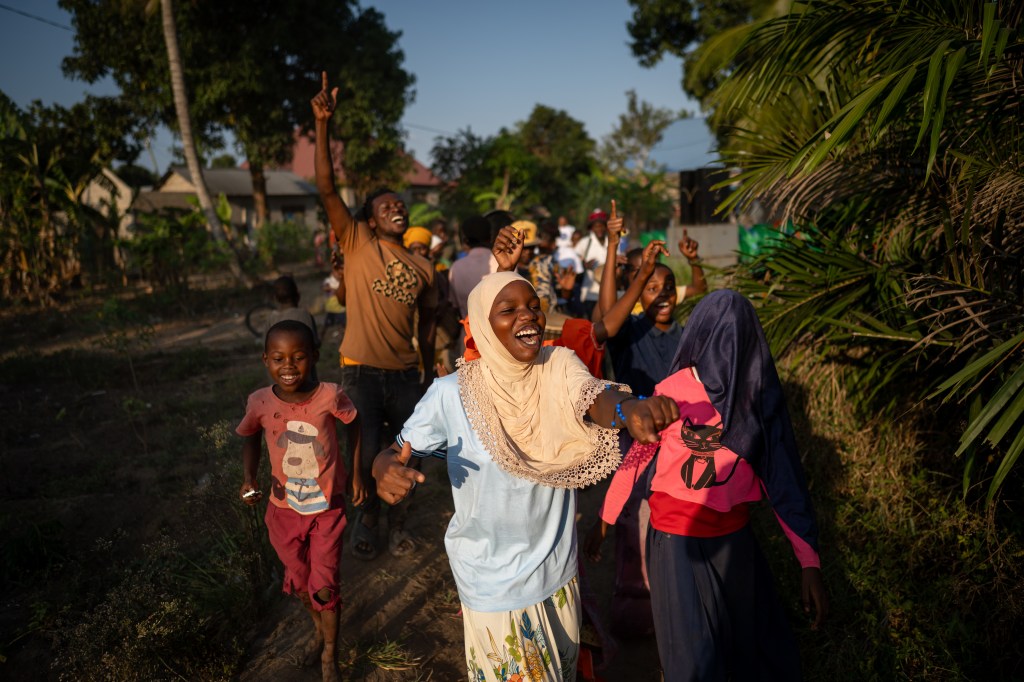
In a small village in Pwani, a district on Tanzania’s coast, a massive dance party is coming to a close. For the past two hours, locals have paraded through the village streets, singing and beating ngombe drums; now, in a large clearing, a woman named Sheilla motions for everyone to sit facing a large projector screen. A film premiere is about to begin.
It’s an unusual way to kick off a film about gender bias, inequality, early marriage, and other barriers that prevent girls from accessing education in Tanzania. But in Pwani and beyond, local organizations supported by Malala Fund and funded by Pura are finding creative, culturally relevant ways like this one to capture people’s interest.
The film ends and Sheilla, the Communications and Partnership Lead for Media for Development and Advocacy (MEDEA), stands in front of the crowd once again, asking the audience to reflect: What did you think about the film? How did it relate to your own experience? What can we learn?
Sheilla explains that, once the community sees the film, “It brings out conversations within themselves, reflective conversations.” The resonance and immediate action create a ripple effect of change.
MEDEA Screening Audience in Tanzania. Captured by James Roh for Pura
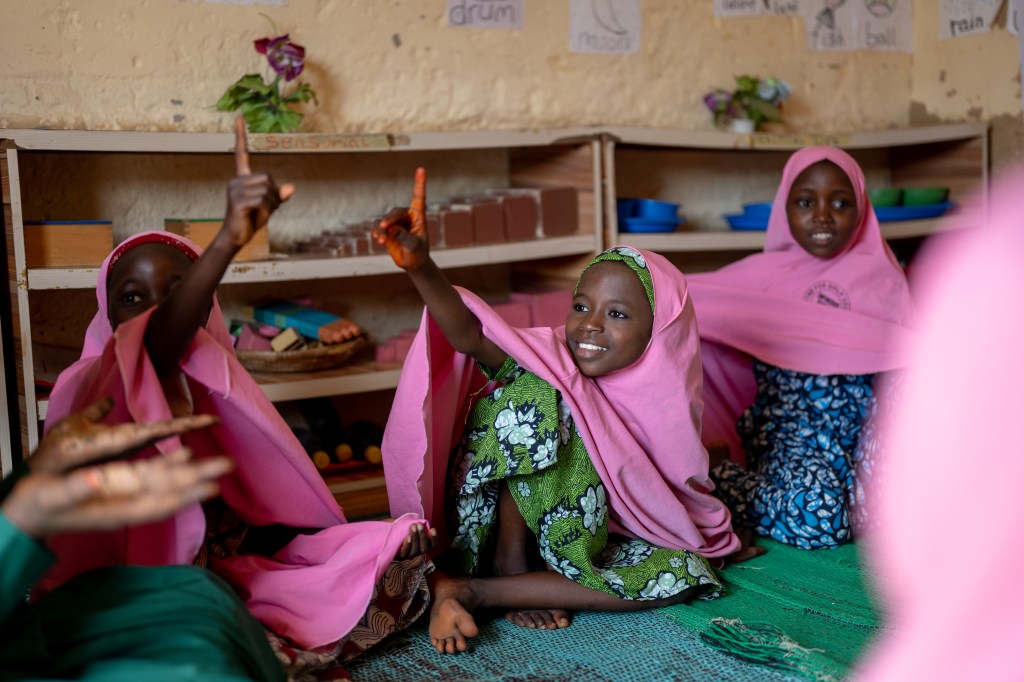
Across Tanzania, gender-based violence often forces adolescent girls out of the classroom. This and other barriers — including child marriage, poverty, conflict, and discrimination — prevent girls from completing their education around the world.
Sheilla and her team are using film and radio programs to address the challenges girls face in their communities. MEDEA’s ultimate goal is to affirm education as a fundamental right for everyone, and to ensure that every member of a community understands how girls’ education contributes to a stronger whole and how to be an ally for their sisters, daughters, granddaughters, friends, nieces, and girlfriends.
Sheilla’s story is one of many that inspired Heart on Fire, a new fragrance from the Pura x Malala Fund Collection that blends the warm, earthy spices of Tanzania with a playful, joyful twist. Here’s how Pura is using scent as a tool to connect the world and inspire action.
A partnership focused on local impact, on a global mission
Pura, a fragrance company that recognizes education as both freedom and a human right, has partnered with Malala Fund since 2022. In order to defend every girl’s right to access and complete 12 years of education, Malala Fund partners with local organizations in countries where the educational barriers are the greatest. They invest in locally-led solutions because they know that those who are closest to the problems are best equipped to solve and build durable solutions, like MEDEA, which works with communities to challenge discrimination against girls and change beliefs about their education.
But local initiatives can thrive and scale more powerfully with global support, which is why Pura is using their own superpower, the power of scent, to connect people around the world with the women and girls in these local communities.
The Pura x Malala Fund Collection incorporates ingredients naturally found in Tanzania, Nigeria, Pakistan, and Brazil: countries where Malala Fund operates to address systemic education barriers. Eight percent of net revenue from the Pura x Malala Fund Collection will be donated to Malala Fund directly, but beyond financial support, the Collection is also a love letter to each unique community, blending notes like lemon, jasmine, cedarwood, and clove to transport people, ignite their senses, and help them draw inspiration and hope from the global movement for girls’ education. Through scent, people can connect to the courage, joy, and tenacity of girls and local leaders, all while uniting in a shared commitment to education: the belief that supporting girls’ rights in one community benefits all of us, everywhere.
You’ve already met Sheilla. Now see how Naiara and Mama Habiba are building unique solutions to ensure every girl can learn freely and dare to dream.
Naiara Leite is reimagining what’s possible in Brazil
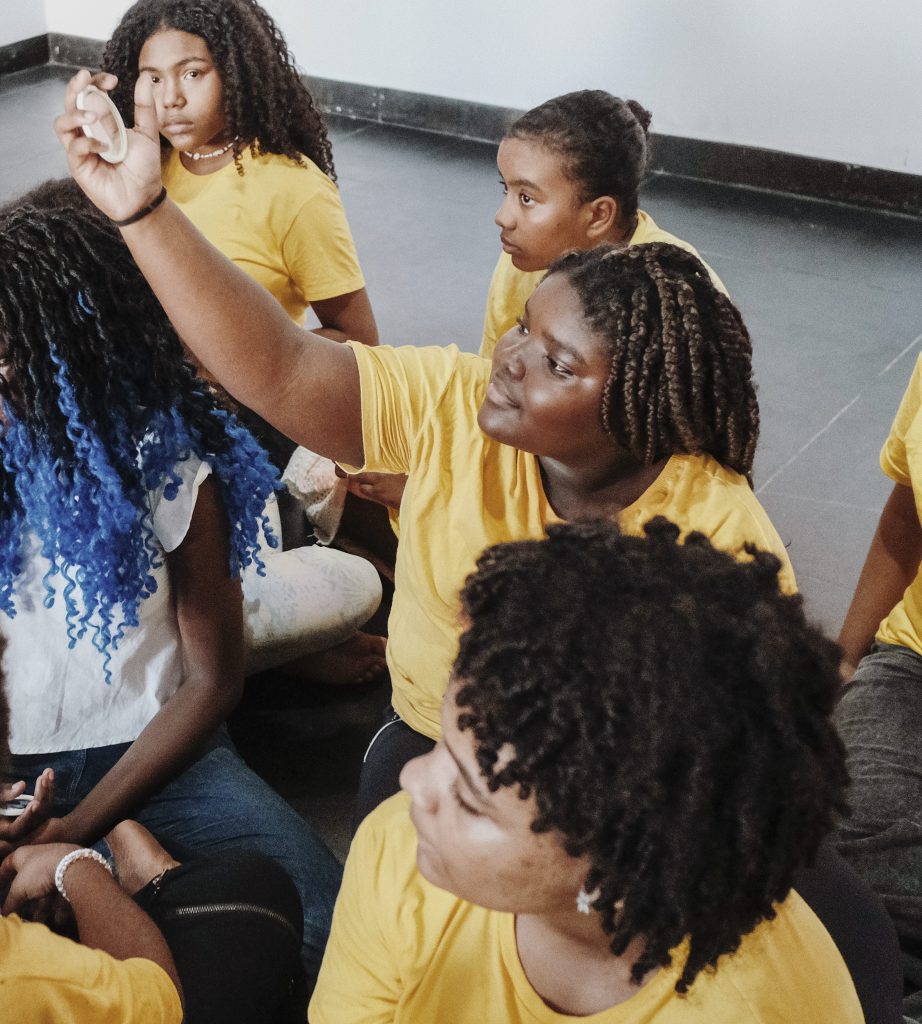
Julia with Odara in Brazil. Captured by Luisa Dorr for Pura
In Brazil, where pear trees and coconut plantations cover the Northeastern Coast, girls like ten-year-old Julia experience a different kind of educational barrier than girls in Tanzania. Too often, racial discrimination contributes to high dropout rates among Black, quilombola and Indigenous girls in the country.
“In the logic of Brazilian society, Black people don’t need to study,” says Naiara Leite, Executive Coordinator of Odara, a women-led organization and Malala Fund partner. Bahia, the state where Odara is based, was once one of the largest slave-receiving territories in the Americas, and because of that history, deeply-ingrained, anti-Black prejudice is still widespread. “Our role and the image constructed around us is one of manual labor,” Naiara says.
But education can change that. In 2020, with assistance from a Malala Fund grant, Odara launched its first initiative for improving school completion rates among Black, quilombola, and Indigenous girls: “Ayomidê Odara”. The young girls mentored under the program, including Julia, are known as the Ayomidês. And like the Pura x Malala Fund Collection’s Brazil: Breath of Courage scent, the Ayomidês are fierce, determined, and bursting with energy.
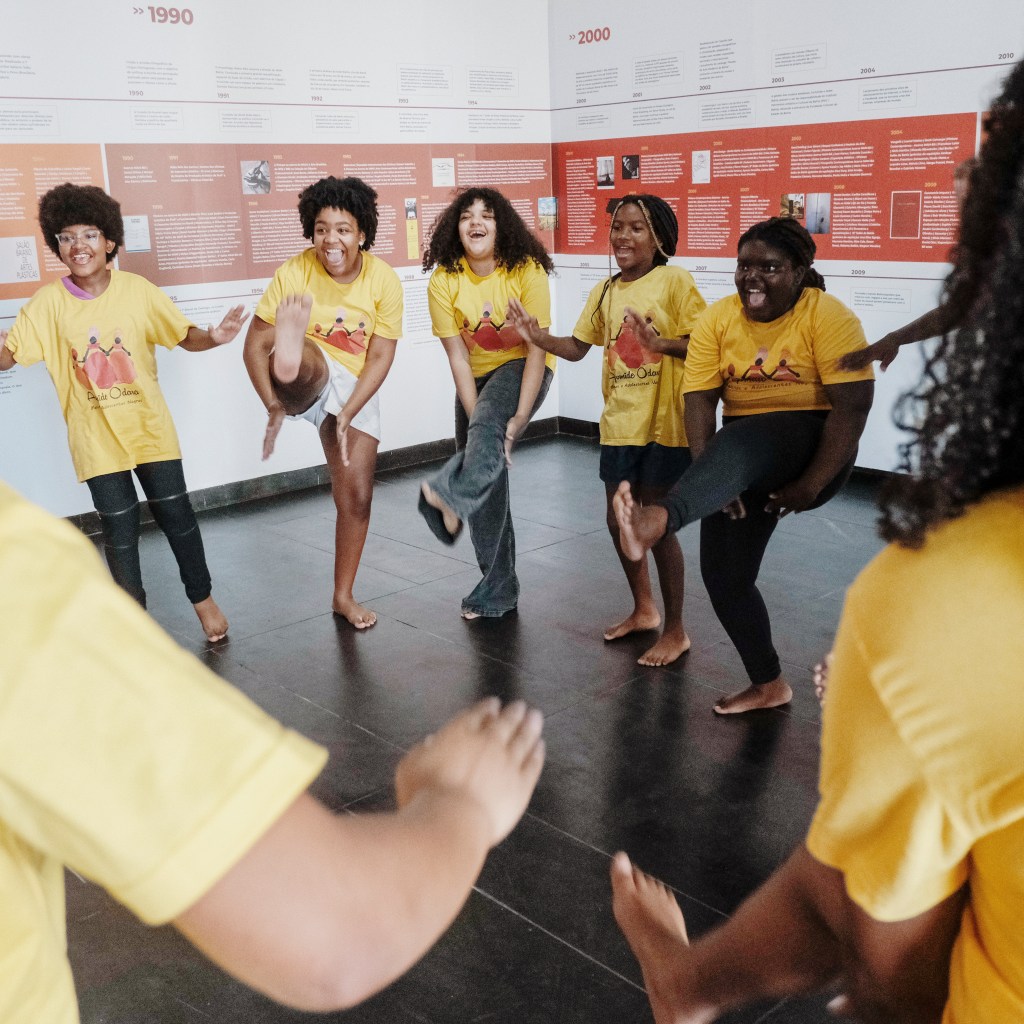
Ayomidês with Odara in Brazil. Captured by Luisa Dorr for Pura
Ayomidês take part in weekly educational sessions where they explore subjects like education and ethnic-racial relations. The girls are encouraged to find their own voices by producing Instagram lives, social media videos, and by participating in public panels. Already, the Ayomidês are rewriting the narrative on what’s possible for Afro-Brazilian girls to achieve. One of the earliest Ayomidês, a young woman named Debora, is now a communications intern. Another former Ayomidê, Francine, works at UNICEF, helping train the next generation of adolescent leaders. And Julia has already set her sights on becoming a math teacher or a model.
“These are generations of Black women who did not have access to a school,” Naiara says. “These are generations of Black women robbed daily of their dreams. And we’re telling them that they could be the generation in their family to write a new story.”
Mama Habiba is reframing the conversation in Nigeria
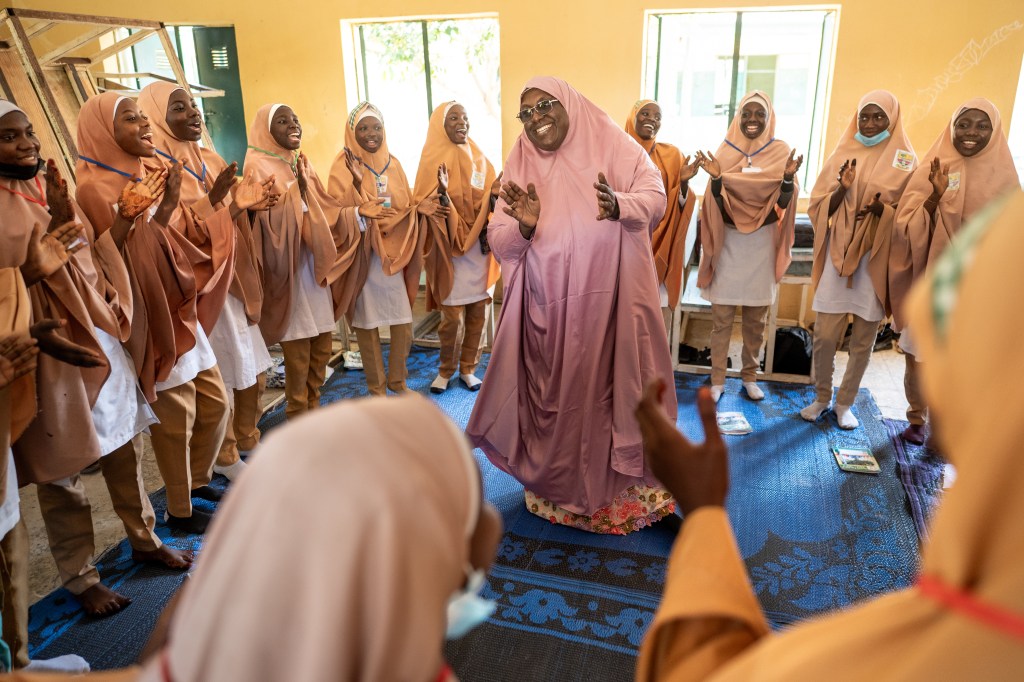
Centre for Girls' Education, Nigeria. Captured by James Roh for Pura
In Mama Habiba’s home country of Nigeria, the scents of starfruit, ylang ylang and pineapple, all incorporated into the Pura x Malala Collection’s “Nigeria: Hope for Tomorrow,” can be found throughout the vibrant markets. Like these native scents, Mama Habiba says that the Nigerian girls are also bright and passionate, but too often they are forced to leave school long before their potential fully blooms.
“Some of these schools are very far, and there is an issue of quality, too,” Mama Habiba says. “Most parents find out when their children are in school, the girls are not learning. So why allow them to continue?”
When girls drop out of secondary school, marriage is often the alternative. In Nigeria, one in three girls is married before the age of 18. When this happens, girls are unable to fulfill their potential, and their families and communities lose out on the social, health and economic benefits.
Completing secondary school delays marriage, and according to UNESCO, educated girls become women who raise healthier children, lift their families out of poverty and contribute to more peaceful, resilient communities.
Centre for Girls’ Education, Nigeria. Captured by James Roh for Pura
To encourage young girls to stay in school, the Centre for Girls’ Education, a nonprofit in Nigeria founded by Mama Habiba and supported by Malala Fund and Pura, has pioneered an initiative that’s similar to the Ayomidê workshops in Brazil: safe spaces. Here, girls meet regularly to learn literacy, numeracy, and other issues like reproductive health. These safe spaces also provide an opportunity for the girls to role-play and learn to advocate for themselves, develop their self-image, and practice conversations with others about their values, education being one of them. In safe spaces, Mama Habiba says, girls start to understand “who she is, and that she is a girl who has value. She has the right to negotiate with her parents on what she really feels or wants.”
“When girls are educated, they can unlock so many opportunities,” Mama Habiba says. “It will help the economy of the country. It will boost so many opportunities for the country. If they are given the opportunity, I think the sky is not the limit. It is the starting point for every girl.”
From parades, film screenings to safe spaces and educational programs, girls and local leaders are working hard to strengthen the quality, safety and accessibility of education and overcome systemic challenges. They are encouraging courageous behavior and reminding us all that education is freedom.
Experience the Pura x Malala Fund Collection here, and connect with the stories of real girls leading change across the globe.
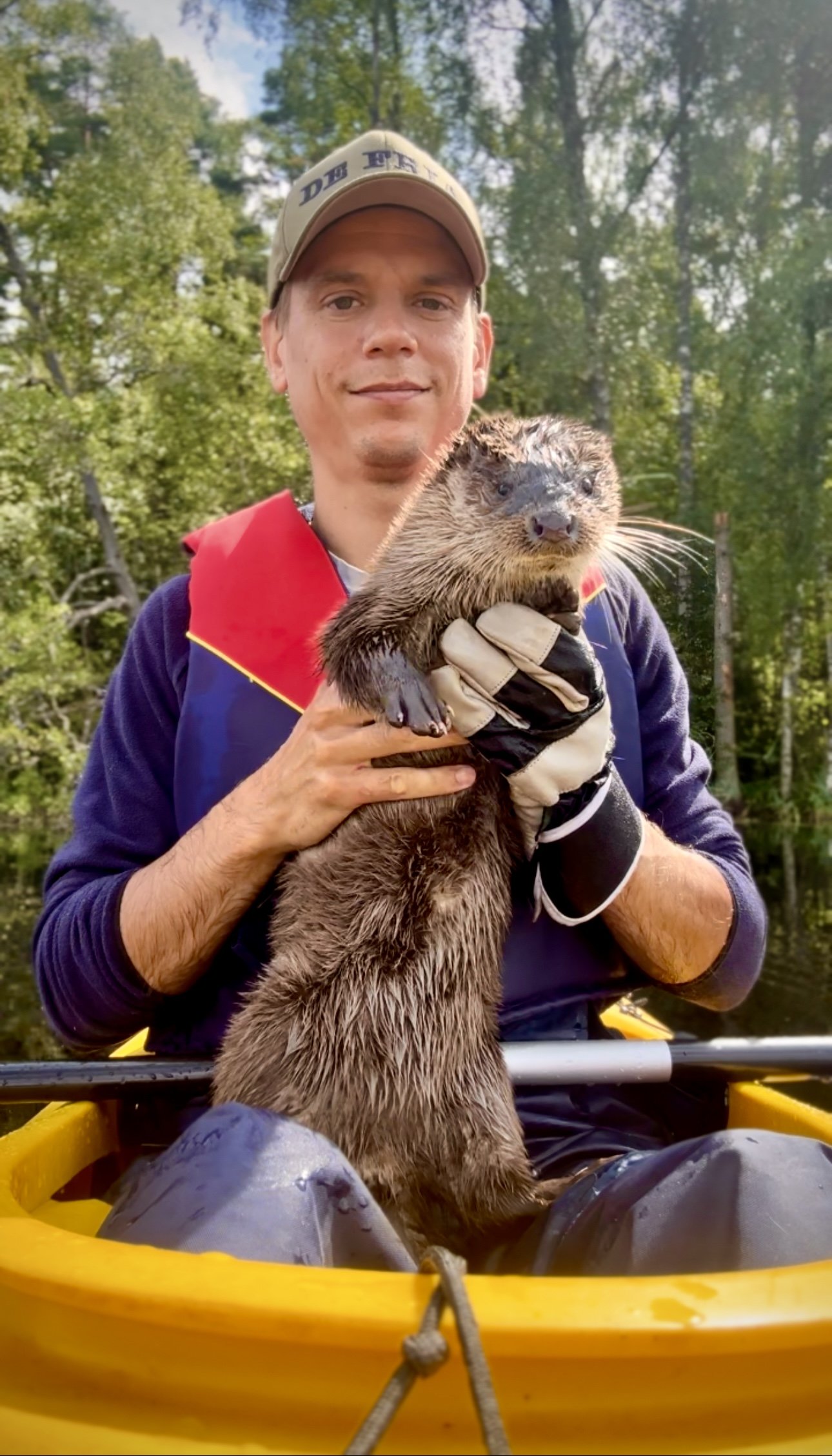
When Mats Janzon found Leya, she was just a tiny baby curled up alone in the grass near his home in Sweden. Janzon was out on a quiet walk in the woods when he heard a soft peeping sound and saw it was a baby otter. He kept his distance for several hours, hoping her mother would return. When no one came, he searched the area and found that her mother had been killed on a major road nearby. Leya appeared to be starving and barely breathing, and he knew she wouldn’t make it without help.
Janzon had volunteered with animal rescues while working as a pilot in Cyprus, but after moving back to Sweden several years ago, he felt a pull to leave his job and spend more time in nature. “This shift led me to focus on helping wildlife,” Janzon tells Upworthy. “I’ve cared for various animals, mostly birds, that seemed to find me. Huginn, a crow I rescued, stayed with me for three years before he was ready to join his own flock in the wild.”
However, Janzon had never raised an otter before and didn’t know what to do. He was scared, as Leya needed care around the clock, but she began to thrive and quickly bonded with him. She would cry when he left the room and curl up in his lap to feel safe.
“The first time she let me pet her, I remember thinking this can’t be real,” Janzon told the TikTok account SoulPaws Tails. “It felt like a dream, this wild, free otter choosing to trust me.”
Still, Janzon kept second-guessing himself, wondering if he was doing the right thing. Otters are wild animals, and he knew Leya couldn’t stay indoors forever. So, starting with a plastic kiddie pool in the backyard, Janzon helped Leya learn to swim. She was awkward in the water at first, but little by little, day by day, she grew more confident.
Two years ago, our sweet otter pup Leya took her very first splash in a cozy baby pool, a moment that still melts our hearts! At just a few weeks old, tiny Leya was all curiosity and wobbly paws as she explored the shallow water filled with colorful floating toys. ?✨ Her first cautious pats at the surface turned into excited splashes as she chased the toys. Watching her dive and twirl, already showing off her natural otter grace, was pure magic. Now, at 2 years old, Leya’s likely out in the wild, thriving and possibly finding a safe territory for her own pups. ? We’re so proud of the strong, playful otter she’s become, and we’ll always cherish those early days of her splashing adventures in that little pool. ? Here’s to Leya, ruling the rivers and raising her own little swimmers! ?? #Throwback#FirstSwim#OtterMemories#WildAndFree#fyp#foryourpage
Leya followed Janzon everywhere. Soon she became part of the family, which included another rescued crow and a cat. The animals would play hide and seek, chasing one another around the bushes. Janzon says it was like something out of a children’s storybook.
Once Leya was totally comfortable in the water, he took her down to the lake. She looked up at Janzon as if to ask, “What now?” He nodded at her, and she jumped into the water. He realized that in some way he’d become a father to her.
“I named Leya while sitting with her on my lap, gazing out over the lake in a near-meditative state,” Janzon tells Upworthy. “I quietly asked her, ‘Who are you? What should I call you?’ The name Leya popped into my mind, and when I said it aloud, she instantly looked up at me. That’s when I knew it was the name meant for her.”
But as Leya grew, so did her wild instincts. She began to wander farther and stay out longer, and Janzon knew it was time to let her go. He describes it as “a strange kind of love—part pride, part heartbreak” but she started living the life she was meant to live.
“Leya is an old soul, brimming with energy and positivity, always finding opportunities in everything,” Janzon says. “Nothing seems impossible for her. She’s been a true inspiration and a dear friend during my transition from a conventional career to a life focused on something greater, not just working to pay bills, but making a difference by helping all living beings in our community.”
At some point, Leya started staying away for days at a time. But even then, when Janzon was out for a morning kayak ride on the lake, he’d see her nose pop out of the water and start moving towards him. Leya knew he was there and would swim up and climb into the kayak for cuddles and a ride.
Mats says Leya is officially living her wild life now.
“I last saw Leya at the end of May,” Janzon tells Upworthy. “Initially, we thought she’d find her own territory before winter, but after several long trips, she chose to stay under the house while the lake was frozen. When spring arrived, she resumed her search, staying away for up to 10 days before returning for brief visits, lasting a few hours to a day. Her last visit was unusually long, over a week. I suspect she may have been pregnant, eating heartily to prepare for a longer stay in a new territory farther away.”
Janzon wants people to know that as much as he loves Leya, she’s not a pet. “When an animal trusts you, it creates a bond deeper than words can explain,” he told SoulPaws Tails. “If you’re thinking of adopting or rescuing an animal, especially a wild one, please do it with your whole heart and full responsibility. Do your homework, talk to professionals, ask questions, learn everything you can about animals like Leya. They aren’t pets. They’re living, feeling souls that deserve to be loved and respected for who they are.”
You can follow Mats Janzon and see more videos of Leya on TikTok.
This article originally appeared last year. It has been updated.
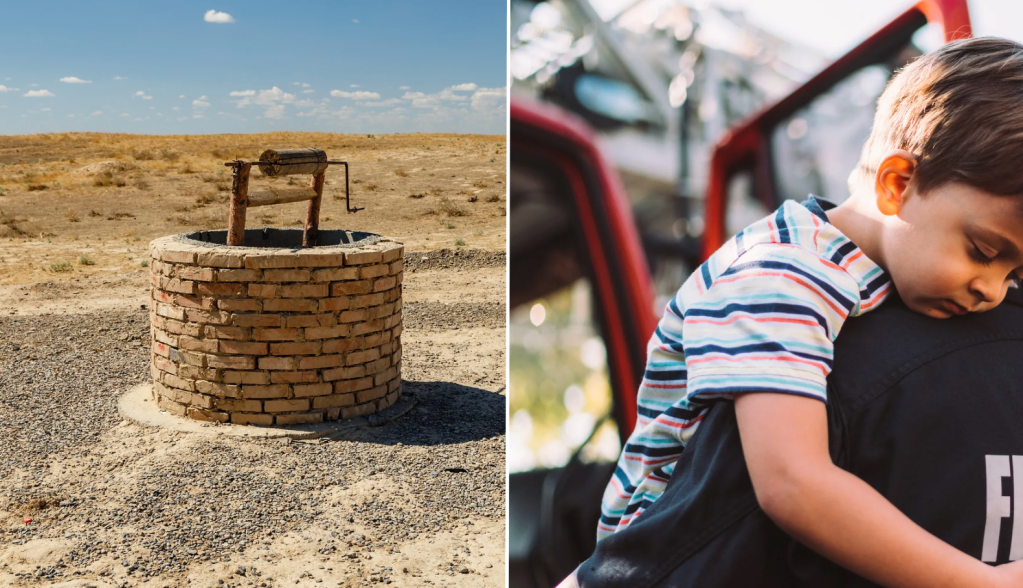
In April 2013, a three-year-old boy named Gabriel fell into a well in the yard of his family’s home in Segarcea, a small town in Dolj County, Romania. The well was about 15 meters deep and barely wide enough for a slender teenager to squeeze through. Professional rescue crews arrived quickly. They tried everything available to them: shovels, a tractor, specialized equipment, different angles of approach. None of it worked. Hours passed.
After eleven hours, according to accounts that circulated widely at the time via CVL Press in Romania, a firefighter finally said aloud what everyone had started to fear: “There’s no more hope. The well is too narrow.”
At that moment, a 14-year-old boy named Cristian Marian Becheanu stepped forward. He was a seventh-grade student from the area, thin enough to fit where the adults could not. He told the crew he wasn’t afraid. He said he would go in.
They strapped a headlamp to his forehead, tied a rope to his ankles, and lowered him into the dark shaft headfirst.
Cristian went down with his arms stretched out in front of him so he could reach Gabriel once he found him. Somewhere in the dark, 15 meters below the surface, he did. When he emerged from the well with the three-year-old alive in his arms, the crowd that had gathered over those eleven hours erupted. Gabriel was taken immediately to hospital, where doctors monitored him for cervical spine injury and signs of oxygen deprivation. He recovered.
Reflecting on what he’d done, Cristian was characteristically understated. “I did what had to be done,” he wrote on Instagram. “I am proud of that act.” He also admitted, in accounts translated from the Romanian press, that he had been afraid at first. “But then I wasn’t,” he said.
We came across this video of 14 year old hero Cristian Marian Becheanu from Romania who volunteered to be lowered head first into a well to rescue a toddler who fell in after 11 hours of failed attempts to reach the child. They used the song Shoulders, and we wanted to share this story with you. Cheers to Cristian!
Romania celebrated him. Local and regional officials honored Cristian at a ceremony at the Dolj County Prefecture. He received diplomas, a bicycle, a tablet, and a monthly stipend from the Artego Humanitarian Foundation through the end of 2013. Most significantly, county officials pledged support for the thing he said he actually wanted: to become a firefighter. As Alina Ionescu, director of the County Directorate for Sport and Youth, confirmed to CVL Press at the time, the institutions were committed to helping him pursue that path. Cristian is also the only civilian ever to receive the emblem of the General Inspectorate for Emergency Situations, Romania’s highest emergency services honor, as reported by Romanian press in 2021.
He kept his promise. More than a decade after that night in Segarcea, Cristian Marian Becheanu is now Sergeant Major Cristian Marian Becheanu, a professional firefighter and rescuer with ISU Dolj, Dolj County’s official emergency inspectorate. He is married with children of his own.
The video of the rescue has resurfaced online repeatedly over the years, and its current wave of circulation is doing what it always does: stopping people mid-scroll. The details that get people every time are the ones the headlines often skip. That the well was 50 feet deep. That he went in headfirst. That a rope on his ankles was all that connected him to the surface. That two other volunteers stepped up before him, looked into that dark shaft, and decided they couldn’t do it.
Malala Yousafzai most certainly has a lot of light. At the young age of 11, she began advocating for education for girls after the Taliban took over her district of Swat in Pakistan. About three years later, she, (alongside two other girls) was shot in the head on a bus for her passionate, outspoken views.
She survived and went on to address the United Nations about the importance of education. From her non-profit’s website, “The U.N. recognized July 12 as Malala Day, in honour of her courageous advocacy and to highlight the global struggle for education. With her father, her ally and inspiration, she established Malala Fund, an organisation dedicated to giving every girl the opportunity to learn and choose her own future.”
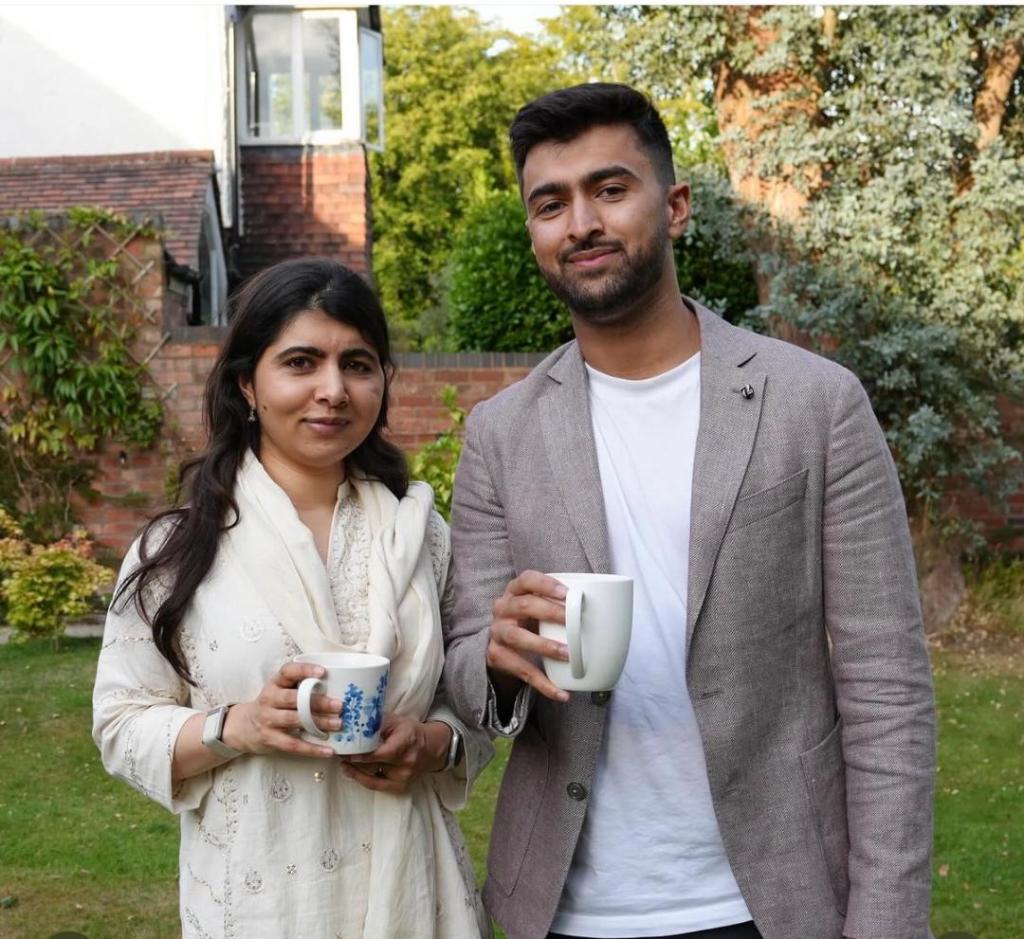
Recently, one of her younger brothers, Khushal Yousafzai, was speaking at the Oxford Scholars Program when he was asked if he ever felt “overshadowed” by his sister’s accomplishments. His answer was vulnerable, heartfelt, and lovely. “My sister almost died. Forget her getting the Nobel Prize. Forget her getting the limelight. I would give up my life for you to have a life. Death puts things into perspective like nothing else does.”
He pauses and asks, “Why would her success take anything away from me? I’m not in my sister’s shadow. I’m in my sister’s light. And Rumi has this beautiful quote: ‘A candle doesn’t lose its light when it lights up another candle.’ It actually makes the world a brighter place. It lights up the whole room.”
He continues with the message of supporting the people you love. “So guys, uplift each other. If you see your friend, uplift them. Because guess what? We all are gonna die someday. And your friends, I’m sure they mean a lot to you. And at times, there is that feeling of jealousy. You don’t want to be going to their funeral and telling their parents how amazing they were. Because guess what? It’s too late. So tell them while they’re still alive. You don’t want to live with that, so uplift people while they’re still here.”
Khushal speaks frequently to students about his journey. He is also a fierce advocate for education and finding the fuel to live life to its fullest. From the bio he shared with Upworthy: “Through his educational platform, Yousafzai Academy, he mentors students about personal and academic growth, learning from setbacks, and leadership.”
Many in the Instagram comments are beautifully supportive and touched by his words. “So beautiful to see his immense love for his sister shared so honestly, vulnerably, and without any hint of shame or resentment. And the Rumi quote is just so perfect. ❤”
Another notes that his wisdom isn’t surprising, considering that his whole family is involved in activism. “This family has got all the right things going on! What a gift to the world.”
This person was moved by his words, especially by the idea of uplifting people while there’s still time. “Wisdom. Beautiful. Fabulous. What a family! Uplift your friends. Uplift people while they are still here. Yes!”
And this commenter deduces from his clip that the trauma their family has been through has created a thoughtful empath. “You have a high level of empathy 🙏🏽💕. Only people who have come close to death know the depth of your words and the bond you share with your sister.”
Sprinter Derek Redmond made Olympic history after injuring his hamstring during a semi-finals run in 1992. – Photo credit: Canva Photos & Parliament Speakers Limited/Wikimedia Commons
Starting in the mid to late 1980s, Derek Redmond was one of Great Britain’s top sprinters. One of his greatest accomplishments was helping to guide his team to a shocking victory over the United States at the 1991 World Championships. However, Olympic success eluded him due to injuries that forced him to pull out of the games in 1988.
But 1992 was going to be his year. The summer Olympics were being held in Barcelona and, despite all the surgeries and rehab he went through leading up to the events, Redmond was well-positioned to earn a medal for his country.
In the quarter-finals of the men’s 400m sprint, his chosen event, Redmond actually posted a personal best time and easily won his heat. That meant he got to move on to the semi-finals. If he could post a similar time in that trial, he’d be up for medal contention in the finals.
Redmond’s semi-final race got off to a fast start, but with about 250m left to go in the race, tragedy struck. Redmond was spotted on camera slowing up and clutching the back of his right hamstring. It had torn. He was unable to run, and collapsed to the ground in pain. His Olympic dream was over once again.
Redmond was a proud competitor, however, and managed to peel himself off the track. He began to hobble and limp toward the finish line, determined not to earn a “Did Not Finish” disqualification. And that’s when an Olympic legend was born.
Redmond’s father, Jim, was caught on live television storming the track. Training and security personnel tried to restrain him, but there was no stopping this dad. He made it to his son and gave Derek a shoulder to lean on as both men stumbled toward the finish. Again, security tried to remove Jim, but he waved them off.
With his father’s support, Derek Redmond broke down in a powerful display of emotion. The physical pain likely couldn’t compare to the agony of watching his Olympic dream go up in smoke again. Still, the two men pressed on, and yet another Olympic official tried to intervene and was yet again waved off by the determined dad.
Eventually, the Redmonds were able to cross the finish line together to the roar of a standing ovation from the nearly sixty-five thousand spectators watching.
Unfortunately, Derek was still disqualified from the race as he had assistance in finishing. But that official Olympic record does not diminish his accomplishment, which continues to live on as one of the greatest Olympic moments of all time—even being officially recognized by the Olympics as such.
The moment was so powerful because it underscored the sacrifices made by both athletes and their parents. They train their whole lives for often just one opportunity to showcase their skills on the world stage. When it goes wrong, the results can be devastating. Win or lose, the parents are right there with them. Olympic fathers like Jim Redmond make immense sacrifices for their children to be able to chase their dreams, often spending a fortune on equipment and training, giving up career opportunities, family vacations, personal hobbies, friendships, and more to carve out enough time. Famously, gymnast Gabby Douglas spent two years living with a host family across the country from her parents so she could be closer to a top trainer. Other Olympic families spend $60-100,000 per year in training and equipment fees for their budding stars.
All the sacrifice and hope is on display in just this one short clip. The athletic displays at the Olympics are amazing to behold, but what we really fall in love with are the stories of persistence and perseverance, and there’s none better than the story of the Redmonds.
Derek Redmond rehabbed relentlessly after his injury but ultimately had to give up running—though he did enjoy a run as a professional basketball player before retiring from athletics altogether. His father, Jim, passed away in 2022, ten years after being honored as a torchbearer for the 2012 Olympics.
A family in Australia is hailing their 13-year-old son as a hero after he saved their lives following a kayaking and paddleboarding expedition that saw them quickly drift miles off shore. Austin Appelbee bravely left his family (mother Joanne, brother Beau and sister Grace) floating in the waters of Western Australia on Friday, Jan. 30 to seek help in. The nearest land was almost four miles away.
“The wind picked up and it went from there,” Joanne Appelbee told BBC News. “We lost oars, and we drifted out further…. It kind of all went wrong very, very quickly.”
With every moment dragging the family further into the ocean, Joanne had to make a gut-wrenching decision: to ask Austin to attempt to swim ashore for help, knowing he may not survive.
A mother’s gut-wrenching decision
With conditions worsening and daylight fading, Joanne had to make one of the most difficult choices of her life.
“One of the hardest decisions I ever had to make was to say to Austin, ‘Try to get to shore and get some help, this could get really serious really quickly,’” she told the ABC News. “I knew he was the strongest and he could do it. I would have never went because I wouldn’t have left the kids at sea, so I had to send somebody.”
According to a statement from the WA Police Force, Austin “alerted authorities after he decided to return to shore in fading light and rough conditions. He paddled a short distance before his kayak took on water and swam approximately four kilometers (about two nautical miles) before reaching land.”
Naturaliste Marine Rescue commander Paul Bresland added that Austin swam for the first two hours with a life jacket on, calling his swimming “superhuman.” “And the brave fella thought he’s not going to make it with a life jacket on, so he ditched it, and he swam the next two hours without a life jacket,” he explained to ABC News.
The family had been stranded at sea for 10 hours when a rescue helicopter spotted Joanne and her two children clinging to a paddle board 8.5 miles offshore. A “volunteer marine rescue vessel was directed to their location and all three were successfully rescued and returned to shore.”
Joanne is also being hailed a hero for tethering herself and her kids to the paddleboard as they floated further and further out. “We kept positive, we were singing, and we were joking and … we were treating it as a bit of a game until the sun started to go down, and that’s when it was getting very choppy [with] very big waves,” she said. “As the sun went down, I thought something’s gone terribly wrong here and my fear was that [Austin] didn’t make it. Then, as it got darker, yeah, I thought there was no one coming to save us. It was the end, it was definitely the end.”
A 13-year-boy swam for more than two miles in “rough conditions” to get help for his family who were stranded out at sea. Austin Appelbee told CNN affiliate 9News that he focused on happy things to keep him going. #cnn#australia
Austin shared more about his heroic battle to save his family.
“I started paddling to shore on the kayak … but it kept taking on water and I was fighting rough seas and then I thought I saw something in the water and I was really scared,” he shared with ABC News. “I was trying to get the happiest things in my head, and trying to make it through, [and not think of] the bad things that will distract me.”
Mentally, he had to keep himself locked in.
“And at this time, you know, the waves are massive, and I have no life jacket on … I just kept thinking ‘just keep swimming, just keep swimming,” he added. “And then I finally made it to shore, and I hit the bottom of the beach, and I just collapsed.”
However, the physical challenge was not over. Once he made it to land, Austin had to run two kilometers (about 1.25 miles) to the family’s parked car to call authorities on his mom’s cell phone.
“I said, ‘I need helicopters, I need planes, I need boats, my family’s out at sea.’ I was very calm about it,” he said, adding that “nice ladies on the beach” were able to offer him food before he “just passed out.”
Days later, Austin was using crutches to help him walk on incredibly sore legs. Despite the physical exertion and trauma, he remained humble about the ordeal.
“I don’t think I am a hero—I just did what I did,” he told BBC News.
Fate often tests our courage at the most unexpected times. For UPS driver Willy Esquivel, that moment came on January 15 while he was completing a delivery in Orange County, California.
According to KTLA, Esquivel was on his routine route in Santa Ana when he noticed neighbors attempting to smother a blaze coming from the condo of Ann Edwards, a 101-year-old woman who lives alone.
Esquivel wasted no time entering the smoke-filled building to rescue Edwards, who seemed “very disoriented” and reluctant to leave. Nevertheless, Esquivel “picked her up and carried her safely outside,” according to KTLA and a statement from the Orange County Fire Authority (OFCA).
A video posted on the OFCA’s X account showed just how thick the smoke was pouring from Edwards’ condo as firefighters arrived. The OFCA also acknowledged the resourceful neighbors who aided in the rescue.
“At the same time, the neighbors used fire extinguishers to knock down the kitchen fire,” the OCFA wrote on X. “One of them, a roofer by trade, grabbed his ladder, climbed to the roof, and used a garden hose to spray water into the kitchen vent.”
Thankfully, while Edwards was taken to the hospital, she was expected to make a full recovery. Her son, Rick, told KTLA that he was grateful to Esquivel for “sticking with her and getting her out of there.”
As for Esquivel, rather than seeing himself as a hero, he told KTLA that he was “just a UPS driver who was in the right place at the right time.”
“I just did what I thought was right,” he added. “At the end of the day, she’s someone’s mother, someone’s grandmother, great-grandmother.”
Moments like this rarely announce themselves ahead of time. They unfold in the middle of ordinary days, on familiar streets, while people are simply doing their jobs or moving through their routines. Delivery drivers like Esquivel travel through neighborhoods every day, often unnoticed, yet uniquely positioned to sense when something is wrong. On this day, being present and paying attention made all the difference.
Just as striking as Esquivel’s bravery was the way neighbors instinctively sprang into action. Without hesitation, they grabbed fire extinguishers, ladders, and garden hoses, each contributing whatever they had in the moment. Together, their quick thinking and collaboration helped prevent an even greater tragedy.
“A remarkable outcome made possible by quick action, teamwork, and people looking out for one another in a moment of need,” the OCFA wrote on X.
A remarkable outcome made possible by quick action, teamwork, and people looking out for one another in a moment of need.
It’s easy to assume someone else will step in. That it’s not your fight. That it’s not your responsibility. Heroism requires the opposite mindset. And at a time when the world can feel increasingly short on that quality, this story is a refreshing reminder that yes, there are still good people out there willing to help, even when it means helping complete strangers while on the job.
History remembers extraordinary people who accomplish great things, lead big movements, create new inventions, and make an indelible mark on the world. But what about the individuals who dedicate their time and energy to making their local community, however small, a better place?
Those everyday heroes rarely get lauded in posterity, but thanks to human interest stories, some people get the flowers they never asked for long after they’re gone. Enter Agatha Burgess, an 80-year-old grandmother who, in 1983, had a visit from CBS Evening News as she went about her normal weekday business of feeding her community, simply because she could.
In the footage from the archives, Burgess is shown bopping about her modest kitchen, where she’s been working since 5:00 a.m. She’s surrounded by pans and tins and bowls, which she’s using to make corn muffins, rice, dressing, peach cobbler, and more for residents of her small town of Buffalo, South Carolina. She’s done this for 15 years, not as a business, but as a service to her community. She said she didn’t have any desire for a “big, fine home” and that she’d always wanted to “live by the side of the road and be a friend to man.”
“I always get what I want, but I know what to want,” she said.
Some meals were sent out to shut-ins in the community, delivered by Meals on Wheels volunteers. She made sure those meals were always ready by 11:00 a.m. After that, people also came to her home to get a meal. If they were able, they’d drop $2.75 per meal into a box on the side table to cover the costs, even making their own change on the honor system. But no one was ever turned away if they couldn’t pay.
Apparently, Agatha Burgess's corn muffins were legendary. Photo credit: Canva
Burgess didn’t have a large home, so people would crowd into her dining room and kitchen to eat the home-cooked meals she made single-handedly. After people had eaten and left, she would do the dishes and start on her baking for the next day. This was her life from 5:00 a.m. to 10:00 p.m., five days a week.
Why? Because she loved doing it. She said, “This guy asked me the other day, said, ‘Miss Burgess, why don’t you stop and rest?’ I said, ‘What would I have to live for?’ Because these people come in every day. They mean so much to me. I just love. I fall in love with people.”
Her sister said she might end up regretting the honor box, that someone would end up ripping her off. But Burgess said that God had always taken care of her, and if someone stole from the box, God would take care of them, too.
Build a house by the side of the road and be a friend of man
Burgess’s quote about being “a friend to man” comes from the poem “The House By The Side Of The Road” by Sam Walter Foss, the last stanza of which reads:
Let me live in my house by the side of the road, Where the race of men go by- They are good, they are bad, they are weak, they are strong, Wise, foolish – so am I. Then why should I sit in the scorner’s seat, Or hurl the cynic’s ban? Let me live in my house by the side of the road And be a friend to man.
People loved hearing about Burgess’s extraordinary retirement in the resurfaced clip from the CBS News archives:
“She has the best attitude about life. She is so grateful for what she has.”
“This is one of the most wholesome things I’ve ever seen.”
Agatha Burgess (1903–1992) was a resident in South Carolina who, as noted in this 1983 “CBS News Video”: ”cooks all day, for anyone who wants to come over and eat.”
This is a refreshing profile on a woman who was giving to people in need.
“‘I don’t want your big fine home. But I’m glad you got it.’ There’s beauty in being content with what you have, and being happy for people. What a sweet lady.”
“‘I always get everything I want, but I know what to want’ might be the wisest thing I’ve ever heard.”
“What a wonderful woman. My dad used to eat there for lunch while working his first job out of college. God bless.”
“I’m a grown man and I’m sitting here watching this crying. I know you’re no longer with us, but God bless you, Agatha. Did you ever realize all the lives you blessed?”
Burgess died in 1992 at the age of 89. Though she didn’t spend nearly two decades cooking for friend and stranger alike in order to get praise or accolades, there’s something truly beautiful about people seeing her service over four decades later and giving her the flowers she deserved.
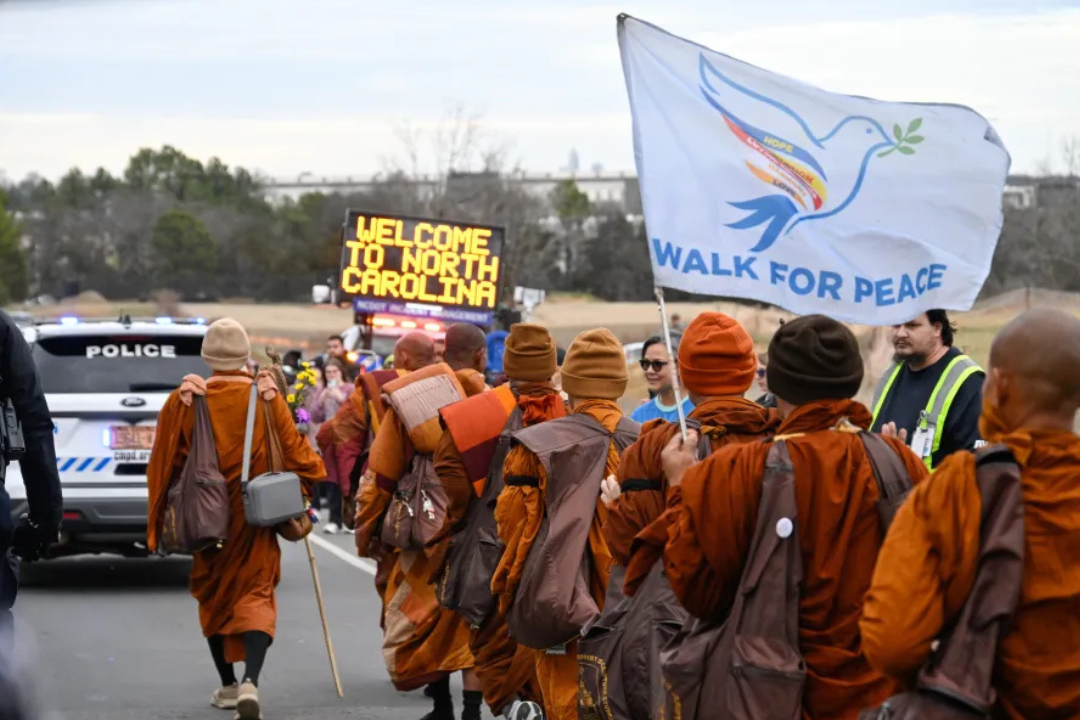
It was a normal winter’s day in Charlotte, North Carolina, when the Buddhist monks came to town. Soft gray clouds blanketed the city without a trace of wind in sight. A few people complained about the 96% humidity, while others put their heads down and went on with their damp day.
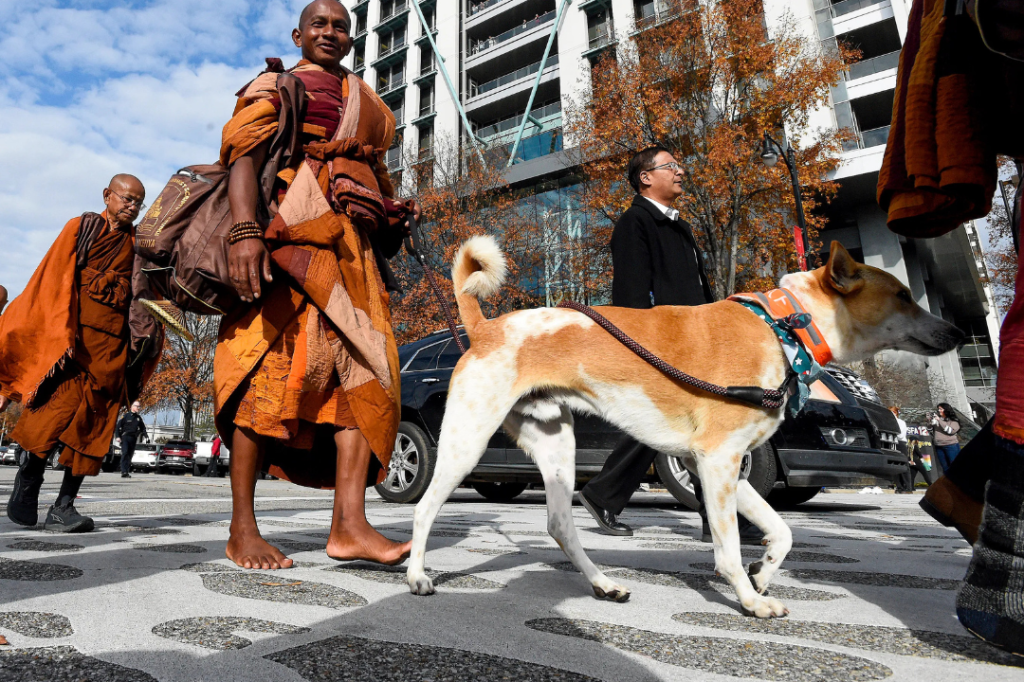
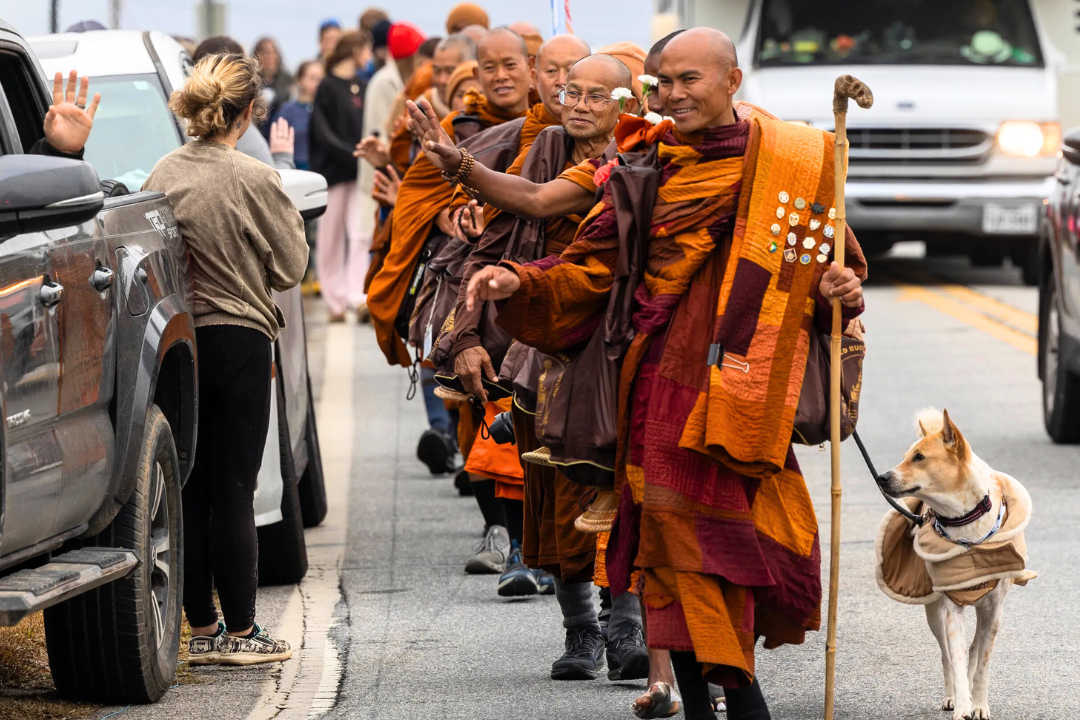
Then, like a scene from a movie, there they were: a single-file line of men, each wearing flowing saffron and ochre-colored robes, steadily marching along the shoulder of the highway. Some wore sandals while others cheerfully went ahead barefoot. Trotting alongside them—and at times, leading them—was a scruffy, tousle-haired rescue dog eagerly wagging his tail—Aloka, whose name translates to “Divine Light” in Sanskrit.
In October 2025, approximately two dozen Buddhist monks hailing from various Theravada Buddhist monasteries across the globe, along with Aloka, embarked from Fort Worth, Texas, on a 2,300-mile pilgrimage to Washington, D.C. This “Walk of Peace,” and the participating 18 monks, stand on the shoulders of giants: the countless of those who came before them in this time-old tradition of spiritual activism through walking meditation, from the Buddha himself to Gandhi’s groundbreaking 240-mile “Salt March” in 1930, to Dr. Martin Luther King’s immortalized March on Washington in 1963 and the marches from Selma to Montgomery in 1965.
The journey, expected to conclude in mid-February 2026, has attracted millions of social media followers and drawn thousands of participants to major stopping points, transcending the religious and political divide during a period defined by deep division.
A pilgrimage of resilience
The journey began in Fort Worth, Texas, on October 26, 2025, at Huong Dao Vipassana Bhavana Center, the Vietnamese Buddhist temple that organized the Walk for Peace. It’s also the Venerable Bhikkhu Pannakara’s home temple, who serves as the group’s spiritual leader and primary spokesperson.
While this is Pannakara’s first pilgrimage in the States, the Vietnamese Theravada Buddhist monk has reportedly walked across several South Asian countries, including a 112-day walk across India in 2022, where he met Aloka, the stray dog that’s become somewhat of a mascot for the walk. Aloka has been with Pannakara ever since.
In a written statement to USA Today, Pannakara encourages others to reframe the purpose of their mission. “We walk not to protest, but to awaken the peace that already lives within each of us,” he writes.
He continues: “The Walk for Peace is a simple, yet meaningful reminder that unity and kindness begin within each of us and can radiate outward to families, communities, and society as a whole.”
He means it. For Pannakara, this walk represents a national act of healing rather than a political statement. At every stop, he offers lessons about mindfulness, peace as an inner quality, forgiveness, healing, unity, and the importance of meeting people where they are.
2,300 miles is no walk in the park
The journey hasn’t been easy—though that was never the point for this group. As if walking 2,300 miles across ten states wasn’t difficult enough, Pannakara and the other Theravada Buddhist monks live in accordance with the earliest teachings of the Buddha and dedicated themselves to extreme monastic living and to following strict Buddhist codes of living.
As a result, the monks sleep in tents and rely on the kindness of strangers for shelter or sustenance. They’ve faced the physical reality of walking on asphalt for months. Then, in November, tragedy struck near Dayton, Texas. An escort vehicle was hit, resulting in an accident where one monk was severely injured and lost a leg.
Yet, the group continued.
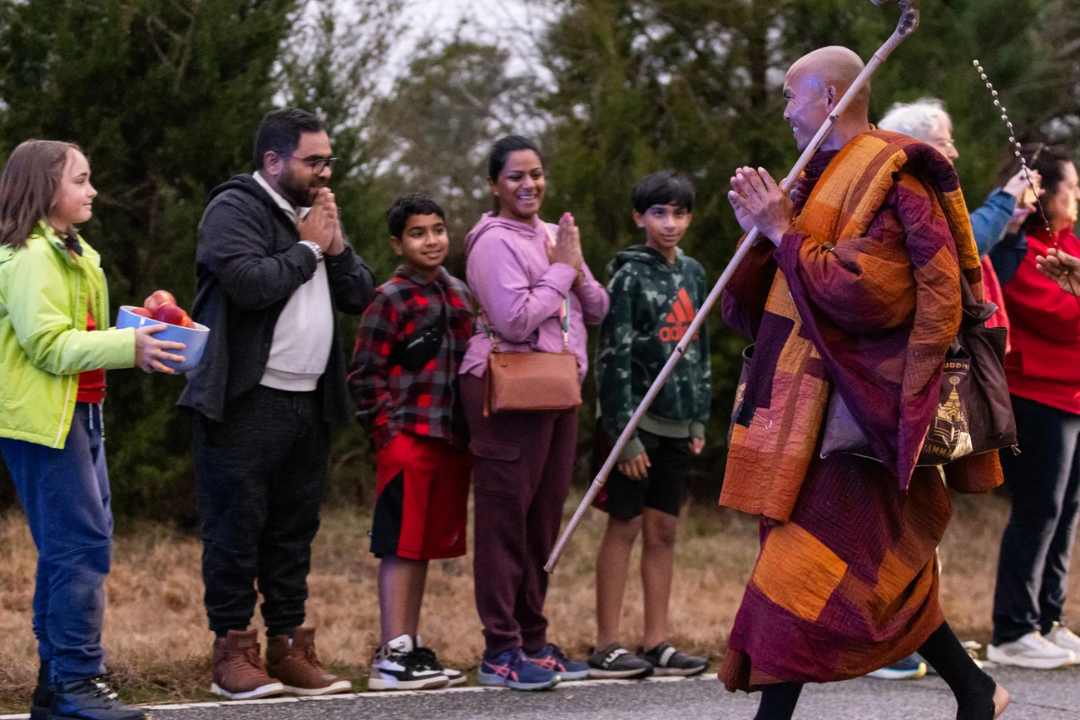
At their stop Thursday in Saluda, South Carolina, Audrie Pearce—who had driven four hours from her village of Little River to see them—teared up as Pannakara handed her a flower.
“There’s something traumatic and heart-wrenching happening every day in our country,” Pearce told Newsday. She describes herself as spiritual, but not religious. “I looked into their eyes, and I saw peace. They’re putting their bodies through such physical torture, and yet they radiate peace.”
Aloka, the four-legged peacekeeper
While the monks inspire reverence, the true celebrity of the group might just be their canine companion.
Aloka is an Indian Pariah dog, a breed known for its intelligence and loyalty. His story with Bhikkhu Pannakara began thousands of miles away in India during a previous peace walk. When Aloka fell critically ill as a puppy, Pannakara carried him and nursed him back to health.
Thevada Buddhist monks greeting fans on their Walk for Peace. Credit: Des Moines Register
Now, the roles have reversed. Aloka is the one keeping spirits high. He happily trots alongside the monks, offering a furry reminder of loyalty and joy. When the group reached North Carolina, locals didn’t just bring water for the monks; they brought dog treats for Aloka.
Strangers becoming neighbors
Perhaps the most beautiful part of this journey is how it has brought people together. As the monks traverse states like Mississippi, Alabama, and the Carolinas, they have been met not with suspicion but with overwhelming hospitality.
The Heraldshared stories from people in the crowd as the monks traveled through Rock Hill and Fort Mill on their way to Charlotte.
“I like the idea of peace, and I’m concerned about the state our country is in,” said Penny Sheppard of Rock Hill, as she waited for the monks to walk by. “The peace walk exemplifies where we could be…. I just want to support them… They just impress the heck out of me.”
The monks as they enter North Carolina. Credit: 7News
Stevie Goudui of Fort Mill echoed this sentiment. “We could definitely use a little more peace in the United States right now,” he said.
Then, from Rock Hill resident Carolyn Hall: “No matter your religion, it makes sense that the purpose of the walk was for peace,” Hall said.
“Women, children, people getting killed. It’s a sad day in America right now,” she added. “I think it’s great what (the monks) are doing. I love it, and I just want to be a part of it.”
Streets lined with onlookers on a cold, wet Wednesday made for an emotional morning. “That really touched my heart,” said the Venerable Bhikkhu Pannakara. “These days, you all make me cry so much. A lot. But happy tears. Joy.”
A quiet request for a national holiday
While the spiritual goal is paramount, the monks do have a tangible objective for their arrival in the nation’s capital. Upon reaching Washington, D.C. in mid-February, they plan to ask Congress to recognize Vesak—the day celebrating Buddha’s birth and enlightenment—as a federal holiday.
The hope is that recognizing Vesak will officially acknowledge a day dedicated to reflection, compassion, and unity for all people, regardless of their faith.
Judging by the overwhelming response to the Walk of Peace, the monks will always have the public’s support, regardless of the outcome in Congress.
The viral trek gained more than one million followers on both Facebook and TikTok since the monks started walking in October. Even Aloka the dog has enjoyed Internet stardom, gaining 752,000 followers on Facebook.
“Together, we are proving that peace is not just a dream—it is alive, it is real, and it is growing stronger every single day,” Walk for Peace organizers posted to Facebook.
Finding your own “peaceful day”
You don’t have to walk 2,300 miles to feel the impact of this journey. The monks’ message is that peace is accessible to everyone, right where they are.
Becki Gable, a woman grieving the loss of her daughters and parents, drove nearly 400 miles to meet the monks in Saluda, South Carolina.
“I just felt in my heart that this would help me have peace,” she told a local news station. “Maybe I could move a little bit forward in my life.”
She spoke about how the encounter helped her move forward, adopting a simple practice suggested by Bhikkhu Pannakara. Every morning, she writes down five words: “Today is my peaceful day.”
You can follow the monks on their journey to Washington, D.C. through their live tracker here.