What nobody warns you enough about when it comes to having kids

Experienced parents are dropping truth bombs about parenthood.

parenting, motherhood, fatherhood, kids, children
Photo credit: Photo by Nubelson Fernandes on UnsplashHere are some things new parents need to know.

Parenting is as old as time, but there’s never been a time in history when we’ve talked about it more. If you go into any bookstore, you’ll find shelf after shelf filled with books about how to raise your kids. If you have questions about any element of parenting, there are countless websites and online groups you can consult.

And yet, most of us still go into it unaware of the reality of it, because let’s face it, there’s no way to adequately prepare for parenthood. No matter what you picture it being like going in, parenting will yank that image right out of your head, smash it into the ground and grind its heel right into the heart of it.


Okay, that’s a bit dramatic. But only a bit.

Parenting is the hardest, most rewarding job on earth—a thrill ride that takes you on the highest highs and plunges you to the lowest lows.

Up and down you go, over and over again, sometimes squealing with delight, sometimes thinking you might puke and sometimes screaming “Stop the ride, I wanna get off!”

While it’s not possible to truly prepare, it’s good to hear from experienced parents what you might expect. Every kid, every parent, every family is different, but there are some near-universal things that people really should know going in.

A user on Reddit asked, “What is something nobody warns people about enough when it comes to having kids,” and the answers didn’t disappoint. Here are some highlights:

You have less control over how your kids turn out than you think.

“There’s a very good chance they won’t turn out like you think,” wrote one commenter. That’s not to say that you have no influence whatsoever, but each kid is their own unique person with their own individuality, and they also change as they grow. If you’re too attached to an idea of how they should be, you may not fully appreciate who they are.

“People seem to often forget that they’re raising people,” shared another commenter, “as in, independent-thinking individuals whose actions, values, personalities, interests, and capabilities will potentially be completely unlike yours. I’ve seen a lot of parents struggle hard with that, and frankly, that’s a possibility you should have made your peace with before you became a parent, imo.”

Another person added:

“This is why many parent/child relationships are so strained. Many parents have a child thinking they are programming a perfect human being. Many are disappointed when the child is not the exact person they hoped (or worse, the polar opposite). Perfectly normal children grow into resentful, tired adults because of their parents’ unrealistic expectations that have nothing to do with them.”

The books aren’t all that helpful.

women's yellow jacket Photo by <a href="https://unsplash.com/@nci?utm_source=RebelMouse&utm_medium=referral">National Cancer Institute</a> on <a href="https://unsplash.com/?utm_source=RebelMouse&utm_medium=referral">Unsplash</a>

We all want to look to “the experts” when raising our kids, and some things we find in parenting books can be marginally helpful. But they certainly aren’t the be-all-end-all of good parenting.

“The books are fine for ideas, your experience, friends thoughts, paediatricians, therapists,” wrote one commenter. “But at the end of it all you have this complicated little person you’re in charge of with their own preferences, feelings, insecurities, abilities, and you have to do what works for them and your family and, of course, also raise someone who isn’t a blight on humanity or menace to society.”

Another wrote:

“As my mum says: ‘The kid hasn’t read the book.’

“Her parents tried to do everything by the book with her and she hated it. She was supposed to have pigtails, wear dresses, learn piano and not go climb trees and play soccer/football. She saved pocket money to get her hair cut short and her dad almost hit her for it. Did she stop pushing to be herself? Nope. She is a strong woman, but boy, does she have some scars on her soul.

“With her own three kids she watched what interests they developed and then helped them explore it further and to not forget to keep an open mind about other possible hobbies, sports, arts etc. I have no idea how to thank her properly for this.”

It doesn’t go by fast—until suddenly it does.

woman in black graduation gown with black mortar board Photo by <a href="https://unsplash.com/@omarlopez1?utm_source=RebelMouse&utm_medium=referral">Omar Lopez</a> on <a href="https://unsplash.com/?utm_source=RebelMouse&utm_medium=referral">Unsplash</a>

“The days are loooong and the years are so very short,” wrote one person. It’s true. When you’re in the thick of parenting and someone tells you how fast it goes, you might feel like strangling them. But then you look at your child who has changed so much and it does feel fast in hindsight.

“I’ve heard older people say this or the equivalent all my life,” wrote another. “I always thought I understood. And then I had children. Now I understand. I keep looking at my kids and can’t believe how much time has passed. I’ll look at them doing something new and just be amazed. Seems like yesterday that my youngest couldn’t lift her own head and now she’s doing tuck rolls across the house.”

“This is it!” shared a parent of young adults. “Mine are 18, 19 & 20. Empty-nest syndrome is a REAL thing. I always look back and think… How the hell did it go by so quick? I used to roll my eyes at people who would say stuff like this when they had 3 different practices, in 3 different places at the same time. It really goes by so quickly.”

Your time—and sleep—are no longer yours.

grayscale photography of kid lying on bed Photo by <a href="https://unsplash.com/@anniespratt?utm_source=RebelMouse&utm_medium=referral">Annie Spratt</a> on <a href="https://unsplash.com/?utm_source=RebelMouse&utm_medium=referral">Unsplash</a>

When they’re babies, they wake up in the night for all kinds of reasons—to eat, to practice crawling, to say hi, to wail inconsolably for no explicable reason, and so on. When they’re older, they wake up because they need to go to the bathroom or a drink of water or they’re scared. Then, when they’re much older, they suddenly stay up late and want to have deep, heart-to-heart talks at 10 p.m. Most of us expect the baby sleep deprivation stage, but there are sleep disruptions throughout a child’s entire childhood.

“When they grow older, you don’t have a private life anymore,” wrote one commenter. “They stay awake longer than you.”

“Never thought of this. The later part of the evening is my time usually,” someone responded.

“Used to be my time as well,” shared another commenter. “Since becoming a parent, my time is 4-6am. One reason why you start waking up early once you’re older, probably.”

I have a young adult, a teen and an almost-teen, and I can attest to waking up extra early simply to have uninterrupted time to myself.

You will miss being able to think clearly.
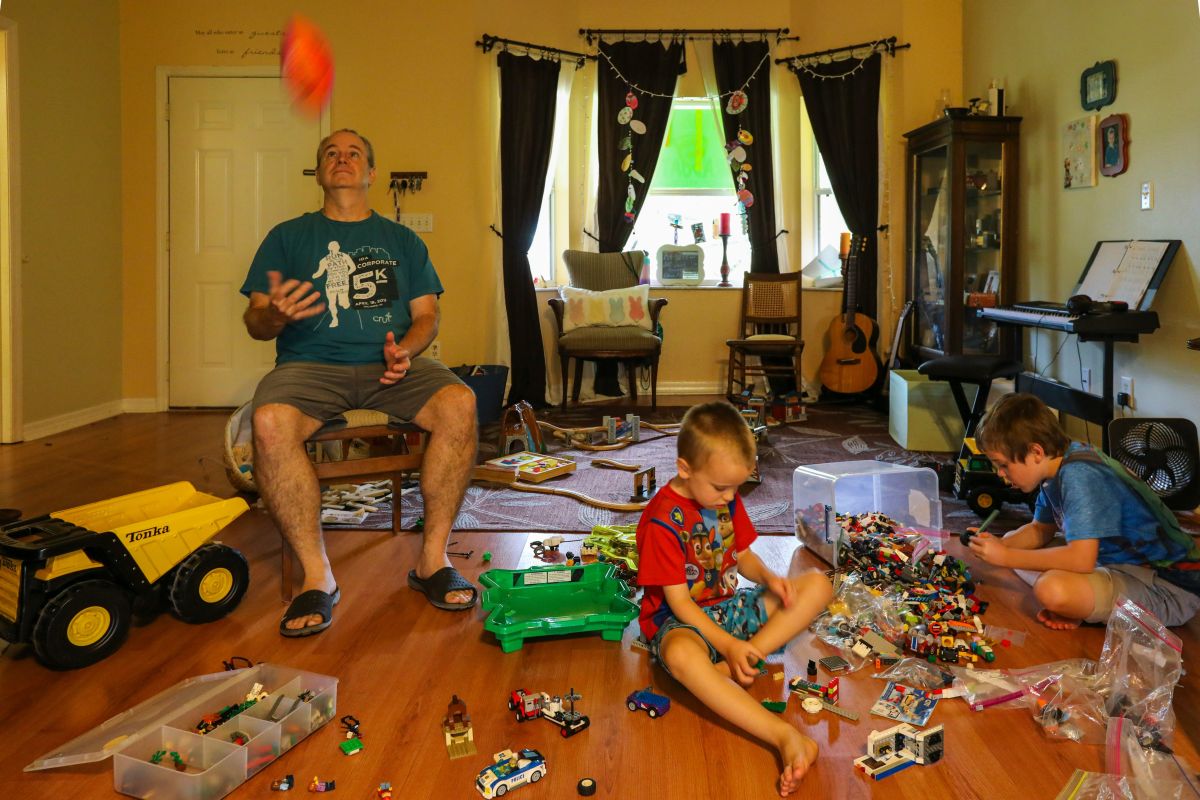
man in gray crew neck t-shirt sitting beside boy in red and white crew neck Photo by <a href="https://unsplash.com/@rocinante_11?utm_source=RebelMouse&utm_medium=referral">Mick Haupt</a> on <a href="https://unsplash.com/?utm_source=RebelMouse&utm_medium=referral">Unsplash</a>

“For me, I stopped having a chance to think anything through without interruption,” wrote a commenter. “I had a very hard time with that. I couldn’t remember anything, couldn’t make decisions, etc because every thought seemed to get interrupted.

“I’d just sit in my car alone sometimes so I could think.”

Ah, the beautiful, quiet solitude of the car. Every mother I know enjoys a good “car bath” once in a while.

“I am so glad somebody said this,” someone responded. “I was starting to worry I was getting early onset dementia, because my mind just feels like mush all the time. I can’t remember things, I start sentences and can’t finish them, I forget common words….my mind rarely gets to switch off because someone is always interacting with me or calling my name.”

Part of the brain mush is because kids need things all the time. And part of it is that you now have an entire other person’s life (multiplied by however many kids you have) to think about. Their health and well-being, their education, their emotional state, their character—it’s a lot. So much more than you can really imagine until you’re in it.

Take advantage of the middle years.

“How important the years between 7 and 12 are for building a bond (one that lasts into the teenage years),” wrote a commenter. “They are so hard to listen to at that age with all the starts and stops in conversation and they talk about the most boring thing’s BUT it is so important to listen and converse at those ages. They will grow into teenagers that will talk to you, and be fun to talk to, but only if you can get through long boring conversations about Minecraft or whatever thing they are currently into.”

Having teens and young adults, I have seen the truth of this advice play out. If you want your teens to talk to you, you have to listen well before they get to that age.

Another user shared what it meant to them when their mother did just that:

“I can remember being about 12 and wanting to share my biggest interest at the time with my mom, that being Bionicle, by reading to her all the books I had been collecting with my allowance. Sometimes she would involuntarily fall asleep, but my God she tried so hard to show an interest. I really didn’t appreciate it at the time, focused on all the times she yawned or fell asleep, but now (16 years later) we both remember it fondly as the bonding time it really was.”

And another shared just the opposite:

“My god, what an amazing mom you have. I vividly remember coming home from school around 12-13 yo, super excited to tell my mom all about my day, and she’s sitting there reading her book, as always. No problem, I’m just telling her my stories while she’s reading. Then that one time, I wondered is she actually listening? So I stopped mid-sentence and she didn’t notice. I remember my heart just sank, and after that I never told her anything ever again. I don’t think she noticed.”

Diapering a doll isn’t going to prepare you for wrangling a baby.

baby in white and black plaid shirt Photo by <a href="https://unsplash.com/@evysem?utm_source=RebelMouse&utm_medium=referral">Evelyn Semenyuk</a> on <a href="https://unsplash.com/?utm_source=RebelMouse&utm_medium=referral">Unsplash</a>

“Practicing diapers on a doll doesn’t count,” wrote one commenter. “You’re ready when you can do it on a cat.”

HA. So true. Others shared their diaper wrangling woes as well:

“My first daughter was patient and would just let us change her. My second daughter wants nothing more than to roll over and crawl away. There’s nowhere for her to go but she wants to go anyway.”

“It’s like, I am physically orders of magnitude stronger than her, how the hell does she still win?”

“My daughter has just perfected the alligator death roll technique when she doesn’t want to be changed or put pants on lmao. And because she’s 2 and a bit she laughs the whole time cause it’s hilarious.”

Don’t even get me started on trying to get an unwilling jellyfish toddler buckled into a carseat.

All parents are winging it.

“I stupidly thought once I had a child I would automatically ‘know’ how to parent,” wrote one commenter. “You’re the same dummy before and after having a child, and you realize how much your parents were winging it.”

“Leaving the hospital with that tiny fragile little being was terrifying,” wrote another. “C-section delivery so they kept us a couple days longer. Lots of help from the amazing maternity ward, to the moment you realize you and your spouse are alone and now solely responsible for keeping this little baby alive.”

“Yeah, it’s like: “We can just leave? WITH the baby? Who approved this?” added another.

“The panicked looks my husband and I exchanged the first time we were left alone with our newborn will live forever in my mind,” wrote yet another.

It really is surreal that you’re just, like, handed a newborn baby and that’s it. A whole life in your hands, and you’re supposed to just figure out what to do with it. Good luck!

The relentlessness is real.

“Nothing prepared me for the sheer ‘unrelentingness’ of parenting,” shared one parent. “Every day for many years has to be finished with a dinner/bath/bed routine that takes two hours, regardless of how tired, upset or unwell you are. Difficult enough if you’ve been at work all day, yes. But also if you’re on holidays and got a little bit sunburnt, or been to a family wedding and overeaten, or spent the day assembling Ikea furniture and are just exhausted.

“As a childless adult you could occasionally say ‘I’m just having takeaway tonight’, and flop in front of the TV until bedtime. As a parent, that’s not an option.”

This is a truth that’s hard to fathom but oh so real. Parenting never ends. You don’t ever really get a break, even when you’re lucky enough to kind of get a break. Your kids’ well-being is always on your mind, even when you’re not with them.

And it doesn’t end at 18, either. Many commenters talked about how parenting is forever. You worry about your adult kids, too, just in a different way than when they were young and you were fully responsible for raising them.

woman in black shirt sitting beside man in white t-shirt Photo by <a href="https://unsplash.com/@hillshirefarm?utm_source=RebelMouse&utm_medium=referral">Hillshire Farm</a> on <a href="https://unsplash.com/?utm_source=RebelMouse&utm_medium=referral">Unsplash</a>

This list might lead people to believe that parenting sucks, but it doesn’t. I mean, sometimes it can, but that’s true of anything in life. If you’re fortunate and put in your best effort, the joy and fulfilment of parenting hopefully outweighs the hard parts. Getting a realistic picture of what it entails—both the delights and the challenges—can help people temper their expectations and take the roller coaster of parenting as it comes.


This article originally appeared on 11.22.21

  • The Bee Gees perform ‘How Deep Is Your Love’ live and a capella in resurfaced 1998 clip
    Photo credit: via Edu Seijas/YouTubeThe Bee Gees singing "How Deep is Your Love" in 1998.

    In 1998, The Bee Gees, brothers Barry, Robin and Maurice Gibb, stopped by ITV’s “Des O’Connor Tonight” with acoustic guitars in hand to promote their recent release, “One Night Only,” an album and live concert DVD featuring many of the band’s biggest hits.

    The highlight of the performance was when Barry got ready to strum his guitar for a performance of “How Deep Is Your Love,” the 1977 megahit from the “Saturday Night Fever Soundtrack,” but instead chose to sing the song a cappella.

    Their signature sound

    Barry starts the song solo in his beautiful falsetto, but then, when his brothers join him, they create a wonderful harmony that only brothers can make. The show’s host, Des O’Connor, a notable singer himself, even joins in for a few bars.

    Earlier in the performance, the brothers played their version of “Islands in the Stream,” a song made famous by Dolly Parton and Kenny Rogers in 1983 that was written by the Bee Gees. In 1998, the song was enjoying a resurgence as its melody was used in the song “Ghetto Supastar” by Pras of The Fugees.

    Writing for music icons

    Robin Gibb later admitted that the song was initially written for Marvin Gaye to sing, but he was tragically murdered in 1984 by his father. The band also had Diana Ross in mind while composing the tune.

    During the appearance, the band also sang “Guilty,” a song that the Bee Gees wrote for Barbara Streisand and Barry produced in 1980.

    You can watch the entire performance here:

    The Gibb brothers started making music together when they were children, and after their first public appearance together at a local movie theater in 1956, they were hooked on performing.

    “It was the feeling of standing in front of an audience that was so amazing,” said Barry. “We’d never seen anything like it. We were very young, but it made an enormous impression. We didn’t want to do anything else but make music.”

    After the family moved to Australia in 1958, Barry, Maurice, and Robin were “discovered” at the Redcliffe Speedway, where they had asked to perform between races. Even over the tinny PA system, their harmonies made an impression. Speedway manager Bill Goode introduced the trio to DJ Bill Gates, who set them up with a recording session.

    From a land down under

    If you’ve ever wondered how the Bee Gees got their name, that was it: Bill Goode, Bill Gates, Barry Gibb, and the brothers’ mother Barbara Gibb all had the initials B.G. After a strong reception on the airwaves in Brisbane, Gates forwarded the brothers’ recordings to a Sydney radio station. They got a lot of airtime there as well, and the band had a run of success performing in Australia, but it wasn’t until their return to England in 1967 that they became the international sensation we all know today.

    Manager Robert Stigwood had received tapes from the Gibbs brothers and called them up within weeks of their arrival in the U.K.

    “I loved their composing,” Stigwood told Rolling Stone in 1977. “I also loved their harmony singing. It was unique, the sound they made; I suppose it was a sound only brothers could make.”


    More than just disco

    And, as they say, the rest is history. The award-winning 2020 HBO documentary, “The Bee Gees: How Can You Mend a Broken Heart” tells the story of the band with loads of footage from throughout their 40-year career, which includes not only their disco-era fame, but the various phases of their musical journey and the countless songs they wrote for other artists.

    As one commenter wrote, “People that call the Bee Gees a ‘disco group’ don’t have a clue. They had 10 albums out before they ventured into ‘disco.’ Their song catalogue is amazing and some of their very best songs were written long before Saturday Night Fever. Those ‘disco’ songs are classics as well. It is nice to see they are finally getting the recognition they deserve.”

    This article originally appeared two years ago. It has been updated.


  • Prince wrote a singer an original song. Her performance left ‘AGT’ judges astounded.
    Photo credit: Flickr/Wikipedia, America’s Got Talent/YouTubePrince would be so proud.

    When the 2024 Summer Olympics ended, few knew we weren’t quite done marveling at elite-level humans at the top of their game. America’s Got Talent returned from its two week hiatus in August 2024 with eleven incredible acts, but it was R&B singer Liv Warfield who stole the show with her rendition of “The Unexpected,” a song that just so happened to be written specifically for her by Prince. No big deal.

    Warfield had already wowed audiences with her initial audition, which earned a Golden Buzzer from Simon Cowell. But her follow-up performance had Cowell saying, “If this was the Olympics for singing, you would have won the gold medal.”

    Liv Warfield after receiving the Golden Buzzer. Photo credit: NBCUniversal.

    Judges Sofia Vergara and Howie Mandel echoed similar praises. Vergara called Warfield’s set “perfection,” while Mandel, a self-proclaimed Prince fan, told Warfield that “The Purple One knew what he was doing when he gave you this gem. That was a million-dollar performance.”

    And it’s not hard to see why Warfield got such high remarks. Beyond her unbelievable vocals was her undeniable star power and ability to transport us all back in time to the days of 70s rock n’ roll.

    As one viewer put it, “If Prince and Janis Joplin had a baby = Liv Warfield!”

    Just watch:


    From Prince to AGT

    Warfield’s connection to Prince began in 2009, when she joined his New Power Generation band. Though she noted that “backing up Prince was a dream,” not to mention the fact that she’s already made several chart topping achievements on her own, she still felt like her ultimate potential had yet to be reached, hence her AGT audition. Now, her quarterfinal performance has made Cowell declare another defining moment in her career.

    “It felt to me like all those years you’ve been climbing the ladder to where you want to be, it all came out in those three minutes,” he said.

    Indeed, what a testament to the power of steadily going after your dreams. Raw talent is great, but even with God-given gifts, there’s still so much work that goes into being ready for big opportunities. Though she didn’t win the competition in the end, Warfield is already a winner through and through.

    Learning from the master

    Warfield is continuing on her musical path in her hometown of Chicago and was invited to perform the Star-Spangled Banner at a Chicago Cubs baseball game in May of 2025.

    @livwarfield

    Thank you @cubs for inviting me out to sing. ✨Beautiful Day, Beautiful People,Energy at @cubs game! With my @zinzannichicago Family❤️✨. Although sis, was hiding out like the 🦀 that I am. 😂😂🤘🏾 Love y’all! Yesterday was necessary 🫀. PR Queen @aidanhenri 😘✨🫶🏾 @princenolov3 😘

    ♬ original sound – LiV Warfield

    Her Prince roots are alive and well in her stage performances as she performed in a tribute concert series during the summer of 2025. She also has multiple albums under her belt, beginning with “Embrace Me” in 2006 and continuing through her 2023 album “The Edge.”

    Warfield has credited Prince with her musical development, telling NPR in 2014:

    “He’s influenced me first and foremost, as a performer. Just kind of like taking chances first. It took me a while. Like I thought I was a good performer, but when I got part of the New Power Generation, I was like, ‘Whoa this is a whole new world for me.’ And even in the writing and arranging, and him just teaching me how to really listen to the music. Listen to every instrument, give space, and I wasn’t really thinking about those things. I just wanted to hear everything. I thought, ‘If everybody plays, it’s good.’ … Sometimes it could sound like noise, but he just really kind of developed my ear.”

    Liv Warfield performing on AGT. Photo credit: NBCUniversal

    Just more proof that musical legends live on not only in the music they leave behind but in the talent they help nurture and develop.

    This article originally appeared two years ago. It has been updated.

  • 15 old-school casserole recipes that feel like home for boomers and Gen Xers
    Photo credit: Image via Reddit/MyDogGoldiVintage casserole recipes from Gen X and boomer childhoods.

    Childhood dishes can take you straight back to your seat at the family dinner table. Comfort meals that were served there are uber nostalgic. And there is one dish represents the epitome of Gen X and baby boomer childhoods: casseroles.

    These one-dish wonders were loaded with flavor and baked to perfection. Pulled straight from the oven to the dinner table, casseroles filled the house with the smell of unique home-cooked recipes.

    And while most of us are eating casseroles today at Thanksgiving, Gen Xers and boomers grew up eating casseroles on the reg.

    Here are 15 old-school casserole recipes that Redditors grew up eating, which are just as yummy today:


    Chicken casseroles

    Fancy Fast Chicken casserole

    Fancy Fast Chicken is delicious and so simple. Line up chicken breasts in a casserole dish. Dump uncooked stuffing over top the chicken breasts. Pour Cream of Mushroom (Onion or chicken works too) and incorporate it into the stuffing. Top with cheese of your choice, and fried onions if you’re inclined. Bake at 350 for 45min or until chicken is thoroughly cooked.” – Applepoisoneer

    Chicken Curry Divan casserole

    “My favorite is Chicken Curry Divan. A friend made it for me in college 40 years ago and it is a favorite to this day. Never disappoints. Many people have asked me for the recipe over the years. My best friends kids now that they are grown have each approached me for it.

    1 1/2 lbs chicken breast tenders cooked and cut into bite sized pieces
    3 cups broccoli in bite sized pieces
    2 cans Cream of Chicken soup
    1 cup mayonnaise (must be Mayo)
    2 tsp curry
    Juice of 1 lemon
    Shredded sharp cheddar (use the amount you like o like a nice even cover of the top)
    3/4 cup crushed Ritz crackers
    3 tbsp melted butter
    In 9×13” baking pan layer chicken then broccoli.

    Mix the soup, Mayo, lemon juice and curry together well, pour over chicken broccoli mixture evenly and smooth out. Sprinkle cheese over top evenly. Crush crackers fine, mix in melted butter well and sprinkle evenly over top. Cook at 375° for 25-30 minutes until bubbly and top brown. Serve with rice.” – karinchup

    Chicken and Rice casserole

    “This baked rice & cheese casserole has become a staple in our house! It’s great as a side dish, or I’ll add rotisserie chicken and serve it as a main dish.” – anchovypepperonitoni

    Chicken & Dumplings casserole

    “The secret of this is not to stir anything. That’s what makes your dumplings. When you dish it out, you have your dumplings on top.
    2 chicken breasts, cooked and shredded; 2 cups chicken broth; 1/2 stick of butter; 2 cups Bisquick mix; 2 cups whole milk; 1 can cream of chicken soup; 1/2 medium onion, minced; 1 cup frozen peas; 3 tsp chicken Better Than Bouillon; 1/2 tsp dried sage; 1 tsp black pepper; 1/2 tsp salt.

    (1) Preheat oven to 350 degrees
    (2) Layer 1 – In 9×13 casserole dish, melt 1/2 stick of butter. Spread shredded chicken over butter. Sprinkle black pepper and dried sage over this layer. Do not stir.
    (3) Layer 2 – Sprinkle minced onions and peas over chicken
    (4) Layer 3 – In small bowl, mix milk and Bisquick. Slowly pour all over chicken. Do not stir.
    (5) Layer 4 – In medium bowl, whisk together 2 cups of chicken broth, chicken bouillon, and soup. Once blended, slowly pour over the Bisquick layer. Do not stir.
    (6) Bake casserole for 30-40 minutes, or until the top is golden brown.” – Superb_Yak7074

    Chicken broccoli casserole

    “I made chicken broccoli casserole last week and that’s a favorite here. This is pretty close to how I do it.” – gimmethelulz

    Potato casseroles

    Funeral Potatoes

    “The unfortunately named, funeral potatoes!” – IRLperson

    Tater Tot casserole

    Tater tot casserole. My mom made this at least once a week when I was growing up, but she added a quart of green beans to make it a meal. If you brown your ground beef in a good size cast iron skillet, you only dirty up one pan to make it!” – hcynthia1234, upperwareParTAY

    Breakfast casserole

    “I’m making a breakfast casserole this morning for brunch later—a bag of frozen hash brown potatoes thawed, a pound of sausage sauteed with peppers and onions, a brick of cheese grated, eight eggs beaten with a bit of milk and cream and some salt and pepper. Layer in a casserole, ending with cheese. Bake around an hour at 375.” – CWrend

    Hamburger pie casserole

    “One of my childhood favorites. Did not add vegetables or cheese though. This was an end of the month struggle meal that everyone loved.” – DarnHeather

    Shepherd’s pie casserole

    “Shepherd’s pie : brown 1.5 lbs ground beef with half a chopped onion, salt and pepper, drain it and then spread into a 13×9 and stir a can of cream of mushroom soup into it. Spread a drained family size can of corn on top, use a container of prepared mashed potatoes for the top layer. Bake for a half hour at 350.” – ExplanationLucky1143

    Noodle casseroles

    Tuna casserole

    “Love my mom’s tuna noodle casserole: 1 bag broad egg noodles, 1 can cream of mushroom soup, 2 cans tuna, 1 cup frozen corn or 1 can kernel corn, 2 cups shredded sharp cheddar cheese, 1/2 cup seasoned bread crumbs, 1 tbsp celery salt
    Cook noodles per package directions, drain, then place in a 13×9 casserole dish. Mix in cream of mushroom soup, tuna, corn, 1 cup of the cheddar cheese, and celery salt. Top the casserole with the remaining cheese and bread crumbs. Bake at 350 for 20 minutes or until done enough for you.” – Pinkleton

    Mock Stroganoff casserole

    “Mock stroganoff – brown 1lb ground chuck. Mix in 8 oz sour cream and 1 can cream of mushroom. Add to 1 lb of cooked egg noodles. Season with black pepper. Extras – fresh mushrooms and/or onion cooked with the beef. Any precooked veggies of your choice, peas or broccoli work well. Splash of Worcestershire, soy sauce, or fish sauce. Garlic or onion powder. Parsley, thyme, or cilantro.” – Nathan_Saul

    Cabbage noodle casserole

    “I have a quick cabbage and noodles that uses bagged cole slaw. Cook a bag of noodles. Put aside. Cut up a lb of bacon and a med onion. Cook in pan until bacon is slightly fried and onions are clear. Add cabbage(without carrots) let sit 10 min or so. Add to noodles. It’s so easy.” – conjas11

    @allrecipes

    Thanksgiving prep class is now in session! 🍂🧑‍🏫 If there’s one thing you need to nail on the big day (other than the turkey, of course), it’s Green Bean Casserole. This recipe tastes just like the one your grandmother used to make, if not even better! 😋 Continue reading or click the link in the @allrecipes bio to get the full recipe. Ingredients: 2 (15-ounce) cans cut green beans, drained 1 (10.5-ounce) can condensed cream of mushroom soup ¾ cup milk 1 (2.8-ounce) can French fried onions salt and ground black pepper to taste Directions: Gather all ingredients. Preheat the oven to 350 degrees F (175 degrees C). Mix green beans, condensed cream of mushroom soup, milk, and 1/2 of the fried onions in a 1.5-quart casserole dish. Bake in the preheated oven until heated through and bubbly, about 25 minutes. Sprinkle remaining onions on top and return to the oven for 5 minutes. Season with salt and pepper to taste. Let rest for a few minutes before serving. 🧑‍🍳: Nicole #thanksgiving #greenbeancasserole #greenbeans #thanksgivingsides

    ♬ Greens Bean Potatoes – Thanksgiving Music

    Vegetable casseroles

    Green bean casserole

    This is the best green bean casserole recipe, it does use the canned onions but you make your own cream of mushroom and it’s soooo good. I’ve made it on random weekends, it’s not just a Thanksgiving food. I don’t know much about older foods, I just really wanted to share that recipe.”

    Corn casserole

    “Our family Corn custard doesn’t have crackers but we double the recipe and there’s never any left over. 2 eggs, 1 cup of sweetened condensed milk, 1/2 flour, 2 T soft butter, 1 tsp sugar, 1 can of creamed corn, 1 can of whole corn. Mix all together and bake in a 8×8 about 45 min at 350. Gotta have that!” – Psychological_Bat890

    This article originally appeared last year. It has been updated.

  • Artemis II pilot delivered an impromptu Easter message we all need to hear
    Photo credit: NASA Johnson/YouTubeThe crew of Artemis II.
    ,

    Artemis II pilot delivered an impromptu Easter message we all need to hear

    It’s resonating with people of all faiths, and even those with no faith.

    The four astronauts on the Artemis II NASA mission have broken a 55-year-old record, traveling farther into space than any human has gone before. Every human milestone is significant, and an Easter message from the mission’s pilot, Victor Glover, reminds us why.

    Speaking with the astronauts, a CBS News reporter noted that the Apollo 8 crew delivered a Christmas Eve message during their 1968 mission. He asked whether the Artemis II crew had a message to share for Easter. When the microphone floated to Glover, he said he hadn’t prepared anything, but offered some impromptu thoughts:

    “We are the same thing”

    “I think these observances are important, as we are so far from Earth and looking back at the beauty of creation. I think for me, one of the really important personal perspectives that I have up here is I can really see Earth as one thing.

    And you know, when I read the Bible, and I look at all of the amazing things that were done for us, who we’re created, it’s…you have this amazing place, this spaceship. You guys are talking to us because we’re in a spaceship really far from Earth. But you’re on a spaceship called Earth that was created to give us a place to live in the universe, in the cosmos.

    Maybe the distance we are from you makes you think what we’re doing is special. But we’re the same distance from you, and I’m trying to tell you—just trust me—you are special. In all of this emptiness—this is a whole bunch of nothing, this thing we call the universe—you have this oasis, this beautiful place that we get to exist together.

    I think as we go into Easter Sunday, thinking about all the cultures all around the world, whether you celebrate it or not, whether you believe in God or not, this is an opportunity for us to remember where we are, who we are, and that we are the same thing, and that we got to get through this together.”

    @corybooker

    This is beautiful. op: keithdmedia via IG

    ♬ original sound – Cory

    People of all faiths—and no faith—appreciated the message

    Commenters appreciated Glover’s perspective as he looked out at all 8 billion of us on our beautiful “pale blue dot.”

    “One of the most beautiful perspectives I’ve ever heard on this topic. Thank you Victor.”

    “Beautiful unifying message.”

    “I am not a religious person at all but this speech made me cry.”

    “It gave me chills. What a beautiful message.”

    “As someone who’s not religious this is the perfect message conveyed by someone of faith without feeling unwarranted or preaching in a way that doesn’t land. Delivered perfectly and I respect him for that.”

    “What a beautiful sentiment we all so desperately need to hear.”

    Glover’s remarks reflect what others who have viewed Earth from space have said. The emotional experience of that perspective, known as the “overview effect,” often results in a profound awareness of humanity’s place in the universe.

    The “overview effect” is a common experience for people who see Earth from space

    For Star Trek actor William Shatner, who went to space at age 90 in 2021, that awareness gave him a surprising feeling of deep grief.

    “It was the death that I saw in space and the lifeforce that I saw coming from the planet — the blue, the beige and the white,” he said. “And I realized one was death and the other was life.”

    Earth and life are “so fragile,” Shatner said. “We hang by a thread…we’re just dangling.” Seeing humanity from that distance put conflicts between humans into perspective. “We’re entangled with each other,” he said. “We have a war…the stupidity of it all is so obvious.”

    Frank White, the space philosopher who coined the term “overview effect” in his 1987 book of the same name, wrote that astronauts who leave Earth generally come back with “a greater distaste for war and violence, and a desire to do something to improve life back on the surface, because they’ve seen the truth of our situation.”

    Space travel highlights our shared humanity

    When Glover referred to Earth as a spaceship, he wasn’t just being metaphorical. Our planet is a self-contained, closed-loop system, meaning its resources are produced and recycled here. And we are hurtling through space at about 67,100 miles per hour—much faster than any spacecraft we’ve sent into space. For all intents and purposes, we are traveling together on a giant, round spaceship.

    The universe is vast, yet it’s so easy to get wrapped up in the little details of life on our planetary ship. Zooming out—seeing Earth from a distance—can help us view ourselves and our lives in a different light. Seeing our home, our people, our lives as one has the power to change something within us. It’s a potent reminder that, for all our uniqueness, we really are one.

    Watch the highlights from Day 4 of the Artemis II mission:

  • Doctor warns Boomers’ screen time habits may be mimicking dementia symptoms
    Photo credit: CanvaDoctor warns Boomers' screen time habits may be mimicking dementia symptoms
    ,

    Doctor warns Boomers’ screen time habits may be mimicking dementia symptoms

    Excessive screen time for adults can cause “digital dementia.”

    Millennials have noticed a problem with their Boomer parents’ phone addiction, and they’re calling it out. At first, it seemed like harmless teasing about role reversal, but their excessive screen time just might be an issue. Dr. Sue Varma, Board Certified Psychiatrist, reveals the risks related to increased screen time in adults.

    The negative effects of too much screen time have been discussed ad nauseam when it comes to children and teens. However, rarely talked about is the cognitive impact it has on adults of all ages. Given that Boomers have reached senior status, cognitive lapses are already a heightened concern for many.

    Boomers, screen time, digital dementia, Millennials, culture
    Elderly woman smiling at phone
    Photo Credit: Canva

    It turns out that screens might be mimicking a serious issue. This can create concern and anxiety for Boomers and their children. The psychiatrist joined the CBS Mornings co-hosts for a candid chat about the research on screen time.

    When discussing the impacts of screen time on adults, Varma drops a bombshell, saying, “We end up getting something called digital dementia or digital fog, where the symptoms of poor attention span, memory, concentration all go down, and it very much mimics a real dementia where you walk into a room and you’re like ‘why am I here, what did I come for, where are my keys?’ The tip of the tongue feeling, like there’s a word, there’s a name, ‘I know that person, I can picture them in my head,’ and the word doesn’t come to mind.”

    Researchers Rinanda Shaleha and Nelson Roque from the Pennsylvania State University Department of Human Development and Family Studies, Center for Healthy Aging, report concerning findings. “Digital engagement among older adults also carries risks, including attention deficits, disrupted sleep patterns, social isolation, reduced physical activity, and structural brain changes that could accelerate cognitive decline and dementia onset. Extended screen exposure may further contribute to visual fatigue, chronic distraction, and sedentary behaviors, potentially exacerbating cognitive vulnerabilities,” the duo writes in a recent study.

    Dr. Varma tells CBS Mornings that the symptoms can “very much look like dementia,” invoking the “if you don’t use it, you lose it” warning. This isn’t just a quirky thing that happens and stops when the phone is put down.

    Boomers, screen time, digital dementia, Millennials, culture
    Elderly man on laptop.
    Photo Credit: Canva

    According to Dr. Varma, “There are real structural changes in the brain for people who are using excessive screens, and we see that a lot of older adults are using 10 hours a day. That’s seven and a half hours of TV plus four hours of phones.” She later adds that 63% of seniors “find that social media strengthens their connections.”

    Not all Boomers fall into this category. Many are connecting with their community physically, but those with chronic illnesses tend to be on screens more often. Pew Research found that 41% of all adults report being online constantly, 84% say they’re online multiple times a day.

    Boomers, screen time, digital dementia, Millennials, culture
    Elderly woman looking at tablet.
    Photo Credit: Canva

    If people are interested in breaking their phone habit, she advises them to put their phone in grayscale mode. Varma adds that replacing digital things with their analog counterparts will also help break a phone habit. Finding ways to connect in person instead of passively scrolling also reduces screen time. Varma says that these small changes can help limit your screen time and re-engage your brain.

  • Doctor explains why some people can’t bring themselves to touch a deceased loved one’s things
    Photo credit: CanvaDoctor explains why some people can't bring themselves to touch a deceased loved one's things

    Losing someone you love is never easy, and the process is different for everyone. For some people, keeping their deceased loved one’s things exactly the way they left them is part of it. But to some people, this act of enshrinement can be viewed as unhealthy. Dr. Jason Singh argues that this behavior isn’t unhealthy at all. In fact, he explains that it’s actually your brain doing something intelligent.

    In a recent video, Singh makes his case. The doctor asks, “Have you ever lost someone and couldn’t bring yourself to touch a single thing they left behind?” At this point people may be expecting that he would touch on ways to move on from this kind of grief, but he doesn’t.

    grief, grieving, loss, wholesome, science
    A grieving woman. Photo Credit: Canva

    Instead, he shares information about the brain that can help those who are struggling with the reality of being unable to move these items. “Here’s something you may not have realized,” Singh says. “You’re not keeping their stuff because you’re stuck. You’re keeping it because your brain is doing something profoundly intelligent.”

    Singh explains that while people around you may think leaving a deceased loved one’s unwashed coffee mug untouched is unhealthy, it’s not. He shares that our brains are constantly updating information on the people we know. Like a computer system, it’s always processing new information and looking for updates. When someone we love dies, there is no new information about that person for our brains to process and categorize.

    grief, grieving, loss, wholesome, science
    Man comforting a grieving woman. Photo Credit: Canva

    Leaving things as the deceased person left them is bridging this stalled function in a way. According to Singh, “Objects are not just objects to a grieving mind. They’re the last negotiation your nervous system has with permanence. See, when your dad passes away, or your mom passes away, something neurologically catastrophic happens that has nothing to do with sadness. Your brain, which has spent decades building a mental model of that person, their voice, their patterns, their presence, suddenly receives no more data to update that model with, and it refuses to close the file.”

    He says a brain that refuses to “close that file isn’t grief” because closing it would dismantle the attachment architecture that person helped build. “So that room is not a shrine,” Singh explains. “It’s a server that’s still running, and I don’t believe you’re in denial of their death. I honestly don’t. You’re in a silent war between two parts of your brain. The prefrontal cortex, which is the logical, forward-moving, knows that they’re gone, and the limbic system. The part that holds every memory of being loved by them.”

    The doctor says that Bond’s Theory explains that there is no logical way to override that program breakdown. Picture it like the old Windows buffering signal. The computer is on, it’s running, but it can’t move forward, no matter which button you press to escape the screen. Due to this theory, Singh shares that getting rid of their things may feel like participation in their erasure.

    Singh’s explanation resonated with viewers deeply. One person reveals, “This is awesome, thank you. Husband’s clothing still in closets and dresser, his two pair of running shoes still under the bed. Two years, 4 months since he passed.”

    grief, grieving, loss, wholesome, science
    A woman comforts a grieving elderly man. Photo Credit: Canva

    Another shares, “Thank you. I thought maybe I wasn’t dealing with my husband’s death 4 months ago very healthy….I can’t even remove his things from the shower as it feels like I’m moving him out of my life and that’s the last thing I want to do. He was ,y best friend and we were married 36 1/2 years and I miss him so much it hurts every day.

    It took me 3 months to finally wash his dress socks and the entire time I was washing them I was asking myself why I was washing them and what I was going to do with them once they were all washed? I matched them and put them away in his drawer and thought to myself how silly I was as these are just “things” but these socks had his feet in them and I just can’t bare to get rid of things he touched or wore or used and Ona afraid of being a ridiculous pack rat, but I have given and will continue to give my 5 adult kids his things and try to figure out what to do with the rest.”

    grief, grieving, loss, wholesome, science
    A grieving man looks out a window. Photo Credit: Canva

    One grieving child writes, “This was good to hear. I lost my Mama 5 years ago, my parents live with my family and we’ve barely touched anything in her room, my Dad and me go in and sit ‘with her’ when we need to and although we have taken a few things out and moved some things around it’s basically as it was when we lost her that day… mug still there, slippers by the bed, clothes folded on the chair, clothes still hanging in the wardrobe, teddy on the bed and ornaments on the shelves etc all sitting there… like they’re waiting for her to come home.”

    Someone else shares, “Wow, this makes so much sense. I walk into my father’s closet, touch the clothes, smell them and then close the door. That’s all I can do right now. I also am still paying for his phone.”

  • Gen Xers share how to avoid a midlife crisis so younger people don’t have to
    Photo credit: CanvaA Gen X man and a Gen Z man reflect on life.
    ,

    Gen Xers share how to avoid a midlife crisis so younger people don’t have to

    “Try to become what you want to be, rather than what you think you should want to be.”

    Take it from a Gen Xer: midlife regrets are no fun. But what if it were possible to learn from our elders and avoid making the same mistakes? We’ve reached a moment when Gen X (and, frankly, some Millennials) has entered its silver age of wisdom and is ready to pass it on to the next generation.

    In a Reddit thread titled “Middle-aged people, what advice would you give a young person to avoid going through a mid-life crisis later in life?” there have been more than 400 responses in less than a week. They range from beautifully earnest to highly practical, with none crossing into judgmental territory. Here are some of the best:

    Don’t let others decide what your life should be

    “Don’t spend your 20s and 30s becoming someone else’s idea of successful and then wonder at 45 why nothing feels like yours.”

    “Try and become what you want to be, rather than what you think you should want to be.”

    “This is it. I followed my parents’ idea of a career and success and I’m lost at 40. I should have followed my own path.”

    Decisions have consequences

    “Every decision you make can have life-altering consequences later on. Watch your diet, exercise, money, and mental health and constantly keep tabs on them and generally speaking, you should avoid most of the common pitfalls.”

    diet, nutrition, healthy, food, gen x
    Nutritious food. Photo credit: Canva

    “A good way to try to teach yourself these habits is to just make a list of brand new things you’ll do for ten minutes in a day, then track them for a week. So, say, ‘I’ll do ten minutes of walking, ten minutes of writing, and ten minutes of reading.’ At the end of the day, after doing these things, you’ll notice they were easier each time and you even felt like you could go longer in the next session. It just shows how habits are built pretty quickly and doing something only once isn’t pointless because it’s starting a whole new act.”

    Reflect and ask questions

    “Spend time alone, reflecting on your thoughts. I know, it seems scary. But trust me. Go to a park or some outdoor space where you can be alone. Don’t look at your phone, don’t listen to music, no distractions. Just try to be there in the moment.

    Consider and reflect on any thoughts that pop into your head. Good or bad, ask yourself what are the origins of these thoughts and the meaning of them? The point of this exercise is to become more attuned to yourself and your unique life that you may not realize because we rarely give ourselves time to reflect.

    Figuring out ‘what you want to be’ requires a deep understanding of yourself, and this comes from spending time reflecting on who you are.”

    “The best way to self-reflect is by asking questions:

    Why are you unhappy?

    What causes you to feel fulfilled?

    Where do you want to see yourself in 5, 10, or 20 years from now?

    What’s holding you back?

    What can you change now?

    As you keep digging, you start to notice questions you don’t know the answers to, or try to avoid.

    Those are usually the things that you slowly have to work on, maybe with a therapist, a friend, or by yourself to become a better person.”

    Someday is now

    “Build a life that actually feels like yours—keep growing, take risks you believe in, and don’t postpone living for ‘someday.’”

    “Everything you want to do and everything you want to be is just on the other side of embarrassment. Don’t be afraid to be bad at something, we all start somewhere.”

  • Ancient salt frying, the cheaper alternative to oil frying, is making a comeback
    Photo credit: Canvasalt (left) skillet over a fire (right)

    Online, you’ll find hundreds of newfangled hacks to get food crispy and golden brown without the oil. But one new method taking over TikTok isn’t new at all. In fact, it’s centuries old. 

    Enter: salt frying. Recently, Roice Bethel (@roicebethel) went viral after sharing a clip of himself dropping chicharrones and popcorn kernels into a frying pan filled to the brim with salt and salt alone. Then voila, each of the foods puffed out, ready to eat…leaving some viewers dumbfounded. 

    “Am I being gaslit?” one person quipped. 

    @noflakeysalt

    Bonus Points if you can guess what part of the world this technique comes from. In English it’s called salt frying! #easyrecipe #foodhacks #foodscience #cookinghacks #deepfried

    ♬ original sound – noflakeysalt

    History of salt frying

    In truth, the technique of using salt (or sand) to cook certain foods has been around for millennia in countries like China, India, and Greece. And you’ll still find it among street food vendors today. In India, for instance, far far (or fryums), made from potato starch, tapioca, and/or wheat flour, are often made this way.

    In China, chestnuts roasted in large woks filled with hot sand are a seasonal winter staple, prized for their subtly smoky flavor. And in Bangladesh, peanuts are traditionally toasted in pans of hot black sand, which helps them roast evenly without burning.

    Similar techniques have also appeared in parts of the Middle East and Mediterranean, where cooks have long relied on heated salt beds to gently cook or warm foods. Historically, these methods were especially useful in places where cooking oil was scarce or expensive, making salt and sand practical alternatives. Not to mention that watching foods cooks this way is also a treat for the eyes. 

    In Turkey, sand has also been a tried-and-true way to make coffee, seen below. 

    How salt frying works

    Really, salt or sand frying isn’t so much frying as it is dry roasting. Frying food in oil makes food crispy by rapidly dehydrating the outer layer. The intense heat triggers the Maillard reaction, which is responsible for browning and complex flavors, and causes surface starches to gelatinize and harden while the inside stays moist.

    When heated, salt and sand act as equally excellent heat conductors. Both can store and distribute heat evenly, surrounding food on all sides and eliminating hot spots. This creates a consistent cooking environment that mimics the effect of deep frying, only without added fat.

    As Kurush F. Dalal, an archaeologist and culinary anthropologist, told Food & Wine, “it’s an incredibly cost-effective and very controllable process,” especially since you can reuse the salt you fry with. Tell that to the southerners among us who save every drop of their bacon grease!

    Salt frying tips

    Now, if you’re excited to try this cooking style out yourself, there are a few caveats—the most important being that this really only works on dry ingredients. Salt will stick to any damp ingredients and completely ruin the taste of the dish. 

    Second, it is advised to use coarse salt, according to Food & Wine. And at least one person on Reddit suggests that no matter what salt or sand you use, “let it heat for 15 minutes to let the volatile compounds evaporate (like iodine).”

    Lastly, you’ll need a large, deep fryer-friendly utensil, like a wok or cast-iron skillet, that can hold a lot of salt or sand. 

    So, while it may look like a viral magic trick, salt frying is really just ancient ingenuity making a well-deserved comeback. Some things are timeless for a reason. 

Life Hacks

What’s the most powerfully useful underground website that most people don’t know about?

Generations

Doctor warns Boomers’ screen time habits may be mimicking dementia symptoms

Culture

Doctor explains why some people can’t bring themselves to touch a deceased loved one’s things

Skills

6 party ideas that actually make it easier to invite people over