This online course will teach you everything you need to know about sustainable living

Right now, you can get a crazy deal on the Sustainable Living Online Course through Groupon.

Array
Photo credit: Image via UnsplashArray

Over the last few years,
sustainability has become one of the biggest buzzwords in the fight against environmental problems like climate change, loss of biodiversity, ecosystem degradation, and pollution. But what does sustainability actually mean? And how do you make it part of your everyday life?

Broadly speaking, sustainability is the idea that we must meet our own needs
without compromising the ability of others to meet their needs, whether the “others” in question are future generations or people living in other parts of the world. But understanding the basic concept is one thing. Practicing it is quite another.


Every single day we make dozens of different choices that impact our planet. But understanding this impact is not easy. And when it comes to green living, there is a lot of conflicting information about what’s eco-friendly, what’s not, what’s fact, and what’s fiction.

But green sustainable living is possible. With a little guidance, we can all learn to make better choices for ourselves and the planet.

And that’s where the Sustainable Living Online Course from International Open Academy comes in.

Amazing deal!
sustainable living course
Sustainable Living Online Course
$119 NOW ONLY $19 AT GROUPON

Sustainable Living Online Course

When it comes to green living, there’s certainly no shortage of information available on the internet. The trouble is figuring out who knows what they are talking about and what information is legit.

If you’re tired of spending half of your research time trying to vet your sources and you just want straight answers to your questions about sustainable living, the Sustainable Living Online Course is for you. Sustainability experts designed this course to be the ultimate resource on sustainable living. As such, it covers everything you need to know to lead a renewable life that keeps you and the planet healthy.

Key topics covered in this online course include:

  • how to make sustainable living easy
  • how to look great without damaging the environment
  • how to spot companies that aren’t eco-friendly
  • how to save money and the planet at the same time
  • how to find sustainable food that tastes great
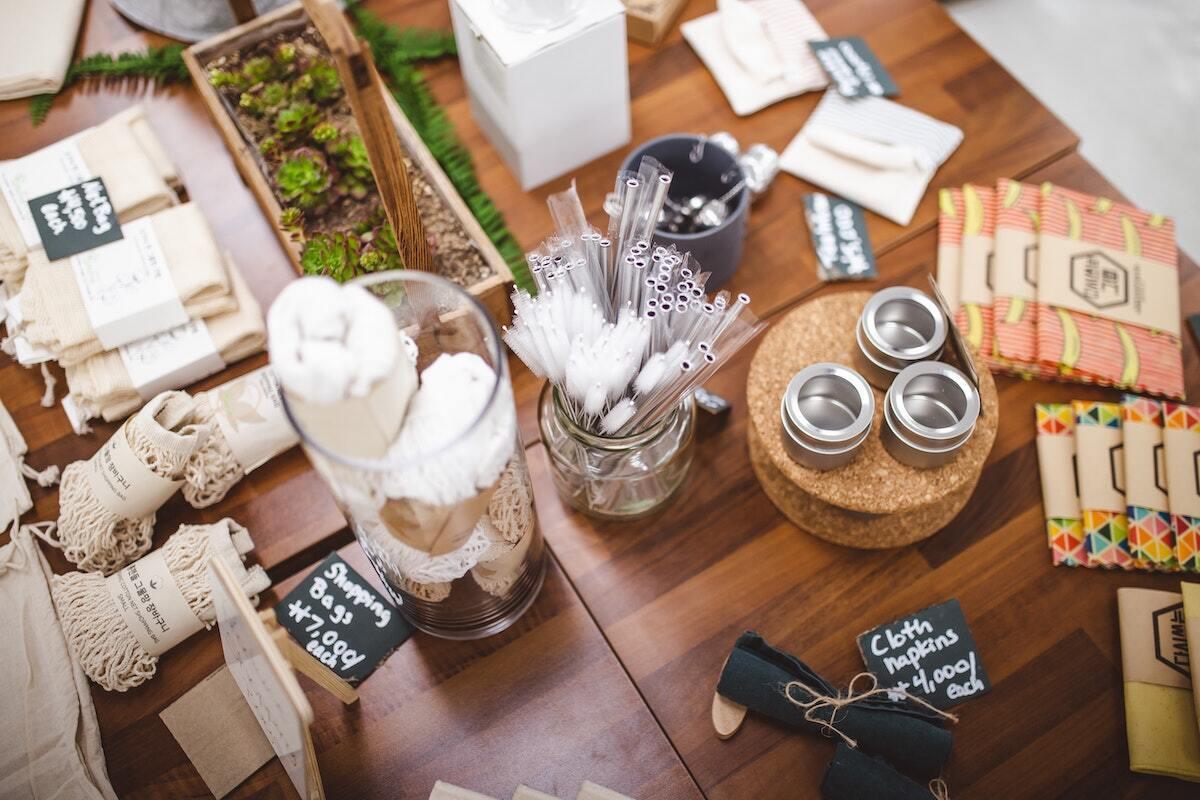
  • how to make simple swaps that make a big impact

Of course, the Sustainable Living Online Course won’t magically reduce your carbon footprint to zero. You’ll still have to put in the work and implement what you learn. But this course will give you the tools you need to be a better citizen and live a healthier, more natural life.

Right Now You Can SAVE BIG

International Open Academy, or IOA, is one of the internet’s most trusted sources for online learning, with over a million students in 139 different countries. Whether you want to learn coding, interior design, or knitting, IOA’s accredited online courses make learning easy, fun, and affordable. No matter the subject, IOA courses focus on practical skills, with videos, texts, activities, and exams that students work through at their own pace.

Normally, the Sustainable Living Online Course costs $119. However, you can enroll through Groupon for just $17, which is a whopping 86 percent off the regular price.

If you’ve made it your goal to be more eco-friendly in 2023 but are unsure where to start, this deal on the Sustainable Living Online Course from International Open Academy is definitely for you. Click here to start your sustainable living journey today.


  • Scientists tested 3 popular bottled water brands for nanoplastics. The results are alarming.
    Photo credit: Suzy Hazelwood/CanvaColumbia University researchers tested bottled water for nanoplastics and found hundreds of thousands of them.

    Evian, Fiji, Voss, SmartWater, Aquafina, Dasani… it’s impressive how many brands there are for something humans have been consuming for millennia. Despite years of studies showing that bottled water is no safer to drink than tap water, Americans are consuming more bottled water than ever, to the tune of billions of dollars in bottled water sales.

    People cite convenience and taste in addition to perceived safety for reasons they prefer bottle to tap, but the fear factor surrounding tap water is still a driving force. It doesn’t help when emergencies like floods cause tap water contamination or when investigations reveal issues with lead pipes in some communities, but municipal water supplies are tested regularly, and in the vast majority of the U.S., you can safely grab a glass of water from a tap.

    Now, a new study on nanoplastics found in three popular bottled water brands is throwing more data into the bottled vs. tap water choice.

    What researchers actually found in those bottles

    Researchers from Columbia University used new laser-guided technology to detect nanoplastics that had previously evaded detection due to their miniscule size.

    The new technology can detect, count and analyze the chemical structure of nanoparticles, and they found seven different major types of plastic: polyamide, polypropylene, polyethylene, polymethyl methacrylate, polyvinyl chloride, polystyrene, and polyethylene terephthalate.

    In contrast to a 2018 study that found around 300 plastic particles in an average liter of bottled water, the study published in the journal Proceedings of the National Academy of Sciences in January of 2024 found 240,000 nanoplastic particles per liter bottle on average between the three brands studied (the name of the brands were not indicated in the study).

    As opposed to microplastics, nanoplastics are too small to be seen by microscope. Their size is exactly why experts are concerned about them, as they are small enough to invade human cells and potentially disrupt cellular processes.

    “Micro and nanoplastics have been found in the human placenta at this point. They’ve been found in human lung tissues. They’ve been found in human feces; they’ve been found in human blood,” study co-author Phoebe Stapleton, associate professor of pharmacology and toxicology at Rutgers University’s Ernest Mario School of Pharmacy, told CNN Health.

    What this means for your health

    We know that nanoplastics are making their way into our bodies. According to UCLA Health, there is some evidence that they may be negatively affecting our health.

    Studies conducted on animals and on cells in a lab suggest nanoplastics can impact a variety of organs and systems throughout the body,” a report by UCLA Health states. “Exposure to high quantities of nanoplastics may affect cell’s immune function and cause inflammation…There is even some evidence that by altering cell function, nanoplastics may increase the risk of some types of cancer.”

    The UCLA Health report notes, however, that “very little research to date has looked specifically at humans.”

    According to Dr. Sara Benedé of the Spanish National Research Council’s Institute of Food Science Research, it’s not just the plastics themselves that might cause damage, but what they may bring along with them.

    “[Microparticles and nanoparticles] have the ability to bind all kinds of compounds when they come into contact with fluids, thus acting as carriers of all kinds of substances including environmental pollutants, toxins, antibiotics, or microorganisms,” Benedé told Medical News Today.

    Where is this plastic in water coming from?

    This study focused on bottled water, which is almost always packaged in plastic. The filters used to filter the water before bottling are also frequently made from plastic.

    Is it possible that some of these nanoplastics were already present in the water from their original sources? Again, research is always evolving on this front, but microplastics have been detected in lakes, streams and other freshwater sources, so it’s not a big stretch to imagine that nanoplastics may be making their way into freshwater ecosystems as well.

    However, microplastics are found at much higher levels in bottled water than tap water, so it’s also not a stretch to assume that most of the nanoplastics are likely coming from the bottling process and packaging rather than from freshwater sources.

    A subsequent study from The Ohio State University also found that bottled water contains three times as many microplastics as tap water. Researchers there recommended drinking filtered tap water from a reusable metal bottle as the best way to reduce daily exposure.

    As for exactly where all those nanoplastics are coming from, the research is still evolving.

    “Based on other studies we expected most of the microplastics in bottled water would come from leakage of the plastic bottle itself, which is typically made of PET (polyethylene terephthalate) plastic,” lead author Naixin Qian, a doctoral student in chemistry at Columbia University, told CNN Health. “However, we found there’s actually many diverse types of plastics in a bottle of water, and that different plastic types have different size distributions. The PET particles were larger, while others were down to 200 nanometers, which is much, much smaller.”

    At this point, we have plenty of environmental reasons for avoiding bottled water unless absolutely necessary and opting for tap water instead. Even if there’s still more research to be done, the presence of hundreds of thousands of nanoplastics in bottled water might just be another reason to make the switch.

    This article originally appeared two years ago. It has been updated.

  • Upworthy exclusive: Neil deGrasse Tyson on the best way to make first contact with aliens
    Photo credit: NASA Goddard Space Flight Center/Flickr & Danie Franco/UnsplashNeil deGrasse Tyson, left, and an illustration of a flying saucer.
    ,

    Upworthy exclusive: Neil deGrasse Tyson on the best way to make first contact with aliens

    Tyson shares why he finally wrote a book about aliens and how we should greet them if—or when!—they land on Earth.

    Neil deGrasse Tyson—astrophysicist, director of the Hayden Planetarium, and host of the StarTalk podcast—is one of America’s most popular science communicators. He has worked tirelessly for more than four decades to improve scientific literacy and instill a greater sense of awe about the cosmos.

    In his new book, Take Me to Your Leader, Tyson loosens his space tie a bit and has fun examining the possibility of aliens visiting Earth from scientific, historical, and pop-culture perspectives.

    Upworthy spoke with Tyson about why he chose this moment to discuss aliens, how we should greet them if—or when!—they land, and how he hopes to broaden people’s perspectives through the alien narrative.

    Take Me to Your Leader cover. Photo credit: Simon & Schuster

    Why now is the perfect time to talk about aliens

    The September 9, 2025, congressional hearing, “Restoring Public Trust Through UAP Transparency and Whistleblower Protection,” was a watershed moment for UFO/UAP disclosure, shifting the conversation from science fiction and conspiracy theories to a national security issue. 

    “The real transition for me was the high-ranking officials who came forth in Congress,” Tyson said. “Much of which landed in that two-hour, hour-and-fifty-minute documentary, Day of Disclosure. So it elevated once it hit that level. It was no longer the sleepy farmer in the back 40 reporting on a glowing object over his farm. It was no longer the drunken revelers coming out of the bar at 2 a.m. reporting on the glowing thing in the sky. Upon reaching that, I said, ‘All right, I can’t sit back any further. I have to write this book.’”

    flying saucer, aliens, UFOs, abduction, alien abduction
    An illustration of a flying saucer. Photo credit: Danie Franco/Unsplash

    The turning point in the public discussion about aliens inspired Tyson to examine extraterrestrials from a practical, science-based perspective.

    “It’s an attempt to anchor the conversation, to celebrate the imaginations that have created aliens in our pop culture, and to pose a set of questions for those who may have had a one-on-one encounter with aliens,” he said.

    Who should represent humanity if aliens arrived on Earth?

    What if aliens were to visit Earth, as his book’s title suggests, and demand, “Take me to your leader”? The Earth doesn’t have a singular leader to turn to, so who would Tyson anoint to make first contact with the alien delegation? His choice: former president Barack Obama.

    Bill Nye, then-President Barack Obama, and Neil deGrasse Tyson. Photo credit: WhiteHouse/Wikimedia Commons

    Tyson says that Obama would be a great representative of Earth after a recent conversation the 44th president had with Stephen Colbert, in which he said he “would be a good emissary for the planet. I feel I have a diverse background, some experience in statecraft and diplomacy. I’m friendly. I actually think I can do a pretty good job.”

    “He thinks he would be a good emissary for Earth, and that would be true,” Tyson shared. “First, he’s a nice guy, plus he’s smart, and he’s also scientifically literate. I think he sees his value there because a politician who’s also a diplomat would value that role if you’re meeting someone from another land, another place, another time.”

    However, Tyson wouldn’t send Obama alone to greet the aliens. He said Obama would need a team of experts to greet the delegation, including a cryptographer, an astrophysicist, an engineer, and a mathematician, “because math is the language of the universe.”

    Who would be the astrophysicist? Tyson, of course. “I’d be the astrophysicist just for good measure,” he joked. That’s no surprise, considering one of the first lines in his book is: “Ever since childhood I’ve wanted to be abducted by aliens.”

    Tyson adds that it would be dangerous for humanity if we sent conspiracy theorists to meet our new friends.

    “There are people who don’t think we went to the moon, people who think Earth is flat. And I say without hesitation to leave them behind on your first encounter with the alien,” he warned. “You’ve got to leave the best impression on them as you possibly can. So, you want humans to have a fighting chance to be respected by our new friends.”

    Tyson challenges Hollywood’s conceptions of alien life

    In Take Me to Your Leader, Tyson deconstructs the notion that if aliens were to visit Earth, they would be humanoid creatures, such as the bar patrons on Mos Eisley in Star Wars or the big-eyed “gray” aliens popularized by Whitley Strieber’s Communion series.

    I’d like to think of it as a force for Hollywood to up its game. That’s what [author] Andy Weir did with Project Hail Mary. His alien was crab-oid, not humanoid, and it was made of a material that resembled rocks, and they were really good engineers,” Tyson said. “So, Andy Weir tried to break that mold. And I would be happier if I saw more of that.”

    The alien question holds up a mirror to humanity

    Ultimately, Take Me to Your Leader is a lighthearted look at how aliens appear in American culture through movies and TV, conspiracy theories, sci-fi speculation, quasi-encounters, and our collective imaginations. Some may be disappointed that it doesn’t provide hard evidence of alien existence. But its real accomplishment is helping humans better understand themselves through imagining otherworldly beings.

    “It is the summation of my life’s thinking and observing. Humans, what we believe, what we count as evidence, what convinces us. The universe is quite susceptible to people’s personal theories about things,” Tyson said. “A lot of the cultural references, it’s not because I am some deep anthropologist, although in a small way, we all are. My father was a sociologist, so I have some baptism in thinking about people and what makes us tick. So the referencing to aliens and our relationship with them and their relationship with us was pumped by these very factors.” 

    This interview was edited for clarity and time.

  • Is wearing earbuds in the grocery store antisocial?
    Photo credit: cottonbro studio/PexelsIs it antisocial to wear AirPods in public spaces like the grocery store?
    ,

    Is wearing earbuds in the grocery store antisocial?

    There’s no shortage of debate about AirPods etiquette.

    If it feels like everyone in public is wearing earbuds—Apple AirPods, specifically—that’s because the behavior is on the rise. In fact, the phenomenon has even been the subject of scientific inquiry, with one study out of the New Jersey School of Architecture examining people’s creation of “private sound environments” in busy urban spaces.

    People might choose to listen to calming music, a podcast, upbeat tunes, or even just silence or white noise. But it’s not the content causing debate—it’s the etiquette involved. There’s been no shortage of discourse around the use of AirPods in public, and one of the most hotly discussed places, fittingly enough, is also one of the most common: the grocery store.

    Some say wearing earbuds in the grocery store is antisocial

    A recent post on X with nearly nine million total views featured a number of strong opinions on both sides.

    The original poster claims to have stopped wearing AirPods at the grocery store because “it’s antisocial, doesn’t matter if everyone else is doing it, you have to start with yourself.”

    Another user replied that they had also recently quit: “I had the same realization recently. I used to fill every ’empty’ moment with podcasts, grocery shopping, jogging, gaming, even cooking, thinking I was being productive by multitasking. But instead of feeling smarter, my brain felt constantly overloaded with noise and information.”

    Others argued that wearing earbuds dramatically decreases social awareness and said people tuned into music or a podcast would frequently stand in their way or otherwise behave rudely due to their inattentiveness.

    In another X post, a user called wearing headphones in public a “dystopian tech trend” and worried that things would only get worse with AI-enhanced glasses, more engaging and addictive mobile apps, augmented reality experiences, and more.

    Psychology Today chimed in on the topic in 2022 with an article titled “Why Earbuds Are a Threat to Ourselves and Society.” In it, Jim Taylor, PhD, wrote:

    “When you are wearing earbuds, you are also sending a signal to others around you that you don’t want to be disturbed. And think about those spontaneous moments in your life when you met someone who became important to you (or you haven’t had those moments because you’re always plugged in). They happened because you were open to the world around you. With earbuds, you are creating a virtual wall that surrounds you and that doesn’t readily allow others into your world.”

    Psychologists weigh in

    The first generation of AirPods is about 10 years old now. Clinical thinking around their use has evolved quite a bit in that time.

    For example, Dr. Shannon Franklin, co-founder and director of clinical training at Element Q Healing Center, says that headphones in public aren’t antisocial—they’re a regulation strategy:

    “[It’s] not a rejection of connection. For folks who are neurodivergent, anxious, or highly sensitive to sensory input, a grocery store is genuinely overwhelming. The headphones aren’t saying ‘leave me alone,’ they’re saying ‘I need to manage this environment so I can function in it.’ There’s also just the reality that public space has gotten louder and more stimulating. People are protecting their attention and their nervous system.”

    @reindrrop

    and yes ill film in a store but the headphones made me nervous idk how to explain it #anxiety #appleairpodmax

    ♬ original sound – Reina

    Ilana Grines, a licensed marriage and family therapist at Daily Therapy Dose, agrees and challenges the stigma behind “closing yourself off.”

    “The stigma comes from this idea that we’re supposed to be available to strangers at all times and that being polite means staying open to whatever comes at you,” Grines said. “There’s a real difference between being antisocial and being intentional about where you spend your social energy. The person with earbuds in at the grocery store might be saving up that energy for a meaningful conversation with someone they actually care about later. That’s protective, and probably important to their overall wellbeing.”

    She calls wearing AirPods in public “the opposite of antisocial” and argues it demonstrates great self-awareness and social awareness.

    To take it a step further, women in particular have admitted to wearing earbuds more frequently in public to tune out and protect themselves from harassers and people who might pose a danger to them. Other people use headphones as a tool to help ward off pushy salespeople, volunteers seeking signatures on clipboards, and other contentious social interactions that can heighten anxiety.

    AirPods at the grocery store, and in other public spaces, is ultimately a gray area. There’s a fine line between using technology to self-regulate or protect your peace and slipping into a dystopian reality where we’re all too self-involved in our own little tech worlds to notice each other.

    The study out of the New Jersey School of Architecture actually found something interesting worth noting. The subjects observed enjoyed busy indoor spaces, like public transit or the grocery store, more when they had earbuds in. But they found far less enjoyment in nature, like public parks, than individuals who didn’t wear headphones.

    In other words, there’s a time and a place. It’s polite and respectful to look a cashier in the eye and engage with them human-to-human, not tune them out with headphones. And if you’re outside the grocery store and in the natural world, research has shown you’ll get much more out of the experience if you tune in to the sounds and sights around you.

    But it’s not antisocial to realize that you don’t owe anyone your time, and it’s OK if you need a little self-regulation to function in high-stimulation environments. It’s good timing that we finally have the tools to do it—and enjoy some awesome tunes at the same time.

  • Feeling lazy, unmotivated, and ashamed of it? Doctor says it could be undiagnosed ADHD.
    Doctor breaks down how to recognize ADHD in adults.
    ,

    Feeling lazy, unmotivated, and ashamed of it? Doctor says it could be undiagnosed ADHD.

    “75% of adults with anxiety actually have ADHD as the cause of their anxiety.”

    If it seems that everyone is being diagnosed with Attention Deficit Hyperactivity Disorder (ADHD), there may be a reason and it’s likely not the reason people think. Diagnostic criteria were initially based on how ADHD presented in white children who were mostly male, so if you fell outside of that box your diagnosis was often overlooked. This is especially true in girls who then turned into undiagnosed or misdiagnosed women.

    But it’s not just women who were undiagnosed since the criteria mostly included ways in which hyperactivity showed up, you know, the “H” in ADHD. But not everyone with ADHD presents with the stereotypical hyperactivity bit.

    A lot of adults slipped through the cracks

    That means a lot of kids fell through the cracks and, as kids do, eventually became adults.

    Family physician and ADHD expert Dr. Heather Brannon breaks down ways in which ADHD is missed and how to identify it in adults in a TEDx Talk in 2021.

    In the first few minutes of the video, Brannon shares a clinical observation that feels mind-boggling

    “75% of adults with anxiety actually have ADHD as the cause of their anxiety.” Even though I fit into that category, consider my mind completely boggled because I thought I was a rarity and my psychiatrist was a magician. Turns out, he was probably just up to date on his continuing education credits.

    Brannon talks about how people who may express feelings of overwhelm, anxiousness, and tiredness and who are easily frustrated may actually have undiagnosed ADHD.

    It’s pretty easy to overlook ADHD that presents with more of the attention deficit part of the diagnosis than the hyperactivity part. When someone is having difficulty sitting still, talking so fast that you can barely keep up, and is constantly on the go, it’s pretty easy to pinpoint there may be an issue.

    But when the person is quiet, sits still but misses large chunks of conversations, or is chronically forgetful and sleepy, it’s much easier to miss the signs, according to Brannon.

    Brannon says many people feel bad about themselves without knowing why, so having an answer for why you’re feeling this way can be helpful.

    Does any of this sound like you?

    In the clip, Brannon introduces us to a theoretical person named Sally.

    Sally is successful, creative, and holds a master’s degree. She’s functioning at a high level by all indications, but Sally struggles with procrastination, getting sidetracked, and feeling unmotivated. She feels lazy and ashamed of it, but she just can’t bring herself to change her behavior.

    Brannon says that Sally is typical of adults with undiagnosed ADHD. These are people who feel and know something is not quite right with them, but they have no idea what.

    As for a little happy ending, Sally eventually finds out that she has ADHD and receives treatment. Brannon says in the video that the right medication can make a world of difference.

    “Now [Sally] can have creative thoughts without having that big swirl of ideas running around in her head. She can look at an email to see if she has time to answer or she needs to save it for later. Now Sally can be on time for her appointment, and that frees up the perfectionist that was trying so hard to be on time before and was failing every time.”

    The numbers are bigger than you’d expect

    Brannon says that over the span of her career, she would estimate about 2 or 3 out of 10 adults have undiagnosed ADHD and are living a life of difficulty and shame.

    “That’s a lot of people who could be feeling a whole lot better,” she says.

    This article originally appeared three years ago. It has been updated.

  • Astounding 2013 study found that ‘expressive writing’ can help heal physical wounds

    Photo credit: Canva Photos

    Writing about your emotions can improve your mental health and, a 2013 study finds, even help heal physical wounds.
    ,

    Astounding 2013 study found that ‘expressive writing’ can help heal physical wounds

    Remarkable things happen when you relieve your psychological stress.

    It’s not breaking news that journaling has been proven, again and again, to be good for you—mind, body, and soul.

    But not all journaling is created equal. Writing about what you did that day and your future plans has a profoundly different effect than writing about your deepest emotions, especially the upsetting ones. A growing body of research now shows that confronting your deepest traumas and experiences in order to put them on the page not only makes you feel better, but can even help heal you. One remarkable scientific study demonstrates how.

    Landmark study indicates that “expressive writing” has healing powers

    The body of research around expressive writing had been growing for years. American social psychologist James Pennebaker is considered one of the leading voices in pioneering this area of research.

    In an interview with the American Psychological Association, Pennebaker recalled wondering, “If secrets are so bad, what if we brought people in the laboratory and had them talk about them… [but] that turned out to be way too complex. How about we just had them write about it? And that was kind of the birth of expressive writing.”

    Pennebaker’s remarkable research revealed that expressive writing could improve mental health, boost the immune system, and reduce doctor visits. In 2013, a group of researchers wanted to see whether these benefits could carry over even further into the physical world.

    In the study, two groups of adults ages 64 and older underwent a simple biopsy procedure. It left a small wound on the upper arm that was uniform in size across all participants and could easily be monitored for changes in healing.

    A Band-Aid covers a wound. Photo credit: Canva

    One group was assigned to perform expressive writing for 20 minutes per day, writing about its deepest thoughts and most upsetting life experiences.

    The other group, rather than not writing at all, journaled daily about its activities but did so in an emotionally neutral register.

    Just 11 days after the biopsy, 76% of the expressive writing group had fully healed. That’s almost double the rate of the control group, of whom only 42% had healed.

    A thorough review found almost no other differences in the adults’ cognitive or physical health, which makes a powerful case that the expressive writing exercises were responsible for the improved healing.

    Why emotional writing can have a physical impact

    Pennebaker, for his part, recognized that deeply emotional journaling is not just about the physical act of writing.

    In order to write about upsetting experiences in your life, you have to turn them over and over in your mind and confront them head-on.

    “Getting people to actually sit down and confront it and to write it, you don’t have to write a lot, but you have to first of all just acknowledge it and put it into words,” Pennebaker said. “And that was really for me, the breakthrough.”

    Emotional writing eases psychological stress. Feelings like anxiety and stress can have severe negative health consequences, so it stands to reason that relieving some of that stress should have a positive payoff. Less stress on the immune system, for example, means it’s better able to do its job of warding off sickness and healing wounds.

    According to Harvard Health Publishing, “The process of writing may enable [people] to learn to better regulate their emotions. It’s also possible that writing about something fosters an intellectual process — the act of constructing a story about a traumatic event — that helps someone break free of the endless mental cycling more typical of brooding or rumination.”

    The power of “letting it out”

    A majority of scientific research agrees that learning to understand and express what’s happening inside us is a key component of mental health.

    “Labeling and expressing what’s going on inside can calm our nervous system. It also gets us in touch with our internal senses and what’s going on beneath the skin, in the heart, and in the brain,” said Alli Spotts-De Lazzer, a licensed therapist. “The connection of thoughts flowing through and out may be similar to ‘name it to tame it,’ a concept related to calming emotional distress and increasing emotional regulation.”

    It can be dance, it can be art, or it can be talking it out with a therapist or friend. The important thing is that expression, or disclosure, is necessary. The unique power of expressive writing, however, is that it forces us to address our biggest sources of pain and anxiety head-on.

    Expressive writing has its limitations, of course.

    It’s not necessarily a cure-all for people suffering from serious mental health conditions like chronic anxiety or major depression. And it can’t cure cancer or miraculously heal a broken leg.

    Some research also shows that expressive writing can temporarily make people feel worse before the mental health benefits kick in. And for people who have recently undergone trauma, it may simply be too soon to write about it. Pennebaker himself advises therapists not to assign expressive writing to patients until at least a few months after an incident.

    However, the study is fairly undeniable evidence of the mind-body connection. Science shows us that placebos can work wonders, even when people know they’re taking a placebo. And expressive writing research is beginning to show just how incredible the physical benefits of relieving psychological stress can be.

  • Researchers found that scrolling while pooping dramatically raises your chance of getting hemorrhoids
    A man looking at his phone on the toilet.

    Have you ever been scrolling through social media on your phone and then suddenly wondered where all the time went? You glance at the clock and wonder, “OMG, did I really just spend 30 minutes mindlessly scrolling on this app?” Well, after a new report published in PLOS ONE, you’ll think twice about getting lost doomscrolling while sitting on the toilet.

    A team of researchers at Beth Israel Deaconess Medical Center found that people who scroll on their phones while pooping have a much higher chance of getting hemorrhoids. Hemorrhoids are swollen veins, akin to varicose veins, that are either internal or external. They can be painful, itchy, and sometimes bleed.

    Looking at your smartphone on the toilet could cause hemorrhoids

    “Smartphone use on the toilet was associated with a 46% increased risk of hemorrhoids,” the paper found after adjusting for sex, age, fiber intake, and exercise activity. To come to this grim conclusion, the researchers interviewed 125 patients at the medical center and asked them about their toilet habits, including whether they scrolled through their phone or not.

    phone, toilet, hemorrhoids, smartphone, tiktok, social media, toilet health
    A woman looking at her phone on the toilet. via Canva/Photos

    What the researchers found was that those who bring their phone into the bathroom spend more time on the toilet; therefore, increasing the likelihood of developing hemorrhoids. “Of all respondents, 83 (66%) used smartphones while on the toilet,” the study found. “Furthermore, smartphone users spent considerably more time on the toilet compared to non-smartphone users, with many spending more than five minutes on the toilet per visit.”

    Of those who looked at the phone on the toilet, 37.3% said that they sat on the throne for six to fifteen minutes. Non-phone users sat longer than six minutes only 7.1% of the time. “The likely explanation is that prolonged sitting increases pressure in the veins around the rectum, which can contribute to hemorrhoids,” Dr. Ernesto Gonzaga, a gastroenterologist from the Hospital of the University of Pennsylvania, told ABC News.

    “When you’re sitting on an open toilet bowl, you have no pelvic floor support,” Dr. Trisha Pasricha, the study’s senior author and a gastroenterologist and director of the Gut-Brain Research Institute at Beth Israel Deaconess Medical Center, told CNN. The study said that 54% of people who use the phone while pooping are reading the news, and 44% said they were scrolling through social media.

    The study was conducted on people 45 and over

    The study was conducted on people aged 45 and older, a beneficial group to examine because some individuals in this age group don’t bring their phones to the bathroom. The study would have been much harder to conduct on younger people.

    “It was helpful to have this (45 and older) group because there were people who didn’t use their smartphones on the toilet. So we had a comparison group,” Dr. Trisha Pasricha, the study’s senior author, told CNN. “Having a third of people not bringing their smartphones to the bathroom helped us understand what a baseline could look like, especially as I imagine the situation is more profound for younger individuals.”

    So what can you actually do about it?

    If you’re afraid of developing hemorrhoids, the first step is to make sure that, if you take your phone with you to the bathroom, you stop scrolling when you’re done evacuating your bowels. You can also eat more high fiber foods, such as fruits and vegetables, and be sure to exhale while pushing and not strain. It’s also important to keep a healthy weight and to avoid sitting for too long, whether on a toilet or in your car. Hemorrhoids are a pain in the butt, and they’re not worth it, no matter how great the latest tea is on TikTok.

    This article originally appeared one year ago. It has been updated.

  • Why does a facial itch feel a lot different than one on your arm? Science just figured it out.
    Photo credit: Champja/Canva & Towfiqu barbhuiya/CanvaWhy does an itch on your face feel so different from one on your arm?

    An itch on the tip of your nose can feel different from one on your rear end—and possibly a bit more painful. Why is that? Shouldn’t your body treat an itch like an itch, no matter where it pops up?

    According to a new study from North Carolina State University, your body treats itches on your face much differently than it treats them on the rest of your body.

    The study found that your body sends itch signals from the face and the rest of the body along different routes to your brain, where they are processed. It’s as if your body has two different “itch phone lines” communicating with the brain—one from the face and another from the rest of the body.

    Itches travel to your brain differently throughout the body

    An itch on your arm starts with irritation of the skin—perhaps from dryness—then travels through the dorsal root ganglia, the spinal cord, and finally to the brain. An itch on your face goes from the spot of irritation to a different system called the trigeminal ganglia, and then to the brain.

    itch, scratch, skin irritation
    An itchy forearm. Photo credit: Canva

    Here’s the straight science:

    “You can think of itch being transmitted from the skin to the brain as a series of switches that get flipped,” Santosh Mishra, associate professor of molecular biomedical sciences at NC State, said in a statement

    “On the body, itch signals go from neuronal projections in the skin through the dorsal root ganglia (DRG) – which are clusters of sensory cells located at the root of the spinal nerves – then to the spinal cord. But on the face and head, those signals travel to the trigeminal ganglia (TG) – which are clusters of sensory cells located in a small structure below the brain where it sits atop the skull,” Mishra added.

    itch, scratch, skin irritation
    A woman scratching her arm. Photo credit: Canva

    Your body sends mixed signals to your face

    The researchers also discovered why an itch on your face may feel different from one on your torso. Studies showed that when histamine, an itch-inducing substance, was applied to the neck and cheek, the cheek itched less than the neck. Researchers initially assumed this was because there are fewer nerves in the cheek, but they were wrong: the cheek actually has far more. Instead, the face sends itch and pain signals simultaneously, and pain often overrides the sensation of itching. In the rest of the body, those signals are separated. That’s why an itch on your face feels different and may even be more painful than one on your arm.

    itch, scratch, skin irritation
    A woman scratching her neck. Photo credit: Canva

    Now that we know why an itch on your cheek feels different from one on your stomach, researchers can work on therapies that better address skin irritation on different parts of the body. One day, you may have a separate cream for a facial itch and another for one on your torso—not because of marketing, but because of real science.

    “Understanding how itch perception in the face differs from itch perception in the body could give us better molecular targets for future therapies,” Mishra said.

  • Man builds the ‘world’s smallest tiny house’ and somehow makes it work in 19 square feet
    Photo credit: Levi Kelly Tours/YouTubeLevi Kelly's tiny house.

    Levi Kelly wanted to go small. Very small. As someone who loves building and touring tiny homes, along with unique Airbnbs and cabins, he wanted to create something truly special. Though the idea of a tiny home isn’t new and certainly began picking up steam in the early 2000s, Kelly wanted to raise— or, in this case, lower—the bar and make a statement about just how efficient he could get.

    In an Instagram clip originally posted just over a year ago, but now making the rounds on social media again, Kelly shows viewers this extraordinary tiny home. Reminiscent of a tree house, its dark brown exterior and cheery windows look genuinely inviting. The most shocking part? It’s only 19.46 square feet.

    19.46 square feet

    The quick tour begins with an exterior view of the home, which is hitched to a two-wheeled trailer. Kelly explains, “I built the world’s smallest tiny house by square footage. It’s 19.46 square feet. Totally off-grid. You can see the solar panels up there. And it’s on a trailer. Take it anywhere you want to go.”

    He then pulls open the door and says, “Walking inside, let’s see how I fit everything in here.” The door opens to an extremely narrow hallway. On one side is a small sitting area with wooden drawers underneath. Straight ahead is a sink beneath a rather large window, at least relative to the size of the space.

    Kelly’s tour continues: “There is a seating area here to the left. Underneath, we have your AC and heating units, and it comes out of this little vent right there. And then on the other side is a battery bank for the solar panel. And that’s how everything in here gets plugged in.”

    Running water, too

    Blink and you’re in the kitchen, where a tiny fridge sits atop the counter. “Up here is your kitchen. We have a mini fridge up here for some drinks.” He removes a light brown cover from a square opening, almost like a jigsaw puzzle piece, revealing that the countertop also doubles as a sink. “Here’s your sink. Open this up and it unfolds.” He turns on the water. “Check that out. Running water. So we’ll shut that back up for more countertop space.”

    He opens a cabinet beneath this area. “Underneath, we have our water tanks, and you can have a little electric grill to take out and put there if you need to.” He then points to another tiny space on the counter.

    Can’t be taller than 5’10”

    Some, at this point, might wonder where someone would sleep in this house. “You’re wondering about the bed situation. Well, it’s up here.” He then points upward, where a platform is hooked to the ceiling. That is indeed the bed. He explains, “It folds down and can fit somebody that’s 5’10” or shorter.”

    As for the bathroom? Kelly has that covered. Once again, he takes the camera outside and shows a small shower head attached to the corner of the house. “You’re probably wondering about the bathroom situation. The outdoor shower is right here. Set this up and turn on the water and you’ve got yourself a little shower.”

    And what about the toilet? Off to the side, there’s an even smaller “storage area.” He explains, “You can take the lid off. The storage is stored in there, which is now right behind me.” The camera then cuts to a fresh white toilet sitting on the lawn. “You can go use the bathroom in nature anywhere you want. And it does flush.”

    Only a month and $5,000

    In a more detailed tour of the tiny home posted on YouTube, Kelly shares additional details:

    “This took over a month and $5,000. It’s a truly functioning tiny house. It has power, running water, kitchen, separate seating, separate bed, shower, flushing toilet, AC, and heating—everything a modern house has, just in the size of 19.46 square feet (1.8 square meters). The nicest tiny house of this relative size I have ever seen.”

    He also shares more details about the materials used, including the padauk wood on the window sills and the walnut kitchen countertops. He even demonstrates what it’s like to have three people sitting in the bench area at the same time. “Here’s a clip of me, Weston (his son), and my wife.”

    We also get a full look at how the “bed” works, which Kelly admits was his one slight miscalculation. There isn’t much space to climb up to the bed, but he demonstrates how to do it by stepping onto the countertop and hoisting himself into the small cubby.

    One YouTube commenter joked that if the bed doesn’t work, “you can sleep on the roof like Snoopy.”

    Another commenter was a big fan, even imagining what it could look like during the holidays: “Imagine adding tiny picture frames or minuscule paintings to the walls, and Christmas decorations outside in winter. The absolute coziest house ever conceived.”

    A few commenters were concerned about the complete lack of storage, joking that someone might have to keep their belongings in their car. But if you like the idea of the tiny house and don’t necessarily want to break any records, Kelly has other tiny homes with a bit more room. One can even be packed up and “unfolded in a single day.”

Communication

How to avoid sounding long-winded in conversations with this 60-second trick

Wholesome

A homeless man returns a pet dog’s stolen ashes to their owner. It’s changing his life.

Wholesome

Woman tests drive-thru barista by tipping him $1 for every second he listens to daughter’s story

Education

North Carolina graduates blown away when commencement speaker pledges to pay off their senior-year debt