The best—and the weirdest—cover versions of Radiohead’s ‘Creep’

The honky-tonk version is oddly impressive.

Array
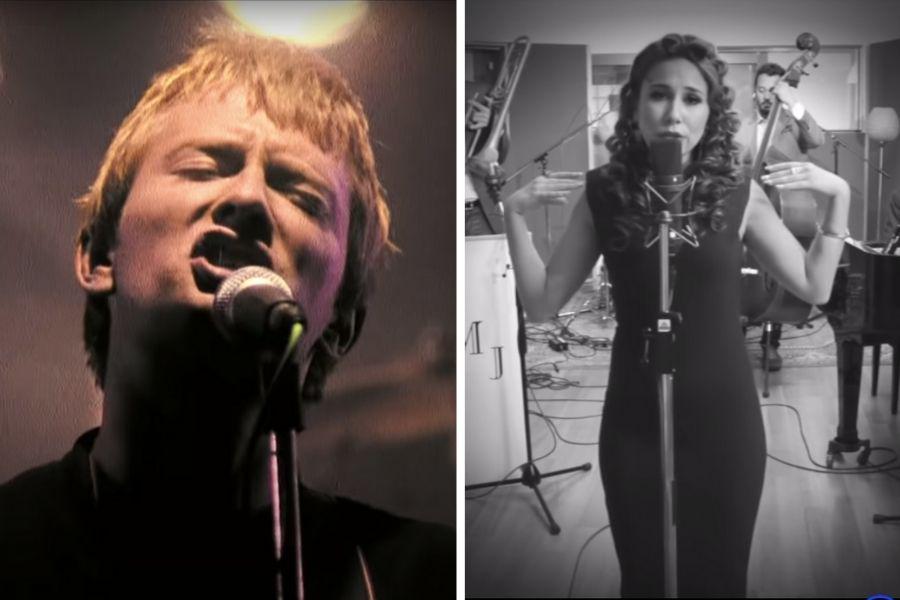
Radiohead's 'Creep' has been covered dozens of times in a range of musical styles.Photo credit: Radiohead/YouTube, Postmodern Jukebox/YouTube

Radiohead’s “Creep” has had an interesting journey during its 30+-year lifespan. The song wasn’t a big hit when it was first released in 1992, only reaching No. 78 on the U.K. Singles Chart. The BBC actually banned it for a while, basically because it was too emo for the early ’90s. (We were all about the angst in the early ’90s. Actual sadness and loneliness, not so much. It also had the f-word in it.) But after it became a hit in Israel, its popularity spread, and when it was reissued in the U.K. in 1993, it reached No. 7.

Die-hard fans of Radiohead don’t like the song much because they don’t think it reflects the band’s true sound. The band itself has some mixed feelings about playing it and in their song “My Iron Lung” even expressed resentment of the way “Creep” had pigeonholed them. But its popularity has stuck and crossed generations, spawning multiple cover versions from a wide variety of artists.

Personally, I’m a fan of the song and always have been. “Creep” came out the year I graduated from high school and makes my Gen X heart go pitter-patter. It’s also just a good song—different, yet entirely recognizable. The simple, two-beat guitar riffs just before the chorus are tidbits of genius. The lyrics explore feelings rarely expressed out loud. It has amazing contrast between the lilting verses and the grungy chorus. Here’s the original if you need a refresher:

It’s also a song that covers actually do justice to, for the most part. Here is a handful of what I think are the best versions—and definitely one of the weirdest.

Let’s start with the weird. The YouTube channel “There I Ruined It” shared a honky-tonk version of “Creep” that’s every bit as WTF as it sounds. But the video is meticulously edited to make it look like both Radiohead and some honky-tonk stars are actually singing it, so even though the song is a bit of an assault on the ears (unless you love honky-tonk, in which case more power to you), the video is worth watching purely for the wow factor.

Honky-tonk “Creep” from There I Ruined It

Amazing, right? I mean, I kind of hate it—sorry honky-tonk fans—but I’m also genuinely impressed. The matchup of the backup vocals with the video clips is perfection.

If you need to wash that out of your ears, more pleasant-to-listen-to versions are plentiful. Halle Bailey (of Chloe x Halle twin fame) recently shared a stripped-down cover version on TikTok with just her voice and an electric guitar and it’s lovely.

@hallebailey

my version of creepppp this song was in my head all day i had to sing it to get it out ! 🥰🤣 ♬ original sound – halle

Halle Bailey is only 21, but she’s not even the youngest performer to make “Creep” her own. In 2019, sisters Mimi and Josefin, ages 15 and 13, sang the song for their blind audition on Germany’s “The Voice Kids.” The audience and judges were so impressed with their performance, they sang an encore. The harmonies are what make this rendition particularly fun to listen to.

The Voice Audition “Creep” from Mimi & Josefin

Some of the best covers are the simple acoustic versions with just a singer and a guitar, like this one from Daniela Andrade.

Mellow acoustic “Creep” from Daniela Andrade

Ever heard an entire choir sing “Creep”? Check this out:

Creepy “Creep” from the Scala & Kolacny Brothers Choir

Scala & Kolacny Brothers is a Belgian girls’ choir and their version is more haunting than anything else. It’s the creepiest of the Creeps for sure, but very cool.

My personal favorite is the Vintage Postmodern Jukebox cover featuring Haley Reinhart. The big band sound is so unexpected for the song, the vocals are stellar, and it’s just hands-down the best version I’ve come across.

Vintage big band “Creep” from Postmodern Jukebox

Sorry diehard Radiohead fans, but “Creep” isn’t going anywhere anytime soon. People young and old love it and if musicians keep making it their own, it’s probably going to outlast us all.

(Final note: It seems remiss not to include the 2021 remix of “Creep” released by Thom Yorke of Radiohead himself. It’s not on my list of favorites, but it’s interesting to see how he’s interpreting the song three decades later.)

Thom Yorke feat. Radiohead – Creep (Very 2021 Rmx)

This article originally appeared two years ago.
  • Why didn’t people smile in old-timey photographs? Smiling meant something different back then.
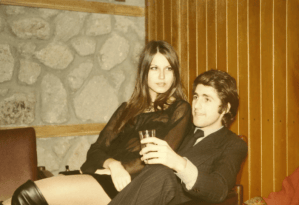
    Photos of a man and woman from the 1800sPhoto credit: Public Domain

    If you’ve ever perused photographs from the 19th and early 20th century, you’ve likely noticed how serious everyone looked. If there’s a hint of a smile at all, it’s oh-so-slight. But more often than not, our ancestors looked like they were sitting for a sepia-toned mug shot or being held for ransom or something. Why didn’t people smile in photographs? Was life just so hard back then that nobody smiled? Were dour, sour expressions just the norm?

    Most often, people’s serious faces in old photographs are blamed on the long exposure time of early cameras, and that’s true. Taking a photo was not an instant event like it is now; people had to sit still for many minutes in the 1800s to have their photo taken.

    Ever try holding a smile for only one full minute? It’s surprisingly difficult and very quickly becomes unnatural. A smile is a quick reaction, not a constant state of expression. Even people we think of as “smiley” aren’t toting around full-toothed smiles for minutes on end. When you had to be still for several minutes to get your photo taken, there was just no way you were going to hold a smile for that long.

    But there are other reasons besides long exposure times that people didn’t smile in early photographs.

    mona lisa, leonardo da vinci, classic paintings, famous smiles, art
    Mona LisaPhoto credit: Public domain

    The non-smiling precedent had already been set by centuries of painted portraits

    The long exposure times for early photos may have contributed to serious facial expressions, but so did the painted portraits that came before them. Look at all of the portraits of famous people throughout history prior to cameras. Sitting to be painted took hours, so smiling was out of the question. Other than the smallest of lip curls like the Mona Lisa, people didn’t smile for painted portraits, so why would people suddenly think it normal to flash their pearly whites (which were not at all pearly white back then) for a photographed one? It simply wasn’t how it was done.

    A smirk? Sometimes. A full-on smile? Practically never.

    old photos, black and white photos, 1800s photos, no-smile photos, no smiles in photo
    Algerian immigrant to the United States. Photographed on Ellis Island. Photo credit: Augustus F. Sherman via William Williams/Wikimedia Commons

    Smiling usually indicated that you were a fool or a drunkard

    Our perceptions of smiling have changed dramatically since the 1800s. In explaining why smiling was considered taboo in portraits and early photos, art historian Nicholas Jeeves wrote in Public Domain Review:

    “Smiling also has a large number of discrete cultural and historical significances, few of them in line with our modern perceptions of it being a physical signal of warmth, enjoyment, or indeed of happiness. By the 17th century in Europe it was a well-established fact that the only people who smiled broadly, in life and in art, were the poor, the lewd, the drunk, the innocent, and the entertainment […] Showing the teeth was for the upper classes a more-or-less formal breach of etiquette.”

    drunks, classic painting, owls, malle babbe, paintings
    "Malle Babbe" by Frans HalsPhoto credit: Frans Hals via Public domain

    In other words, to the Western sensibility, smiling was seen as undignified. If a painter did put a smile on the subject of a portrait, it was a notable departure from the norm, a deliberate stylistic choice that conveyed something about the artist or the subject.

    Smiling simply didn’t work well in old portraits

    Even the artists who attempted it had less-than-ideal results. It turns out that smiling is such a lively, fleeting expression that the artistically static nature of painted portraits didn’t lend itself well to showcasing it. Paintings that did have subjects smiling made them look weird or disturbing or drunk. Simply put, painting a genuine, natural smile didn’t work well in portraits of old.

    As a result, the perception that smiling was an indication of lewdness or impropriety stuck for quite a while, even after Kodak created snapshot cameras that didn’t have the long exposure time problem. Even happy occasions had people nary a hint of joy in the photographs that documented them.

    Another reason why people didn’t smile in old photos is that dental hygiene wasn’t the same as it is today, and people may have been self-conscious about their teeth. “People had lousy teeth, if they had teeth at all, which militated against opening your mouth in social settings,” Angus Trumble, the director of the National Portrait Gallery in Canberra, Australia, and author of A Brief History of the Smile, said, according to Time.

    old photos, black and white photos, 1800s photos, no-smile photos, no smiles in photo
    Even wedding party photos didn’t appear to be joyful occasions. Photo credit: Wikimedia Commons

    Then along came movies, which may have changed the whole picture

    So how did we end up coming around to grinning ear to ear for photos? Interestingly enough, it may have been the advent of motion pictures that pushed us towards smiling being the norm.

    Photos could have captured people’s natural smiles earlier—we had the technology for taking instant photos—but culturally, smiling wasn’t widely favored for photos until the 1920s. One theory about that timing is that the explosion of movies enabled us to see emotions of all kinds playing out on screen, documenting the fleeting expressions that portraits had failed to capture. Culturally, it became normalized to capture, display and see all kinds of emotions on people’s faces. As we got more used to that, photo portraits began portraying people in a range of expression rather than trying to create a neutral image of a person’s face.

    Changing our own perceptions of old photo portraits to view them as neutral rather than grumpy or serious can help us remember that people back then were not a bunch of sourpusses, but people who experienced as wide a range of emotion as we do, including joy and mirth. Unfortunately, we just rarely get to see them in that state before the 1920s.

    This article originally appeared last year.

  • ‘You better than that’: Door camera shows woman stopping package thief with tough love
    A Black woman (left) and packages on a stoop (right).Photo credit: Canva
    ,

    ‘You better than that’: Door camera shows woman stopping package thief with tough love

    She turned a tense moment into an unforgettable display of empathy.

    In a moment when most people might respond with anger and discipline, one Philadelphia woman chose instead to lead with compassion.

    On March 6, Bernadette Williams noticed a stranger across the street near a neighbor’s porch. As seen on Williams’ doorbell camera, a woman with a partial face covering appeared to reach for a delivered package. It was the kind of scene that immediately raises alarm, and Williams responded without hesitation.

    ‘What are you doing? Put that back! Put that back!’

    The woman quickly dropped the package. For a brief moment, the situation hung in the balance. It could have turned into a confrontation, a threat, or a call to the police. But then Williams made a choice that shifted the entire tone of the encounter.

    “I said, ‘She’s in trouble. How can I make a bad situation better?’ You have to be a part of the solution,” she later told WPVI

    Rather than continuing to call out the woman, Williams began speaking to her in a completely different way. As her voice softened, her message changed from warning to encouragement.

    “You better than that. Get some help. I love you. God loves you,” she told the woman.

    Then came the offer that has stayed with so many people who have heard the story. Reaching into her pocket, Williams told the stranger, “I’ll give you some money. Here’s $7, here’s $7.” It was all she had, and she gave it up willingly. 

    package thief, kindness, Philadelphia
    Close-up of hands offering money. Photo credit: Canva

    The exchange was brief, but its impact was clear

    As WPVI reported, the woman apologized and thanked her before leaving. Williams said she could see something had shifted in her expression.

    “Her eyes of ‘I’m sorry.’ That was in her heart, and that’s what I read. I hope that she will be fine, and I have faith that she will be fine.”

    For Williams, the decision was not about ignoring wrongdoing, but about recognizing what might be underneath it. Instead of seeing a thief, she saw someone who might be struggling.

    “She started realizing ‘I am somebody,’” Williams said. “She started realizing that ‘There is somebody out here that cares.’”

    package thief, kindness, Philadelphia
    A close-up of eyes. Photo credit: Canva

    That perspective comes from years of living in the same neighborhood and feeling connected to the people in it. Williams believes that communities are shaped by how people choose to respond to one another, especially in difficult moments.

    “We are a part of this community, and we can make our community better,” she told WPVI.

    The big takeaway

    There’s a common assumption that accountability must come with harshness. This story shows that it doesn’t always have to. The would-be thief is held accountable while maintaining everyone’s dignity, making a different choice in the future far more likely.

    While it’s impossible to know what happens next for the woman in the video, what remains is the example Williams set by actively choosing humanity when most would not.

  • Ethan Hawke beautifully explains why AI art can’t replace imperfect human creativity
    Ethan Hawke gets philosophical about art and creativity.Photo credit: Elena Ternovaja/Wikimedia Commons

    As AI plays an increasing role in our world, questions about its appropriate use abound. There’s no doubt that technology has the potential to improve our lives dramatically. But the way we choose to use it can also impact us in ways we may not fully appreciate.

    For instance, how might AI impact our relationship with human creativity? Ethan Hawke was asked about the idea that “AI is the future of art,” and how he would argue that human creativity matters. People are loving his thoughts.

    Ethan Hawke on AI art versus reality

    “Nature is reality,” he said. “And when you get away from reality, you get lost. Human creativity is nature manifest in us. It is happening in us.”

    Then he gave an example of why AI art will never be able to replicate a piece of art created by a human.

    “AI could make an amazing portrait of the Sundance Film Festival, and it’ll be incredible,” he said. “Or my 14-year-old could color her impression of it. And the thing about my 14-year-old’s is it’s not perfect. It’s hers. It’s unique to a moment in time and a place. And it’s inimitable because it’s coming from her, and she is beautiful. And it’s not the painting; it’s the energy behind the painting.”

    “What makes a poem great is not this collection of words,” he continued. “It’s the energy behind the poem. Dance can be…you see people who can barely dance, and you can cry at the joy happening with the music. Because they’re alive right now and they won’t be forever. And when we start making things being about perfection, you’re just belittling the experience of life. You’re just totally ceding your humanity.”

    Hawke concluded, “It makes me sad, but it also makes me excited, because I don’t want to do that. I’m not going to do that.”

    So many people resonated with his response in the comments:

    “This is so beautiful and so true ~ everything he says is so profound and I’m here for this thinking…. we’ve become a weird world of social media perfection.”

    “I love how he got 🥲 talking about the imperfections created by hand from his daughter. What a beautiful way of describing creativity.”

    “Can he just write a philosophy book already? We all know we’d read it.”

    @ethanhawke always saying what the world needs to hear. Thank you sir! Thank you for defending the magic of NATURE and defending the MAGIC of humanity. More of this ENERGY and CONSCIOUSNESS ❤️❤️❤️.”

    “This feels less like an anti-AI take and more like a pro-human one.”

    AI isn’t going anywhere, time to choose the role it plays in society

    That last comment hits the nail on the head. Whether you love it, hate it, or aren’t sure how to feel about it, AI is here. The conversations we have about it, and how we consciously choose to engage with it, matter. There’s a lot to consider on that front, ethically, educationally, environmentally, and more.

    But one thing those considerations are forcing us to do is to examine the value of human creativity. Not the dollar amounts we can assign to it, but the inherent value of the energy behind an artist’s unique expression. Generative AI will never be able to replace human creativity, no matter how “perfectly” it may replicate it. The real beauty of art is the singularity of the human spirit and the unique energy an artist brings to it.

    As Hawke said, we can choose not to cede our humanity in the age of AI—and we can be excited about that choice because the beauty of human creativity is absolutely worth celebrating.

  • Pop music’s most famous phone number now connects callers to a cancer support helpline
    Jenny's number can now help cancer patients.Photo credit: TutoneJJ/YouTube & Canva

    Since the 1980s, one particular phone number has earwormed its way into pop culture’s collective memory. That number? 867-5309 (which you probably just sang in your head). Today, however, that memorable number doesn’t belong to Jenny anymore. Thanks to Tommy Tutone’s frontman, dialing it now connects cancer patients to a support group.

    Tommy Heath, the lead singer of Tommy Tutone, teamed up with the Cancer Support Community to secure the number for its free support helpline. In an exclusive interview with People, Heath shared how cancer has affected him as he’s gotten older, noting that he is dealing with “minor” skin cancer himself.

    “I have some family members who are struggling with cancer,” he told People. “I’m out on tour with a lot of bands and suddenly somebody’s not there.” 

    The song’s prank-filled past

    The song “867-5309/Jenny” reached No. 4 on the Billboard Hot 100 in 1982. However, its catchy, memorable chorus led to a wave of stories beyond music. It also sparked years of prank calls, with people asking for “Jenny” whenever they dialed the number—both during the song’s heyday in the 1980s and decades later.

    The Cancer Support Community’s hotline provides expert support from trained specialists who offer personal guidance, information, and a listening ear for cancer patients. Having such a recognizable phone number helps ensure people know exactly which number to dial for help. After learning this, Heath stepped in, wanting to give back after getting so much from the number that made him famous.

    “I need to give back to the community, the people who have supported me all these years,” he told People. “I’m going to do what I can…I’d be happy if this was an enduring legacy, and made people smile and give them hope.”

    Now, when someone dials the number using the 272 area code (or “CSC,” for “Cancer Support Community”), it connects them to a professional who can help people with cancer.

    At 78, Heath is still going strong, performing live. And yes, he still happily plays and sings “867-5309/Jenny” for the crowds that support him.

    If you need additional or specialized support in your battle against cancer, visiting the American Cancer Society’s website can help. Searching for and connecting with professionals there can provide patients with additional resources, including in-person, local support.

  • Grocery store’s produce section concerts give indie musicians a live venue. People want more.
    A band plays in the produce section of Fiesta Fresh Market. Photo credit: Fiesta Fresh Market/YouTube
    ,

    Grocery store’s produce section concerts give indie musicians a live venue. People want more.

    “We need this right now in the world…Real humans doing real human things.”

    On the outside, Fiesta Fresh Market looks like just another neighborhood grocery store in New Castle, Delaware. Inside the produce section, however, customers can listen to local bands perform their latest songs live and in person. These “Mercadito Sessions” have since evolved from a simple community offering into a full-fledged live music event.

    While grocery stores and live music don’t typically mix, at Fiesta Fresh Market, it’s part of the family. The Aguilar Garcia family, who run the store, have music in their roots—especially co-owner José Luis Aguilar Garcia, who works in the music industry.

    In the hope of helping Mexican American bands gain more exposure, José and his family offered their produce section as a space for Latin musicians to perform for customers. They were inspired by National Public Radio’s “Tiny Desk Concerts,” which feature artists performing live in a confined space.

    These produce section mini-concerts, dubbed “The Mercadito Sessions,” initially puzzled customers. Over time, however, shoppers came to welcome and enjoy the live music, with some even visiting just for the performances. Then, posts on the store’s social media featuring the bands began to go viral.

    “The idea is to highlight independent artists from the area,” José told CBS Philadelphia. “Because it’s getting more attention online, people are excited. They’ll ask when we’re doing the next one.”

    Commenters on the store’s Instagram celebrated the market’s concert concept:

    “This is so cool. Not everyone wants to go to bars and/or have to stay up late to hear live music. I love this so much.”

    “Honestly this is the absolute coolest thing ever.”

    “Amazing music scenes going on everywhere, love the magic being shared.”

    “We need this right now in the world…Real humans doing real human things.”

    “Such an innovative and creative idea! 🥹💫”

    @fiestafreshmarket

    Just put the bananas in the bag bro @erre6ixx

    ♬ original sound – Fiesta Fresh Market

    While the Mercadito Sessions showcase Mexican regional music, they are open to any genre. As the series gained attention online, many bands reached out to Fiesta Fresh Market to get booked. Several acts have come to perform and record as customers pick out fresh fruits and vegetables.

    Concerts for the community, by the community

    Musicians and customers alike say these concerts provide a sense of community among Latin Americans living in Delaware. They not only celebrate their culture, but also showcase it to others in New Castle.

    “It gives us a platform to portray who we really are,” musician Jesús Beltran Méndez told CBS Philadelphia. “There’s a lot of misconceptions about who we are. There are bad people. There are good people. We are just human.”

    @fiestafreshmarket

    @Los K-Bros “Ya No Me Llames” (Unreleased) live desde Fiesta Fresh Market

    ♬ original sound – Fiesta Fresh Market

    Demand for the music has grown so much that the grocery store is now hosting and promoting a full-fledged concert event. What was once a place to buy groceries has become a spotlight for the community—all by offering a small space in an aisle.

  • A ‘gentleman’ reveals 4 reasons why men suddenly stopped wearing fancy hats in the ’60s
    Men wearing hats speak in the 1930s.Photo credit: Mitchell Library, State Library of New South Wales/Wikimedia Commons
    ,

    A ‘gentleman’ reveals 4 reasons why men suddenly stopped wearing fancy hats in the ’60s

    Men and women once went out wearing hats, and then suddenly, they disappeared.

    One of the most striking things about real-life footage of Americans from the advent of the camera until around 1970 is that nearly all men, and many women, are wearing hats. In footage from the 1940s, for example, men boarding the subway to go to work are almost always seen in fedoras, trilbys, or homburgs. Earlier clips show them in bowlers and top hats.

    It’s as if, before TV turned color, Americans were a nation of conformists who all dressed the same way. So how did men across the Western world go from wearing hats every day for decades to suddenly going bareheaded? Preston Schlueter of the Gentleman’s Gazette outlines four reasons in a YouTube video with more than 2 million views.

    Four reasons why men stopped wearing hats

    1. Climate control

    “One of the biggest reasons for the loss of hat-wearing is likely that we now have better control over our indoor climate than we used to,” Schlueter says. “This is also why men can now go in and out of doors wearing sometimes fewer than two layers of clothing, and why things like gloves and scarves aren’t as popular as they used to be.”

    2. Social class

    “Social class was an incredibly important aspect of Western society, and people were absolutely expected to know their place,” Schlueter says. “But, after the horrors of war brought every social class just a bit closer, we began to focus more on the individual, rather than on the class in which they resided. As a result, then, the practice of wearing clothing and, particularly, hats to signify yourself as part of a distinct group has become largely extinct.”

    hats, vintage hats, old-timey fashion, top hat
    A man and woman wearing hats at the turn of the century. Photo credit: Adományozó/Wikimedia Commons

    3. Highways and cars

    Back in the day, when transportation consisted of subway cars, trolley cars, horse-drawn buggies, or horseback travel, there was plenty of headroom, even for someone wearing a top hat. However, with the advent of the automobile, headroom in vehicles changed drastically.

    “Look up at the ceiling in your own car. How much headroom do you have there? The answer is probably not much, perhaps even for a relatively soft or short hat style,” Schlueter says. “Simply put, modern cars aren’t built to accommodate the hat styles of old.”

    bogart, bacall, the big sleep, classic films, movie stills
    Lauren Bacall and Humphrey Bogart in The Big Sleep. Photo credit: Warner Bros./Wikimedia Commons

    4. The Internet

    “In the last decade and a half or so, hats like the fedora and trilby have gained an increasingly negative reputation thanks to Internet memes from websites like 4chan, Reddit, and Tumblr,” Schlueter says. “Indeed, for some younger members of our audience, when we mention fedoras, they might first think of the infamous ‘tips fedora’ meme. Because there are now thousands of these easily spreadable memes all over the Internet, the fedora, in recent years, took on a decidedly less-than-cool reputation.”

    Hats are due for a comeback

    In the end, there are many reasons people stopped wearing fancy hats every day. It appears to be a confluence of historical events, technological progress, and social pressures that influenced this major shift in fashion. But that doesn’t mean the era of the hat is gone forever. If one thing is certain, what goes out of fashion is always bound to come back.

  • Comedian Jack Shep steals new ‘SNL UK’ scene with impeccable Princess Diana impression
    Comedian Jack Shep as Princess Diana in a "Saturday Night Live UK" sketch. Photo credit: Sky TV/YouTube

    Saturday Night Live UK debuted over the weekend on Sky TV (and Peacock in America), and already, one performer is a fan favorite.  In a skit titled “David Attenborough’s Last Supper,” the famed naturalist, played by George Fouracres, invites several of “history’s greatest Britons,” who have been resurrected thanks to his brother Richard Attenborough’s “Jurassic Park technology.”

    Naturally, the sketch featured a slew of impressive celebrity impersonations, from Freddie Mercury to Winston Churchill to Agatha Christie. But even in a sea of notable performances, it was comedian Jack Shep’s Princess Diana who really stole the show.

    Watch:

    While Shep’s Diana does speak here and there—thanking Attenborough for the invitation and reassuring Freddie Mercury that if a menu item “has an asterisk next to its name, then it comes with free rice”—most of the laugh-out-loud moments come from her coy, flirtatious glances at the camera while others are speaking. The People’s Princess has, after all, long been a queer icon. But this takes things to a whole new level.

    Reactions

    One leisurely scroll through the YouTube comments makes it clear that Shep was a fan favorite. Many are eager for Diana to become an SNL UK staple.

    @gaytimes

    Saturday Night Live UK premiered last night and we can’t stop thinking about Jack Shep’s impersonation of gay icon Princess Diana! The British version of the long-running US sketch show debuted with host Tina Fey and musical guest Wet Leg. ‘The Last Supper with David Attenborough’ saw a dinner party featuring a number of resurrected British icons, including Princess Di, Freddie Mercury and Elizabeth I 👏 #snl #princessdiana #diana #tinafey #saturdaynightlive

    ♬ original sound – GAY TIMES

    “The way he was eyeing the camera was hilarious.”

    I hope that Diana becomes a regular that randomly pops up in episodes to steal the show as she/he does here.”

    “Princess Di was to die for.”

    “I loved Princess Di but that Jack Shep impression was the funniest thing I’ve seen in ages.”

    “Hope she’s a recurring visitor…”

    “The Diana impression is an instant classic. Absolutely spot on.”

    “The star of this show is definitely the person that played Princess Diana.”

    Perhaps this comment says it best:

    “Princess Di was uniquely special in real life and this actor does do her memory justice even though it’s a silly comedy skit. I feel she might have had a good laugh about the whole thing and it’s not disrespectful at all.”

    Though Shep undoubtedly helped win favor among viewers, the overall reaction to an across-the-pond version of SNL has been mixed.

    Some things, like host Tina Fey’s opening monologue and the edgier “Weekend Update” segment, have been mostly well-received.

    However, some critics have lambasted the show as a “tepid cosplay” of its American predecessor, arguing that it copies the format without adding a unique touch. Still, even those critics seem to agree that certain elements need time to develop before the show can be fully assessed.

    One promising sign is that, much like SNL in the U.S., SNL UK can give relatively unknown comedians like Shep a chance to share their gifts with the world. That certainly seems like a win-win for everyone.

Life Hacks

Pro cleaner shares ‘trap’ method to stop dust from returning and allergies from raging

Wholesome

Eagle-eyed sleuths might be close to finding the sender of this puzzling 33-year-old Valentine

Pop Culture

Pop music’s most famous phone number now connects callers to a cancer support helpline

Making Sense of Science

Instagram post compares Robert De Niro’s face over the years to explain why everyone’s ears change