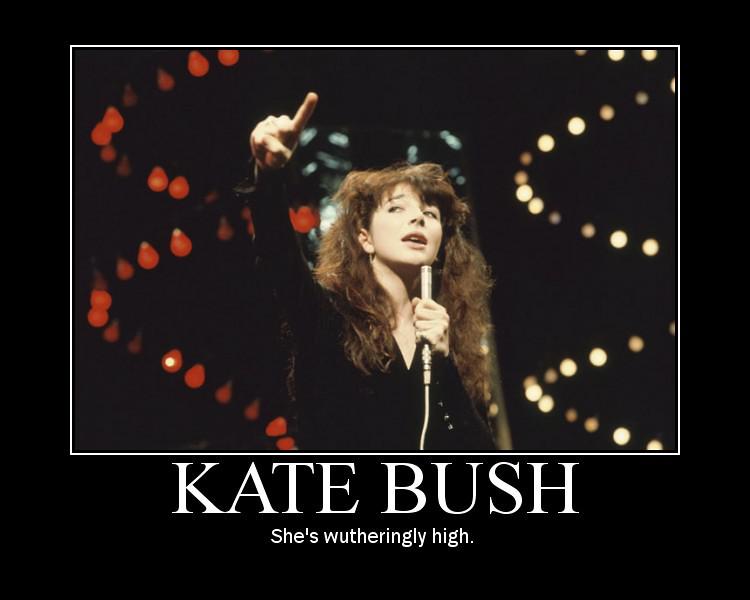
An iconic scene in ‘Stranger Things’ has made this 37-year-old Kate Bush song a number 1 hit

An iconic moment all around.

running up that hill, stranger things, kate bush
Photo credit: www.flickr.comA win for weirdos everywhere.

It’s not every day that an obscure relic from ’80s alt pop completely dominates the charts, takes over social media and becomes a Gen-Z approved cultural phenomenon more than three decades after its original release … all over the course of one weekend, no less. But Kate Bush’s “Running Up That Hill” has done it, thanks to “Stranger Things.”

The widely popular Netflix show has been bringing ’80s pop culture back into the mainstream since its premiere—particularly with things once considered very uncool, like Dungeons & Dragons. But “Running Up That Hill,” wasn’t just used to instill nostalgia or redeem something previously weird (although it does that too). The song plays a pivotal role throughout the season that audiences are responding to on an emotional level.


When a young girl named Max (played by Sadie Sink) becomes haunted by the death of her stepbrother Billy, she starts playing the song over and over again on her Walkman to process her grief.
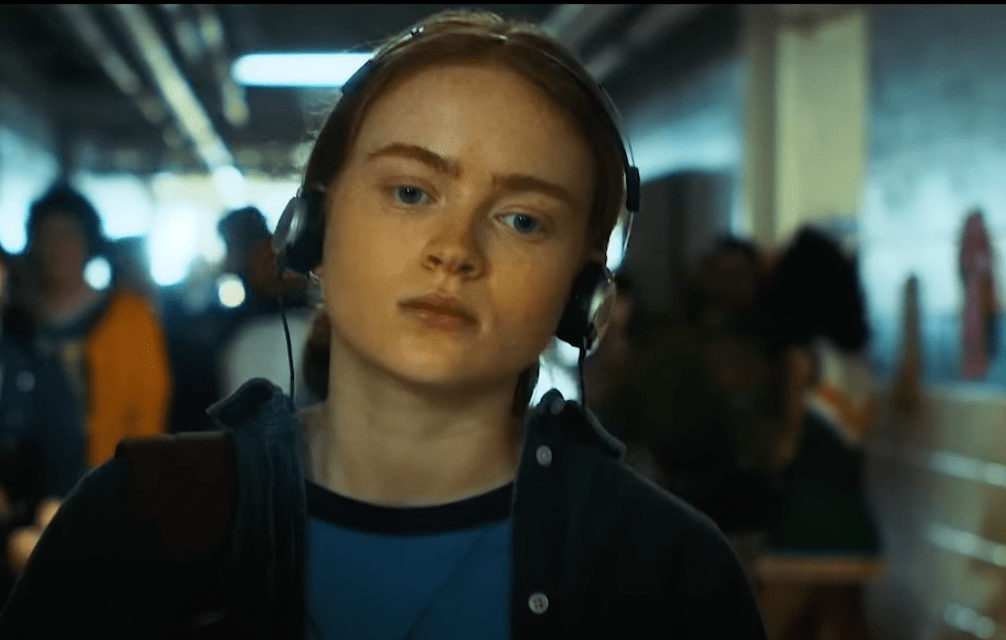
max song stranger things
The headphones might have changed. The feeling hasn't. <a href="https://www.youtube.com/watch?v=2pdkKo-Cj5Y">YouTube</a>

The lyrics “If I only could, I’d make a deal with God, and I’d get him to swap our places” seem to perfectly encapsulate what she might be feeling under her generally tough exterior, and to some extent what anyone who has faced irrevocable loss might feel.

Bargaining, attempting to postpone pain by imagining these “what if” scenarios, is a stage of grief many of us find ourselves in. Though that isn’t necessarily the song’s original meaning, it just works in this context beautifully.

stranger things season four
When the song is over a real life resumes. <a href="https://giphy.com/gifs/netflix-stranger-things-4-st4-7wfWIcQyj2F68vmd18">Giphy</a>

Later, that song is the very thing that saves Max from the evil alternate dimension known as the Upside Down. It pulls her mind away from the darkness and back to her friends, her world and herself. I think everyone has their own “Save Me From The Upside Down” song—a tune or even a whole album that connects them back to their humanity, which is why so many viewers were touched.

Funny enough, for me that lifesaving music is Kate Bush, so this whole moment is super vindicating. Is this what being a hipster feels like?

If you have somehow never witnessed the utterly dramatic, super eclectic, whimsical-yet-bonkers music of Kate Bush, you’re in for a treat. For some, her vibe was way too out there. In fact, according to Unilad, “Running Up That Hill” was even banned from MTV for being “too weird.”

For others, like me, Kate Bush was a spiritual experience.
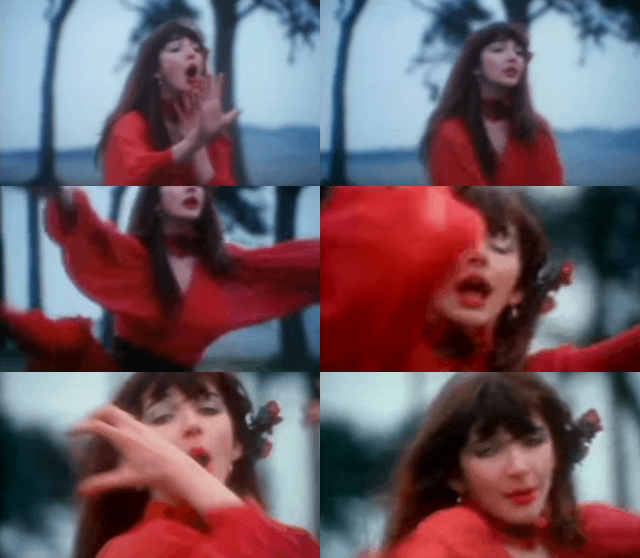
kate bush running up that hill
This was on my vision board for <em>years</em>. <a href="https://giphy.com/gifs/dance-1980s-kate-bush-RC2nV1flJMlfq">Giphy</a>

Not only did it help me escape from otherwise dreary times to fantastical realms, nothing made me feel more encouraged to embrace my own nonconformity. During my teenage years, that was everything.

Below is the original music video for “Running Up That Hill”— complete with interpretive dance moves—just to give you a taste of Kate Bush’s genius.

Since it was released in 1985, the song has been covered numerous times by artists including Tori Amos, Tiffany and Placebo. But for the most part, it has been held in reverent obscurity by only diehard fans. The latest season of “Stranger Things” not only catapulted “Running Up That Hill” to No. 1 on iTunes, it has younger generations now obsessed with all things Kate Bush.

Even the bizarre way she pours tea has gone viral on Twitter.

Is it unsettling to see an artifact from your formative years suddenly be part of the public zeitgeist? Yes, it is. But mostly it’s delightful.

“Stranger Things” is at its heart a story that celebrates outcasts. From the beginning it’s made heroes of outsiders and helped younger audiences appreciate things older generations might have once held shame in loving.
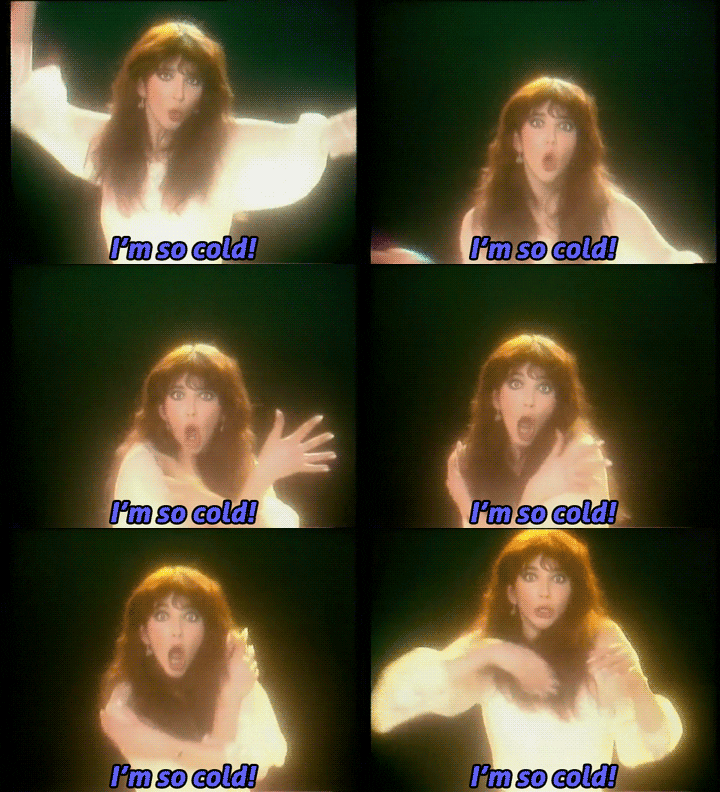
kate bush stranger things
I mean … what's not to like? <a href="https://giphy.com/gifs/cold-14oEknsVCOKSsM">Giphy</a>

Bush’s music is a flavor of uplifting weirdness the world could really use right now, and how thrilling it is to see its much-needed renaissance.

  • Ancient salt frying, the cheaper alternative to oil frying, is making a comeback
    Photo credit: Canvasalt (left) skillet over a fire (right)

    Online, you’ll find hundreds of newfangled hacks to get food crispy and golden brown without the oil. But one new method taking over TikTok isn’t new at all. In fact, it’s centuries old. 

    Enter: salt frying. Recently, Roice Bethel (@roicebethel) went viral after sharing a clip of himself dropping chicharrones and popcorn kernels into a frying pan filled to the brim with salt and salt alone. Then voila, each of the foods puffed out, ready to eat…leaving some viewers dumbfounded. 

    “Am I being gaslit?” one person quipped. 

    @noflakeysalt

    Bonus Points if you can guess what part of the world this technique comes from. In English it’s called salt frying! #easyrecipe #foodhacks #foodscience #cookinghacks #deepfried

    ♬ original sound – noflakeysalt

    History of salt frying

    In truth, the technique of using salt (or sand) to cook certain foods has been around for millennia in countries like China, India, and Greece. And you’ll still find it among street food vendors today. In India, for instance, far far (or fryums), made from potato starch, tapioca, and/or wheat flour, are often made this way.

    In China, chestnuts roasted in large woks filled with hot sand are a seasonal winter staple, prized for their subtly smoky flavor. And in Bangladesh, peanuts are traditionally toasted in pans of hot black sand, which helps them roast evenly without burning.

    Similar techniques have also appeared in parts of the Middle East and Mediterranean, where cooks have long relied on heated salt beds to gently cook or warm foods. Historically, these methods were especially useful in places where cooking oil was scarce or expensive, making salt and sand practical alternatives. Not to mention that watching foods cooks this way is also a treat for the eyes. 

    In Turkey, sand has also been a tried-and-true way to make coffee, seen below. 

    How salt frying works

    Really, salt or sand frying isn’t so much frying as it is dry roasting. Frying food in oil makes food crispy by rapidly dehydrating the outer layer. The intense heat triggers the Maillard reaction, which is responsible for browning and complex flavors, and causes surface starches to gelatinize and harden while the inside stays moist.

    When heated, salt and sand act as equally excellent heat conductors. Both can store and distribute heat evenly, surrounding food on all sides and eliminating hot spots. This creates a consistent cooking environment that mimics the effect of deep frying, only without added fat.

    As Kurush F. Dalal, an archaeologist and culinary anthropologist, told Food & Wine, “it’s an incredibly cost-effective and very controllable process,” especially since you can reuse the salt you fry with. Tell that to the southerners among us who save every drop of their bacon grease!

    Salt frying tips

    Now, if you’re excited to try this cooking style out yourself, there are a few caveats—the most important being that this really only works on dry ingredients. Salt will stick to any damp ingredients and completely ruin the taste of the dish. 

    Second, it is advised to use coarse salt, according to Food & Wine. And at least one person on Reddit suggests that no matter what salt or sand you use, “let it heat for 15 minutes to let the volatile compounds evaporate (like iodine).”

    Lastly, you’ll need a large, deep fryer-friendly utensil, like a wok or cast-iron skillet, that can hold a lot of salt or sand. 

    So, while it may look like a viral magic trick, salt frying is really just ancient ingenuity making a well-deserved comeback. Some things are timeless for a reason. 

  • Robin Williams and Martha Stewart barely keep it together in this classic cooking segment
    Photo credit: via Martha Stewart/YouTube Robin Williams making Martha Stewart crack up.
    ,

    Robin Williams and Martha Stewart barely keep it together in this classic cooking segment

    “I feel incredibly honored to have grown up in an era where we had this wonderful man.”

    It’s hard to believe it’s been over 10 years since the great Robin Williams left our world. The man left a fantastic legacy of laughs, from his time on TV’s Mork and Mindy to his performances in comedy hits such as Mrs. Doubtfire and Disney’s Aladdin.

    Williams was also an incredible dramatic actor, giving memorable performances in films such as Dead Poets Society and Good Morning, Vietnam.

    But the Comic Relief star always shined brightest when he improvised on stage, whether on talk shows or in stand-up comedy. One appearance on Martha Stewart Living from 2004 resurfaced last year because of how quickly he improvised jokes while cooking with Stewart. It’s also great because Stewart plays the perfect straight woman to Williams, although she has a tough time holding it together.

    Their chemistry was spicy

    Whenever Stewart mentions an ingredient, whether cumin or brown sugar, Williams turns it into a comedic riff. He also jokes in Spanish and does a few accents that feel off-color over 20 years later, but they’re delivered with the best intentions. Williams also walks a bit of a tightrope during the segment while he tries to keep his humor appropriate for daytime TV while reacting to Stewart, who is “rubbing the meat.”


    “I feel incredibly honored to have grown up in an era where we had this wonderful man,” the most popular commenter on the YouTube video wrote. “His ability to change characters on the fly is remarkable,” another added. “His spontaneous humor is unmatched! He was an incredibly smart, kind and funny man. He is sorely missed!” another commenter said.

    Who were Martha Stewart’s favorite guests on her show?

    Years later, Stewart would admit that Williams was one of her favorite guests on the show. “We had so much fun because he was the fastest wit and the fastest mind and his mind was like a computer,” Stewart told AOL in 2022. “No matter what I said, he had a retort and he was so quick. I was marinating meat and he loved that—can you imagine what he did with ‘marinating meat’ and ‘rubbing the meat’ and ‘ooh la la?’ Watch the segment; it’s really good.”

    What’s The Many Lives of Martha Stewart film about?

    Although Martha Stewart has rarely been out of the spotlight over the past five decades, she was in the news after releasing the 2023 Netflix documentary about her life, The Many Lives of Martha Stewart.

    The film follows Stewart’s journey from teen model to Wall Street stockbroker to the queen of entertaining and good taste. Eventually, she would become America’s first self-made female billionaire. The documentary also discusses the insider trading scandal that sent her to prison in 2004.

    The film also reveals Stewart’s guiding philosophy. “I have two mottos. One is: Learn something new every day. And the second one is: When you’re through changing, you’re through,” Stewart says in the film. “Change that garden if you don’t like it. Rip it out and you start all over again.”

    If you want to relive the hilarious moments between Stewart and Williams in your kitchen, here’s a recipe for the Chili Espresso Steak Rub.

    This article originally appeared two years ago. It has been updated.

  • Brendan Fraser wows audience with pitch-perfect story of how he first met Harrison Ford
    Photo credit: Monclair Film/Wikipedia & Kevin Paul/WikipediaBrendan Fraser (left), a cockpit (middle), and Harrison Ford (right).

    Some celebrities really live up to their fictional personas. Harrison Ford is certainly one of them, and this recent story from Brendan Fraser is a prime example of it. 

    During a panel at MegaCon Orlando, Fraser shared how he first met Ford while working together on the 2010 film Extraordinary Measures, based on a true story. In the film, they play two men who team up to develop a drug to save children from a life-threatening disease.

    As Fraser told the crowd, he randomly received a phone call from his costar, asking how quickly he could get to the airport. Not wanting to disappoint, Fraser replied, “I guess I can get in a cab now.” Apparently, as soon as he arrived, Ford was there waiting for him. The two then hopped on Ford’s plane, where Fraser was allowed to sit in the co-pilot’s seat. 

    @disadventurelife

    This is the first story he tells about Harrison Ford. Want me to share the second one too? #brendanfraser #harrisonford #megaconorlando #celebrityinterview @FAN EXPO

    ♬ original sound – Disadventurelife

    Showing himself to be a true Star Wars fan, Fraser recalled, “I’m Chewbacca, b**ches,” dusting himself off proudly. Honestly, who could say no to being Chewbacca to the OG Han Solo? And even if you aren’t a Star Wars aficionado, it’s heartening to see Fraser relive a positive memory from his earlier Hollywood years. 

    “I’m smiling ear to ear and damn I needed that,” one viewer on TikTok aptly wrote.

    Another gushed, “Han Solo flew you around? AMAZE AMAZE AMAZE.”

    “This made me cheese so hard what a legend,” added a third.

    This is only one of two hilarious Ford stories Fraser shared. Apparently, for one scene, Fraser couldn’t remember a newly updated line and was growing more flustered with each failed take. Ford, clearly done with the situation, grabbed a Sharpie, wrote the line on some duct tape, and promptly stuck it on his forehead so Fraser could simply read it. 

    “It was hysterical, but it totally defined Harrison,” Fraser recalled during an interview in Beverly Hills, according to the Orange County Register. “His philosophy on acting is ‘Do it, and do it right.’”

    The outlet also noted that Ford was only trying to help his co-star relax. It just happened to be in the most Harrison Ford way possible. 

    “Marlon Brando once said that an actor can’t care about anything or the audience will see it on his face. Maybe Brendan was caring too much,” he quipped. 

    It’s interesting to think about how this time must have felt for Fraser. After the success of The Mummy, he had become an Indiana Jones type in his own right. And there he was, a decade later, not only meeting the OG, but actually working alongside him. That kind of full-circle moment had to feel surreal and nerve-wracking all at once.

    And now, both universally loved actors have enjoyed their own renaissance of sorts: Fraser with his Hollywood comeback in projects like The Whale, Doom Patrol, and Rental Family, and Ford with Shrinking. Who knows—maybe we’ll see them share the screen again. If so, there will likely be even more great stories to come.

  • Watch the tense moment Lucille Ball tells a host to take his hands off female audience members
    Photo credit: CBS Television (Public Domain)Lucille Ball was a powerhouse both on screen and off.
    ,

    Watch the tense moment Lucille Ball tells a host to take his hands off female audience members

    People laughed every time she told him ‘hands off,’ but she was stone cold serious.

    According to her daughter, Lucille Ball never considered herself a feminist, but there’s no question she blazed many a trail for women. A working mother in real life, she depicted issues facing housewives with her brilliant television comedy and became the first female studio head in Hollywood. She broke glass ceilings but wasn’t particularly outspoken about women’s rights. In fact, in a 1980 interview with People she said, “They can use my name for equal rights, but I don’t get out there and raise hell because I’ve been so liberated, I have nothing to squawk about.”

    Ball empowered women by example—and by speaking her mind. Carol Burnett shared a story on PBS about how Ball was unhappy with a script for her new show, but women at that time didn’t raise concerns about such things. Men could express criticism and demand changes, but women simply didn’t. Ball did—and firmly—despite being non-confrontational by nature. Later she told Burnett, “Kid, that’s when they put the ‘s’ at the end of my name.”

    Lucille Ball shuts down TV host 

    A video has been circulating on social media showing Ball’s no-nonsense way of speaking up when she felt the need to, and people are gushing over it.


    Lucille Ball, 70s, 80s, 60s, I Love Lucy, television, actress, hollywood, sexism, misogyny
    Lucille Ball was a massive star, but perhaps best known for the show ‘I Love Lucy By CBS Television – Public Domain

    In 1978, Ball participated in a Q & A session with UCLA theater arts students on the television program “America Alive!” The viral clip shows Ball repeatedly telling one of the hosts, David Sheehan, to take his hands off of female audience members when they were asking a question.

    “Will you take your hands off, David?” she says as he introduces one young woman. “Take your hands off of her,” she says again as he places his hand on the shoulder of another. “David, would you take your hands away?” she says as he places his hands on another woman in a sparkly gold dress.

    Watch:

    People laughed every time, but Ball didn’t so much as crack a smile during her clear, simple, repeated “hands off” admonitions.

    For 1978 especially, her advocacy for the women in the audience was extraordinary. Sheehan wasn’t touching these women in a lewd or sexual manner, but he was touching them in a way that he wouldn’t have touched a man who was asking a question. Most people wouldn’t have thought much of it at the time, but Lucille Ball immediately noted it and didn’t let it stand.

    Here are some of the best comments

    “I love that she didn’t even laugh when the room was. She was not joking.”

    “‘Take your hands off her, David,’ should be a sound AND a t-shirt.”

    “He kept trying. She kept telling him. Love her.”

    “Lucille Ball always reminds me of my grandma. She hated to be seen as delicate, and she hated men that would touch her even more. She would say, stone-faced, ‘Get your paws off.’”

    “The audience laughed and she said ‘ain’t nothing funny.’ Love her”

    .”This happened to me so much growing up and I noticed from very young the boys weren’t treated this way.”

    “Even then she knew how the industry was. I LOVE IT AND LOOOOVE LUCY SO MUCH.”

    A commenter on Reddit noted that Ball started her career as a chorus girl and dancer. “She knows every creepy man trick in the book”

    The wider culture of handsy TV hosts

    Television and game shows from the 70s and 80s are an incredible time capsule of the culture and norms of the era. Sheehan wasn’t the only one who tended to get a little handsy.

    It was common for male hosts to kiss female contestants. Richard Dawson, host of The Family Feud, was famous for it. Even our beloved Bob Barker of The Price Is Right often had women suggestively reach into his jacket to fish out their $100 bill.

    Richard Dawson kissing all the women in the family. YouTube

    There’s a casual lecherous-ness that famous men seemed to get away with easily at the time. For anyone to publicly challenge them on their behavior was absolutely shocking.

    Even if Sheehan was casually touching those women out of habit and not ill intent, it’s laudable that Ball made a point of making him aware of it. Unfortunately, women are still having to deal with men touching them without being invited to, but seeing Lucille Ball’s serious face while calling it out is a good reminder that women have been fighting this battle for a long time. Good for her for using her microphone and the respect afforded her to speak up for the young women in her audience.

    This article originally appeared last year.


  • Singer stuns Boy George with bold take on ‘Do You Really Want to Hurt Me’
    Photo credit: Talent Snacks/YouTubeBoy George listens to "Do You Really Want to Hurt Me" on "The Voice Australia."
    ,

    Singer stuns Boy George with bold take on ‘Do You Really Want to Hurt Me’

    Sheldon Riley delivered a haunting rendition of the Culture Club hit to the pop star.

    Culture Club’s “Do You Really Want to Hurt Me” is a pop song that has stood the test of time. The hit was written by the band’s lead singer, Boy George, and topped the Billboard charts in 1982.

    It continues to resonate with younger generations. During a 2018 blind audition on Season 7 of The Voice Australia, singer Sheldon Riley performed an evocative version of the song for judge Boy George himself.

    Riley’s personal touches on the hit made a deep impact on Boy George.

    Singing to Boy George

    In the viral clip, Riley takes a few deep breaths before beginning to sing, accompanied only by a piano. “Give me time to realize my crime,” he croons, as judge Joe Jonas immediately recognizes the tune, along with Boy George.

    “I know that song,” Boy George says.

    With their ears perked, Riley continues to sing, and Boy George quickly presses the button to turn his chair. Riley immediately becomes emotional as the three remaining judges—Jonas, Delta Goodrem, and Kelly Rowland—also press their buttons.

    “I love it!” Boy George continues, as Riley keeps singing a hauntingly sad version of his major pop hit. Riley bursts into tears at the end of his performance, and Boy George sings his praises.

    “Great song!” he quips. “Obviously that song is so personal to me—it’s my own personal love story in a way. And it’s almost impossible to imagine anyone else singing it. You just added so much kind of sadness to it.”

    @cultureclubofficial

    Learn the story behind “Do You Really Want to Hurt Me” on an all new episode of #BehindTheMusic streaming now exclusively on @Paramount Plus #cultureclub #boygeorge #doyoureallywanttohurtme

    ♬ original sound – Culture Club

    Boy George quickly compliments Riley on his outfit—a purple top with large faux-fur sleeves and white ripped jeans—with Riley sharing that his look isn’t “normally accepted” by others.

    Boy George says to him, “Honey, can I just say…never, ever look for acceptance. Take me as I am—that should be your motto.”

    Later in the clip when Riley is choosing his coach, he tells Boy George, “I just want to say thank you so much. You let people like me wear what I want to wear, and put these lashes on that take thousands of years. You just inspire me so much…I’m going to go Team George!”

    The history of “Do You Really Want to Hurt Me”

    In a 2015 interview with The Guardian, Boy George said he wrote the song about his former partner, Kirk Brandon.

    “I did play the victim. That was the role I took on: ‘Oh, why are you doing this to me?’ Back in the day, I spent so much time trying to change the people I was in love with–and not trying to change myself,” he said.

    And he didn’t think it would be a hit.

    “I thought the song was too personal to be a hit and I didn’t want it to be a single. I went to Virgin and stomped my feet and sat on the stairs saying: ‘You’re going to ruin our career before we’ve even started!’, he said. “Our audience needed something to dance to, and ‘Do You Really Want to Hurt Me’ was too slow, too personal, too long. Everything about it was wrong. So its success was a big education for me: I learned that being personal was the key to touching people.”

    The song peaked at No. 2 on the Billboard charts in March 1983 and spent 25 weeks on the chart.

  • Woman says photos prove that office air changes her appearance
    Photo credit: @noadonlan/TikTok (used with permission)Noa Donlan shows before-and-after photos.
    ,

    Woman says photos prove that office air changes her appearance

    Fluorescent lights really do a number, don’t they?

    Office workers, has this happened to you? 

    It’s 9 a.m. You arrive at your desk feeling fresh, but by noon, when you catch a glimpse of yourself in the bathroom, you barely recognize yourself. And by the end of the workday…yeesh.

    That was the case for Noa Donlan, a flag-waving “corporate girly” who couldn’t help but notice the visible difference between how she looked when clocking in and even just hours later. So she decided to document it.

    In a series of now-viral videos posted to TikTok and Instagram, we see her face transform from glowing and vibrant to puffy-eyed, with dry, gray-toned skin and hair weighed down by oil.

    @noadonlan

    I leave the house feeling fine and by 12pm my skin is dry, my eyes look tired, and my hair is oily?? tell me I’m not the only one follow for realistic 9–5 POVs 💻✨ #creatorsearchinsights

    ♬ original sound – That Office Show
    @noadonlan

    There’s something in the OFFICE air💻 Follow if this is you by 1pm in the office🤍 someone mentioned this song in the comments and I can’t remember who it was so if this was you THANK YOU for the song idea 😉 #corporategirl #officelife #workhumor #9to5 #corporategirly

    ♬ original sound – Z

    Perhaps you could blame it on unforgiving bathroom lights, but Donlan has a different theory: office air.

    And apparently, she isn’t the only one who thinks it might be to blame. Her video drew a ton of comments from people sharing similar experiences.

    ​​“I look like a sick Victorian child by lunch,” lamented one viewer. 

    Plus, there are millions of videos on TikTok from others documenting the same phenomenon, many of whom film themselves in the exact same location for before-and-after shots. The most common complaints are dry skin, a shiny forehead, oily hair, and cracked lips.

    @bypresleemae

    10 hours later and my makeup is gone, my hair is frizzy, my skin is so dry, and I’m missing nails #corporategirlies #corporategirl

    ♬ Get It Sexyy (Instrumental) – Sexyy Red
    @lifewithmorgan_m

    What are we doing to rid this?? TIPS please!! #officelife #corporate #corporategirlies #officeoutfit #officeootd Credit: @Caroline Mackenzie 💝

    ♬ original sound – CLIPSTORM

    “Office air is the most fatal of them all,” another office worker said in a video with 1.2 million views.

    “No matter how good I try to make myself look in the morning, I’m going to leave the office looking like I just ran a marathon and washed my face with grease,” they said.  

    Now, is this a Severance-level work conspiracy? Probably not. (The odds are low, but never zero.)

    However, there are some potential explanations, one of which is the air in the office, which tends to be stripped of humidity thanks to the A/C blasting nonstop.

    Plus, offices without openable windows mean the skin may get less oxygen throughout the day. This, combined with dehydration, “leaves skin looking dull and fatigued,” said skin expert Fiona Brackenbury in an interview with Refinery29.

    There’s also something to be said about the effects that reduced circulation from being stationary, stress, and squinting at screens can have on our appearance, according to the Skin Elite blog.

    Prevent “office air” from damaging skin

    Thankfully, there are expert-approved ways to combat the effects of “office air,” particularly dryness.

    Dr. Catherine Chang, a plastic surgeon, recommends using a small portable humidifier at your desk, as well as a good moisturizer or hyaluronic acid that you can reapply as needed.

    @catchangmd

    If you work in an office 9-5, this is for you. “Office air” aka “work air” might be the reason your skin gets dry and make up patchy while at work. 👀 #skincare #skincaretips #beautytok #beautytips

    ♬ original sound – Dr. Catherine Chang

    She also suggests spraying hypochlorous acid, which can help with inflammation and free radical damage. She noted that it might not actually help with dryness, but can at least leave you feeling “refreshed.”

    In addition, experts recommend serums containing niacinamide, vitamin E, and/or resveratrol, which help protect against environmental damage, support collagen production, and soothe the skin.

    As for the stress portion? That’s a harder nut to crack, but it goes to show, once again, that stress management affects us in more ways than one. Short of packing it all up to live on a cruise ship, don’t forget that some form of relaxation—whether it’s taking a few deep breaths or going for a walk during your lunch break—is vital.

    So, while “office air” might not be fully researched or proven, it serves as a reminder that our work environments shape how we feel—and even how we look—throughout the day. Hopefully, it only takes a few small adjustments to help you leave the office matching the person who walked in that morning, inside and out.

  • ‘The one who’s in love always wins’: Ethan Hawke’s poetic advice on unrequited love touches millions
    Photo credit: Canva & Raph_PH/WikipediaImage of a sunrise (left) and Ethan Hawke (right).

    During a red carpet interview leading up to the 2026 Oscars ceremony, actor Ethan Hawke was asked to speak about unrequited love, as Blue Moon, the film that earned him a Best Supporting Actor nomination, centers heavily on the theme. 

    As Hawke often does, he left viewers stunned and inspired with his thoughtful, poetic answer in a now-viral clip.  

    According to Hawke, one needn’t feel as though they’ve lost anything when romantic feelings aren’t returned, because the act of feeling itself is the true gift of being alive.

    @ameliadimz

    The one who’s in love always wins !!

    ♬ original sound – ameliadimz

    Hawke’s thoughts on unrequited love

    “The one who’s in love always wins,” the Dead Poets Society star explained. “It doesn’t matter if you get your heart broken; you’re living. When you’re feeling, you’re alive.”

    He added, “The sun doesn’t care whether the grass appreciates its rays, right? It just keeps on shining. That’s you.”

    And to top it all off, when the interviewer, Amelia Dimoldenberg, said “I love you” in response to Hawke’s inspiring words, the actor didn’t skip a beat, replying, “I love you too,” with genuine affection.

    Reactions

    The message, now seen more than 13 million times, left many marveling at how Hawke was able to deliver such “insanely beautiful” and “absolutely brilliant” words off the cuff.

    “That was just off the dome??”

    “​​He freestyled that???? no script, nothing…. such heavenly Shakespearean poetic words off the top of his head?? Wow.”

    “This man is always spitting pure poetry.”

    “Ethan Hawke is my fave modern philosopher.”

    Others couldn’t help but share that it instantly changed their mindset for the better.

    “This switched something in my brain like a full factory reset.”

    “It’s the most profound thing I’ve literally ever heard.”

    ethan hawke, love, relationships
    Two hands exchanging a paper heart Photo credit: Canva

    It’s not hard to see why the clip resonated so deeply

    Unrequited love is often framed in pop culture as something embarrassing or tragic. But here, Hawke reframed it as something beautiful and life-affirming. Loving someone, even without those feelings being reciprocated, becomes proof of openness, courage, and emotional vitality. Not a failure.

    That perspective can feel especially radical, since we are often taught to measure success by what we receive in return, whether through affection, validation, or monetary gain. But Hawke’s words gently push against that idea, suggesting that the experience of loving itself holds inherent value, regardless of the result. His take echoes a quote by C.S. Lewis that many referenced in the comments: “Love is never wasted, for its value is not based on reciprocity.”

    Moments like this are part of why Hawke has built a reputation not just as an actor, but as a thoughtful observer of the human experience. Whether through interviews, writing, or performances, he often taps into something both deeply personal and universally relatable.

    If the reaction online is any indication, this brief red carpet exchange did more than promote a film. It offered millions of viewers a small but meaningful shift in perspective, reminding them that feeling deeply is not a weakness, but a sign of being fully alive. And isn’t that, in a way, the point of it all?

  • Why didn’t people smile in old-timey photographs? Smiling meant something different back then.
    Photo credit: Public DomainPhotos of a man and woman from the 1800s

    If you’ve ever perused photographs from the 19th and early 20th century, you’ve likely noticed how serious everyone looked. If there’s a hint of a smile at all, it’s oh-so-slight. But more often than not, our ancestors looked like they were sitting for a sepia-toned mug shot or being held for ransom or something. Why didn’t people smile in photographs? Was life just so hard back then that nobody smiled? Were dour, sour expressions just the norm?

    Most often, people’s serious faces in old photographs are blamed on the long exposure time of early cameras, and that’s true. Taking a photo was not an instant event like it is now; people had to sit still for many minutes in the 1800s to have their photo taken.

    Ever try holding a smile for only one full minute? It’s surprisingly difficult and very quickly becomes unnatural. A smile is a quick reaction, not a constant state of expression. Even people we think of as “smiley” aren’t toting around full-toothed smiles for minutes on end. When you had to be still for several minutes to get your photo taken, there was just no way you were going to hold a smile for that long.

    But there are other reasons besides long exposure times that people didn’t smile in early photographs.

    mona lisa, leonardo da vinci, classic paintings, famous smiles, art
    Photo credit: Public domainMona Lisa

    The non-smiling precedent had already been set by centuries of painted portraits

    The long exposure times for early photos may have contributed to serious facial expressions, but so did the painted portraits that came before them. Look at all of the portraits of famous people throughout history prior to cameras. Sitting to be painted took hours, so smiling was out of the question. Other than the smallest of lip curls like the Mona Lisa, people didn’t smile for painted portraits, so why would people suddenly think it normal to flash their pearly whites (which were not at all pearly white back then) for a photographed one? It simply wasn’t how it was done.

    A smirk? Sometimes. A full-on smile? Practically never.

    old photos, black and white photos, 1800s photos, no-smile photos, no smiles in photo
    Algerian immigrant to the United States. Photographed on Ellis Island. Photo credit: Augustus F. Sherman via William Williams/Wikimedia Commons

    Smiling usually indicated that you were a fool or a drunkard

    Our perceptions of smiling have changed dramatically since the 1800s. In explaining why smiling was considered taboo in portraits and early photos, art historian Nicholas Jeeves wrote in Public Domain Review:

    “Smiling also has a large number of discrete cultural and historical significances, few of them in line with our modern perceptions of it being a physical signal of warmth, enjoyment, or indeed of happiness. By the 17th century in Europe it was a well-established fact that the only people who smiled broadly, in life and in art, were the poor, the lewd, the drunk, the innocent, and the entertainment […] Showing the teeth was for the upper classes a more-or-less formal breach of etiquette.”

    drunks, classic painting, owls, malle babbe, paintings
    Photo credit: Frans Hals via Public domain"Malle Babbe" by Frans Hals

    In other words, to the Western sensibility, smiling was seen as undignified. If a painter did put a smile on the subject of a portrait, it was a notable departure from the norm, a deliberate stylistic choice that conveyed something about the artist or the subject.

    Smiling simply didn’t work well in old portraits

    Even the artists who attempted it had less-than-ideal results. It turns out that smiling is such a lively, fleeting expression that the artistically static nature of painted portraits didn’t lend itself well to showcasing it. Paintings that did have subjects smiling made them look weird or disturbing or drunk. Simply put, painting a genuine, natural smile didn’t work well in portraits of old.

    As a result, the perception that smiling was an indication of lewdness or impropriety stuck for quite a while, even after Kodak created snapshot cameras that didn’t have the long exposure time problem. Even happy occasions had people nary a hint of joy in the photographs that documented them.

    Another reason why people didn’t smile in old photos is that dental hygiene wasn’t the same as it is today, and people may have been self-conscious about their teeth. “People had lousy teeth, if they had teeth at all, which militated against opening your mouth in social settings,” Angus Trumble, the director of the National Portrait Gallery in Canberra, Australia, and author of A Brief History of the Smile, said, according to Time.

    old photos, black and white photos, 1800s photos, no-smile photos, no smiles in photo
    Even wedding party photos didn’t appear to be joyful occasions. Photo credit: Wikimedia Commons

    Then along came movies, which may have changed the whole picture

    So how did we end up coming around to grinning ear to ear for photos? Interestingly enough, it may have been the advent of motion pictures that pushed us towards smiling being the norm.

    Photos could have captured people’s natural smiles earlier—we had the technology for taking instant photos—but culturally, smiling wasn’t widely favored for photos until the 1920s. One theory about that timing is that the explosion of movies enabled us to see emotions of all kinds playing out on screen, documenting the fleeting expressions that portraits had failed to capture. Culturally, it became normalized to capture, display and see all kinds of emotions on people’s faces. As we got more used to that, photo portraits began portraying people in a range of expression rather than trying to create a neutral image of a person’s face.

    Changing our own perceptions of old photo portraits to view them as neutral rather than grumpy or serious can help us remember that people back then were not a bunch of sourpusses, but people who experienced as wide a range of emotion as we do, including joy and mirth. Unfortunately, we just rarely get to see them in that state before the 1920s.

    This article originally appeared last year.

Culture

Doctor explains why some people can’t bring themselves to touch a deceased loved one’s things

Skills

6 party ideas that actually make it easier to invite people over

Relationships

Woman makes boyfriend sign ‘Performance Improvement Plan’ after he forgot her birthday

Generations

Gen Xers share how to avoid a midlife crisis so younger people don’t have to