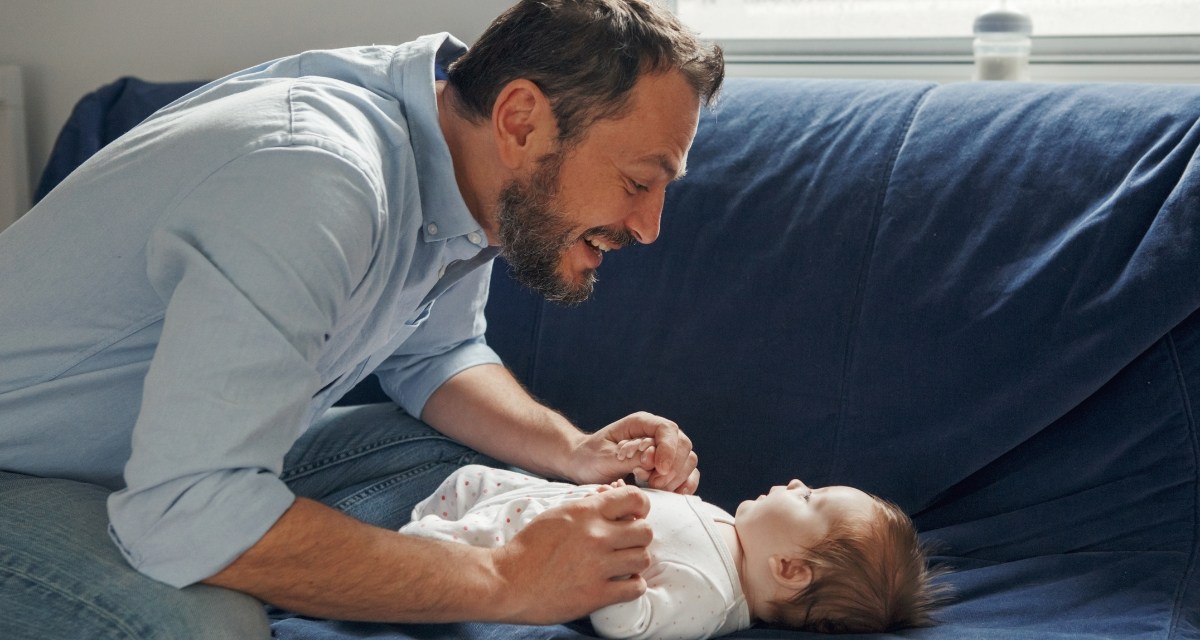
Baby talk can be a touchy subject depending on who you’re speaking with. Some parents believe that babies should be spoken to like miniature adults, while others scoff at the thought. Scientists have now settled the debate. Research reveals that using baby talk with your infant serves an important purpose and that humans instinctively use baby talk across cultures and continents.
The term “baby talk” may conjure the image of a parent hovering over their baby, speaking gibberish, but that’s not what it means. The PBS show Otherwords describes baby talk as the high-pitched, sing-song voice adults use with infants. And dogs. And cats. Pretty much anything a person deems irresistibly adorable. It’s a sound that may take you by surprise the first time you use it. Why is that?
Baby talk may be instinctual
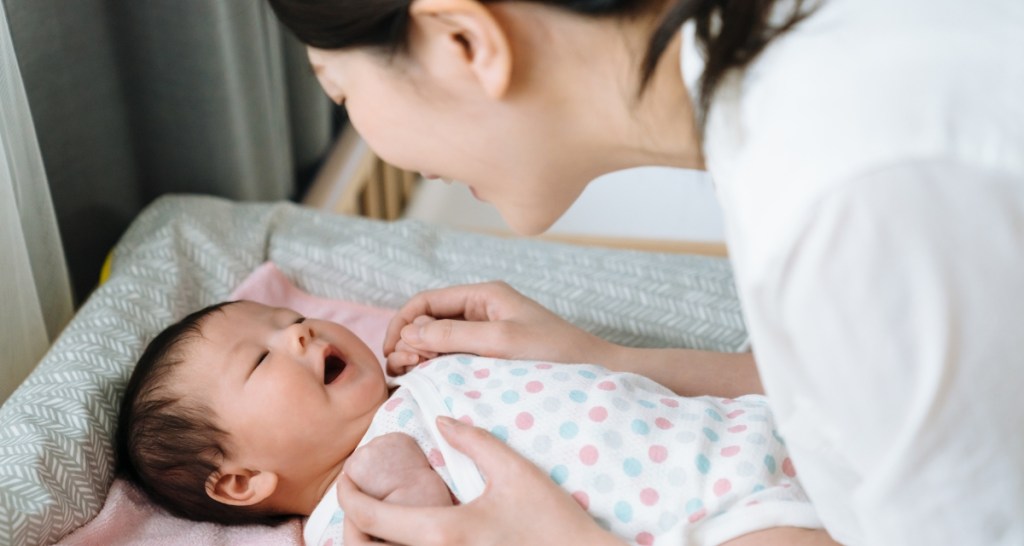
The host of Otherwords, Erica Brozovsky, explains that baby talk has “also been called ‘Motherese’ or ‘Parentese,’ and for many years, child psychologists discouraged the practice, warning parents that it could slow language development and teach bad speech habits.”
Brozovsky later adds, “But that perspective has changed, thanks to a number of linguistic, neurological, and cultural studies into what is scientifically known as ‘infant-directed speech [IDS].’ By looking into the minds of both babies and adults, some fascinating discoveries have been made about how it impacts language acquisition, what its evolutionary roots might be, and even why we do it with our dogs.”
According to Brozovsky, no matter the language or culture, there are common traits of those using baby talk with an infant. People slow down their speech, add pauses between syllables, exaggerate vowels, speak in a high pitch, simplify grammar, and repeat words.
Baby talk serves a purpose
“The behavior is more or less involuntary,” Brozovsky says. “Nobody decides to baby talk. It just kind of happens. Like a lot of linguistic phenomena, when something occurs instinctively, there tends to be a lot going on under the hood, and infant-directed speech is no exception. Studies have found that a high-pitched voice will grab and hold a baby’s attention better than a low-pitched one. In fact, they tend to prefer voices around the same frequency as their own vocal tracts.”
This preference for high-pitched voices doesn’t develop until the baby begins making their own noises in an attempt to communicate. Brozovsky further explains that smooth, high-pitched speech signals vulnerability and friendliness. This high-pitched way of speaking also extends to romantic partnerships, and humans even use these patterns in sounds to recognize the feelings of other species.
The sing-song voice is global
But what purpose does baby talk serve beyond grabbing an infant’s attention? A lot.
Brozovsky shares, “A slower tempo allows an infant to grasp the rhythm and intonation patterns of the language, known as prosody. Exaggerated vowels may also highlight the differences between phonemes. Repetition encourages the retention of key words, and despite the fear that it could teach bad speech habits, baby talk rarely employs incorrect grammar or pronunciations. Various studies have shown that IDS improves or accelerates certain language skills in young children, like vocabulary, sound differentiation, and word-boundary perception.”
Animals can pick up on vocabulary in much the same way as babies, and baby talk crosses languages. The Harvard Music Lab recorded people talking to children in multiple countries with diverse languages in 2022. They found that adults used the same type of special sing-song speech when speaking to infants across every culture and country in their study. In countries where parents don’t speak directly to their infants, siblings and other relatives fill in the gap. Other cultures use baby talk to speak for the baby rather than to the baby, but it’s still baby talk.
It’s unique to humans
“Since humans are the only species with language, this led [researchers] to believe that baby talk specifically evolved to aid in language acquisition,” Brozovsky explains. “If it serves some other emotional or social purpose, you’d expect to see some early version of it in other nonverbal primates. That doesn’t mean it doesn’t serve an emotional or social purpose today.”
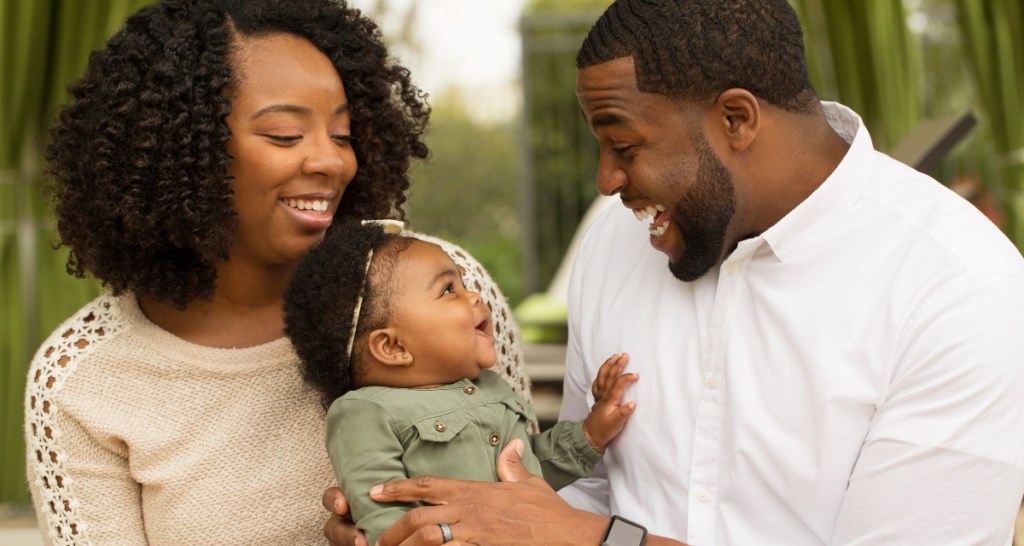
Brozovsky adds, “The process of guiding babies into the wonderful world of language is emotionally rewarding for adults and children alike. Our brains release oxytocin, which promotes bonding and makes us feel happy.”