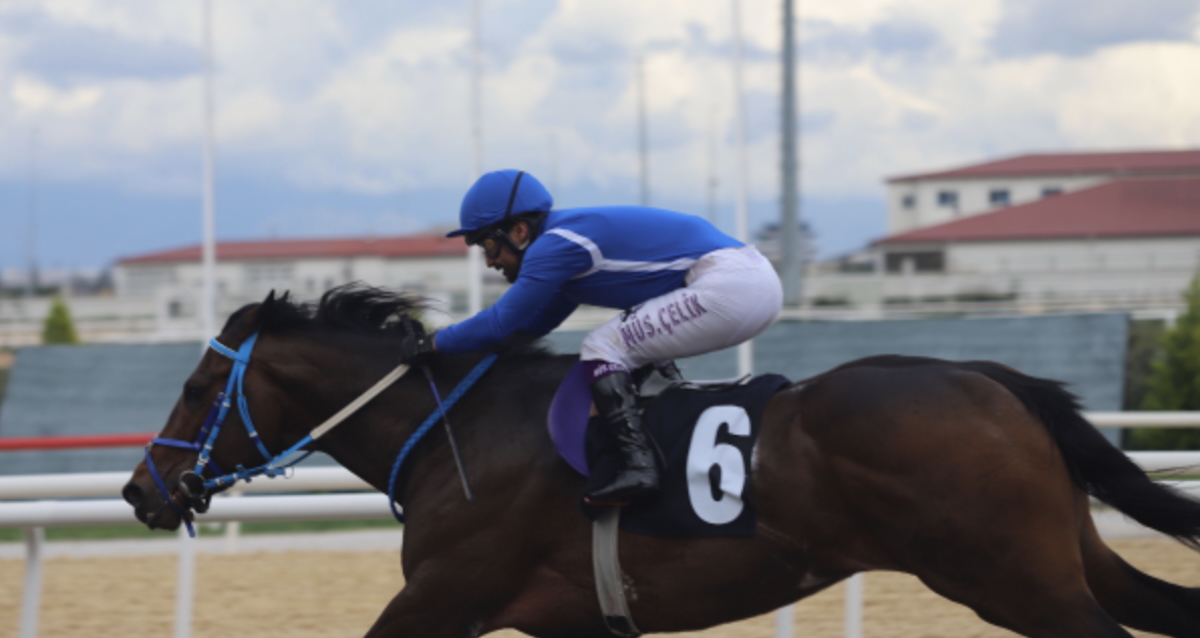
Picture a serene barn in the rolling hills of Sykesville, Maryland. A man in a prison uniform runs a brush along the flank of a horse that once thundered down a racetrack.
A few years earlier, that horse might have been headed for an auction lot, or a truck bound for a slaughterhouse. The man was headed for a cell and a calendar of empty days.
But today, they’re standing in a sunlit paddock and are learning to trust each other.
Welcome to the beauty of the every day work at Second Chances Farm, where retired racehorses and incarcerated men rebuild their lives together. Neither one is the hero, really. They’re rescuing each other.
Problems behind the finish line
You probably don’t think about what happens to a racehorse after its last race. Their endings are often grim.
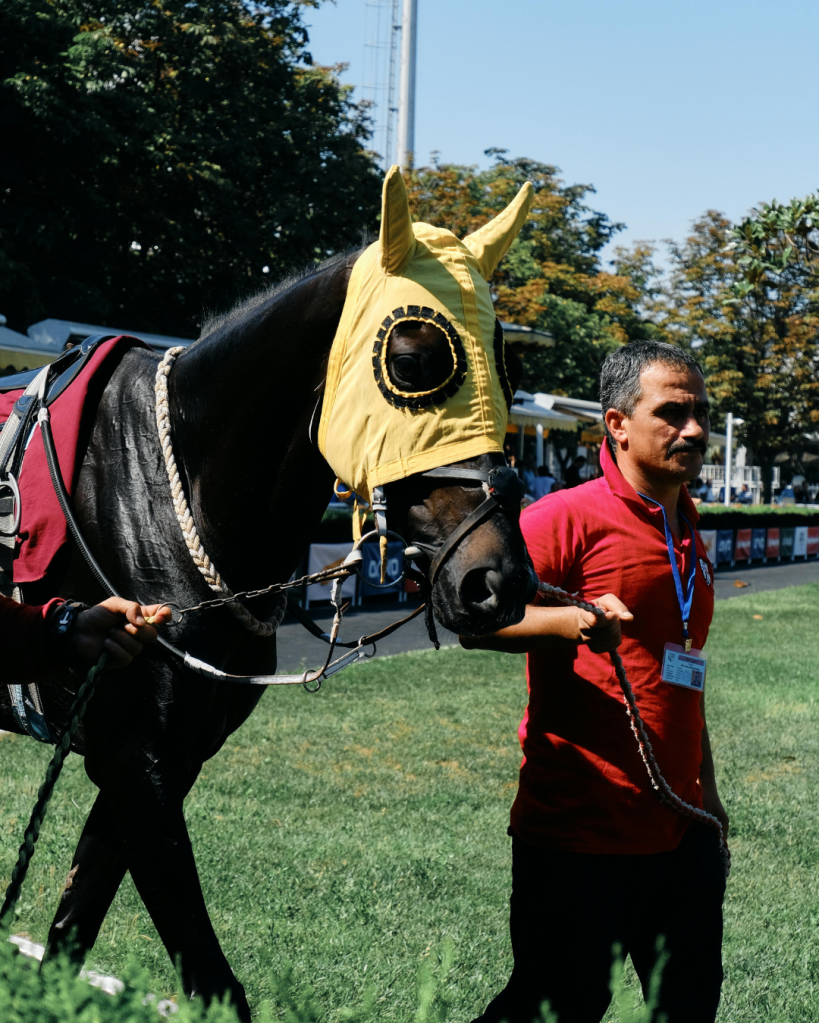
When Thoroughbreds stop winning, many face neglect, abandonment, or even slaughter. The Thoroughbred Retirement Foundation (TRF) was created for this exact reason: to provide “dignified lifetime care” for former racehorses that can no longer compete. The TRF estimates that tens of thousands of ex-racehorses are sent across the border to Canada and Mexico for slaughter every year. As a response, the nonprofit accepts horses that are “most at risk,” meaning seniors, horses with injuries, or horses that face uncertain circumstances.
Meanwhile, less than an hour away, men in Maryland’s correctional system were facing a different kind of dead end: time to serve, and not much sense of purpose to fill it.
How Second Chances Farm brings them together
The farm is a partnership between the Thoroughbred Retirement Foundation and the Maryland Department of Public Safety and Correctional Services. It’s the first of its kind in the state of Maryland.
Here’s how it works. Several days a week, a small group of pre-release men leave a nearby correctional facility and come to the farm. They’re here for the horses: feeding, grooming, medicating, and caring for them as they recover from the wear and tear of racing life. The program’s participants study equine anatomy, nutrition, and injury care, working toward a grooming certification they can actually use at racetracks once they’re out. They conduct daily physical examinations and clean the horses’ living spaces.
Program Coordinator Chelsey Truesdell describes the scope to a local news station: “They do a lot of theory, ranging from horse behavior all the way up to caring for injuries and grooming and tacking and everything that you may need to know moving forward when they’re released from the program.” She adds: “It’s like a veterinary course.”
Graduates have gone on to careers as farriers, vet assistants, and equine caretakers. “A lot of these inmates have never touched a horse before,” says Kendall Norris, TRF’s marketing director, “and they come out of the program with an elite grooming certificate and get another job in the industry as soon as they leave prison.”
Another thing to mention: the program is only open to pre-release inmates, meaning those who have a certain amount of time left on their sentence and have earned the privilege through good conduct. The facility is a minimum/pre-release classification, meaning it’s for men who are on the cusp of returning to society and have already demonstrated positive institutional behavior.
“Horses aren’t like my friends. They are my friends.”
– Alex Wooten, former Second Chance participant
What the horses teach
Picture a bad morning. A man shows up frustrated, distracted, carrying whatever the night before left him. The horse plants its feet and won’t be led — won’t be rushed, can’t be talked around. So the man stops. He breathes. He tries again, slower. And this time, the animal walks with him.
Eight retired racehorses, ranging in age from 4 to 28, currently live at the farm. And they’re active participants in the program, just like their human equivalents. When they first arrive, both the horses and the men are often wounded, guarded. As the men learn to care for them, day in and day out, the horses begin to relax and open up. It’s a wonderful transformation between the animal kingdom and ours.
“Every new cohort of men that come through here, you see the change in the horses,” says Program Manager Chelsea Trusdell.
That’s the magic. It’s simple: caring for large, dependent animals forces a kind of accountability these men crave. Horses are smart animals — they cannot be manipulated or deceived, responding only to their treatment in the present moment. Horses do not care about a person’s criminal record or regretful past. When their wellbeing rests on you, it’s up to you to earn its trust. Psychologists call this co-regulation: you steady the animal, and it steadies you right back.
Michael Green, who is incarcerated at Central Maryland Correctional Facility, arrives each day to administer medications, groom the horses, and tend to their needs. His insight is profound. “Each horse is like a person. They have their own personality,” he told a local news station. “You have to learn how each one goes through and interacts with you.”
With six months left on a 20-year sentence, one participant, Carlos Harvey, reflects on the program’s emotional arc. “The program gives you a lot of therapeutic because you taking care of the horse, but the horse is helping you out too,” he says. “You learn how to have sympathy and empathy for something besides yourself, and it also teaches you that everybody deserves a second chance.”
“A horse does not judge you by your past actions, your tattoos, or anything. They judge you only by how you treat them, and that is the most powerful thing for the men, because you also cannot bully the horse or lie. In this the men learn respect, patience, non-verbal communication, and how to listen.”
– TRF Program Development Manager Chelsea O’Reilly
Does it actually work?
Warm, feel-good stories are nice, but does any of this last after the gates close?
The answer is yes. Take Alex Wooten, for example, who spent 20 years in prison for armed robbery. After he was released in 2017, he began a new life as a professional horse groomer at Laurel Park racetrack, where he cares for four prized Thoroughbreds. Wooten returned to the farm to share his powerful story with Second Chances’ current participants. “Going through Second Chances, you learn whatever anger, frustrations you have, you can’t take it into a stall,” says Wooten. “When you’re locked up, the biggest thing we say about coming home is that you need to change the people you hang with, the places you hang, and the things you do.”
A 2014 study of an equine-facilitated prison program found that participants were significantly less likely to return to prison than men in other vocational programs. The difference lies in what researchers call desistance theory: as these men became caretakers, they stopped seeing themselves as the problem and started seeing themselves as someone another creature depended on.
Second chances — but not yet for everyone
Right now, this door is only open for some. While there are nine farms like Second Chances throughout the United States (operating in eight states), there is no program for incarcerated women in Maryland. That’s largely due to logistics: no women’s facility sits close enough to a horse farm to make it work. But it’s worth pausing on. Who else deserves a second chance like this, and what would it take to make it happen?
“It’s certainly something that can be looked into in the future,” says Warden Michelle Mann, regarding the opportunity for female inmates—who make up 4% of the prison population in Maryland—to participate in a program like the one at Second Chances Farm.
That’s certainly not a knock on what’s happening in Sykesville. Questions like these demonstrate how much is riding on non-profits like TRF getting it right — and the potential for how far it can still go. However, the program is growing in other promising directions: TRF launched a first-of-its-kind juvenile program in Ocala, Florida, extending the model to at-risk youth ages 12 through 18.
And the proof is in the data. Today, over 450 rescued and retired Thoroughbreds are cared for by TRF, through its various programs and sanctuary farms.
A fresh start
Here’s the thing about second chances: they’re rarely one-way.
At this little farm in Maryland, a retired racehorse and a man find each other, and learn that there’s always more to the story than the ending you’re handed. A horse realizes that hands can be gentle. A man discovers that another creature will trust him if he shows up, day after day, and does the work. They know that neither of them can make the journey alone.
We tend to think of redemption as something a person earns by themselves: in private, through sheer willpower. Second Chances Farm suggests it might work differently. That people heal in the presence of something that needs them, and that giving someone a creature to care for can be its own kind of second chance.