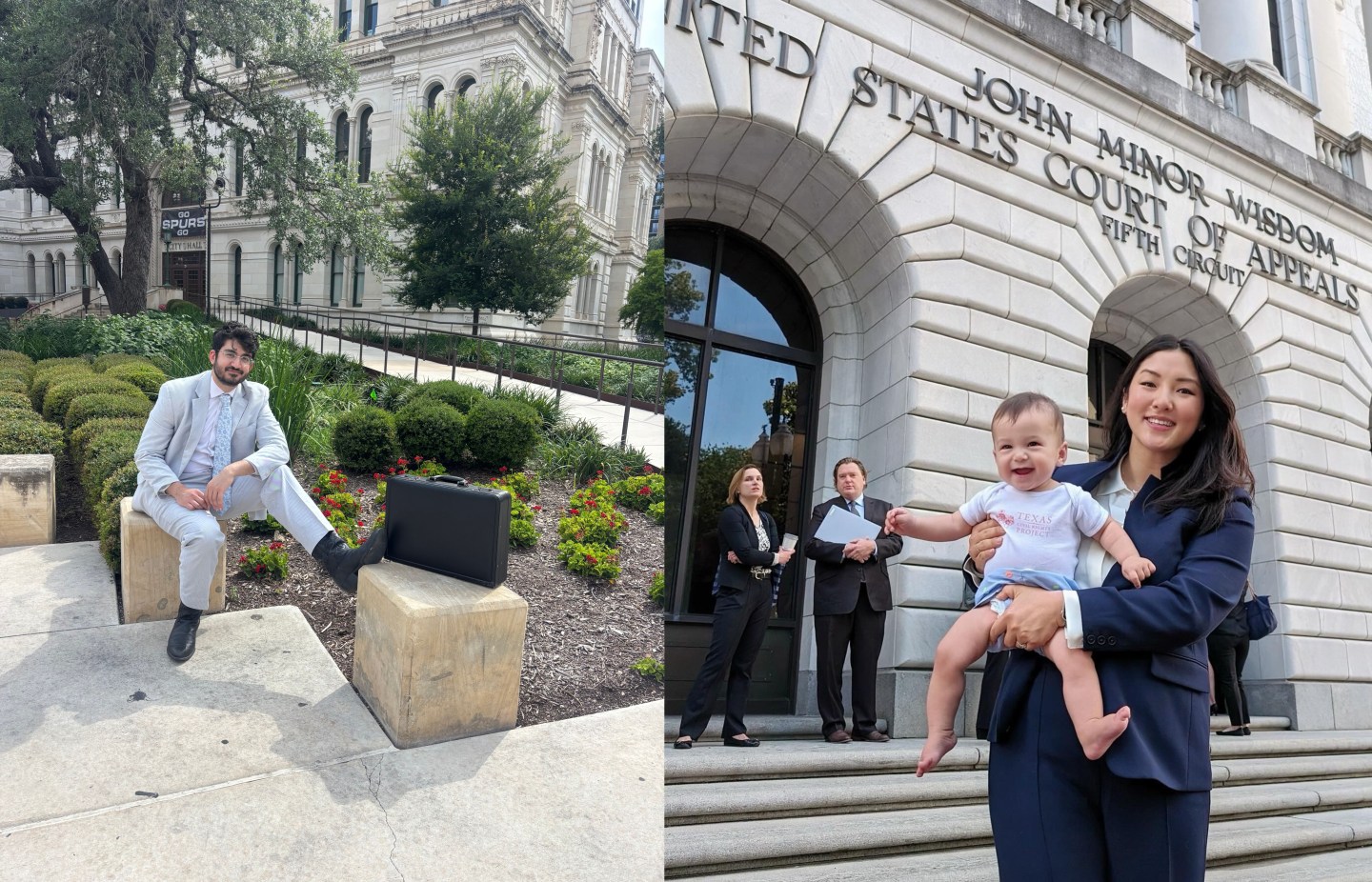
Daniel Hatoum, a Texas native, considers himself a Texan “right down to [his] cowboy boots.” But despite growing up in America, Hatoum, who is the son of a Muslim immigrant, learned early in life that many people saw him as anything but.
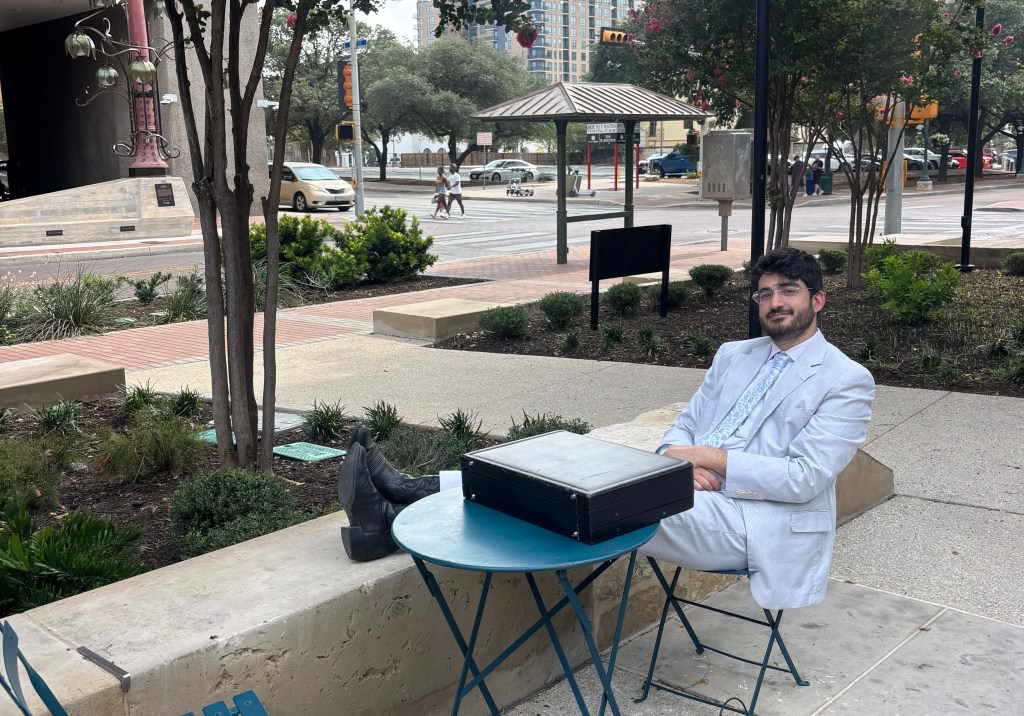
“I was in elementary school when September 11th happened,” Hatoum recalls. “I remember how, almost overnight, people started to turn against my family, including folks in positions of power.” Once, in high school, a student put a note in his twin brother’s locker, accusing him of being a “terrorist” who wanted to blow up the “utopia” of their small Texas town.
The experience gave Hatoum a sense of purpose—and ultimately, a career path. “Honestly, I became a civil rights attorney to fight my own personal bullies,” Hatoum says. “I had a bone to pick against the discrimination I faced in my life.”
Hatoum now works as a Senior Supervising Attorney for the Texas Civil Rights Project (TCRP), which challenges policy and practices that violate American citizens’ civil rights, particularly in areas like voting or immigration. The organization is organized into different programs, each with its own focus, and Hatoum’s team specifically advocates for the humane treatment of people living and traveling through the Texas borderlands. Often, his clients are arrested by Immigrations and Customs Enforcement (ICE) and held in detention facilities, sometimes alongside their entire families. For Hatoum, it’s a reality that hits close to home.
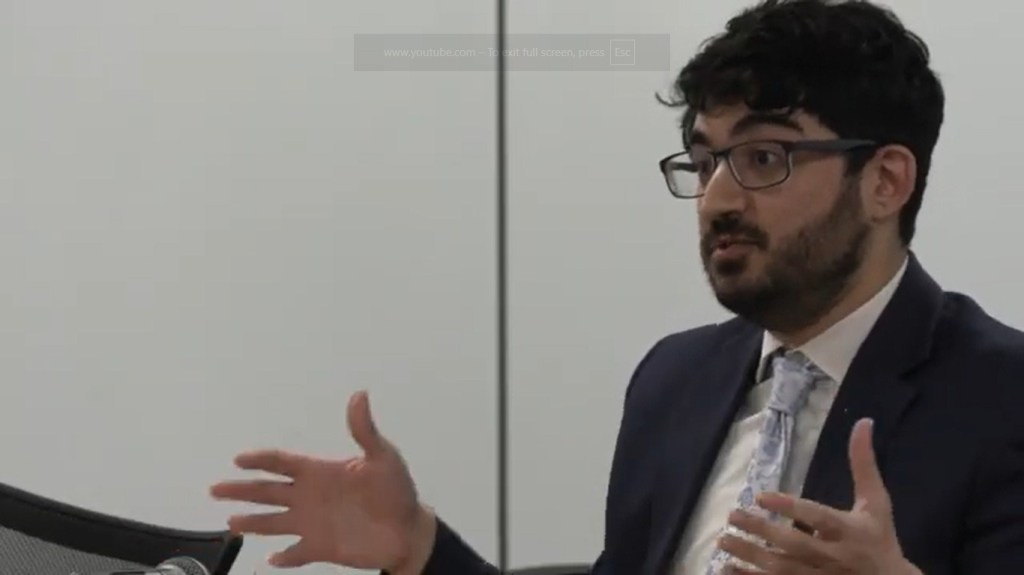
“The parents came to this country to raise their children and give them hope for a better life—the same reasons my parents are here,” he says. “These parents have the same hopes as my family, and frankly, seeing those hopes locked in a detention cell ticks me off.”
But it’s also taught Hatoum that while their struggles are connected, so is their liberation. The work can sometimes be exhausting and emotionally draining, but it’s ultimately his way of fighting for a more just society.
“By fighting for other people, I can help defeat the same kinds of prejudices that led me to be bullied as a kid.”
Wins and Losses
Like Hatoum, Sarah Xiyi Chen was born in the United States to immigrant parents, and her background as a second-generation immigrant helped shape her passion for advocacy work.
“As the daughter of immigrants, I feel incredibly lucky to live in and love the United States, which I believe comes with responsibility to address injustice and inequality,” Chen says. “For all the issues I care about—immigration, the environment, reproductive justice, criminal justice, education, healthcare—we would have much fairer policies if we also had fair representation that enacted the will of the people.”
For this reason, Chen works with the Voting Rights program at the TCRP, which addresses barriers that prevent citizens from exercising their right to vote, such as voter intimidation or redistricting. Last year, the TCRP filed an amicus brief in a lawsuit against the state of Texas, arguing that district maps redrawn in 2021 and 2025 intentionally discriminated against Black and Latino voters. Texas ranks among some of the most heavily gerrymandered states in the country, according to the Redistricting Report Card by the Princeton Gerrymandering Project.
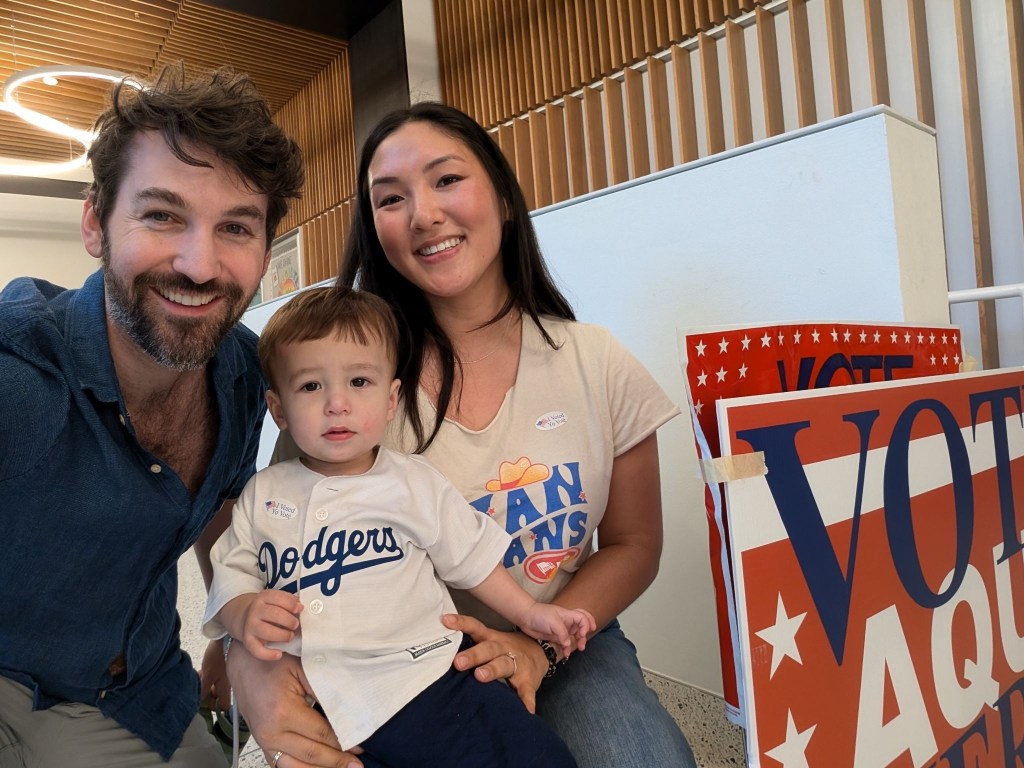
Building a just society is easier said than done, however, and months of advocacy and preparation don’t always translate to a win in court. In LULAC vs. Abbott, the lawsuit for which the TCRP filed an amicus brief, the Supreme Court has allowed the challenged maps to remain in effect while the case continues through the courts.
But sometimes, a loss can still result in positive social change. At the close of one case, Chen says, plaintiff’s advocates and community supporters came together and vowed, in the words of the late John Lewis, to create ‘good trouble’ to advocate for fairer education and housing policies.
“Especially in Texas, where the state and federal courts have historically not been friendly to voting rights or racial discrimination suits, we have to strategize around power building even through loss,” says Chen. “Filing a lawsuit, even one we think will lose, is still worth it to show people that lawyers are willing to fight for them and speak out against injustice.”
Though the losses can be disappointing, Chen says that the work itself, and the knowledge that she is working to change the conditions behind why injustice happens, gives her “greater peace and optimism than I thought possible.”
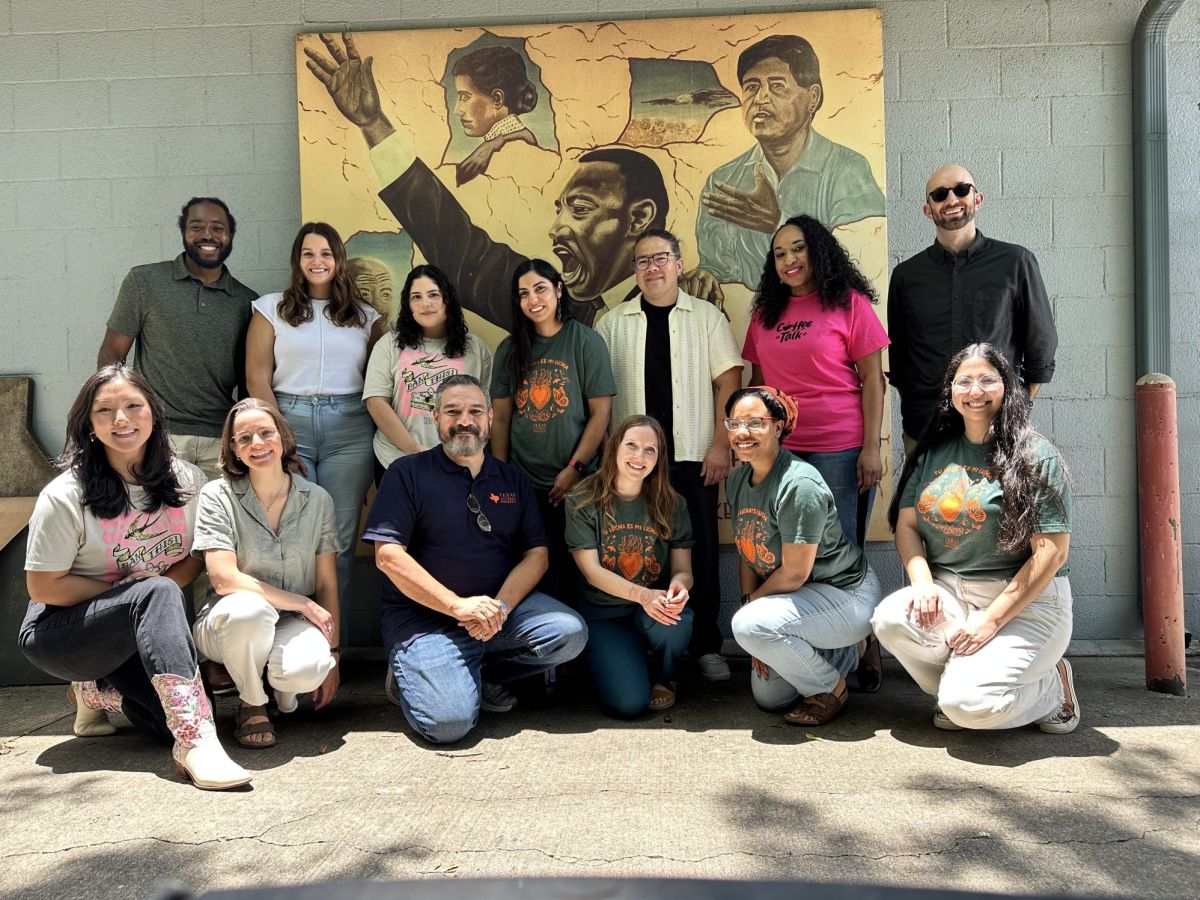
The people behind the work
Ms. Z, a former client, represents the type of injustice that Hatoum works to correct with the TCRP. Ms. Z, who entered the United States legally with her two children, was arrested and placed in expedited deportation proceedings without receiving a full immigration hearing. Worse, she and her family were held at a detention facility in Dilley, Texas, during which time her six-year-old son was unable to receive medical care for his leukemia.
“To aid the family, we not only filed a habeas case to fight for their release, but we also talked about their case publicly,” Hatoum says. It worked. News of the case spread, and quickly the public pressure became so overwhelming that Ms. Z and her family were freed.
Hatoum and his team have been able to help people from beyond Texas who are brought to the state as a result of detention. Last year, a Palestinian woman named Leqaa Kordia was arrested after attending a peaceful protest on a public sidewalk in New York City. The TCRP undertook her representation as her habeas counsel and Kordia was eventually freed. She now continues to advocate for the people she met during her detainment.
“Leqaa could have taken her victory and turned a blind eye to the suffering she is now free from,” Hatoum says. “Instead, she continues to fight injustice on behalf of others. That sticks with me.”
It’s this bravery—from his clients and from the thousands of people who spoke out to help secure their release—that encourages Hatoum to continue his work: “They demonstrate the good of humanity we spend every day fighting for.”
During difficult moments, Hatoum finds strength in remembering the people and the values he’s fighting for.
“I remember this one time I was feeling especially burnt out when I received a call from a client’s family member asking for help with an emergent issue,” he remembers. ”I was so tired at that moment, I considered turning them down. But in that moment, as if by providence, I received a DM from someone on Instagram that had heard me speak at a recent rally. The DM said, ‘I appreciate you and your work. You give me hope.’ That fired me up—because it reminded me that we’re all working towards a collective goal. A goal of making this country a just place for immigrants and their families to live. And it reminded me that there are people backing me, and in turn, I need to back them up, too.”
Hatoum got “very little sleep that night,” but he did say yes to the task. “I’m happy that I did,” he says.
A new Civil Rights Movement
Throughout all this, Chen and Hatoum have seen the best (and worst) of humanity. Both of them have vowed to keep fighting to ensure democracy stays intact, and encourage others to join the effort.
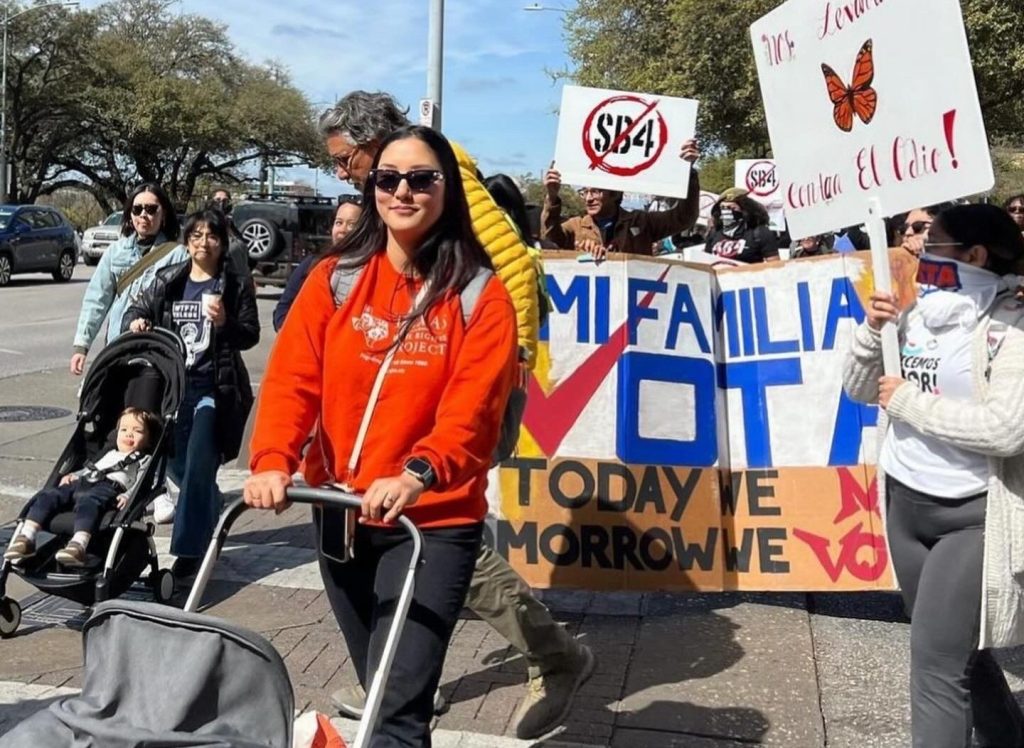
“People often ask me what is the single most effective thing they can do to help, but there’s no easy answer to that. If there was, we’d all already be doing it,” Chen says. Instead, she believes small, sustainable practices will add up to monumental change. Picking just one task—whether it’s participating in neighborhood mutual aid, working at the polls on election day, calling a representative, or having conversations about misinformation on social media—can help create a new movement for social justice and equality as well as bring people together across deep political divides.
“I think we can find a common ground,” says Chen. She and her colleagues at the TRCP will always keep looking for it.
To learn more about the Texas Civil Rights Project, visit txcivilrights.org.