Dog trainers can be found pretty much everywhere, while Googling “cat trainer in my area” yields few, if any, results. There’s a reason for that. Dogs are highly trainable and take direction well once trained. Cats are…well, cats.
Our feline friends respond to commands about as well as a box fan, so the idea of “training” a cat to “act” in a certain way sounds like an exercise in futility and frustration. However, cats play parts on screen, not just in the background. So how do trainers manage it?
Animal handlers for film and TV say cats are the hardest to train
Animal trainer Melissa Millett and animal coordinator Kirk Jarrett told Insider how they get animals to cooperate on screen. Even after working with wild animals like skunks and bison, they say cats are the most challenging to work with.
One reason for that is that cats are independent predators, so cooperation is not part of their natural instincts. They also aren’t particularly prone to people-pleasing the way domesticated dogs are. No amount of “You’re a good boy!” will get a cat to do something it doesn’t feel inclined to do, so trainers have to resort to cat-friendly training techniques.
Cats are motivated by treats, more treats, and fun
The two tools Millett uses to train cats are a clicker and treats. The clicker makes a clicking sound that gets associated with a certain behavior, and the treats reward the behavior.
Millett uses one technique called “targeting,” which involves luring a cat with treats to get it to touch its nose to something. Then trainers move on to getting the cat to move to a specific location, called a mark. Starting with a mark close by, they gradually move it farther away. Each success is met with a click and a treat.
Here’s some cat clicker-treat training in action:
Another technique, “freeshaping,” involves putting a mark down and waiting for a cat to figure out what to do with it. When it figures it out, it gets a treat. This method plays more into a cat’s desire to call the shots.
“It’s a hot-cold guessing game,” Millett said. “It allows them an opportunity to problem-solve and be in control. I put a mark down; if they get on it, they get a treat, so they think that they’re training me.”
Cats are sensitive to their environment, which poses challenges on a set
Film sets are temporary spaces and are often busy and hectic. Not exactly an ideal environment for cats, who usually prefer calm, quiet, and routine. That’s where Jarrett, the animal coordinator, comes in.
Jarrett makes sure that the cats are as comfortable as possible. That means providing a separate space where cats can relax and play freely, as well as getting them used to the set environment and the people and other animals it includes.
This process can take a long time, so patience, consistency, and attention to detail are key. Even the air temperature in the room is taken into consideration as an animal acclimates to the environment.
Using multiple cats has long been a strategy to accommodate cat personalities
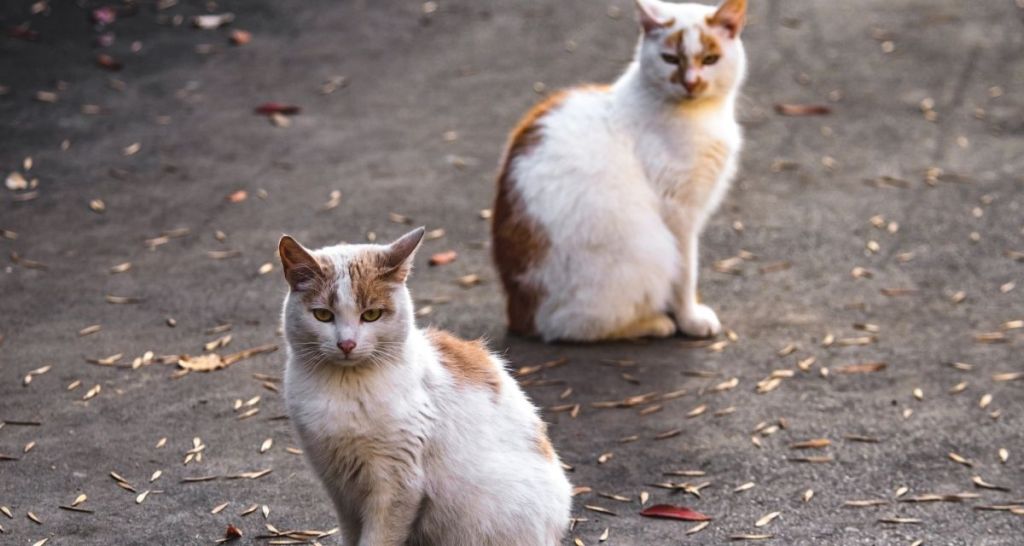
As anyone who’s had more than one cat knows, cats are unique creatures with distinctly different personalities. So “acting” often means finding different cats to be themselves for the specific needs of a scene.
As Millett and Jarrett explain, several cats were used to play Church, the main feline character in Pet Sematary. They rescued five cats for the role but relied primarily on two during filming. A young cat with a more active, playful personality played the living version of Church, while a much calmer cat played the evil, resurrected version. The other three cats occasionally filled in for scenes where their roles were small.
And that’s generally the way cat roles are cast.
Orangey, the most famous film cat in history, was played by dozens of cats
Arguably the first cat to achieve Hollywood fame was a stray named Orangey, the orange tabby who famously starred in Breakfast at Tiffany’s with Audrey Hepburn. Legend has it he was a talented and prolific feline actor, credited with more than 500 roles in film and television throughout the 1950s and 1960s.
But in a shocking plot twist, Orangey didn’t actually play any roles at all. The roles credited to Orangey were actually played by dozens of orange cats. Orangey himself was never even seen on screen.
Why and how, you ask? Long story short, Orangey had an endearing origin story that Paramount loved. A rescued stray cat nursed back to health by a sweet old woman, he was picked from thousands to play Rhubarb, the title character in a screwball comedy about a cat who inherits a baseball team when his owner dies.
However, once Orangey got on set, he was a menace. One studio executive reportedly called him “the world’s meanest cat.” Then, before he filmed any usable footage, Orangey fell ill, died, and had to be replaced. Animal trainer Frank Inn determined it was much easier to teach multiple cats one trick each than to teach one cat multiple tricks, so the production ended up using 36 different cats for the film. But the public was told it was all Orangey, the darling rags-to-riches cat actor, because his story helped promote the film.
What about ‘hair and makeup’? Yep, it’s a thing.
When multiple cats are used for a role, sometimes adjustments need to be made. Two solid-colored cats can easily serve as doubles, but it’s rare for cats with markings to be identical.
In Pet Sematary, the two primary cat actors had slightly different markings, so a darker stripe had to be painted on the younger one. Additionally, the undead version of Church had to look even more terrifying.
“We had to ruffle him up. We had to do some texture with blood, and we had to make him look like if he had been run over by a truck,” said Jarrett.
They put all kinds of things into his fur to make the cat actor look disheveled and dirty. But it was all Humane Society-approved material, perfectly safe for cats to eat. In fact, the “makeup” sometimes served as a treat.
However, the cats did have to get used to being bathed, which many cats aren’t fond of. That process took about two months.
“We had catnip parties in the bathtub to make the bathtub a nice place, and then the next we would have the most delicious treats that we would find,” Millett said. “And we would put two drops of water on them, and then four, and then a little bit of a sprinkle.”
Gently and gradually, the cats became accustomed to the water.
Cat acting is clearly a lot more work for humans than for cats. But it’s a fun challenge to get a cat to “perform” for the camera.