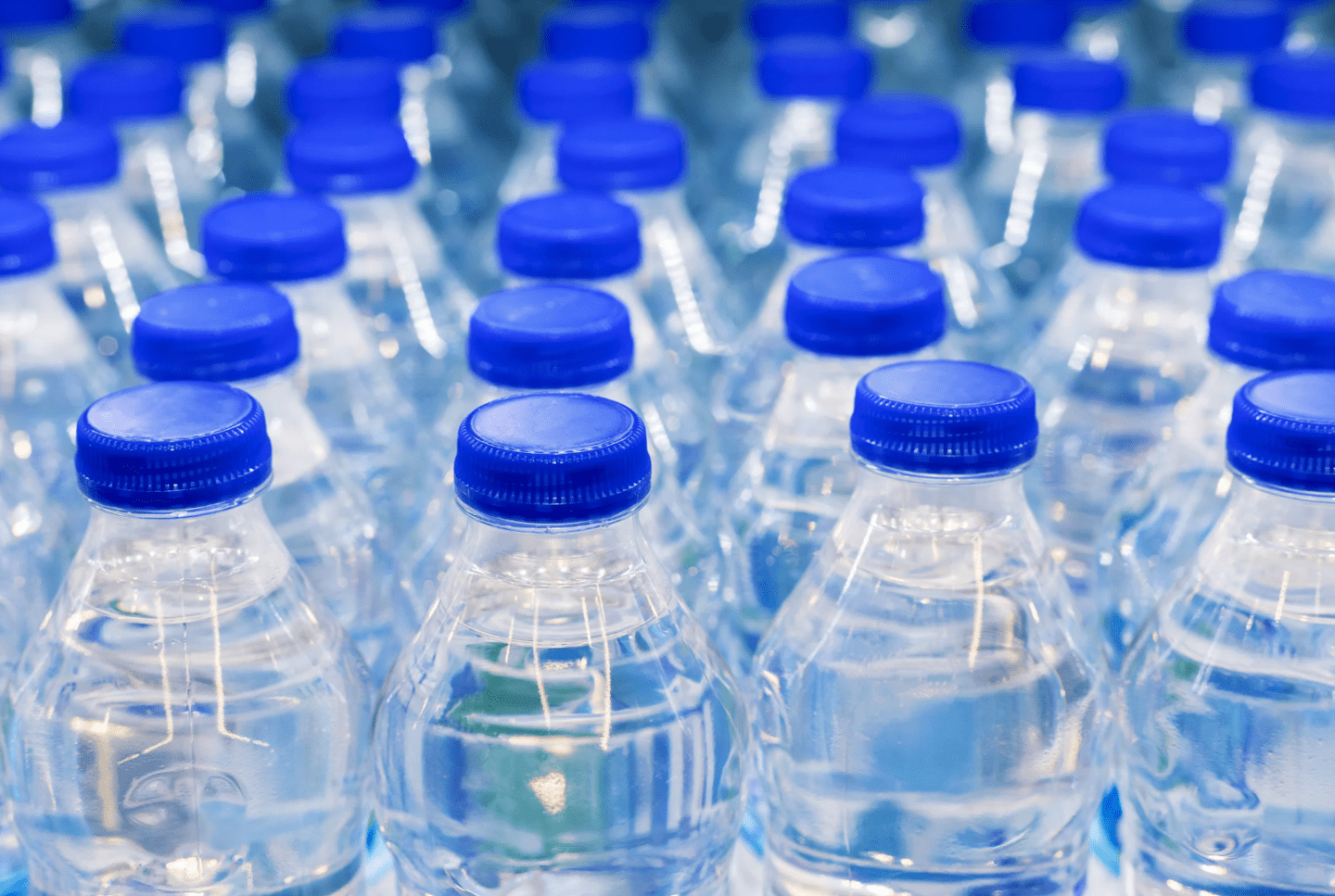
Evian, Fiji, Voss, SmartWater, Aquafina, Dasani, it’s impressive how many brands we have for something humans have been consuming for millennia. Despite years of studies showing that bottled water is no safer to drink than tap water, Americans are consuming more bottled water than ever, to the tune of billions of dollars in bottled water sales.
People cite convenience and taste in addition to perceived safety for reasons they prefer bottle to tap, but the fear factor surrounding tap water is still a driving force. It doesn’t help when emergencies like floods cause tap water contamination or when investigations reveal issues with lead pipes in some communities, but municipal water supplies are tested regularly, and in the vast majority of the U.S., you can safely grab a glass of water from a tap.
What the new study actually found
And now, a new study on nanoplastics found in three popular bottled water brands is throwing more data into the bottled vs. tap water choice. Researchers from Columbia University used a new laser-guided technology to detect nanoplastics that had previously evaded detection due to their minuscule size.
The new technology can detect, count and analyze and chemical structure of nanoparticles, and they found seven different major types of plastic: polyamide, polypropylene, polyethylene, polymethyl methacrylate, polyvinyl chloride, polystyrene, and polyethylene terephthalate.
In contrast to a 2018 study that found around 300 plastic particles in an average liter of bottled water, the study published in the journal Proceedings of the National Academy of Sciences in January of 2024 found 240,000 nanoplastic particles per liter bottle on average between the three brands studied. (The name of the brands were not indicated in the study.)
As opposed to microplastics, nanoplastics are too small to be detected by conventional microscopy, which is why the Columbia team developed a new laser-guided imaging technique to find them. Their size is exactly why experts are concerned about them, as they are small enough to invade human cells and potentially disrupt cellular processes.
“Micro and nanoplastics have been found in the human placenta at this point. They’ve been found in human lung tissues. They’ve been found in human feces; they’ve been found in human blood,” study coauthor Phoebe Stapleton, associate professor of pharmacology and toxicology at Rutgers University’s Ernest Mario School of Pharmacy told CNN Health,
What does this mean for your health?
We know that nanoplastics are making their way into our bodies. We just don’t have enough research yet on what that means for our health, and we still have more questions than answers. Homir effect they might have cumulative? We simply don’t have answers to these questions yet.
Research since then has accelerated. A landmark 2024 study published in the New England Journal of Medicine found microplastics and nanoplastics in arterial plaque in patients with heart disease, and those patients were significantly more likely to experience a heart attack, stroke, or death within three years. It’s the first study to link plastic particle accumulation to real cardiovascular outcomes in humans.
That’s not to say there’s no cause for concern
We do know that certain levels of microplastic exposure have been shown to adversely affect the viability of cells. Nanoplastics are even smaller. Does that mean they are more likely to cause cellular damage? Science is still working that out.
According to Dr. Sara Benedé of the Spanish National Research Council’s Institute of Food Science Research, it’s not just the plastics themselves that might cause damage, but what they may bring along with them. “[Microparticles and nanoparticles] have the ability to bind all kinds of compounds when they come into contact with fluids, thus acting as carriers of all kinds of substances including environmental pollutants, toxins, antibiotics, or microorganisms,” Dr. Benedé told Medical News Today.
So where is all this plastic coming from?
This study focused on bottled water, which is almost always packaged in plastic. The filters used to filter the water before bottling are also frequently made from plastic.
Is it possible that some of these nanoplastics were already present in the water from their original sources? Again, research is always evolving on this front, but microplastics have been detected in lakes, streams and other freshwater sources, so it’s not a big stretch to imagine that nanoplastics may be making their way into freshwater ecosystems as well. However, microplastics are found at much higher levels in bottled water than tap water, so it’s also not a stretch to assume that most of the nanoplastics are likely coming from the bottling process and packaging rather than from freshwater sources.
The reality is, though, we simply don’t know yet.
“Based on other studies we expected most of the microplastics in bottled water would come from leakage of the plastic bottle itself, which is typically made of PET (polyethylene terephthalate) plastic,” lead author Naixin Qian, a doctoral student in chemistry at Columbia University, told CNN Health. “However, we found there’s actually many diverse types of plastics in a bottle of water, and that different plastic types have different size distributions. The PET particles were larger, while others were down to 200 nanometers, which is much, much smaller.”
We need to drink water, and we need to drink safe water. At this point, we have plenty of environmental reasons for avoiding bottled water unless absolutely necessary and opting for tap water instead. Even if there’s still more research to be done, the presence of hundreds of thousands of nanoplastics in bottled water might just be another reason to make the switch.
This article originally appeared two years ago. It has been updated.