Recently, adolescent girls have taken to social media to flaunt that they’re “2000s skinny,” while the women who lived through it are sounding the alarm. The days of people being encouraged to embrace their natural curves seem to be over, as many now strive to make themselves smaller.
Wellness culture is morphing into something dangerous, resulting in unrealistic body standards. Celebrities like Demi Lovato, Britney Spears, and Lindsay Lohan were called fat when they were still adolescents in the early 2000s. Back then, it wasn’t uncommon to see hip, collarbone, and chest bones protruding on the red carpet—or even in a local high school.
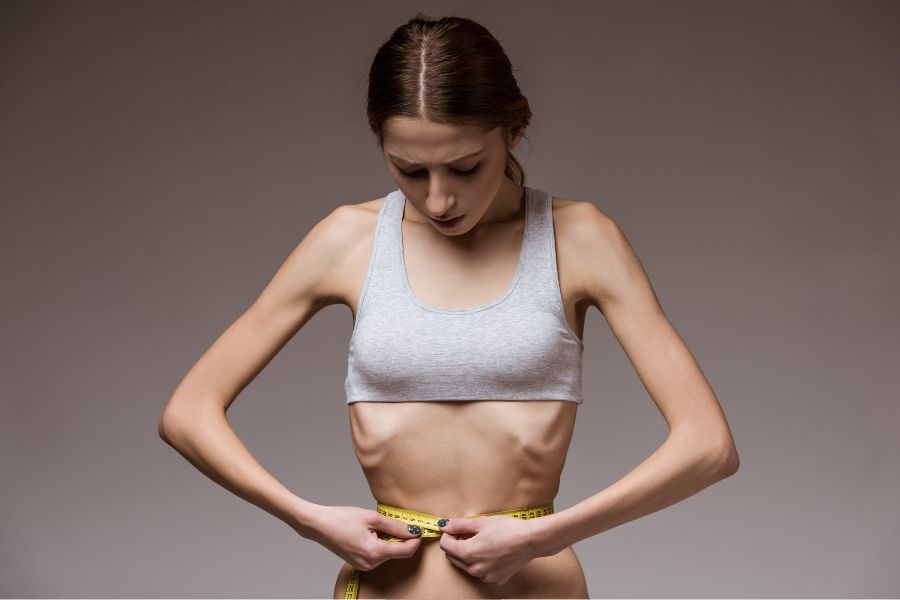
There was a name for it back then: “heroin chic.” The term was “used to describe an ultra-thin, waifish body, as well as a style of fashion photography that glamorized a skeletal figure,” Percival Fisher Jr., a psychotherapist, writes for DetoxRehabs.net.
In that era, teen girls—much like their favorite young celebrities—were developing eating disorders and body dysmorphia. Raven-Symoné has said she underwent two breast reductions and liposuction before the age of 18 due to fat-shaming. Lovato, Taylor Swift, and Lohan have also shared that they struggled with eating disorders earlier in their careers.

Teen girls were doing all they could to make themselves as small as possible because that was suddenly the beauty standard. Now it’s back. The trend is catching on, in part thanks to wellness influencers who stress “clean eating” to achieve physical and mental fitness. Advice about keeping daily calories under 1,200 or doing juice cleanses to maintain a low weight is showing up in the algorithm.
In a video uploaded to social media, a very thin woman poses for the camera. The text overlay on the video reads, “If you think 800–1,200 calories a day is starvation, just know that the 2000-calorie diet was made up by the elite who prey on kids.” James Cappola, a fitness coach, responded to the video by calling out the dangerous misinformation and warning about the risks of anorexia and orthorexia.
Personal trainers, nutritionists, dietitians, and Millennials are among the chorus shouting into the void. But it may be too late. With social media, fear-based nutrition advice, and the re-emergence of heroin chic converging, orthorexia is on the rise.
Orthorexia is a relatively unknown eating disorder that has not yet been included in the Diagnostic and Statistical Manual of Mental Disorders, Fifth Edition as an official diagnosis. The National Eating Disorder Association describes the disorder as an obsession with healthy eating. “People with orthorexia become so fixated on so-called ‘healthy eating’ that they actually damage their own well-being and experience health consequences such as malnutrition and/or impairment of psychosocial functioning,” the association explains.
The warnings from older adults and experts online don’t seem to stop teen girls from showing off their extreme thigh gaps. When a new video of a girl getting down to a size 00 goes up, a Millennial adjusts her messy bun and shares the war stories of her adolescence.
In a TikTok video, wellness entrepreneur Autumn Clayman says, “Everyone is getting freakishly thin online. This trend needs to stop. This trend needs to stop. We’re right back to early 2000s skinny—it’s freaky. It’s scary, and people aren’t considering what this trend is going to do to their bodies long term.”
After disclosing that she used to struggle with an eating disorder, Clayman shares her concern about people going to extremes to be thin. She then explains how extreme undereating is “disrupting their hormones, bone density drops, they go through mood issues, so more anxiety, depression, thyroid slows down, fertility drops, chronic stress, gut and digestion issues, skin issues, blood sugar issues, just all the things.”
A man who goes by the name Brandon Ruins Everything on TikTok explains something younger people may not know about the trend: “People are talking about bringing back 2000s skinny, and I don’t think y’all realize that 2000s skinny isn’t a body type. It’s a goalpost that keeps moving. You will never be skinny enough to be 2000s skinny.”
Getting healthy and being comfortable in your body are admirable goals. The way you do it—and the reasons you’re doing it—matter. Changing your body to fit a trend can lead to unhealthy expectations and behaviors, as concerned voices have pointed out. Hopefully, the ultra-skinny trend fades as quickly as it returned.