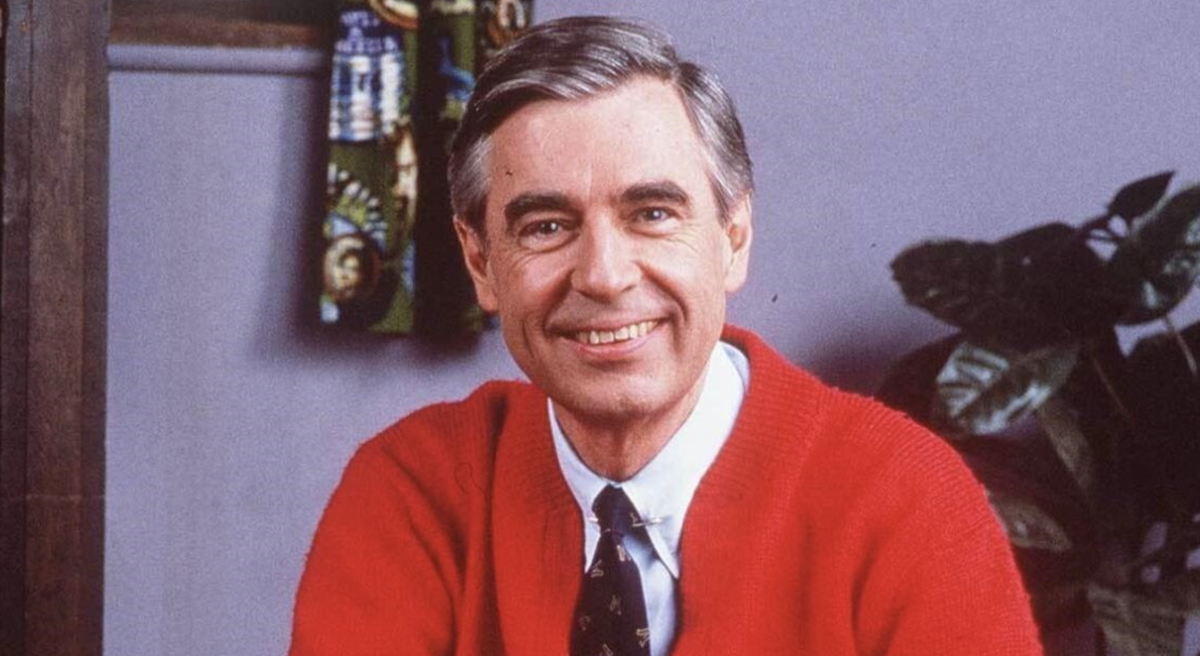
Fred Rogers was a sick, heavy, lonely kid in Latrobe, Pennsylvania. Plagued by asthma and, by his own account, every imaginable childhood disease (including scarlet fever), he spent long stretches quarantined in bed. To entertain himself, he would transform his bedspread into imaginary landscape as he remained an only child until age 11.
At school, other children called him names.
One afternoon as he was walking home, a group of boys began following him. They taunted him for eleven blocks, then chased him when he ran. “Freddy, hey fat Freddy! We’re going to get you, Freddy!” they called. He made it to the house of a family friend, who took him in.
Rogers described that walk himself decades later in a speech at Saint Vincent College. He also described what he did about it: “I cried to myself whenever I was alone.”
The turnaround
He wasn’t imagining any of it. A childhood classmate named Rudy Prohaska later told biographer Maxwell King that students were constantly calling Rogers names. “There were a lot of people in school who irritated me by the way they treated him,” Prohaska said. “I couldn’t take the name-calling and all that.”
The adults around him mostly told him to hide his hurt feelings. Pretend like he didn’t care. But Rogers has been clear that he did care, and pretending otherwise wasn’t something he was willing to do.
His grandfather handled him differently.
Fred Brooks McFeely was his mother’s father, a Pennsylvania businessman with a farm the family visited on weekends. Rogers was named after him. On one of those visits, the boy wanted to climb a stone wall on the property. Fearing he’d hurt himself, his mother and grandmother told him not to do it. His grandfather overruled them and told him to go ahead on the grounds that he needed to learn to do things for himself.
Rogers spent the day on the wall and came back scuffed up. His grandfather told him he’d made the day special just by being himself, and that he was liked exactly as he was.
Grandfather’s kind words touched generations
Rogers began hosting Mister Rogers’ Neighborhood in 1968 and stayed with it for 33 years and 896 episodes. In a sweet nod to his grandfather, the speedy delivery man on the show was named Mr. McFeely. Recalling his grandfather’s kindness and wisdom, Rogers ended nearly every episode the same way:
“You’ve made this day a special day, by just your being you. There’s no person in the whole world like you, and I like you just the way you are.”
He explained his beloved closer in 1969 while testifying before a Senate subcommittee weighing cuts to public broadcasting: “I give an expression of care every day to each child. To help him realize that he is unique,” he said, before reciting the sign-off from memory. “And I feel if we in public television can only make it clear that feelings are mentionable and manageable, we will have done a great service for mental health.”