Tyler Currie

  • 11 sneaky ways to save money on gas when ‘drive less’ just isn’t an option
    Photo credit: CanvaGas prices have people looking for ways to save.
    ,

    11 sneaky ways to save money on gas when ‘drive less’ just isn’t an option

    Tips for when gas prices are ridiculous and every dollar counts.

    Gas prices always fluctuate, but when the price at the pump approaches an all-time high, we all feel it. The road trip this summer feels like a budget buster, and even a quick drive to the grocery store requires a second thought.

    Using less gas is smart both environmentally and economically, no matter what gas prices are doing. But when gas prices are ridiculous and every dollar counts, it becomes a necessity. “Drive less” is obviously the best approach, but that’s not always an option.

    Here are 11 lesser-known ways to maximize your gas dollars:

    1. Drive the highway ‘sweet spot’ speed as much as possible

    Bad news for leadfoots: Speeding on the highway is bad for fuel efficiency. And it’s not a tiny difference.

    According to the Department of Energy website, “It can be assumed that each 5 mph driven over 50 mph is like paying an additional $0.27 per gallon for gas.” But that’s assuming gas costs $3.83 a gallon. When gas prices are closer to $5.00 a gallon, or in some places over $6.00 a gallon, slowing down on the freeway becomes an even bigger savings.

    2. Stop ‘topping off’ the tank

    For many people, topping off the tank by giving the gas pump a few extra squeezes after it stops is habitual. Stop it.

    First of all, you may actually be doing damage to your car by topping off the gas, according to Consumer Reports. Secondly, you’re wasting gas. When the pump automatically stops, it means the tank is full, so anything you pump doesn’t actually go into the fuel tank. It spills over into your vapor canister and ends up releasing toxic gas vapor unnecessarily.

    At least one state, Oregon, has made it illegal to top off your gas.

    3. Don’t idle more than 10 seconds

    There’s a lot of conflicting information out there about how long you should let the car idle before it becomes a waste of gas. Obviously, leaving the car running for long periods of time wastes gas, but since it takes an initial injection of gas to start up an engine, how long makes sense to wait before turning the engine off instead of idling?

    It might be less time than you think. According to a report shared by the Deaprtment of Energy, the threshold is only 10 seconds.

    “Idling for more than 10 seconds uses more fuel and
    emits more CO2 than engine restarting,” the report reads. So if you’re waiting in a drive-thru, picking up a kid, or otherwise waiting in your car, if it’s going to be longer than 10 seconds, turn off the engine.

    4. Ditch the junk in your trunk

    The weight of your car affects its gas mileage, and unnecessary weight just makes you waste fuel for no reason. If you have something heavy in your trunk, take it out. If you store stuff to take to Goodwill in your car for months, maybe prioritize that drop-off.

    5. Only use Premium gas if your car requires it

    Consumer Reports says that if your car manufacturer only recommends Premium gas, it can run just fine on Regular. They tested whether Premium made fuel efficiency difference and found that there was no performance or fuel-economy benefits for many cars. And the price difference can definitely add up.

    So basically, check your manual and don’t feel pressured to use Premium gas unless the manufacturer requires it.

    6. Check your tire pressure

    An often overlooked source of fuel inefficiency is underinflated tires.

    “When your tires aren’t at the proper pressure, your engine is working harder to move the same speed and distance. This means more fuel consumption and, ultimately, lower MPG,” Firestone shares on its auto care website.

    Many tire companies will let you check your tire pressure and use their air pumps for free. Some will even do it for you, so make it a monthly habit for the best gas mileage.

    7. Buy gas on Sunday or Monday

    The gas price comparison app GasBuddy analyzed the data to see which day of the week gas tends to be cheapest. Here’s what they found:

    Sunday = cheapest

    Monday = also cheap

    Tuesday and Saturday = fluctuates, so compare prices

    Wednesday, Thursday, Friday = most expensive

    (Of course, these are based on averages, so good to do your own comparison in your local area.)

    8. Open windows instead of using A/C

    Obviously, on very hot days, windows simply aren’t going to cut it. But the more you can roll down windows instead of using your car’s air conditioning, the better when it comes to gas usage. Your car’s A/C doesn’t use gas directly, but the power it requires means the car uses more gas when it’s running.

    People might ask if having the windows open creates drag that would affect fuel economy. According to Consumer Reports testing, the effect of opening windows didn’t affect fuel economy, even at 65 mph. (However, your hair probably won’t love that speed.)

    9. Coast more.

    Hard braking wastes the gas you used to get to the speed you’re driving. In other words, you held the gas pedal longer than you needed to. Adjusting your driving habits to take your foot off the gas earlier and coast more before braking means using a bit less gas overall.

    Note: Coast in gear, not in neutral. Old advice would tell you to put the car in neutral to coast, but in newer cars, that actualy is less fuel-efficient than keeping the car in gear.

    10. Accelerate slowly.

    Some of us fancy ourselves efficient drivers by doing everything quickly. But accelarating quickly is actually less efficient when it comes to gas. According to the Department of Energy, aggressive driving (which includes rapid acceleration, hard braking, and speeding) can lower gas mileage by roughly 15% to 30% at highway speeds and 10% to 40% in stop-and-go traffic.

    gas pedal, driving, gas prices
    Go easy on the accelerating. (Photo credit: Canva)

    11. Don’t sleep on loyalty programs and warehouse discounts

    While loyalty programs at gas stations and grocery stores that sell gas might seem like a gimmick, there is genuine savings to be had through them. And memberships at warehouses like Costco and Sam’s Club can also save you money at the tank. Some people like to stack those savings with credit card rewards as well, with some rewards cards offering extra points or cash back for gas purchases.

    While we wait (or at least hope) for gas prices to drop, these tips can hopefully help ease the pressure on the pocketbook a little bit.

  • Colorado elementary school puts on 75-minute Phish musical, and it was delightfully epic
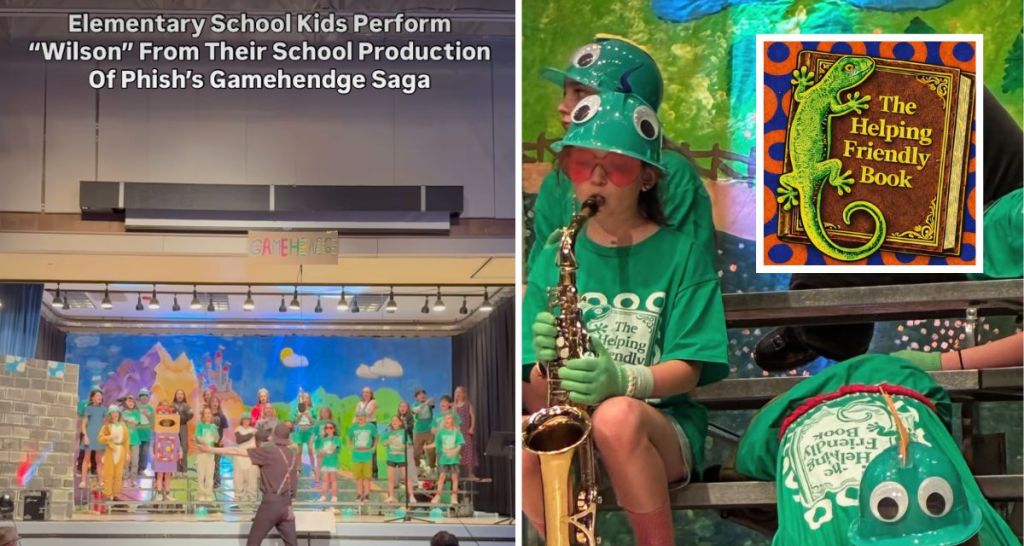
    Photo credit: @erathpercussion/Instagram, used with permissionWho knew Phish's Gamehendge worked so well for a kid's musical?

    Sure, you could venture to Vegas to experience Phish’s legendary Gamehendge saga in 360 at the Sphere…but it would all pale in comparison to the palpable, electric joy that permeated throughout the audience after an elementary school cast decided to bring it to life. 

    A small town teacher with a big idea

    Every year, music teacher Kirk Kubicek, the leader behind this massive project, tries to give his students in the smaller schools throughout the mountains of Colorado something special for their year-end musical production, despite them not having access to the same resources that other schools in the flatlands might have. 

    “They have heart, they have courage, and they deserve every bit as much ambition and opportunity as anyone else. Every year I try to give them something bigger, something that asks more of them and leaves them with something they carry forever,” he wrote in an Instagram post

    This year, that meant telling the tale of Colonel Forbin, Icculus, and the Mockingbird, who help the “Lizard” community regain their sacred “Helping Friendly Book” stolen by the greedy King Wilson. With DIY costumes, cardboard sets, a four-person instrumental backing band, and a passionate teacher orchestrating it all, start to finish. 

    The result was something spectacular and heartwarming, whether you’re a card-carrying Phishhead/Phan or have never heard any of their songs. 

    “I wanted to recreate what it feels like to be at a Phish show,” Kubicek told Rolling Stone. As you can see in the video above, that mission was certainly accomplished. 

    Not only did Kubicek and his merry band of kindergarten through 5th graders recreate peak Phish vibes, but they stayed true to the themes presented throughout the album (and arguably through all of Phish’s work), including community, sharing wisdom, and, most importantly, “surrendering to the flow.” 

    “This elementary adaptation celebrates those same values: that knowledge shared becomes more powerful, that true importance comes from connection rather than control, and that sometimes the bravest thing we can do is remember to have fun and embrace the vibration of life,” the program reads

    Why Gamehendge means so much to fans

    For longtime Phish fans, Gamehendge occupies an almost mythical place in the band’s history. The rock opera originated as guitarist Trey Anastasio’s senior thesis project at Goddard College in the late 1980s and became the foundation for some of Phish’s most beloved songs.

    Instead of releasing it as a traditional album with widespread radio promotion, Phish allowed the story to evolve through live performances over the years. That helped turn Gamehendge into something fans passed down almost like folklore, with audiences eagerly waiting for rare full performances.

    The story itself blends fantasy, humor, and surprisingly heartfelt messages about kindness and knowledge. Which, in hindsight, makes it a pretty perfect fit for an elementary school production.

    A wholesome, inspiring memory for all 

    Part of what makes the video so charming is how fully committed the students are to the material. Nobody appears self-conscious. They sing, dance, act, and throw themselves into the wildly imaginative world with complete sincerity, thanks in no small part to the teacher who gave them the encouragement to do so. 

    That enthusiasm clearly rubbed off on the crowd as well, many of whom can be heard cheering throughout the performance like proud parents witnessing the world’s sweetest jam band concert. 

    And then for us online viewers, we got to witness how live music, when performed with passion, still brings people together in the best possible way. Basically, for everyone involved, the production became something much more magical than a simple school activity. 

    Graciously, the full production of Gamehendge was posted on YouTube and is available for viewing below. Enjoy. 

  • A seemingly innocent painting of a farmer and family member caused outrage in 1930
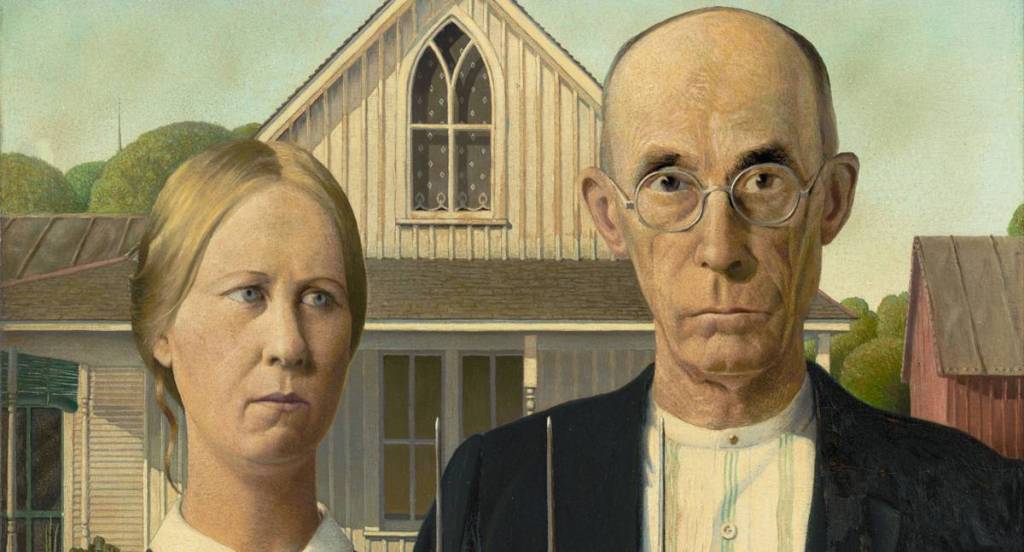
    Photo credit: Grant Wood/Wikimedia CommonsAmerican Gothic by Grant Wood.
    ,

    A seemingly innocent painting of a farmer and family member caused outrage in 1930

    When looking at “American Gothic,” context is everything.

    One of the most iconic American images is American Gothic, a 1930 painting by Grant Wood of a farmer holding a pitchfork, standing next to his annoyed daughter (or wife). It’s been parodied everywhere from Homer and Marge standing in the pose on The Simpsons, to advertisements for Nicole Ritchie and Paris Hilton’s The Simple Life (2003 to 2007), to Magenta and Riff Raff recreating the painting in The Rocky Horror Picture Show (1975).

    To modern eyes, the painting appears to be a traditional depiction of a couple living on the farm. It’s as wholesome as America gets. However, when it was first hung in the Art Institute of Chicago, it was a cultural Rorschach test that offended rural Americans and delighted city slickers. “We should fear Grant Wood. Every artist and every school of artists should be afraid of him, for his devastating satire,” writer Gertrude Stein said of the painting.

    Why was American Gothic so controversial?

    With American Gothic, context is everything. The painting was released on the precipice of the Great Depression at a time when the Dust Bowl was killing American agriculture. It was also after a great migration when Americans left farms in droves for city life. Rural Americans were mocked for their simpler, conservative ways, with cultural voices such as H.L. Mencken referring to rural Americans as “booboisie.” 

    The painting showed a dour, joyless couple wearing simple clothing and was painted in a style that could be called medieval—no doubt, a comment on their traditional ways. After the painting caught the public’s attention, an Iowa farmer’s wife phoned Wood and didn’t hold back. “She claimed she wished to come over and smash his head for depicting her countrymen as grim Bible-thumpers,” Art History School host Paul Priestley said, according to Open Culture.

    american gothic, grant wood, american art, art gallery, paintings
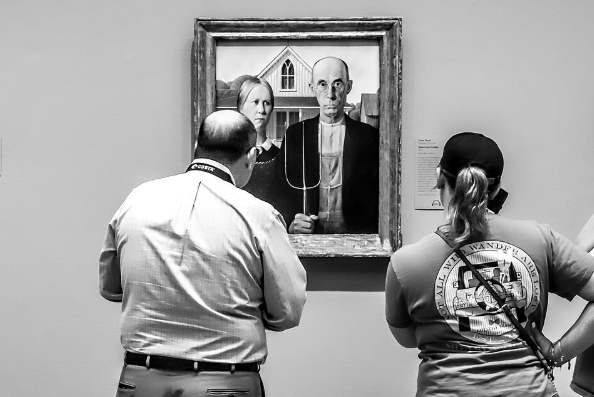
    Museum patrons looking at American Gothic. Credit: Kevin Dooley/Wikimedia Commons

    The artist’s background also plays a big role in how the painting is interpreted. Wood grew up in Cedar Rapids, Iowa, but often traveled to Europe to study Impressionism. This meant that he had one foot in the world of Bohemian Europe and another as an Iowa farm boy. 

    Wood would never admit that his painting was anything but an expression of genuine affection for its subjects. Wood “said he painted American Gothic to extol rural American values, real people in their well-ordered world: an image of reassurance during the onset of the Great Depression,” Priestly continues

    american gothic, american gothic home, artwork, famous homes, iowa
    The home that inspired American Gothic. Credit: Ser Amantio di Nicolao/Wikimedia Commons

    How American Gothic’s meaning changed over time

    “American Gothic” was born at the beginning of the Great Depression, and its meaning would evolve over the difficult period. By the end of the decade, working people of the Midwest had begun to be seen as noble by city dwellers, who embraced folk music and workers’ rights. Further, mocking the “yokels” who were devastated by a natural disaster felt rather cruel. 

    The painting’s meaning evolved “because over the course of the thirties in the context of the depression and throughout World War II, it changed from being that satirical image to a national symbol of stability, order, prosperity, virtue and wholesomeness,” Steven Biel, historian and author of American Gothic: A Life of America’s Most Famous Painting, told Pop Entertainment

    Great pieces of art can mean different things to different people and evolve with the times. For many, in 2026, American Gothic is seen as simple American iconography and little more than a template for satire. But those who intend to tap into its cultural cache should first understand that it has undergone an incredible cultural arc: it redeemed those it intended to mock while softening the hearts of its jaded first audience. That’s something that the farmer’s wife (or daughter?) probably couldn’t even scoff at. 

  • Thimbles, sapphires, and other things that served as engagement rings long before the diamond reigned supreme
    Photo credit: CanvaAn engraved ring (left) Woman from the Medieval era (right)

    Many of us know that diamonds weren’t always considered the go-to stone for engagement rings. In the grand scheme of things, they haven’t even held the title that long. It was only thanks to a certain clever marketing ploy in 1948 that convinced us diamonds were “forever” that they became the standard in the first place. 

    Before that, engagement rings have come in many different shapes, sizes, and materials throughout history…some interesting, some inspiring, and others a bit more baffling when viewed through a modern lens. 

    No stones, no problem

    Ancient Egyptians, for example, exchanged braided hemp or reed rings, believing the circle symbolized eternity. Romans adapted this by giving iron or copper betrothal rings often featuring tiny keys, symbolizing that the wife was her husband’s property. Perhaps some rituals are best left in the past. 

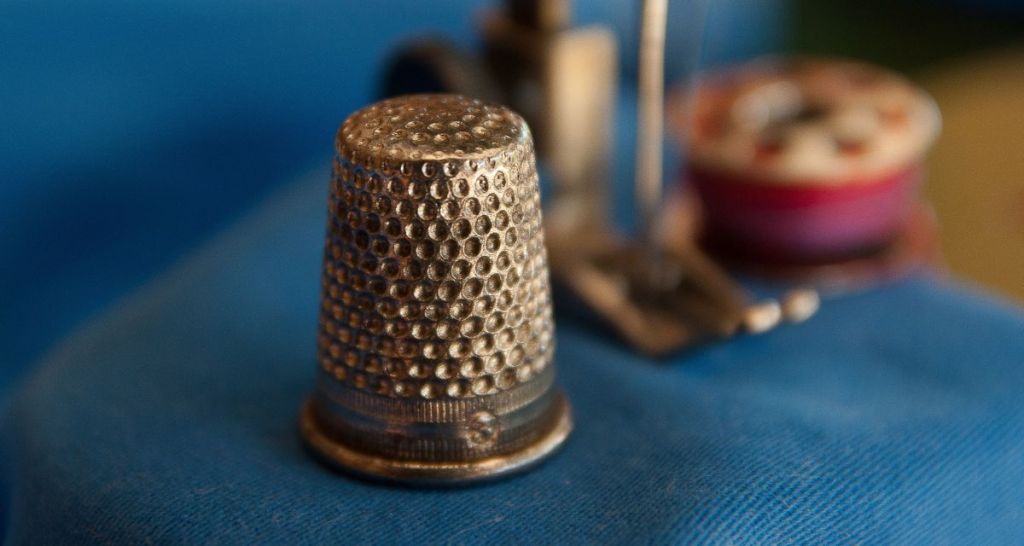
    Puritans in the 1600s, on the other hand, gave engagement thimbles, which wives would use to sew their own wedding dress. While not the most romantic upon first glance, that thimble would then be cut into a ring. All in all, a pretty clever way to serve both practical and sentimental purposes…which sounds very on brand for Puritans. 

    wedding rings, diamond alternative, diamond ring
    A thimble in front of a sewing machine, Canva

    When rings delivered tiny poems

    Meanwhile, in Medieval Times all the way through the Renaissance, brides-to-be were given gold-banded posy rings (derived from the French word “poesy,” meaning poetry) featuring short, intimate inscriptions engraved on the inner or outer surface. These could be romantic promises, religious sentiments, or even secret messages.

    According to jewelry site Berganza.com, it’s likely that goldsmiths of the day had a book of stock phrases from which the customer would pick, two of the most popular being “A true friend’s gift” and “a loving wife during life.”

    wedding rings, diamond alternative, diamond ring
    Two engraved gold bands, Canva

    In some ways, these rings feel ahead of their time, considering personal messages engraved inside jewelry are still a popular choice today. 

    The vibrant era before diamonds took over

    When it comes to stones specifically, colorful, meaningful gems like sapphires, rubies, and emeralds were among the most popular. Sapphires were particularly favored for their durability and symbolic meanings—representing love, commitment, and royalty. Sapphire engagement rings date back to Egypt, Greece, and Rome. Even today, they remain a top diamond alternative, celebrated for their rich, distinctive hues. 

    More than one way to symbolize commitment

    For all the cultural power diamonds hold today, history suggests that engagement traditions have always been quite flexible. Across different countries and time periods, people attached meaning to whatever felt valuable within their own communities, be it from rarity, usefulness, or how it told the story of a relationship. 

    If you yourself are not convinced diamonds are your best friend when it comes to an engagement ring, take comfort in the fact that there are countless other alternatives. 

    By the way, jeweler Mason Mignanelli, who made the video above going through some alternative wedding rings throughout history, has a pretty fascinating e-book delving even further into this topic, which you can read for free here

  • Pianist stuns by using every part of his piano to perform ‘Africa’ by Toto
    Photo credit: via Peter Benace/YouTubePeter Bence plays the entire piano, and he does it barefoot.
    , ,

    Pianist stuns by using every part of his piano to perform ‘Africa’ by Toto

    “I don’t think I’ve ever seen anyone has so much fun playing the piano.”

    Peter Bence’s performance of “Africa” by Toto has over 19 million views on YouTube because of his creative reimagining of the song and, well, just about everyone loves “Africa.” Bence is a Hungarian composer and producer who has become a viral sensation for his Michael Jackson, Queen, Sia, and Beatles covers. He has over 1.1 million followers on YouTube and has toured the globe, playing in more than 40 countries across four continents.

    His performance of “Africa” is unique because it opens with him creating a rhythm track and looping it by strategically tapping the piano and rubbing its strings to create the sound of shakers and conga drums.

    The video eventually becomes rapturous, with Bence making the piano sound like an entire orchestra. 

    The comments say it all

    As the video caption says, “Toto x Peter Bence = Africa Piano Symphony.” Indeed. People were blown away by Bence’s impressive rendition of the classic 80s song.

    “I’m so glad to watch and see a fellow musician, that enjoys the music deep down. Excellent playing man!”

    “So fluid. The piano is an extension of your whole body. Amazing.”

    “I don’t think I’ve ever seen anyone has so much fun playing the piano. You’re not just terrifically talented, I love the creativity.”

    “Brilliant! Loved it. It made me think what would J S Bach have done with looping on a piano/harpsichord?”

    “Mesmerizing! He became the music and the music became him.”

    “Are you kidding me!!!! This cover is incredible. Still listening to it, years after I discovered it.”

    I return to this regularly, it’s absolute witchcraft levels of genius. This level of talent isn’t written in any handbook, it’s completely unworldly.”

    “I love how PB plays a piano worth more than my house in his bare feet like it’s an actual extension of his body. Pure brilliance.”

    baby at piano, toddler piano, piano prodigy
    Peter Bence was considered a musical prodigy as a child. Photo credit: Canva

    He has been a prodigy since toddlerhood

    If it seems like Bence was born to do this, that appears to be accurate. According to the bio on his website:

    “Starting as early as age 2 he already played back melodies by ear from his favorite cartoons and films on his grandparents’ upright piano. Showing serious interest and talent, he soon began his musical education at 4 in the local music school of his hometown, Hajduboszormeny in Hungary.

    He was considered a musical prodigy by teachers and peers, and was already accepted at Franz Liszt University of Music in Debrecen, despite he was still being enrolled at elementary school.

    At 7 he wrote his first composition, which was heavily influenced by the music of Mozart and Chopin, and at 11 he published his first solo piano album of his early compositions.”

    So yeah. The guy has had piano chops since toddlerhood, and he’s made the instrument his own with unique, edgy pieces like this one.


    And about the song itself

    Released in 1982 and peaking at number one in the U.S. in February 1983 and number three in the UK, “Africa” was Toto’s biggest hit, and the top 10 globally. It’s a stirring piece of music that’s beautifully arranged with an anthemic chorus. However, the lyrics aren’t that accurate.

    The song’s author, Toto drummer Jeff Porcaro, describes it as: “A white boy is trying to write a song on Africa, but since he’s never been there, he can only tell what he’s seen on TV or remembers in the past.”

    Nevertheless, the song is an iconic tune that captures a specific spirit of the early ‘80s when the world turned its focus to Africa. Over 40 years later, the song’s wholesome sincerity has made it a piece of music that every few years captures the hearts of a new generation.

    This article originally appeared three years ago.

  • High school salutatorian’s Goth yearbook photo goes viral for the most inspiring reason
    Then-17-year-old Weronika Jachimowicz
    ,

    High school salutatorian’s Goth yearbook photo goes viral for the most inspiring reason

    “I was always trying to please others and be like what everyone else wanted me to be.”

    Back in April 2021, then-17-year-old Weronika Jachimowicz got a lot of attention for subverting people’s expectations of who excels in high school—and that’s exactly what she wanted. Jachimowicz was named New York’s Mattituck-Cutchogue Union Free School District’s 2021 salutatorian. Her yearbook photo next to valedictorian Luke Altman is going viral because of her dramatic Goth makeup and attire.

    It all started when assistant professor and writer Dr. Jules Lipoff’s tweet of the photo of the valedictorian and salutatorian he saw in a newspaper went viral. How many salutatorians have you seen wearing pentagram hoop earrings, a choker, and black devil horns? The juxtaposition of her next to the bowtie-wearing Altman makes the photo even more amusing.

    The Today Show reports that Jachimowicz at first took her senior photo dressed “normal.” During the retake, she decided to “go all out and be herself.”

    Jachimowicz wanted the world to know that there’s no one way someone has to look or present themselves if they want to be academically successful, or successful in any right.

    What research actually says about Goth kids

    In fact, it’s completely normal for kids who are interested in the Goth subculture, as well as any other clique or community, to be good students.

    “The scene has quiet middle-class values—education, highbrow culture, theatre, museums, romantic literature, poetry, philosophy, Gothic architecture,” Dr. Dunja Bril, who studies Goth culture in England, told The Independent in 2006.

    “Many Goths like classical music. It’s a status symbol to have a good collection of classical pieces—mostly requiems and darker pieces,” she added.

    “Going to do a university degree is encouraged,” Bril continued. “[Being Goth] doesn’t encourage people to drop out of school. Whereas in the Punk scene you turn down the normal educational values, in Goth you gain status if you’re perceived as being educated. You get people who are in it for the shock value, but they are usually the ones who grow out of it.”

    Another study found that joining the Goth subculture may be good for young people’s mental health, offering them protection in the form of strong peer support and community. “Rather than posing a risk, it’s also possible that by belonging to the goth subculture, young people are gaining valuable social and emotional support from their peers,” writes New Scientist, quoting the study’s author.

    The response from young people was overwhelming

    Since her photo went viral, Jachimowicz has received countless messages of thanks from young people who say she’s inspired them to express themselves.

    “In all honesty, that’s all I wanted. I wanted to help anyone I could who is struggling with expressing themselves because I’ve been in the exact same position,” Jachimowicz told Yahoo! Life. “When people message me telling me how I have given them the confidence to be who they truly are, I almost cry from happiness.”

    Jachimowicz says that she was able to be herself because she was encouraged by others, so this is her chance to pay it forward.

    “I was always trying to please others and be like what everyone else wanted me to be, or at least try to fit into what was ‘normal.’ However, I did slowly start to realize that it’s OK to be different,” she said. “I’ve met people in my life who gave me the confidence to fully be myself,” she added.

    By the way, her resume is incredible

    In addition to having an unweighted GPA of 97.27%, Jachimowicz was on the fencing, ping pong, and winter track teams. She was also a member of the National Honor Society, Students Against Drunk Driving, and the Unity Club. The Suffolk Times says Jachimowicz had some of her hand-drawn art chosen to appear on the cover of the senior yearbook, as well.

    She told Fox 5 New York in a 2021 interview that she planned to major in biology and forensics after graduation, with hopes of becoming a forensic pathologist.

    Jachimowicz’s accomplishments are another reason to never judge someone for how they look or their interests. Just because someone is wearing satanic earrings doesn’t mean they aren’t highly intelligent or athletic.

    She believes the most important thing is to be yourself, regardless of what anyone else thinks. “Even if others don’t really like my style, it’s what makes me happy and I’ve worked hard to finally come to that conclusion,” she said.

    This article originally appeared five years ago. It has been updated.

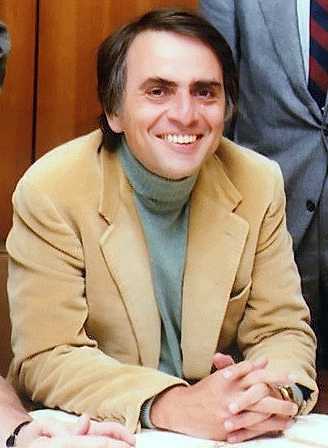
  • 30 years ago, Carl Sagan revealed exactly how a ‘charlatan’ leader could take over the U.S.
    Carl Sagan tried to warn us that a 'charlatan' leader could easily take over the U.S.

    You’ve heard of old quotes, interviews, and predictions that “aged like milk,” but here’s one that aged like a fine wine.

    While astronomer Carl Sagan would likely be the first to scoff at the idea of him being a fortune teller, the man certainly had a prescient way of looking ahead during his lifetime. Sagan was the original host of a show called “Cosmos” back in 1980 and it became the most watched show in public television history. Sometimes called the “Mister Rogers of science,” few science communicators have been able to match Sagan’s talent for stoking wonder about the universe and our place in it.

    Sagan passed away in 1996, 30 years ago, from pneumonia. He was only 62, and it was a tragedy that he was taken so soon with so much good work left to do.

    His final warning was about all of us

    Shortly before his death, however, Sagan appeared on “Charlie Rose” and made one final prediction: A dire warning about how susceptible America would be to the next “charlatan” politician who might come along.

    Sagan said that Americans’ lack of skeptical, scientific thinking could lead to disastrous consequences down the road. As a man who dedicated his life to science and education, he knew exactly how bad things could and would get.

    How accurate was his warning?

    Today, we can see the problems that are happening due to America’s anti-science streak whether it’s anti-vaxxers, conspiracy theories, or climate change deniers.

    Sagan was right, America will suffer due to a lack of scientific skepticism. Not skepticism of sound, peer-reviewed science, but skepticism of salesmen and frauds and conmen who come along and claim to have all the answers despite having put in none of the work.

    “We’ve arranged a society on science and technology in which nobody understands anything about science and technology, and this combustible mixture of ignorance and power sooner or later is going to blow up in our faces,” he told Rose. “I mean, who is running the science and technology in a democracy if the people don’t know anything about it?”

    carl sagan, charlie rose, science education, science communication, critical thinking, skepticism
    One of Carl Sagan’s final interviews featured a dire warning. Photo credit: NASA/JPL – Wikimedia Commons

    He then warned that our lack of critical thinking leaves us vulnerable to those who wish to exploit our ignorance.

    “Science is more than a body of knowledge, it’s a way of thinking,” he says. “A way of skeptically interrogating the universe with a fine understanding of human fallibility. If we are not able to ask skeptical questions to interrogate those who tell us that something is true, to be skeptical of those in authority, then we’re up for grabs for the next charlatan, political or religious, who comes ambling along.”

    Sagan believes that a democracy cannot function without an educated populace.

    “It’s a thing that Jefferson lay great stress on. It wasn’t enough, he said, to enshrine some rights in the Constitution and the Bill of Rights, the people had to be educated and they have to practice their skepticism and their education,” he says. “Otherwise, we don’t run the government, the government runs us.”

    What scientific skepticism actually means

    One key to remember is that good scientists are inherently skeptical. NASA writes beautifully about the difference between scientific skepticism and the “do your own research” crowd, “Skepticism helps scientists to remain objective when performing scientific inquiry and research. It forces them to examine claims (their own and those of others) to be certain that there is sufficient evidence to back them up. Skeptics do not doubt every claim, only those backed by insufficient evidence or by data that have been improperly collected, are not relevant or cannot support the rationale being made.”

    Part of the problem we face in the present is that what constitutes education, including science and technology education, is being debated at the highest levels.

    Institutions of higher learning are undergoing attacks by the government, traditional education is being devalued by powerful parts of the political world, and positions that were traditionally filled by public servants with credentialed expertise are now being filled by political loyalists instead.

    Critical thinking has also taken a beating. People believe themselves to be “critical thinkers” simply because they go against scientific consensus, but that’s not how critical thinking and skepticism really work. When political ideologies take precedence over genuine scientific inquiry and investigation, we all lose out.

    In fact, many believe there is a concerted effort to discredit science; not just for kicks, but because those with ulterior motives need the populace to be uneducated, uninformed, and skeptical of those that might speak truth to power. This is not a new phenomenon, but it’s reached new levels in the modern age.

    Have we already reached that place?

    Some might even say we’ve already reached the place Sagan tried to warn us about. The “next political charlatan,” certainly sounds more than familiar to some. Of course, that’s up for debate as well, but regardless, Sagan certainly seemed to have his finger on the pulse of humanity’s tendencies. Hopefully people will heed his words and put science education in its rightful place as part of a thriving democracy.

    This article originally appeared six years ago. It has been updated.

  • Empty nesters share their genius, and surprisingly touching, downsizing hack
    Empty nest season comes with a lot of decisions about what to keep.
    ,

    Empty nesters share their genius, and surprisingly touching, downsizing hack

    “All I have to do is look in the eyes of my two girls, and they take me back, every time, to the most beautiful, colorful, emotional scrapbook I could ever dream of having.”

    The decades parents spent raising children are full, rich, exciting, exhausting, and loud. From babies crying to siblings bickering to the raucous laughter that creates collective memories, the sounds of family life are constant. Your home is full. The laundry never ends. Food gets purchased in bulk.

    Then, one day, you find that the intense family life that took up so much space physically, mentally, and emotionally, dwindles to a strange silence. When the last child moves out, you find yourself swimming in a house full of unused rooms and piles of memories. Suddenly, you don’t need all that space anymore, and you have to figure out what to do with those rooms and those piles of memories.

    For one couple, the process of downsizing their empty nest brought about a reflection on their family life, their relationship with their kids, and their stuff. In 2021, Jimmy Dunne shared that reflection entitled “Downsizing” on Facebook in a viral post that resonated with many people who are at or near this stage in life.

    Here is what he wrote, in his own words

    “My wife Catherine and I recently moved.

    I realized I had something I never knew I had.

    Thirty-four years ago, I carried my wife in my arms over the threshold in our home. Thirty-four years ago. From newlywed days, to witnessing our babies go from little girls to young adults. So many great memories in every inch of every room of our home.

    I didn’t think I was ready to ‘downsize.’ What an awful word. I liked walking through our girls’ bedrooms and still seeing their stuff on the walls and on the shelves. I liked our backyard. I liked imagining our kids coming down the steps every Christmas morning.

    We put it on the market, it sold in a couple days, and suddenly agreements thicker than my leg were instructing me to clear everything I ever had and knew – out.

    Every night I found myself saying goodbye to our backyard, to our garden of roses that Catherine would till and trim, to the sidewalk where the girls drove their Barbie cars and learned to ride their bikes, to our front lawn where we hosted tons of talent shows with all the kids on the block, and the red swing on the front porch.

    We found a condo in town and started lining up our ducks of what we were keeping, and what we were tossing. We vowed, if we’re going to do this, we weren’t putting anything in storage.

    I literally threw out half my stuff. Half. Half of the furniture. Half of my clothes, books. And the big one… way more than half the boxes in the attic.

    The attic was more than an attic. It held our stories. Every thing in every box, every framed picture was a story. After we gave away almost all of the living room furniture, we split the room in half and brought down everything of the girls from the attic and from their rooms. We invited the girls over, handed them a cocktail and said, “There’s good news and bad news. We’ve saved all this stuff; your outfits, drawings, dolls, skates — for you. It’s now yours. The bad news, whatever’s not gone by Friday at 10 in the morning, it’s getting chucked in that giant green dumpster in front of the house.

    The girls thought we were Mr. and Mrs. Satan. But they went through it, and that Friday, most of it went out the front door and right in the dumpster.

    I filled the entire dining room with boxes of all my old stuff. Grade school stories and pictures, report cards, birthday cards, trophies, you name it. Boxes of old plaques and diplomas and just stuff and stuff and stuff like that. How could I throw any of this out? I may as well have been throwing me in the dumpster!

    But this little jerk on my shoulder kept asking — what are your kids going to do with all this a week after you’re six feet under? They’re gonna chuck it all out!

    Here’s the crazy thing. The more I threw stuff in there, the easier it got. And I started to kind of like throwing it up and over in that thing. I started to feel lighter. Better.

    And we moved in a half-the-size condo – and the oddest thing happened.

    It became our home.

    A picture here and there on the wall, Catherine’s favorite pieces of furniture, all her knickknacks in the bathroom. We blinked, and it looked and felt just like us.

    And then I found that thing I never knew I had.

    Enough.

    I had enough.

    The wild thing was that having less – actually opened the door to so much more. More in my personal life. More in my career. More in everything.

    All I have to do is look in the eyes of my two girls — and they take me back, every time, to the most beautiful, colorful, emotional scrapbook I could ever dream of having.

    All I have to do is hold my wife’s hand, and it hypnotizes me back to kissing her for the first time, falling in love with everything she did, seeing her in that hospital room holding our first baby for the first time.

    It sure seems there is so much more to see, and feel, and be — if I have the courage, if I have the will to shape a life that’s just…

    Enough.”

    You can also read Dunne’s reflection on his website.

    Why this post resonated with so many people

    People shared Dunne’s post more than 24,000 times, and it’s easy to see why. He’s speaking a truth we probably all know deep down on some level: Things don’t make a life. Things don’t make relationships. They don’t even make memories, though we tend to hold onto them as if they do. We may associate places and things with memories, but we don’t need the places and things for our memories to live on.

    It’s not hard to notice Dunne’s deep wisdom as the result of a life well-lived. Fortunately for readers everywhere, Dunne compiled his wisdom, including the viral “Downsizing,” into a book that was released in September 2024 by Savio Republic and Post Hill Press, titled Jimmy Dunne Says: 47 Short Stories That Are Sure to Make You Laugh, Cry—and Think. Like his Facebook post, Dunne’s book is filled with heartfelt, thought-provoking reflections that stand to teach readers valuable and relatable lessons. It even got an endorsement from none other than actor Henry Winkler.

    The empty nest years can be whatever you want

    Kudos to Dunne and his wife for looking ahead to what their children would have to go through after they pass if they didn’t go through it now themselves. And kudos to them for truly embracing the freedom that comes with having raised your children to adulthood. The empty nest years can be whatever you choose to make of them, and this couple has figured out a key to making the most of theirs.

    Keep up with the Dunnes on their Instagram, where they share more writing, wisdom, family moments, and sweetest of all, their grandbabies.

    This article originally appeared five years ago. It has been updated.

Culture

High school salutatorian’s Goth yearbook photo goes viral for the most inspiring reason

Science

30 years ago, Carl Sagan revealed exactly how a ‘charlatan’ leader could take over the U.S.

Family

Empty nesters share their genius, and surprisingly touching, downsizing hack

Culture

People share 20 everyday things from the 90s and early 2000s that are now considered ‘luxuries’